East Travel Editorial Department · Travel Diaries and Pre-Trip Reading
First, decide where you want to view the Giant Buddha
Photos of the Leshan Giant Buddha often feature a complete statue centered in the frame, but when you actually visit, your viewing method will determine the rhythm of your day. Approaching along the mountain trail allows you to observe the relationship between the face, ears, and fingers and the cliff face, though you’ll also encounter stairs, narrow passages, and lines. If you choose to tour from the river, you can frame the mountain, the river, and the statue together, but you may not be able to stay at your desired spot for very long. Each approach offers its own unique experience; simply “seeing the Giant Buddha” shouldn’t be equated with a single, uniform experience.
For first-time visitors to Sichuan, we recommend first asking yourself whether you’re more interested in the details of the stone carvings or the overall geographical setting, and then making a decision based on the weather, your stamina, and the day’s opening hours. If you only have half a day, choose one primary viewing method and set aside some time for downtown Leshan; this is usually a more relaxed approach than trying to squeeze in everything at once. It’s important to identify the actual ticketed tour package and boarding location, rather than the camera angles shown in promotional images. Certain riverbank vantage points may not offer a complete view of the carvings, and the view from the boat is also affected by water levels and the route. Accept these conditions in advance, and once you arrive on site, you won’t have to spend all your time searching for that “perfect” photo that only a photographer could capture.
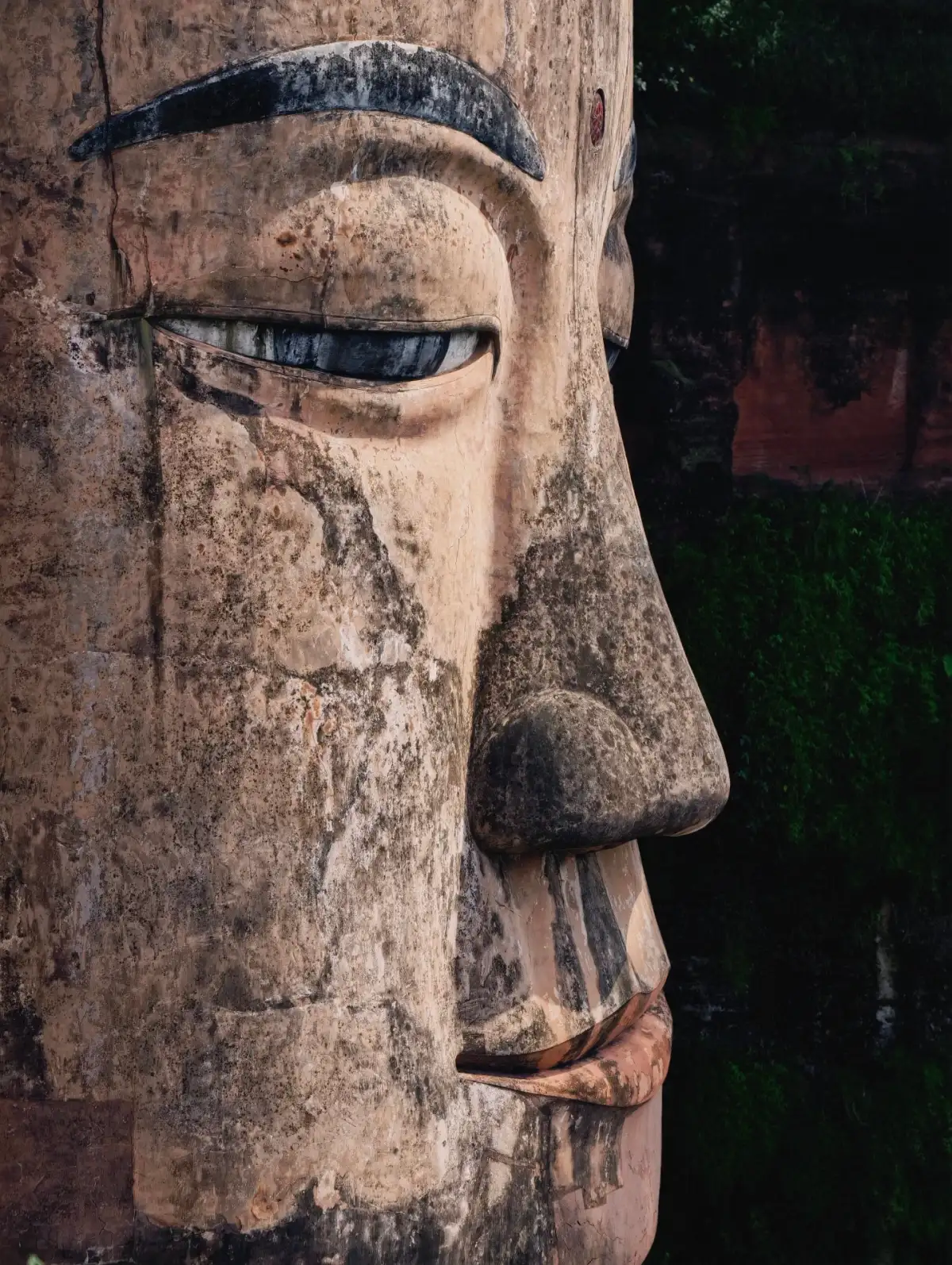
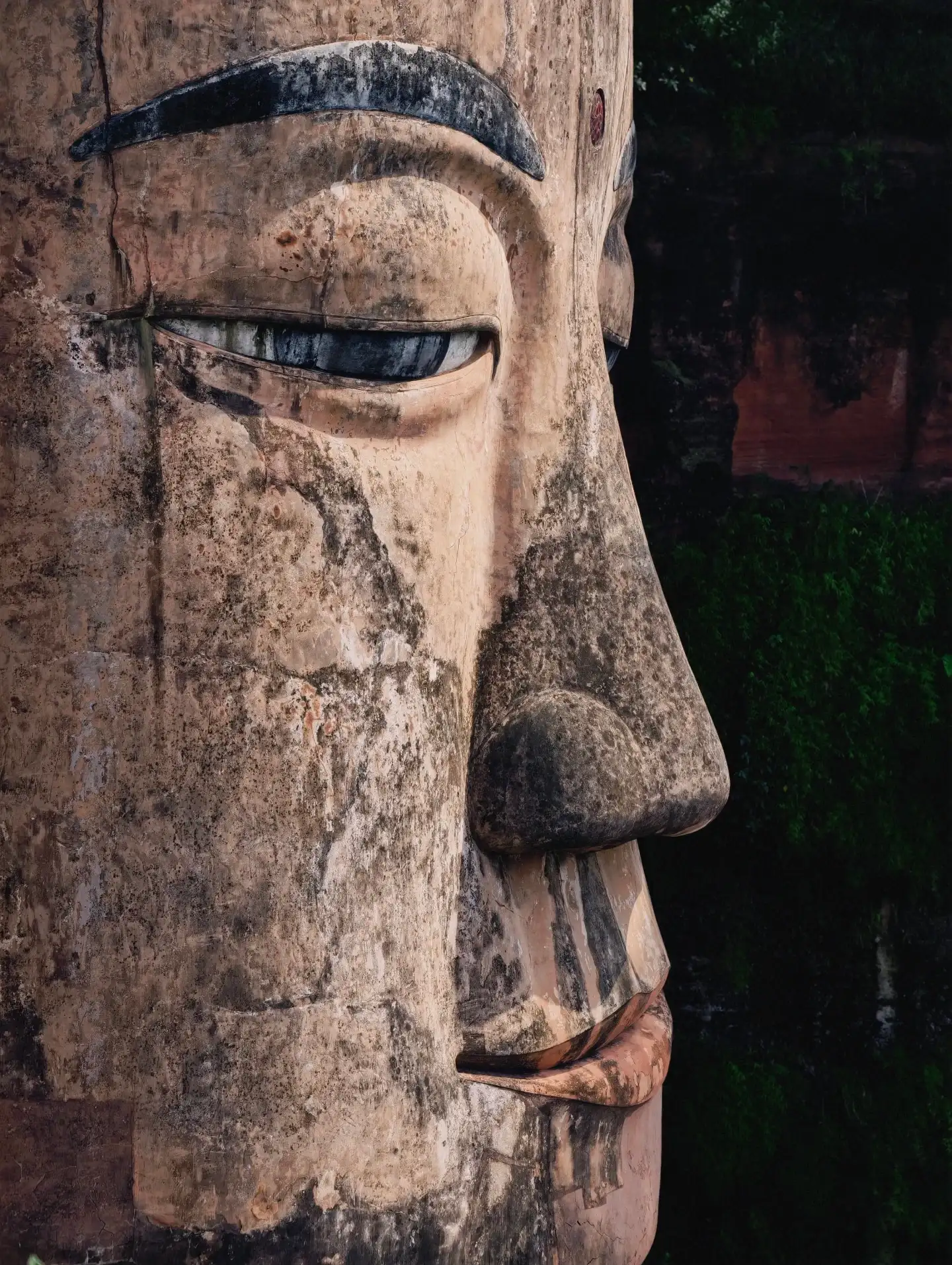
The side profile of the Leshan Giant Buddha’s carved face.
The Three Rivers and the Cliffs: Explaining Why They Are Here
Lingyun Mountain, home to the Giant Buddha, lies near the confluence of the Min River, the Dadu River, and the Qingyi River. UNESCO has listed Mount Emei and the Leshan Giant Buddha as a single World Heritage site, describing this stone carving—approximately 71 meters tall and first carved during the Tang Dynasty. Numbers can help convey the scale of the structure, but even more significant is its setting—nestled against the mountain and facing the river: the mountain provided the material for carving, while the water brings passing people and vessels right before it.
Looking out over the river from the designated viewing points—observing the current, the shoreline, and passing boats—is far more interesting than simply searching for the “Confluence of Three Rivers” sign. The distinct colors of the different rivers do not always form a clear boundary every day; the water’s color on-site is influenced by the season, rainfall, and sediment. You can learn about the historical stories behind the statue’s construction through official exhibits or reliable guided tours; there’s no need to interpret the calm water surface during a single photo session as proof that the statue has permanently eliminated the risks posed by river currents. The historical connection between the statue and navigation is distinct from the operational management of the waterways today. While travel experiences can be rich and varied, the boundaries of fact should still be maintained—only then can this great Buddha be prevented from being reduced to nothing more than a magical legend.
When viewing the stone carvings up close, look at the faces first, then the hands.
When viewed up close, the facial contours create a different impression than when viewed from a distance. The eyelids, bridge of the nose, and corners of the mouth take on distinct shapes, while the stone surface reveals uneven coloring, signs of weathering, and changes resulting from restoration work. The facial carvings are integrated into the natural rock, and the viewing angle alters one’s perception of the proportions of the eyebrows, eyes, and corners of the mouth—a change you can observe simply by pausing for a moment. Do not interpret every deep or shallow groove as a chisel mark left by Tang Dynasty artisans; these stone carvings, which are continuously being preserved, reflect the combined effects of many different periods.
As you follow the trail and continue observing the hands and bodies, you’ll come to understand why the carvings must harmonize with the entire mountain. The massive fingers aren’t standalone sculptural elements; the rock face extends right behind them. The junction between the hands and the red cliff face is particularly worth examining. By following the edges of the carvings toward the rock face, you can see how the sculptures blend with the natural material. You can take one shot of the entire scene and then select a close-up of a detail; there’s no need to take a “souvenir photo” of every single body part. When there are crowds, don’t occupy narrow viewing spots for too long, and don’t lean over the guardrails. Put your camera away for a moment and simply use your eyes to take in the rock’s layers—you’ll often discover relationships within the mountain that are hard to discern in photographs.
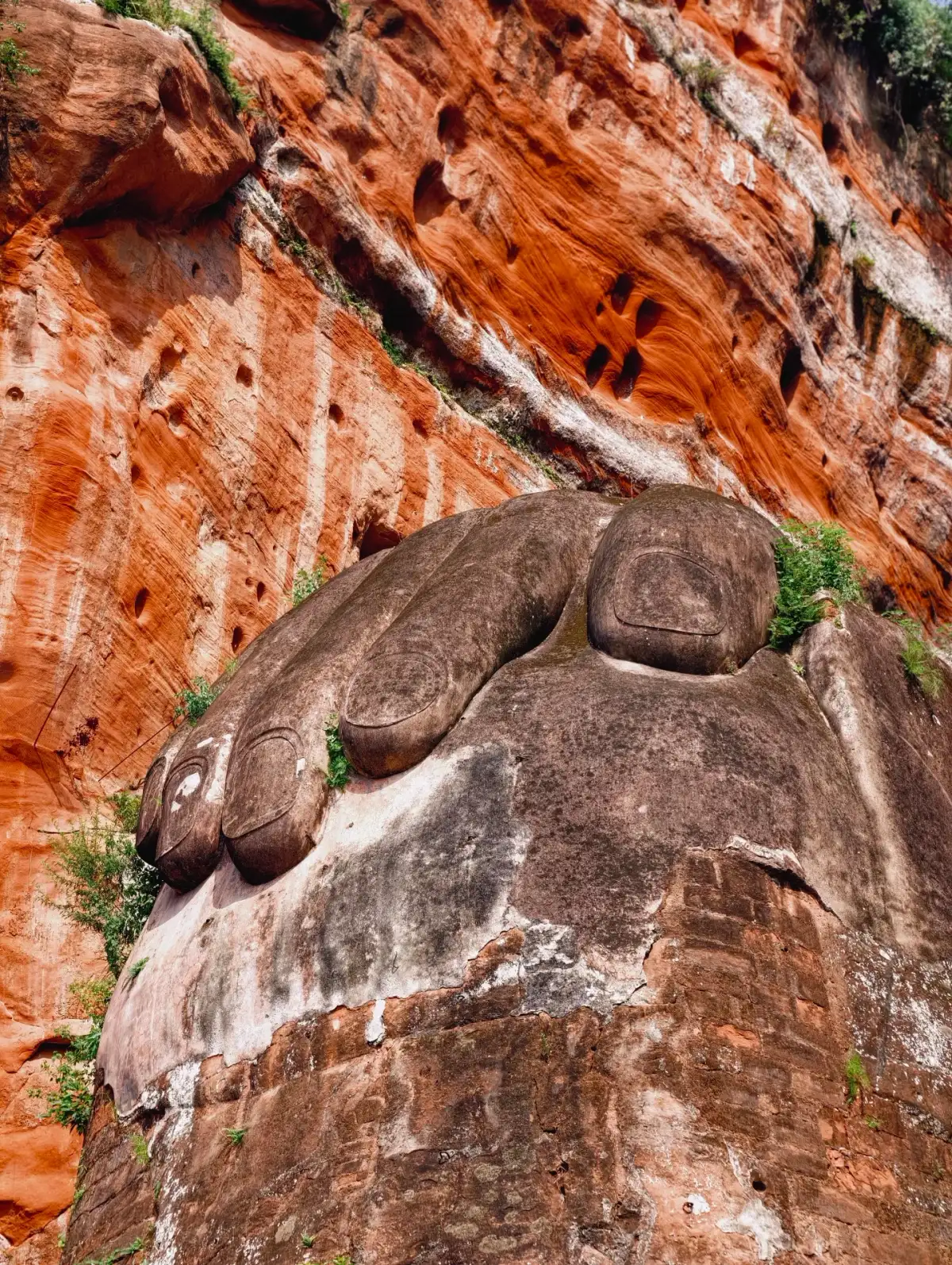
The stone carving on the Leshan Giant Buddha’s finger and the red cliff behind it.
The cliffside trail is not a path to be overlooked
The cliff-side walking paths around the Giant Buddha are part of the walking tour. While the zigzagging railings in photos make them appear as delicate lines, actually walking the path involves continuous ascents and descents of stairs, passing spaces, and varying access requirements for different sections. Whether routes such as the Nine-Turn Plank Walk are open, whether one-way traffic is in effect, and how long you may have to wait should be determined by the scenic area’s daily announcements and on-site guidance. Do not assume that the empty paths shown in historical photos represent current conditions.
Before you go, discuss with your travel companions whether they’re comfortable standing for long periods and willing to climb steep steps. If you need to minimize stair climbing, consult park staff about alternative viewing areas; don’t purchase a full package only to discover the route isn’t suitable. On sunny days, the cliff edges may be very bright, and on rainy days, the grip on the stone steps varies depending on your footwear; a pair of comfortable walking shoes is more practical than a complex photography setup. When waiting in line, be sure to factor in time for drinking water, rest breaks, and the return trip into your plan. If the staircase route is temporarily closed, choosing other mountain viewpoints or cultural sites that remain open—or making alternative arrangements after confirming ferry conditions—are all sound travel decisions. Getting a close-up view isn’t the only measure of whether the day was a success.
There are also temples and other cultural points of interest on the mountain.
While the Giant Buddha often commands the full attention of visitors, the temples, pagodas, and other stone carvings on Lingyun Mountain help contextualize its cultural setting. In addition to the main statue, you can choose to explore areas related to Lingyun Temple or Lingbao Pagoda based on the day’s open routes, shifting the focus from a single visual spectacle to the relationship between Buddhist architecture and the mountainous landscape. Whether you can actually enter, or if there are any temporary maintenance work or religious activities taking place, will depend on the on-site announcements.
Etiquette for visiting temples differs from that of general sightseeing. Keep your distance when others are praying, and do not ask them to move just so you can take a photo. Check the photography rules before entering the halls; burning incense or participating in rituals are not mandatory parts of the travel experience. A guided tour can begin by explaining the architectural purpose of the structures and then provide background on the Buddhist sculptures, making it easier for international visitors unfamiliar with Chinese religious culture to understand. If you have a deep interest in history, arrange for a formal exhibition or professional guided tour—don’t rely solely on mysterious stories found online for answers. Wuyou Mountain and Wuyou Temple represent a distinct cultural aspect worth exploring on its own; do not assume that because they appear close on a map, they are automatically connected to the main Great Buddha tour route, allowing for unrestricted access. Before setting out, confirm the connections, accessibility, and time requirements.
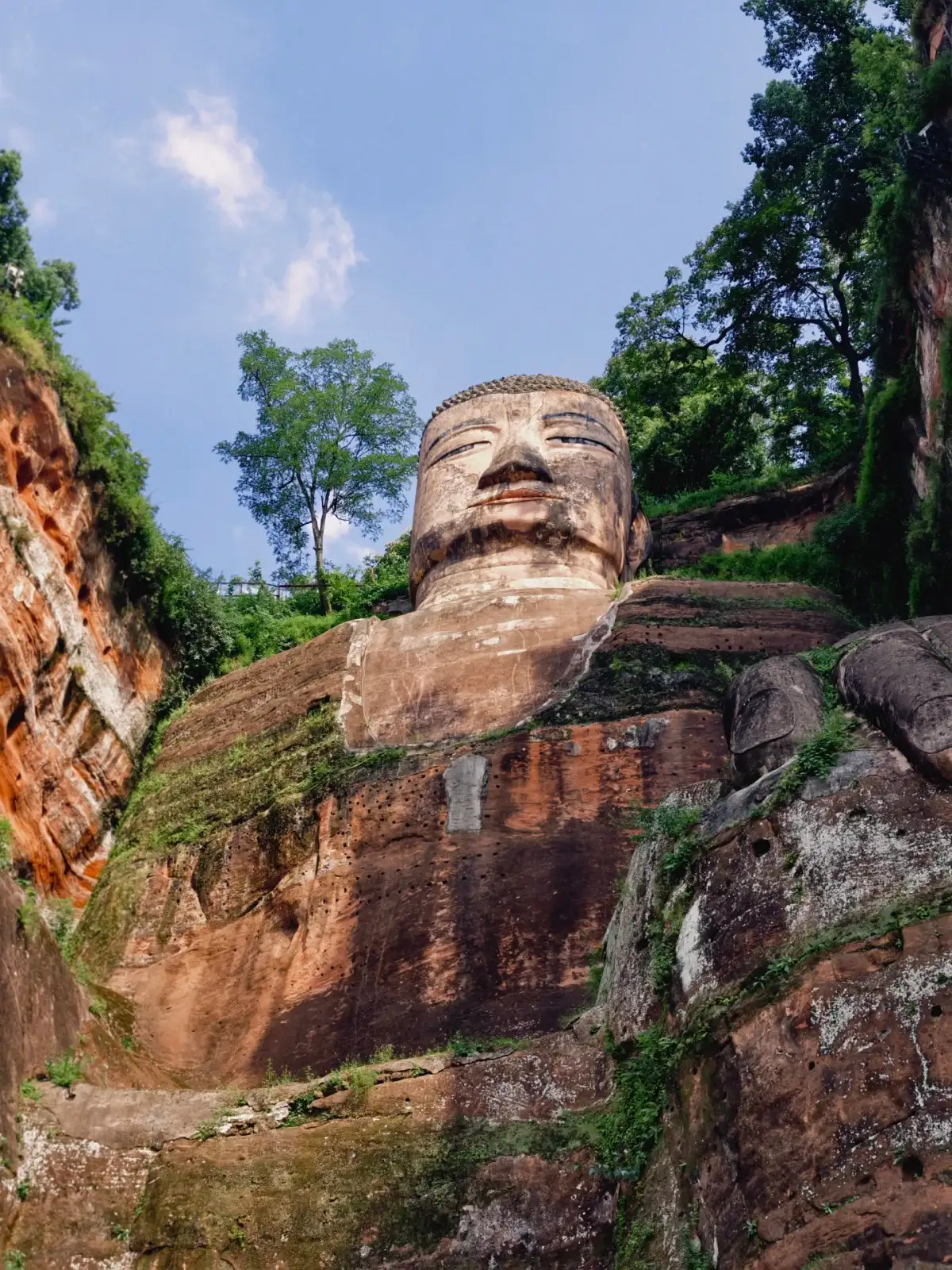
A view looking up from below at the Leshan Giant Buddha and the cliffs on either side.
When viewing from the river, first check the actual sailing conditions
Viewing the Giant Buddha from a boat allows you to appreciate its relationship with the entire cliff face, but your itinerary must be flexible to accommodate river conditions. Leshan authorities have previously noted that boarding and disembarking piers may vary during the flood season for night tours. This serves as a reminder to travelers: booking a boat trip involves more than just purchasing a ticket; you must also confirm the boarding location, disembarkation point, whether the boat is operating that day, and how shore transportation will be coordinated. Daytime, nighttime, and different tour packages should not be treated as interchangeable.
When planning, treat the boat ride as a separate option and verify it independently from the walking tour. Before booking, confirm that the route you’re purchasing actually passes through the viewing area of the Giant Buddha, as well as the requirements for your ID, accompanying children, and luggage. Once on board, take your seat as directed by staff and do not cross into the passenger area just to get a head-on shot. The boat is in motion, and visitors may congregate on one side; photo opportunities depend on the on-site organization. Overcast or rainy weather, strong sunlight, or high water levels can all affect the quality of your photos. If the scheduled service is suspended, do not seek out unlicensed small boats as alternatives. You must also comply with waterway regulations along the riverbank; your visit should not extend to activities such as entering the water, climbing over barriers, or approaching closed sections of the shoreline. Leave some room for flexibility so that your time on the river can truly be spent admiring the mountains and stone carvings.
Save a spot at the dinner table in Leshan
After seeing the Giant Buddha, consider spending the rest of your time in downtown Leshan. Rather than rushing through a meal at the scenic area exit, choose a neighborhood convenient for your return trip to sit down and relax—you’ll have a better chance of experiencing the city’s daily life. There’s a wide variety of local dining options. When ordering, ask about portion sizes, spice levels, main ingredients, and daily specials before deciding whether to share a meal with others; there’s no need to cram a meal into a “must-try everything” checklist.
For international visitors with dietary restrictions, the English translations of dish names may not adequately describe the broth, animal offal, or seasoning used; it’s best to confirm details using clear Chinese keywords. A restaurant where you can sit quietly, with decent hygiene and clear menu information, is a better choice for this day than the most popular spot with the longest line. If your itinerary includes Mount Emei, be sure to set aside separate time for transportation and for visiting the other scenic area. Just because these World Heritage sites share a name doesn’t mean they’re seamlessly connected by foot. Those who enjoy strolling through cities can also choose to stay in Leshan for just one night, saving the riverfront and neighborhood exploration for the next day to reduce the stress of rushing back and forth from Chengdu on the same day. After selecting a restaurant, you can take the opportunity to confirm the meeting point for your next leg of the trip, ensuring a smooth transition from your meal to your next mode of transportation and leaving plenty of time for rest.
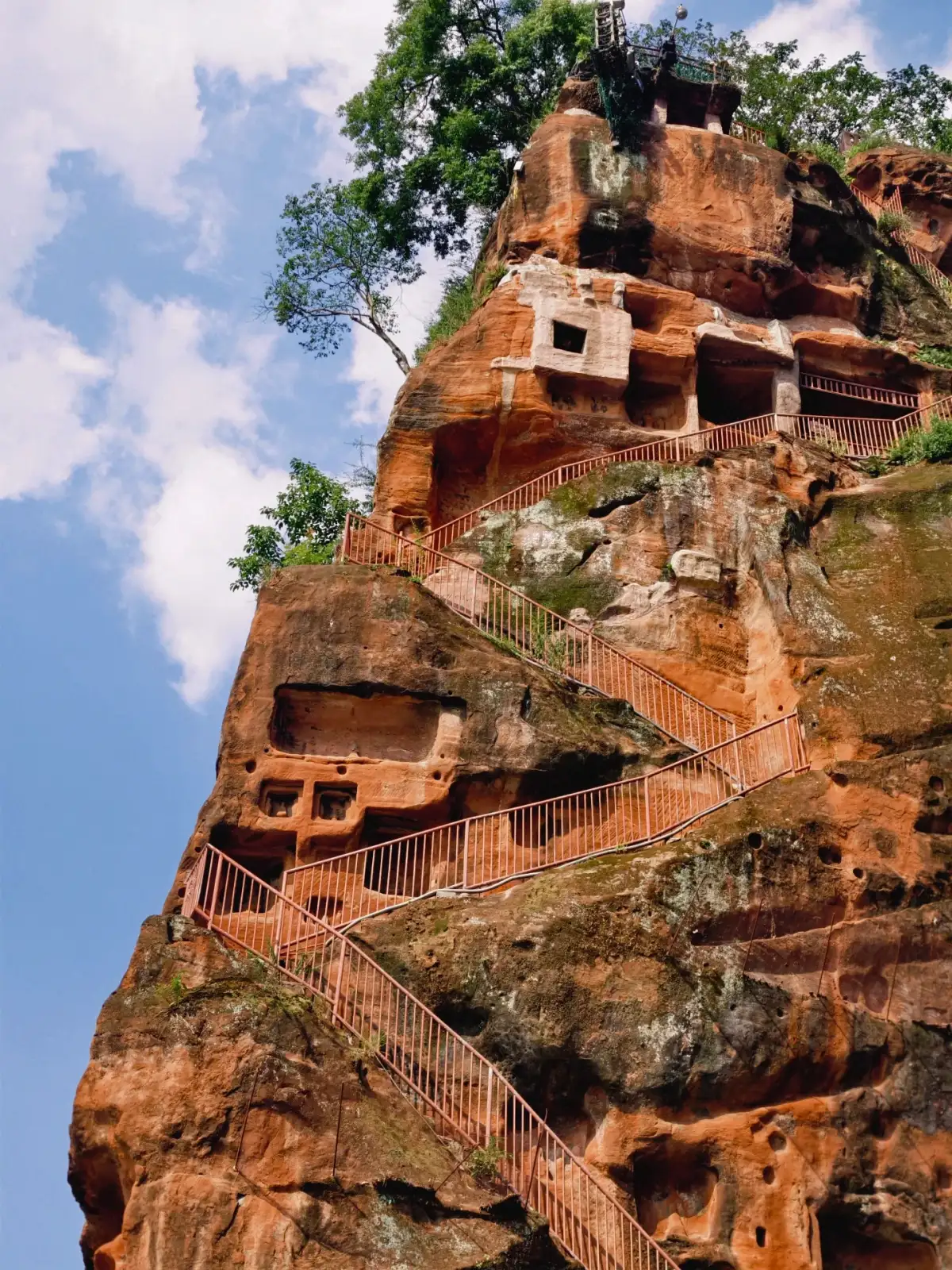
The winding staircase path along the red cliff face next to the Leshan Giant Buddha.
When departing from Chengdu, plan your final leg of transportation carefully.
The train is a viable transportation option between Chengdu and Leshan, but once you arrive at Leshan Station, you’ll still need to complete the final leg of your journey to the scenic area or boarding point. When selecting a train schedule, factor in the time needed to exit the station, board the train, check luggage, and any potential waiting in line; do not assume the train’s travel time equals the total door-to-door journey. If arranging a vehicle, provide the driver with the exact Chinese name of the entrance and the pickup location; for the cruise, be sure to agree in advance on a meeting point after the tour concludes.
First-time visitors should plan for a full day, centering their visit around one primary viewing method and incorporating a full meal or a short stroll through the neighborhood. Those wishing to examine the temples and exhibitions in detail should skip other city attractions. In summer, be mindful of high temperatures, rainfall, and changes during the flood season; in winter, the river and mountains may feel damp and chilly. Regardless of the season, check the daily announcements beforehand. At the end of the day, try to connect the details of the stone carvings you’ve observed with the mountain as a whole, and reflect on how the silhouette seen from afar is composed of these specific materials up close. Admission prices, open routes, and boat schedules are subject to change; please review announcements from the scenic area and operators before making reservations. As you leave, reflect on the relationships between faces, hands, cliff faces, and the river’s flow—and the Great Buddha will transform from a mere name into a place you’ve truly come to understand, at least in part.
Further Reading and References
Compiled and organized by the Eastbound Travel Editorial Department based on publicly available travel notes and listed information, this guide is intended for pre-trip reading and does not constitute a personal account of the experience; opening hours, transportation, reservations, and service arrangements should be verified based on your actual travel dates.
UNESCO: Mount Emei Scenic Area, including the Leshan Giant Buddha Scenic Area
Leshan Giant Buddha Scenic Area Master Plan (2018–2035)
Which choice suits a first visit?
Leshan Giant Buddha boat or walk choices depend on the scale you want to study. Leshan Buddha river views emphasise the full figure's relationship with cliff and current; a Lingyun Mountain walking visit suits closer stonework and temple spaces. The methods answer different questions. Choose one main approach without treating completion of both in a day as the measure of the visit.
Allowing room for waiting and food
For the hillside, check the day's open sections and how your companions manage steps. For a river view, confirm sailings and weather separately. Neither should be assumed available from old photographs. Leave a meal or short city walk in Leshan so transport and waiting have flexibility. If travelling onwards that day, reduce extras and protect rest after viewing.
Planning references
Planning reference: Leshan Giant Buddha boat or walk 1
Planning reference: Leshan Giant Buddha boat or walk 2