Dongxing Travel Editorial Department · Travel Diaries and Pre-Trip Reading
Start by getting your bearings in front of the Jokhang Temple
Barkhor Street forms a neighborhood and a circular route around the Jokhang Temple; understanding this spatial relationship provides a clear starting point for your stroll. On your first visit, you can first observe the temple entrance, the surrounding streets, and the flow of people from an open area where stopping is permitted, and have your host indicate the routes and meeting points accessible that day. Walking clockwise around the temple is linked to local religious practices; visitors should respect this direction while strolling along the street and follow on-site guidance when encountering areas where you must stop, turn, or navigate through crowds. Walking through the neighborhood outside the Jokhang Temple and touring the interior are two distinct experiences. If you plan to enter the temple, you should confirm in advance the opening hours, reservation requirements, necessary documents, and guided tour options—and avoid assuming that simply walking across the square constitutes a tour of all the temple’s halls. For first-time visitors to Lhasa, it’s more comfortable to first explore the immediate surroundings briefly before deciding whether to embark on a longer route. The Barkhor is not a standalone backdrop for photography; religious activities, commerce, residential life, and urban traffic all take place here. As you orient yourself, you are also coming to understand the kind of everyday space you are about to enter.
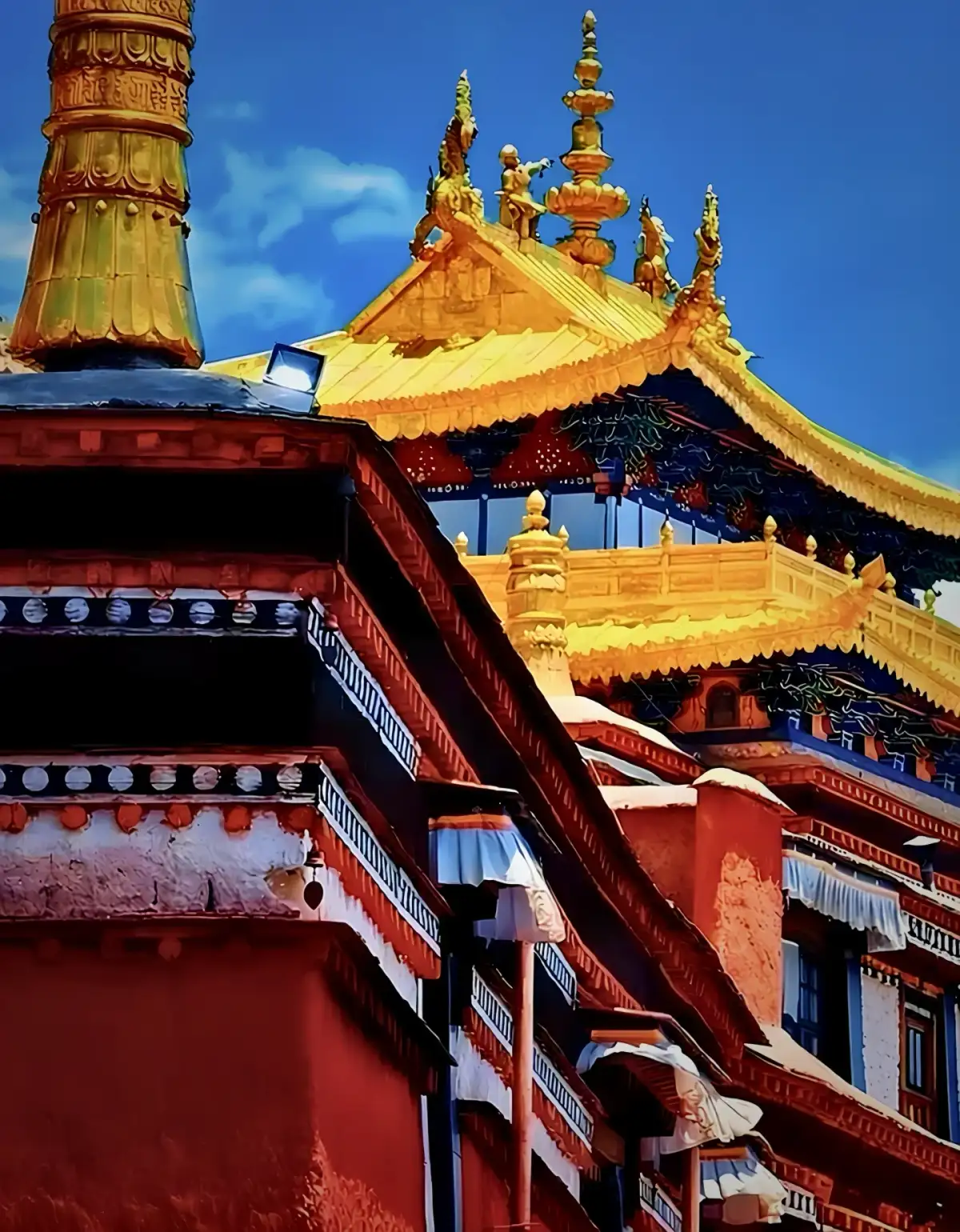
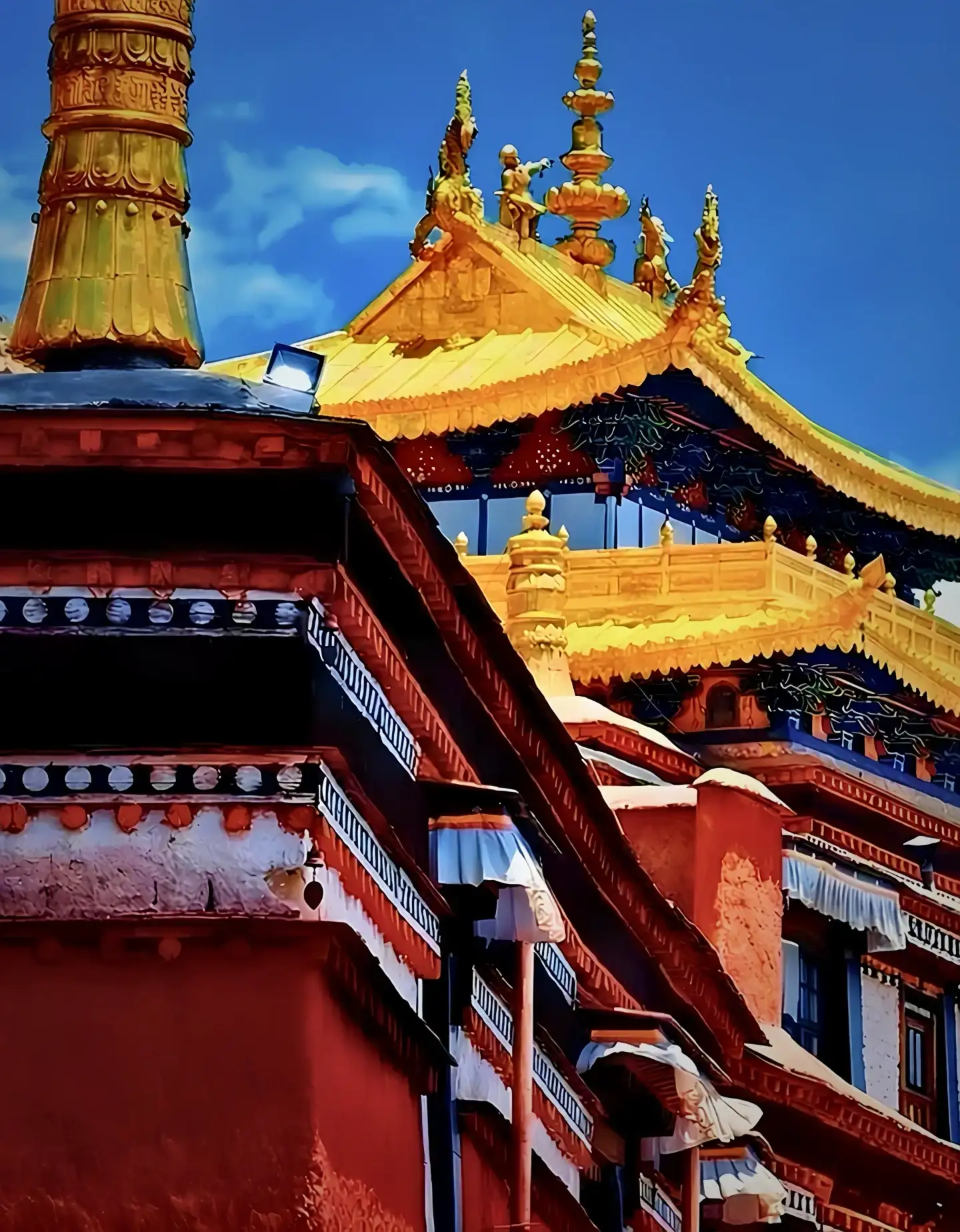
The exterior of the Jokhang Temple in Lhasa, featuring golden roof ornaments, red wooden structures, and white walls.
A walk around the circuit connects the eaves and streets section by section
As you move slowly along the circuit, you can divide your observation into several segments: first, examine the facades adjacent to the Jokhang Temple; then, notice how the street narrows at the turns; and finally, observe the way the shops are lined up in succession. Eaves, window frames, door awnings, and wall colors make up the details, revealing different layers under varying light conditions. The red wooden structures, painted window frames, and yellow exterior walls provide clear focal points. The dark window frames contrast with the light-colored walls, while the awnings beneath the eaves add another layer of definition to the facade; these ordinary details are worth pausing to examine individually. When you reach the entrance to a side alley, first determine whether it’s open to the public, then walk a short distance back to the main street; there’s no need to overlook what’s along the way just to complete a full loop, nor is it necessary to walk all the way to the end of every side street. Street corners are ideal for observing how a single facade relates to two streets; when taking photos, stand off the path and wait for a suitable opening. Using this segmented approach, a walk around the block transforms from an abstract place name into a continuous sequence of architectural and living spaces, allowing you to recall exactly what you saw along each section later on.
The temple’s roof—even its imagery carries its own meaning.
When observing the exterior of the Jokhang Temple from designated public viewing areas, focus on the interplay between the golden roof, the red-and-white walls, the dark window frames, and the painted wooden structures. The roof decorations are related to the building’s religious function and require context from explanations and reliable commentary to be fully understood; for unfamiliar motifs, note their names first, and avoid arbitrarily labeling all decorations as specific auspicious symbols. From a distance, the building’s silhouette blends into the skyline, while up close, the colors and details of the wooden structures become more apparent—these two perspectives complement each other. The exterior roof decorations and corner details can serve as an introduction before entering the temple for a tour; even if the itinerary consists solely of a walking tour of the neighborhood, a meaningful viewing experience can be achieved through explanations of the building’s exterior, spatial orientation, and history. If a visit inside the temple is arranged, visitors should adhere to on-site guidelines regarding photography, movement paths, and noise levels, and the tour guide should gradually unfold the relationships between the architecture, faith, and history. Religious practices remain vibrant in the area surrounding the Jokhang Temple; by leaving clear pathways for those currently using the space while viewing the building, cultural visits can naturally blend into the on-site experience. For visitors unfamiliar with Tibetan Buddhism, understanding the significance of one or two specific elements is more helpful than memorizing a large number of names in a short time, and it also makes it easier to build on this understanding during subsequent museum visits.
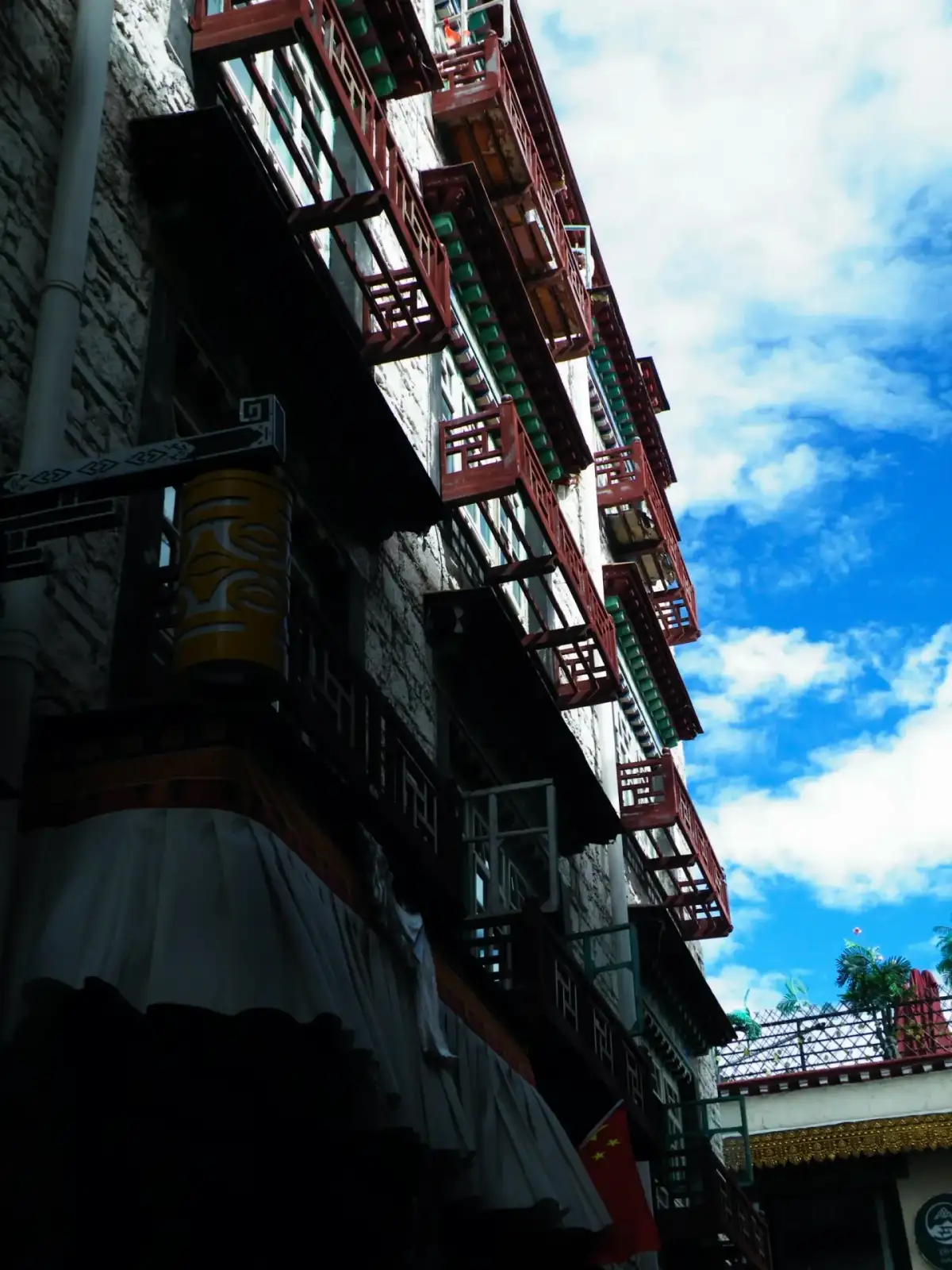
Painted wooden windows and eaves on buildings surrounding the Jokhang Temple and Barkhor Street.
Shops and merchandise bring the tradition of trade to life through tangible objects
Barkhor Street is not only associated with the religious circuit but has also long served as a hub for trade and exchange. The goods lining the street bring this connection to life: fabrics, daily necessities, handicrafts, and religious items are all displayed at shop entrances, with their colors, packaging, and display heights all worthy of observation. Rows of containers, grain products, and displays of paintings demonstrate how a single shop can simultaneously accommodate daily necessities and diverse cultural needs. It is more rewarding to first identify the materials and uses, then inquire about the craftsmanship and origin, rather than judging goods solely by their colors. When considering a purchase, ask about the materials, dimensions, manufacturing methods, and handling requirements, and have the shopkeeper explain the specific item; Handcrafted, machine-produced, and printed items differ significantly; one should not assume an item is a traditional original based solely on its design. Religious paintings such as thangkas, in particular, require an understanding of both subject matter and craftsmanship; viewing the finished product is not the same as witnessing the painting process firsthand, nor should a shop’s listed price be taken as the standard market rate. Even if you have no intention of shopping, you can gain insight into how tourist needs and local life intersect by observing the shop’s offerings. Obtain permission before photographing merchandise or store displays, and give customers and shop owners space while you’re there. This way, even a casual browse can become a considerate cultural exchange.
Historic courtyards and old street names add a detour to the loop
While strolling around the Barkhor, you can combine Lhasa’s official guides with local commentary to choose a historic building or old street name as a side trip. Exhibits related to the Qing government’s Resident Minister’s Office in Tibet, as well as spaces like Chongsaikang, can help you understand the city’s history and commercial exchanges. However, whether specific interiors are open to the public must be confirmed based on the day’s arrangements; not all historic buildings should be treated as museums that are always accessible. Even without entering, understanding a building’s past function and its connection to the surrounding streets helps reveal aspects of the city beyond its religious center. It’s recommended to explore one theme at a time—such as the origins of traded goods or how a particular courtyard contributed to local governance—and then link it to the shops and streets you’ve already passed. Official reports from Lhasa in 2026 discussed neighborhood life through ancient place names: Chongsaikang is associated with markets and shopping, while around Zetangkansa, one can observe clothing businesses linked to trade with Shannan. The origins of these names are documented in historical records as well as passed down through oral tradition. By distinguishing between the two during the guided tour, you’ll see how migration, trade, and local memories are woven into the street names. Leaving some space for what you haven’t yet explored provides a direction for continuing to understand Lhasa on your next visit; when reviewing the map, you can mark the street segments you’ve walked along alongside the place names you’ve just learned.
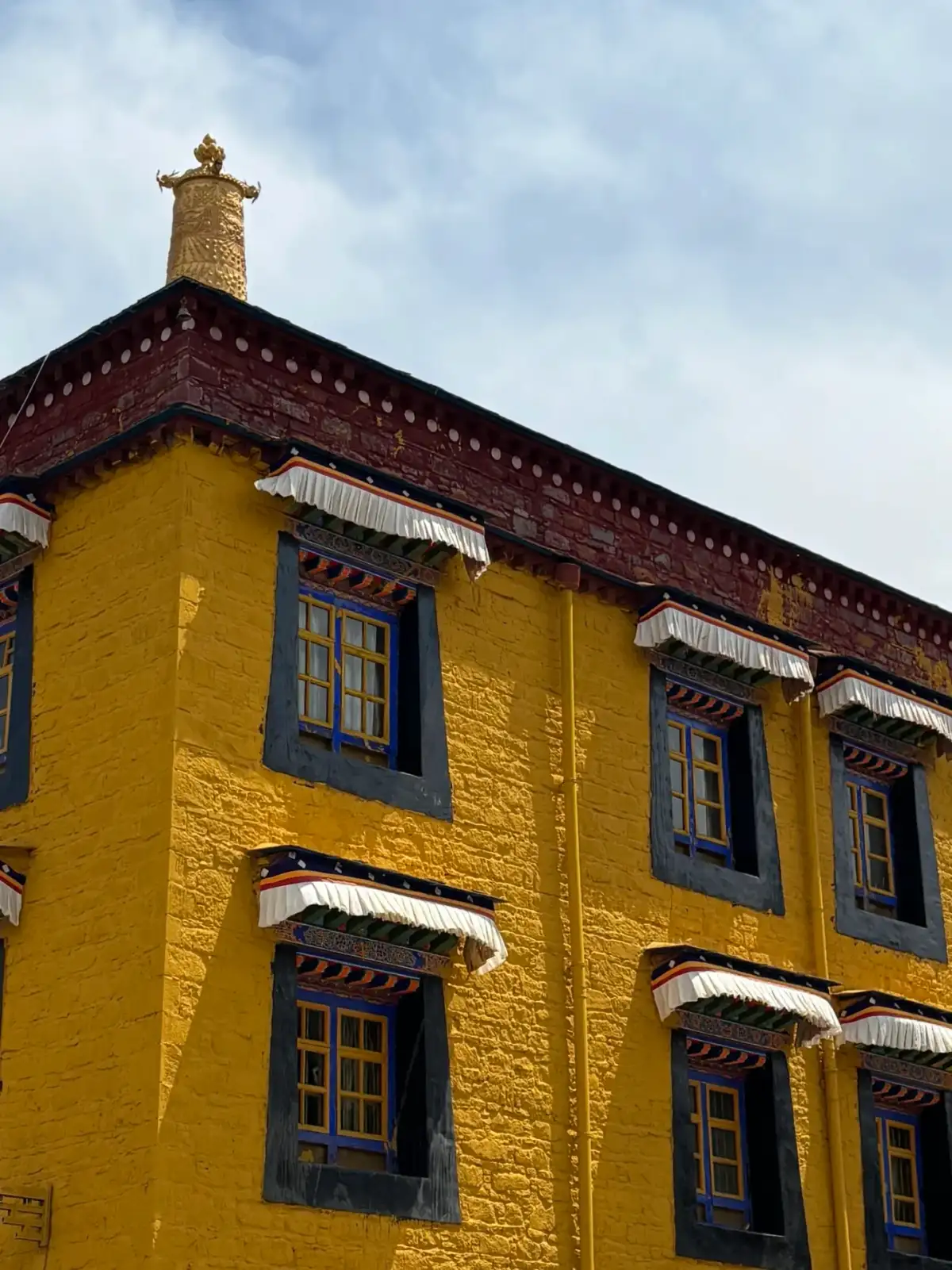
Painted window frames and awnings on the yellow exterior walls surrounding Barkhor Street.
Tea, meals, and rest are also ways to get to know the city.
The teahouses and restaurants around Barkhor offer a chance to sit down for a while. Choose establishments that are openly operating and welcoming to guests; first familiarize yourself with the seating arrangements, ordering process, and menu items before deciding whether to stay. Sweet tea, butter tea, and other local beverages and dishes each have their own ingredients and flavors. If you’re unfamiliar with them, ask for recommendations and try small portions first. Since dairy products, flour, and other ingredients may conflict with personal dietary restrictions, don’t make assumptions based solely on their Chinese names. Schedule tea breaks between walking segments; this allows your companions to rest and makes it easier to reflect on the doors, windows, merchandise, and place names you’ve just seen. Guests in teahouses are engaged in their own conversations and daily lives; do not assume you can take close-up photos simply because the space has local character. If you wish to document the surroundings, ask the shop owner for permission first and focus on tabletops, architecture, and furnishings. Once seated, take a moment to organize the place names you’ve just heard, confirm the next detour and meeting time, and share your observations with your companions; such stops ensure that the walk doesn’t have to constantly follow the markers on the screen. Cultural understanding often begins with specific details—a menu, the ingredients of a particular tea, or a street name can all serve as clues to prompt further inquiry.
Take care of your entry arrangements for Tibet first, then set aside a generous amount of time for your first day.
For Lhasa itineraries intended for international tourists, a qualified travel agency should verify and handle the applicable entry procedures for Tibet prior to departure. Requirements for different types of travel documents—such as foreign passports and Taiwan resident documents—must be confirmed separately; being able to enter mainland China or meeting certain visa-exemption conditions does not automatically mean that approval to enter Tibet has been granted. Official documentation includes the Tibet Entry Approval Letter and the Confirmation Letter for Foreign Group Travel to Tibet. Specific requirements regarding documents, nationality, hosting arrangements, and approved itineraries must be fulfilled by the host organization in accordance with the current regulations of the competent authorities. Allowing sufficient time for processing and finalizing transportation, accommodation, and hosting arrangements only after receiving explicit confirmation ensures a smooth transition between entering China and traveling to Tibet. Upon arrival in Lhasa, it will still take time to reach your accommodation, check in, and rest. Acclimatization to high altitudes varies from person to person; even if you are physically fit or have traveled to high-altitude regions before, this does not guarantee you will not experience discomfort. On the first day, plan a short introductory tour of the Barkhor; save the full walking tour for when your physical condition permits. If you have pre-existing health conditions or experience persistent discomfort, seek professional medical advice promptly. By carefully arranging the necessary procedures and ensuring you are in good physical condition before departure, you will be able to devote more attention to the culture and the neighborhood itself once you arrive.
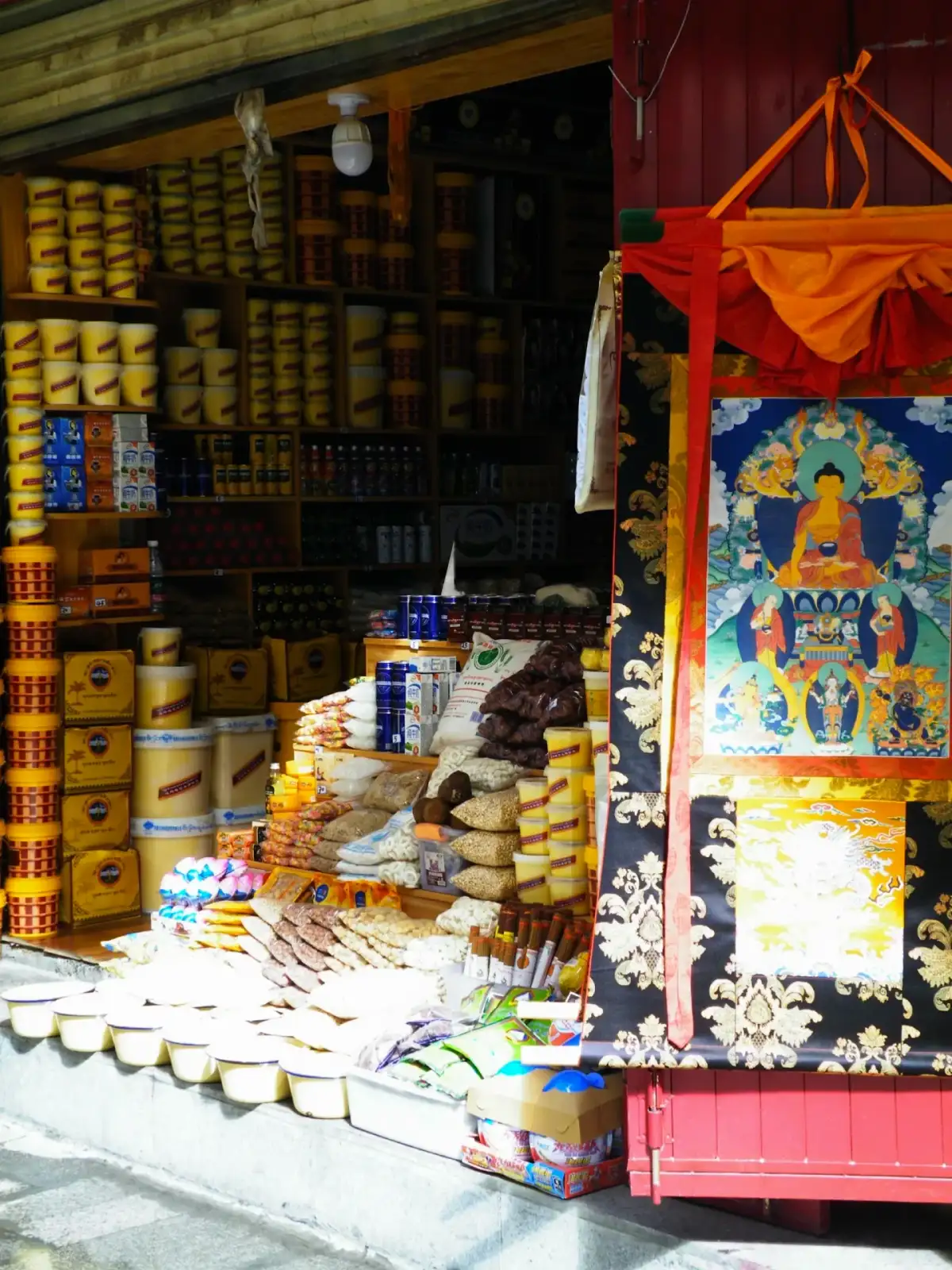
Displays of containers, goods, and art-related merchandise in shops along Barkhor Street.
Conclude this circuit amidst authentic daily life
A stroll around Barkhor can capture the colors of the eaves, street corners, materials on shop shelves, and historical names—and it can also leave you with a deeper understanding of the relationship between religious pilgrimage and urban life. Respecting the local context doesn’t require turning your trip into a long list of prohibitions; practical actions can be simple: walk in the appropriate direction, stop only where permitted, ask for permission before photographing people or store interiors, and avoid close-up shots of people’s faces or individual subjects. Let architecture and merchandise be the main subjects of your photos—this alone can fully document your stroll: rooftops define the center of a space, window frames and walls connect to the street, and goods make the themes of trade and daily life visible. When light, weather, or access conditions change, you can shorten your route, saving the historical explanations and tea house breaks for another day, and returning to explore another section later. When organizing your photos, label them with verifiable names; keep simple captions for ordinary street-level buildings—there’s no need to exaggerate the cultural richness. Finally, return to the prearranged meeting point and continue to the next segment according to the confirmed itinerary. This half-day itinerary doesn’t aim to cover all of Lhasa, but it transforms the area around the Jokhang Temple from a mere famous landmark into a recognizable, understandable neighborhood where people still live their lives with purpose.
Further Reading and References
Compiled and organized by the Dongxing Travel Editorial Department based on publicly available travel journals and listed information. Intended as pre-trip reading material; this is not a personal account of firsthand experience. Please verify opening hours, transportation, reservations, and service arrangements according to your actual travel dates.
Lhasa Municipal Government: The History of Barkhor Street’s Circular Route and Commerce
Lhasa Municipal Government: 2026 Barkhor Street—Historical Place Names and the History of Daily Life
Lhasa Municipal Government: 2026 Chongsaikang Street Historic Building Restoration Project
Does circling Barkhor mean you visited the temple?
A Barkhor Street walk and entry inside the temple are separate arrangements. Barkhor clockwise walking follows the relationship between the temple and public streets while respecting actual on-site directions. Jokhang exterior observation can begin with entrances, eaves and the flow of people. If you intend to go inside, confirm access and visiting requirements separately; crossing the square does not amount to seeing every hall.
Observing religious activity without disrupting it
From permitted stopping places, see how worship and street life coexist. Keep passages clear, avoid pursuing people walking or praying, and obtain consent before photographing individuals. Shops and residential spaces have boundaries; an open door does not invite entry. On first arrival in Lhasa, keep the walk short according to your condition and leave the full route for when you feel able. Understanding need not involve every lane.
Planning references
Planning reference: Barkhor Street walk 1
Planning reference: Barkhor Street walk 2
Planning reference: Barkhor Street walk 3
Planning reference: Barkhor Street walk 4
Planning reference: Barkhor Street walk 5