Eastbound Travel Editorial Department · Travel Diaries and Pre-Trip Reading
Let’s put Baisha back on the map of Lijiang
Baisha is located north of Lijiang City, along the route toward the Yulong Snow Mountain. It’s ideal for a half-day with a clear theme during your Lijiang itinerary: first, explore the town’s streets and traditional residences; then, immerse yourself in the context of its mural culture; and finally, admire the mountain views from the town’s outskirts. Whether you’re departing from Lijiang Old Town, Shuhe, or a downtown accommodation, you should first identify a place to park and a pedestrian entrance, leaving your large luggage at your lodging. Once you enter the neighborhood, wooden doors, tiled eaves, and courtyard walls coexist with modern store signs, while cafes and retail shops have become part of the daily landscape here. Start by getting your bearings on the main street, then choose a side alley open to pedestrians for a round trip—avoid planning your entire route based on a single online photo taken from a specific vantage point. Although Baisha is not far from other neighborhoods in Lijiang, its unique character requires time to appreciate on-site; rather than rushing through three ancient towns in a single day, it’s better to dedicate a full afternoon to just one of them. Local transportation and attraction opening schedules are subject to change. Before departure, please have your host arrange pick-up and drop-off based on the actual address, and do not assume that a short straight line on a map equates to a confirmed driving route.
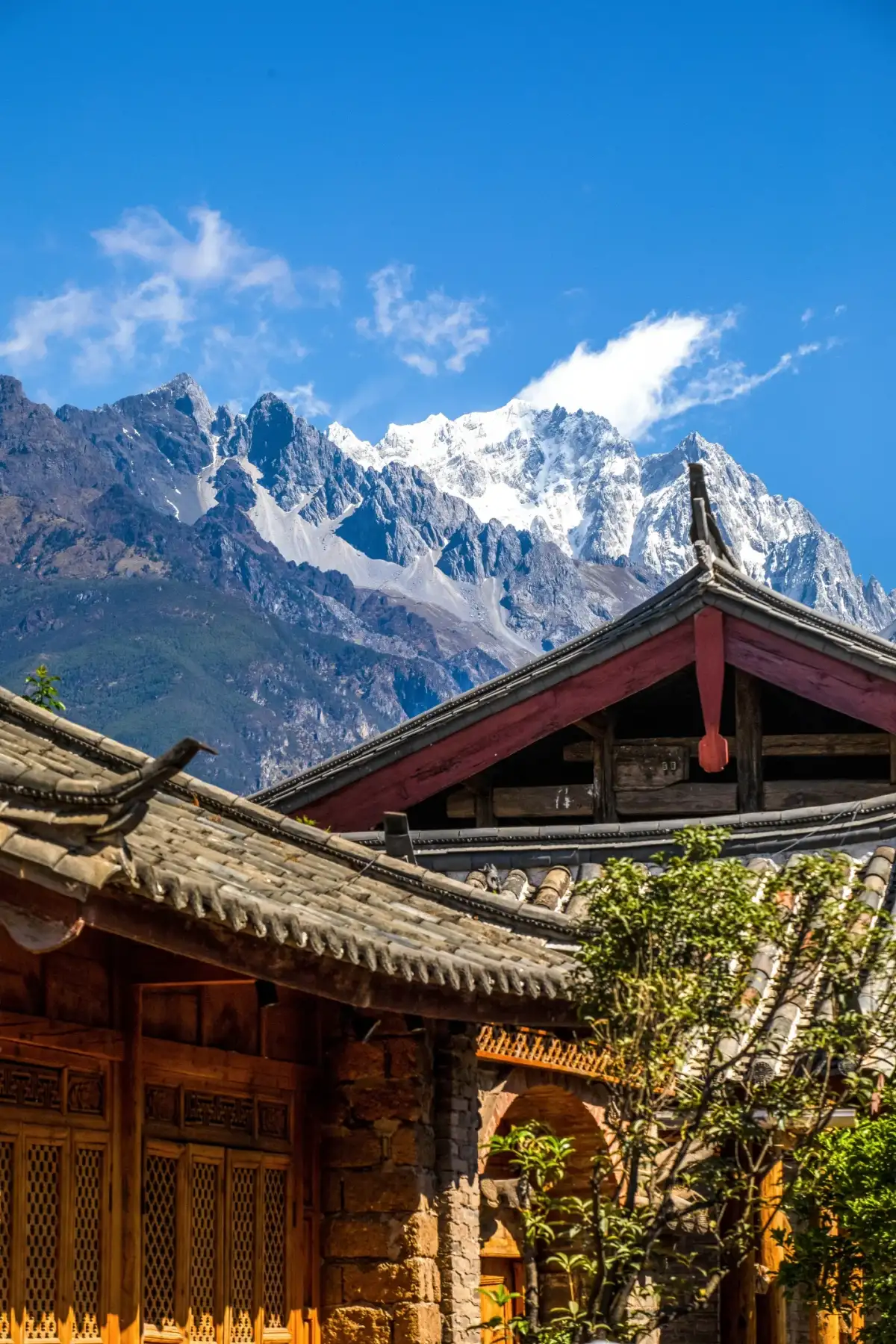
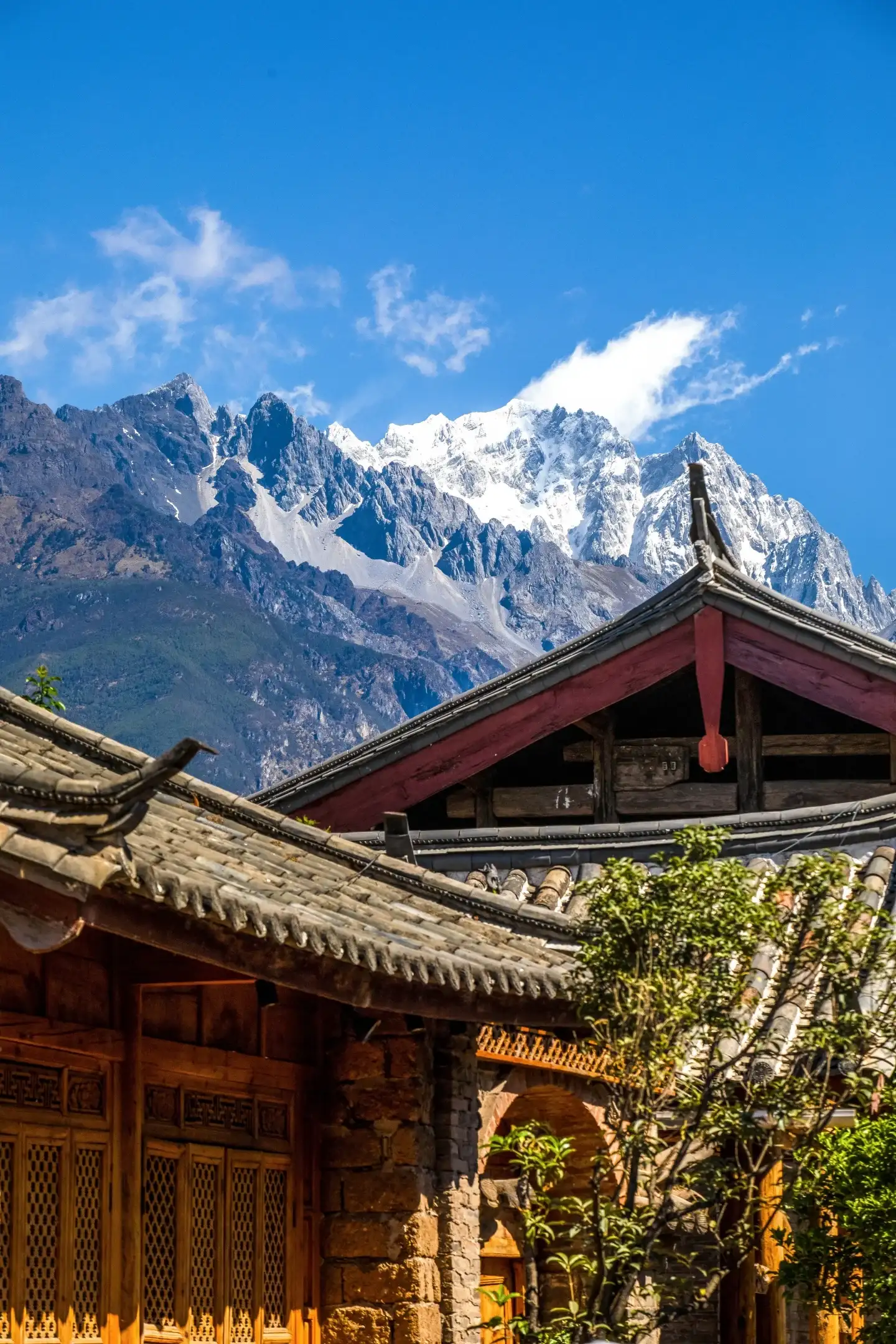
Wooden townhouses in Baisha Ancient Town with the Yulong Snow Mountain in the distance. the streets Wooden townhouses in Baisha Ancient Town with the Yulong Snow Mountain in the distance.
The snow-capped mountain lies at the end of the street, and also beyond the clouds
The most distinctive geographical landmark in Baisha is the Yulong Snow Mountain, which peeks out above the rooftops when the weather permits. When looking north, the relationship between the mountain and the street houses changes depending on your vantage point: nearby tiled eaves may obscure the base of the mountain, while wider roads reveal more of the skyline. The peaks in photos are often compressed by a telephoto lens, so the proportions seen on-site may differ; clouds and mist may also keep the mountain hidden for most of the day. You can start by stopping at a safe spot along the roadside, waiting for traffic to pass before framing your shot—there’s no need to stand in the middle of the road just to get the same angle as others. The light in the early morning or late afternoon lends different layers of depth to the wooden structures and white walls, and winter, spring, and the rainy season each bring their own weather variations—though no single season guarantees clear skies all day long. Set aside some time to visit covered shops or indoor exhibitions; even if the mountains are obscured by clouds, your trip will still be worthwhile. Viewing the mountains from the Baisha neighborhood is not a substitute for visiting the snow-capped mountain scenic areas; if you wish to go up the mountain, transportation, reservations, altitude, and available time must be arranged separately—you cannot spontaneously add a full mountain itinerary just because you can see the peaks from town.
Mural art isn’t a photo you can snap and take with you in a hurry
The value of Baisha’s murals lies in the concrete imagery left behind by the long-term convergence of diverse cultures. The well-preserved Ming and Qing dynasty murals are associated with structures such as the Great Treasury of Merit Palace and the Glazed Hall, where Han, Tibetan, and Naxi artistic and religious traditions intersect within the paintings. Before entering the courtyards, take a moment to review the guide map and descriptions to familiarize yourself with the buildings and their exhibits, then choose a mural to pause and examine its composition. Start by identifying the central figure, the surrounding figures, and the color zones in the painting; this approach yields more insight than simply describing it as “ancient” or “mysterious.” The identities of different figures, the purposes of objects, and traces of restoration should be understood by referring to on-site explanations and guided tours; if you encounter unfamiliar symbols, make a note of their names and look them up later. The colors of ancient paintings may not be as vivid as those in promotional images, and lighting is also restricted by conservation requirements. This more deliberate approach to viewing allows the murals to become the true focus of your visit, rather than merely a backdrop for your travels. Whether photography is permitted, access to specific halls, and the language of the guided tours should all be confirmed upon arrival; in particular, the use of camera flashes near the artwork must never be decided based on personal judgment.
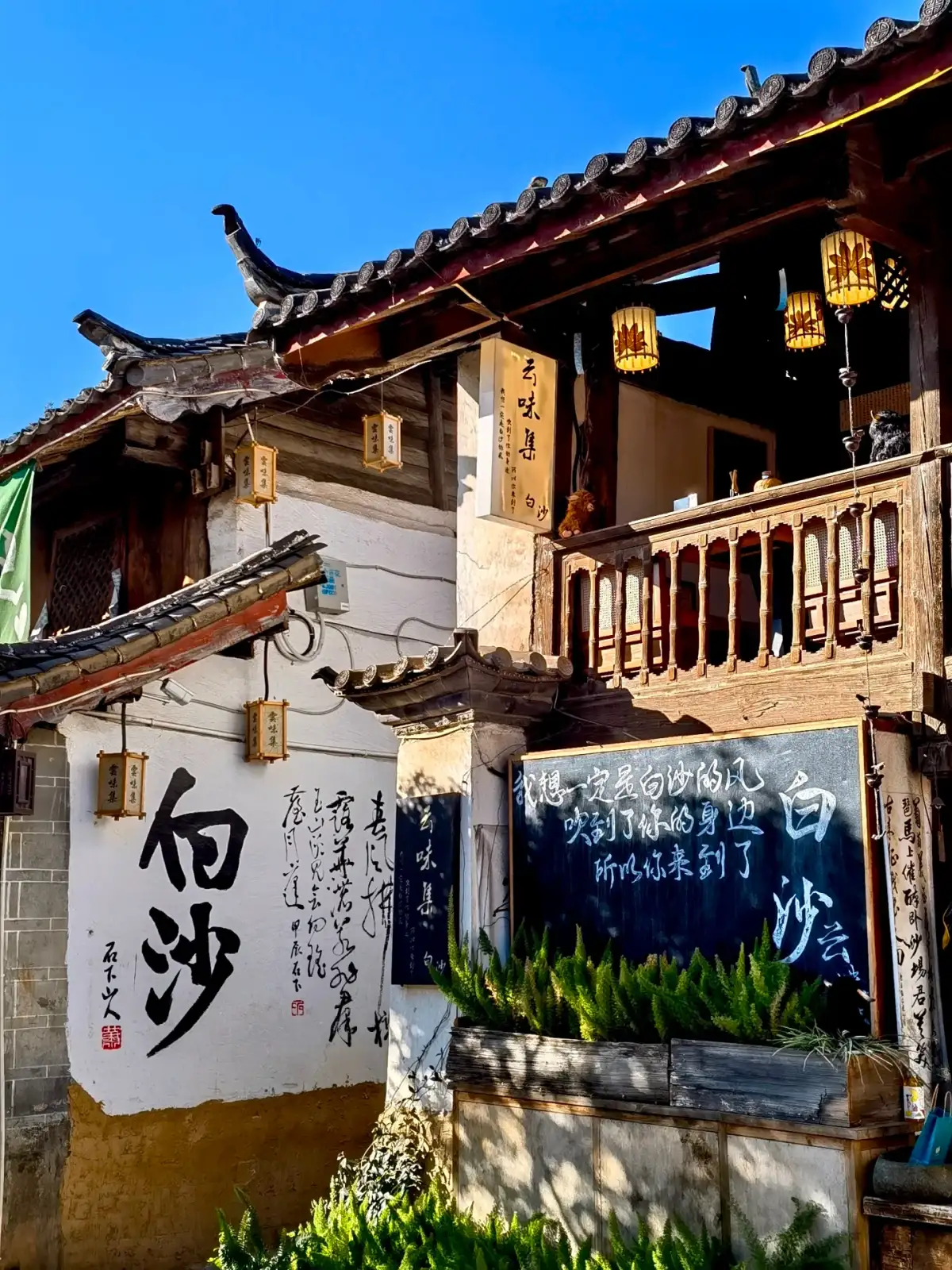
The white walls, wooden balconies, and street-facing shops of Baisha Ancient Town.
Understanding the Scale of the Neighborhood Through Wooden Doors and Courtyards
After finishing the mural tour, return to the streets to observe the wooden windows, door frames, eaves, and courtyard entrances—you’ll gain a deeper understanding than when you first arrived. The roofs and walls protect the living spaces, while the doorways open onto the street and simultaneously mark the boundaries between homes and business premises. Observe how storefronts make use of the existing bay widths, how merchandise is arranged near the doorways, and how signs and sunshades are integrated into the architecture. Wooden balconies, shop facades, and printed goods offer different points of interest; the distinctions between historic dwellings and contemporary renovations can be gradually understood by referring to architectural descriptions, materials, and usage patterns. When you come across woodblock prints, textiles, and other souvenirs, ask the shop owner about the materials, place of origin, and craftsmanship—this is more reliable than making assumptions based on labels like “ethnic” or “handmade” on the packaging. Even if a residential door is open, it does not necessarily mean the space is open to tourists; you must obtain explicit permission before entering a courtyard. Side alleys are sometimes quieter, but they may also be used for deliveries and resident access; as long as you find a spot where you can stand steadily without obstructing others, a few minutes of observation is sufficient—there’s no need to follow every alley all the way to the end to take photos.
A half-day itinerary, making the cultural visit the central part of the journey
A practical itinerary would be: a brief stroll along the main street, visiting courtyards featuring murals, lunch or a rest, viewing the mountain from the town’s edge, and then returning to the prearranged pickup point. Set aside a relatively uninterrupted block of time for the mural section to avoid having it broken up into ten-minute segments by lunch reservations or driver pickups. If the tour itinerary indicates that a specific time slot is more suitable for visiting, you can visit the exhibition first and then walk along the streets; this route does not rely on a fixed order of sightseeing spots. The section for viewing the mountain at the town’s edge should stay within existing public roads; if you encounter fields, courtyard walls, or construction barriers, turn back along open roads—do not cross through cultivated areas in search of a spot directly facing the mountain peak. When traveling in a large group, gather in open areas and enter narrow alleys and shops in small groups to minimize blocking passageways. If you have only an hour left, it’s best to make a clear choice between viewing the murals and strolling through the neighborhood, foregoing extra shopping time; if you have the whole day, allow more time for a midday break and the return trip to the city, or plan an additional walk through Shuhe. Taking the time to fully experience each location will leave a clearer memory than simply checking off more places on your daily list.
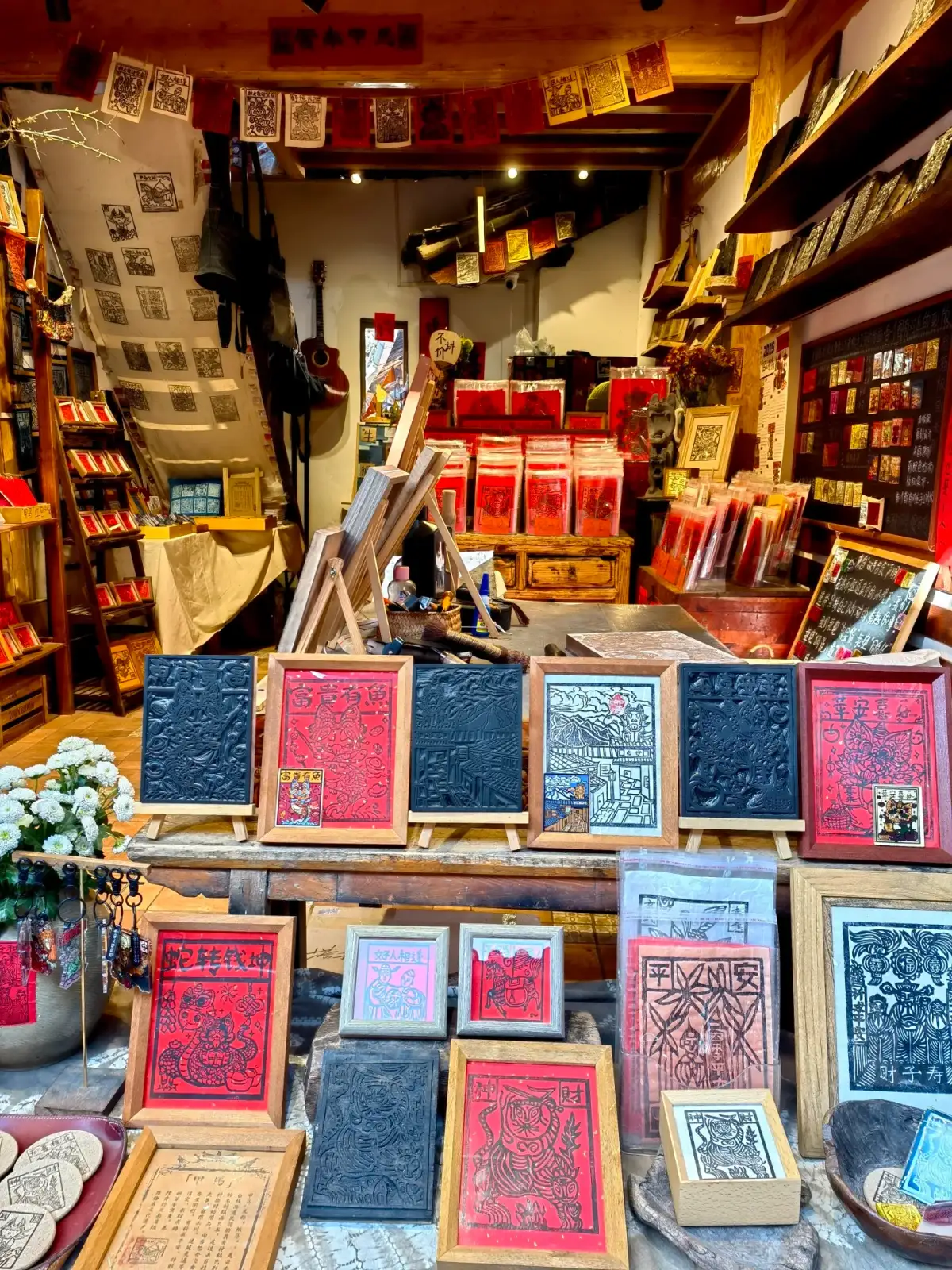
Woodblock prints on display in shops and wooden storefronts in the Baisha district.
Lunch and shops—giving contemporary Baisha some breathing room
The restaurants and cafés in the neighborhood offer a place to rest and provide a glimpse into how the ancient town interacts with today’s visitors. When choosing a meal, start by checking the ingredients and preparation methods on the menu, and ask if the dish contains dairy, nuts, or a significant amount of chili. If international visitors are unfamiliar with Chinese dish names, ask your host to help confirm. Prioritize finding a place to sit down, rest, hydrate, and use the restroom—there’s no need to repeatedly wait in line at narrow street corners just to boost your social media ranking. Shop decor may incorporate local cultural elements or simply feature contemporary design; when making a purchase, consider the product itself, the craftsmanship description, and after-sales information separately. If you encounter a craft demonstration, first confirm whether viewing or photography is permitted before deciding to stay; if there is no live demonstration, do not describe the displayed items as if you witnessed them being made in person. Sitting by the street in the afternoon, watching deliveries, shops opening, shelves being restocked, and tourists coming and going, you can sense the rhythm of life in Baisha. Spending money isn’t a prerequisite for understanding the neighborhood; simply taking the time to carefully observe the architecture and murals offers a rich enough travel experience in this ancient town.
On sunny and rainy days, plan your viewing highlights accordingly
On clear days, spend extra time outdoors observing the interplay between the mountain, rooftops, and trees; on rainy days, focus your energy on cultural exhibitions and covered sections of the streets. Stone surfaces and steps may become slippery when wet, so watch your step when walking and make sure to stand steady before raising your camera to take photos. In winter, the perceived temperature may differ between early morning and evening and when the sun is out; layering your clothing makes it easier to adjust to indoor and outdoor conditions. During the rainy season, carry a lightweight raincoat to avoid letting the success of your trip hinge on those few minutes when the snow-capped mountain is visible. There have been reports in recent years regarding digital exhibitions and conservation efforts at the Baisha Murals; the actual content available at the relevant facilities is subject to the information announced at the time of your visit, and we cannot guarantee that the same experience will be available on every visit. Families with children can start by identifying colors, recognizing roof styles, and locating objects in the murals, and should keep each viewing session as brief as possible; for companions who need to walk less, minimize detours through side alleys and arrange pick-up and drop-off near public entrances where parking is permitted. Adjusting the duration of your stay to accommodate different needs does not necessarily diminish your understanding of Baisha culture.
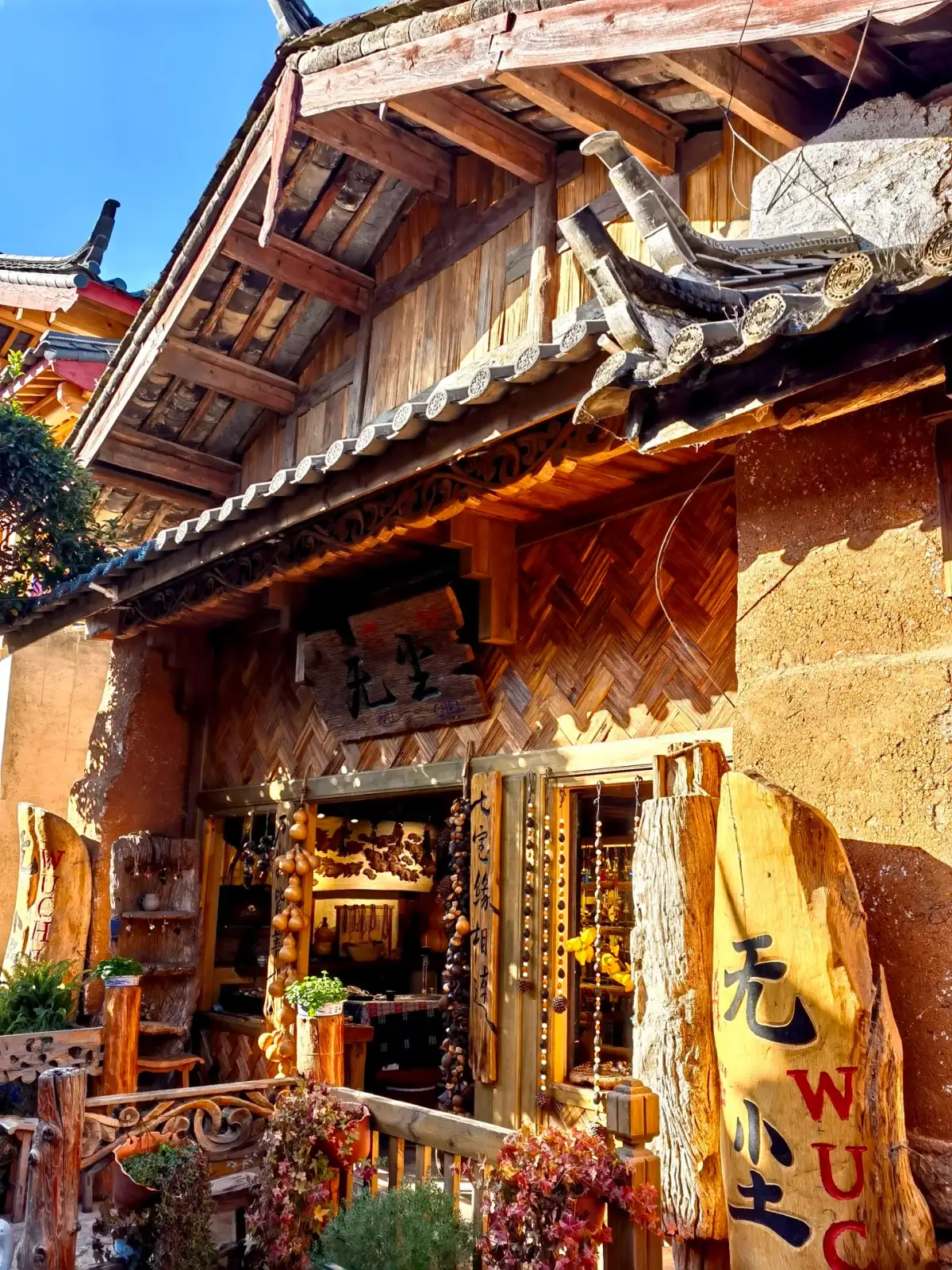
Shops and merchandise displays beneath the eaves of Baisha Ancient Town.
It carries away two kinds of time, not just a label
As you leave Baisha, the snow-capped mountain and the murals represent two different ways of experiencing time. The mountain requires you to be at the mercy of the weather, while the murals demand that you focus on the details; the streets connect the two, while also accommodating the daily businesses and lives of the present. When organizing your travel photos, you can label distant views of the mountains, mid-range shots of architecture, and close-ups of shops separately to document the public spaces you’ve actually visited. Recording your mural visits and street strolls separately will help you recall the details of each space more clearly: in the halls, focus on the images and captions; on the streets, pay attention to the relationship between the architecture, merchandise, and the mountain. If you wish to delve deeper into Naxi culture, combine visits to Lijiang’s museums with reliable guided tours to place place names, figures, architecture, and imagery within a more comprehensive historical context. For first-time visitors to China, Baisha is particularly well-suited for practicing this kind of concrete observation: why are doors and windows arranged in a certain way in a given space? How does a painting incorporate different traditions? How does a tourist district continue to serve the local community? Asking such questions doesn’t require you to be an expert, but it can give your half-day stroll real substance. Finally, return to the pickup point as agreed, leaving plenty of time for the return trip to the city, dinner, or rest—this will make your entire Lijiang itinerary much more relaxed.
Further Reading and Reference Sources
Lijiang · Destination Overview
Compiled and edited by the Dongxing Travel Editorial Department based on publicly available travel notes and listed information. Intended for pre-trip reading; this is not a personal travel account. Opening hours, transportation, reservations, and service arrangements should be verified according to your actual travel dates.
Xinhua News Agency: Preservation of Baisha Murals and Ming and Qing Dynasty Architecture
CCTV: The Culture and Conservation of Baisha Murals
Should the murals or the mountain come first?
For a Baisha village half-day, confirm actual mural visiting content first, then place street walking and mountain viewing around weather. A Baisha murals visit can focus on one interpreted painting: identify central figures, edges and colour areas before asking about the subject. Protected time for culture keeps the visit meaningful when clouds hide the peak, instead of waiting on the street throughout.
Do views from town replace a mountain visit?
Baisha snow-mountain views are a line of sight from the village; visiting the mountain scenic area requires separate transport and arrangements. Photograph from safe public positions without entering fields or standing in traffic to align the peak. With an hour, choose clearly between murals and street walking. With longer, add lunch and a short edge-of-town section, agreeing the pickup point back to Lijiang beforehand.
Planning references
Planning reference: Baisha village half-day 1
Planning reference: Baisha village half-day 2