A window can reveal a view, or it can temporarily keep it from being fully seen. At Suzhou’s Lingering Garden, when you focus your gaze on a lattice window, the garden transforms from a single, complete landscape into a series of gradually unfolding layers. The lines of the window, the boundaries of the walls, and the scenery beyond all contribute to this viewing experience simultaneously. You don’t need to walk through every courtyard first; by understanding a single window, you can begin to grasp how the space is organized.
This article focuses on windows and the act of viewing, drawing on facts from the Suzhou Garden Bureau and local annals. It does not treat literary associations as historical prototypes, nor does it interpret a single unoccupied photograph as representative of typical visitor traffic. The small experiment described below is a suggestion from the editor; viewing positions should still be limited to designated public walkways.
A window is not defined by just one frame
According to the *Suzhou Local Chronicles*, lattice windows feature openwork patterns within the window frame, serving both decorative purposes and controlling the visibility of the scenery. When looking at a window, you can first distinguish between the frame, the patterns, and the background. The frame defines a boundary; the patterns create lines and gaps within that boundary; and the background enters your field of vision through these gaps. The proportions among these three elements determine whether you see the patterns or the garden view first.
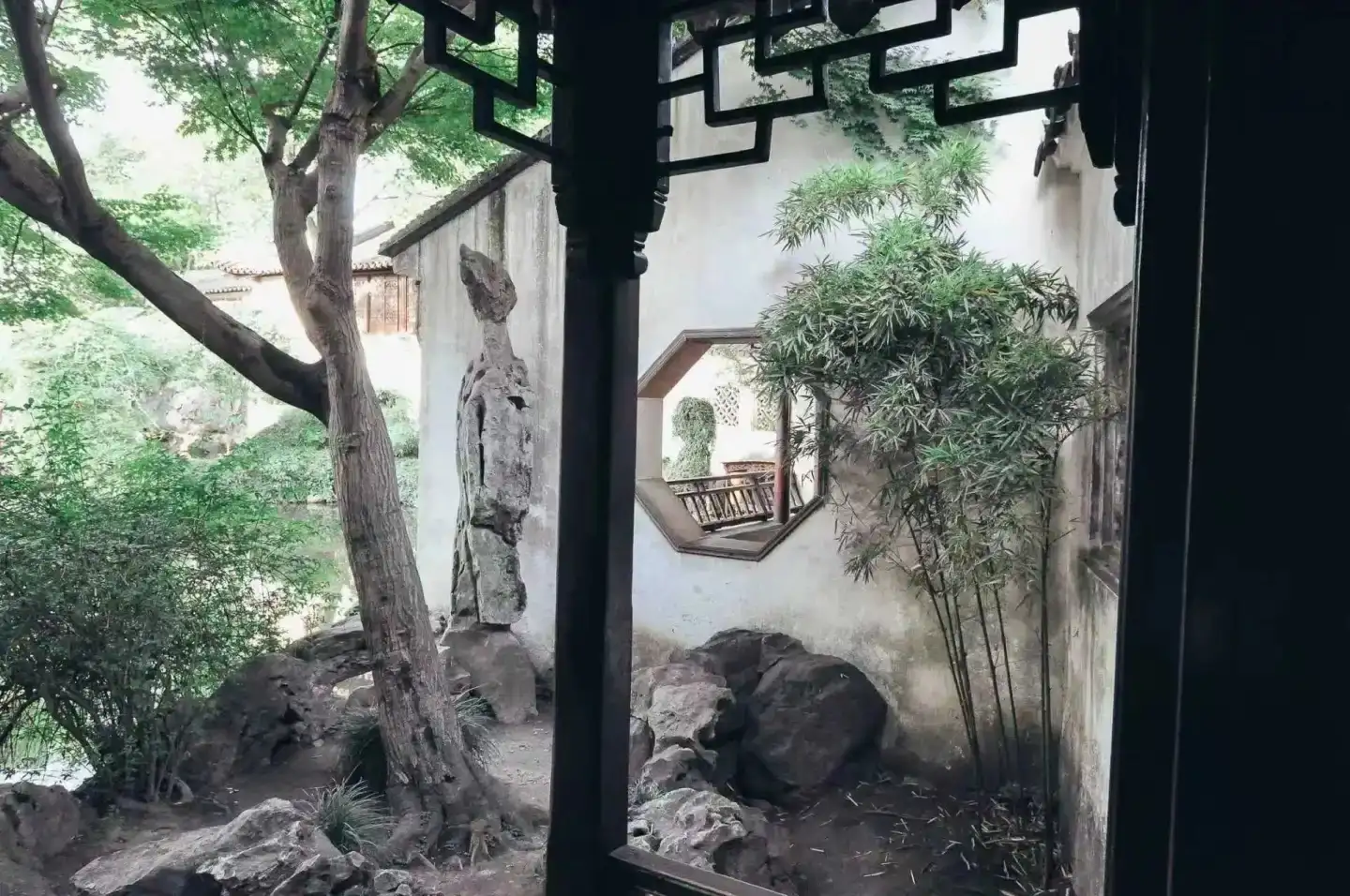
This differs from a completely open aperture. The obstruction in front of the window prevents the background from appearing all at once; the gaze must move from one opening to another. You might first see a patch of bamboo, then spot the rocks and water, and finally realize they all belong to the same scene. The window does not isolate the space, but it does alter the sequence in which the space is perceived—this is precisely the kind of garden concept that lends itself well to on-site observation.
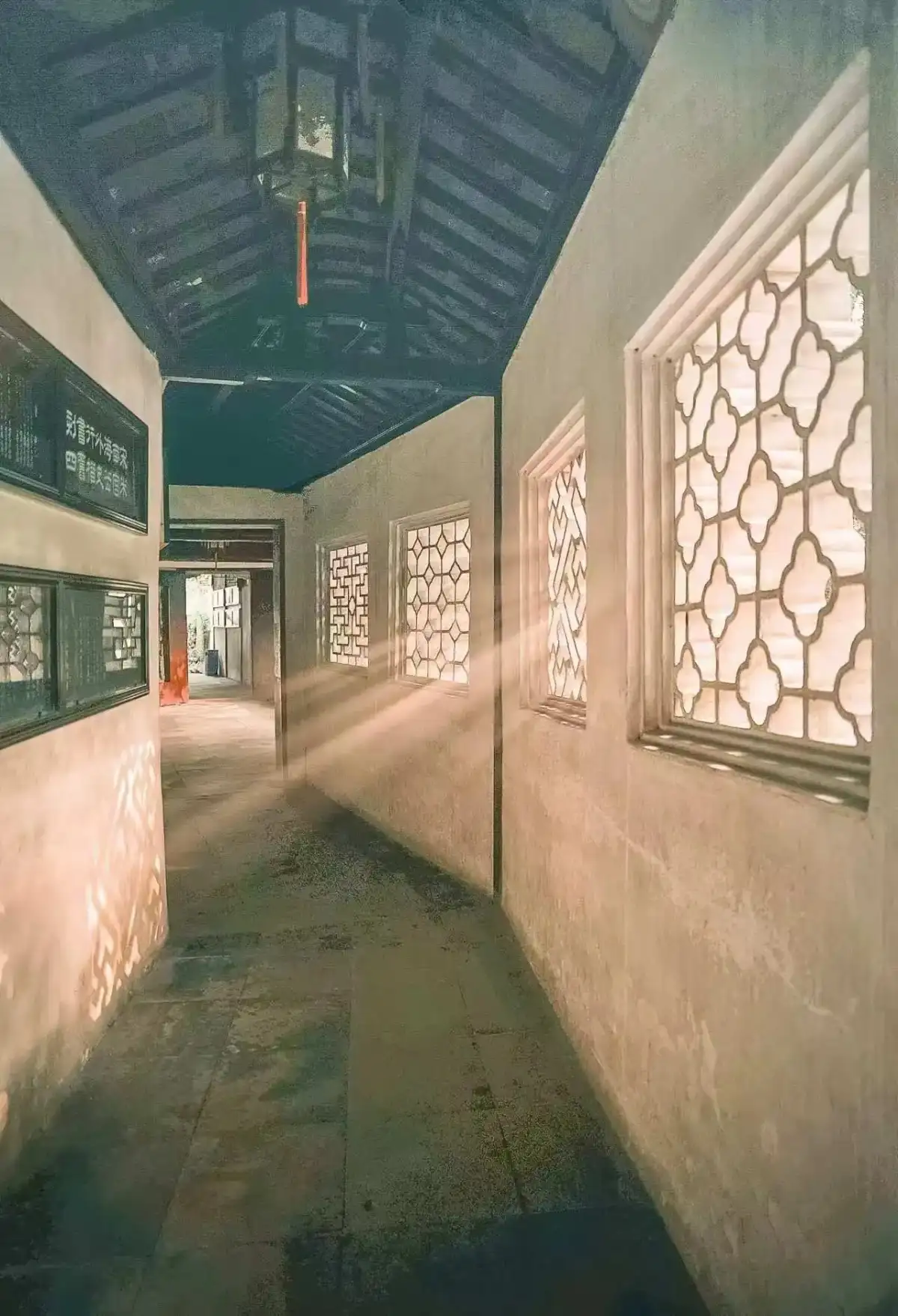
The official guide to the Humble Garden describes how the eastern courtyard complex interconnects through openwork windows, arched doorways, and long corridors. When viewing a window alongside its adjacent passageway, one discovers that the window provides a visual connection, the arched doorway offers a path for passage, and the long corridor allows that connection to unfold further. Though these three elements serve different purposes, they alternate in view as you move through the space. Whether you look first and then walk, or walk through and then look back, each approach creates a distinct experience.
The same window, a comparison of near and far
Start from a slightly greater distance, maintaining the relative positions of the wall and the window within the building. As you approach, the patterns will occupy a larger portion of your field of view, and the background will fragment into smaller segments. Then slightly shift your angle to the side to compare which elements are obscured and which gaps open up. By changing only one factor at a time, it becomes easier to understand whether the changes you observe stem from distance or direction.
This experiment does not require you to get close to the structure or extend your lens outside the window. Simply stop at a spot where you do not obstruct traffic and compare the elements with your eyes. When visitors pass by, you can pause your observation and resume it later; garden spaces are meant for shared use, and observing the subject does not require exclusive access to a single spot. The appearance of people inside the window will also remind you that the background is not a static backdrop, but a space where people still walk today.
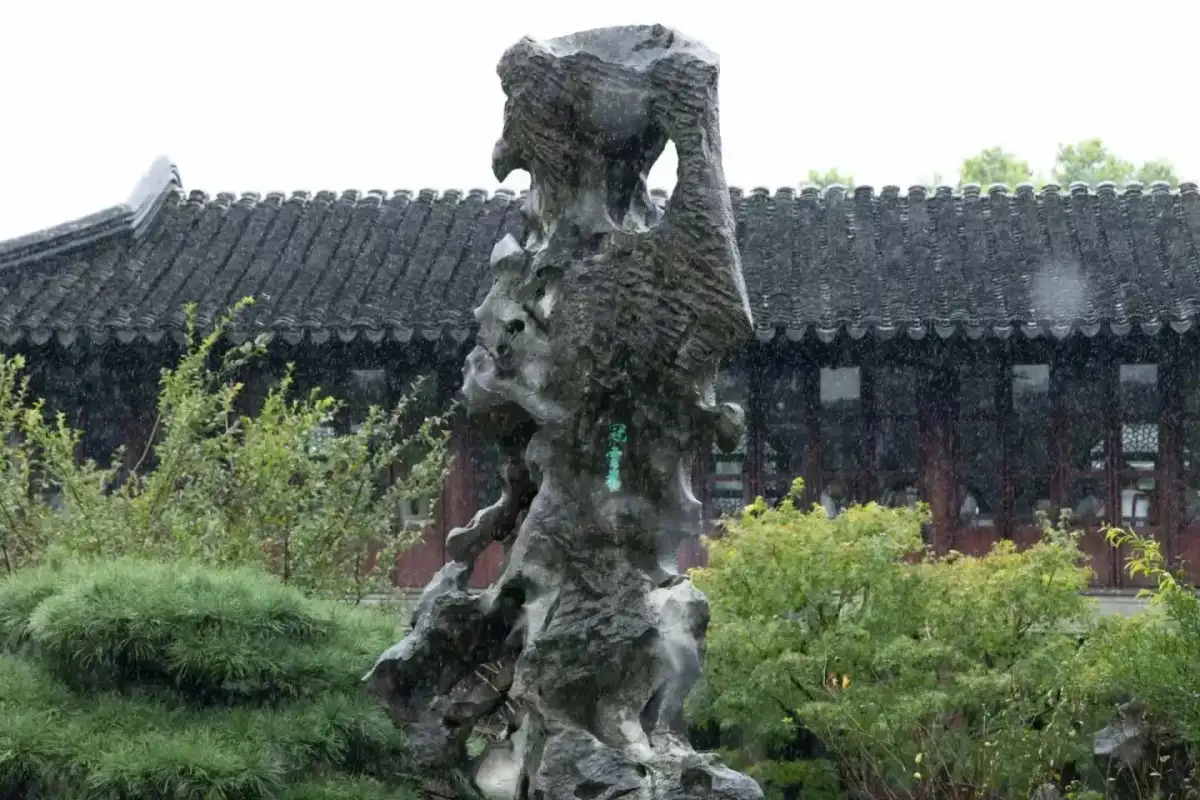
Q: Are lattice windows only suitable for photographers? No. Photography preserves a single moment of choice, but the naked eye is better at perceiving continuous change. If you look only at your phone screen, you might overlook how the scenery changes as you move. Observe first, then frame the shot—capture the single moment of change that best illustrates the relationship—only then does the image become a record of understanding, rather than a substitute for the act of seeing.
The local chronicles mention that the front corridor of Liu Yuan, where ancient trees intertwine, features six lattice windows through which the scenery behind them appears and disappears. If your itinerary takes you past them, you can use them as points of comparison to observe how the patterns and the background interact in each case. You don’t need to memorize all six patterns, nor do you need to expect every window on-site to produce the same effect; identifying two instances with distinctly different relationships will be sufficient to spark a discussion.
photograph the window itself or the scenery behind it.
The two photographs answer different questions. When the window is the subject, the lines and patterns are most important, with the background providing a backdrop; when the scene behind the window is the subject, the patterns in the foreground become the viewing path. Before deciding, ask yourself what you want the viewer to see first—this will determine the focal point, distance, and composition. Retaining every detail does not necessarily result in a more complete image than clearly defining a single focal point.
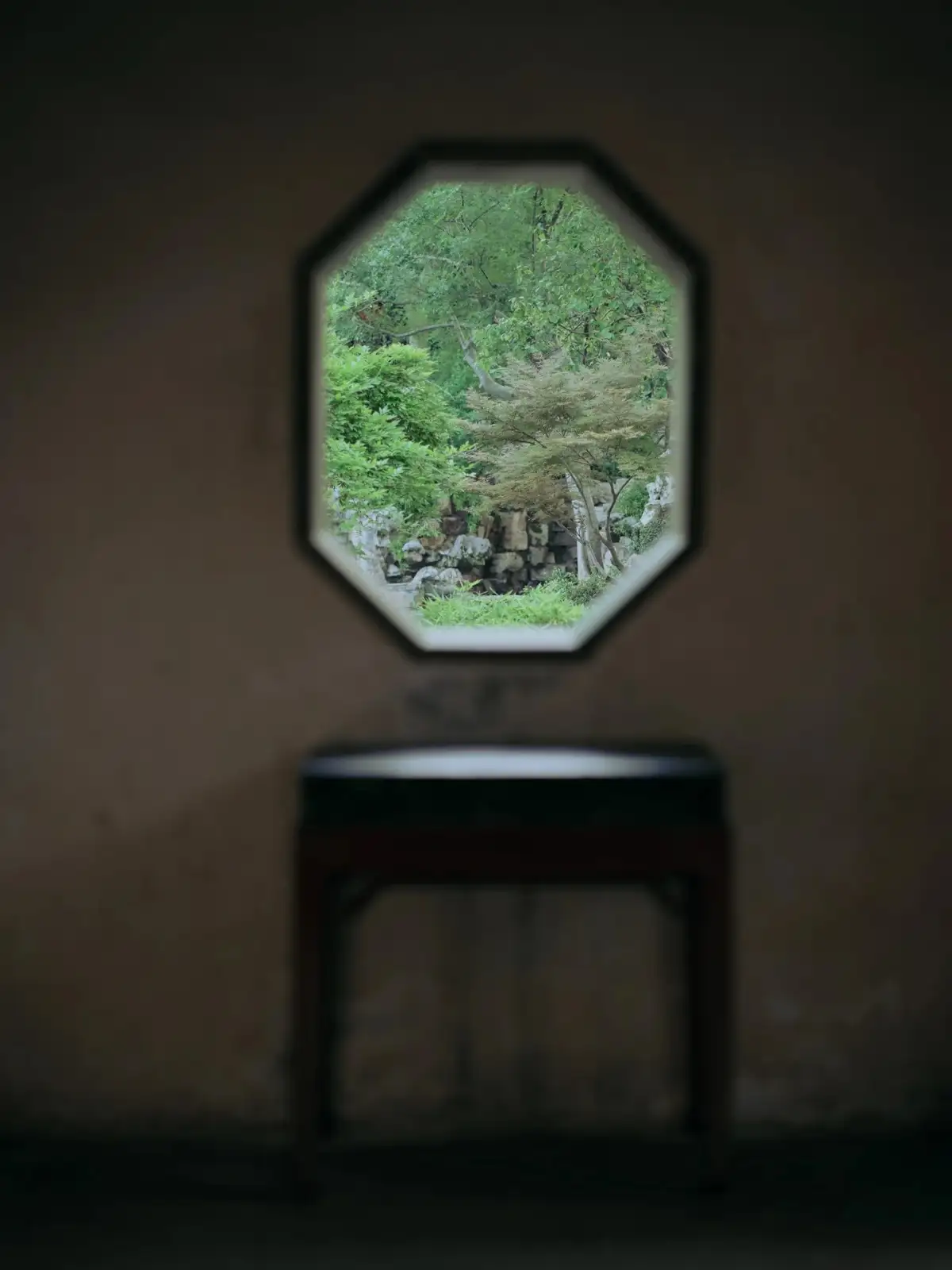
You can create a comparison using two images. The first image illustrates the overall relationship between the wall, the window, and the passageway, while the second selects an angle that makes the background clearer. Write different captions for each the first explains where the window is located, and the second describes what the viewer sees after the line of sight passes through it. This set of images is more narrative than a continuous display of similar front-view window photographs and is also suitable for readers unfamiliar with Chinese gardens.
When both light and shadow appear simultaneously, your phone may process certain parts as too bright or too dark. First, assess the on-site tonal range, then adjust your framing based on the subject you wish to highlight. There’s no need to repeatedly reposition yourself just to capture a photo where every texture is perfectly clear. Preserving some shadows as they appear to the naked eye can also help the image convey that sense of things appearing and disappearing.
Take your child along and use the window as a tool for exploring relationships
Q: What if my child doesn’t recognize traditional patterns? How can they participate? You can start by having them identify the lines inside and outside the window, comparing which ones actually belong to the window and which ones come from the branches in the background. Sometimes these two types of lines visually merge, appearing as a single pattern. Distinguishing between them trains the child to look closely and helps them understand that the shapes in a photograph aren’t necessarily all on the same plane.
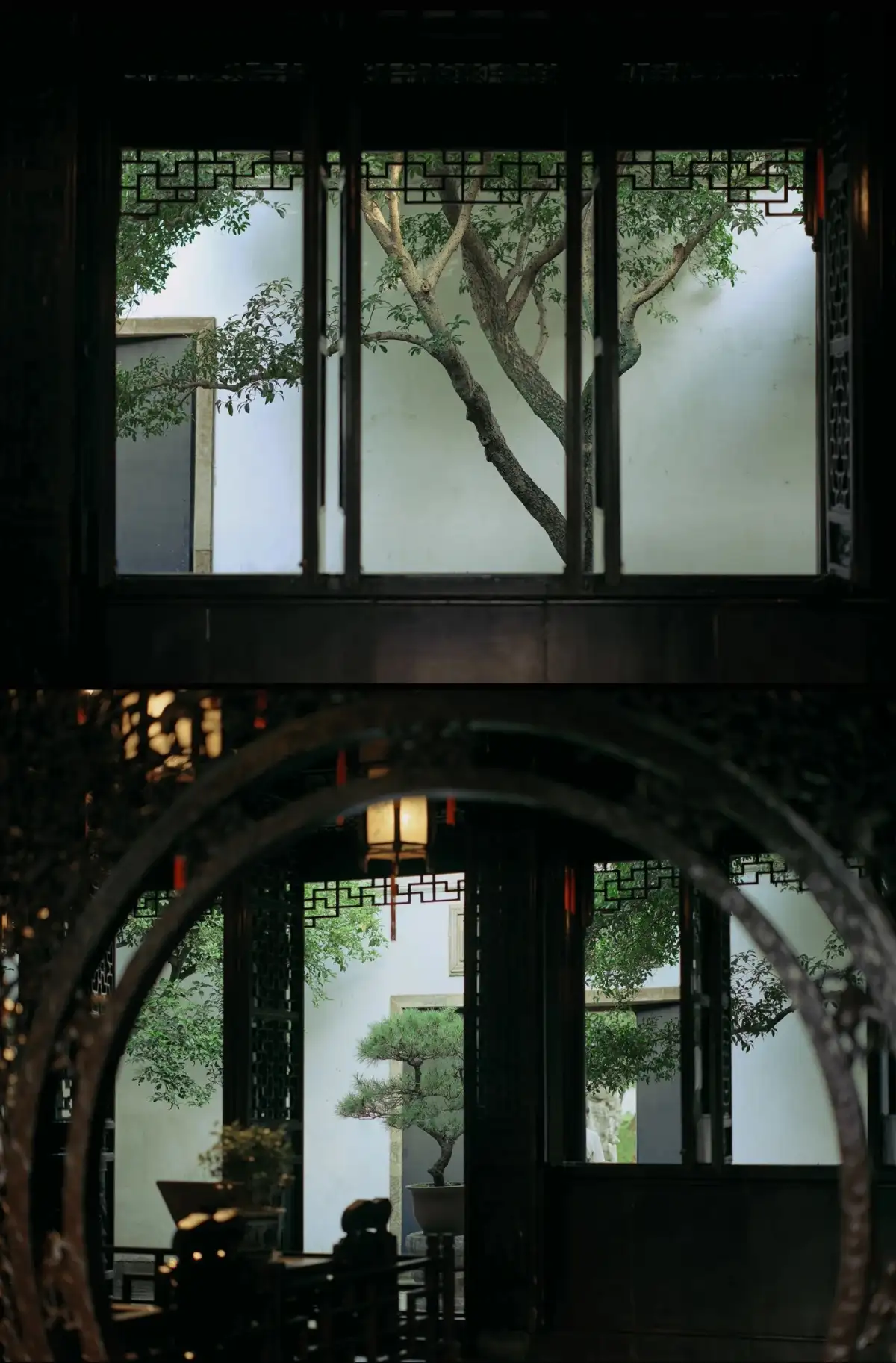
Next, have the child choose a gap and describe what they can see through it, then switch to another gap for comparison. Adults can simply provide the name and function of the lattice window; there’s no need to interpret every shape as having a symbolic meaning. If the child is willing to draw, have them sketch a simplified frame at a suitable resting spot, recall the scene behind the window, and let their actual observations continue to evolve into their own artistic expression.
Adults visiting together can use the same approach. One person might focus on the window’s geometric order, while another observes the natural lines of the background, then compare how the two elements intersect. Those who appreciate historic architecture might delve further into materials and craftsmanship, while photography enthusiasts might focus on capturing the light; both interests can spark conversation centered around a single window. The garden thus accommodates interpretations of varying depths, without requiring everyone to master the same terminology.
From the small scale of the window, return to the grand scale of the Lingering Garden
After viewing several windows, when you walk into an open courtyard or to the edge of a pond, it becomes easier to notice how your field of vision is released. The scene that previously required passing through fine, fragmented gaps to be understood may now appear as a single, complete expanse. Convergence and expansion mutually define one another, ensuring that the variations in the garden stem not only from the number of scenic elements but also from shifts in the viewer’s perspective.
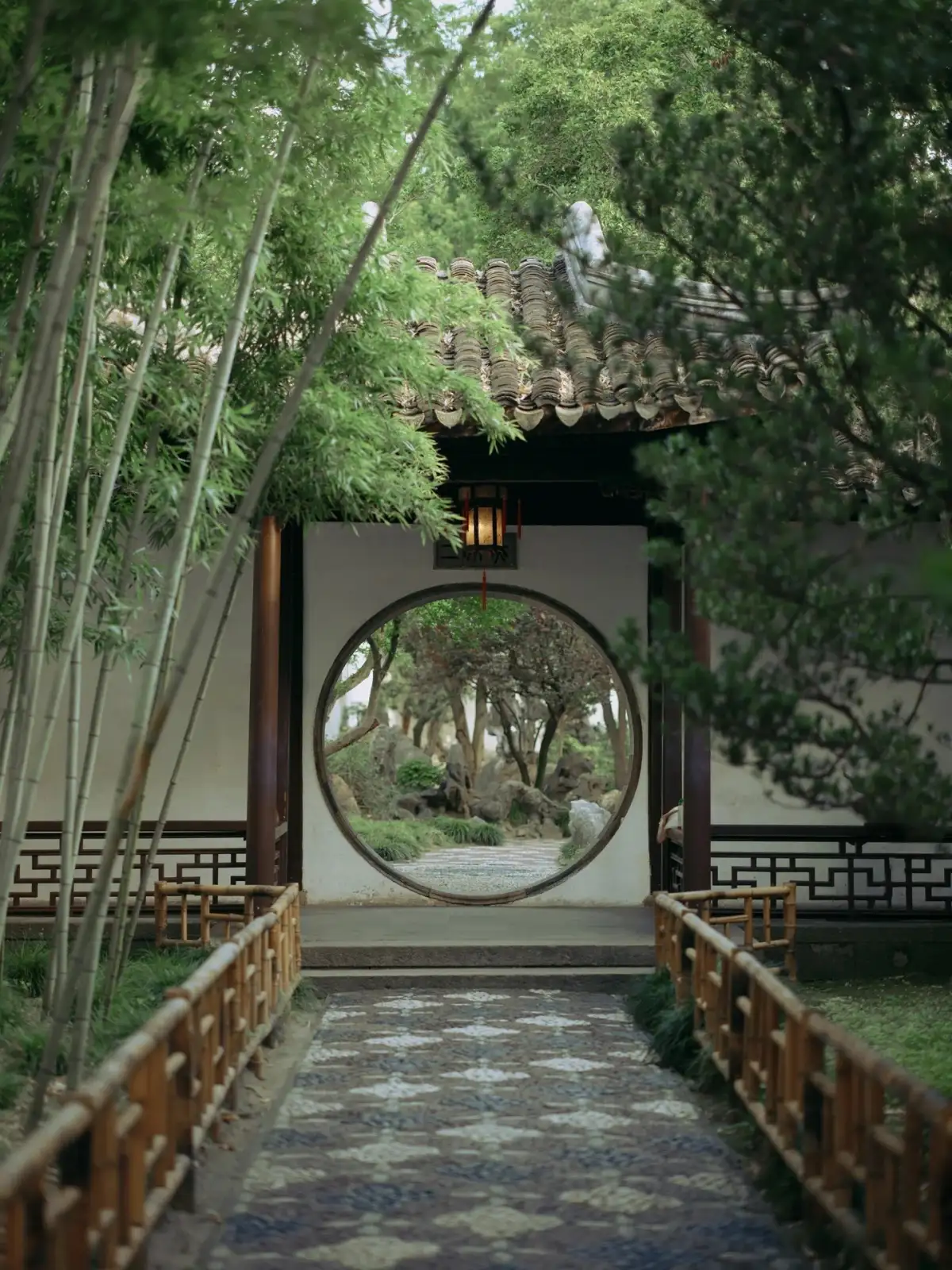
Since time is limited, let this progression serve as your main thread: a close look at a window, a stroll along a long corridor, and a glance back at the open space. Afterward, reading the official descriptions will help you better understand why the courtyards are connected in various ways. There’s no need to memorize the names of every building in advance; simply exploring the spatial relationships is enough to make for a meaningful visit.
If you wish to keep a travel journal, you can juxtapose two observations of the same window. In the first, describe only the pattern; in the second, note the changes in the background and your vantage point. Then compare which account better illustrates what you actually saw. While there is no single correct answer to such writing, it clearly illustrates the process of understanding. A small object thus ceases to be a detail hastily glossed over during the entire visit and instead becomes the gateway to later recollections of Liu Yuan.
inSuzhou Cultural Itineraryinside. The Humble Garden is an ideal place to practice how to perceive a vast space through very small elements. The lines of the windows do not force nature to stop changing, but they provide the gaze with an order through which to enter nature. After leaving the garden, when you encounter archways, corridors, and street corners, this habit of first identifying the relationship between the viewer and the scene remains useful.
Source and Editorial Notes
They do not serve as proof of actual travel experiences or services provided by Dongxing Travel.
Suzhou Municipal Bureau of Gardens and Greening · Lingering Garden · Official Materials; Verified/Compiled on: October 3, 2026.
Office of the Suzhou Municipal Local Chronicles Compilation Committee · The Marvelous and Exquisite Art of Openwork Windows in Suzhou’s Classical Gardens · Official Materials; Verified/Compiled on: October 3, 2026.
Look at one window twice
Observe Lingering Garden windows first with their walls, then from a closer permitted position. In Suzhou garden photography, patterns alone may omit depth and viewing direction. Exploring Lingering Garden with children can involve finding what changes behind the same window as you move.
Keep a short, clear photo stop
Let others pass before taking a photograph from one clear angle. Do not touch, lean on or climb windows and stonework. Return from the detail to the whole courtyard to understand its setting. Reduce repeated movement on wet paving and keep paths open.
Planning references