East Travel Editorial Department · Travel Diaries and Pre-Trip Reading
to Linhai, treating the city wall as a path with elevation changes
The Taizhou Prefecture City Wall is located in Linhai, so be sure to keep this place name in mind when planning your trip. Taizhou is a larger administrative region; staying by the coast or in another part of the city doesn’t mean you can walk to the ancient city. Set aside half a day to a full day for Linhai, and include both the city walls and the streets and alleys below them in the same itinerary to truly experience the transition from the rooftops to the streets at the gate. If you come just to take a photo of the long staircase, you’re likely to miss the richer connections this path has with the mountains, the city, and the river.
Historical records of Taizhou describe the city wall as stretching along the ridge of Beigu Mountain and connecting to the banks of the Ling River. Such a route naturally has ups and downs, so you shouldn’t estimate your stamina as if you were taking a stroll on flat ground. Before setting out, check the currently open entrances and exits as well as the map to determine exactly which section you plan to walk and where you’ll descend from the wall. An easier route can shorten the distance you need to walk along the wall, while those who enjoy walking can extend the mountain section; deciding on your endpoint in advance is much more relaxed than trying to complete a so-called full loop on the fly while on the wall.
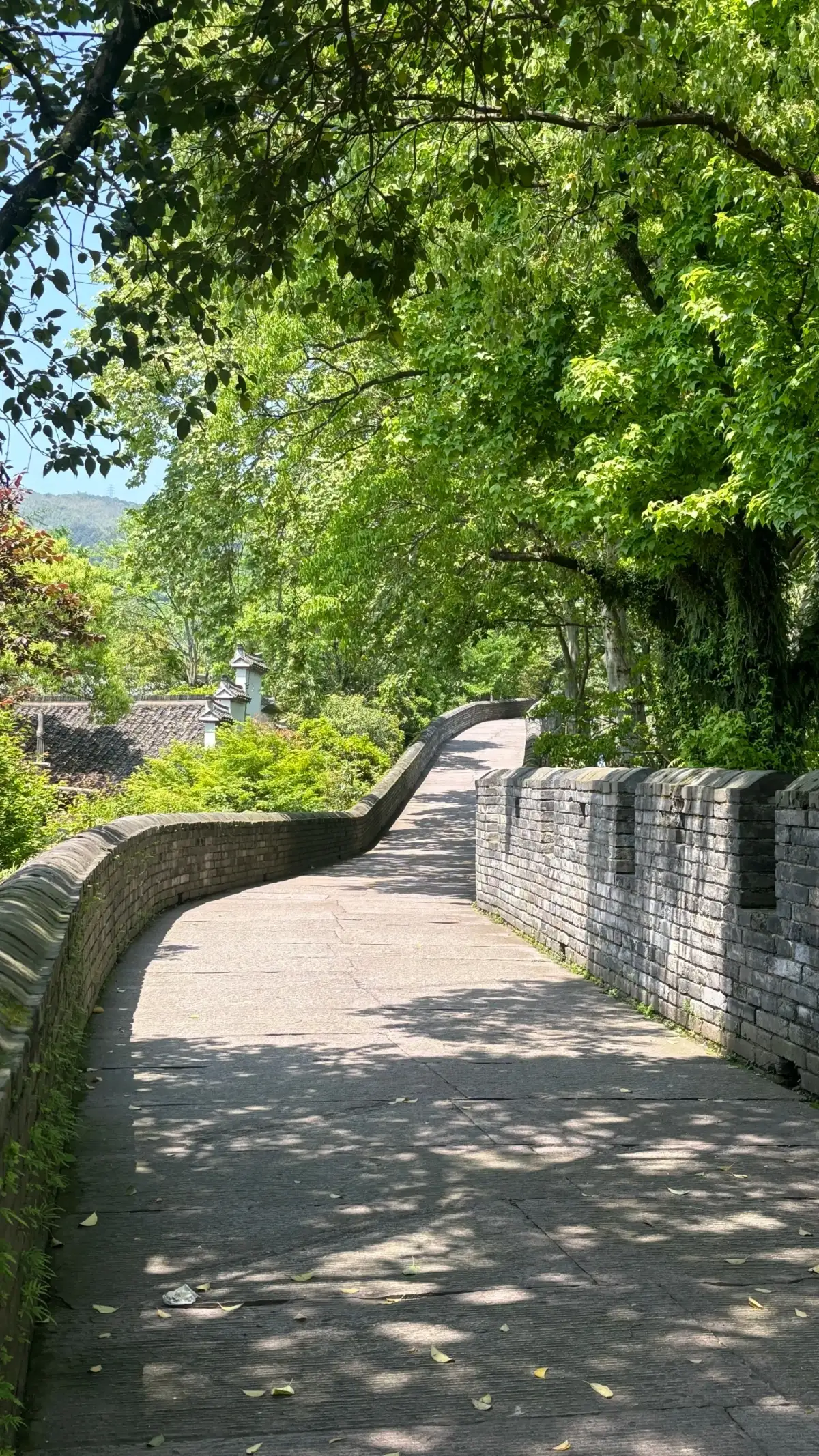
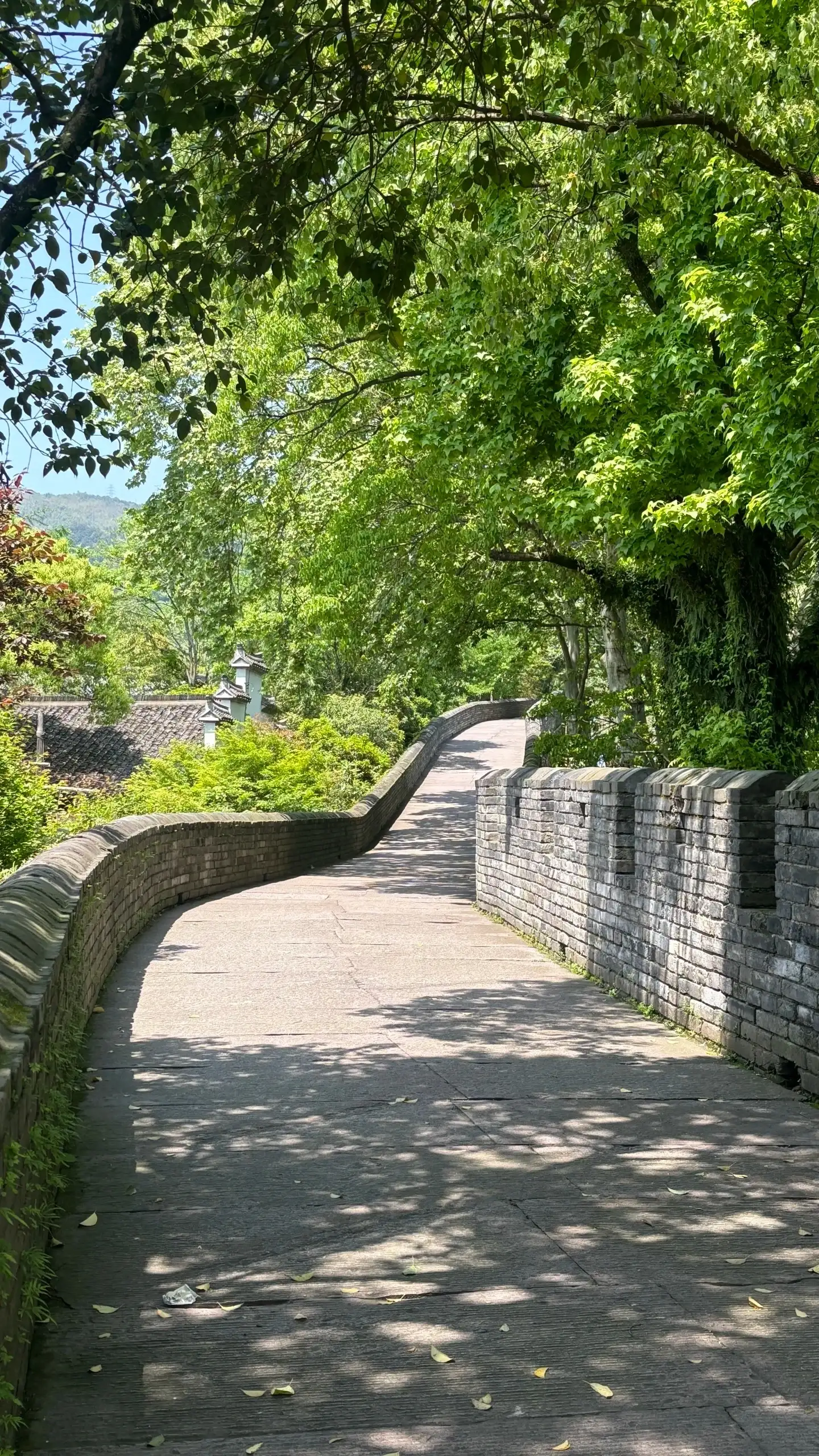
The winding path beneath the shade of trees along the Taizhou Prefecture City Wall in Linhai.
The steps at Lansheng Gate set the pace for the start of the walk
The long staircase near Lansheng Gate is highly distinctive. Looking up from the bottom of the stairs, the gate tower sits among the trees, and the slope unfolds right before your eyes. It’s not a challenge to be conquered in one go; instead, climb in sections at your own pace, stepping aside to let others pass on the landings before taking a break. As you look back, the view toward Donghu Lake and the city below gradually unfolds, and the scenery—previously fragmented by buildings—begins to come together as a cohesive whole.
The pace for taking photos on the steps is often different from the actual walking pace. If you stop to wait for the path ahead to clear, choose a spot that doesn’t obstruct traffic; don’t back up to find the right angle, and don’t look at your phone while climbing. If you’re traveling with the elderly, young children, or people with limited mobility, check in advance for other open entrances and specific elevation differences—don’t assume a route is easier just because it’s close to the parking lot. Before climbing the wall, hydrate, organize your backpack, and stow items you’ll need access to frequently so you won’t have to keep stopping to rummage through it while taking in the views.
The wall along the ridge is not a straight line
Once you enter the mountainous section, pay attention to how the wall changes direction as it follows the terrain. A section ahead is obscured by trees, only to reappear at the bend; what seemed gentle just moments ago reveals short slopes or steps upon closer inspection. The continuous brick wall ties these changes together, yet you find yourself moving through a series of distinct small spaces. The length of the city wall isn’t defined solely by the number of steps, but also by these lines of sight that are obscured and then reappear.
shade is especially worth taking the time to appreciate. The shadows cast by the branches and leaves onto the brickwork and pavement lend a sense of depth to the rough materials; tree trunks standing close to the wall on the outside sometimes split the distant mountains into several sections. Find a safe, wide spot to stand firmly, take a moment to see whether the wall or the trees are in the foreground and which is in the background, then continue on your way. Shade in the immediate vicinity doesn’t mean there will be shade all the way ahead, and you shouldn’t rely on random street stalls for supplies. In hot weather, bring plenty of water; once you reach a suitable spot on the mountain section, head back down to save your energy for the streets inside the city.
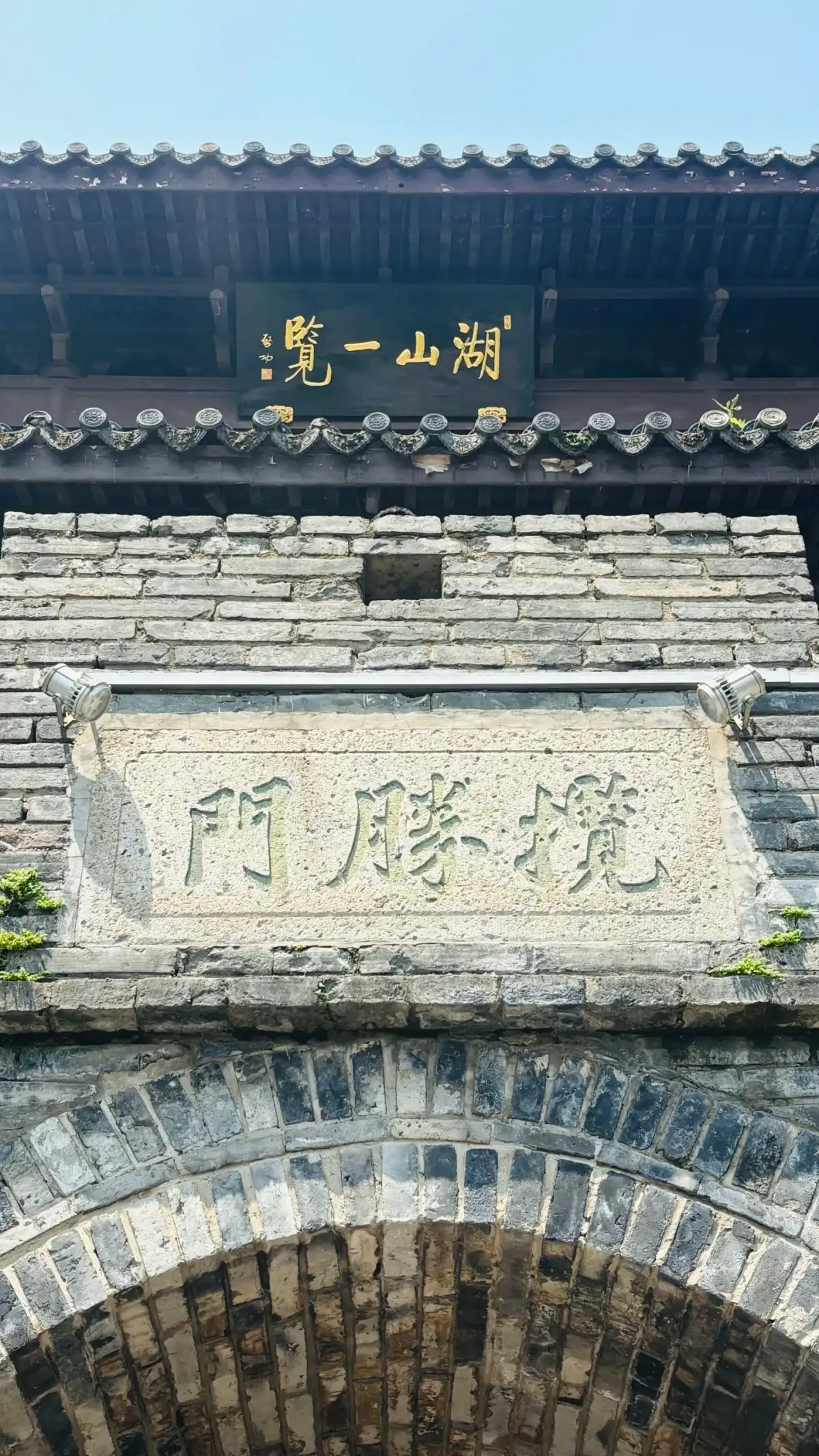
The inscription and gate tower at Lansheng Gate on the Taizhou Prefecture City Wall.
City bricks and watchtowers: understanding both materials and functions
The city walls of Linhai have been rebuilt multiple times throughout history. Historical records from Taizhou mention repairs carried out by Qi Jiguang during the Ming Dynasty and the construction of defensive watchtowers. When you come across relevant explanations on-site, you can connect the military functions to the structure before your eyes: the wall provides a continuous passageway, protruding structures alter the line of sight, and openings and coverings influence how people face the outside. Understanding a few specific architectural elements is far more interesting than treating the entire city wall merely as a weathered backdrop.
Upon closer inspection of the brick surfaces, you’ll notice that the color, size, and surface wear aren’t entirely consistent. What you see today reflects the results of preservation and restoration efforts across different periods. When touring, follow the on-site explanations to distinguish between them—don’t assume every brick is a relic from the same era. The textures are best documented with your eyes and photographs; avoid climbing, tapping, or touching fragile areas. If you encounter a watchtower or gatehouse that is off-limits, observe its relationship to the ramparts from the open areas; a closed gate does not prevent you from understanding how a structure is situated within the complex.
Gazing at the rooftops while taking in the mountains and the river
The city wall offers a unique experience: the same path presents different scales on either side. Looking inward toward the city, rooftops and alleys gradually unfold, and the gaps between buildings allow you to guess the direction of the roads; looking outward, the mountains, water, and the city’s distant silhouette extend your line of sight. Don’t just take photos continuously in one direction; as you round a corner, shift your perspective—this will help you understand why the position of the wall is so important.
If you walk to the section open along the river, the Lingjiang River reveals the distance between the city and the surrounding terrain. The relationship between the riverbank and the city wall is best understood in conjunction with local historical accounts of flood control. Rivers do not merely provide a picturesque backdrop for the city; long-term life here has also required coping with water levels and floods. Today’s tour follows designated pathways; visitors must not climb over the walls or descend unmarked slopes to approach the river. When the water’s surface is obscured, shift your attention back to the rooftops and ramparts—you can still grasp the city’s overall outline.
At the corner of the wall along the riverside section, you can observe how it changes its orientation toward the water. Archaeological research has discussed the design of the city wall adapting to the flow of the Lingjiang River, making this bend not only about passage but also connected to the power of the water. Visitors see only the present-day appearance; the layers beneath the ground require research and exhibitions to be understood. By connecting the two, one can trace a longer urban history from an ordinary walking path. Comparing the twists and turns of the mountain section with the turns along the river section—the former responding to the ridgeline, the latter hugging the riverbank—reveals that the same wall exists within two distinct geographical contexts.
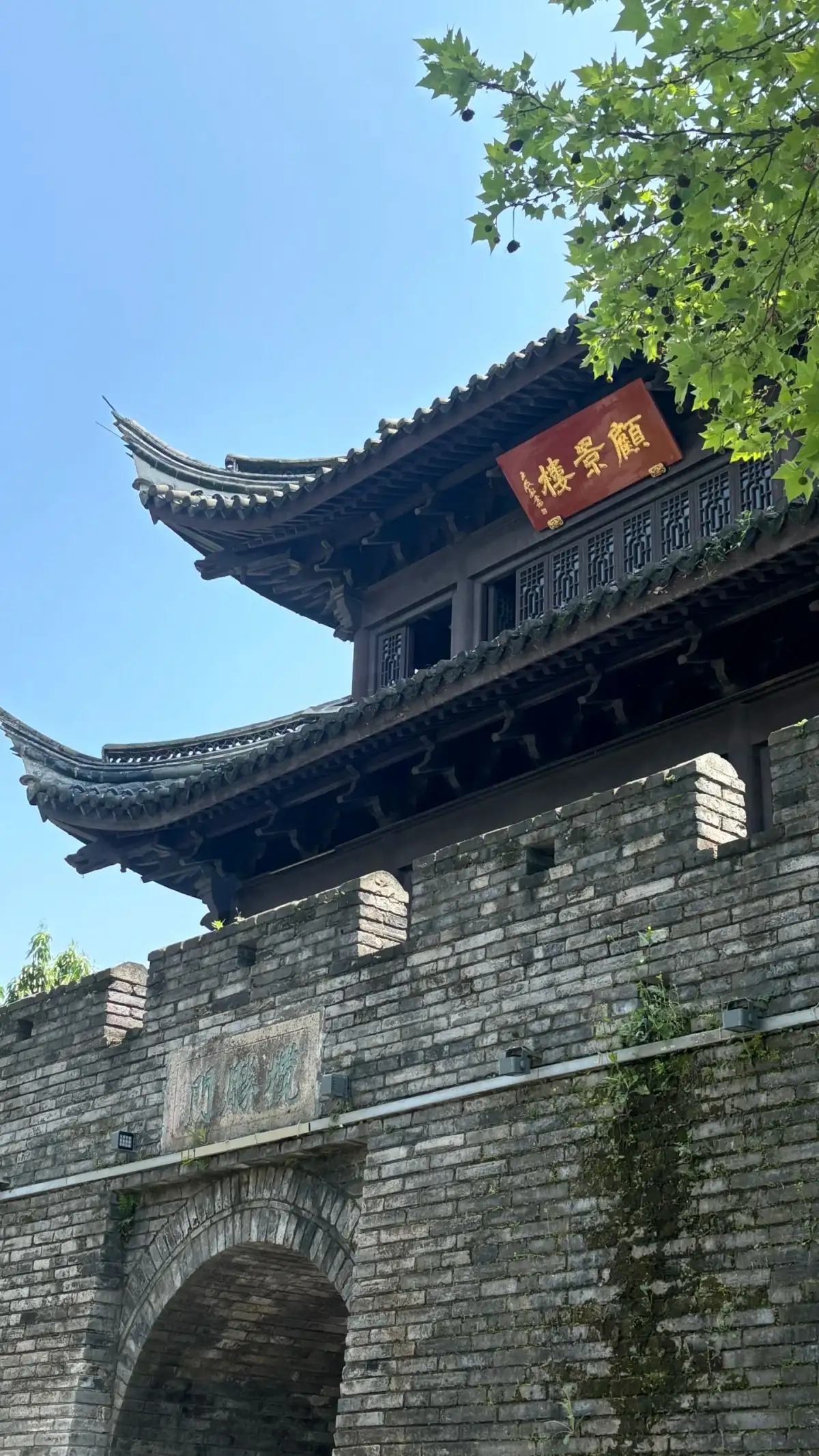
The eaves of Guijing Tower and the brick wall of the Taizhou Prefecture City Wall.
After descending from the city walls, switch up the pace on Ziyang Street
If the exit and timing are right, you can use Ziyang Street as the second half of the route along the base of the wall. Earlier, you were looking up at rooftops; now, as you approach storefronts, building facades, and street corners, your perspective shifts completely. Walk along a short stretch of the main street, then choose a side alley with clear public access for a brief look—there’s no need to walk to the very end of every narrow alley. The city wall first helps establish a sense of direction, while the streets and alleys add the details of daily life; only when these two elements are combined does the scene feel complete.
Linhai’s street snacks can be part of your rest break. Names like “seaweed cakes” and “wheat shrimp” appear on shop menus, but be sure to ask on the spot about specific preparation methods, ingredients, and portion sizes. For international tourists encountering these names for the first time, take a look at the actual items and the menu before deciding whether to try a single item or sit down for a full meal. For allergy, vegetarian, or dietary restrictions, provide clear instructions in Chinese to the shop owner for confirmation. If popular spots are crowded, consider switching to a shop with seating, and treat your break as a time to truly recharge.
Between sun and shade, leaving alternative routes both above and below the wall
On sunny days, the city walls feature vivid brick tones, dappled foliage, and the sky—but it can get quite hot in summer. It’s best to tackle the main ascent during cooler hours and take breaks in the alleys or indoors in between. On cloudy days, the distant mountains appear softer and more layered, and in winter, when the trees have fewer leaves, the winding path along the wall is more clearly visible. The scenery varies with the seasons; there’s no need to judge every season by comparing it to a single photo taken in the height of summer.
After rain, the bricks, fallen leaves, and steps may be slippery, so watch your step carefully, especially when walking the mountain section. In case of heavy rain, lightning, strong winds, or temporary management adjustments, the wall climb may be shortened or even replaced with activities within the city walls; double-check the opening status before setting out. If you’ve already purchased transportation tickets, you can make exploring the ancient city’s streets and alleys the main focus of the day and wait until the weather stabilizes before deciding whether to climb the wall. If reservations, ID verification, or other admission procedures are required, follow the latest official guidelines to prepare in advance. Allow sufficient time for processing and waiting in line to avoid arriving at the entrance only to find that your schedule is too tight.
Before heading back, retrace the ancient city’s path along the streets
Once back on the ground, you can find another open street corner to look toward the city wall. The path up the mountain now appears as a thin line on the horizon, and the elevation you just climbed finally feels tangible. The city gate, eaves, tree canopies, and distant mountains are no longer separate entities, because you’ve personally walked through some of these spots. The reward of visiting Linhai shifts from merely the striking name “The Great Wall of Jiangnan” to a cityscape where the map and your field of vision align.
Save the Chinese names of your return station, accommodation, and transfer points in advance, paying special attention to the distances between different stations and various areas of Taizhou. Don’t assume your arrival time at the city center is the same as your arrival time at the station; factor in time for meals, picking up luggage, and travel time separately. If you have the time, sit down and reflect on your observations from this half-day: how the steps create a sense of height, how the gables curve, how the roofs converge, and how the river winds around the city. For visitors to China who enjoy culture and walking, these specific details are rich enough to warrant a slow and thorough exploration on foot.
Further Reading and Reference Sources
Originally compiled by the Dongxing Travel Editorial Department based on publicly available travel notes and listed information, intended for pre-trip reading and not as a personal account; opening hours, transportation, reservations, and service arrangements should be verified according to the actual travel date.
Taizhou History and Chronicles: The Great Wall of Jiangnan
Does the starting point suit everyone?
Count Lansheng Gate steps as part of the effort for a Linhai city wall walk instead of judging only map distance. On the higher route, compare ridge turns, defensive towers and roofs. Companions who prefer fewer climbs should check usable entrances and exits before choosing a shorter section or spending more time below. The entire route should not be assumed flat or easy.
Why leave time after descending?
A Ziyang Street walk shifts attention from roofs viewed at a distance to windows and street functions. Choose a city direction from the wall, then look for corresponding relationships on the ground. In rain, prioritise footing and secure stopping places, shortening the elevated section according to actual access. Street walking and a meal can give the remaining day a clear purpose.
Planning references
Planning reference: Linhai city wall walk 1