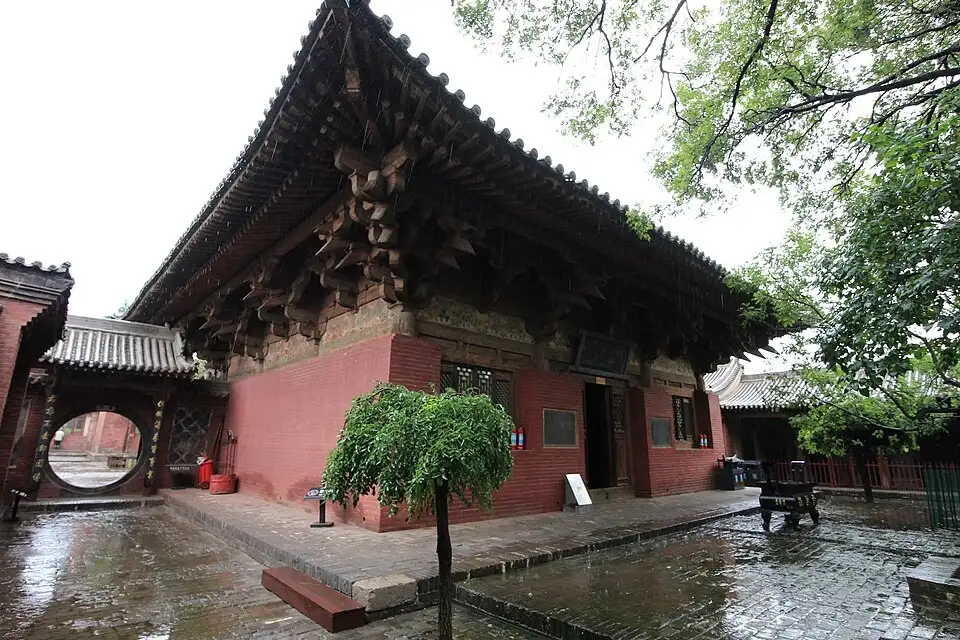
When walking the streets of Qingyan with a child, the most common scenario is that the adult keeps talking about historical periods, while the child keeps asking when they’ll eat. If you reframe this outing as “finding different ways stone is used,” the pace will be much more relaxed: the pavement is for walking, the walls enclose the space, the archways convey remembrance through carvings, and the stone lions attract attention with their unexpected poses. In just half a day, you don’t need to cover the entire history of the ancient town to let the whole family truly appreciate the architectural details.
它提出了随走随看的兴趣,具体阅读则可以借文化和旅游部介绍以及贵州地方文化资料。本文把路线缩成几个有形对象,让孩子从看见的形状进入文化,成人也不必一路像讲课一样说话。
Why do stone lions face downward?
An article on Qingyan culture published in the Guizhou CPPCC Journal describes the stone lions on the Zhao Lilun Centenary Archway, noting that their tails point upward and their heads point downward—a posture known as “descending lions.” This detail serves as an excellent starting point: How do the stone lions we usually see stand, and what makes this one different? Let the children describe the movements first, and then parents can provide the correct terms based on their accurate descriptions. There’s no need for them to understand the archway system right from the start.
When viewed in conjunction with the architecture, the downward-facing posture reveals that the carvings are not isolated objects. Which pillar the lion stands beside, how its body connects to the surrounding elements, and what can be seen when it raises its head—these are all relationships that can be directly observed. If you’re unsure about the symbolism, you can ask a docent for an explanation; there’s no need to treat every theory circulating online as gospel.
Adults can also learn about commemorative practices from the archway itself. The name “Centennial Arch” links the figures depicted to the commemoration of longevity; the inscription, the figures, and the architecture collectively convey this message. For foreign family members unfamiliar with Chinese culture, you can first explain that it differs in purpose from a gate tower: while visitors can pass by it, its primary function is to commemorate and express—it is not the entrance or exit to a city.
piece of cultural material circulating online that provides specific details about the archway carvings. When viewing the site, it’s best to read the signage first, then focus on a single detail. There’s no need for children to memorize the names of all the deities; instead, they can compare clothing, gestures, and the raised or recessed parts on the stone surface. The smaller the tasks set for parent-child visits, the more opportunities children have to make discoveries on their own; moving on to the next section only after completing one discovery is far more engaging than constantly being asked, “Did you remember that?”
The stones at its feet and the stones within the wall
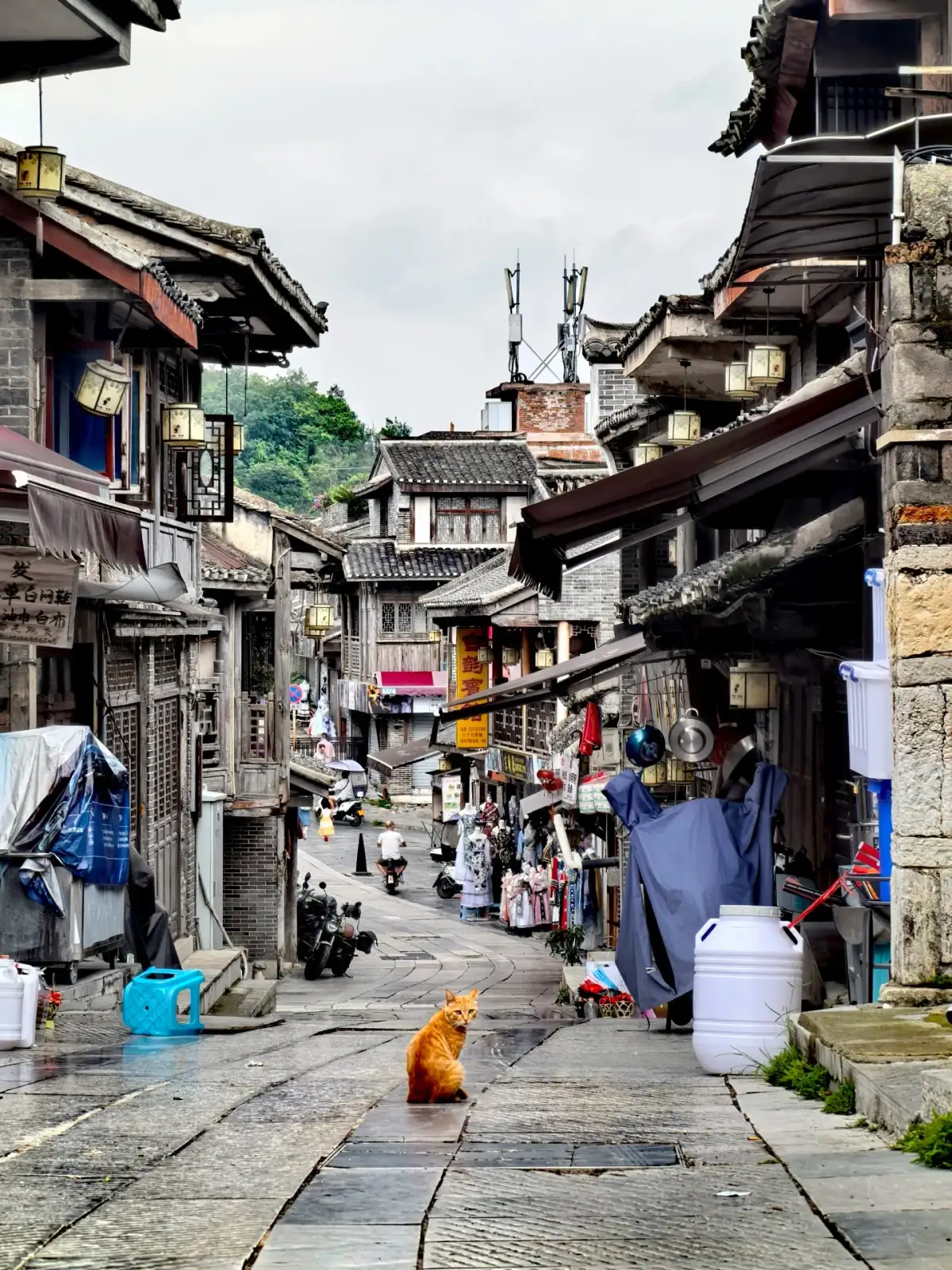
The Ministry of Culture and Tourism’s introduction to Qingyan highlights the blue stone streets and alleys, stone-walled enclosures, courtyards, and traditional architecture as its distinctive features. When walking through open stone alleys such as those off the main streets, encourage children to compare the paths and walls: the path surface is designed for people to walk on, while the walls serve to define boundaries. Although both are made of stone, their orientation, scale, and arrangement differ.
This observation can be linked to children’s experience with building blocks at home. Which stones are more regular in shape, which are irregular, and how do they fit together in the composition? Visitors can view the structure from both close up and a distance without touching or moving anything: up close, they can examine a small section of the arrangement; from a slight distance, they can see how it forms an entire wall. The fact that materials take on different orders depending on their purpose is a more concrete form of knowledge than simply noting that “the stones are very old.”
Stone alleys also feature wooden doors and eaves. Materials from the Ministry of Culture mention doors and traditional craftsmanship, indicating that Qingyan isn’t built from just one type of material. Asking children to find “where stone and wood meet” helps them connect the base of the wall, the doorway, and the roof above; adults can use this as a starting point to discuss how different materials contribute to the space, rather than simply searching for photo opportunities in front of each building.
The color and sheen of the stone surfaces change with the light and humidity. Photographers can observe the contrast between shaded and lit areas, while children should look at their feet at a normal walking pace—without running backward or stepping into unsafe spots just to capture a pattern. Selecting a short section to linger in is sufficient for comparing materials; there’s no need to walk through every alley to complete the observation.
Now look at the city gate—how does it differ from the archway?
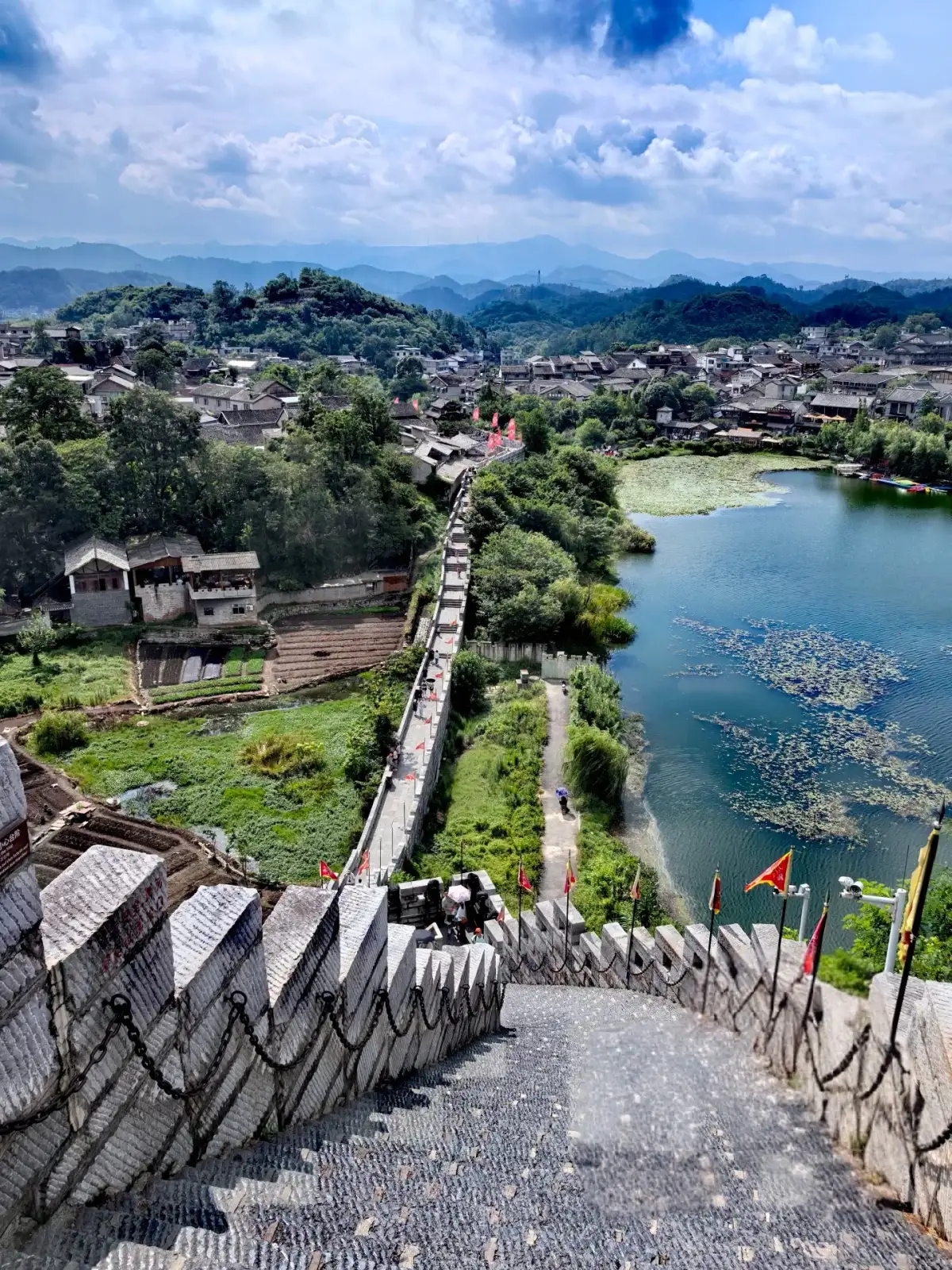
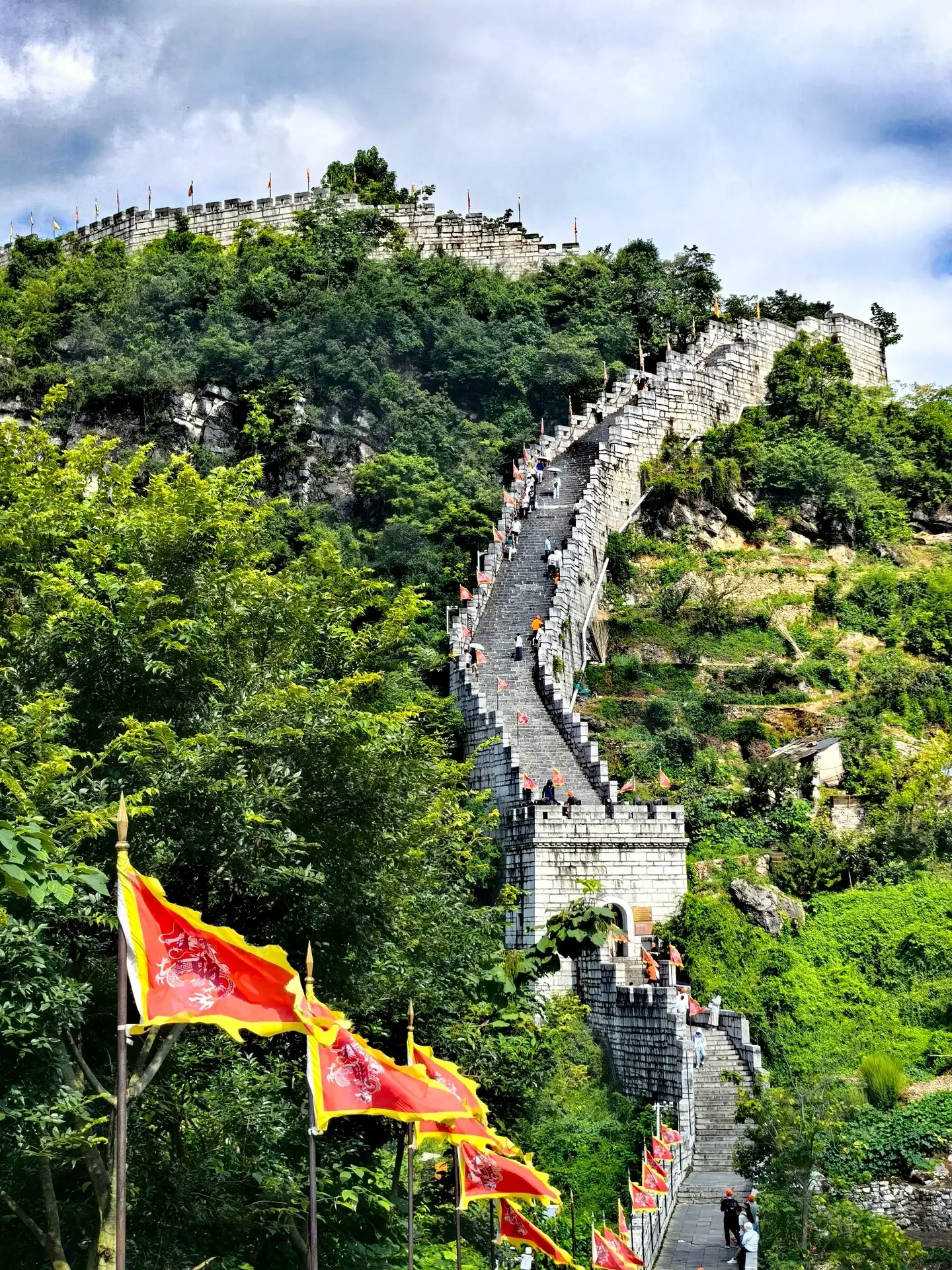
City gates are easier to explain in terms of their practical use. How people and goods enter from outside the city, how the gate arch controls passage, and how the space above relates to the walls on either side—all these questions can be discussed using the structure right before your eyes. As for specific dates and restoration history, read the on-site explanations; don’t assume that every stone you see today dates back to the town’s founding.
By comparing the stone lions with the archway, children will discover that one is primarily associated with entry and enclosure, while the other is primarily associated with commemoration and expression. Both cause people to look up, yet they tell different stories. Cultural family trips often require such comparisons; the same material or similar appearance does not necessarily imply the same purpose. Once they understand this, children will be able to ask better questions when visiting another ancient town in the future.
Whether or not to climb the open section of the city wall should be a separate decision. Viewing the city gate and climbing the wall need not be linked as a mandatory task; if family members are unwilling to continue up the steps, observing the gate arch, wall lines, and rooftops from within the street can still help them understand the spatial layout. Parents can consider climbing up, descending, and returning as separate activities. When children are already tired, avoid urging them on by saying, “You have to go up to see the whole view.”
Take a photo here that captures the surroundings, allowing people, the archway, and the surrounding streets to collectively convey a sense of scale. Pedestrians in the distance help contextualize the architecture; there’s no need to frame strangers as the main subjects. If you wish to photograph your child, have them stand in a spot where they’re permitted to linger without obstructing traffic. The camera should serve the purpose of the visit, rather than the entire visit being devoted to staged photos.
Every meal brings a new discovery to a close.

After comparing a few objects, arrange for everyone to sit down and eat; this can create a natural break between the morning and afternoon. Qingyan has local cuisine, but the names of the dishes do not necessarily indicate their ingredients; if your family follows a vegetarian diet or has other dietary restrictions, please discuss each item with the vendor to choose meals that allow everyone to sit comfortably and share easily. Don’t turn every local snack into a mandatory checklist.
During meals, ask everyone to share one thing they’ve noticed: a stone lion facing downward, a section of wall with an unusual arrangement, or the point where a wooden door meets a stone wall. Adults can simply add a reliable explanation, allowing children the chance to express themselves. If they’d like to draw it, the outline doesn’t need to be precise—as long as they can describe how it differs from other elements.
Return arrangements should also be kept simple. Qingyan has different entrances and pickup locations; international visitors should keep a record of the actual Chinese meeting point and their hotel address. Those traveling with strollers, luggage, or who need to minimize walking should specify their needs in advance so that the host can make arrangements based on the day’s itinerary. Do not skip the return trip or transportation just because the half-day tour is short; children’s patience is often most needed during this final leg of the journey.
The order of this short route can be adjusted based on where you enter, but the core is to maintain a comparison between one carving, a section of material, and the function of a space. If you miss a particular item, you can shift your focus to other objects available for viewing on-site; there’s no need to drag the child back to a distant spot to complete the task. Qingyan is rich in detail, offering enough to make a short visit a meaningful experience in its own right.
After leaving, if a child sees stone lions elsewhere, they’ll remember to compare their postures; upon seeing a city gate, they might also recall how it differs from an archway. These memories of the ancient town are composed of visible objects—they not only satisfy the curiosity sparked by family travel but also allow adults to rediscover the stones they once glanced past without a second thought.
Sources and Editorial Notes
They do not serve as proof of actual travel experiences or services provided by Dongxing Travel.
Ministry of Culture and Tourism · Qingyan Ancient Town Scenic Area, Huaxi District, Guiyang City · Official materials; Verified/Compiled on: October 3, 2026.
Guizhou CPPCC News / Guizhou Provincial Committee of the Chinese People’s Political Consultative Conference · Refreshing Guiyang, the Time-Honored Ancient Town of Qingyan · Official materials; Verified/Compiled on: October 3, 2026.
Without a history lesson first
Qingyan with children can begin with the direction of Qingyan stone lions, then compare an archway and gate before examining Qingyan stone lanes. Ask one question that can be answered by looking. Stop for food or rest when attention fades instead of insisting on finding every lion.
Check the practical route
Confirm entrances, steps and seated resting places. Keep observation stops out of the way, shorten slopes when paving is slippery, and look at carvings without climbing or touching them. Ask about ingredients and spice rather than assuming every local snack suits children.
Planning references