
East Travel Editorial Department · Travel Diaries and Pre-Trip Reading
On my first visit to Qufu, I began by distinguishing between these three names
The “Three Kongs” of Qufu are often included on the same travel itinerary, yet each tells a different story. The Confucius Temple is a complex of buildings dedicated to commemorating and honoring Confucius; the Kong Family Mansion relates to the daily lives and governance of the Kong descendants; and the Kong Family Cemetery serves as the family burial ground. For a first visit, you can make the Confucius Temple the main focus of the morning. Start by understanding the connection between the courtyards and the rites, then decide in the afternoon whether to visit the Confucius Mansion. With this arrangement, architecture, family history, and philosophy won’t all become a jumble of unfamiliar terms within the first hour.
For international visitors, the name Confucius may be familiar, but the specific layout of this Chinese architectural space may not be easy to grasp. Before entering the park, pick up a map, circle the entrance, the Great Achievement Hall, and the exit, and then select Kuiwen Pavilion and Xingtan as stops along the way. Knowing where you’re headed allows you to focus more on the gates, trees, and steles. The Confucius Temple is not the entire original site where Confucius once lived; the buildings visible today have undergone expansions and renovations across the centuries. Recognizing this layering of time is a great starting point for understanding this place.
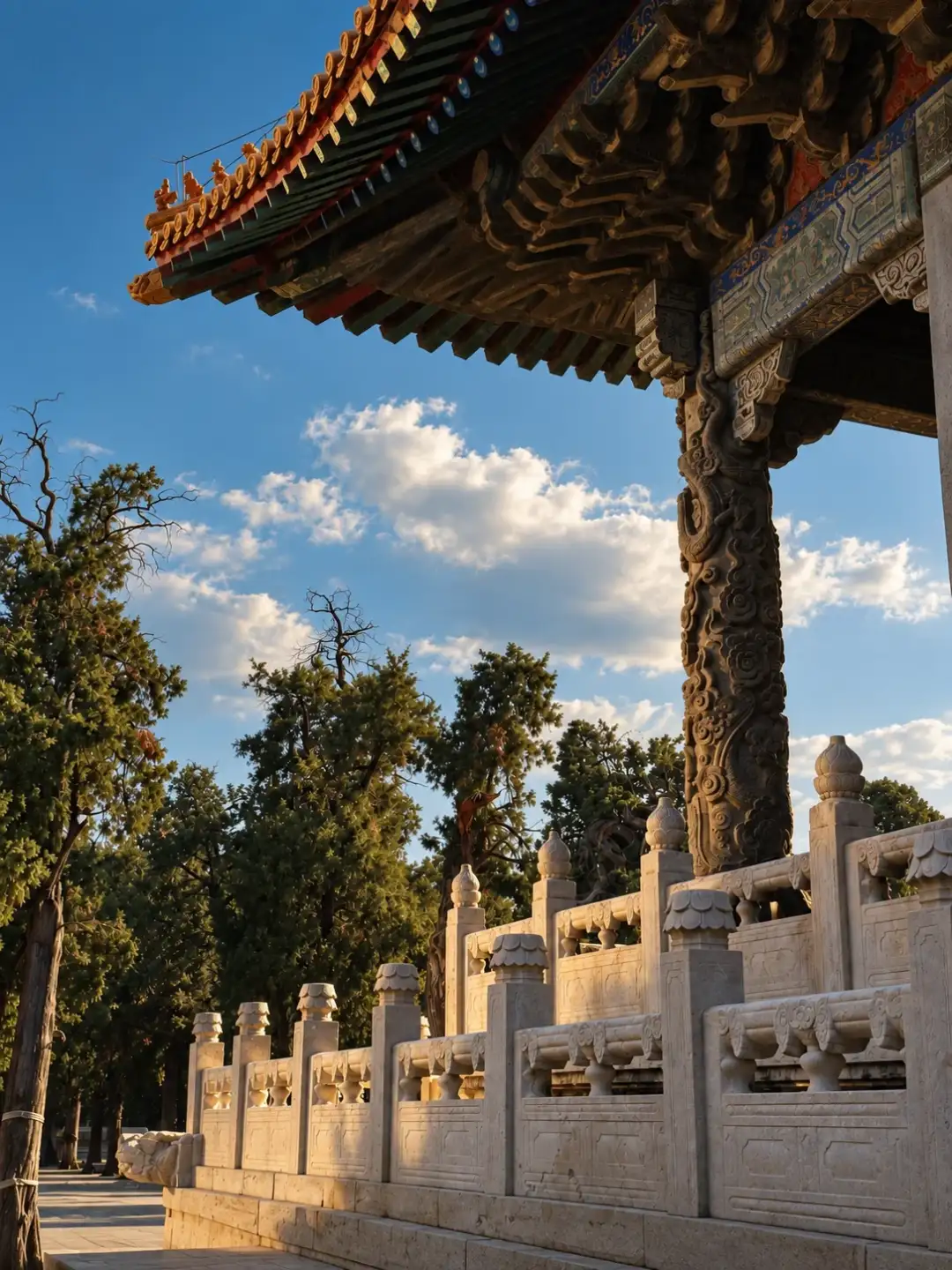
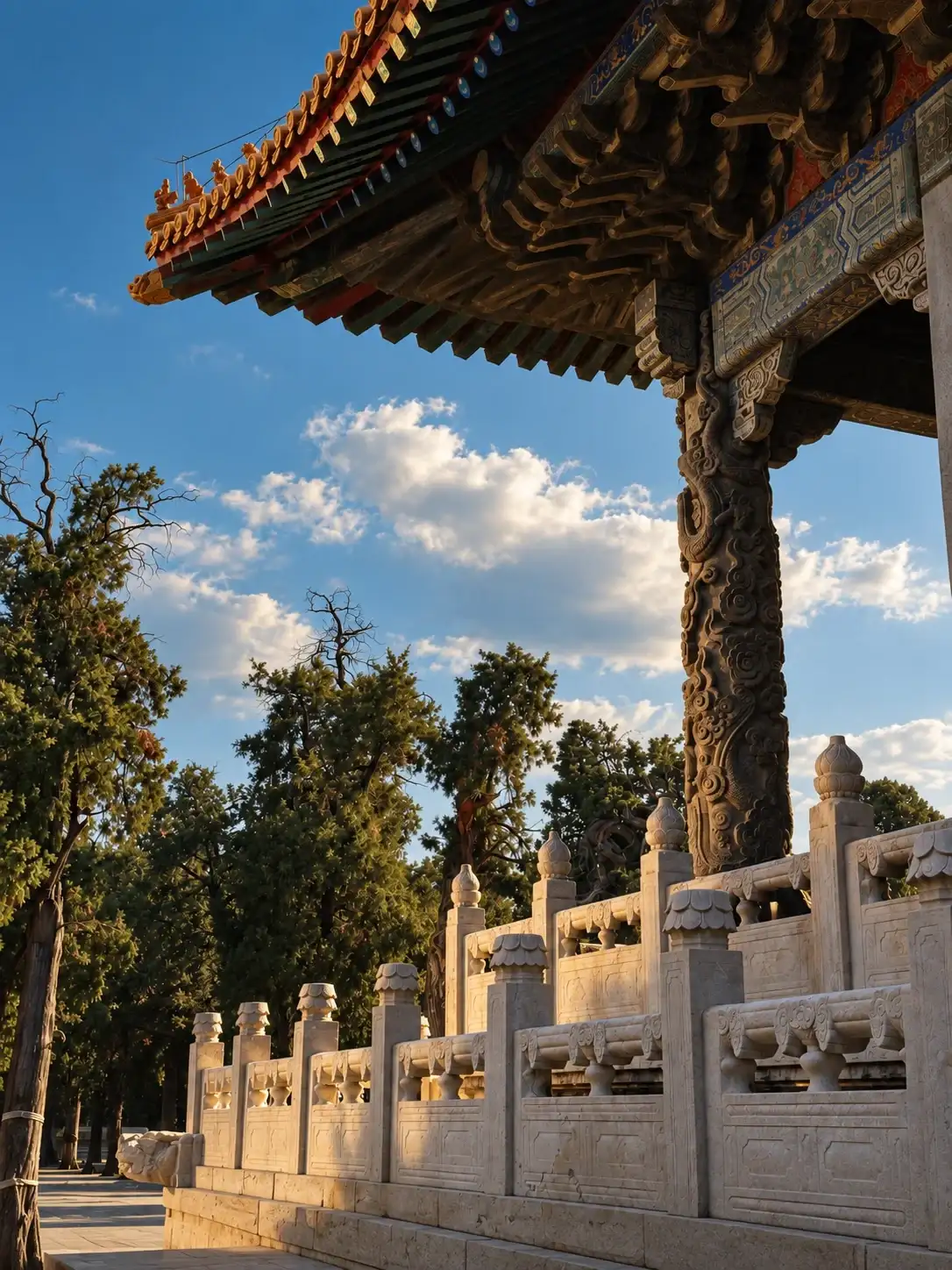
Stone-carved dragon columns and stone balustrades beneath the eaves of the Great Hall at the Confucius Temple in Qufu.
Between one gate and the next, the rites of propriety unfold along a path
The gates within the Confucius Temple serve not only as entrances and exits but also divide the viewing experience into distinct segments. Standing outside one gate, you can first observe the gate pillars, the roof, and the surrounding walls on either side, then pass through to explore the next courtyard. Pausing briefly before a gate often makes it easier to identify the central axis than immediately raising your camera: how the center of the roof, the path, and the buildings behind align with one another, and how the trees on either side introduce a gentle variation to the otherwise rigid arrangement.
For first-time visitors, it’s more helpful to view these gates as a sequence of unfolding spaces than to memorize all their names. After passing through two or three of them, compare the sizes of the front and rear courtyards, the density of the trees, and the length of the sightlines—you’ll come to realize that the architecture isn’t revealed all at once. The frames of the gateways frame the distant halls; once you pass through, the view opens up again. In this process, there’s no need to interpret every architectural element as carrying a fixed symbolic meaning; first, take note of the observable forms, then use exhibition labels and guided explanations to learn about ritual, hierarchy, and history—this approach will lead to a more solid understanding.
Kuiwen Pavilion: Preserving a Place for the Written Word
As you approach Kuiwen Pavilion, the architecture itself invites you to explore the themes of scholarship and literature. Its elevated eaves, the interplay between upper and lower levels, and the shadows cast by the wooden framework set it apart from ordinary courtyard gates. Standing at a designated viewing spot, first observe how the roof tapers layer by layer, then examine the arrangement of the windows and doors below. The literary tradition reflected in its name thus connects with the actual form of the pavilion before your eyes, making it more than just a “must-visit” spot on a tour guide.
While traveling, you don’t necessarily need to have a complete grasp of ancient classical texts and institutional systems, but you can ask a specific question: Why does a place dedicated to commemorating a teacher require a building specifically designed to house texts and books? Reading the explanatory notes with this question in mind makes it easier to understand the significance of education here than simply taking a photo of a plaque. Even if the interior of the pavilion is not open to the public, there is still much to see from the outside; by looking up at the wooden framework beneath the eaves and placing the building within the context of the front and rear courtyards, you can appreciate its position along the entire avenue. Please refer to the announcements at the time of your visit for information on which areas are open and what exhibits are on display.
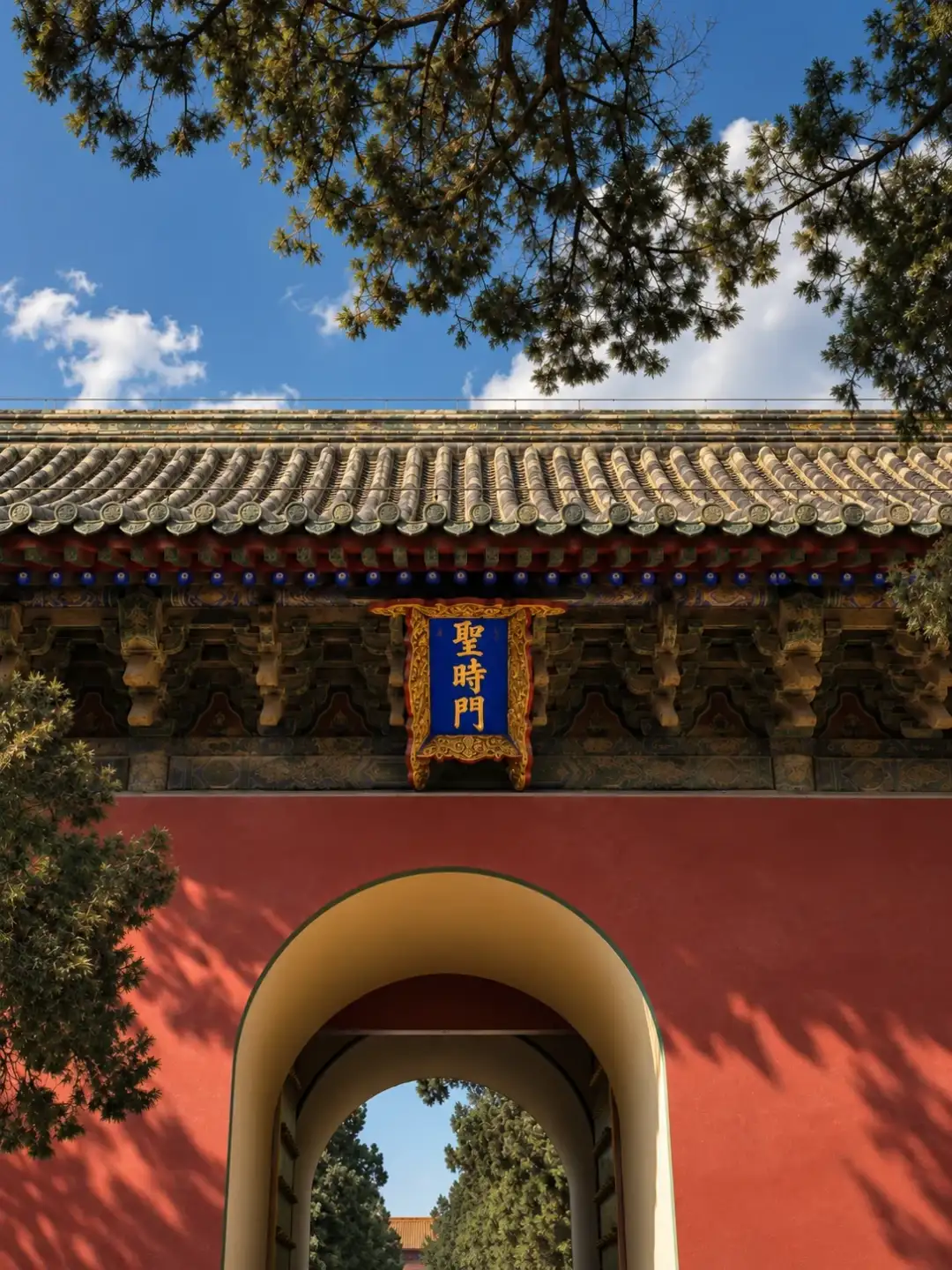
The plaque, eaves, and red-walled gateway of the Shengshi Gate at the Qufu Confucius Temple.
Appreciating the stele inscriptions doesn’t begin with deciphering every single character
The Confucius Temple preserves a rich collection of stele inscriptions. Faced with dense Chinese text, international visitors can begin by examining the stone materials and forms. How the stele head is crafted, how the body connects to the base, and whether the size of the text and line spacing are consistent—these are all details that can be observed directly. Comparing two steles of different styles side by side yields more insight than a hurried glance at the entire stele forest. Afterward, reading the exhibition labels to understand the era and reasons for the steles’ erection allows the text to gradually take on concrete historical meaning.
The steles here are not merely decorative panels from a single era. They bring together different dynasties and commemorative traditions within a single space, and the wear on their surfaces reflects both the preservation environment and the passage of time. You might ask a professional guide to select a representative stele and explain its main content using a concise translation; there’s no need to turn every unfamiliar Chinese character into an exam question. When taking photos, capture the stele in relation to the surrounding architecture, then take an additional shot of a detail that’s permitted to photograph. That way, when you look back at the photos, you’ll remember both what was written on it and why you stopped there at that moment.
Xingtan: Bringing Education Back from a Concept to Human Interaction
The Xingtan is the perfect spot for a brief, quiet pause. Understanding Confucius’s philosophy can begin with education, learning, and daily conduct, without rushing to provide a comprehensive definition of Confucianism. Traditional commemorative spaces link the teacher to the veneration he received from later generations, but the architectural forms before us represent a history of commemoration continuously shaped by subsequent eras. Separating historical figures, commemorative traditions, and contemporary architecture actually makes it easier to understand why they have been able to sustain one another over time.
You and your companions can each choose a question: Why does learning require communication? How is politeness manifested in interpersonal interactions? What is the connection between family life and public life? The discussion doesn’t require “correct” answers, nor is it necessary to reduce the lives of all Chinese people today to a single ideology. Retaining specific questions about an unfamiliar culture is more helpful than drawing a few grand conclusions. As you linger, observe which side the tree shadows fall on and how the surrounding paths connect the front and rear halls; then continue toward the Dacheng Hall, where the topic of education takes on a tangible space to be remembered.
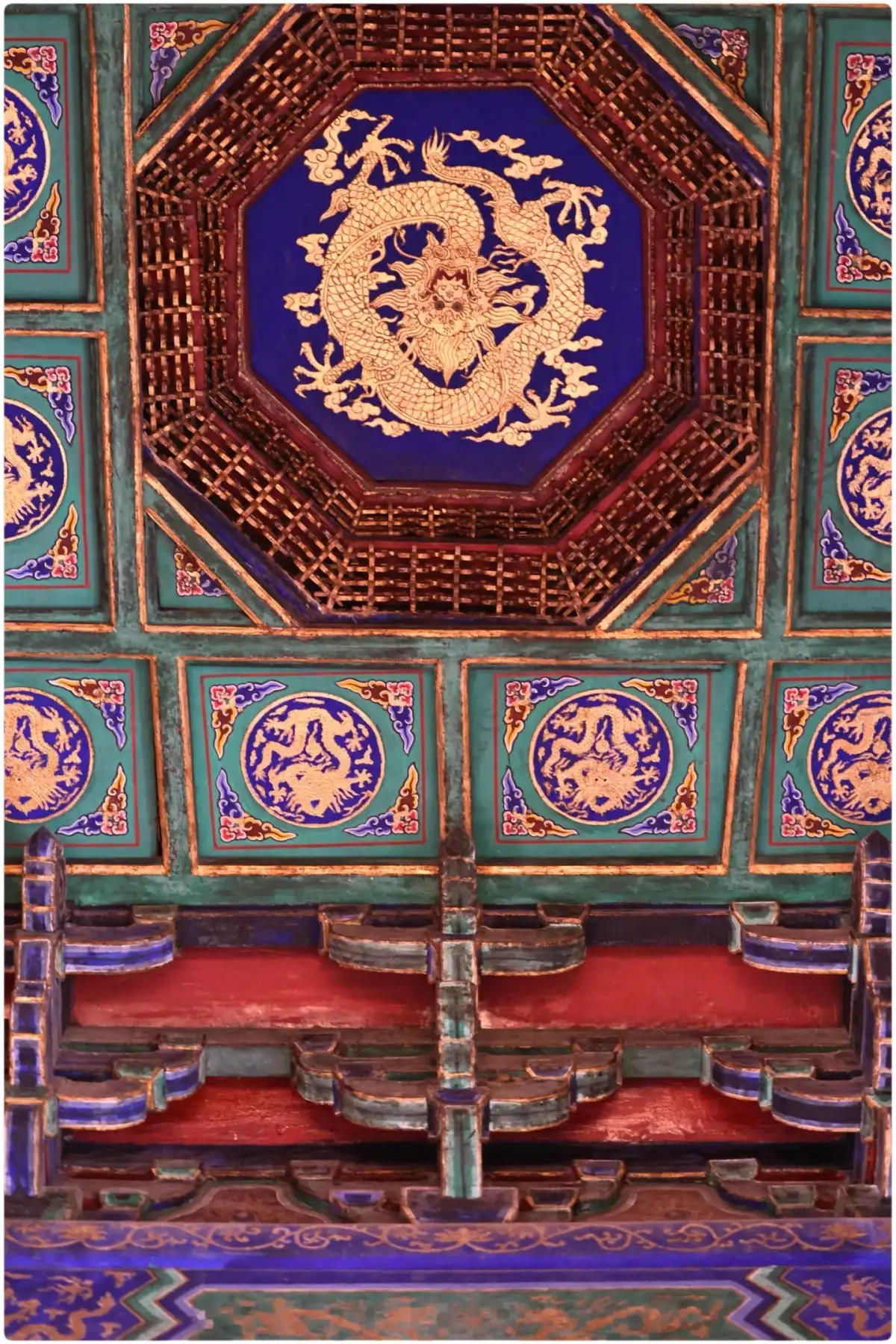
The painted coffered ceiling and wooden structure beneath the eaves of the Xingtan Hall at the Qufu Confucius Temple.
In front of the Dacheng Hall, first take in the panoramic view, then examine the carvings
The Great Achievement Hall should be the highlight of your morning visit. Start by keeping some distance to observe the interplay between the roof, the plinth, the colonnade, and the open space in front of the hall, then approach closer in accordance with the on-site guidelines. From a distance, one perceives the overall order; up close, the details of the stone columns and carvings emerge. These two perspectives are not mutually exclusive: focusing solely on close-up photos of the details can make one forget the vast scale of the hall; conversely, relying solely on panoramic views may cause one to miss the artisans’ masterful handling of patterns and transitions.
When observing the carvings, follow a curve to see how it winds around the column surface, and compare the shadows cast by the raised and recessed areas. For visitors unfamiliar with dragon motifs, this approach offers a concrete enough perspective. UNESCO documentation lists the architecture and stone carvings here as key components of the site’s heritage value, but a single visit does not require a professional-level appreciation. Choose a detail you can describe—such as the rhythm of the colonnade or the layering of the eaves—and then return to view the whole. The architecture’s solemnity then becomes more than just an adjective; it can be explained through several tangible elements.
Ancient trees and winding paths add moments of pause to the long axis
Amid the layers of courtyards, ancient trees offer another perspective. Their canopies stretch above the eaves, their branches forming contrasting lines with the straight rows of columns, while patches of light on the ground shift with the weather. You can pause briefly in the public walkways to observe how a single tree, together with a nearby stele pavilion or courtyard gate, composes a scene. There’s no need to constantly search for the oldest tree; simply read the preservation signs and observe the condition of the branches to sense the layers of life within the architectural complex.
This brief rest also helps adjust your walking pace. Looking up at the roofs for long periods and reading steles up close can be tiring; shifting your attention to the shadows of the trees, the ground, and the next courtyard gate allows both your body and your mind to relax. The appearance of the foliage varies with the seasons, so the colors in the photos may not necessarily match what you see during your visit. If your companions need to sit down or escape the heat, you can first look for designated rest areas before continuing along the main route. Exploring the Confucius Temple does not require maintaining a solemn and tense demeanor throughout; you can take your time while still respecting the sanctity of the site.
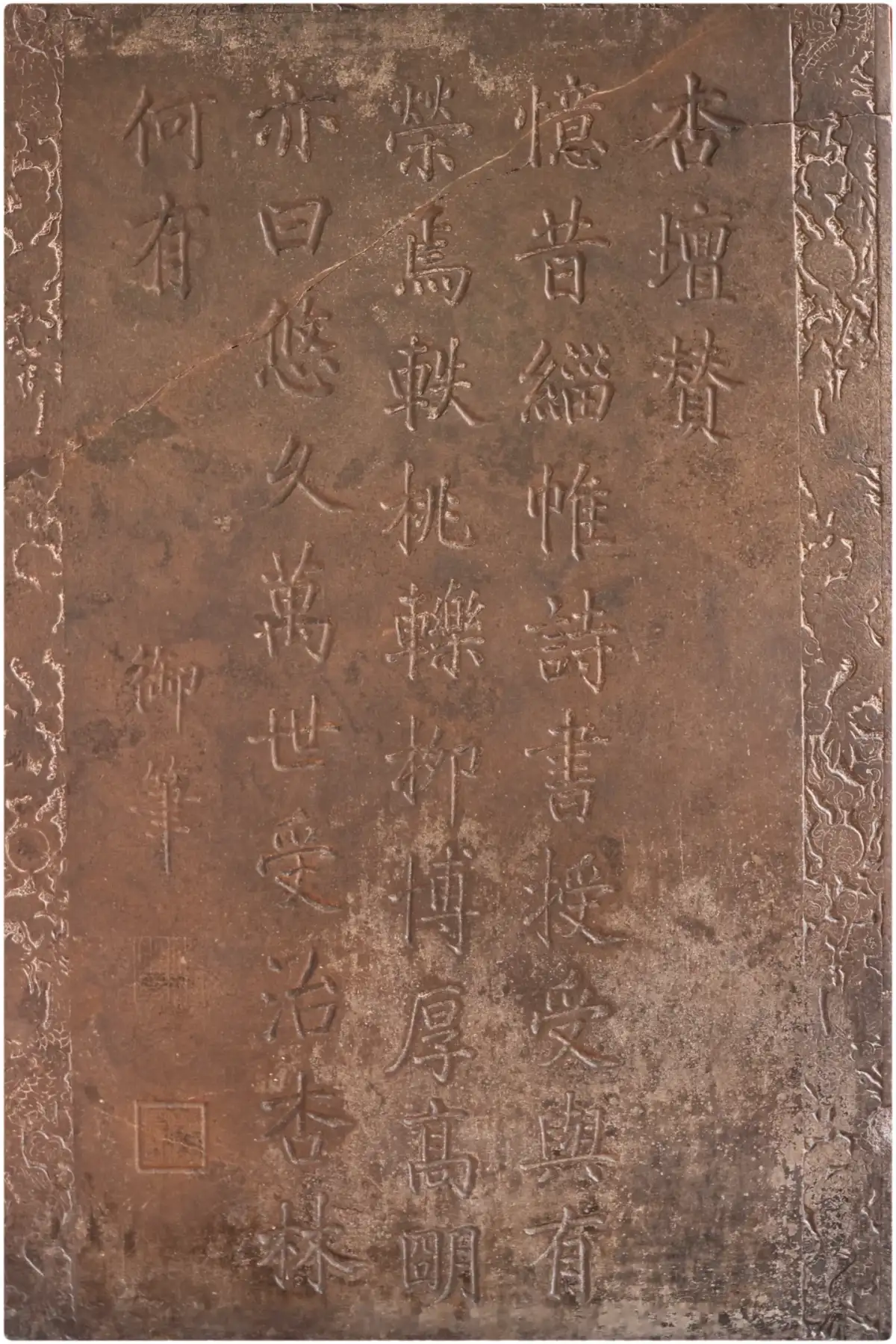
The stone surface of the Xingtan Stele and its carved edges at the Qufu Confucius Temple.
When visiting the Confucius Mansion in the afternoon, it’s best to leave some time to explore the city as well
After the morning’s activities, have lunch and rest before deciding on plans for the afternoon. If you’re interested in family life and traditional governance, the Confucius Mansion offers a perspective distinct from that of the ritual spaces; if your companions are already tired, a short walk through Qufu’s city center is also a suitable option. The Confucius Forest requires separate transportation and time allocation; do not assume—simply because “the Three Confucian Sites” is a collective term—that it is the same compound you can casually stroll through from the entrance of the Confucius Temple.
When making choices, ask yourself what you’d most like to explore further in the morning. Architecture enthusiasts might enjoy comparing the spatial layout of the Confucius Mansion; those interested in family history can spend more time reading the exhibition displays; and those looking to slow down can reserve the afternoon for a leisurely meal. Food choices should be based on dietary needs and actual operating hours; do not view the so-called “Confucius Mansion Cuisine” set menu as a cultural experience that every visitor must purchase. Confirm reservations, required documents, and the scope of access to various areas in advance to give your itinerary a clear direction; specific ticket prices and discounts are subject to current official information.
Taking away one question is more useful than memorizing the names of all the halls
Before leaving, take a moment to review the three landmarks you’ve memorized: an archway, a stele, and the colonnade in front of the Great Achievement Hall. These respectively illustrate how to enter, how to document, and how to commemorate—enough to lay the foundation for your initial understanding of the Confucius Temple. Organizing your photos by these three themes makes it easier to explain this trip to friends than simply grouping them by the time they were taken. You can also double-check the translations of the Chinese plaque inscriptions while organizing your photos to avoid confusing similar names.
When traveling to Qufu by high-speed rail, be sure to verify the actual station location and the transfer routes to your hotel or the scenic area; do not assume your arrival time at the station is the same as your entry time to the park. Having Chinese place names, offline maps, and contact information on hand is especially helpful for international visitors. What you ultimately take away may not be a complete explanation of Confucianism, but rather a question that invites further reflection: Why has a philosophy about learning and life been continuously commemorated by so many generations through architecture, trees, and steles? Such questions ensure that Qufu becomes more than just a stop along the route; it also inspires continued exploration through reading long after the trip is over.
Further Reading and References
Originally compiled by the Dongxing Travel Editorial Department based on publicly available travel notes and listed materials, intended for pre-trip reading and not as a personal account of firsthand experience; opening hours, transportation, reservations, and service arrangements should be verified according to the actual travel dates.
UNESCO: Qufu Confucius Temple, Confucius Forest, and Confucius Mansion
Must all three sites fit one day?
The Three Confucian Sites can be divided by interest. Qufu Confucius Temple focuses on ritual space and Dacheng Hall, while the Kong Family Mansion shifts attention to family life. Allow a separate travel and walking budget for the cemetery. A focused two-site day can be more rewarding.
Brief your guide
Specify the language, children's ages and objects you want to examine, such as Xingtan, inscriptions or carvings. Use a few clear questions and lighter transitions between courtyards. Consider thresholds, stone paving and walking distances when discussing access needs.
Planning references


