East Travel Editorial Department · Travel Diaries and Pre-trip Reading
In the heart of the Old City, let’s try a different way of looking at the palace
The Shenyang Imperial Palace is nestled within the fabric of city life; as you approach its red walls, the sounds of the street have not yet fully faded away. This proximity makes it an ideal highlight of a Northeast China city tour: enter the palace in the morning and conclude the afternoon with a stroll through the nearby neighborhoods, viewing the historical space alongside the old city as it exists today. On your first visit, start by reading the guide map inside the compound to distinguish between the East, Central, and West Routes, then plan your tour around the Grand Hall of State and the buildings along the Central Route—there’s no need to memorize all the hall names right away.
Even if you’ve previously visited the Forbidden City in Beijing, the Shenyang Imperial Palace deserves a fresh start. The architectural layout, historical context, and northern cultural backdrop here form their own narrative; one shouldn’t judge the richness of the experience solely by area or scale. Choose two courtyards with distinct differences, stroll slowly between them, and observe how the archways shift your perspective and how the eaves vary in height—the palace will then transform from a vague impression of imperial grandeur into a space you can concretely recognize.
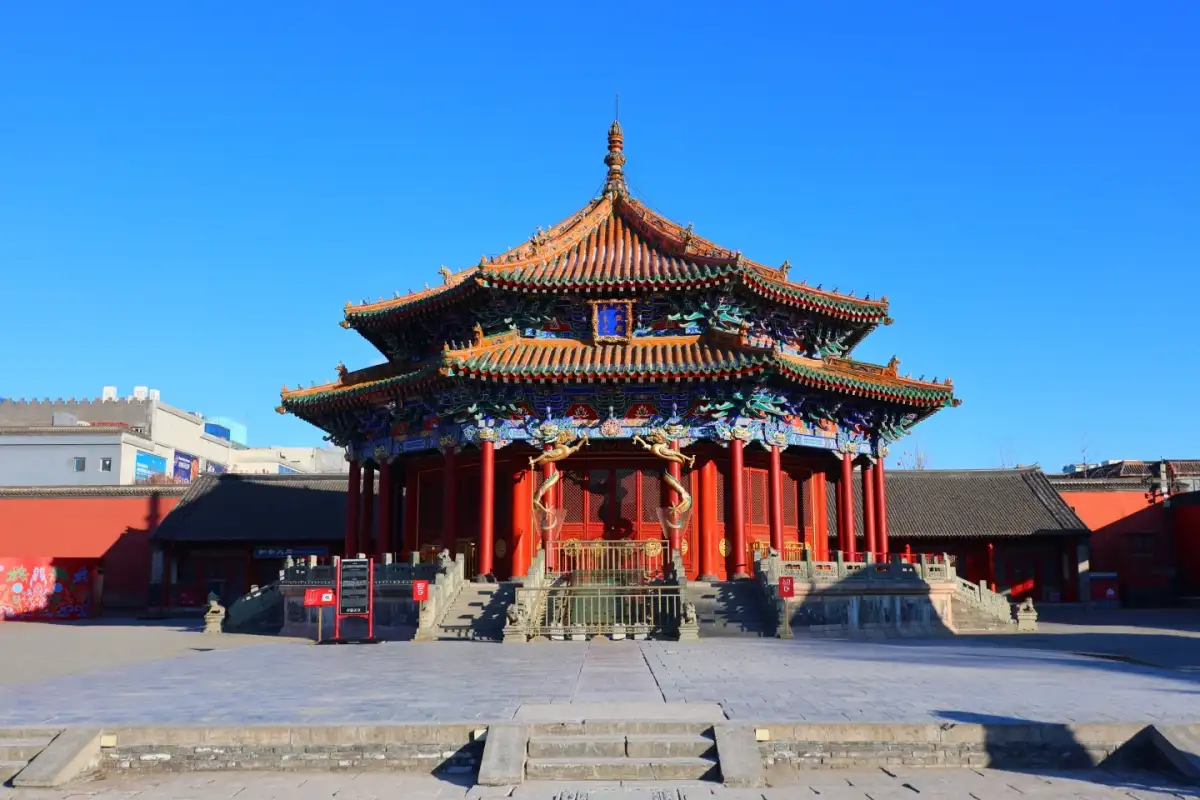
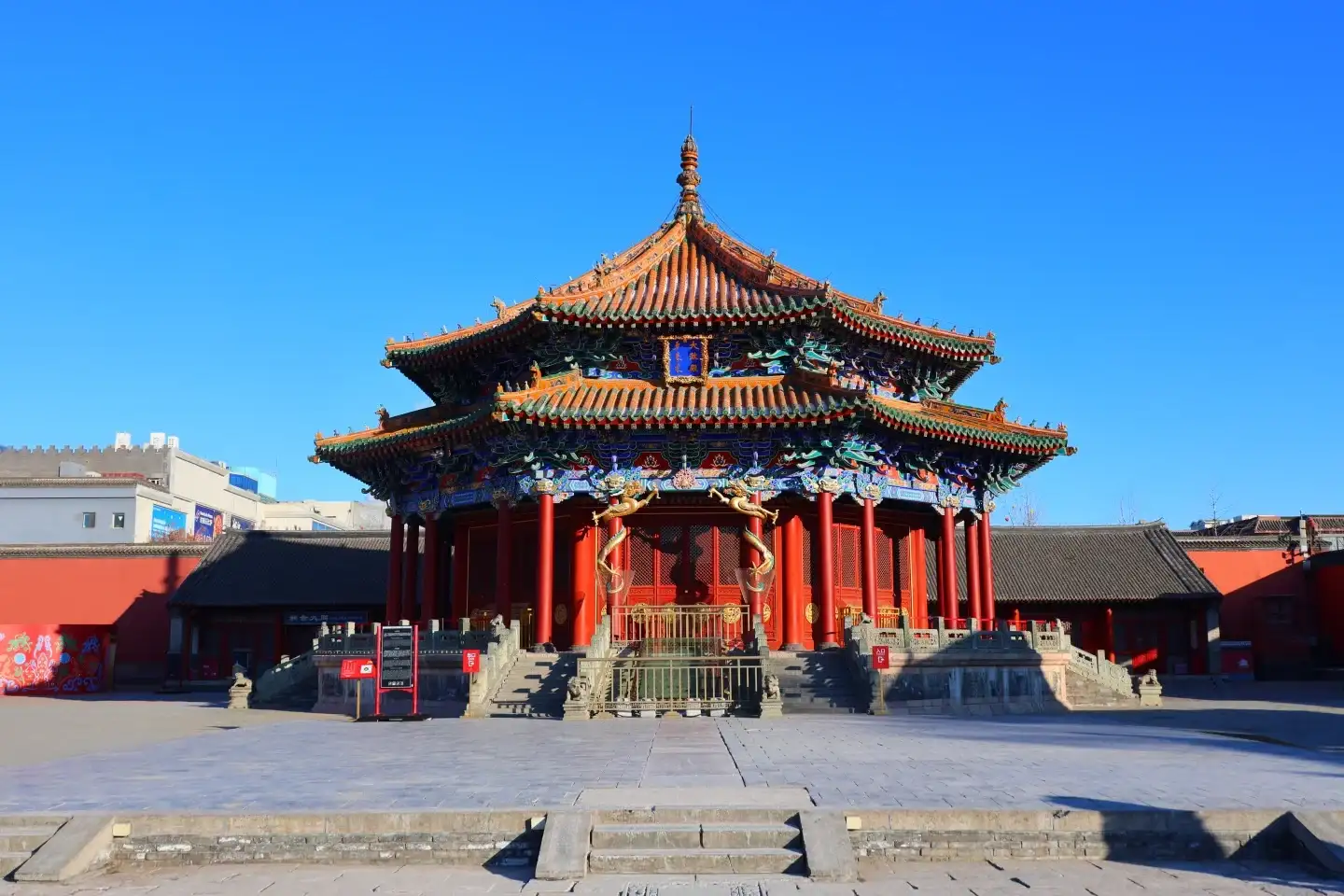
The octagonal structure and double eaves of the Hall of Grand Administration at the Shenyang Imperial Palace. After Summer and Autumn
The Hall of Grand Administration: Examine the Octagonal Form Before the Ornaments
It’s best to first view the outline of the Hall of Grand Administration from a relatively unobstructed vantage point. The octagonal form, overlapping eaves, and soaring roof set this structure apart from the typical rectangular palace. Don’t rush to get up close to the dragon-carved columns; instead, first observe how the colonnade encircles the central area and how the steps separate the ground from the hall itself. As your gaze moves upward from the stone platform, the red columns and painted decorations alternate, creating a stable, supportive relationship within the complex ornamentation.
angle along the accessible path; the same hall will reveal different sides, and the curves of the eaves will no longer align perfectly. Upon closer inspection, identify the coiled dragons, plaque inscriptions, and the colors of the beams and brackets; this allows you to place one or two details back into the overall picture you just observed. Whether you can enter the interior and which furnishings you can see clearly depends on the day’s tour route. By fully appreciating the structure already revealed by the exterior, there is no need to crowd into a narrow space just to get a closer look at the interior.
The Ten Princes’ Pavilion: Placing the Architecture Back Within a Space for Deliberation
The Ten Princes’ Pavilions surrounding the Hall of Grand Administration elevate the significance of the eastern section beyond that of a single beautiful hall. The museum’s introduction links this complex of buildings to early political deliberations, celebrations, and the “tent-hall” layout. Visitors can turn from the front of the hall to either side to compare the arrangement of the pavilions, their distance from the central hall, and why the entire site retains such a large open space. By first observing the spatial relationships between the buildings and then listening to the historical explanation, it becomes easier to understand than simply memorizing a single functional term.
view, though it’s also worth spending some time in the open spaces. When viewed from the front, the focus is concentrated on the Hall of Grand Administration; when viewed from the side, the focus shifts to the arrangement of pavilions—these two perspectives give the site different focal points. Today’s stone paths, railings, and visitor organization do not faithfully recreate past activities; there is no need to imagine every component before your eyes as part of an early Qing dynasty ceremony. By grasping the layout relationships that are still visible, the palace’s history gains a spatial foundation, and the remaining details can be further explored through the exhibition.
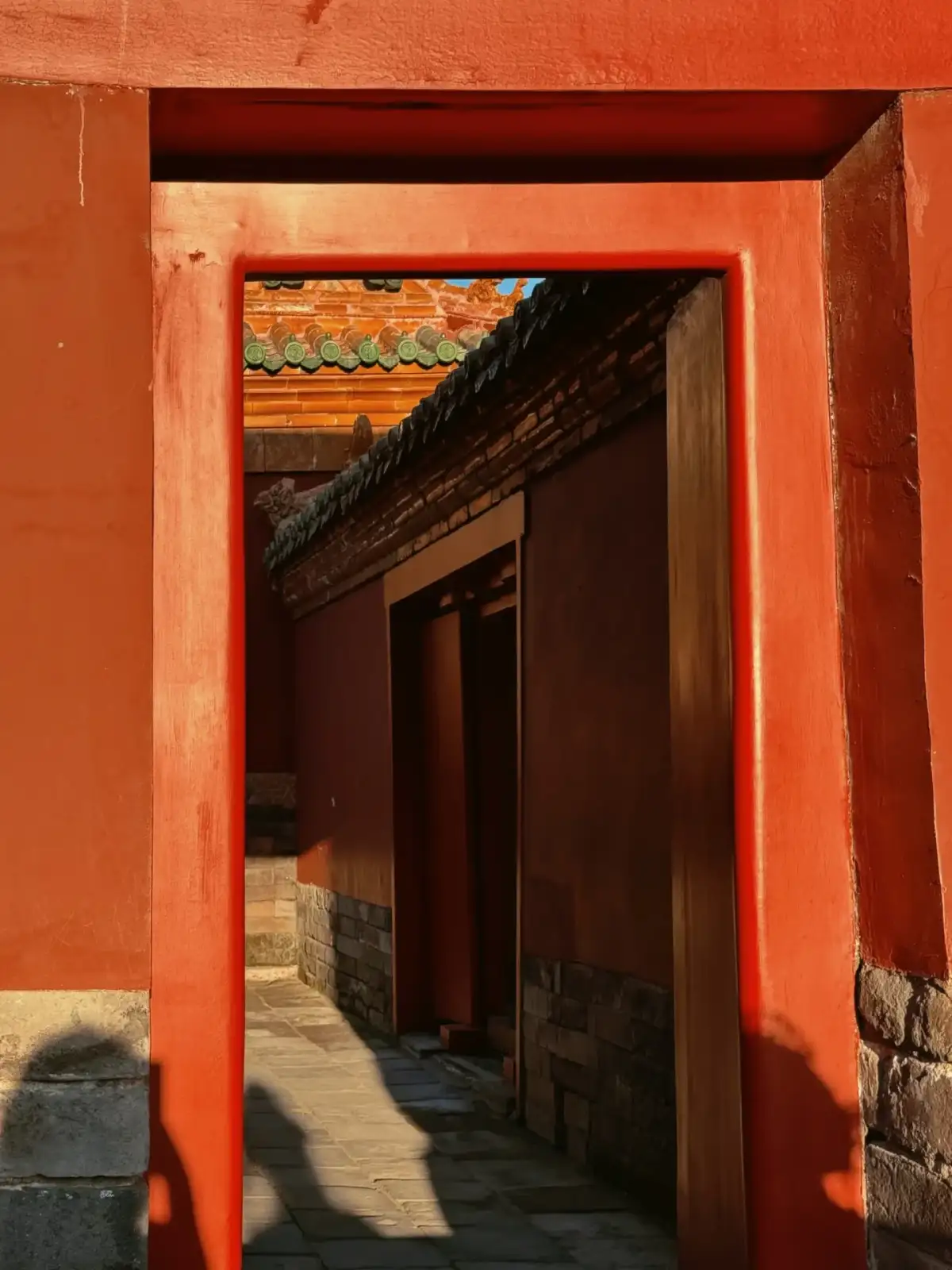
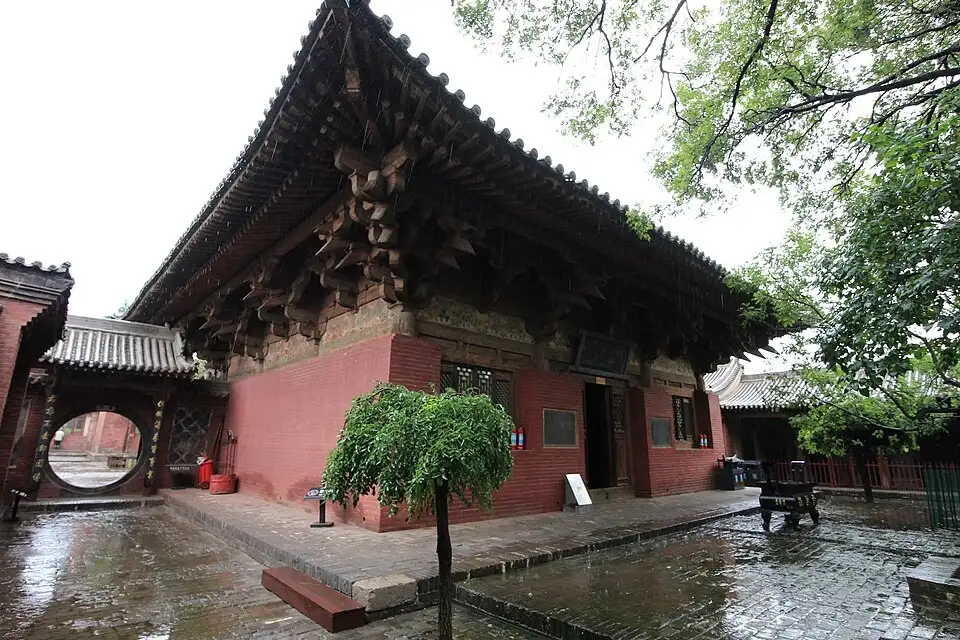
A red archway and the dimly lit passageway inside the palace.
In front of the Chongzheng Hall, the courtyards begin to emphasize symmetry
to the central axis area; the focus of observation shifts from the layout of the eastern wing to the courtyard’s central axis. The Hall of Supreme Government, together with the buildings on either side, establishes a clear hierarchy, with the gate, steps, and roof guiding the gaze toward the front. Standing at a suitable vantage point, first observe whether the structures on the left and right echo each other, then choose one side to examine the window panes and roof tiles in detail. Symmetry isn’t about requiring visitors to take a perfectly centered photo; rather, it helps identify how the space is arranged for both arrival and lingering.
central axis, with variations in elevation between the front and rear. When viewed from the Imperial Bedchamber area, the platform and steps become prominent elements in the composition. Whether a particular path is actually accessible depends on the current opening schedule. Even from a lower vantage point, one can discern the elevated outline of the rear buildings. Compared to the Hall of Grand Administration, the differences between the two areas are already quite clear: one allows the gaze to sweep across the surrounding rows of pavilions, while the other makes it easier to move along the front-to-back sequence, giving the visit a distinct rhythm.
doorways and under the corridors, bringing the palace right before your eyes
The true charm of the Shenyang Imperial Palace lies beyond the main hall. Red doorways frame dim, narrow paths, while gray brick bases and the wooden windows above form a low boundary; stepping from a bright courtyard into the covered walkway, the colors of the roof suddenly take on a more nuanced quality. Choose a section of the open corridor to observe the relationship between the beams, brackets, and columns, then look back at the archway you passed through earlier. As your gaze connects the two views, the architectural scale shifts from the vast mass seen from a distance to the distance of a single corridor span.
painted figures, objects, and landscape motifs—and then combine this with the explanatory notes once you’ve clearly identified them. Even if you don’t know the stories behind them yet, you can still compare the geometric frames, color schemes, and the scale of the images. Don’t just look up and overlook the threshold at your feet, nor should you stop in the middle of a doorway and block the flow of traffic. In areas with heavy foot traffic, walk a short distance ahead and then look back; the architecture will continue to reveal new details—you don’t need to wait for the entire path to clear before beginning your appreciation.
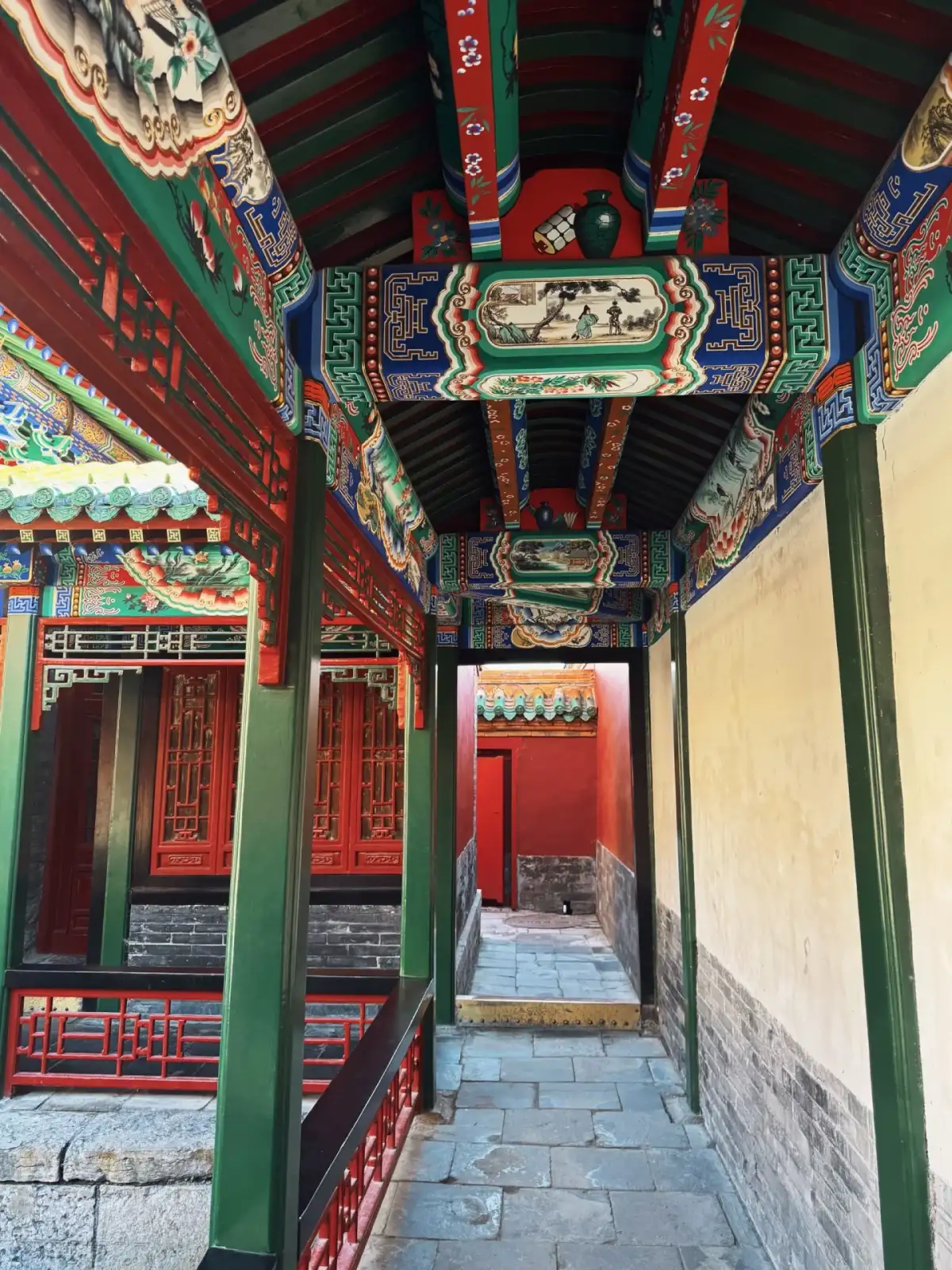
Painted beams, brackets, and columns in the connecting corridor of the Shenyang Imperial Palace.
Near the Phoenix Tower, use variations in height to understand the living quarters
The Phoenix Tower and the elevated platform area nearby help visitors understand that the palace is not limited to the front section where government affairs were conducted. The raised ground level, surrounding walls, and architectural sequence create a clearer division between the rear spaces and the front courtyards. When viewing the building, first observe how it stands on the platform and how its layered eaves connect with the lower roofs nearby, then explore the historical functions of the corresponding structures. Topography and architecture serve as the most direct entry points for appreciation here.
When viewing the furnishings in the imperial quarters, it’s also advisable to maintain this sense of scale. The size of the furniture and the relationship between windows and doors reveal more about how a room is organized than a string of anecdotes about the figures who lived there. For information on the era of the furnishings, whether they are original pieces, and whether they are in their original locations, consult the on-site exhibition labels; one should not automatically infer a particular emperor’s daily emotions from a single exquisitely furnished room. After viewing the interior, return to the courtyard to compare the intimate scale of the interior with the distant view from the elevated platform; this makes it easier to appreciate the spatial contrast between the ceremonial hall and the living quarters.
Choose an exhibition to provide textual context for the architecture
If you have time, choose one of the day’s exhibitions related to Qing dynasty history, court artifacts, or architecture. Before entering the exhibition hall, ask yourself a simple question—for example, what kinds of artifacts were used at court, or how the Shenyang Palace continued to be used after the capital was relocated. Exploring an exhibition with a specific question in mind—rather than simply photographing one eye-catching artifact in each gallery—will help you connect the eaves and rooms you saw that morning into a coherent historical narrative.
Exhibitions are subject to change, so check the museum’s announcements before you go and choose your itinerary based on the actual arrangements once you arrive. You can also tailor guided tours to your interests by selecting the language, duration, and scope, allowing architectural details and historical explanations to complement one another. When you hear unfamiliar names, there’s no need to memorize all the dates right away; instead, associate them with a specific building or artifact you see before you. By the end of the visit, being able to describe even one change you observed is far more valuable than simply taking home a large number of photos of exhibit labels.
Step outside the red walls and observe daily life on the nearby streets
After leaving the palace, take a short walk through the Old City; there’s no need to rush to catch a ride to another distant attraction. The commercial district toward Zhongjie and the streets surrounding the palace each have their own distinct sounds, shopfronts, and pedestrian traffic. Conclude your focused tour of the palace with a meal or a hot drink, then take a stroll along a route that’s convenient for your return journey—the historical space will naturally reintegrate into the urban fabric of today. A palace is not an island isolated from its surroundings on a travel map.
When choosing a place to eat, consider the menu, operating hours, and your personal dietary preferences—there’s no need to treat a popular, long-line restaurant as a mandatory cultural experience. If you’re exhausted by the end of the day, simply sitting down to reflect on the outline of the Hall of Grand Administration and that painted corridor can be a fitting way to wrap up your itinerary. The value of strolling through the old town lies in observing how life outside the gates intertwines with the spaces within—not in constantly racking up the number of “check-ins.” Figuring out the route back to your hotel or the station in advance will make your evening much more relaxed.
In winter, focus on the lines; in the warmer months, allow yourself to linger in the courtyards
If you visit Shenyang in the cold season, the red walls and glazed tiles may create a striking contrast with tree branches and snowdrifts, and the biting wind in the unprotected areas of the courtyards will be even more pronounced. Wear shoes with good traction, and alternate between indoor exhibitions and outdoor architecture; whether or not there’s a snowy landscape, it doesn’t affect your appreciation of the roofs, colonnades, and archways. During the warmer months, you can linger a bit longer in suitable courtyards to observe how sunlight shifts from the eaves to the ground, avoiding the urge to snap a quick photo every time you look up.
Before booking, verify the current open days, admission time slots, and procedures for using foreign identification documents, and allow extra time for security checks at the entrance and your return journey. If you encounter building renovations, skip the affected sections and substitute them with a current exhibition; avoid climbing over barriers to find angles for old photographs. As this journey draws to a close, perhaps the most valuable takeaway is a clear sense of comparison: the unfolding of the octagonal halls, the progression of the central courtyard, and the refined details of the corridors collectively define the unique architectural scale of the Shenyang Imperial Palace.
Further Reading and Reference Sources
Originally compiled by the East Travel Editorial Department based on publicly available travel notes and listed information, intended for pre-trip reading and not as a personal account; opening hours, transportation, reservations, and service arrangements should be verified according to the actual travel date.
UNESCO: The Ming and Qing Imperial Palaces in Beijing and Shenyang
Shenyang Imperial Palace Museum: Palace Tour
Why compare routes within the same palace?
Read Shenyang Imperial Palace architecture by comparing the octagonal mass of Dazheng Hall and nearby pavilions with the central courtyards' axis. Dazheng Hall details include the surrounding open space as well as painted decoration. Compare the view before and after passing through a doorway to ground historical scale in a visible spatial change.
Balancing buildings and an exhibition
If a central-route courtyard walk takes much of your time, select one exhibition related to Qing history, then return to a covered passage to examine timber details. Those more interested in objects can reduce repeated courtyard crossings. Plan pauses around the group's pace in any season, and add a short old-city walk after leaving to compare life inside and outside the red walls.
Planning references
Planning reference: Shenyang Imperial Palace architecture 1