Dongxing Travel Editorial Department · Travel Diaries and Pre-trip Reading
First, find the mountain where the grottoes are located amidst the woods
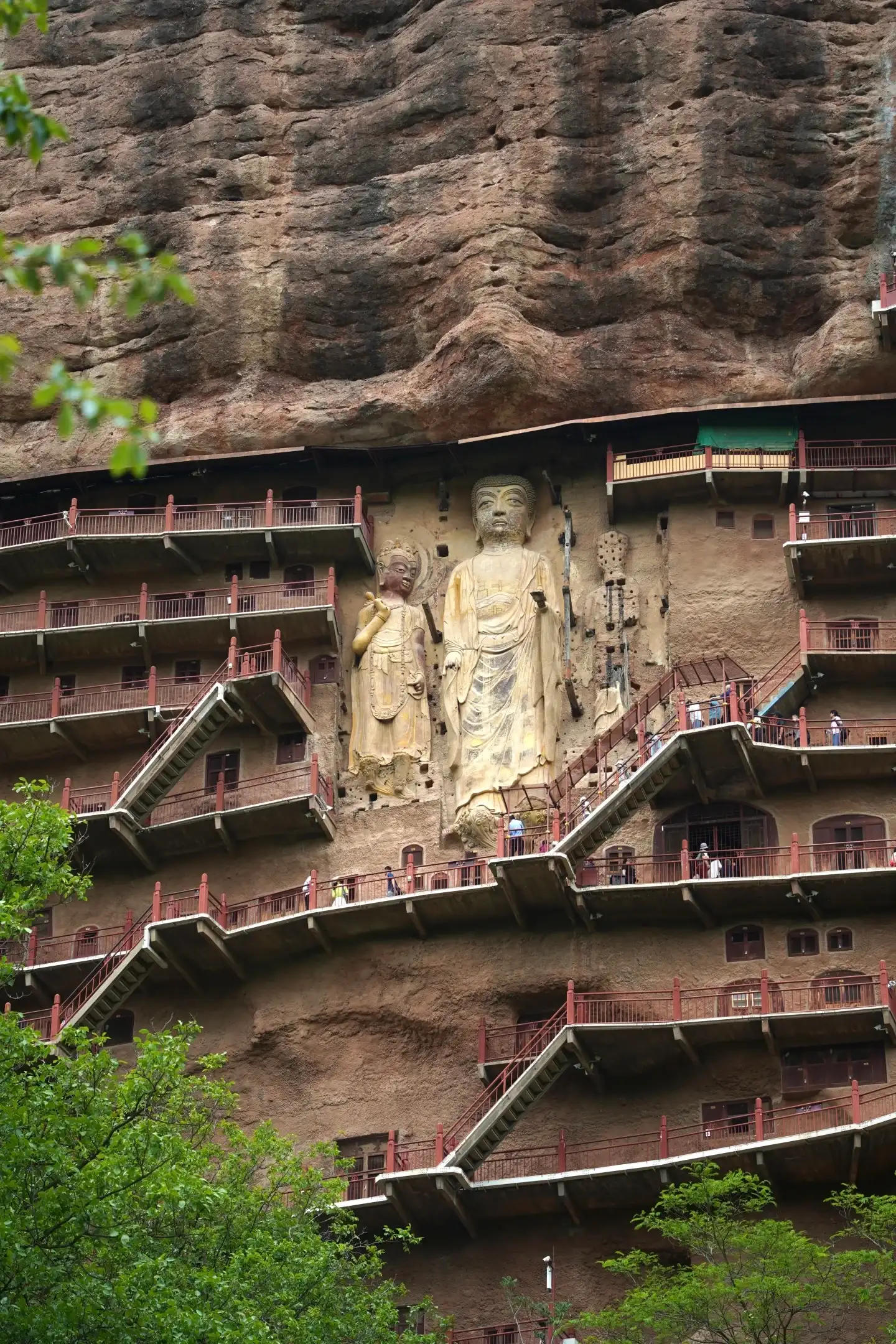
Maijishan does not suddenly begin with a cliff face entirely covered in caves. Upon entering the scenic area, the mountains, forests, paths, and the gradually approaching rock face collectively form the first half of the tour. It’s best to first take in the overall view from a designated viewing area at the base of the mountain: the upper part of the mountain blends with the surrounding forest, while tiered walkways on the cliff face connect the caves; the exposed statues transform what would otherwise be an indistinguishable rock face into a historical space open to visitors. This distant view helps you decide whether you’re up for continuing up the boardwalk and also explains why a small sculpture further along is best viewed from the cliff’s edge. If it’s your first visit to Tianshui, there’s no need to cram Maijishan, Xianrenya, and all the city’s historic sites into a single day. Set aside ample time for just one mountain—travel, waiting in line, guided tours, and resting in the woods should all be part of the experience itself. The grottoes are truly spectacular, but how well you prepare at the base of the mountain determines whether you can stay focused while on the cliff face.
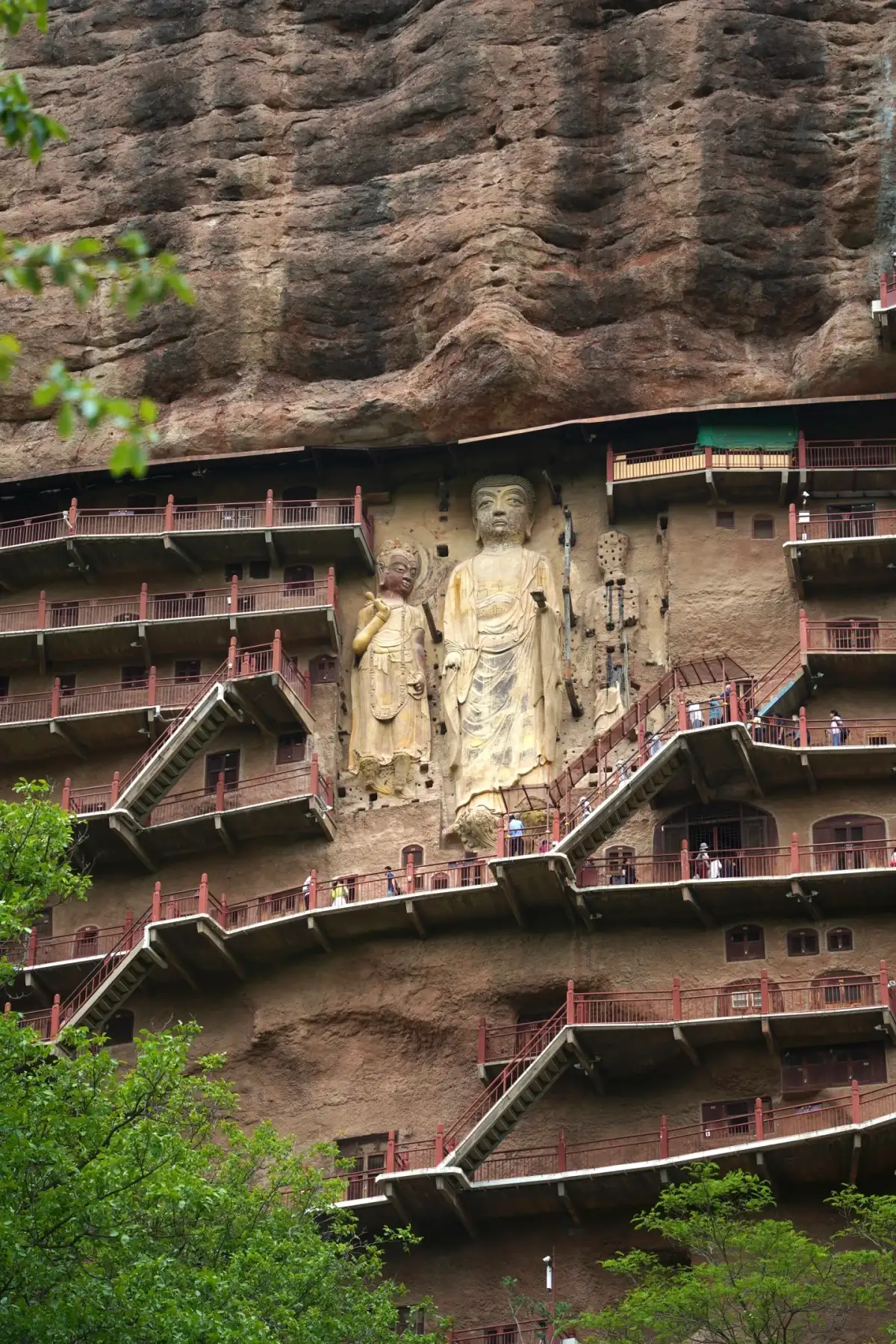
The cliff-face sculptures and tiered walkways of Maijishan.
Before the cliff face, first observe the relationship between the caves and the paths Upon reaching the foot of the mountain, the most striking impression usually comes from the large, exposed sculptures and the
Upon approaching the mountain, the most striking impressions usually come from the large, exposed sculptures and the network of horizontal and diagonal walkways clinging to the cliff face. As you view them, try first to distinguish which parts are natural rock formations, which are the sculpted figures, and which paths are used for modern-day visits. The caves are not neatly arranged on a single level but form a complex relationship with the rock face, historical construction, and later conservation efforts. When viewing the overall scene from the foot of the mountain, the height difference between the figures’ bodies and the cliff face is quite clear; up close, however, you’ll notice the folds of their robes, their facial features, and the protective structures. Don’t let one vantage point replace the other; spend a few minutes at the base orienting yourself, and once you’re up there, it will be easier to know which side of the mountain you’ve passed through. There’s also no need to identify all the cave numbers here—first understand how the ascent, viewing, and descent are organized, then note down the numbers that interest you; this will give you a clearer direction for your subsequent reading.
Before setting out on the walkways, choose a route that suits your physical condition
The tour routes at Maijishan are subject to change based on visitor volume, weather, and conservation efforts; the caves and paths that were open during a previous visit cannot be taken as a guarantee for today. Before entering the core cave area, check the official announcements for that day and consult staff to clarify available routes, whether one-way traffic is in effect, and what each route covers. For those with a fear of heights, limited mobility, or traveling with young children, it is essential to first assess the actual conditions of the steps and walkways; do not assume there are no heights simply because the terrain is described as “relatively gentle.” If you ultimately decide to stay at the base of the mountain, you can still carefully observe the cliff-face sculptures and the overall environment. Once you’ve ascended, proceed in the designated direction and do not walk backward to catch a statue you missed earlier. Before setting out, you can share the two questions you’re most curious about with your tour guide to make the most of your limited time there. Choosing a route is part of the travel experience; there’s no need to wait until you feel visibly anxious to change your plans at the last minute.
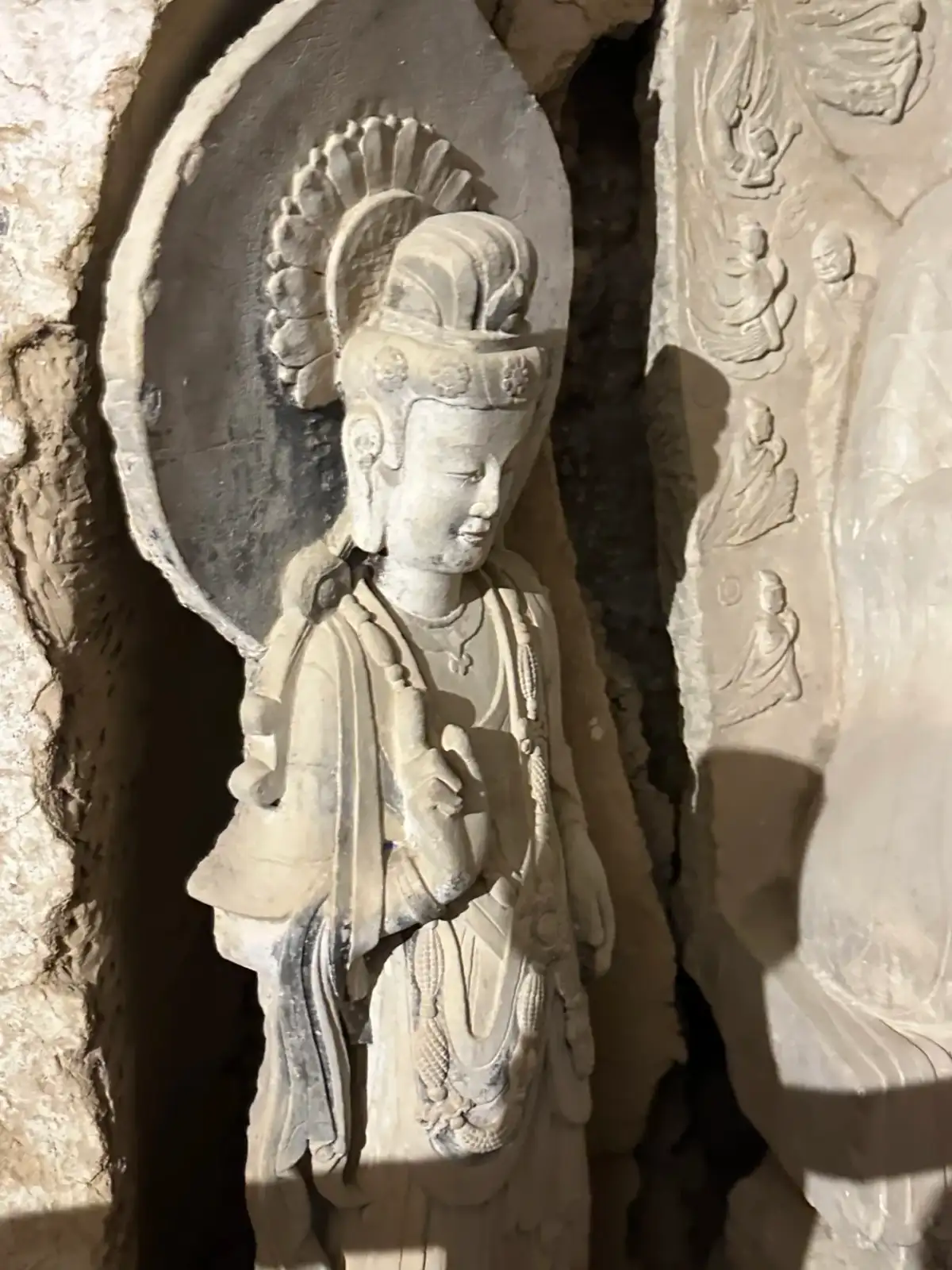
The facial headdresses and drapery of the Bodhisattva statues in the Maijishan Grottoes.
A single small statue can reveal a wealth of movement
The appeal of the Maijishan sculptures lies not only in the height of the large Buddha statues. The facial expressions, hand gestures, headdresses, and drapery of the smaller figures often reveal even more nuanced expressions. When viewing a Bodhisattva statue, start by observing the angle of the face, then examine the relationship between the arms and the chest, and finally observe how the nimbus, sash, and adjacent forms support this pose. Sculpture does not require a wealth of technical terminology to be appreciated, but the era, cave, and materials to which it belongs should still be understood based on on-site signage or expert explanations; it is not advisable to draw conclusions based solely on a single face. A gentle expression may evoke everyday emotions—this is a matter of the viewer’s perception—but the religious significance of the sculpture requires a more specific context. Both perspectives can coexist. After examining a detail closely, return to the cave as a whole; you will often discover compositional relationships that were previously easy to overlook, and you will also understand why individual figures are not isolated.
Both the colors and the signs of wear and tear are part of the history visible today.
The colored sculptures, murals, and rock surfaces inside the grottoes are not uniformly preserved; layers of paint, cracks, missing sections, and repairs from various historical periods are all intertwined. When observing these traces, begin by distinguishing between the phenomena you actually see and the underlying causes that require explanation. Faded colors do not necessarily mean there were no original polychromatic paintings, nor should a relatively new section be automatically attributed to a restoration from a specific era. When explaining the materials and conservation process, it is helpful to focus on how the colored sculptures are attached, how the folds of clothing are formed, and why humidity and lighting need to be controlled. Viewing the sculptures in this light will prevent one from making a simplistic judgment based solely on whether they are “intact” or “damaged.” Missing fingers, blurred patterns, and well-preserved facial features all serve as reminders that what stands before us is a cultural relic that has weathered the test of time. Photography restrictions and conservation measures thus take on practical significance; they are essential to the preservation of the material and should not be viewed merely as obstacles to viewing.
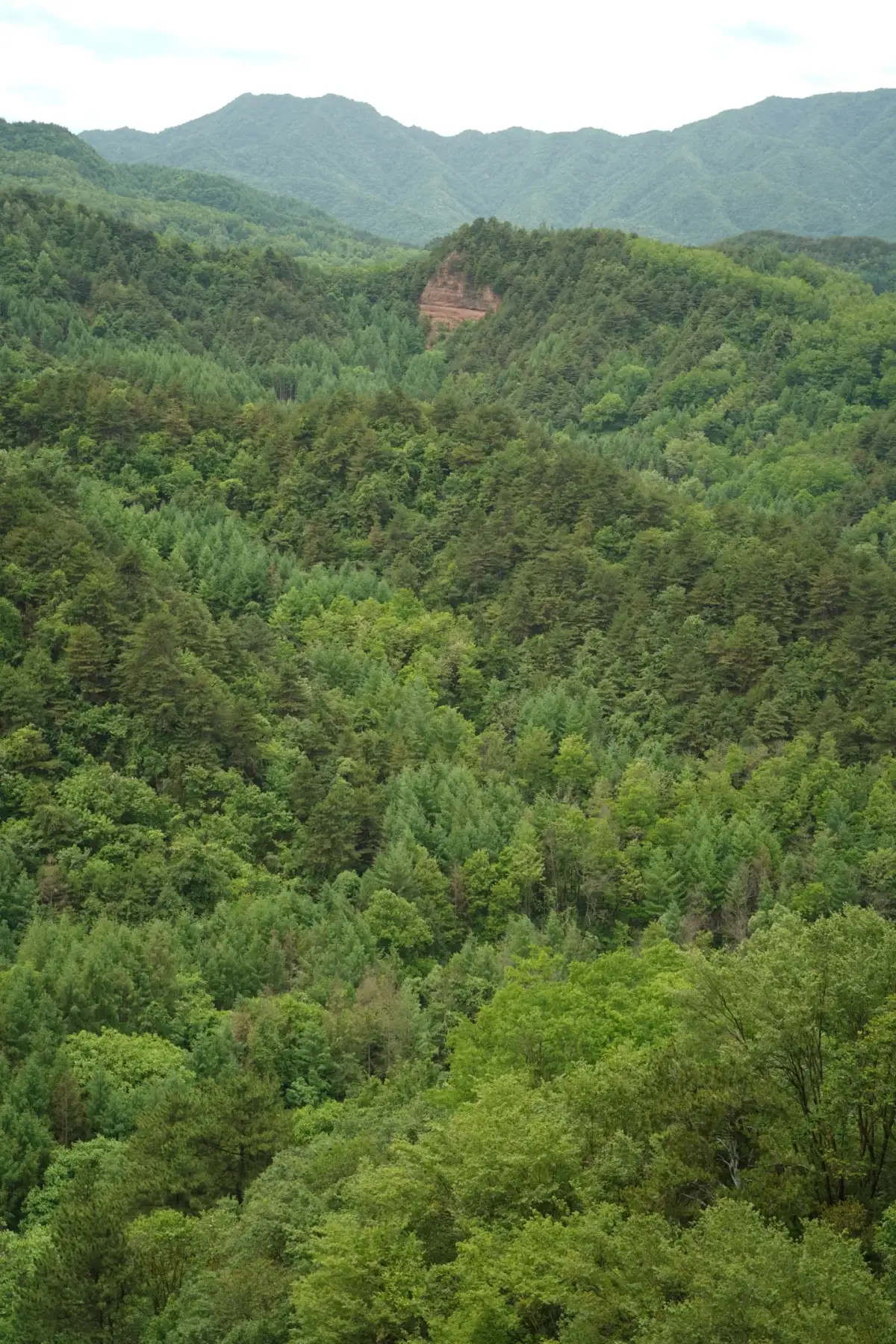
The forests and hillsides surrounding Maijishan.
Walking and viewing—each has its own place
The official Maijishan visitor guidelines remind tourists that the walkways are narrow; visitors should proceed in an orderly manner and refrain from taking photos or lingering on the walkways. Content that truly warrants a closer look should be viewed at locations designated by staff and according to the guided tour schedule; do not keep the line behind you waiting just because the view in front of you is beautiful. Before entering the core area, stow items that could easily fall—such as cell phones, keys, and water bottles—inside your bag; carrying fewer items in your hands allows you to focus better on the path ahead. Even at designated photography spots, be sure to confirm specific restrictions: do not use flash, and do not touch the statues or the cliff faces. In rainy or snowy weather, road and rock surface conditions may change; please follow temporary management instructions and guidance. If you wish to preserve your memories, you can note the cave number, a detail of the clothing folds, or a question raised during the tour after leaving narrow sections. Quiet and attentive viewing does not depend on taking a photo at every single spot you pass.
Return to the woods and let the forms you just encountered slowly sink in
After completing the cliff-face route and returning to the forest path at the foot of the mountain, you’ll find that your eyes no longer need to simultaneously take in the elevation changes, your footing, and the details inside the caves. This is a good time to find a public rest area to sit for a while and reflect on what you’ve just seen in chronological order: first, the entire cliff face; then the paths and caves; and finally, a face or a fold in a garment. The layers of the surrounding forest form a striking contrast to the rock face, setting Maijishan apart from the arid and desolate cave environments many people imagine. The mountain forest is not merely a backdrop at the end of the tour; it helps visitors understand the relationship between the site’s location and its environment. If you still have the energy, take a leisurely stroll along the designated open paths—without straying from the trail in search of unique vantage points. The flowers, trees, and distant hillsides are all worth admiring, but there’s no need to try to name every plant from memory. As you shift your focus from the sculptures back to nature, the pace of your journey will once again become more relaxed.
Departing from Tianshui: Confirming the Bus Station and Guided Tour
It’s important to distinguish in advance between Tianshui’s rail terminals and the city’s main activity areas. Tianshui South Station, Tianshui Railway Station, and your planned accommodation location will all affect your transportation options to Maijishan; while official guides list public transportation options, you should still verify specific schedules, departure points, and service status before departure. If arranging a shuttle service, clearly specify the scenic area entrance, the return meeting point, and the estimated end time; do not rely solely on a location found on your phone at the last minute for transportation at the foot of the mountain. Professional guided tours and visits to special caves require separate arrangements; language options, open caves, meeting points, and fees should be confirmed through official channels. A standard visit does not guarantee access to all caves, and a specific combination of special caves mentioned in a travel log may not remain open for future visits. For international visitors, it is advisable to confirm in advance the required documents, payment methods, and contact information. By taking care of these logistical matters at the base of the mountain, you can focus your attention on the cultural relics and trails along the cliff face.
There are suitable options for both the rainy season and sunny days
The greenery in the forests of Maijishan changes with the seasons; on sunny days, you can see the texture of the cliff face more clearly, while on cloudy days, the colors between the sculptures and the rock may appear softer. Rainy days don’t just mean missing a blue sky in your photos; they can also affect the maintenance of steps, walkways, and the mountain itself. Whether the area is open should be determined by the official schedule for that day. In summer, consider visitor volume and lines; in winter, check for low temperatures and icy conditions. If you cannot access your planned route, focus on viewing the site as a whole from the foot of the mountain, or return to Tianshui city to visit cultural sites confirmed to be open—do not assume that closed caves can be easily made up for later. When you leave, what you’ll remember may not be the most numbers you’ve memorized, but rather a subtle gesture in a statue, or the way that cliff face rises from the forest. Maijishan places art, religion, and the mountainous environment along the same path; by carefully choosing how you view them, you can allow all three to complement one another.
Further Reading and Reference Sources
Compiled and organized by the Dongxing Travel Editorial Department based on publicly available travel notes and listed information. Intended as pre-trip reading material; this is not a personal account of the experience. Please verify opening hours, transportation, reservations, and service arrangements based on your actual travel dates.
Maijishan Grottoes Art Research Institute: Tourist Guide and Visitor Information
How can you decide if the higher route suits you?
Begin a Maijishan Grottoes visit below the cliff to understand where caves and paths sit, then check the open route suitable for your group. Maijishan cliff walkway choices differ from a woodland stop. If heights concern you, do not wait until a narrow section to decide. Ask what can be seen and how to return; ground-level viewing still explains the relationship between caves and mountain.
Where should you pause over a small figure?
For Maijishan sculpture observation, choose one interpreted figure and examine gestures, clothing folds and balance before considering colour and damage. Use formal explanation when visibility is limited instead of crossing boundaries for an angle. Back among the trees, note one detail and one question, turning a brief higher-level view into material you can continue exploring.
Planning references
Planning reference: Maijishan Grottoes visit 1