
Dongxing Travel Editorial Department · Travel Diaries and Pre-Trip Reading
View the island from the shore first—your journey has already begun
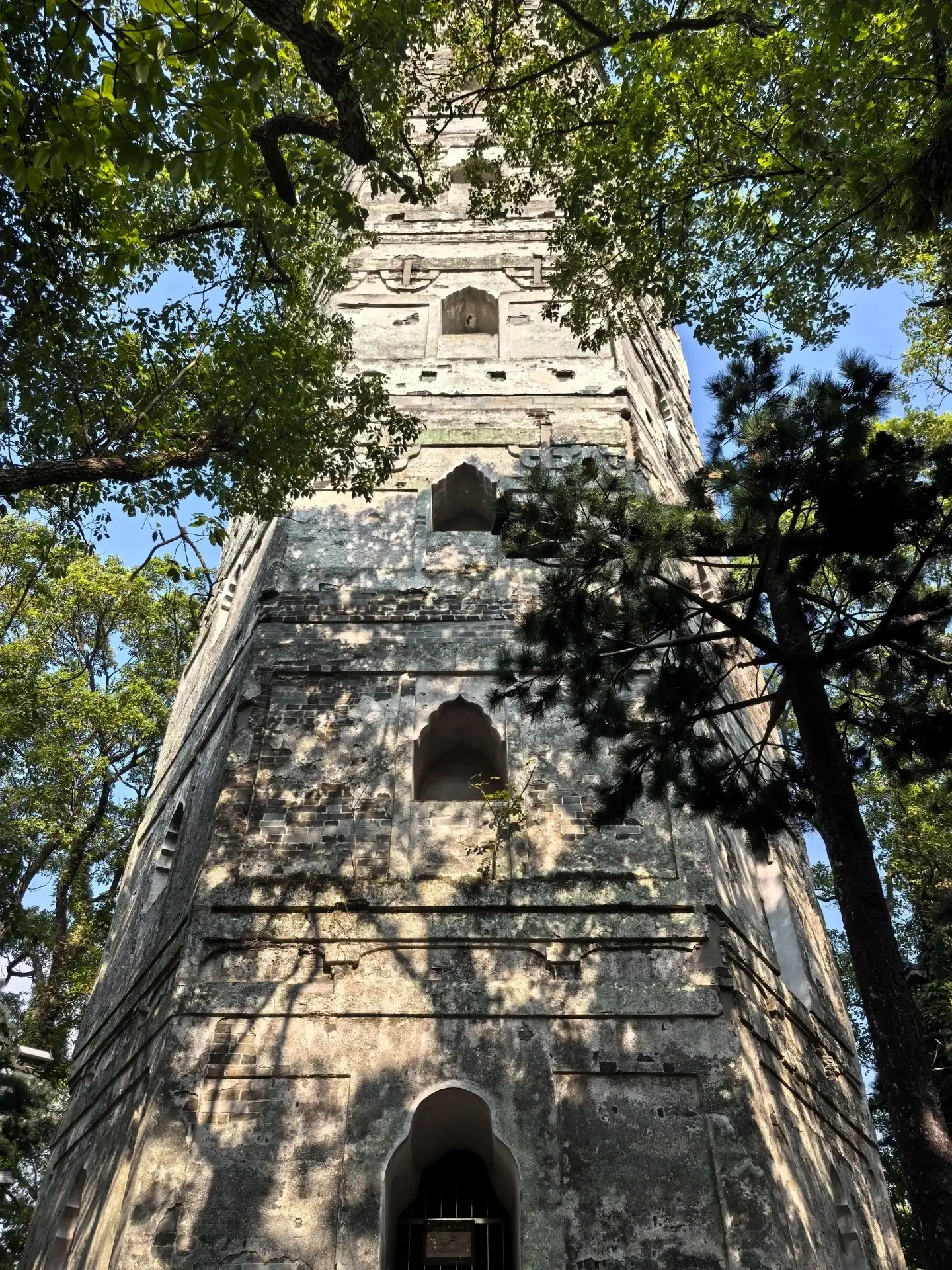
Jiangxinyu is situated in the middle of the Ou River, so visiting it requires understanding the relationship between the island and the shore as a whole. Before setting foot on the island, take a moment from a safe public riverside spot to observe the positions of the two pagodas: they rise above the trees and buildings, yet the island is not defined by just one vertical landmark. This distant view serves as a fitting introduction, providing a point of reference for the close-up view you’ll experience once you set foot on the island. On a city tour of Wenzhou, set aside half a day for this spot to transition from the streets to the water, and then look back at the city from the island.
ferry as the actual boundary of this journey. Before departure, verify the current pier in use, schedule, ticketing procedures, and final return arrangements—do not rely on fixed boarding locations from outdated travel guides. When choosing a boarding location, always refer to the latest ferry service announcements. The ferry doesn’t depart immediately upon arrival at the pier, so allow plenty of time for waiting and boarding. With this preparation, once you’re on the island, you won’t have to constantly worry about whether you’ll make the return trip—and you’ll be better able to take your time exploring the twin towers, the temple, and the shoreline at a leisurely pace.
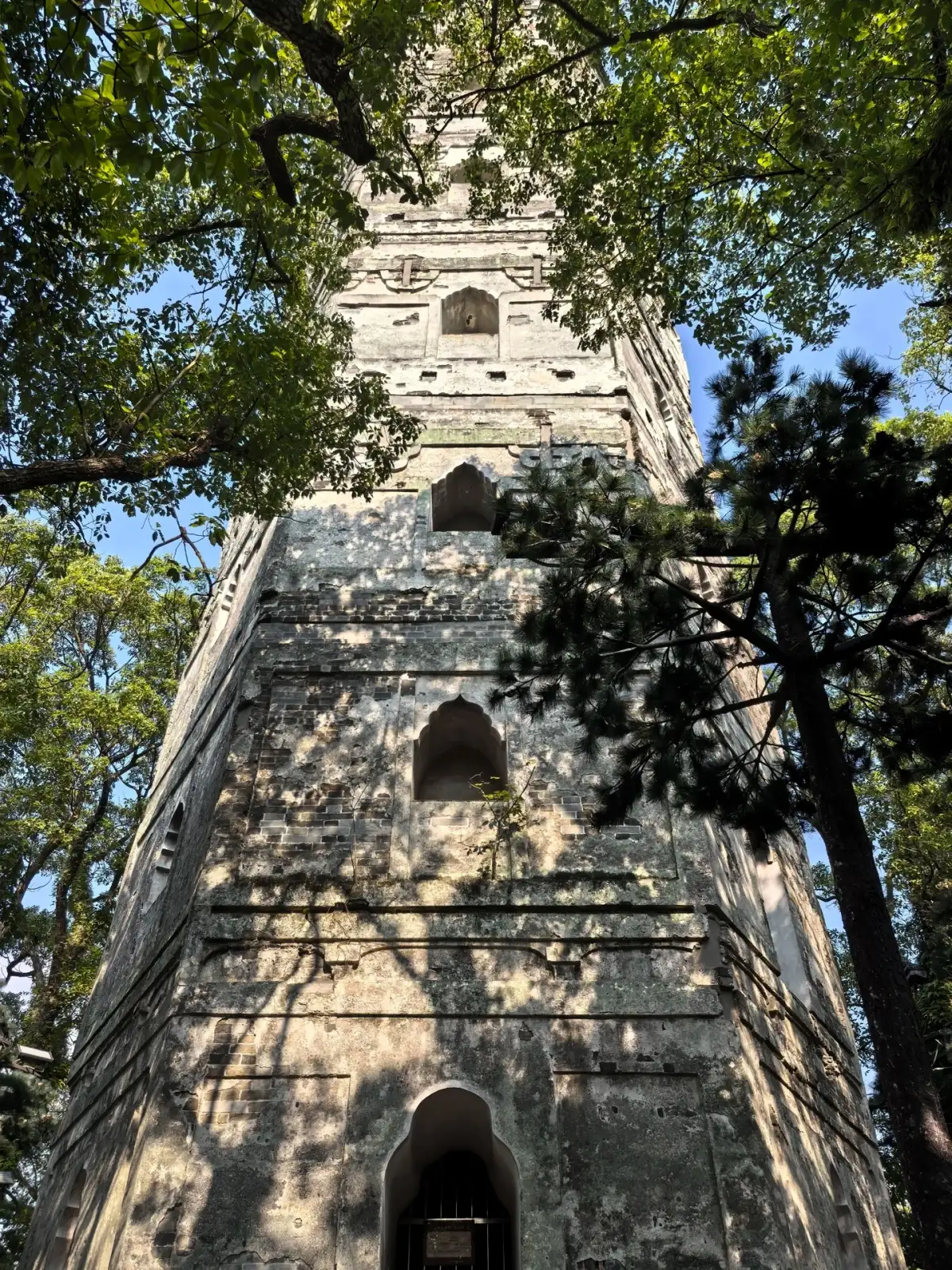
An ancient pagoda among the branches on Jiangxinyu Island in Wenzhou.
A few minutes on the boat let the city recede into the distance
As you ride the boat, notice how the buildings on the shore gradually shrink, while the pagodas and trees become increasingly distinct. This isn’t about searching for the perfect vantage point on the deck, but rather about sensing the shift in viewing distance. When on shore, the city feels close; once out on the water, it becomes a horizontal silhouette. When the island is in the distance, it’s a mass of tree shadows; as you approach, the shoreline, rooftops, and sloping terrain come into view. A brief crossing across the water already offers two distinct spatial scales.
Follow onboard safety guidelines: observe from permitted areas, do not lean over the railings, and do not obstruct the passage of other passengers. Weather affects the water’s surface, the feel of the breeze, and visibility; while views on cloudy days may not be crystal clear, you can still appreciate the river’s width and the layered architecture. If ferry service is adjusted due to weather conditions on the day of your visit, adjust your itinerary according to official and on-site announcements. Enjoying the distant river views or taking a stroll among the city’s buildings can serve as alternatives—don’t insist on visiting the island simply because you’ve made a special trip to get there.
Start by observing the outlines of the twin pagodas, then explore their connection to the voyage
The East and West Towers are key landmarks of Jiangxinyu. According to Wenzhou’s cultural and tourism materials, they are linked to the history of ancient navigational beacons, reminding viewers that the towers are not merely religious symbols—they once helped passing ships navigate. A visual analysis can begin with the outlines: the number of stories and the projecting eaves create a repetitive pattern; the distance between the towers and the tree canopies determines how they appear from afar; and these two elements together form a recognizable composition.
close-up of the base of a pagoda right away; start by observing from an open vantage point where you can see the whole structure clearly, then approach along the designated route. The two pagodas differ in their current appearance and state of preservation; you cannot apply a single description to both, nor can you assume that climbing them is permitted. When reading the descriptions, distinguish between the towers’ construction history, subsequent restorations, and the parts preserved today. On the return trip, take another look from the shore—the details of the towers will recede into their outlines once more, making it easier to understand the significance of these historic navigation markers: they are meant to be recognized from afar, not merely admired up close.
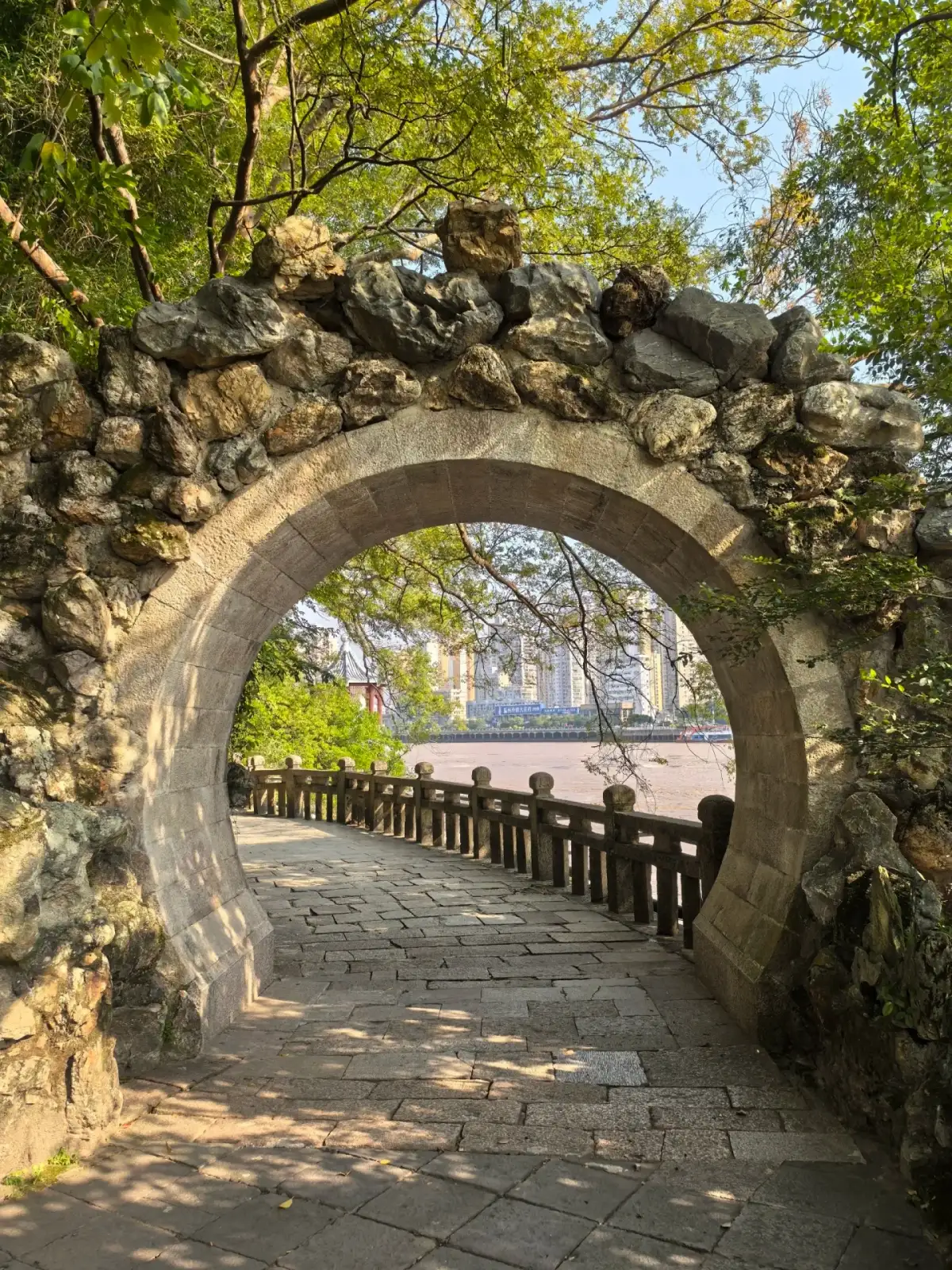
View of the river and the city from the circular stone arch on Jiangxinyu Island.
Jiangxin Temple—narrow your gaze between the trees and the pagoda
Once you reach the vicinity of Jiangxin Temple, your gaze will shift from the river’s surface to the gates, courtyards, and eaves. Official materials list the island’s cultural landmarks, such as Jiangxin Temple; upon arrival, you can first observe how the temple positions itself among the two pagodas and the surrounding trees. The openness of the exterior contrasts with the intimacy of the courtyard; even if you’re unfamiliar with Buddhist architecture, you can discern its order through the entrance direction, the space in front of the hall, and the layering of the roof.
temple—it still holds religious significance, so visitors should observe on-site etiquette and adhere to photography and access guidelines. Do not treat ongoing rituals as performances you can approach at will, nor use monks or pilgrims as props for your shots. When viewing the couplets and inscriptions on the gates, ask a certified guide to help with pronunciation and meaning; do not invent your own stories simply because the characters are beautifully written. For travelers who cannot read Chinese, the light and scale of the architecture provide the first layer of understanding, while written explanations supplement the history—it is not necessary to grasp all the allusions from the very beginning.
The Island of Poetry: Perfect for Reading Just One Poem
Jiangxinyu has rich connections to poetry and literature; the verses of Xie Lingyun and others have even been included in official guides. If you’re interested in Chinese literature, choose a poem related to this isolated islet—one whose source you can verify—and read it; this makes it easier to connect the scene before your eyes than simply collecting a long list of famous names. The clouds, water, and distant shores described in the poems must be viewed in conjunction with their actual locations; today’s city has changed, so there’s no guarantee you’ll see the same scenery as in the era when the poems were written.
where you can pause for a moment by an open pavilion or along a walking path—first gazing at the river’s surface nearby, then at the opposite shore. For those who find reading Chinese difficult, choosing a reliable translation can help you understand how water and sky are woven into the sentences. Literature offers a way of seeing, not an exact navigational map. The memorial structures on the island and the later reconstructions each have their own contexts; one cannot simply assume they are the original structures personally used by the poet just because their names are associated with him. Reading in this way preserves the allure of culture while also making the distance between history and the actual site clearly visible.
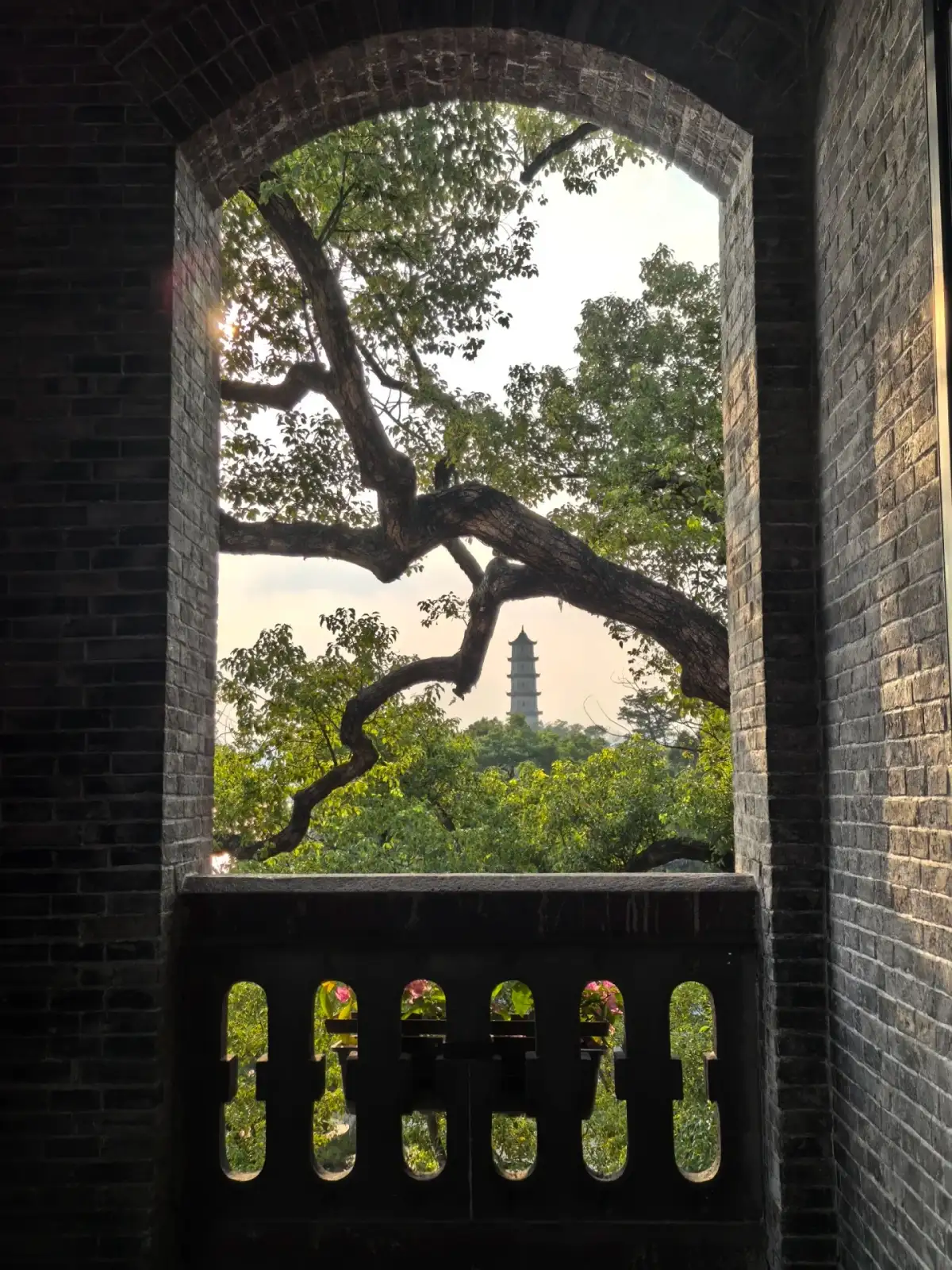
a tree or the shadow of a pagoda framed by a brick window on Jiangxinyu.
Looking back at the coastline, Wenzhou transforms from a cluster of buildings into a skyline
Another important walk after arriving on the island is to the accessible stretch of shoreline to look back at Wenzhou. The riverside buildings, bridges, and distant terrain together form a horizontal layering, while the pagodas and trees behind you become the foreground. The island and the city are not two isolated spaces; the ferry constantly connects the two ends, and the water creates a distance that allows them to view each other. Simply choose a stretch of the shoreline—there’s no need to constantly search for uncharted paths just to circle the island.
photo that includes a railing or tree branch on the shore to indicate your location; zooming in solely on the high-rises across the water will cause you to lose sight of the island’s vantage point. If the wind is strong or the waterfront is slippery, retreat to a safe public area. Viewing the river doesn’t require standing right at the edge; the open water itself provides ample distance. If visibility is low that day, focus on the shadows of the trees and building facades near the shore—don’t make a clear distant view the sole reason for this journey.
view of the city from the island; instead, try to distinguish three horizontal lines: the nearby shore, the lower edges of the buildings at the far end of the river, and the distant skyline. The shoreline is sometimes obscured by branches and leaves, and clusters of buildings may overlap due to their varying distances; a slight shift in your position rearranges these obstructions. This small exercise is best done on a wide, flat public promenade; there’s no need to chase after sharp corners along the riverbank. The name of a distant building has no bearing on understanding these layers; first, identify your position and the direction of the river, then consult a map to locate the pier—the route back will become clear as a result.
The weather and the return journey are more tangible than the sunset in the photo
Spring and autumn are generally suitable for longer outdoor walks, while in summer you’ll need to factor in the sun and humid heat; in winter, standing by the riverbank brings a distinct chill. Sunset and the condition of the flora are influenced by weather and season; the colors of the water and sky can vary from day to day. If you’re planning a trip specifically to catch the sunset, first confirm the return ferry schedule and the distance to the pier before deciding how long to stay; don’t assume that the time it takes to finish photographing the sunset is the same as the time it takes to reach the boarding area.
In the event of strong winds, thunderstorms, or other warnings, ferry schedules and scenic area openings may be adjusted; please follow the notices issued on the day of your visit. Alternative plans can include the historic districts on the mainland or cultural venues that are accessible; be sure to check their opening hours in advance. Visitors with limited mobility should inquire about boarding and disembarking procedures as well as slope conditions on the island. When traveling with children, avoid scheduling all stair climbs and waterfront viewing activities in a single segment of the trip. For specific ticket prices, identification requirements, and discounts, do not rely on figures from old social media posts; it’s more practical to have the Chinese names of the piers clearly prepared in advance.
Back in the city, let the island’s sense of distance linger
view of the towers and shoreline on the return trip to compare it with your first glimpse on the way there. The buildings that were just silhouettes a moment ago can now be placed along the path you’ve traveled; the dense cluster of buildings on the shore also appears more layered because you’ve viewed them from afar on the island. Crossing the water, studying the pagodas, and looking back at the city—these three activities are enough to make up a complete half-day, without needing to add many distant attractions to make it seem more substantial.
Once back in the city, find a place to sit down for a meal—just choose based on your dietary preferences. If you plan to explore other historic districts in Wenzhou afterward, set aside clear blocks of time for both Jiangxinyu and the mainland, so that waiting for the ferry and travel time don’t eat up the entire afternoon. The value of this island lies not merely in its two towers, but in how it reveals how water both separates and connects the city. For visitors to China, this concrete relationship can be experienced simultaneously through photographs, poetry, and a stroll—making it easier to remember than the name of an isolated attraction.
Further Reading and References
Compiled and organized by the Eastbound Travel Editorial Department based on publicly available travel notes and listed information. Intended for pre-trip reading; this is not a personal travel account. Please verify opening hours, transportation, reservations, and service arrangements according to your actual travel dates.
Wenzhou Culture and Tourism Bureau: Introduction to the Culture of Jiangxinyu Island
What changes when you see the pagodas from the island?
Begin a Jiangxin Islet visit by viewing the island and towers from the city bank. Once across, compare distances between pagodas, trees and the temple. Jiangxin twin pagoda views offer more than a portrait backdrop: as your position changes, nearby city buildings become a skyline. Choose one view back across the river to connect your island walk with the outline seen before departure.
Keeping a poetry walk compatible with the ferry
Set a Jiangxin ferry return plan using the day's actual sailings and permitted visiting areas before allowing time for the temple and one poem. Choose one interpreted line to compare with the river rather than reading every inscription. If weather or sailings change, shorten the final stop. A meal back in Wenzhou can continue the half-day visit without rushing a last rest on the island.
Planning references


