Eastbound Travel Editorial Department · Travel Diaries and Pre-Trip Reading
In Hankou, start getting to know Wuhan by exploring the river.
Wuhan is a large city; for a first-time visit, it’s a good idea to spend half a day exploring the riverside area of Hankou. Use the vicinity of the Jianghan Customs House as an easily recognizable starting point, choose a section of the riverside boulevard to walk alongside the historic buildings, and then enter the riverside park through a regularly open entrance to view the Yangtze River. With buildings, streets, and the waterfront at varying distances from one another, this route connects all three, ensuring the city is more than just a few famous landmarks scattered far apart. If you have time afterward, extend your walk a short distance toward Lihuangpi Road or Jianghan Road.
When planning, first distinguish the locations of Hankou, Wuchang, and Hanyang—where you’re staying will directly affect your travel routes to and from your destinations. For a half-day itinerary, it’s best to focus on a single area; there’s no need to include all river-crossing attractions at once. It’s very helpful for international visitors to note down the Jianghan Customs, the riverfront entrance they plan to use, and the Chinese names of their hotels, as well as to confirm the final pickup and drop-off locations. Separate city walking from transportation arrangements; only then can you truly appreciate the architecture and the river views without constantly worrying about the next bus.
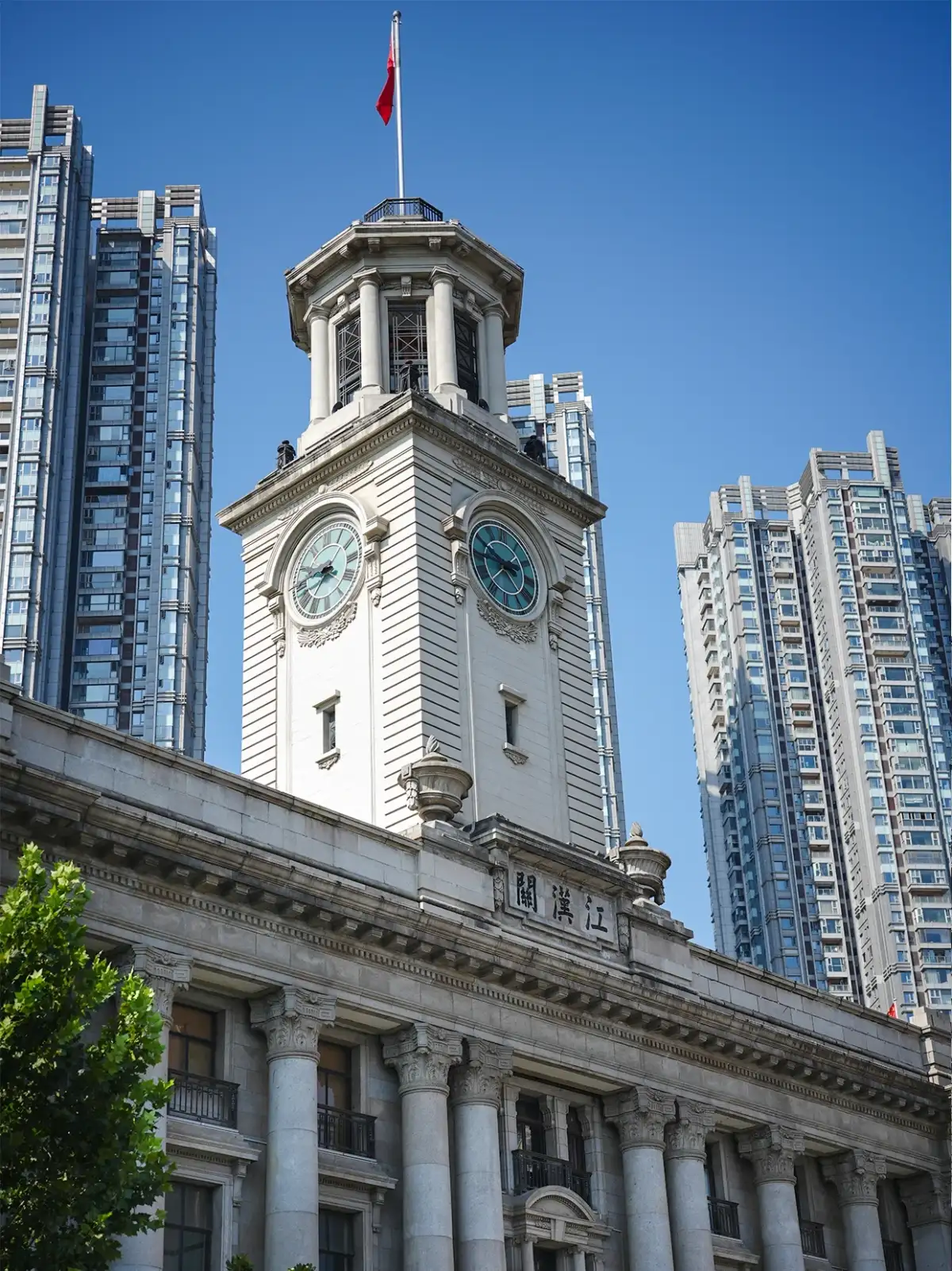
The Jianghan Customs House Clock Tower in Hankou with modern high-rises in the background.
Jianghan Customs House: Beneath the clock tower lies the history of the port
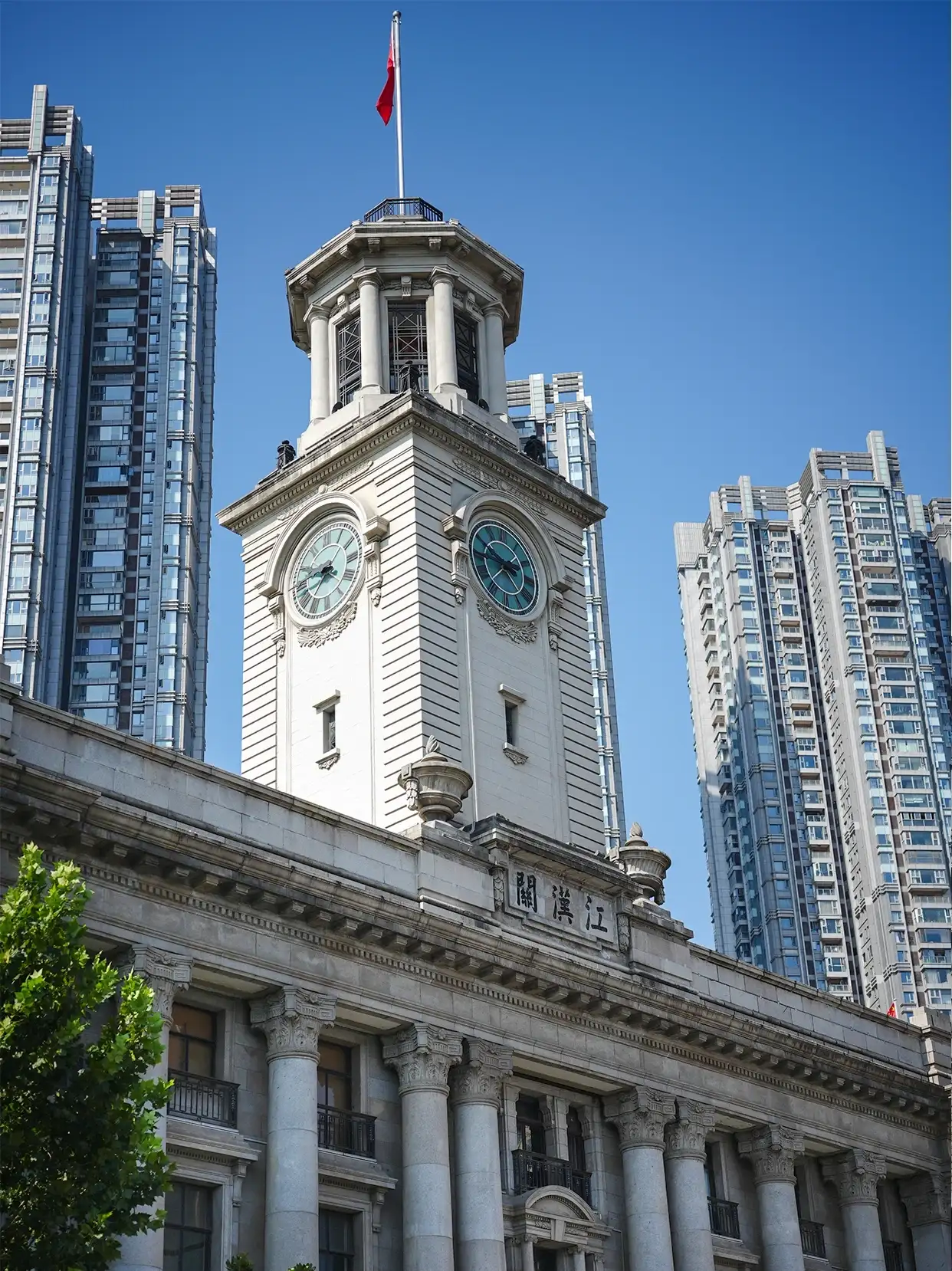
Jianghan Customs House is an ideal first stop on this route. First, look up to observe the proportions between the clock tower and the main building below; then step back a bit to appreciate how the entire structure relates to the street and the river. According to official Wuhan sources, this building was constructed in the 1920s. Originally used as a customs office, it later became a museum. With this basic background in mind, you can connect its exterior to trade, the port, and urban development—rather than simply viewing it as a clock tower suitable for photo ops.
Architectural observation can begin with the details: the arrangement of windows, the relationship between columns and walls, and how the tower extends from the main building—all of which can be seen from the outside. If you plan to visit the Jianghan Customs Museum, check the opening hours, reservation requirements, and ID requirements based on your visit date, and set aside a full block of time for the exhibits. The exhibits and historical photographs will help you understand why this building stands on the banks of the Yangtze River. Both the exterior and interior offer unique insights; choose one or two aspects that align with your interests, and don’t let the pursuit of a specific photo angle distract you from the stories you originally came to explore.
Along the Riverside Boulevard, start by walking along the side with the buildings
After leaving the Jianghan Customs House, you can choose a section of the riverside avenue where historic buildings are relatively concentrated, using doors, windows, and street corners as points of observation. There’s no need to prepare a complete chronology for every building; start by reading the on-site signage, identifying whether they were banks, commercial establishments, or served other historical purposes, and then compare how their street-facing facades were designed. The riverside area once served as a hub for trade and cultural exchange; the continuous sequence of buildings allows this chapter of urban history to gradually unfold as you walk.
Along the route, you can use on-site signage to visit named buildings such as the former site of the Russian-owned Xintai Building, the former site of the Sino-Russian Daosheng Bank, or the former site of the Citibank Building. The distinct functions of trading companies and banks gave the facades in front of their entrances different historical contexts; by comparing the treatment of columnar orders, windows, and corners, you’ll see that the buildings along the same street are not entirely identical. Viewing these differences alongside their original uses provides a richer perspective than simply categorizing them all as “European-style architecture.” The buildings may still be in use or in operation; whether you can enter depends on their current accessibility. The public pedestrian spaces outside already provide ample opportunities for observation and make it easier to maintain a continuous route, avoiding the constant interruptions that come from searching for interior entrances building by building.
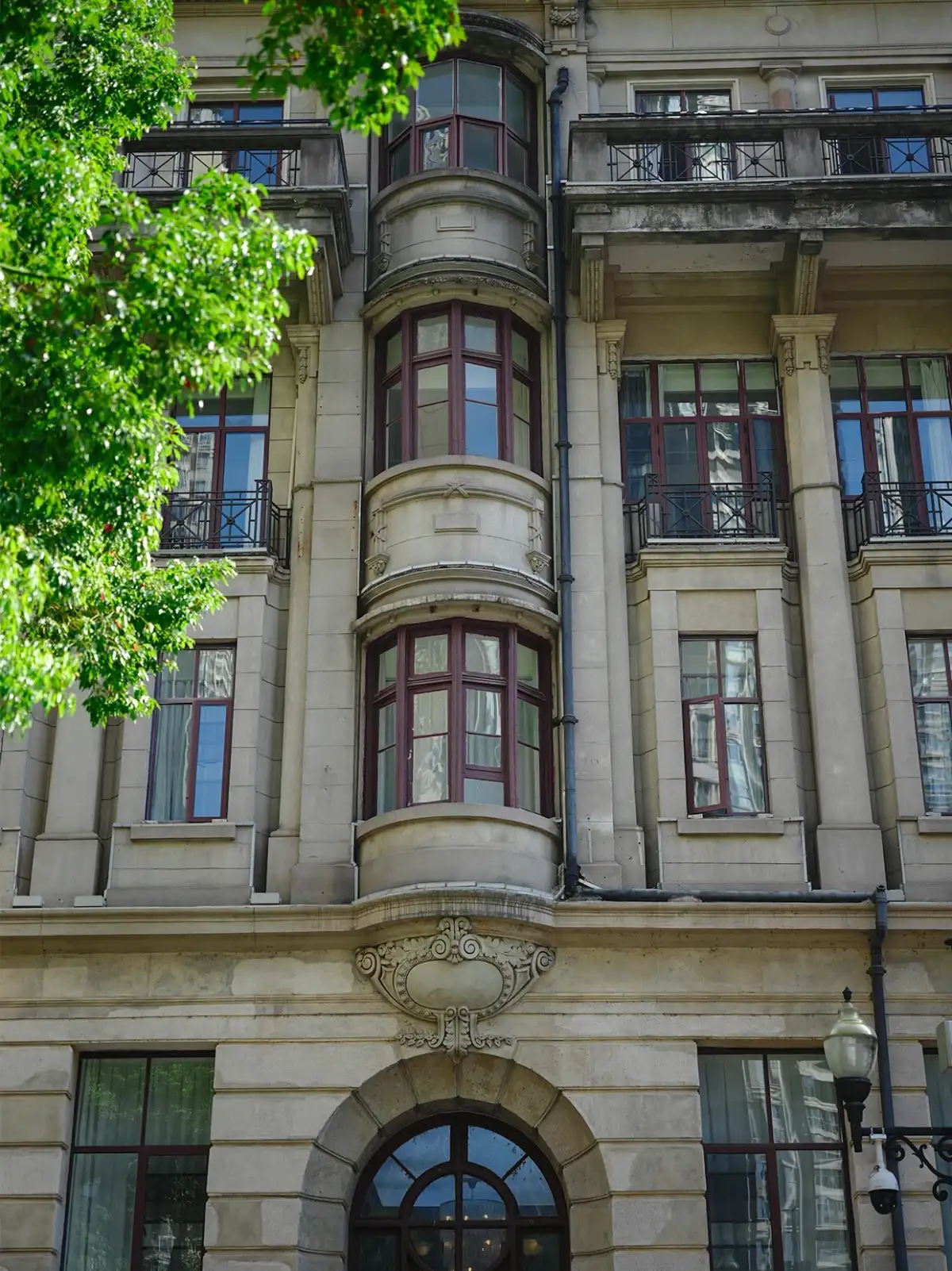
Bay windows, balconies, and street-facing facades of Hankou’s modern riverside architecture.
A small street that brings the grand riverfront down to scale
Beyond the riverside boulevard, you can choose a shorter walking route along the Lihuangbi Road area depending on your stamina. Here, the Ba Gong House serves as a clear landmark. Its red-brick exterior and triangular floor plan create a striking corner; both its former use as an apartment building and its subsequent preservation and adaptive reuse can be further explored through on-site observations and official records. As the street scale narrows, storefronts and daily business activities come more readily into view. The public facades of the riverside buildings seen earlier transform here into the details of the alleyways. Experiencing these two different scales within the same half-day reveals that Hankou possesses both an urban image facing the port and spaces more closely tied to everyday life.
When deciding to extend your route, first check the map and actual walkability—there’s no need to go down every single side street. You can step into a shop that’s open to the public and suitable for a break, sit down, and observe the street corner through the window, or simply take a leisurely stroll outside. Architectural preservation, restoration, and new uses often coexist; reading the explanatory signs can help distinguish between a building’s historical identity and its current function. Photography enthusiasts don’t need to chase every popular vantage point—the interplay between a wall and an adjacent window, or a rooftop that comes into view after a turn, can create very specific memories of the neighborhood.
Entering the riverside promenade, the distance between the buildings and the water changes
Enter the riverside promenade through a normally open entrance, and the cityscape will suddenly unfold before you. The doors and windows that were previously right before your eyes recede into the background, while the river, the shoreline, and the city in the distance form new layers of the landscape. Choose a public path suitable for walking, pause at a spacious spot to gaze at the water for a moment, then turn back to look at the buildings along the river. This dual shift in perspective illustrates that this river is not merely a scenic spot, but also a vital boundary defining the city’s layout and activities.
Yangtze River water levels and shoreline access are subject to actual conditions; waterfront areas, grassy areas, and multi-level walkways may not always be accessible by default. When traveling, refer to the day’s management information and view the river from permitted locations. Start by observing the flowing patterns of the water, the silhouettes of buildings on the opposite bank, and passing ships—there’s no need to get too close to the water’s edge in pursuit of extreme angles. By including the road or railing in the foreground, your photo will actually convey where you’re standing. For first-time visitors to Wuhan, this sense of spatial context is often easier to remember than a photo of just the water’s surface.
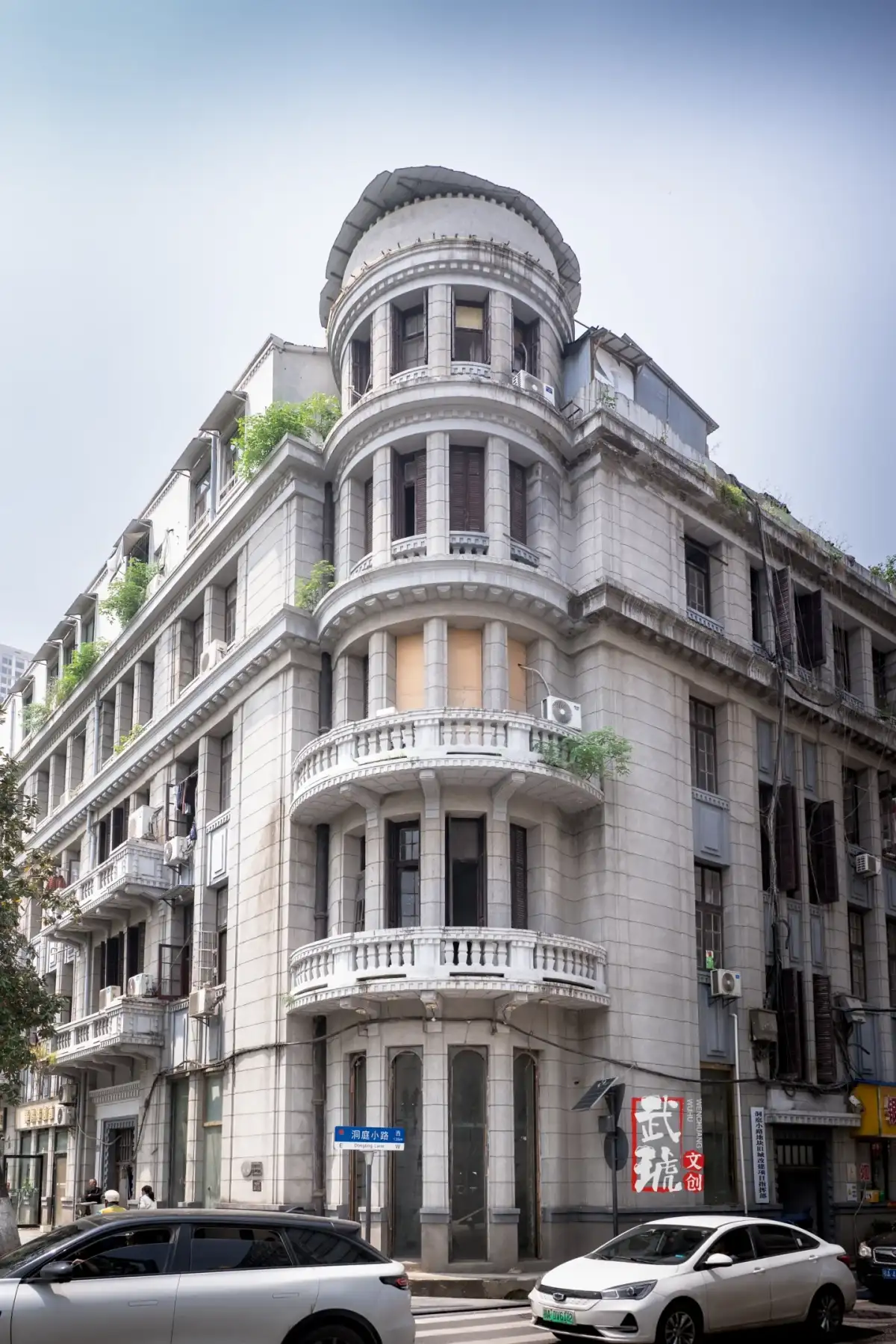
The circular corner building at the intersection of Dongting Alley in Hankou.
The river breeze and the sounds of the city give the route a whole new dimension.
The riverside is worth more than just a visual experience. When the wind sweeps across the open water, the sensation differs from that felt among the buildings; the sounds of the streets, pedestrians, and distant ships also gradually reveal the city’s scale. Find a spot where you’re allowed to rest and sit down—don’t rush straight to the next destination. This allows you to truly linger along a stretch of the route. Observe how the people around you stroll, rest, and move about, and the city’s way of life will naturally reveal itself, without needing to be staged as a special performance.
This is also a great time for travelers to share their experiences. Some may be fascinated by the clock tower, others may prefer the river view, and still others might be drawn to the shops on the small streets—each can choose a photo to explain why. The theme of an urban journey can thus be shaped collectively by diverse interests. We can focus our attention on the different rhythms of strolling, resting, and passing through, while respecting the personal space of ordinary citizens. Viewing public spaces as places for everyone to share makes the journey more leisurely and allows the photos to capture the true daily life of Hankou more authentically.
If you plan to cross the river, treat the ferry ride as a separate segment.
If you wish to view Wuhan from the water, please separately verify currently operating ferries or suitable transportation options. Information regarding piers, routes, last departures, and ticketing methods is subject to current official announcements; do not assume that a ferry schedule mentioned in an old travelogue is guaranteed for that day. Crossing the river will change your viewing perspective and also alter the endpoint of your itinerary; consider in advance how you’ll return to your hotel after disembarking. This way, the boat ride can serve as a meaningful extension of your trip, rather than just a spur-of-the-moment decision to board a boat upon seeing a pier.
If time is limited, exploring the riverside promenade on the Hankou side provides a sufficiently comprehensive experience; there’s no need to cross the river just to prove you’ve been to Wuhan. For those wishing to continue exploring cultural sites in Wuchang, plan this as a separate itinerary, allowing time for transportation, admission, and rest. Which option you choose can be determined by what you most want to see: the distance across the water, the opposite riverbank, or a specific cultural exhibition that you’ve confirmed is open. By linking your choices to your subsequent itinerary, the Yangtze River can become a clue to understanding the city, rather than an obstacle that forces you to spend the whole day constantly backtracking.
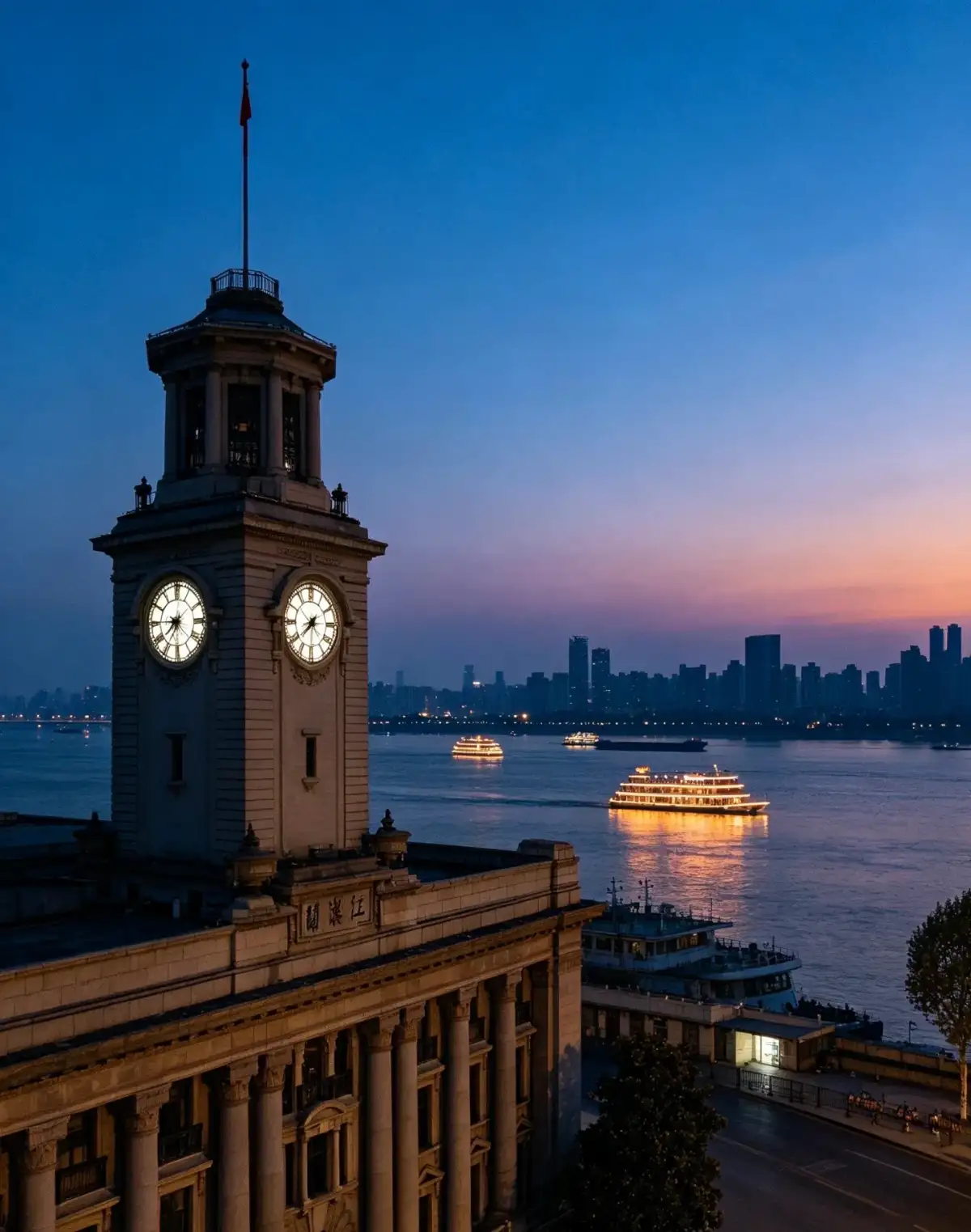
The Jianghan Customs House clock tower, Yangtze River vessels, and the silhouette of the opposite bank as seen from a high vantage point at dusk.
After a meal, decide whether to take in the night view
As the half-day walking tour concludes, plan dinner in an area that’s convenient for continuing your exploration or heading back. While Wuhan’s breakfasts and noodle dishes are often memorable for travelers, meal choices should still be based on your actual schedule, personal preferences, and dietary needs. Those with allergies to sesame, nuts, or other ingredients should inquire about specific ingredients and preparation methods—don’t assume that a local dish is something everyone can try by default. Picking one or two items that pique your interest and sitting down to enjoy them is far more pleasant than rushing through a food checklist while on the go.
If planning to view the night scenery, first check your companions’ stamina after dinner, then choose a public spot that’s easy to return from. Lighting alters the appearance of buildings and their reflections on the water; the clock tower and rooftops you observed during the day take on a whole new perspective at night. Lighting, performances, or special events may vary by date, so don’t rely on social media photos to guarantee specific scenes. Even if the hours aren’t extended that day, the Jianghan Customs House, the buildings along the river, the small streets, and the riverside promenade already make for a rich half-day; the night scenery can be a bonus, rather than a mandatory part of this itinerary.
Returning to the city from the riverfront makes the ending point clear.
After finishing your visit to the Riverside Park, you can return to Yanjiang Avenue via the normally open exit, then choose your next destination based on your accommodation and transportation locations. Those who still want to dine or shop can explore convenient connections toward Jianghan Road; those who’ve walked enough can simply arrange their return. The clock tower, the former bank building, the red-brick corner of Ba Gong’s House, and the riverbank offer a variety of experiences during this half-day visit. You don’t need to cross the river to chase after another, more famous destination to make your day feel fulfilling.
If you’re catching a train that evening, first confirm which station—Wuhan Station, Hankou Station, or Wuchang Station—is your actual departure point, then finalize the pickup and transfer arrangements with some buffer time. For those staying overnight, you can assign different themes to each day—such as cultural visits on the opposite bank—and set aside dedicated time for each. As you leave the riverbank, take one last look back at the streets and buildings; the windows, doors, and walls you just examined up close now come together to form a continuous urban silhouette. This segment of your exploration in Hankou concludes with a clear, defining route: from the port’s history to ordinary streets and alleys, and finally back to the Yangtze River and everyday life right before your eyes.
Further Reading and Reference Sources
Compiled and organized by the Dongxing Travel Editorial Department based on publicly available travel notes and listed information. Intended for pre-trip reading; this is not a personal travelogue. Please verify opening hours, transportation, reservations, and service arrangements based on your actual travel dates.
Wuhan Municipal Government: Jianghan Customs Architecture and Modern History
Wuhan Municipal Government: Historic Buildings and Pedestrian Spaces along Yanjiang Avenue
Wuhan Municipal Bureau of Culture and Tourism: Jianghan Customs Museum
Wuhan Municipal Government: Ba Gong House and Lihuangpi Road Neighborhood Renewal
Choose a side of the riverside
Yanjiang Avenue offers closer views of buildings, while the Hankou riverfront opens onto the Yangtze and its wider shoreline. Choose one stretch if energy is limited. A Wuhan ferry ride adds a separate transport leg: confirm the departure pier and your destination across the river.
Specify the return point
Name the road, entrance and meeting place; a clock-tower photograph is not a complete address. Shorten the walk if wind, rain or access changes require it. Check ferry routes and departures separately rather than assuming an older account guarantees evening service.
Planning references