East Travel Editorial Department · Travel Diaries and Pre-Trip Reading
From downtown Xining to Lushar, set aside half a day for the monastery
Ta’er Monastery is located in the Lushar Town area of Huangzhong District, Xining City. It’s best to set aside at least half a day from the city center for this visit. Travel time, admission procedures, and walking between courtyards will take up a significant portion of your time, so don’t assume you can quickly tour the entire complex after getting off the bus. Before setting out, double-check your current reservation, identification documents, and arrival location. If you’ve arranged for a guided tour, confirm the language and meeting point, then decide whether to have dinner in town or return to the city after your visit. For first-time visitors to the plateau, it’s also advisable to keep the day’s pace light—avoid combining temple walks, long drives to the lake, and evening activities all on the same day. Ta’er Monastery encompasses architecture, religious life, and artistic craftsmanship, each requiring a different approach to appreciation. First, clarify your main interests and read a brief introductory overview near the entrance; this will provide better direction than simply following the crowd and help ensure a quieter experience during your visit.
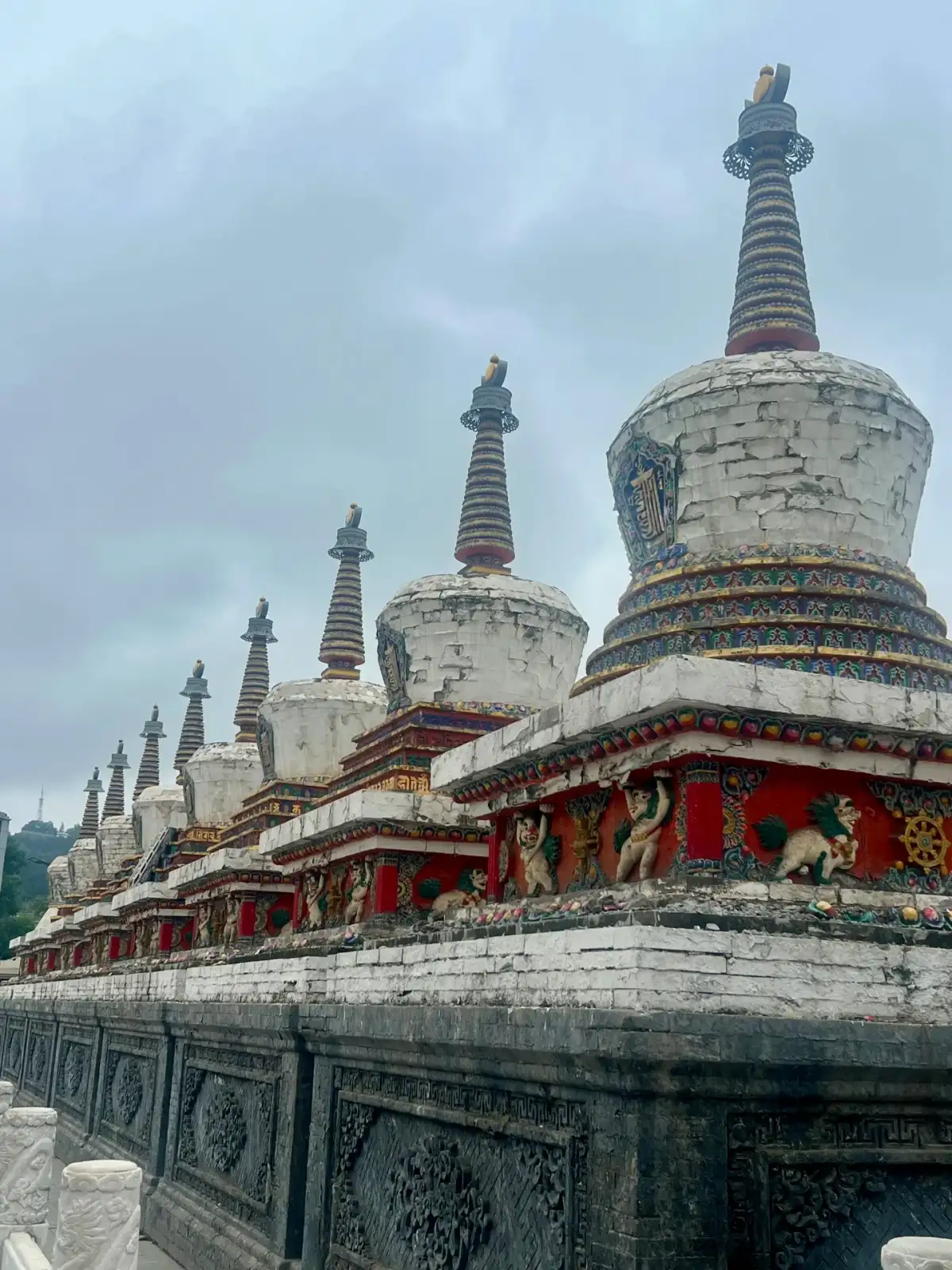
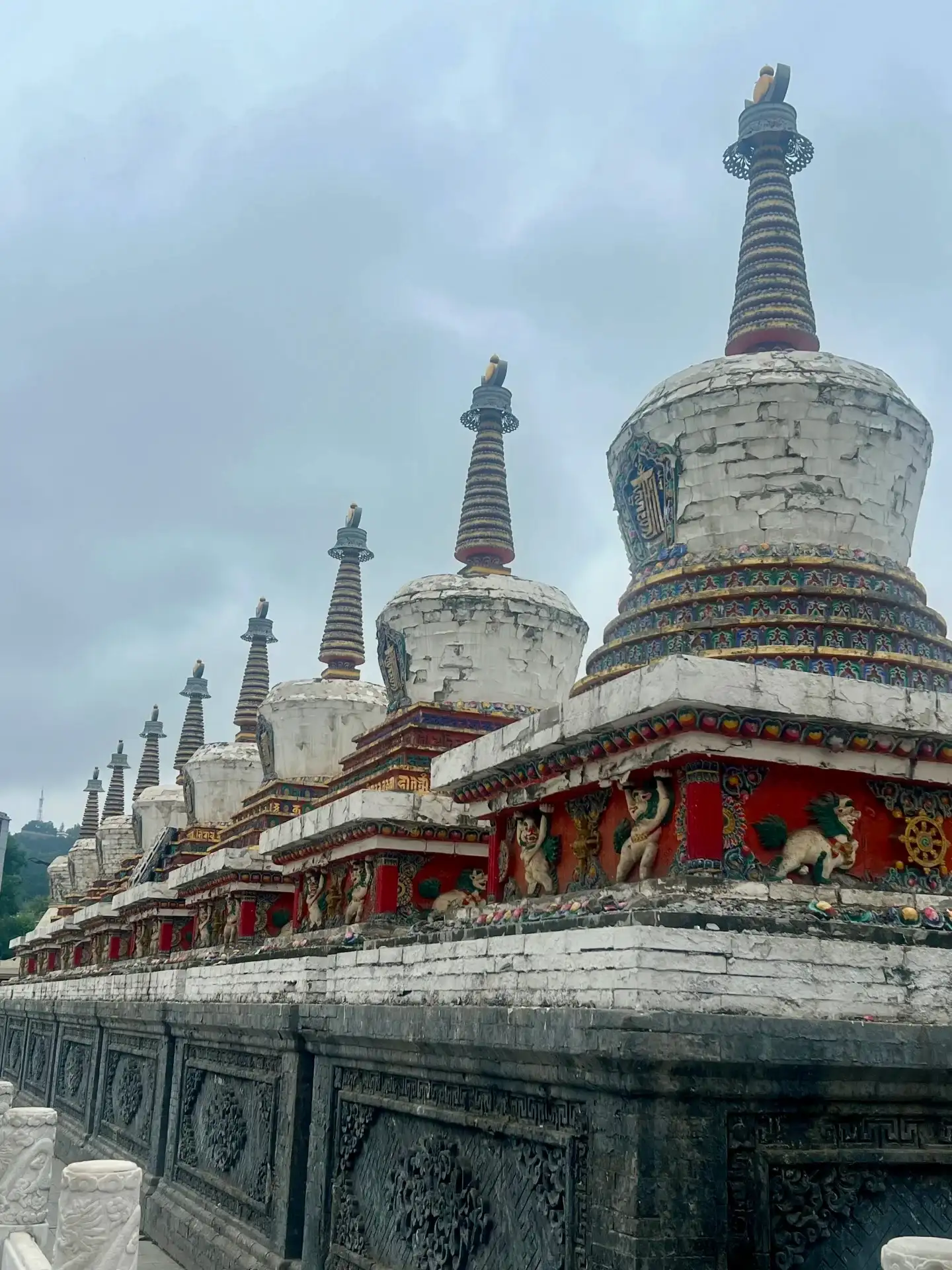
The White Stupa and colorful decorations at Ta’er Temple on a cloudy day.
Next to the White Stupa: Don’t Rush to Name Every Structure
The white stupa near the entrance is very striking. The repetitive arrangement of the stupa bodies, the decorative elements at varying heights, and the base below form a cohesive whole that’s ideal for a first look. Start by observing how the white structures connect with the red, gray, and painted details, then identify the finials and the decorations on the base. If you are unfamiliar with Tibetan Buddhist architecture, there is no need to immediately guess the symbolic meaning of every pattern; on-site signage or guided tours can provide accurate context, so for now, simply focus on memorizing the relationships between the architectural elements. When people are engaged in religious activities nearby, visitors should leave space for them to pass and gather; keep the architecture the focus of your shots and avoid treating those engaged in worship as subjects for a photo op. The white stupa can serve as the starting point for your day, but there’s no need to spend all your photography time here. Continue walking into the courtyard; the way the stupas, halls, and paths interconnect offers a richer experience than a single row of buildings.
Follow the slope to identify the connections between the courtyards
The architecture of Ta’er Temple unfolds across the hillside; the halls, courtyard walls, and passageways are not all arranged on the same plane. As you walk, pay attention to when the ground rises, how steps connect two sections of the path, and how entrances guide your gaze toward the next courtyard. First, take a moment in a wide-open area to get a clear sense of your current path, then proceed as directed. If you encounter closed-off areas or sections reserved exclusively for monastery use, do not venture in on your own via the small paths marked on the map. If your companions are slow on the stairs, spread out your stops across several public spaces, designating specific spots for rest and waiting. This pace also allows you to discover the subtle relationships between the courtyard walls, trees, and buildings. Don’t just follow the golden roofs in search of your next photo; the sloping ground and passageways beneath your feet also reveal the temple’s layout. Walk slowly from the outside in, and the layers of the courtyards will reveal a tangible sense of order.
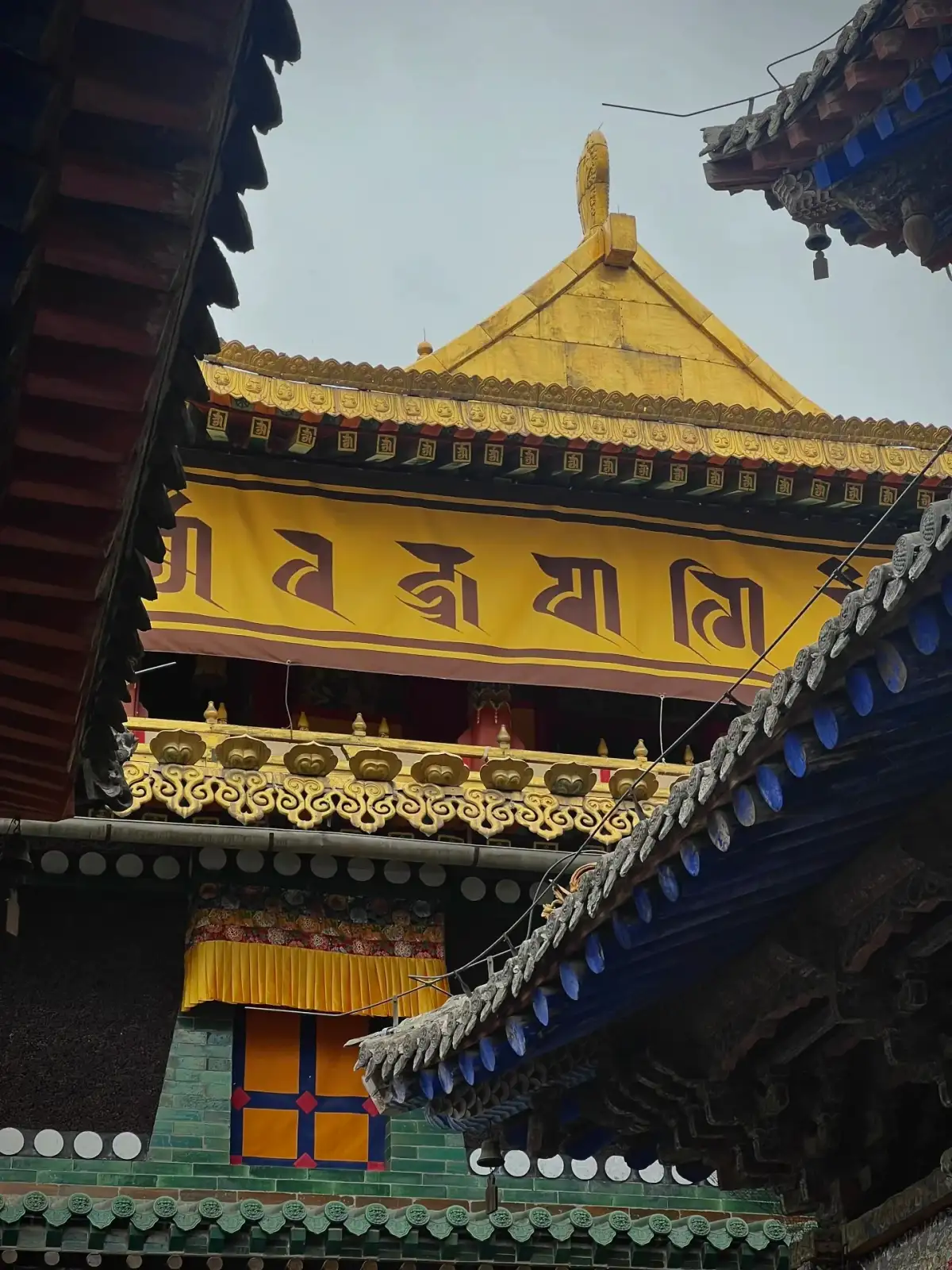
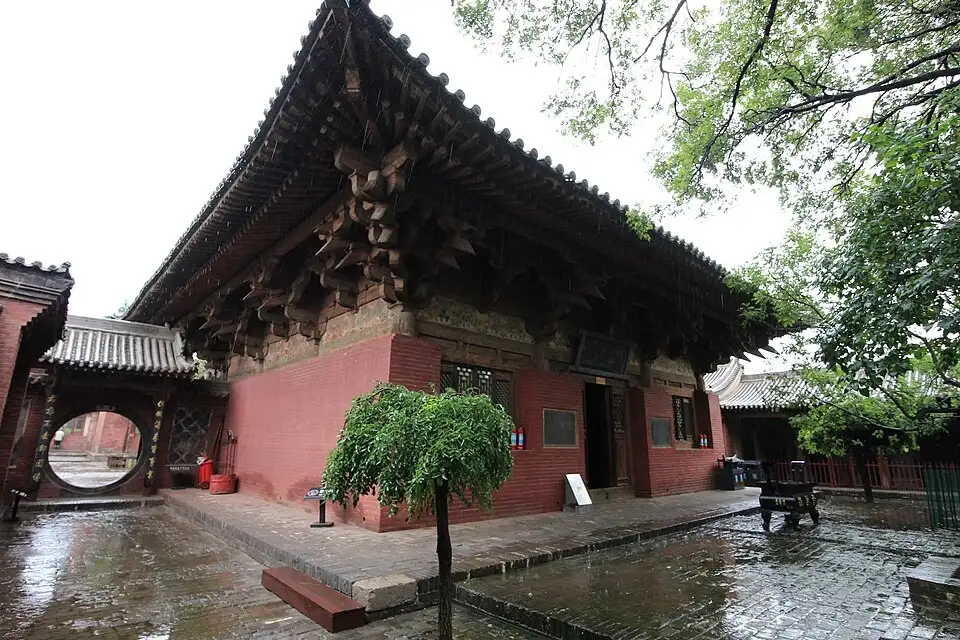
The golden roofs and overlapping eaves of Ta’er Temple.
The golden roof and dark eaves—best viewed together in one spot
As you approach the building with the golden roof, its bright surface often creates a striking contrast with the surrounding dark wooden structures, red walls, and painted decorations. On sunny days, the gold reflects light, while on cloudy days it appears softer—both are ideal for viewing. Start by taking in the overall outline of the roof, then observe the connections between the colors under the eaves, the doors and windows, and the hanging fabrics—rather than simply chasing a particular sheen. The name and religious significance of the hall with the golden roof should be identified based on the on-site explanations; do not assume that a distant patch of gold belongs to the same building. The nearby shades of blue, green, yellow, and red are not randomly combined; their artistic traditions and religious significance require specific context. If you’ve hired a guide, choose a decorative element that interests you and ask for clarification, then observe how other buildings incorporate similar elements. Understanding these practical connections brings you closer to the local culture than simply dismissing all patterns as “mysterious.”
Three Forms of Art: Using Materials as Clues
The butter sculptures, murals, and appliqué embroidery of Ta’er Temple are often collectively referred to as the “Three Artistic Masterpieces.” It’s best to start by exploring them through their materials. Butter sculptures are shaped from butter; appliqué embroidery creates a three-dimensional effect through layered fabrics and stuffing; and murals depict figures and stories through painting. If you encounter an exhibition open to the public, first observe how one craft forms its shapes, then compare how the other two handle color, edges, and layering. Even if you’re unfamiliar with religious stories, you can still gain concrete insights from the materials: Is this piece of clothing painted or formed from fabric? How does a small figure remain stable, and how does it display such rich detail? Exhibition availability and content are subject to change; do not assume that a large-scale display during a festival will be available year-round. Also, do not cross barriers or touch the materials in order to examine details. By understanding these techniques within the context of religious veneration and cultural heritage, art will reveal more than just its exquisite appearance.
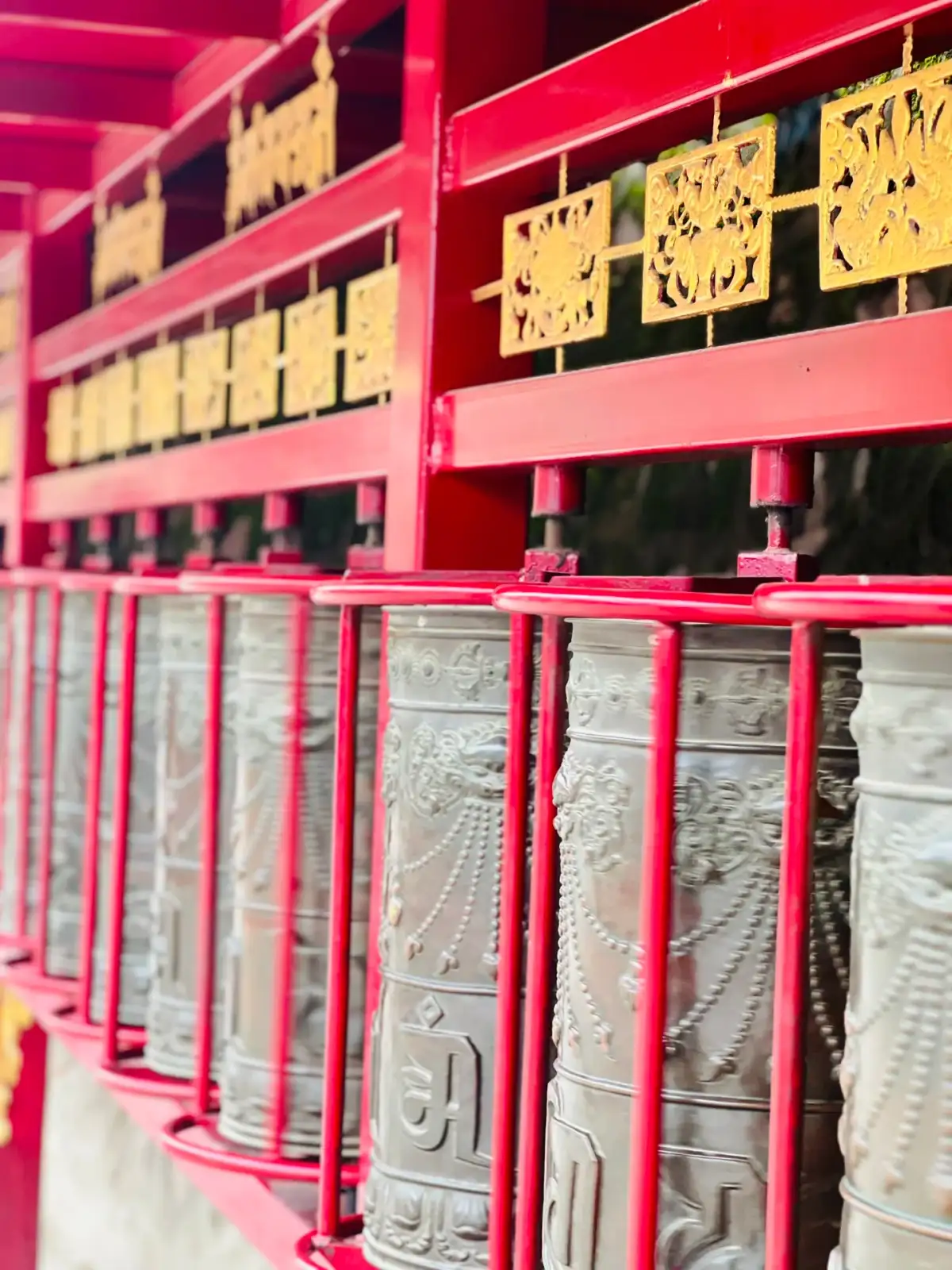
Prayer wheels and a red wooden frame at Ta’er Temple.
Next to the prayer wheels, learn not to disturb
Prayer wheels, prostration, and circumambulation within the monastery hold religious significance. Visitors should first observe the traffic guidelines and yield the path to those currently using these spaces. If you’re unfamiliar with the specific practices, feel free to ask staff or a tour guide—but don’t attempt gestures you don’t fully understand just for the sake of a photo. If someone wishes to remain quiet, refrain from persistently asking about their personal beliefs or pointing your camera at their face. Before entering a hall, pay attention to the local requirements regarding hats, clothing, photography, and personal belongings; different areas may have different restrictions, so do not assume that the rules for one open courtyard apply to the entire monastery. If photography is prohibited in a certain area, put your phone away and simply take a moment to observe with your own eyes; exterior architecture, public passageways, and permitted details can equally leave a lasting impression. Ta’er Temple is not merely a tourist attraction; understanding its daily functions allows for a more informed visit and enables visitors to share the space respectfully with those who use it.
Religious stories and historical records—each has its own way of being interpreted
The relationship between Ta’er Temple and Tsongkhapa provides essential background for understanding this monastery. On-site guides may recount legends about the origins of the trees, stupas, and the temple itself, and there are also architectural and religious history materials available for reading. As you listen to the stories, pay attention to how they express the memories of this sacred site, and distinguish between the narratives of faith and verifiable historical accounts. There’s no need to treat every legend as an objective event that actually occurred simply to add a sense of mystery to your trip. If you’re interested in Buddhist studies and monastic organization, you can delve deeper into the monastic college and its lineages here, though there’s no need to memorize the entire system during a single short visit. Choose one question, listen carefully to the basic context, and then read formal materials after you leave; this makes it easier to form a reliable understanding. For international visitors, guided tours in their native language are particularly helpful, as they explain the concepts behind Chinese names and prevent you from having to guess complex meanings based on brief translations from your phone.
Rainy days, winter, and crowds—these factors alter your pace
Even on a cloudy day, Ta’er Temple retains its distinct colors and architectural layers; under the gray sky, the white stupa, red walls, and golden details each take on a unique character. On rainy days, watch your step on the stairs and ground, and avoid entrances and narrow passageways when stopping to look around; in winter, check the trail conditions, temperatures, and opening hours beforehand, and dress in layers that allow you to easily add or remove clothing indoors and outdoors. During festivals, there may be a large number of worshippers and tourists, and the tour routes and attractions may be adjusted. Check the current schedule before departing and allow extra time for entry, exit, and transportation. Don’t assume you’ll have the courtyard all to yourself just because others say it’s quiet during the off-season. The rhythm of a temple is influenced not only by the weather but also by its own religious activities. If a particular area is off-limits due to an event, simply move on to other spaces that are open to visitors. Embracing these changes will give you a deeper understanding of the temple’s true nature than stubbornly following the order shown on online maps to take every photo.
Returning to Xining, I took away one specific detail
After the tour, you can reflect on your impressions of this half-day visit either in Lushar Town or upon returning to downtown Xining. What first comes to mind might be the layered decorations on the White Stupa, a section of colorful murals beneath the golden roof, or the quiet rhythm of people walking around the prayer wheels. Choose a detail you’ve already grasped and write it down; then look up some related information on the craftsmanship or history, and your understanding will continue to deepen. If you plan to visit Qinghai Lake, Tongren, or other high-altitude cultural sites later, be sure to respect the specific visiting guidelines of each location—don’t apply the architectural style you saw at Ta’er Temple to every place you visit. The value here lies not only in the vivid colors, but also in the integration of materials, art, and religious life within the mountainous landscape. Set aside enough time for the monastery, know where to look and where it’s best to pass quietly, and then place what you’ve seen back into its specific context—even a brief visit can leave you with a clear and nuanced understanding.
Further Reading and Reference Sources
Compiled and organized by the East Travel Editorial Department based on publicly available travel notes and listed information. Intended for pre-trip reading; this is not a personal account of the experience. Please verify opening hours, transportation, reservations, and service arrangements according to your actual travel dates.
China Intangible Cultural Heritage Network: Tar Temple Butter Sculptures
People’s Government of Huangzhong District, Xining City: Ta’er Temple
How should the three arts be compared?
A Kumbum Monastery visit can distinguish butter sculpture, appliqué textiles and murals by material. For Kumbum butter sculpture viewing, ask how the material is shaped, then compare it with fabric layers and painted walls. You need not identify every religious figure at once. Choose one reliably interpreted image and record position and purpose instead of describing every motif as mysterious.
Visiting quietly without knowing the rituals
Kumbum visitor etiquette begins with the use of each space: leave passages clear near prayer wheels and hall entrances, and follow actual notices about photography and access. Do not imitate worshippers or obstruct their movement. Rest between sloping courtyards and shorten the route to suit your companions. Understanding one complete question does not require entering every space.
Planning references
Planning reference: Kumbum Monastery visit 1