Dongxing Travel Editorial Department · Travel Diaries and Pre-Trip Reading
Read a short poem first, then decide how to climb the mountain
Mount Jingting is best reserved for a leisurely morning in Xuancheng—one without the need to rush to catch a bus. Its proximity to the city and its name’s close association with Li Bai might easily lead one to believe that simply taking a photo in front of the inscription is enough to count as having visited. What’s truly worth setting aside time for, however, is a slow walk between the verses and the mountains and forests. Before setting out, read “Sitting Alone on Mount Jingting” once, watching as birds fly off into the distance and clouds drift away, until finally only a person and the mountain remain, gazing at one another. Though the poem contains few actions, it captures the passage of time; this way of reading helps travelers immerse themselves in the surroundings far more effectively than rushing to find a specific pavilion.
For fellow travelers who are not yet familiar with Chinese, you can start by discussing the two characters “独坐” (sitting alone). They point to a posture of stillness, rather than a state of solitude that is mandatory. Describe in your own words the difference between sitting and gazing at the mountain versus driving past it, then set your words aside. The clouds, trees, and other visitors you encounter on the spot need not correspond one-to-one with the lines of poetry. The literary significance of Mount Jingting does not require it to remain as it was in the Tang Dynasty; rather, it has endowed a mountain accessible to ordinary people with a name that invites repeated contemplation.
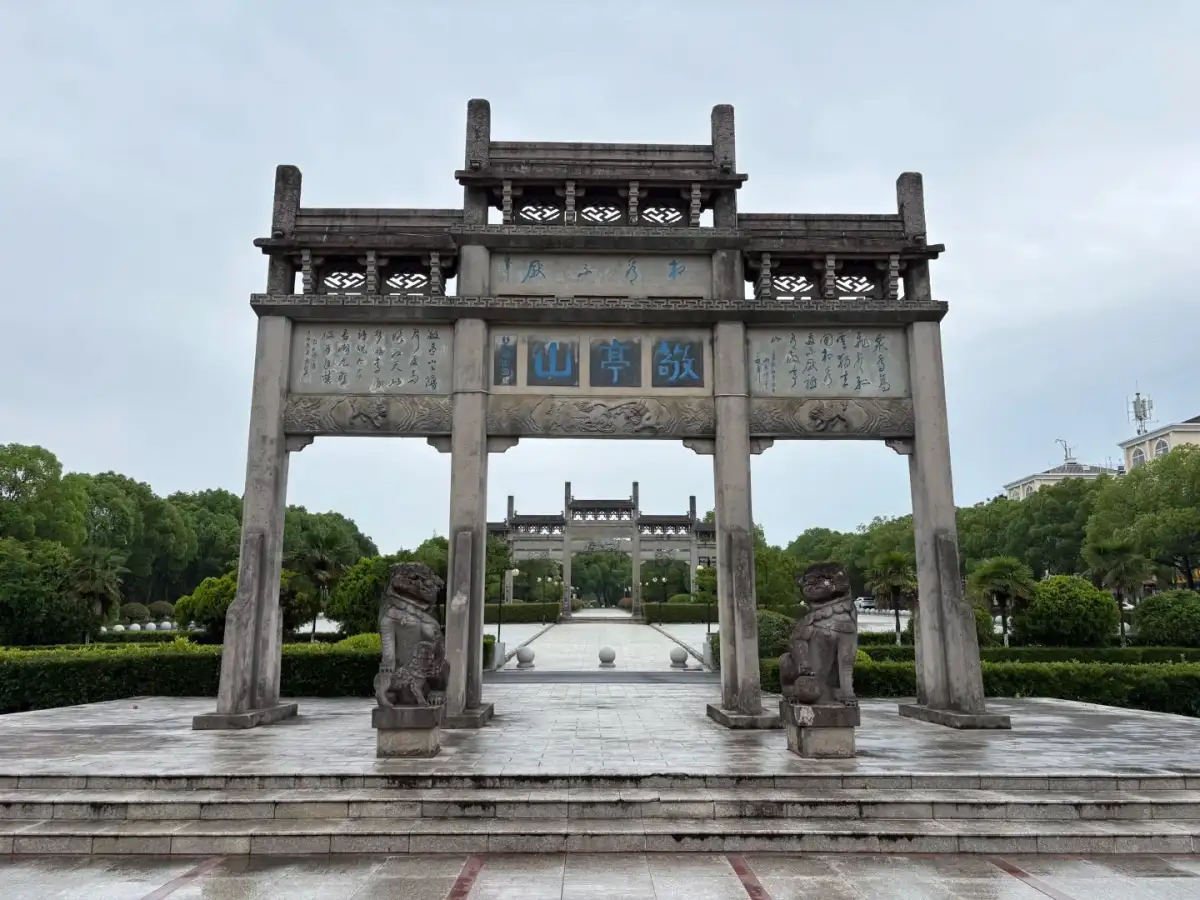
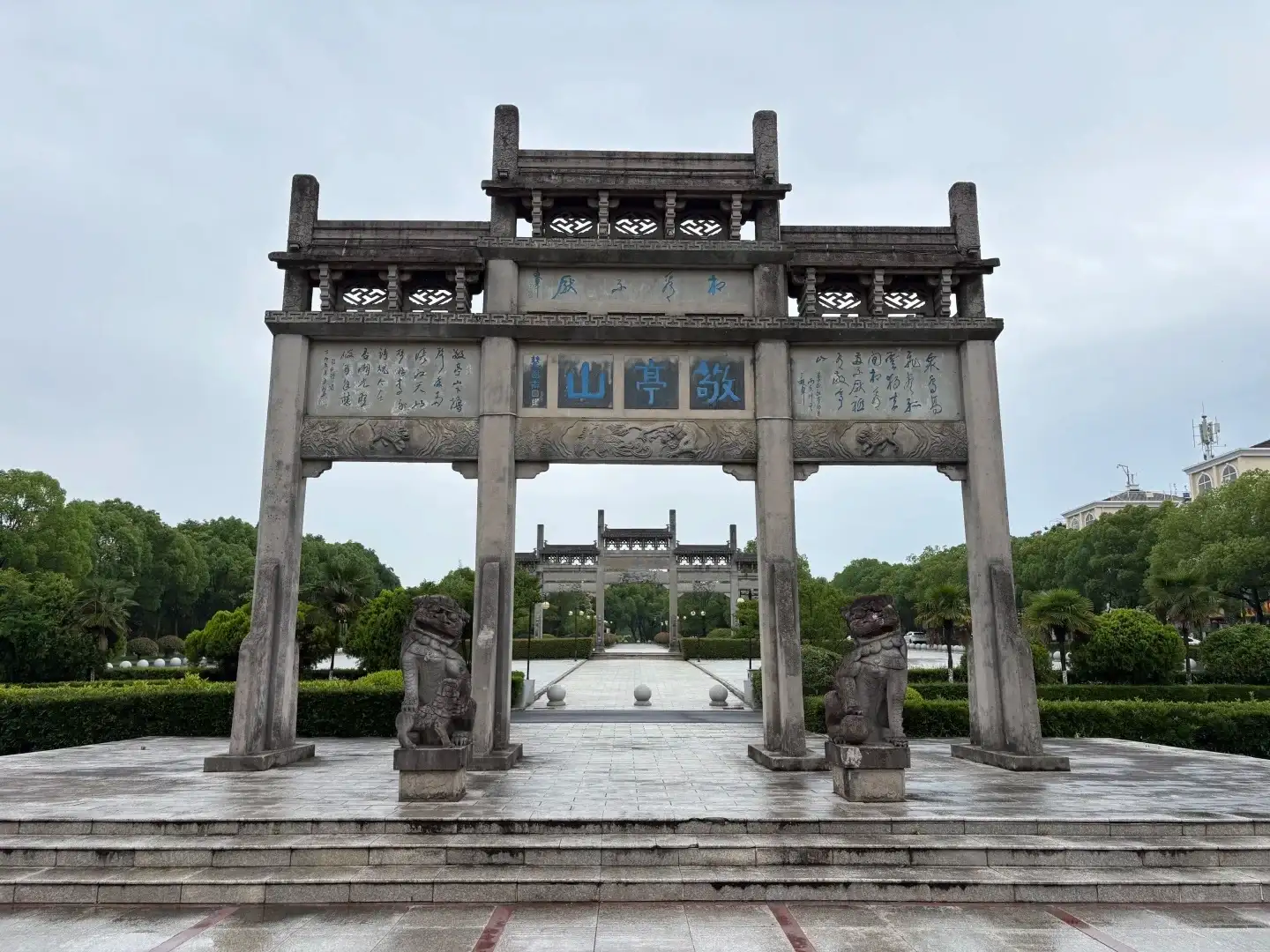
Stone archway at the entrance to Mount Jingting.
At the lake on the southern slope, first distinguish between the long and short routes
Upon arrival, check the entrance map first to identify the locations of the South Slope Lake, the Ancient Zhaoting Archway, and Li Bai’s Solitary Seating Pavilion, then decide how far you’ll hike that day. Taking public transportation from the city center is more leisurely than piecing together a tight itinerary combining bus stops, mountain trails, and another distant suburban attraction. The area marked as “Mount Jingting” on maps is quite broad, so when arranging pickup or drop-off locations, it’s best to use the full names of the actual entrance or parking areas to avoid ending up at a remote intersection on the outskirts. The estimated walking time in mountainous areas includes stops and the return trip; do not treat the one-way time shown on navigation apps as the total duration of your visit.
For those who simply wish to read and take a stroll, focus on the southern slopes and the Solitary Seating Pavilion, walking back and forth along the main open path; those willing to continue the ascent should check the direction to the summit, their remaining stamina, and the weather at the junction. By the lake, you can first observe how the mountain ridge rises from behind the city, while the fine ripples on the water constantly shatter the shadows of the trees. For families with elders or children, this is also a good opportunity to gauge the pace of the walk. If you start to feel the heat or experience knee discomfort right from the start, you can shorten the ascent and spend more time resting by the lake—you’ll still enjoy a fulfilling experience in the mountains.
The bricks of the Twin Pagodas raise a question beyond the poetic imagery
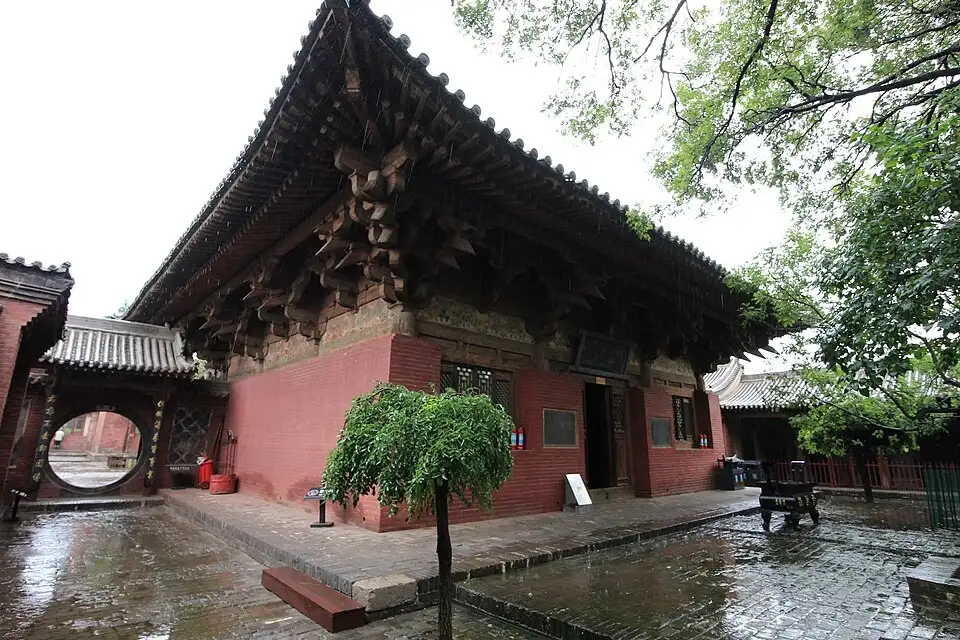
The Twin Pagodas on the southern slope are worth taking the time to stop and admire. According to Xuancheng’s cultural tourism materials, they are classified as Song Dynasty architecture; the pagodas use bricks to mimic wooden structural elements such as columns, beams, and bracket sets. First, observe the tiered eaves of the pagodas, then look at the shapes beneath the eaves that resemble wooden supports—you’ll discover that bricks aren’t merely stacked to form a wall; they can also be arranged to create a rhythmic architectural language. For those accustomed to seeing wooden pavilions and stone archways, this is an opportunity to rethink ancient architecture through the lens of a different material—without feeling the need to memorize every technical term at once.
, move slowly through the open areas to observe the differences in texture between the sunlit and shaded sides of the pagoda. The brick joints, corners, and eaves provide clues that are more concrete than the adjective “ancient.” For first-time visitors to China, you can view the pagoda as both a religious structure and a part of local history, then use on-site information boards to confirm its name and conservation details. If there is a barrier around the pagoda, stopping just outside it is sufficient to clearly see its main structure. Do not step onto the road in an attempt to fit both pagodas into a single frame; be mindful of the paths of passing vehicles and pedestrians as well.
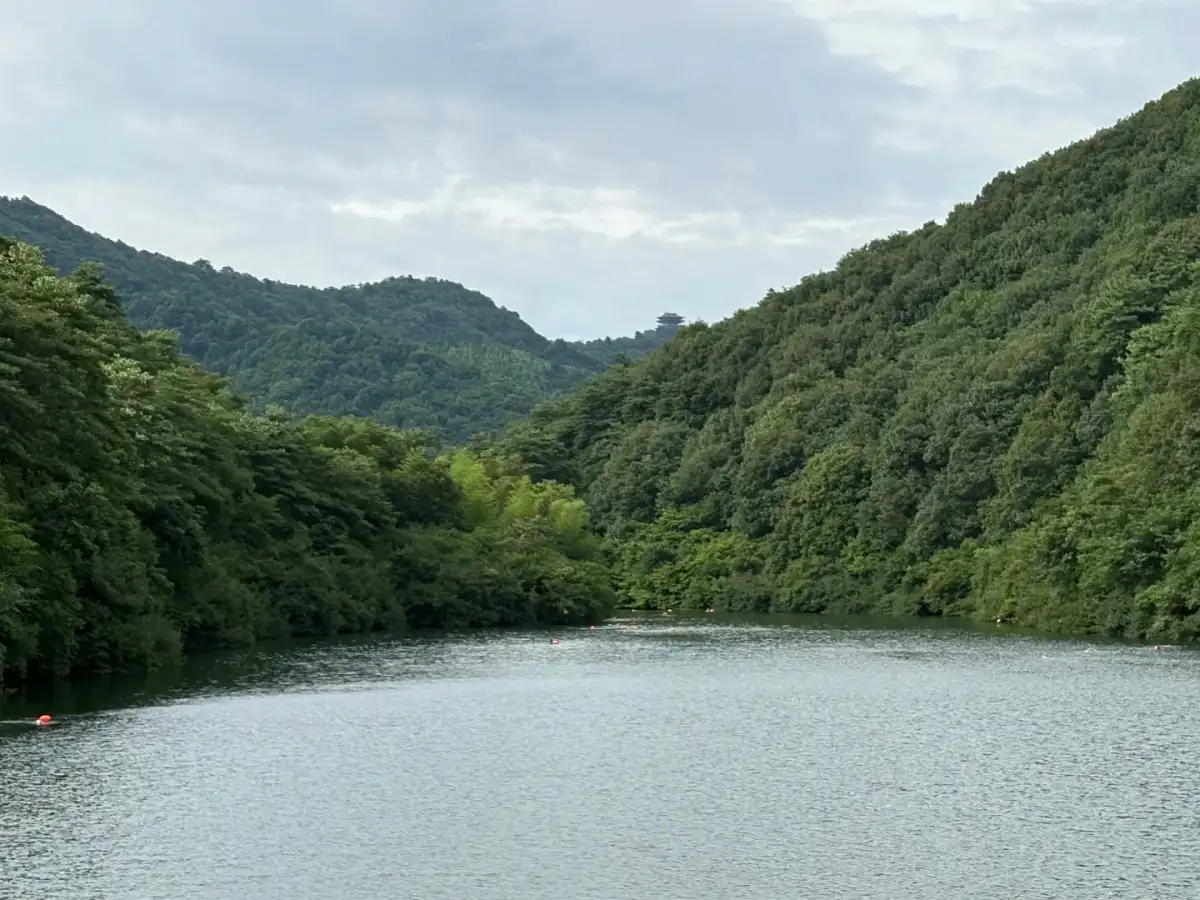
The lake and forests of Mount Jingting.
The Ancient Zhaoting Archway: Reading the Time Left Behind by Restoration
following the guide signs into the area around the Ancient Zhaoting Archway; the inscriptions and stone pillars transport the mountain path into a different era. Official records indicate that it was first built during the Ming Dynasty and has undergone repairs and reconstructions in subsequent eras. When facing such a historic site, an interesting question to ask is: How has a structure withstood the elements, and how has it been preserved by later generations? Incorporating both construction and maintenance into your observation brings you closer to the truth than imagining every stone before you as it was in its original state. If there are historical plaques on site, take a few minutes to read them, then examine the joints between the column bases and the stone components.
Here, too, you can adjust your stride from the flat streets of the city to the mountain trails. Don’t overpack your backpack—water and a lightweight outer layer are more practical than a full set of photography gear. When passing through narrow sections, yield the path to others, then find a safe spot to stop and read the inscriptions. China’s famous scenic spots often place nature and literature on the same path; the inscriptions aren’t a test you have to decipher in their entirety. Choose a phrase you like, ask your companions to explain its meaning, and you’ll create a reading memory unique to this journey.
On the path under the trees, let the sounds capture your attention
from the Ancient Archway toward Taibai’s Solitary Seating Pavilion; along the way, set aside a short stretch of time without taking photos. The rustling of leaves, the soft sound of your shoes on the steps, and the varying distances of other visitors’ voices will give you a more direct sense of the mountain path ascending. Mount Jingting isn’t known for its rugged terrain, but the continuous staircase can still be physically taxing. Maintain a pace that allows you to speak in full sentences, and take short breaks when you encounter long slopes. This is more comfortable than rushing all the way to your destination before finding a place to sit, and it also lets you notice how the light under the trees gradually changes.
The behavior of bamboo leaves and broad-leaved trees in the wind differs: the former often produce a fine, rustling sound, while the latter’s leaves flutter in unison. You don’t need to accurately identify every plant; simply observing the differences in leaf shape, tree trunks, and fallen leaves is sufficient. In spring and summer, the mountain forests are lush and green; as autumn sets in, you may see more withered leaves and fruits along the path; in winter, the contours of distant mountains are more easily visible through the branches. Walking on well-maintained, open trails not only makes it easier to find your way but also provides stable conditions for observing these details. If a trail on the mountainside lacks clear signage indicating it is open to the public, do not include it in your route.
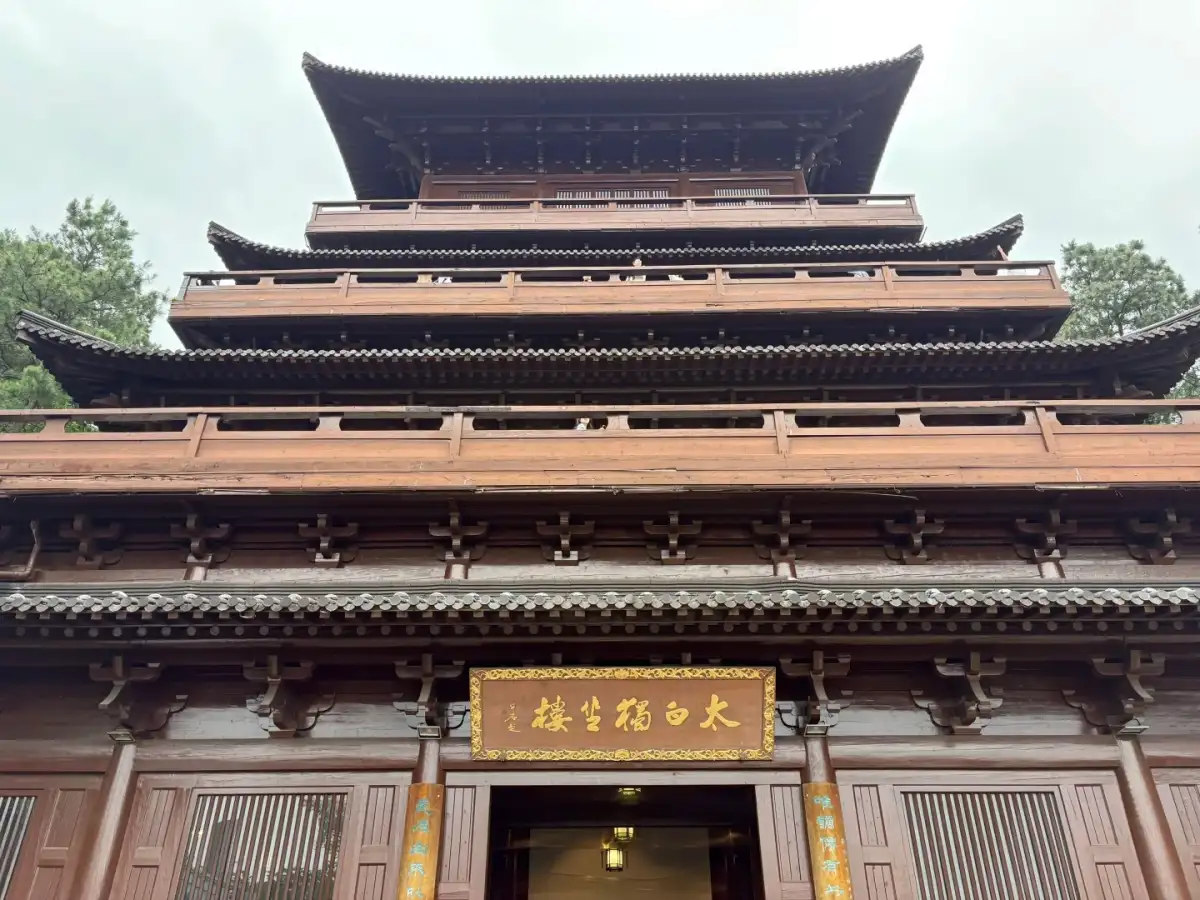
Li Bai’s Solitary Seating Pavilion on Mount Jingting.
to the Solitary Seating Pavilion—first, give yourself a moment to truly pause and sit.
The Li Bai Solitary Seating Pavilion links the poet’s name to the mountain experience. Upon arrival, you can first read the related exhibits, then sit for a while at a spot where lingering is permitted. The pavilion’s architecture, eaves, and the surrounding trees are all worth observing, but there’s no need to focus all your attention on the building. Gaze out along a stretch of the mountain ridge, watch the clouds drift by, and let the poem’s transition from bustle to stillness come back to mind. Even if there are people around, you can find a spot that doesn’t obstruct the path to settle down; there’s no need to wait until the entire scenic area is deserted.
By the time you read the poems again, your understanding may already differ from what it was at the foot of the mountain. The labored breathing from the climb, the temperature under the trees, and the moments spent waiting for others to pass all give the act of “sitting” a concrete, physical experience. If your companions are willing, each person can name one thing they first noticed, allowing you to compare your perspectives. Those with a deeper interest in literature can also explore the on-site materials to discover the connections between poets like Xie Tiao and Xuancheng; simply choose one topic to delve into further. Afterward, decide whether to descend the same way or continue along the open hiking trail—there’s no need to force yourself to extend the journey just because you’ve made it this far.
Include both the ascent and the return trip in the same itinerary
If the weather is clear, you have plenty of time, and your stamina allows, climbing to the summit offers a view of the mountain forest adjacent to Xuancheng’s urban area. The distant clusters of buildings, roads, and green spaces all coming into view will make you realize that Mount Jingting remains an integral part of urban life today. Before continuing, confirm the day’s open trails and the return entrance—and above all, do not blindly follow off-trail loop routes posted on social media. So-called “shortcuts” on unfamiliar mountain paths may contain unexpected forks or slippery stone steps; while the main trail involves some backtracking, it allows for a quick retreat should the weather take a turn for the worse.
In summer, plan to set out early to minimize ascents during the stifling afternoon heat; during consecutive rainy days, watch out for standing water and fallen leaves on the steps; if a thunderstorm is clearly forecast, switch to indoor activities in the city. The view from the summit is also affected by fog and humidity, so there’s no need to linger at windy spots just to wait for a distant vista. When booking a car or arranging a pickup, factor in extra time for the descent and inform the driver of the actual exit point. If you’d like to try some local tea, ask about the brewing method and flavor when you see “Jingting Green Snow” on the menu, and start with a small sample. Scheduling your tea break after the hike ends also allows your body to gradually recover from the physical exertion.
Return to Xuancheng and let the moment in the mountains continue
When you return to the lakeside, take another look at the mountain’s contours you first noticed. What earlier seemed like a mere silhouette in the background now encompasses the slopes you’ve walked, the shade of the trees where you paused, and the verses you’ve read. The lake need not be any calmer than when you arrived, yet your attention may have grown a bit more refined. It’s better to spend ten or so minutes packing up your belongings, rehydrating, and confirming your return transportation than to rush off to the next attraction the moment you finish the hike. If you still have half a day left, heading back to the city for a meal or visiting an exhibition hall adds a natural ebb and flow to the rhythm of your trip.
When writing in your journal, you can record genuine observations: which set of steps made you slow your pace, which inscription required someone else’s explanation, or which gust of wind made the undersides of the leaves glisten. Such details may intersect with the poetry, yet there’s no need to replicate the poet’s feelings. A trip to Mount Jingting can ultimately be quite simple: take a walk in the mountains beside the city, read a short poem twice, and bring back a question you’re willing to keep pondering. The next time you read the mountain’s name, the words will be accompanied by a recognizable direction and a specific path.
Further Reading and Reference Sources
Compiled and organized by the Dongxing Travel Editorial Department based on publicly available travel notes and listed information. Intended as pre-trip reading material; this is not a personal account of the experience. Please verify opening hours, transportation, reservations, and service arrangements according to your actual travel dates.
Xuancheng City Culture and Tourism: Ancient Buildings of Mount Jingting
Xuancheng City: Jingting Mountain Tour Routes
Can you explore the poetry without reaching the highest point?
Begin a Jingting Mountain walk by reading Li Bai's short poem about sitting alone with the mountain, then start beside the lake and shaded paths. Jingting Mountain poetry can become a reason to sit quietly rather than merely photograph a name plaque. Today's scene need not reproduce every image in the poem; actual sounds and paths are also worth recording.
A tower visit or a longer climb?
Plan a Taibai Duzuo Tower visit together with your return descent. Those focused on poetry can prioritise associated spaces; woodland enthusiasts can add a higher section. Choose one brick tower or old archway to examine material and interpretation. With different walking speeds in the group, reduce additional stops and protect time to sit, giving the literary subject more substance than a quick portrait.
Planning references
Planning reference: Jingting Mountain walk 1