
East Travel Editorial Department · Travel Diaries and Pre-Trip Reading
Entering the city from the seaside, and heading from the city toward the sea
Yantai Mountain is best visited on the first day of your stay in Yantai. It weaves together the coastline, hillsides, and modern architecture into a route that unfolds gradually, sparing you the need to immediately choose between visiting more distant islands or the outskirts. Start by exploring the streets at the foot of the mountain, then enter the park and follow the main trail uphill, finally reaching a spot with a sea view where you can pause and look back at the city—all within half a day, creating a clear sense of rhythm. The mountain doesn’t need to attract visitors with its height; what makes it truly interesting is that here, the city and the sea are visible to one another.
Upon arrival, check the entrance and the guide map to identify the main buildings, the direction of the lighthouse, and the exit for your return. The route alternates between tree-shaded paths, slopes, and buildings; when planning your schedule, factor in both uphill climbs and rest breaks—don’t assume that a short line on the map means flat terrain. International visitors may want to save the Chinese names for Yantai Mountain, the hotel, and the pickup point. Make sure your phone and camera are fully charged before the tour so you can focus on the ever-changing sea views beyond the rooftops, rather than spending the entire trip searching for places to charge your devices.
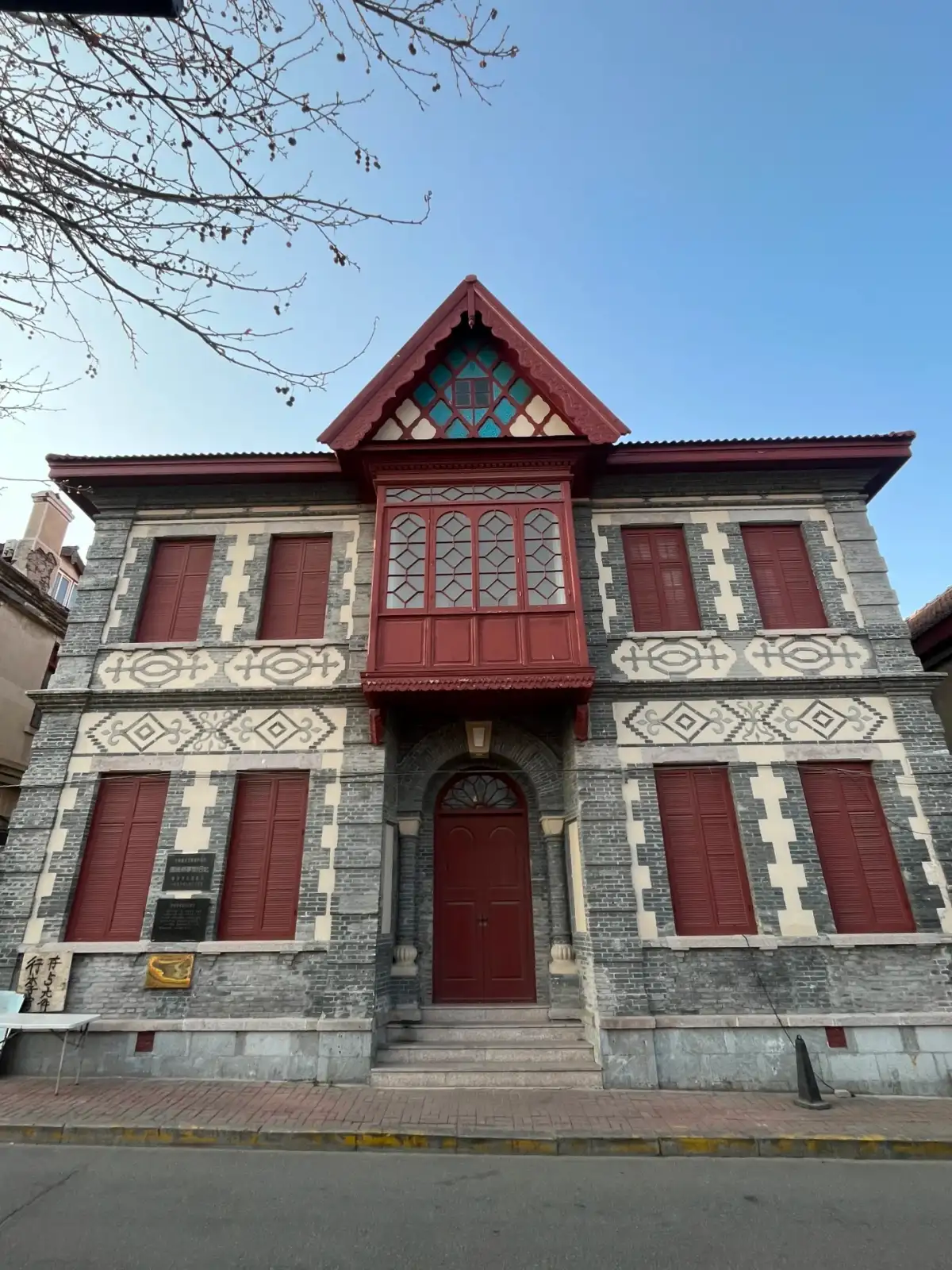
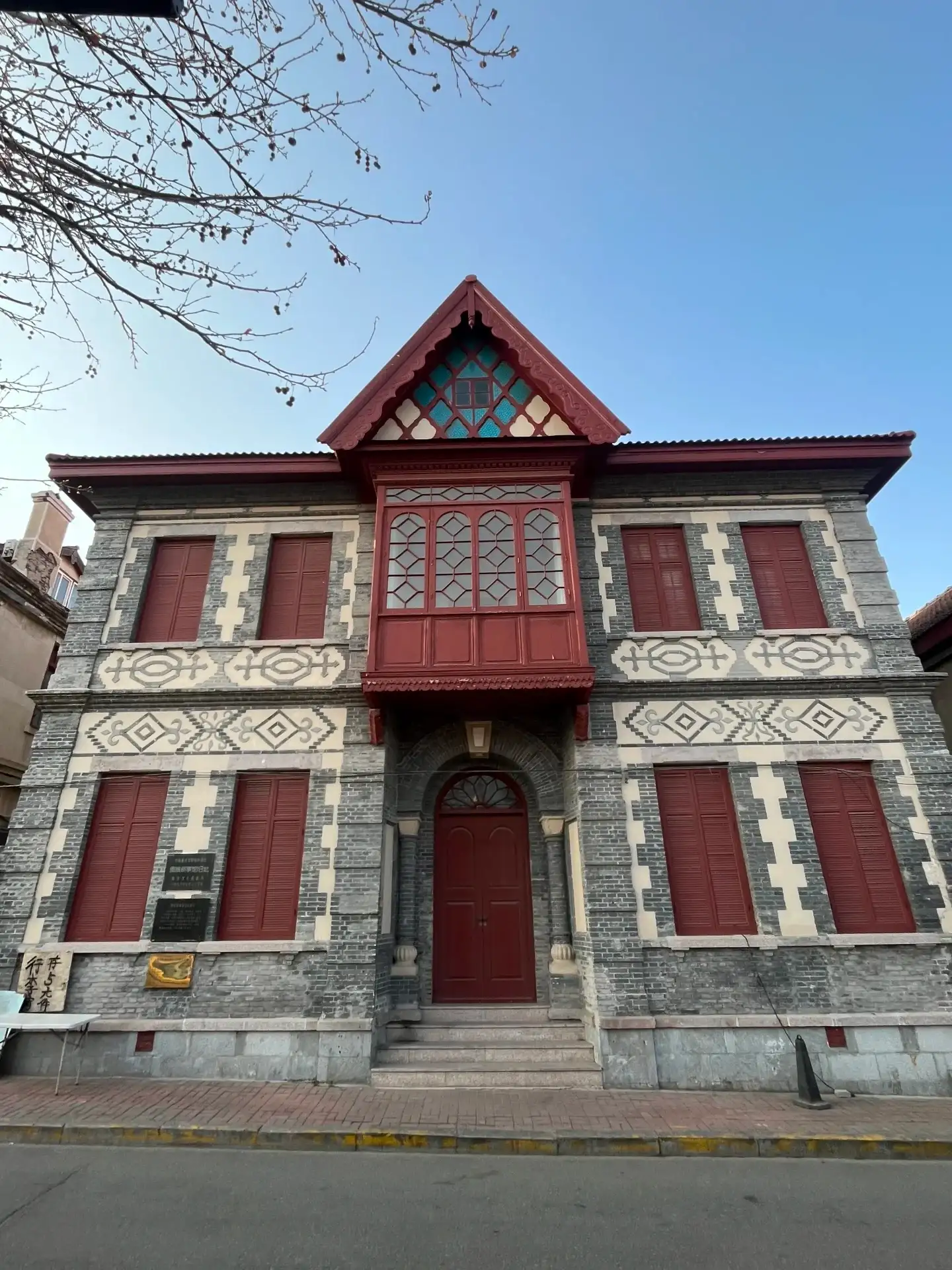
The brick-and-stone facades, red doors and windows, and gables of the modern architecture on Yantai Mountain in Shandong.
A row of old buildings tells the story of a port city’s history
the modern architecture preserved on Yantai Mountain and its surroundings, are closely tied to the city’s history following Yantai’s opening as a treaty port. The Yantai Treaty Port Opening Exhibition Hall is a worthwhile stop for in-depth exploration: official Yantai sources clearly state that it is located on the site of the former U.S. Consulate. By first examining the building’s entrance and exterior walls, then studying the historical photographs and artifacts in the actual exhibition, visitors can connect the beautiful roof above the entrance with the city’s history as a port.
consulates, post offices, and other functions, so it’s not appropriate to simply refer to them all as “beautiful Western-style houses.” By learning about a building’s original purpose, construction background, and current use—and then observing how it relates to the hillside and the road—history takes on a concrete context. Those interested in culture should focus their time on the “Opening of the Port” exhibition rather than rushing to glance at every doorway. The information on trade, cultural exchange, and urban transformation in the materials also reminds visitors that this history has complex realities; a careful reading will yield more insight than simply applying a single romantic description to the exterior.
Start by looking at the doors and windows, then study the contours of the roofs
architectural details are best compared slowly as you navigate the sloping streets. For example, study the arrangement of doors, windows, and facades outside the former U.S. Consulate, then connect your observation of the architecture near the Bing Xin Memorial Hall to the writer’s childhood memories—each location has its own distinct theme. When viewed head-on, the repetition of doors and windows is often the first thing you notice; but when you shift slightly to the side, the thickness of the walls, the steps, and the contours of the roof become clearer. You can choose a representative window to observe the relationship between the window frame and the wall, then zoom out to see how it fits into the overall layout. By shifting your focus from a specific detail back to the entire building, your photos will more effectively capture the on-site scale.
When photographing, there’s no need to try to exclude every single tree branch from the frame. The shadows of trees and the foliage indicate that the buildings are situated on a forested hill, and the varying shades of light on the walls can also help identify the materials used. On cloudy days, the colors of the exterior walls appear more uniform, while on sunny days, you can make out the shadows cast by the eaves—each type of weather offers its own unique visual interest. If the building is in use, respect the rules regarding pedestrian traffic in front of the entrance and restrictions on indoor photography; simply observing the exterior from public areas is sufficient to see how the port buildings are situated within the mountainous landscape—there’s no need to seek out unauthorized vantage points inside.
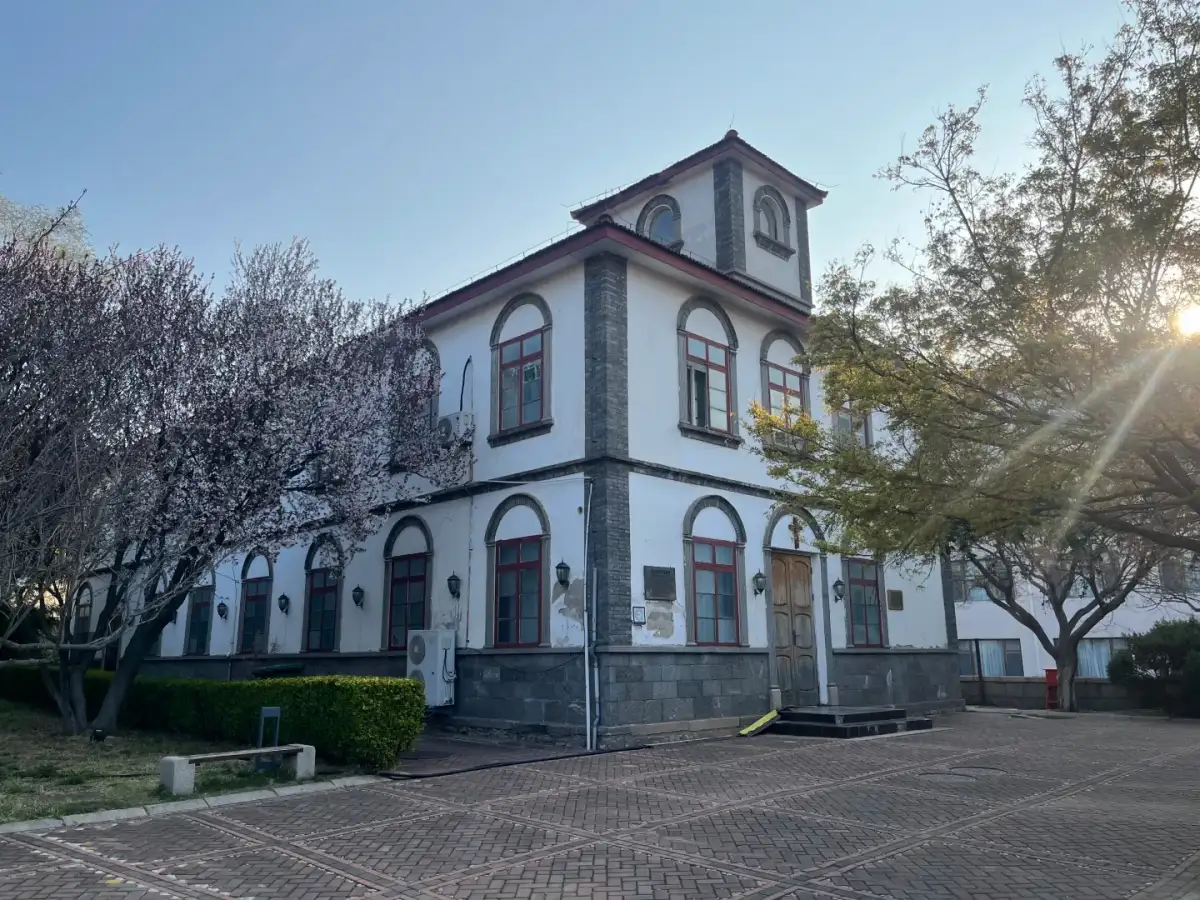
The windows, doors, trees, and courtyard paving at the former site of the Yantai Mountain United Church.
The sloping path under the trees is part of the route
viewing Yantai Mountain doesn’t have to revolve around any single building. As you walk along the trail, trees will first block the view of the sea, only to reveal the water again after a turn. This process of opening and closing the view adds variety to a relatively short walk: the ground beneath your feet is sloping, with branches and railings in the foreground, and the harbor and city in the distance. Walk a little slower and compare the different vantage points along the same route at varying elevations; this makes it easier to grasp the connection between the mountain and the sea than constantly switching between sightseeing spots.
allows the group’s pace to adjust naturally along this stretch. Photography enthusiasts can linger a bit longer at designated stopping points, while those who want to rest can find designated rest areas—just agree on the next meeting spot in advance. The wind can significantly affect how cold you feel; open areas by the sea may feel very different from those under the trees. Lightweight outerwear and water are more practical than carrying a lot of extra equipment. After rain, proceed slowly on stone surfaces and steps as conditions warrant; you can shorten the route and still enjoy the ocean view from lower vantage points. A half-day hike doesn’t mean you have to complete every uphill section.
the lighthouse, first take a look at how it appears in the harbor scene
the lighthouse is an easily recognizable landmark on Yantai Mountain, but your observation can begin with its relationship to the mountain, the sea, and the trees. First, observe from a distance how the white silhouette emerges from the greenery; then, up close, notice how the base connects to the surrounding roads. The lighthouse draws the eye upward, while the coastline expands the scene horizontally; if you capture both perspectives simultaneously, your photo will convey a stronger sense of place than one focused solely on the tower itself.
the history of the existing lighthouse and this mountain must be distinguished according to the exhibition labels; do not assume that all the buildings you see today are original structures from the period when the port was opened. Information regarding access to the tower or related viewing areas, including opening hours, ticketing, and restrictions, should also be verified separately. Even without going up to the higher levels, viewing the lighthouse and the harbor from standard public vantage points still provides a complete thematic experience. You can take one last look before leaving: after walking past the hillside and the buildings, the white tower—which was previously just a landmark—can be placed back into the path you’ve traveled, becoming a memory of the city’s direction.
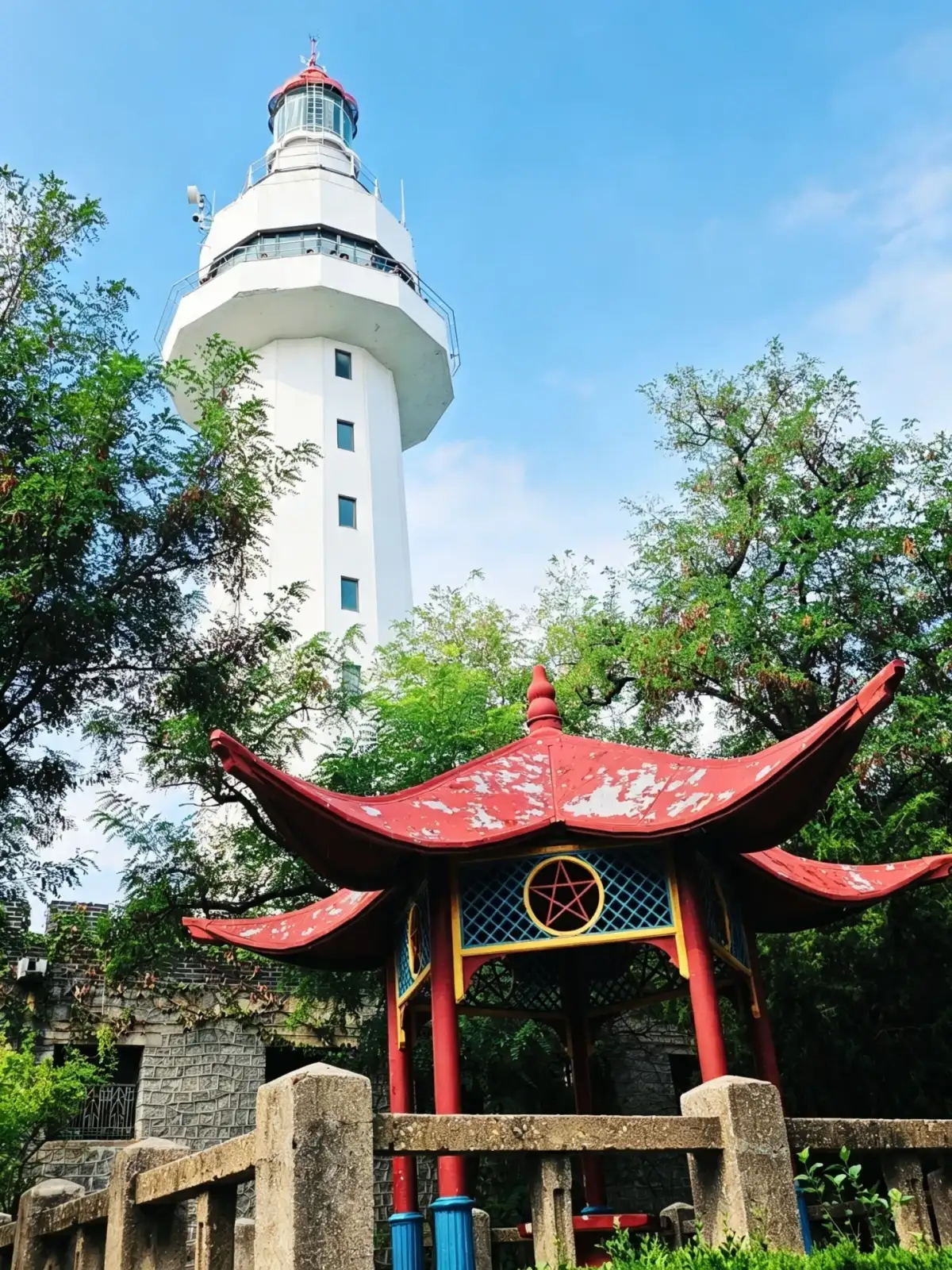
Yantai Mountain Lighthouse with the pavilions and trees below; tiny visitors can be seen in the distance atop the tower. the Rat Race
Viewing the harbor—no need to rush to name every boat
Looking out over the harbor from an authorized vantage point with a sea view, pay attention to the distances between the water’s surface, the boats, and the buildings onshore. The sea in the foreground and the city in the distance aren’t always bathed in the same light; as clouds move, one section of the water’s surface may brighten first, while another remains serene. Such changes are best appreciated slowly—there’s no need to change your camera angle every few seconds. The coexistence of port activity and urban life is precisely what sets Yantai Mountain apart from isolated island viewpoints.
Don’t feel compelled to interpret every visible ship as belonging to a specific route, nor should you judge the current use of a pier based on an old photograph. If you’re interested in shipping, you can continue to explore the stories through the exhibits and official materials; but when observing on-site, start by documenting the outlines and directions you can confirm. The rocks along the shore, the railings, and the water in the distance can create different layers; when framing your shot, stay within permitted boundaries. Seascapes don’t require you to walk to the edge of danger; capturing the foreground actually helps clarify your vantage point, allowing a blue photograph to convey specific information about the mountains, the shore, and the harbor.
After descending the mountain, the neighborhood brings history back into everyday life
After finishing your tour of the mountain, you can take a walk along a section of Chaoyang Street, depending on its opening hours and how far you’re willing to walk. Yantai Culture and Tourism promotes this as a cultural district, which naturally ties in with Yantai Mountain’s theme of early colonial architecture. The sounds of the city will gradually return—coffee shops, ordinary stores, and street traffic—bringing the buildings you’ve just seen out of the realm of abstract history. Choose a route that’s convenient for returning to your hotel, and take your time exploring the street corners as you walk; there’s no need to rush to visit every “Instagram-worthy” spot at once. This marks the end of your half-day on Yantai Mountain, allowing you to transition smoothly from the heights and ocean views back to dining and rest.
If you’d like to delve deeper into the cultural theme, choose an exhibition where you still have the energy to read; if you prefer seaside life, save the next segment for the regularly open coastal promenade. Choose lunch based on your dietary needs—seafood isn’t a must-try for everyone. For visitors with food allergies or dietary restrictions, it’s more reliable to specify your needs in advance than to guess based on photos of the menu at the last minute. Sit down to sort through the photos you just took, selecting one each of the architecture, tree shadows, and the harbor—and you’ll see that this route offers more than just the lighthouse as a memorable highlight.
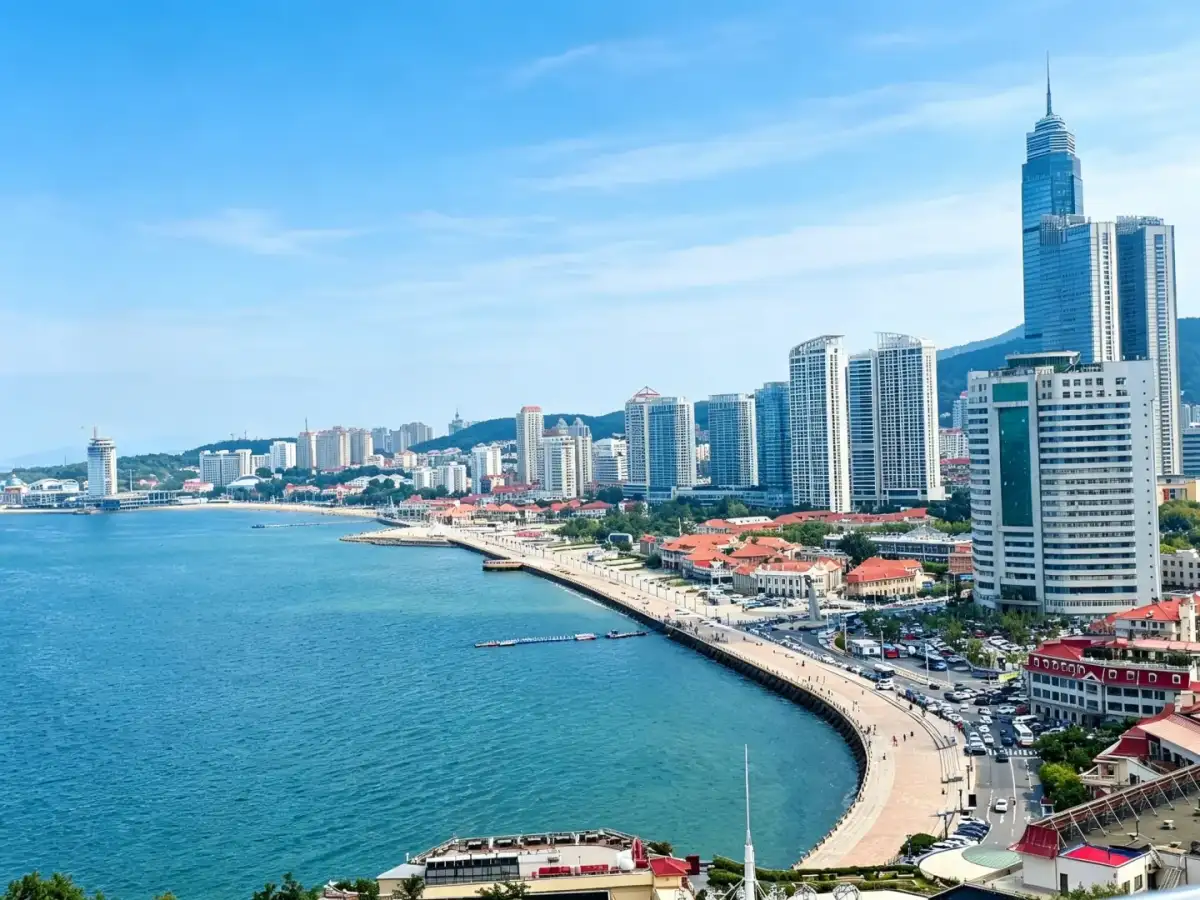
View of the coastal arc, the city, and the water from the heights of Yantai Mountain in Shandong.
change color with the seasons, and also change the way you experience them
Yantai Mountain offers different lighting and vegetation conditions in different seasons. Warmer periods are ideal for combining tree shade with ocean views, while colder seasons call for preparing for the wind in open areas. During the intense summer sun, start by visiting the exhibitions best suited for indoor viewing, then adjust your time outdoors based on how the weather makes you feel; on cloudy or rainy days, limit your walking range and focus primarily on the building exteriors and indoor reading. The significance of the route doesn’t disappear just because the blue sky from the photos is missing.
If you’re making a special trip to catch the evening colors, first check the opening hours and return schedules for the relevant areas of the park; don’t assume the lighthouse area is a sunset viewing platform you can reach at any time. Travelers with mobility challenges should inquire in advance about trail and stair conditions and choose a more suitable route at lower elevations. Travel planning doesn’t require packing every minute of the day—just ensure your arrival, rest, and return are clearly mapped out. Set aside a little time for the sea breeze, the shade of the trees, and the architecture. On sunny days, you can enjoy the distant views; on cloudy days, you can clearly see the textures of the walls. The weather itself is part of the experience.
Descending from the lighthouse and heading toward Chaoyang Street for a meal
As your tour of the park comes to an end, first confirm which exit you’ll use to return, then walk toward Chaoyang Street at your own pace. As the shade of the trees on the hill and the lighthouse gradually fade behind you, the bustle of the streets and the sounds of the city reemerge—a perfect way to wrap up your half-day outing. If you’re still in the mood for cultural exploration, choose an exhibition that’s currently open; if you’re already tired, simply sitting down for a meal is a perfectly satisfying way to wrap things up. The sea views and modern architecture need no further proof of their richness through long walks—they’ve already been showcased along the same route.
If you plan to transfer to a different train later, confirm the actual station, pickup point, and departure time in advance; those staying in the city center can save the rest of the coastal area for another time. A short walk along Chaoyang Street brings the port’s history back into modern life—there’s no need to expect every shop to have maintained its original purpose for a century. Pick a spot that’s easy to return from and suits your dining preferences, sit down, and take another look at the street from beneath the eaves. The experience offered by this mountain concludes with a relaxed and tangible urban interlude.
Further Reading and References
Compiled and organized by the East Travel Editorial Department based on publicly available travel notes and listed information. Intended as pre-trip reading material; this is not a personal account of firsthand experience. Please verify opening hours, transportation, reservations, and service arrangements based on your actual travel dates.
Yantai Municipal Government: Yantai Mountain Architecture and Coastal Tour
Yantai Culture and Tourism: Chaoyang Street
Buildings or sea views with half a day?
Begin a Yantai Hill walk with one historic building that has public interpretation, looking at its windows and roof before following permitted paths towards the harbour. History enthusiasts can spend longer in displays; those drawn to the coast can shorten indoor stops. Both interests fit a single ascent and descent without making every building compulsory.
Connecting the hill with the streets below
Photograph the Yantai Hill lighthouse in its harbour setting, treating access inside and viewing from outside as separate arrangements governed by current access. A Chaoyang Street walk after descending can continue the port-history theme through street architecture and a meal. Choose an end point before arranging transport to avoid retracing the slopes.
Planning references
Planning reference: Yantai Hill walk 1


