East Travel Editorial Department · Travel Diaries and Pre-Trip Reading
and first identify the different earthen towers on the map
Fujian Tulou often enter travelers’ imaginations through photos of circular structures, but on the map, the names are separated by villages and mountain roads. Hongkeng, Gaobei, and Chuxi in Yongding, as well as Tianluokeng in Nanjiang, are not simply a series of points connected by stepping out of a single courtyard gate. On a first visit, making Hongkeng the main focus of the day makes it easier to understand the relationship between architecture and daily life: first, observe the exterior of Zhencheng Tower; then, enter the courtyard open to visitors; and finally, compare other architectural styles within the village. This approach gives the journey a clear question: Why do houses adopt different layouts even though they all serve the same purpose of communal living? If you’ve already booked accommodations in the Longyan area, be sure to factor in travel time, arrival at the entrance, and return transportation into your itinerary; for long-distance round trips from Xiamen, you’ll need to cut back on additional stops outside the village. Don’t cram several sets of tulou into a single itinerary—you’ll end up spending all your best time rushing from place to place. Hongkeng is worth exploring on foot at a leisurely pace; even the ordinary alleys between the buildings can help explain why they exist here.
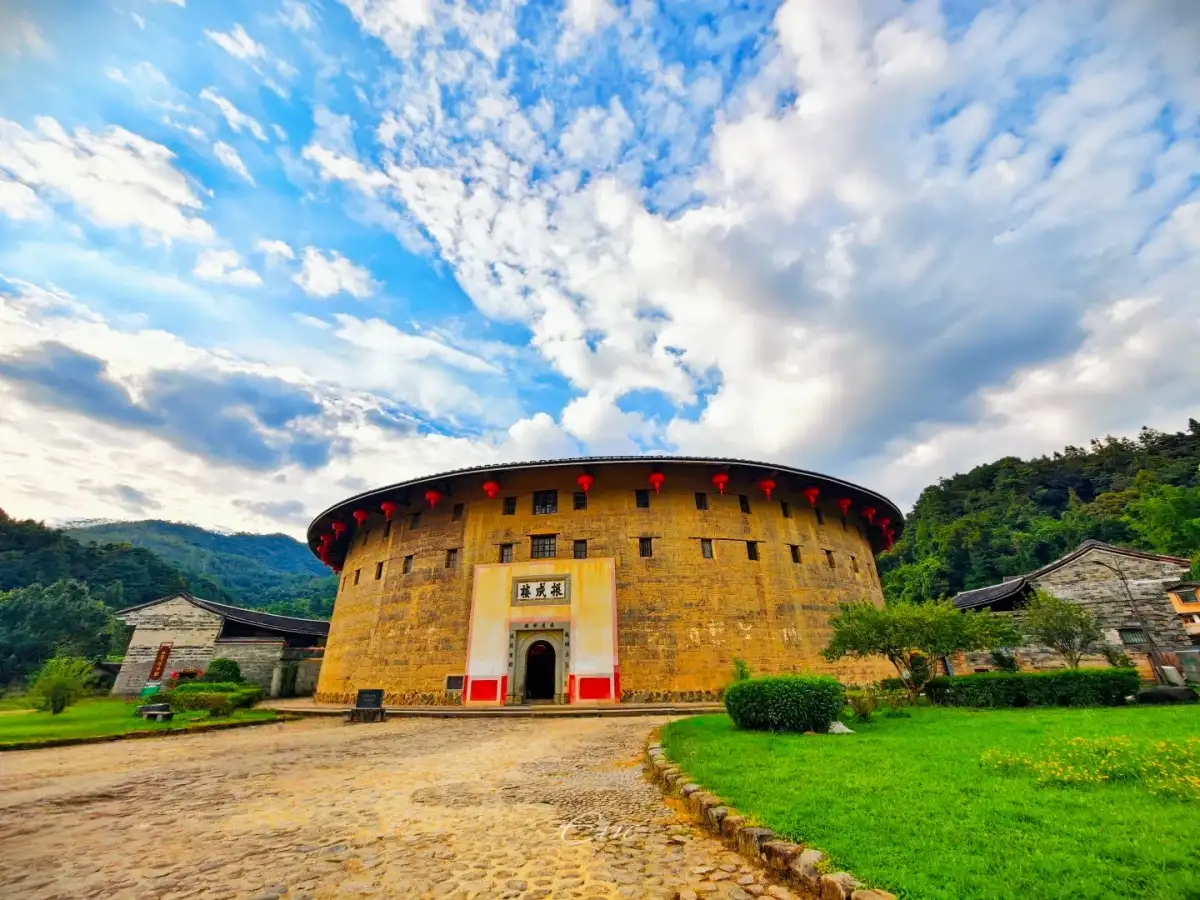
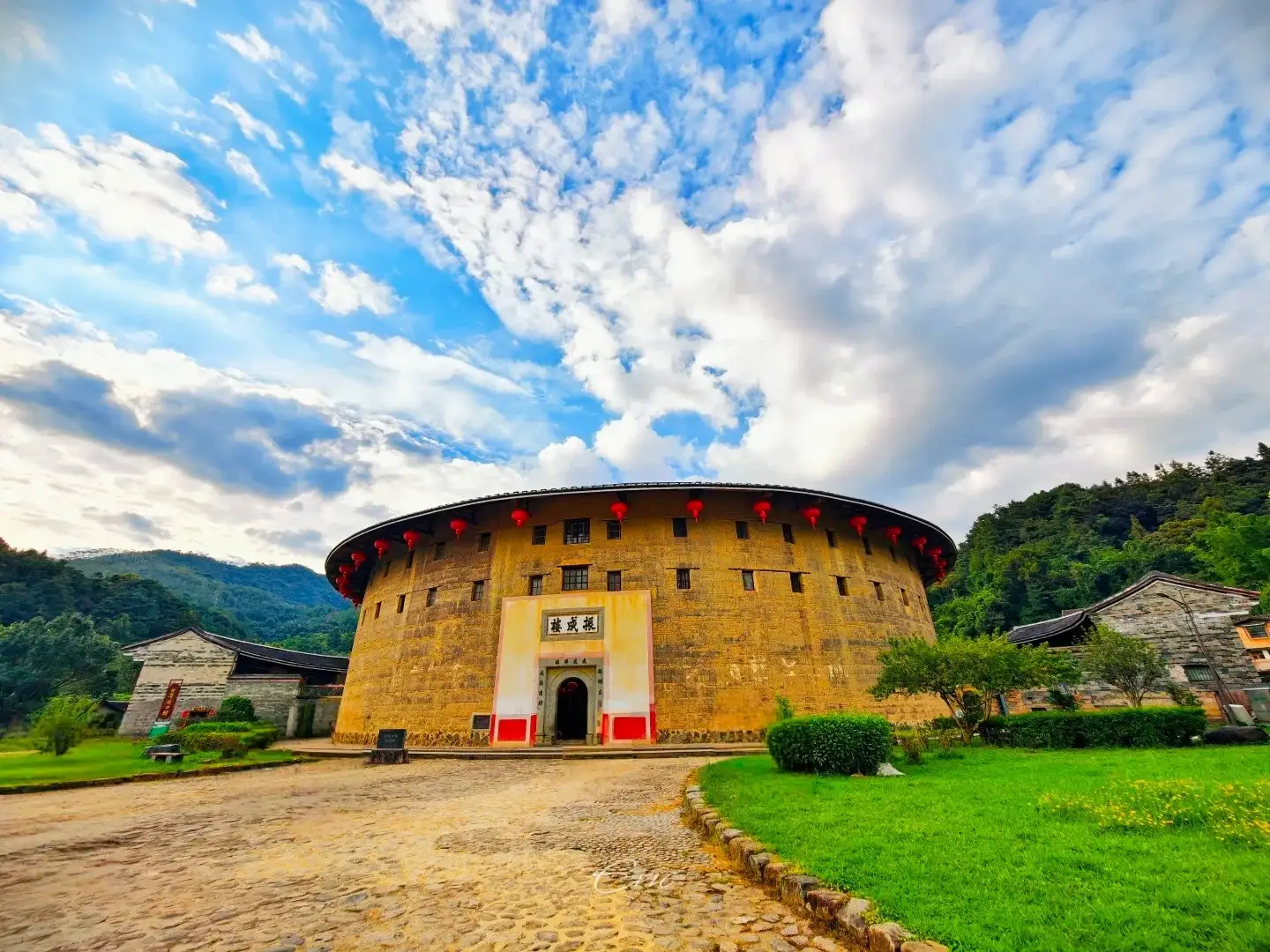
The exterior wall of Hongkeng’s Zhencheng Lou against the mountainous landscape.
View of the walls and openings from outside Zhencheng Lou
Zhencheng Lou is part of the Fujian Tulou World Heritage Site. Before reaching the building, first walk around to the outer side where access is permitted to observe the color of the earthen walls, the eaves, and the openings that vary between the upper and lower levels—rather than immediately entering through the main gate. The exterior gives a first impression of solidity and continuity, yet the roof is framed by a ring of tightly packed tiles and wooden structures. The doorway appears understated against the massive wall, while the stone foundation, doorframe, and wall materials—all visible up close—each possess their own distinct texture. By comparing the shaded and sunlit sides along the path, you’ll notice that the same earthen hue isn’t always uniform. The appearance of the walls after rain will also differ from that in photos taken on a sunny day. When photographing the entire building, simply stand at the edge of a public road or lawn; do not step onto the grassy areas just to avoid including a lantern or sign in the frame. If a guide is present, ask them to first explain the functional divisions between the exterior walls, the interior wooden structures, and the courtyard, before discussing specific historical periods and family stories. The building’s purpose must be explained first; only then can its decorative elements be properly contextualized.
and once you pass through the gateway, the circular layout begins to take shape.
The most fascinating transformation inside a round earthen building is how the orderly exterior outline gives way to a multitude of distinct doors, columns, and staircases. Standing in an open area of the courtyard and looking up, you’ll see continuous wooden corridors connecting rows of identical rooms; then, when you turn back to find the door you just entered, you’ll realize that even a circle has a center and a direction. The internal layout and central hall of Zhencheng Lou are best appreciated in conjunction with the exterior walls. First, listen to the on-site explanation of the building’s functions, then observe the relationships between the hall, corridors, and courtyard pathways. Do not assume that all earthen buildings are uniformly designed as residential structures with equal space distribution. The open space in the center of the courtyard allows light to enter and enables visibility between the different floors. For international visitors, it may be helpful to use familiar apartment buildings as a reference, but do not let this overshadow the role of these spaces in family life and ritual. During your visit, follow only the designated paths; be sure to ask in advance where the stairs lead and which floors are accessible. If someone upstairs is hanging laundry, opening a window, or resting, this is everyday life—not a display area you can enter at will.
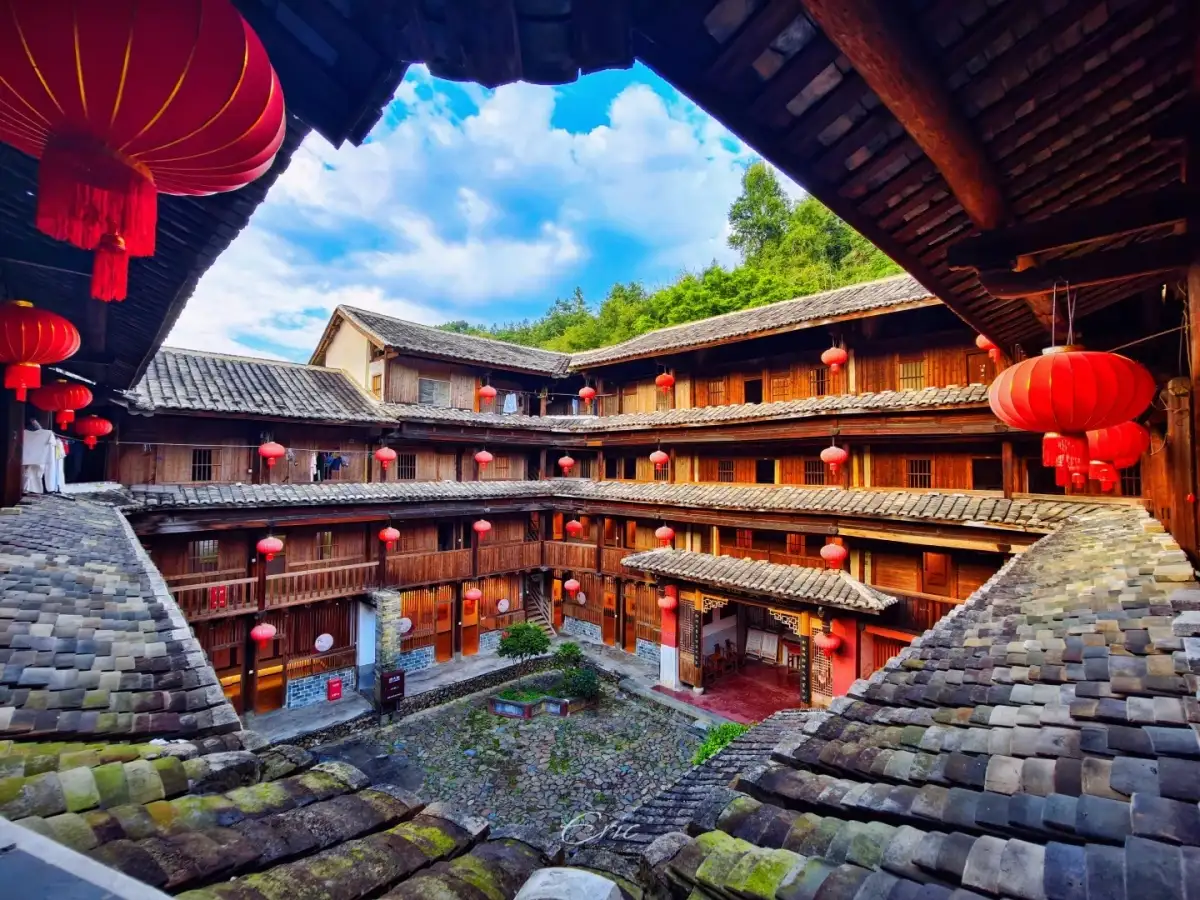
Courtyards and wooden walkways at Hongkeng Tulou.
Comparing the circular, square, and hillside layouts in the village
After leaving Zhencheng Lou, set aside some time to explore the other buildings in Hongkeng Village. Fuyu Lou, Kuiju Lou, and Rusheng Lou can serve as points of comparison, but there’s no need to inspect every single room in each building. First, locate them on the scenic area map, then select two based on which ones are open that day to avoid repeatedly backtracking at the alley entrances. When comparing them, pay attention to how the entrances connect to the streets, how the halls and living quarters are arranged, and whether the roof levels vary with the terrain. While the exterior of these round buildings can easily become a unifying symbol, when you actually walk through different courtyards, you’ll discover that the paths in front of the gates, the mountains behind them, and the organization of the structures are equally important. When you come across information signs, make a note of the local names used for the buildings; this will help you distinguish them when reviewing your photos later. If the interior is crowded, you can observe the exterior first and return to the open entrance later. Observing three distinct layouts along the way is often more memorable than hastily jotting down the names of ten buildings. What you focus on during your visit will vary based on your personal interests: those interested in architecture will examine the column grid and eaves, while those interested in social life will look at the communal halls and the entrances to individual homes.
A living heritage site
As a World Heritage site, the Tulou must be preserved, yet they still require water, electricity, sanitation facilities, and safety exits. Official Fujian government materials on “living heritage” document how improvements in living conditions proceed hand-in-hand with conservation efforts. The modern amenities you encounter during your visit are therefore best understood within this context. Refrigerators, fire extinguishers, or household items found around the courtyard do not mean the building has lost its value; rather, they serve as reminders that these spaces still fulfill practical needs. As you explore, pay attention to how traditional materials coexist with modern amenities, and ask a knowledgeable guide about the principles guiding the restoration. It is generally appropriate to photograph doors, windows, hallways, and common areas; however, you should obtain permission before taking pictures inside residents’ homes, of children, or of people performing household chores. If you happen to encounter a family gathering, yield to the situation as it unfolds and do not prioritize your own itinerary over the residents’ needs. Buying a cup of tea or a local snack can provide an opportunity to take a break; whether or not to make a purchase should be based on your interest—there’s no need to turn every conversation into an occasion for spending.
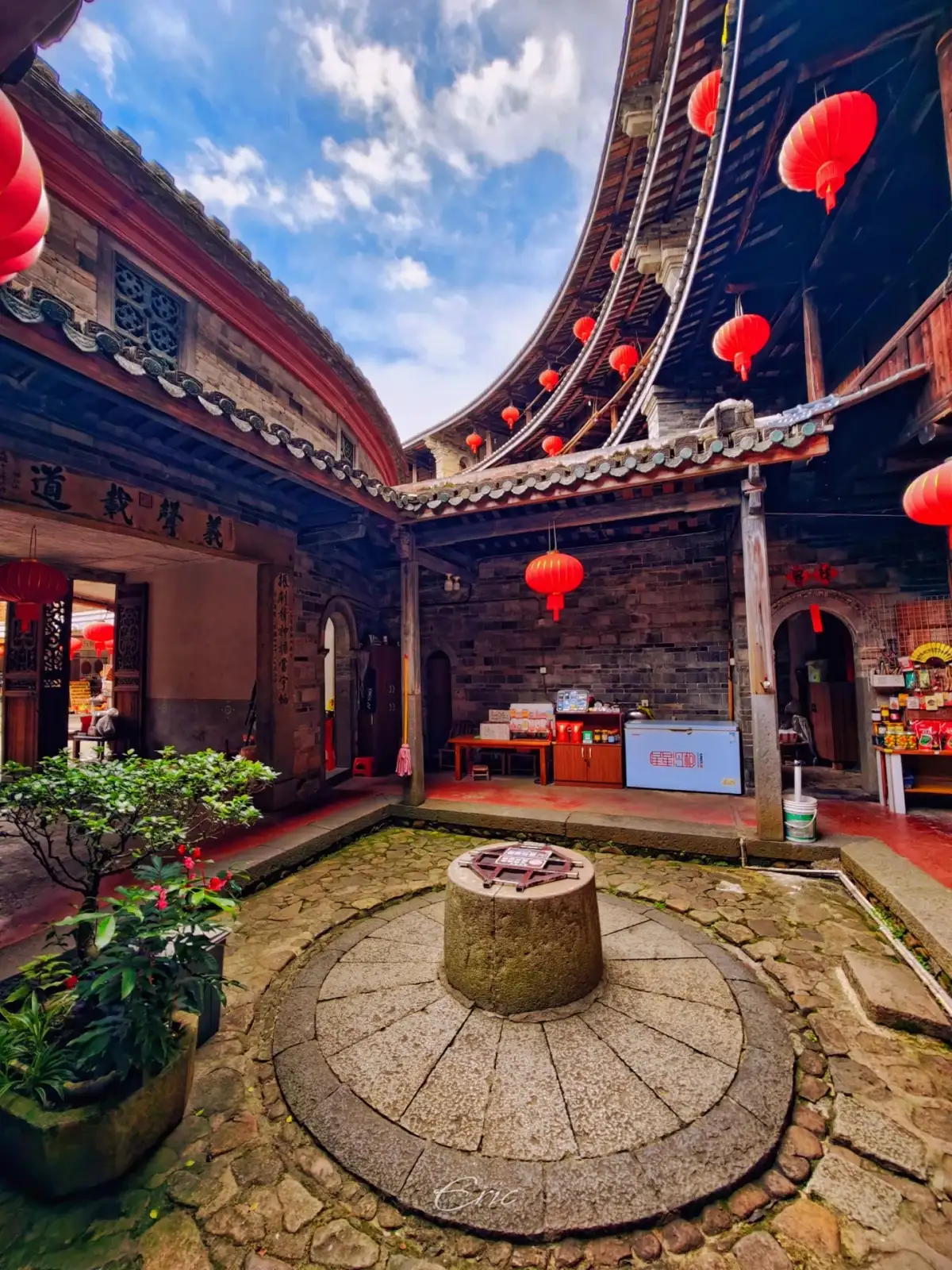
The inner courtyard and well of a circular Tulou in Hongkeng.
Split the half-day into two paces over lunch
Walking in Hongkeng isn’t a continuous climb, but it does involve repeatedly moving between stone surfaces, thresholds, and courtyards. Spend the morning mainly touring the buildings; after lunch, slow down to make time for the village paths, the backdrop of the hillsides, and close-up observations. Hakka cuisine can serve as a gateway to understanding local life. Before ordering, carefully review the menu, portion sizes, and pricing methods; when traveling in a small group, there’s no need to fill the table just to sample everything. If ingredients like taro-based dishes or dried bamboo shoots appear on the day’s menu, feel free to ask about their preparation and flavor; For guests with allergies or dietary restrictions, it’s best to have a traveling companion confirm the ingredients in Chinese. After the meal, find a place to sit and rest first, then decide whether to proceed to another building. This arrangement also makes it easier to accommodate the varying interests of your group: some may want to listen to the tour guide, while others might prefer to sit in the village and drink tea; everyone can then meet up again at a prearranged spot. Mountain trips often take a toll on one’s energy due to travel, so taking a break isn’t a wasted interlude—it allows you to truly appreciate things in the afternoon that might otherwise be easily overlooked.
Gao Bei should be treated as a separate leg of the trip, rather than just a quick stop along the way.
If you’re particularly interested in large-scale round buildings, you can plan a separate visit to Gaobei to explore Chengqi Lou and the surrounding structures as a second leg of your tour. Travel between Hongkeng and Gaobei requires a road trip. Before departing, confirm transportation options, entry points, and the scope of each area’s visit—do not assume the two zones are connected by a continuous walking trail covered by a single ticket. Local residents can split the visit into two days: one day to compare the different building styles in Hongkeng, and another to observe the overall structure and repeated interior units of the circular buildings in Gaobei. If you have only one day, complete the main area first, and then make a choice only if you have sufficient energy and time for the return trip. For international visitors using public transportation, you must separately confirm the station names, bus terminals, and the final leg of the transfer; the straight-line distance on a map is insufficient to estimate travel time in mountainous areas. Save the Chinese names of your destinations on your phone, making sure to distinguish between Yongding, Hongkeng, and Gaobei. Also specify the return meeting point down to the exact entrance or parking area to avoid drivers and passengers waiting at different archways.
The weather will determine how the final leg of the journey unfolds.
On a rainy day, the earthen buildings are better suited for a leisurely examination of the eaves, wall bases, and drainage systems, but the slippery stone surfaces and wooden staircases will slow your pace. Wear shoes with good traction, and make sure to stow your rain gear before entering the narrow doorway—don’t let your dripping umbrella block the people behind you. On hot, sunny days, keep your observation of the sun-exposed exterior brief and take breaks in sections under the open verandas. In the fall, if you see crops being dried in the sun, feel free to watch, but don’t assume every courtyard will have the same “autumn drying” scene, and do not move any items placed there by residents. Evening activities and illuminated tours are scheduled separately; before deciding to stay, check the day’s information and your return transportation arrangements. At the end of the day, what you’ll remember most may not be the number of round buildings you visited, but the transformation you experienced the moment you stepped through the doorway: a structure that appears as a single, cohesive entity from a distance is, in fact, composed of many households, passageways, and communal spaces. With this understanding, the Fujian Tulou ceases to be merely a distinctive architectural form and becomes a way of life that invites further reflection.
Further Reading and References
Originally compiled by the Dongxing Travel Editorial Department based on publicly available travel notes and listed information, intended for pre-trip reading and not as a personal account of the experience; opening hours, transportation, reservations, and service arrangements should be verified according to the actual travel date.
Fujian Provincial Department of Culture and Tourism: Fujian Tulou Heritage Sites
Fujian Provincial Government: Living Heritage Preservation of Tulou
One cluster or two?
A Fujian tulou visit can focus on one area. For a one-day visit to Yongding tulou, make the Hongkeng tulou cluster your main focus and compare Zhencheng Lou with other building forms. Add the Gaobei tulou cluster if large round buildings are your priority. Allow for road transfers, lunch and a clear return meeting point.
Before taking the stairs
Ask which floors are open and which areas remain in residential use. An accessible courtyard does not make every staircase or room public. Ask separately before photographing domestic details, and allow a slower pace on wet stone and timber stairs.
Planning references