Photography itineraries in Yuanyang often start with the question, “Where should I go to see the sunrise?” Yet what truly determines whether the next morning will be leisurely may well be where you stay the night before. Staying close to your destination, having a room with a view of the terraced fields, being able to easily arrange breakfast, and ensuring a smooth pickup by car are four distinct factors. Only by comparing them separately will your accommodation truly support your photography—rather than simply providing a bed to go with a scenic photo.
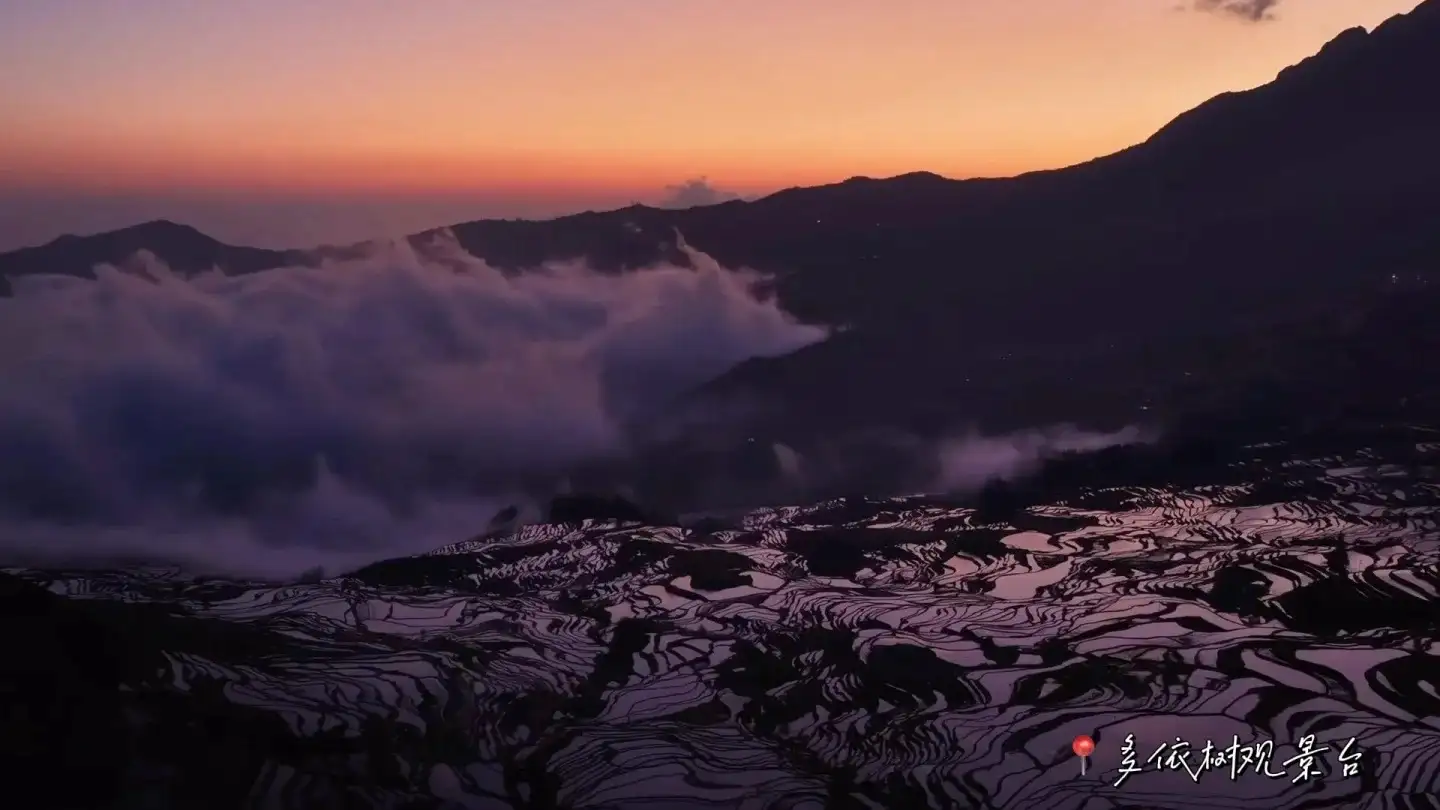
这些评价展示了作者当次拍摄的结果,却不是景观点位的永久排名。小刘同学则用多依树航拍描述线条与色彩,提醒我们另一件事:从地面观看和从空中观看,构图本就不同,不能靠房间窗口承诺复制航拍画面。
Ask separately about the location of the accommodation and the view from the room.
The Honghe Prefecture tourism materials describe Duoyishu as a spot for viewing terraced fields, sea of clouds, and sunrises, while Bada is described as a spot for viewing sunsets, terraced fields, and villages. The two locations offer different viewing directions and environments, making them ideal for planning morning and afternoon activities rather than guaranteeing specific colors on any given day. When choosing accommodations, first focus on the main viewing points, then consider what kind of views the room itself offers.
When inquiring with the property, be sure to distinguish between the view from the room and the view from a communal terrace. Photos may have been taken from the rooftop, the restaurant, or another room, and the specific room type you book may not necessarily offer the same vantage point. If you plan to wait inside your room for the light to change, you should ask for specific details regarding the room’s orientation and whether the view is actually unobstructed; if you’re willing to get up early and head out, you should confirm the meeting point for your vehicle and the actual route to your destination.
foreign visitors will also need an accurate Chinese address. The English translation of an accommodation’s name may not directly correspond to the village or road listed on a driver’s map; please save the map location, Chinese name, and contact number provided by the establishment. Clarifying the next day’s meeting point the night before saves more energy than spending the early morning searching repeatedly with several similar transliterated place names.
the schedules of your travel companions are also a key factor in accommodation decisions. Photographers may wake up early, while children and parents might want to sleep in a bit longer; if you’re sharing a vehicle, decide whether the whole family will head out together, or if the photographer will take a short, separate trip while the rest of the group eats at their usual time. Both arrangements have their own costs and logistical requirements—you cannot assume that everyone is willing to sacrifice sleep for a single sunrise photo.
one night versus two nights offers very different opportunities
and staying only one night, arrival, unpacking, and dinner will often take up part of the first day. It’s recommended to first confirm the most important observation points for the second day, then schedule evening activities within a convenient range to minimize the need to rush between multiple vantage points upon arrival. If long-distance travel is still required at night, the family will exhaust their energy before even seeing the sunrise.
a two-night stay allows you to use the first morning to familiarize yourself with the surroundings, then adjust your plans on the second day based on the weather and your interests. On the first day, capture the overall scene and spend the afternoon observing the interplay between the village and the fields; on the second day, choose a direction you wish to explore in greater depth. This rhythm makes it easier to develop a thematic focus than if you were to pack and move your luggage every day. However, a two-night stay does not guarantee sunny weather or that the same scenery will persist; rather, it provides a buffer for observation.
, you can divide your goals into two categories: subjects you must capture, and effects you’re willing to wait for. Subjects include the repetitive lines of field ridges, the relationship between villages and terraced fields, and varying elevations; effects include specific types of sea of clouds, reflections, or the morning glow. The former category is better suited to underpin the entire trip, while the latter depends on weather and the agricultural season. Even without the ideal morning glow, the trip can still be rich in experiences.
don’t just bring your camera in the early morning
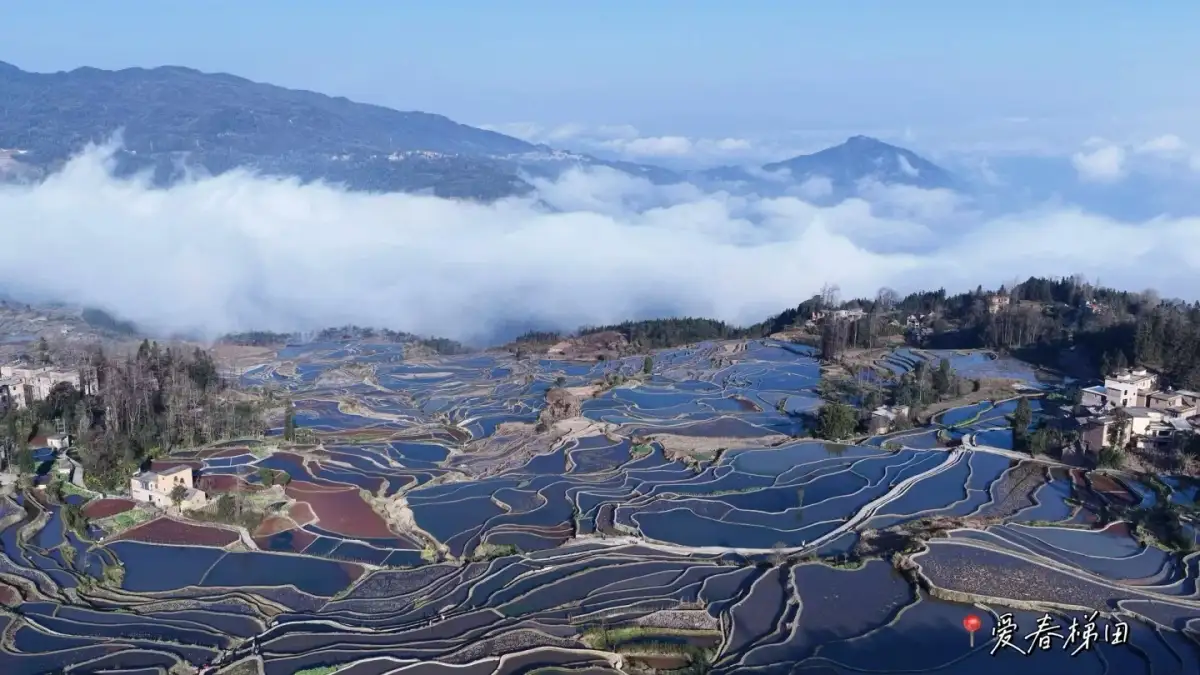
and have your gear organized the night before, you’ll have less to do when heading out at dawn. Keep frequently used lenses, spare batteries, memory cards, and basic rain gear in easily accessible places; once you arrive at the viewing area, find a spot where you’re allowed to stay before opening your bag. When the viewing area is crowded, tripods and other large equipment may obstruct passage. Follow on-site guidelines and do not demand that others give up their designated spots for you simply because you’ve “waited all morning.”
Clothing and breakfast are also part of your photography plan. Waiting in the early morning feels different from walking continuously; pack layers that can be easily added or removed based on actual weather conditions. Confirm breakfast times with the accommodation provider; if you plan to leave very early, arrange for a simple meal that suits your needs in advance. Discuss vegetarian or other dietary requirements separately—don’t wait until everyone is rushing to leave to explain them.
The sunrise time listed for a specific day in the original post should not be treated as a year-round schedule. Mountain obstructions, cloud cover, and your viewing location will all affect the exact moment you actually see the sun; check information for your specific travel dates before departure, follow on-site advice upon arrival, and allow plenty of time for waiting. Watching the sunrise doesn’t begin the moment your phone displays “one minute to sunrise”—the interplay of sky, clouds, and water has already been changing long before that.
The parking, crowds, and oncoming traffic mentioned by “Travel Lajiaoniao” were specific to their experience on that particular trip. While these issues highlight transportation challenges, they cannot be directly extrapolated to mean that all locations will be congested. The shuttle service provider needs to know the specific location, date, number of people, and amount of photography equipment, and will then make arrangements based on actual traffic conditions; the locations of the hotel, viewing platform, and vehicle must all be confirmed separately.
to combine the morning and afternoon into a single photographic theme
and finish shooting in the morning, you can return for a meal or rest before spending a more relaxed period photographing the villages and fields. The descriptions of the Hani Terraces by UNESCO and the Food and Agriculture Organization of the United Nations (FAO) highlight the connections between forests, villages, terraces, and water systems; this offers photographers a more comprehensive subject than simply the color of the water’s surface. Your compositions can shift from wide-angle shots to explore the spatial relationship between people and the land, without entering unauthorized agricultural areas.
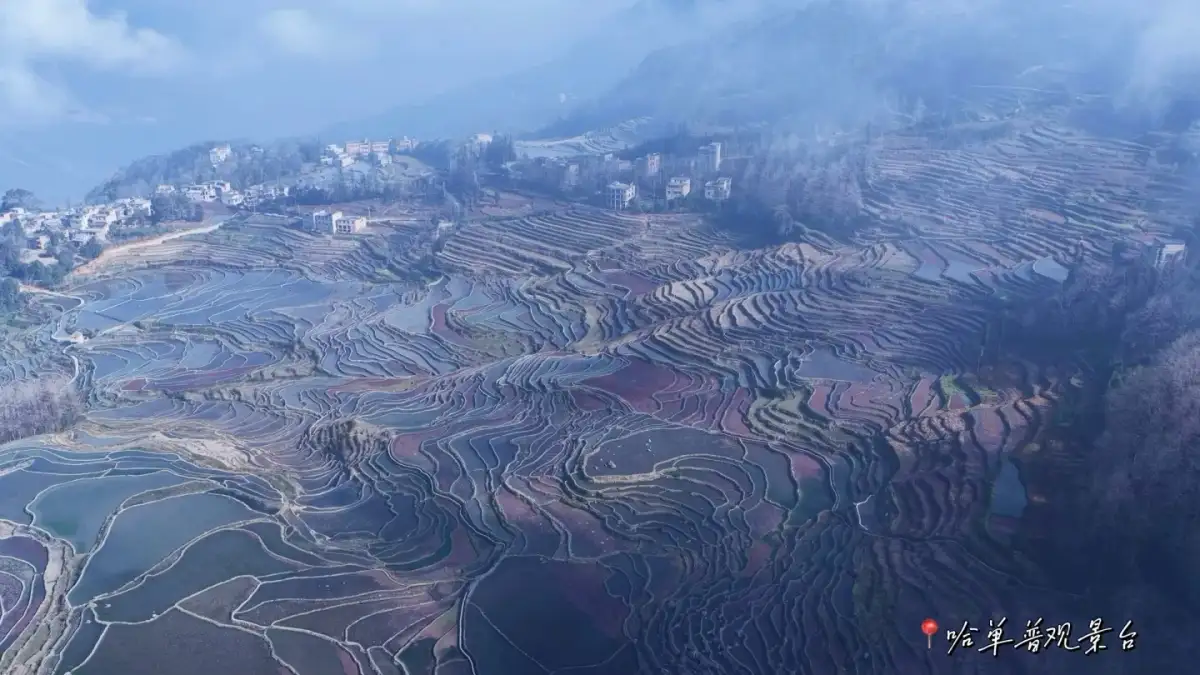
to visit villages, stick to designated access areas and do not automatically treat local daily life as a photo opportunity. Always ask for permission before photographing residents or courtyards, and do not interfere with farm work when photographing labor in the fields; people in the background can help establish scale, but when photographing subjects up close, respect their wishes. Field ridges are agricultural structures; do not trample on them or place equipment there arbitrarily just to achieve a low camera angle.
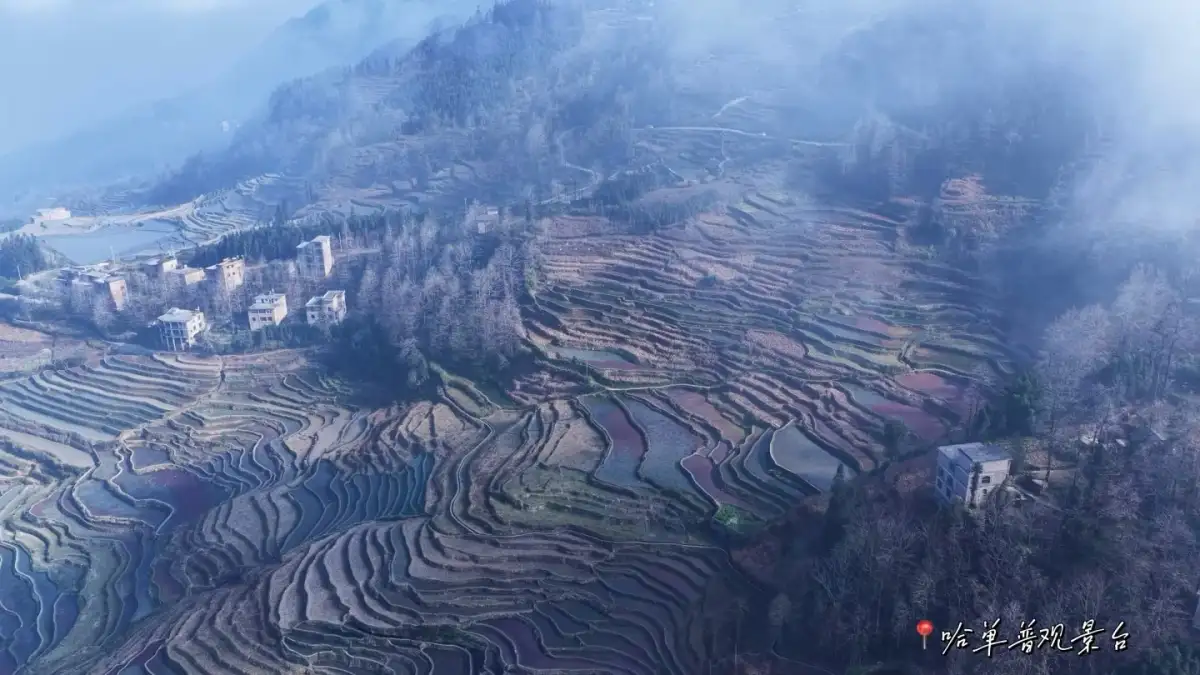
, the afternoon light can provide a contrast to the morning: viewing the same set of field ridges from a different angle may reveal completely different reflections and contours. Rather than rushing to multiple locations on the same day to repeatedly shoot “wide shots,” it’s better to choose two subjects with distinct characteristics—this makes it easier to explain why you kept a particular photo when reviewing your shots later. The viewing directions provided in official guides, such as those for Bada, offer clues, but the final choice still depends on the conditions on the day of your visit.
for drone photography, you should separately confirm current airspace regulations, site management policies, and personal operating conditions. Xiao Liu’s aerial photographs illustrate one viewing height but do not guarantee that every visitor can take off from the same location. Even without aerial photography equipment, you can create your own ground-level perspectives by utilizing variations in elevation, winding field ridges, and the layout of villages.
Finally, back to accommodations: if the room is comfortable for resting, meal arrangements are clear, and the meeting points are well-defined, it has already fulfilled the most important function of a photography base. What you see out the window is a bonus; whether the entire itinerary works is the foundation. Provide your consultant with the season, your travel companions’ schedules, and two or three specific subjects, and your trip to Yuanyang will transform from a hunt for photo spots into a patient, theme-driven exploration of the mountains.
Source and Editorial Notes
They do not serve as proof of actual travel experiences or services provided by Dongxing Travel.
People’s Government of Honghe Hani and Yi Autonomous Prefecture / Prefectural Bureau of Culture and Tourism · Yuanyang Hani Rice Terraces Scenic Area · Official information; Verified/compiled on: October 3, 2026.
UNESCO World Heritage Centre · Cultural Landscape of the Honghe Hani Rice Terraces · Official information; Verified/compiled on: October 3, 2026.
Food and Agriculture Organization of the United Nations · Hani Rice Terraces System · Official information; Verified/compiled on: October 3, 2026.
Does a view room replace a viewpoint?
When choosing Yuanyang terrace accommodation, ask separately about location and the room's actual orientation. Nearby Duoyishu morning views do not guarantee a terrace view from every room. For Hani terrace photography, establish the viewpoint route and transfer before comparing rooms, including luggage access after dark.
One night or two?
One night offers one morning; two nights allow more flexibility without guaranteeing sunrise, mist or flooded fields. Check seasonal field conditions and use villages and farming as daytime subjects. Stay out of crops, leave residents' equipment in place and ask before photographing people.
Planning references