
Street scale in the Five Great Avenues
Trees, garden walls and turning streets matter as much as a few famous villas.
A deeper China. A journey of your own.
Trace riverside architecture and local flavours along the Haihe.
Plan my trip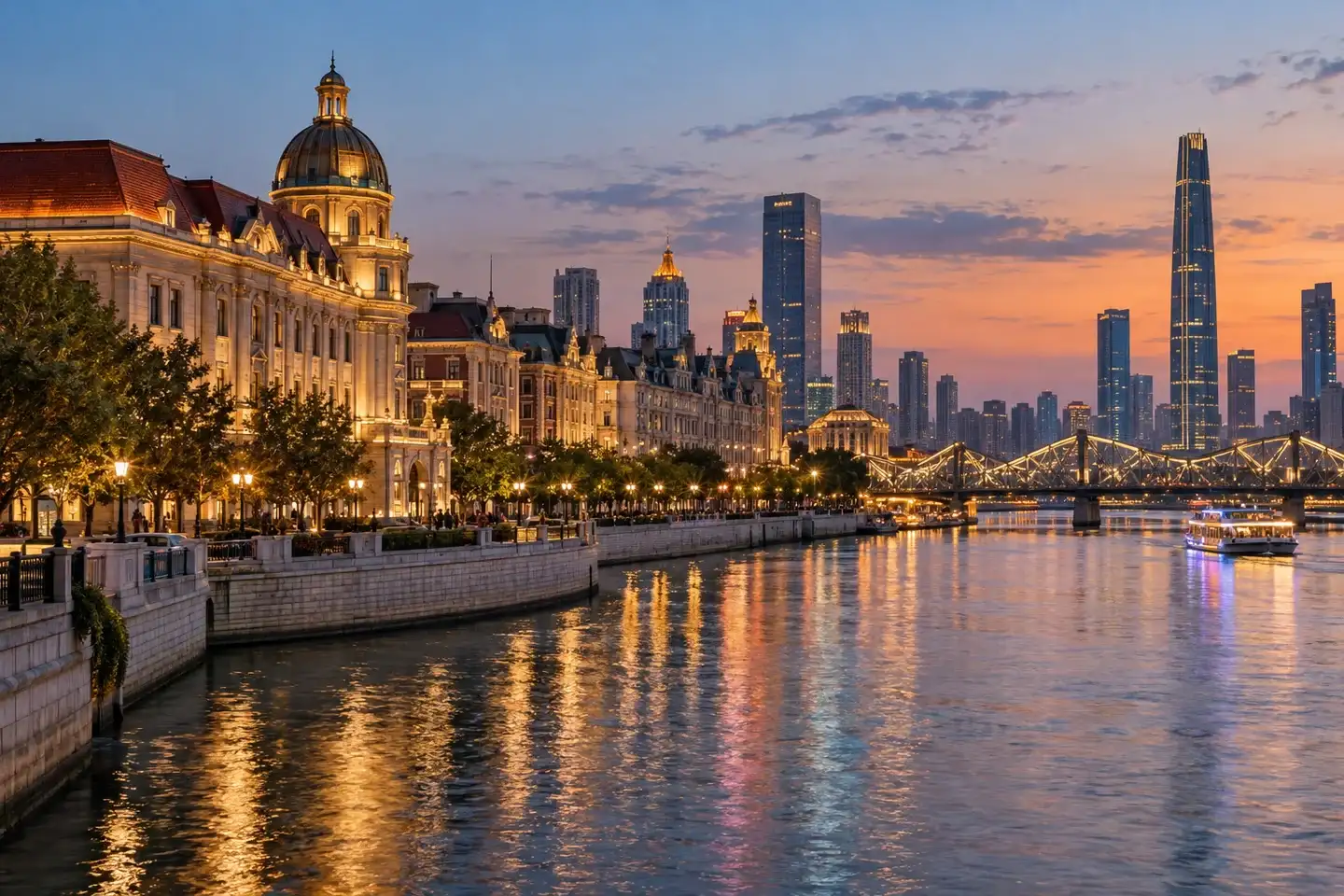
Tianjin's story follows the Haihe River, but it is far richer than an evening light show. The villa-lined streets of the Five Great Avenues, the early modern architecture of Jiefang North Road, older neighbourhoods and river bridges reveal different phases of urban life. Walk one district in daylight, then let the river connect the next part of the day. A rapid night drive past illuminated facades misses the details.
Begin with a local breakfast, perhaps jianbing guozi, before exploring the Five Great Avenues on public streets. Many of the buildings are still in use rather than museums open to enter; appreciate facades, garden walls and the rhythm of corners from outside. Later, choose Jiefang North Road or the old city and study how financial buildings, shopfronts and the river relate to one another. In the evening, walk one manageable Haihe section. Daylight reveals bridge structure and riverfront architecture; night lighting changes their character.
Tianjin is closely linked to Beijing, but the intercity train time is only part of the journey. Stations, transfers and walking still count. With a night or two, architectural wandering can be separated from museums, local food or a performance. Confirm current venue and show details before planning around them.
Trees, garden walls and turning streets matter as much as a few famous villas.
Choose one river stretch and see how its bridges join neighbourhoods built at different times.
Study early modern financial facades from public space and remember many buildings are active workplaces.
Sit down in a local breakfast shop, then enter a Five Great Avenues or old-city route on foot.
Give doorways, materials and street corners more attention than a long list of building names.
Compare daylight structure with evening light on one short section rather than trying to cover the whole Haihe.
Begin with local food, then walk selected streets slowly, reading facades, trees and corners.
Explore the historic street in the afternoon and one river section toward evening; add a museum or performance only with time.
Choose by your main district and railway arrival. The Five Great Avenues, Haihe and old city differ in walkability; check your late return route.
Allow for stations, security, city transit and walking in addition to the intercity train.
Do not enter private or office buildings without permission, and keep footpaths clear when photographing.
Wind can make the banks cold, especially in winter; wet or icy paving needs care.
No. Daylight is better for architectural detail and the scale of streets; evening offers a complementary river atmosphere.
Yes, but include both station transfers and local walking. An overnight stay gives more room for several districts.
China Travel Guide
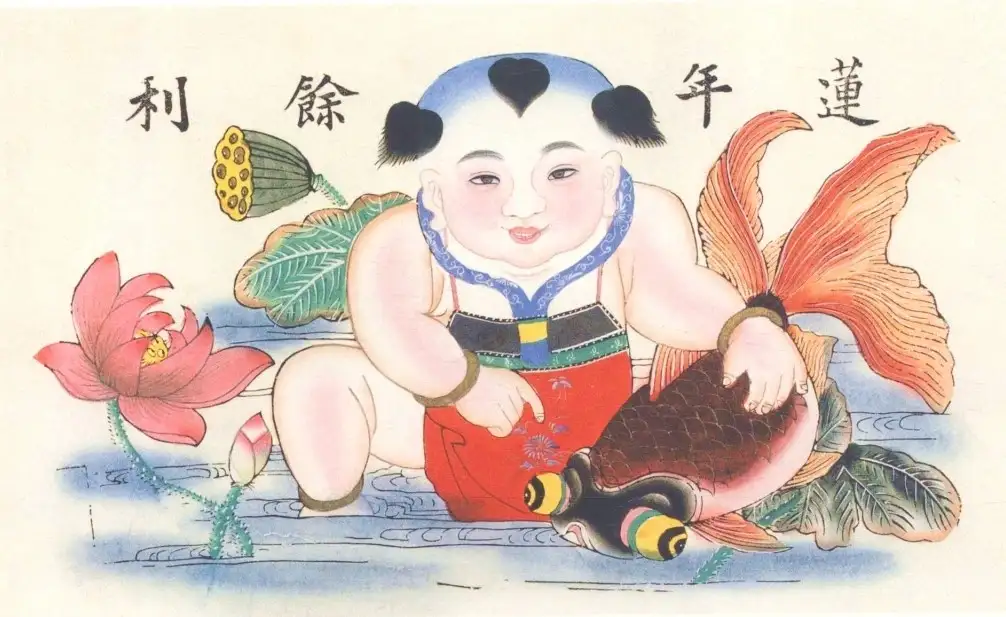
Read the fish, lotus and inscription in a Yangliuqing New Year print, then fit a gallery into your old-town walk.
Read the journal →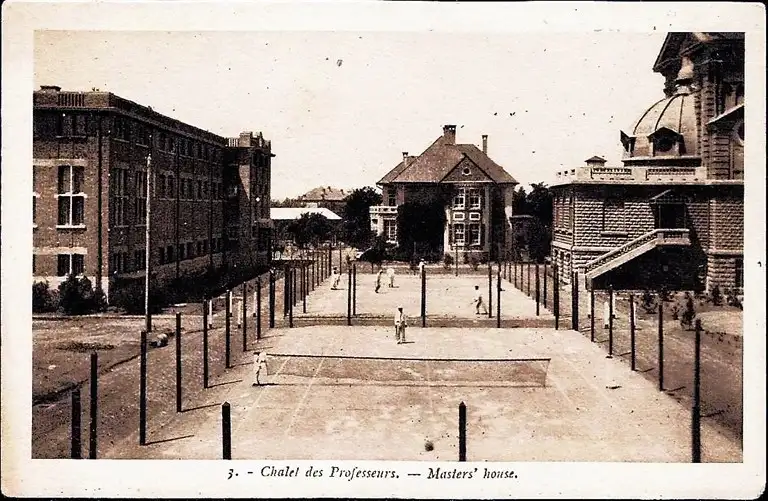
China Travel Guide
Find the Machang Road campus entrance and look closely at Beijiang Museum's historic displays.
Read the journal →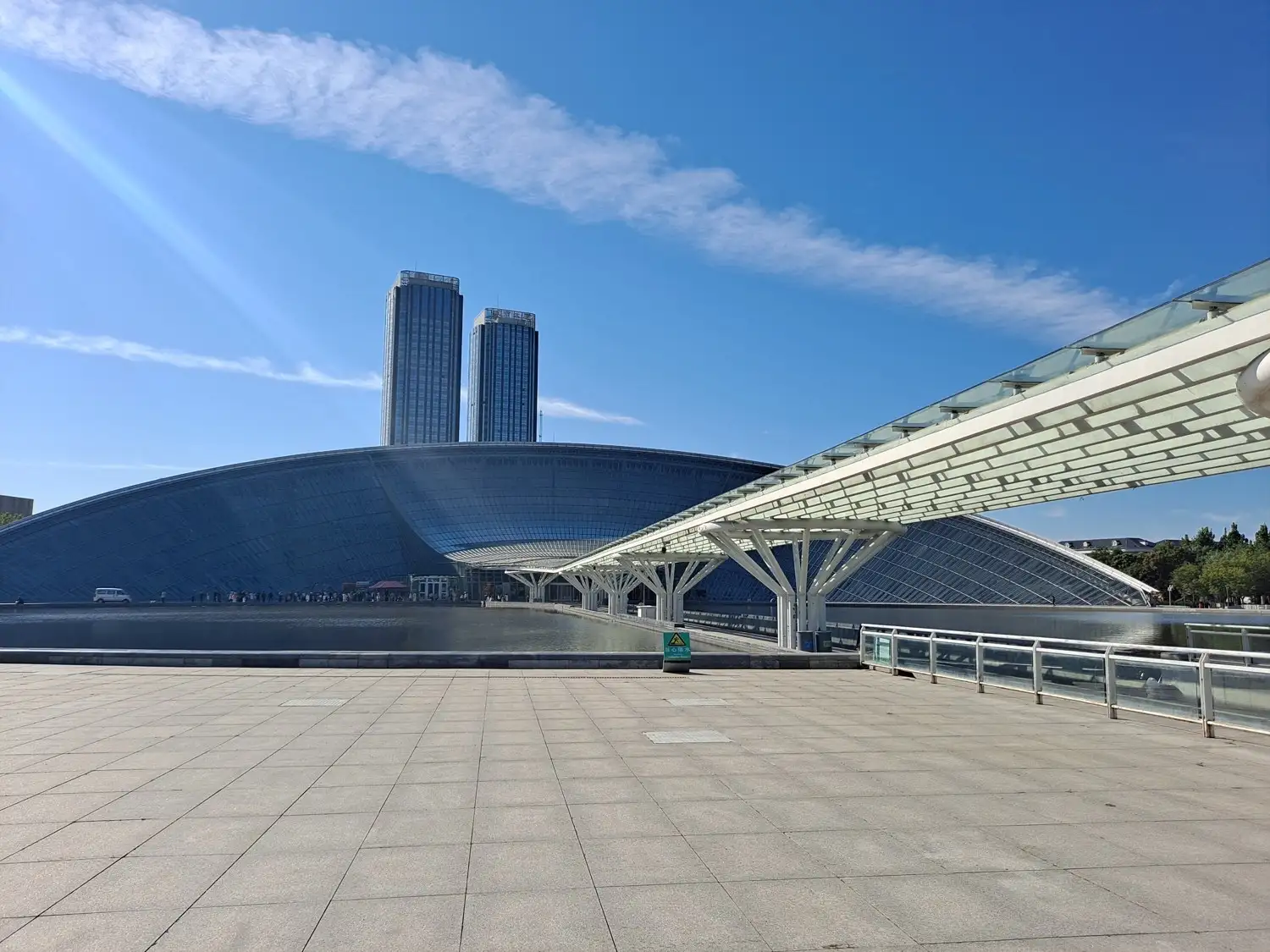
China Travel Guide
Choose between the Cultural Center and Binhai by what you want to see and how much time you have.
Read the journal →
Start with your interests, available time and the right combination of places.

Plan by region and interest, rather than choosing one season for the whole country.

Meet local life with curiosity, consideration and an open mind.
YOUR JOURNEY
Share the places and timing you have in mind, then discuss a suitable route with a guide or travel adviser. Services and availability need confirmation.
Contact a guide about this place
FROM INSPIRATION TO YOUR JOURNEY
A place you dream of. A journey shaped around you.
Plan my trip