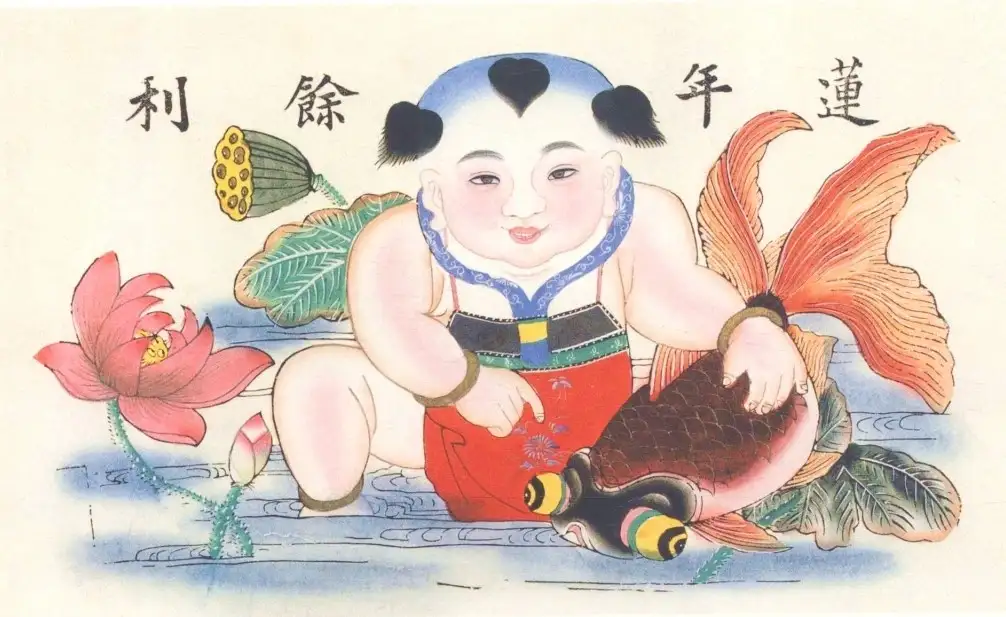
Start a visit to Yangliuqing with an image that is easy to recognize: a plump child holding a fish beside a lotus. Reds, greens and pinks fill the paper. Children may notice the fish first, while adults look for the auspicious words. A single question about why the artist chose these details can give a small gallery plenty to hold your attention.
Look at the fish and lotus before the inscription
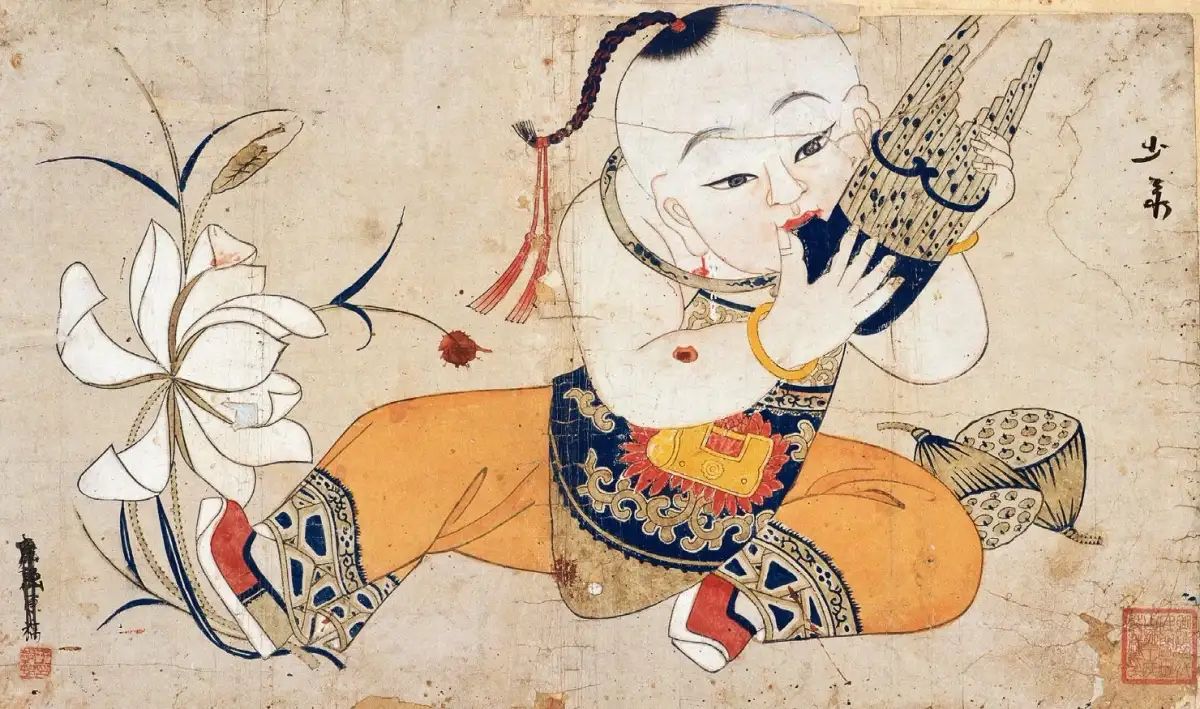
In a print such as 莲年余利, find what the child holds, where the flowers grow and where the artist places the words. In Chinese, lotus sounds like “successive,” while fish sounds like “surplus,” creating a visual wish for abundance year after year. Find another print with a child and compare the headdress, pose and objects. Pick a favorite detail and think about whom you would give the picture to.
Follow the lines and color in a process display
Yangliuqing New Year prints combine woodblock printing with painting by hand. If the exhibition includes blocks or process notes, start with the outlines and see how the cheeks, folds of clothing and large areas of color come together. For a workshop, ask in advance whether there is a session that day, whether you will print or paint, and when you can take your work away. Without a workshop, choose two colors in a print and see how they bring the figure forward from the background.
Fit the prints into a walk around the old town
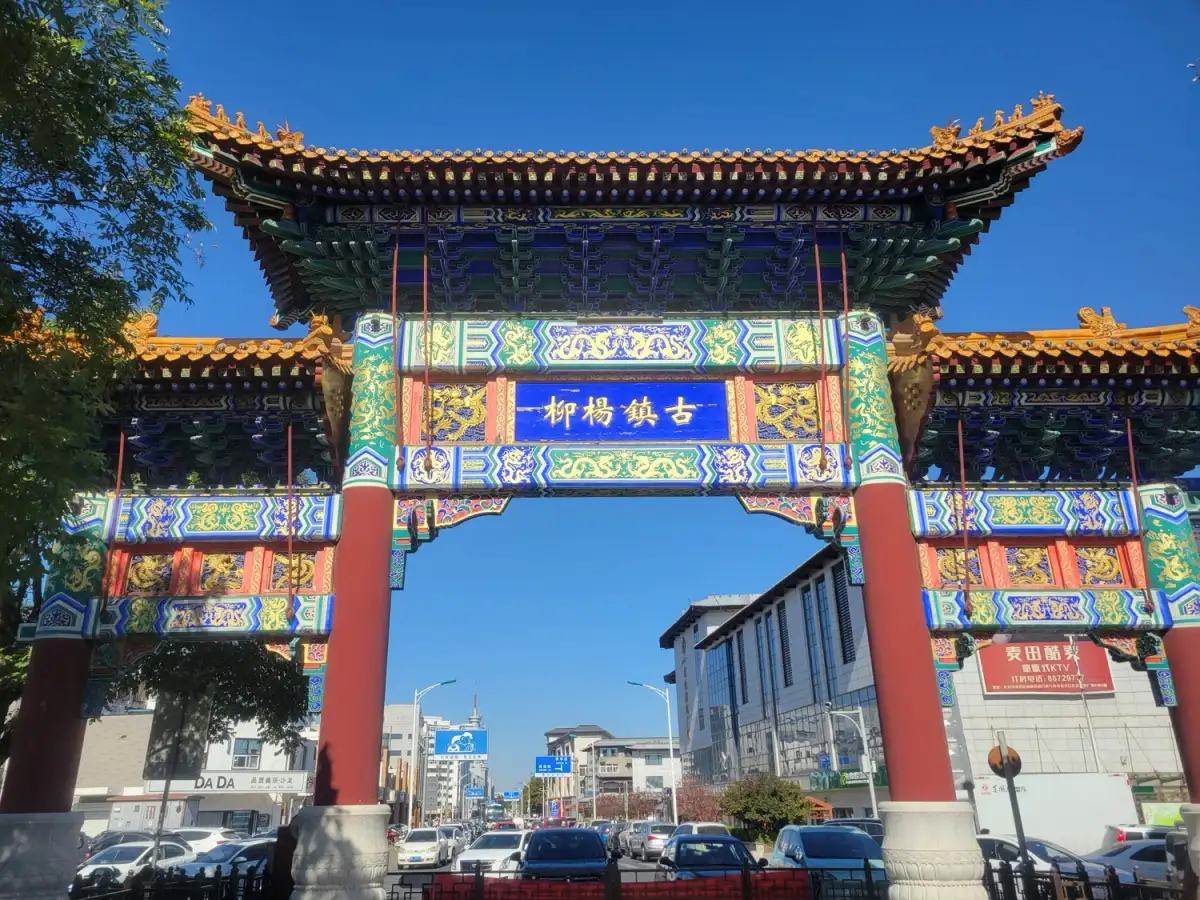
Before setting out from central Tianjin, confirm the name and address of the gallery or studio you want, its opening arrangements and any reservation requirements. Use the old town's archway to get your bearings, then put an indoor gallery visit between longer stretches of walking. If you also want to visit the Shi Family Courtyard, check its entry arrangements separately. When buying a print, ask the shop to write down the title and production method, then find out how to roll or pack it for the journey home.