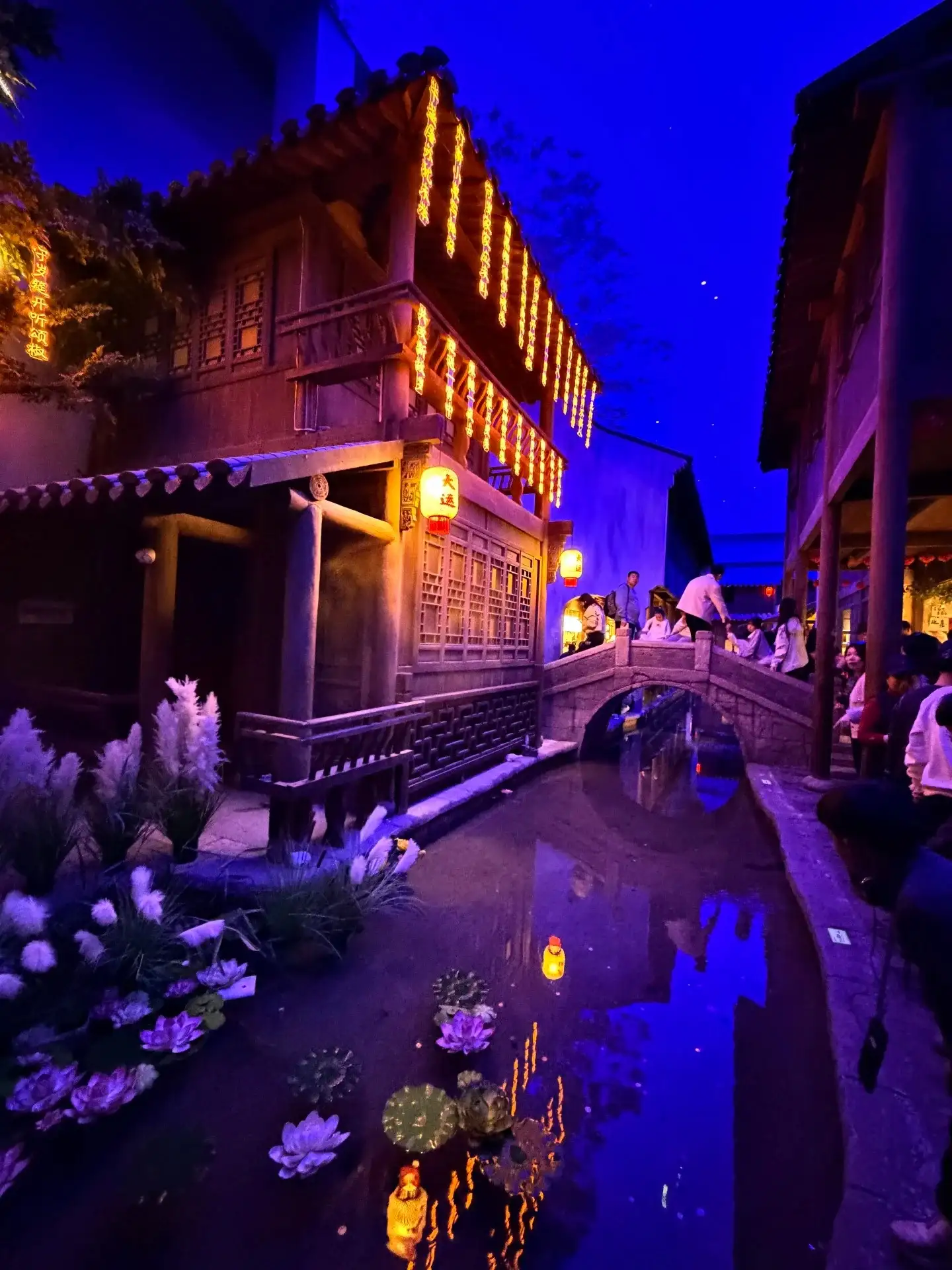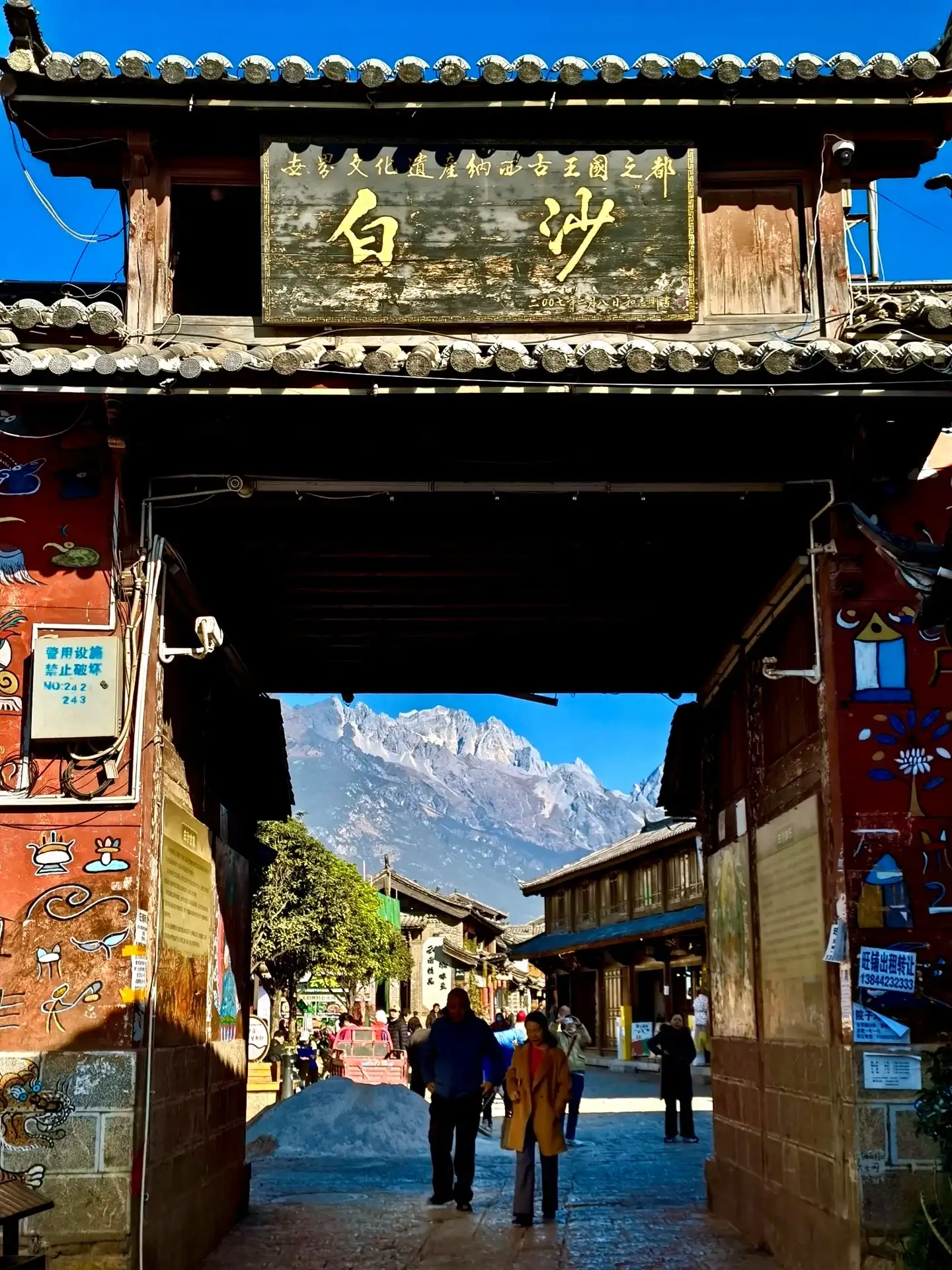
白沙的雪山咖啡照片容易被记住,壁画的名字却常在攻略最后才出现。小红书作者珂的笔记也从街道、牌坊与二楼视野写起,随后把白沙壁画列为一项独立参观。这个顺序说明游客可以从日常风景走向更深的文化内容;如果对艺术有兴趣,行程中最值得重新分配的,正是壁画所需的注意力。
The Baisha murals are not simply paintings moved from an art museum to an ancient town. They coexist with the architecture, religious themes, and local history; when viewing them, one must also consider the hall in which the wall surfaces are located. An introduction to Naxi culture by the State Ethnic Affairs Commission notes that a key feature of the Baisha murals is the coexistence of diverse religious content and painting techniques from different ethnic groups. This convergence elevates Baisha beyond the image of a “small town at the foot of the snow-capped mountains,” transforming it into a window through which to understand Lijiang’s historical exchanges.
Encounters Within the Walls
the Great Treasury of the Buddha Hall in art history sources can serve as a concrete example for pre-visit reading. A research article from the Rubin Museum of Art discusses the architecture and murals separately: the date of the building’s construction does not automatically correspond to the date when all the wall paintings were created. This distinction is worth highlighting during a visit, as a hall often undergoes multiple phases of construction, painting, and conservation, and the space we see today was not completed all at once in a single year.
The museum’s article cites instances where Buddhist and Daoist motifs coexist within the same room, illustrating this fusion through images such as those of Marici and the Three Purities. Visitors encountering these religious images for the first time need not immediately identify every figure. Simply being aware that the images may come from different traditions can help visitors avoid simplistically labeling an entire wall as “Dongba paintings” and enable them to understand why the postures, attire, and compositions of adjacent images appear different.
Another concrete example can be found in the ceiling decorations: researchers have discussed images combining the Kalachakra mantras with the Eight Trigrams symbols. Visitors can familiarize themselves with the relative positions of these elements through publicly available diagrams before their visit, then view them within the permitted viewing area on-site. The value here lies not in seeking out a “bizarre symbol” to check off a list, but in discovering how different traditions are recombined within a single work. One cannot deduce the meaning of an image based solely on its appearance; guided explanations and reliable sources can fill in this gap.
Naxi culture is not limited to a single visual form. Materials from the State Ethnic Affairs Commission describe wooden plaque paintings, bamboo-stick paintings, paper plaque paintings, and scroll paintings, each with distinct media and contextual uses. The religious and artistic exchange depicted in the Baisha murals is connected to these Dongba traditions, but this does not mean that every form of Naxi art is interchangeable. If you see an object bearing Dongba script in a shop, you cannot infer from this that it serves the same function or dates from the same period as the murals inside the temple.
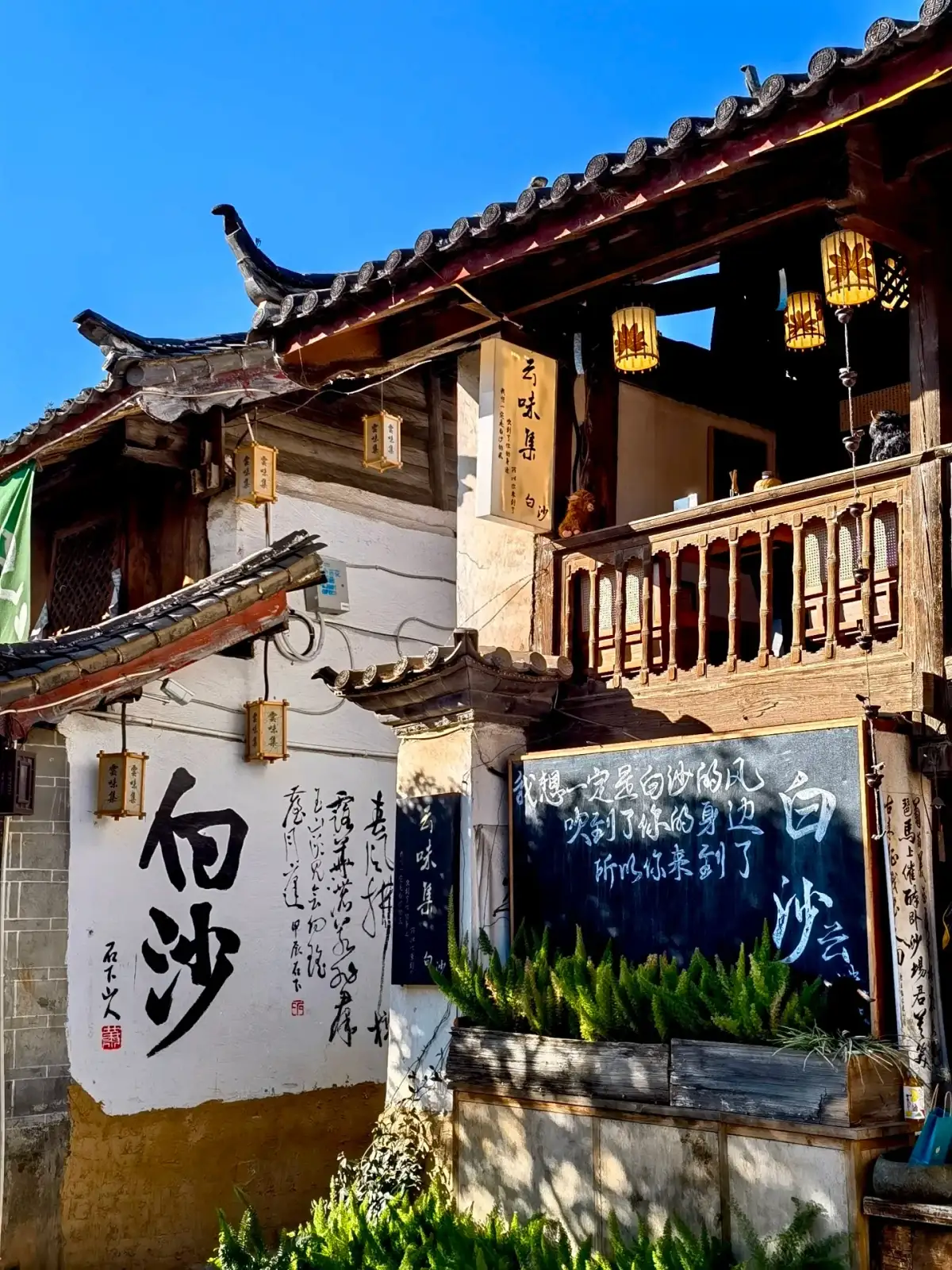
Traditional wooden buildings and walls in Baisha Ancient Town. Photo:Ke · Original Post.
This distinction is particularly important for international visitors. If an English commentary mentions only an ethnic group’s name, the imagery may be interpreted as mere local decoration; however, if concepts such as “murals,” “religious imagery,” “local patrons,” and “artistic exchange” are explained in advance, the tour provides a clearer context. Guides should be encouraged to use one or two specific works to illustrate these concepts, rather than listing the names of various religious sects in rapid succession within a short timeframe.
Schedule your mural viewing for a time when you are most mentally focused.
If the murals are the main focus of your Baisha trip, you can tour the museum upon arrival before strolling through the streets and stopping for coffee. This way, you can devote a focused period to interpreting the images and use the rest period to explore the town and admire the snow-capped mountains, allowing the two experiences to flow naturally into one another. Conversely, if you’ve already been hiking in the mountains all day and arrive in Baisha later in the day, you might end your day with a stroll through the streets and save the murals for a future visit when you’re feeling more energetic.
Ke mentions that the ancient town streets and the mural sites have different access points; specific details regarding ticket purchases, open areas, and guided tours should be confirmed with the respective venues. When booking accommodations or a private car, it is best to specify “Baisha Murals Tour” in the address and include the exact location of the venue; if you simply write “Baisha Ancient Town,” the pickup service may assume you are referring to the street entrance. Walking tours and museum visits require different amounts of time, so arrangements for the driver’s wait and the next leg of the journey should be planned separately.
When bringing children to view the exhibition, you can start by asking, “What different types of clothing can you see on the same wall?” and “How do the figures come together to form a composition?” Parents should first let their children describe the shapes they see, then use explanations to help them understand the relationships between the figures, rather than asking them right away how much history they’ve memorized. For younger children, carefully examining a single image or a group of images is far more rewarding than quickly scanning through the entire exhibition from start to finish.
Photography enthusiasts will also find opportunities to adjust their focus here. As the murals are cultural relics, whether and how you may photograph them must follow on-site regulations; even if you cannot capture the murals themselves, you can photograph the architectural surroundings and the streets and towns after your visit from permitted locations. Recording visual memories in your notebook can sometimes help you focus more intently on the nuances of the imagery, rather than constantly checking your camera screen. The people on the streets, as well as the windows and courtyards, have their own real-life occupants; public views and private spaces should be treated differently.
What do the original artwork and the digital image each contribute?
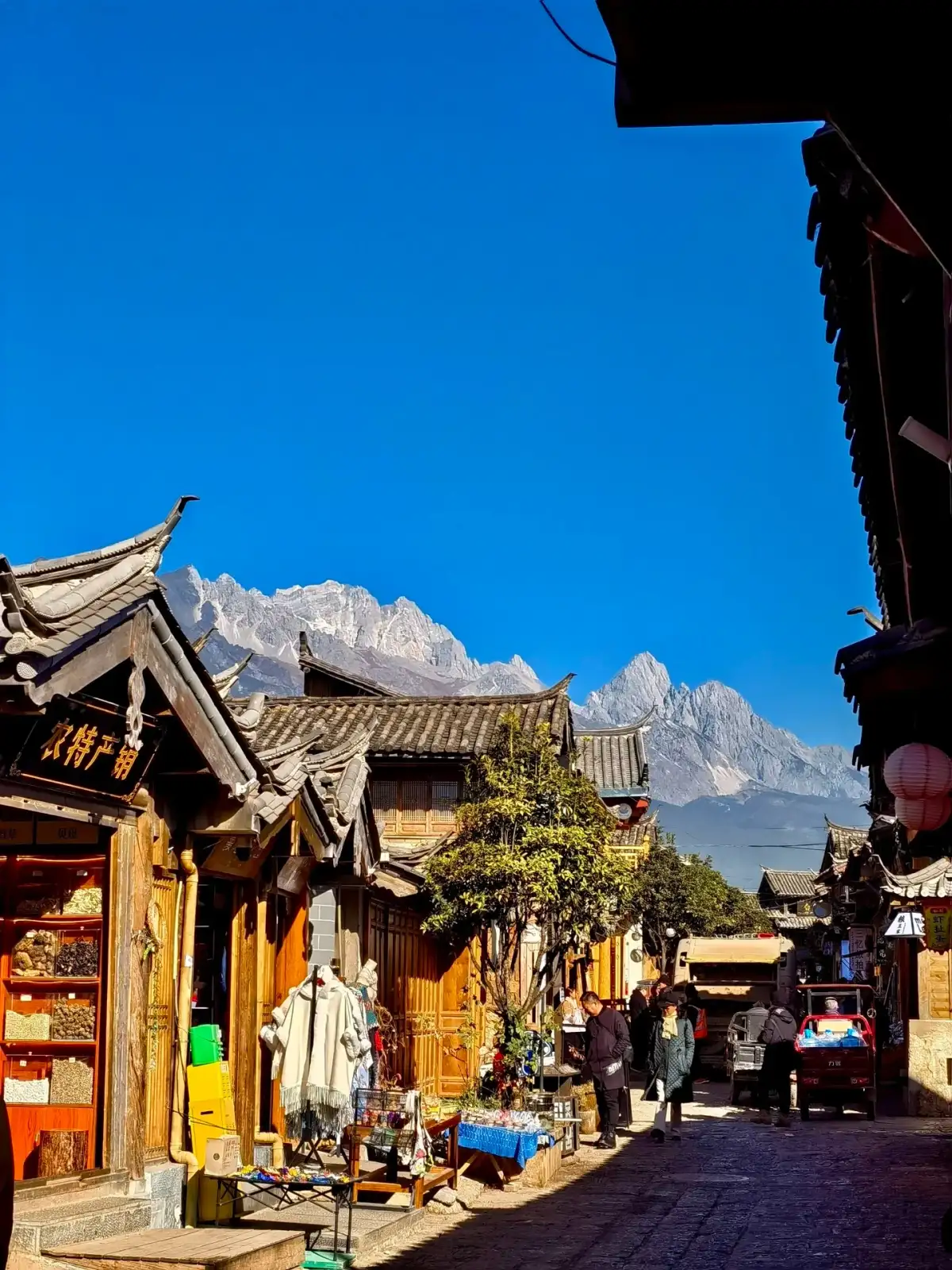
The streets and alleys of Baisha Ancient Town with distant mountain peaks. Photo:Ke · Original Post.
A 2026 report in the Lijiang Daily introduced the digital exhibition of the Baisha murals, noting how high-resolution photography and digital technology help reveal the images’ fine details. Digital images help visitors examine small-scale details, while the original works preserve the connection between the murals, the architectural walls, and their state of preservation. These two modes of viewing complement each other; one should not regard the historic murals as “less clear” or inferior simply because the screen display is more vivid.
Before your visit, inquire with the museum about which areas featuring original works are currently accessible, as well as any digital exhibits and audio-guide services available. If digital content is provided, use it first to help establish the composition of the images, then return to the originals to observe their scale and spatial context; if only part of the building is open, you can still choose to explore the accessible areas in depth. Conservation efforts may alter the scope of the tour, so it is best not to treat every hall as a guaranteed stop on your itinerary.
original work—its colors, damage, and state of preservation—makes the viewing experience different from looking at a digitally enhanced image online. When facing ancient images, one can shift expectations from “the colors must be vivid” to “what layers of detail remain.” This is not to ask visitors to pretend they understand restoration, but to help them accept that historical works bear the marks of time, while new visual technologies assist in understanding what remains discernible within those marks.
Back on the street, Baisha takes on a different scale. Coffee, shops, and views of snow-capped mountains belong to contemporary life, while the murals display works left behind by historical exchanges. By experiencing both in a single day, the ancient town offers more than just a single vantage point; visitors can also discuss the images they’ve just seen while taking a break, using a specific detail to replace the vague assessment that “this place is very cultural.”
If you’d like to customize a cultural itinerary in Lijiang, you can make the Baisha Murals the main focus of your visit and specify whether you need an English-speaking guide, are traveling with children, or are more interested in the paintings or the architecture. An advisor will then coordinate the day’s open attractions with stops in the surrounding towns and neighborhoods. The most captivating aspect of Baisha is often not the moment when the snow-capped mountains outside the window are most clearly visible, but rather when you finally realize why a single wall can hold so many encounters.
Sources and Editorial Notes
This article is an original travel analysis compiled by the Dongxing Travel editorial department based on cited materials; it is not a firsthand account by the author. The full text of the original post has not been reproduced; accompanying images are used within the scope of authorization and are credited to the author and the source of the original post. They do not serve as proof of actual travel experiences or services provided by Dongxing Travel.
Ke · Lijiang, Yunnan | Baisha Ancient Town: Naxi Culture at the Foot of the Jade Dragon Snow Mountain · Travel Notes; Verified/Compiled on: October 3, 2026.
State Ethnic Affairs Commission · Naxi Customs, Traditions, and Art · Official source; Verified/Compiled on: October 3, 2026.
Rubin Museum of Art / Karl Debreczeny · Dabaojigong Temple · Official source; Verified/Compiled on: October 3, 2026.
Lijiang Daily · Digital+ Brings the Baisha Murals Within Reach · Official source; Verified/Compiled on: October 3, 2026.