The most memorable aspect of a canal is the boats on its water. But where do these boats come from? Why do they travel along this waterway? And how do they transform a city once they dock? Approach the Yangzhou Museum of the Grand Canal of China with these three questions in mind, and your visit will take on a clear direction. You can skip some exhibition halls without seeing them all and still gain a complete thread of understanding.
小红书作者第二假半价在中秋游记中,对综合展的丰富信息与舟楫、街肆展的直观体验给出了不同感受。这提醒行前规划者:内容充足和容易投入,是两回事。下文展览主题依据博物馆官网,参观顺序与分组方式是编辑建议,不把那一次到访中的服务、讲解场次与设备状态延伸为固定安排。
First, decide how big a question you want to answer on this visit.
If it’s your first visit to Yangzhou and you want to understand the relationship between the canal and the city, it’s best to use the General Exhibition as a framework and select a specific thematic exhibition to provide further insight. If you’re visiting with children, you can start with ships as a point of entry, then head to the comprehensive exhibition to explore the conditions under which they operate. For those already interested in history and engineering, it’s best to begin with hydraulic engineering and management, using ships and the marketplace as examples to test your understanding. All three approaches are valid; the difference lies in where your initial interest originates.
Should you visit every gallery? If your goal is to understand a specific theme, the answer is usually no. The museum’s website describes the permanent and special exhibitions as a complementary system, meaning they are designed to illuminate one another rather than simply being visited one after another. Rather than lingering in every gallery until you’re exhausted, it’s better to devote your full attention to two or three clearly related themes. When you return next time, you’ll find new angles to explore.
Before you go, create a one-page itinerary that combines your mode of transportation, reservation status, plans for returning to downtown Yangzhou, and your main themes of interest. The official website provides access to reservations and announcements; temporary exhibitions and gallery adjustments may affect your choices on the day of your visit. It’s more efficient to determine which areas you can visit first and then select a combination of themes, rather than filling your entire day by strictly following the gallery numbers listed in outdated guides.
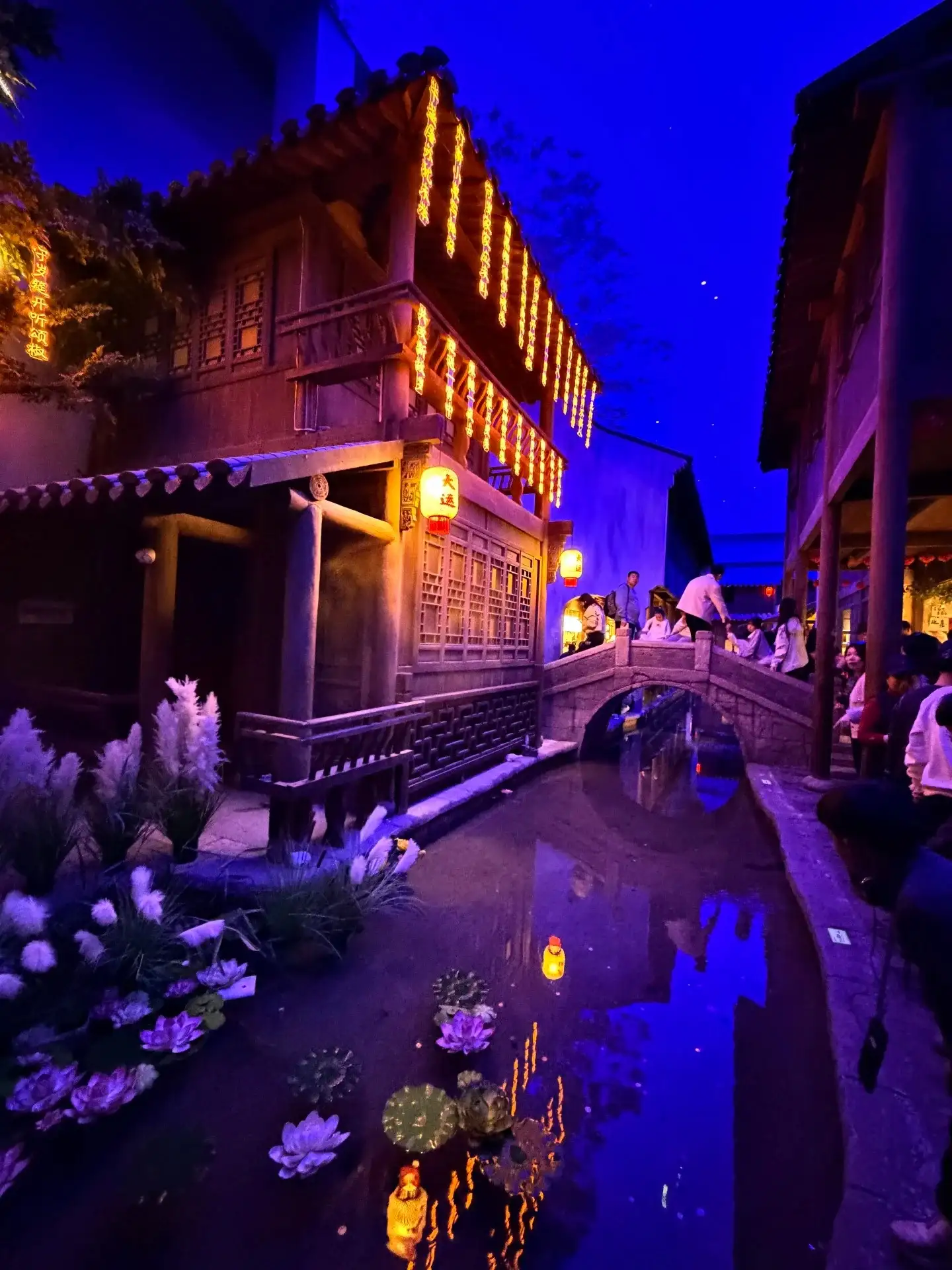
A simulation inside the exhibition hall depicting a waterfront street, wooden buildings, and visitors. Photo:Have You Had Breakfast Yet? · Original Post.
First Question: Why Can Water Become a Road?
The General Exhibition introduces the construction and management of the Grand Canal, its technology and engineering, and the daily lives of its people. When viewing this section, you might start by looking at the master map, then find an engineering explanation, and finally examine an artifact related to transportation or daily life. The overview map helps you understand which places are connected by the waterways; the engineering explanations clarify how water was managed; and the specific artifacts bring this vast network down to a tangible, relatable action. By alternating between these three scales, reading the text becomes more than just a continuous recitation of historical dates.
When looking at the map, you might start by asking where the water enters and where it exits, and which areas require human intervention to connect them. As an artificial waterway, a canal’s significance lies not only in the length of its water surface but also in the engineering and management required to maintain its connectivity. If the engineering terms on the exhibit panels are unfamiliar at first, try translating them into actions: Does this allow water to pass through, let it linger, or help boats navigate differences in water levels? Actions are easier to remember than technical terms.
When you see an engineering model, choose one component and explore it thoroughly. Observe its spatial relationship with the water, the ships, and the people, then read the accompanying explanation. This reveals a chain of cause and effect: how certain conditions created difficulties, how a particular structure addressed those difficulties, and who is responsible for its ongoing maintenance. For children, you can use hand gestures to demonstrate the direction of the ship’s movement; for adults, you can ask how management beyond the engineering aspects ensures the shipping route remains operational.
If your companion doesn’t care for lengthy exhibition panels, should you skip the General Exhibition? You can narrow down the task. Finding just one map that illustrates the network, one exhibit that explains the technology, and one story that highlights the people is enough to establish a basic framework. After reading, have everyone describe one thing in their own words. If something isn’t clear, go back to that section and read it again—rather than continuing to pile on new information.
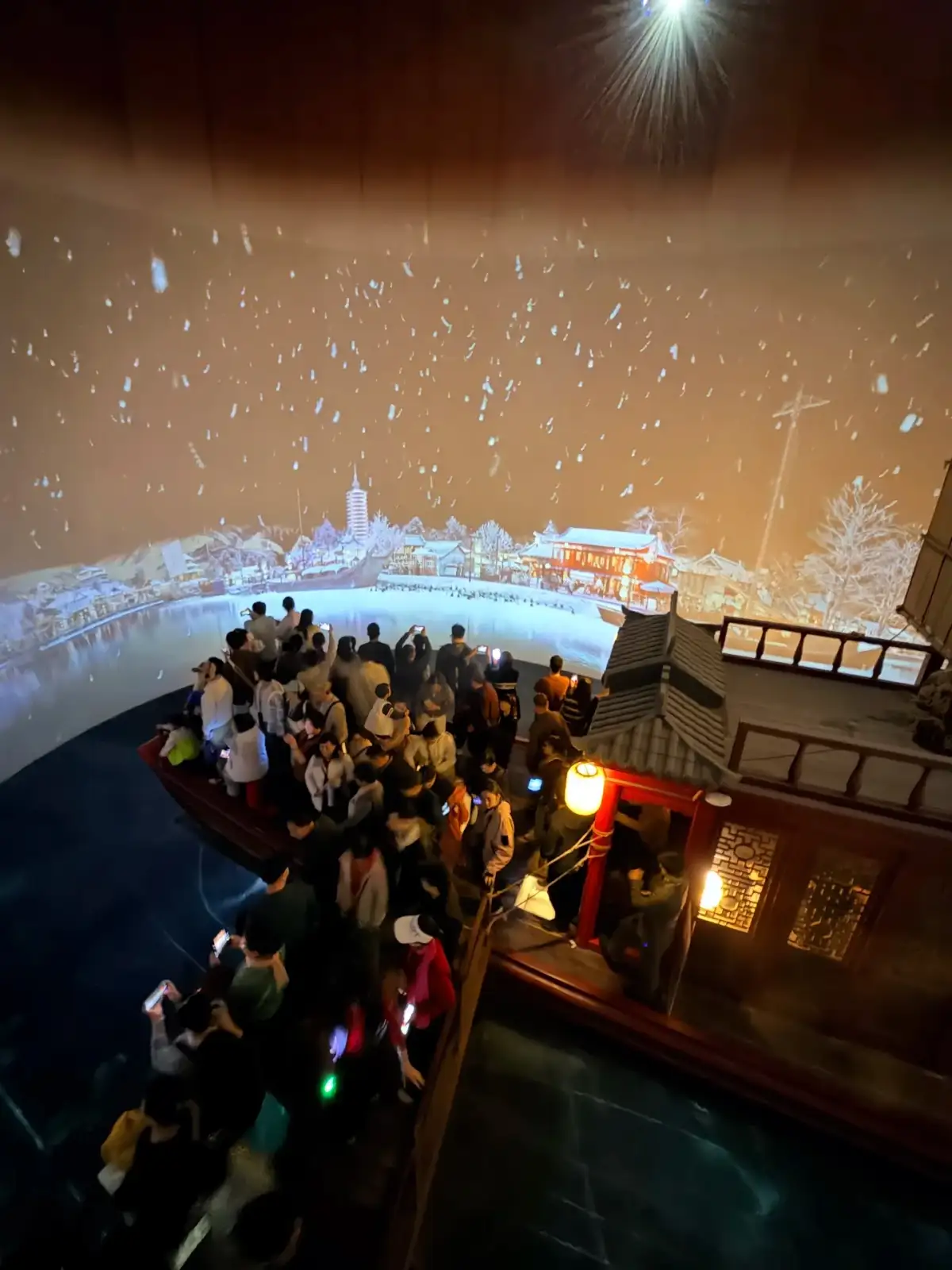
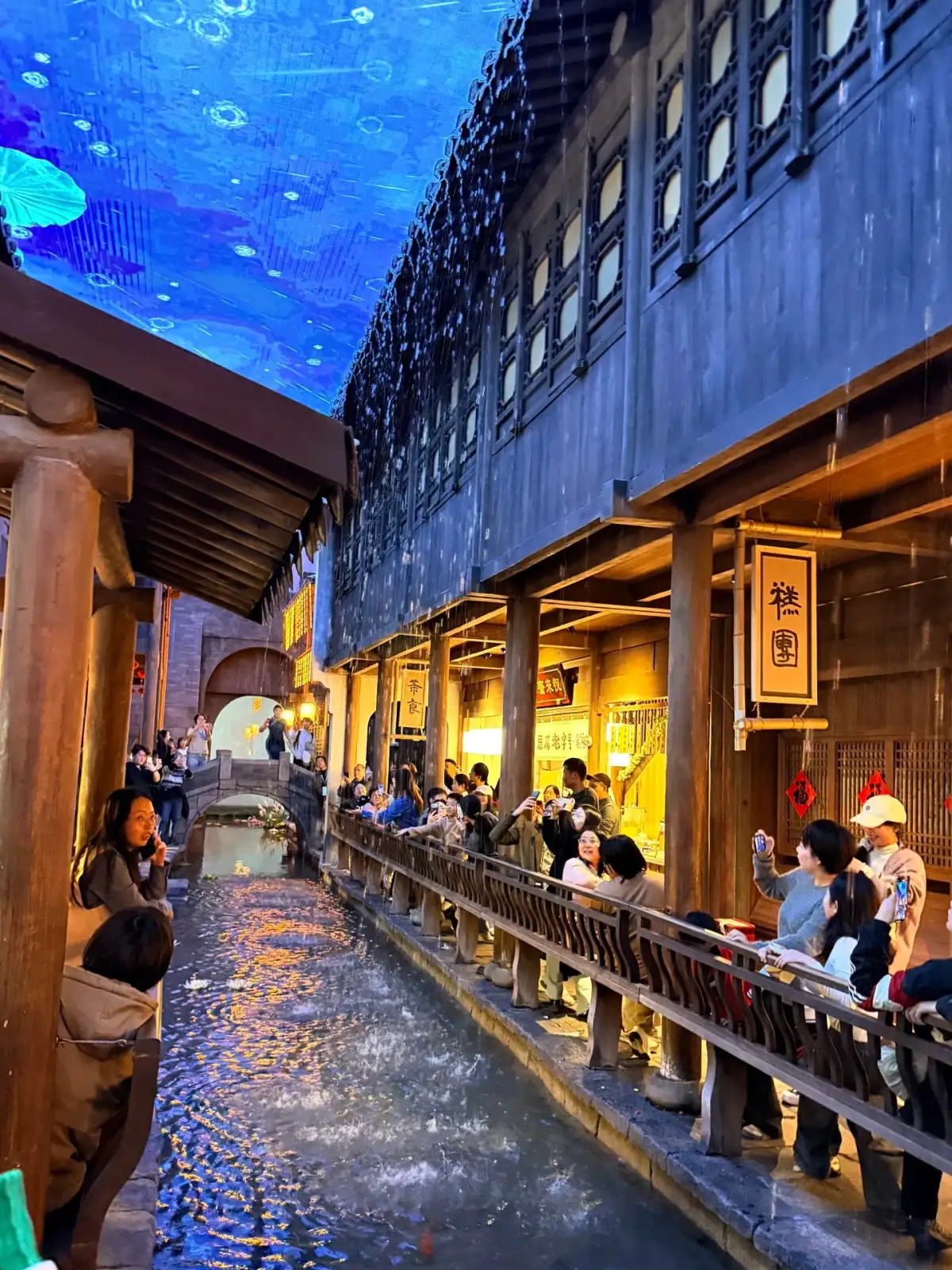
A bird’s-eye view of the immersive video gallery and its visitors. Photo:Have You Had Breakfast Yet? · Original Post.
Question 2: What tasks does a ship need to perform?
The official website describes the “Boats and Vessels” exhibition as presenting the evolution of vessels through physical displays and interactive experiences, while using stories such as the “Sand-Flying Boat” and scenes of wedding processions, opera performances, and royal escorts to illustrate life along the canals. When entering this section, you can first examine the forms boats took as modes of transportation, then explore how they became spaces for daily life and social activities. Even though both involve movement on water, the different arrangements required for carrying cargo versus hosting ceremonies will shift the perspective from which you observe them.
When examining models, approach them from three perspectives: the hull’s outline, the cargo space, and the locations where people would have worked. Does the ship appear wide or narrow? Where is the space concentrated? Where might people stand to operate it? These are all questions that can be raised based on the exhibition display. The specific purpose can then be confirmed by the exhibit labels. Observing first and then seeking confirmation helps avoid directly interpreting attractive shapes as unspecified functions, and ensures that the model is more than just a photo op.
If hands-on experiences are available on-site, standing within the designated areas to experience the spatial scale is more valuable than simply viewing the ship from a distance. Imagine a person turning around, a group of people conversing, or objects being carried in and out—the ship’s interior will then transform from an abstract volume into a space the body can comprehend. On-site facilities and interactive activities are determined by the museum’s arrangements; the itinerary itself can retain the core focus of observing the model, which remains valid even without participating in the interactive elements.
Families with children can set a small challenge here: each person chooses a ship, explains the reason for their choice, and then finds an exhibit label to support one of those choices. Children might be drawn to the ship’s outline, while adults might focus on its function; these two perspectives can be discussed together in front of the same exhibit. Rather than requiring children to memorize all the ship names, it’s more effective to let them discover that the questions they ask can be answered by the information available in the museum.

The “Canals and Wetlands” thematic display panel and the animal exhibits. Photo:Xiao Bajie’s Travels · Original Post.
Question 3: After the ship docks, who goes about their daily lives?
The “Street Scenes” exhibition recreates the landscapes of riverside towns—including streets, shops, docks, granaries, opera houses, and residential buildings. You can view it as the culmination of the first two questions: waterways provide connections, boats facilitate those connections, and the people along the banks transform that flow into exchange and daily life. The maps and models introduced earlier now take the form of the various functions one might encounter on a single street.
Select three spaces within the exhibits and compare the people and activities they serve. The wharf relates to arrival and transportation; the shops relate to exchange; and the theater relates to gathering and spectating. This comparison serves as a method of interpretation; the specific location, era, and function of any given scene should still be identified through the on-site explanations. Reconstructed exhibits can help us understand the historical context, but they serve a different purpose than the neighborhood as it functions today. When you revisit Yangzhou after leaving the museum, you’ll gain an additional perspective for understanding the space.
If you’d like to take photos, start by capturing a shot that conveys the spatial relationships, then take a close-up of a specific detail. The former shows how shops relate to the street and how the opera house relates to the viewing area, while the latter documents signs, architectural elements, or displayed objects. When placed side by side, these two photos tell a more complete story than a single close-up. When taking photos, pay attention to the signage in the exhibition halls and leave space for visitors to move around and read the exhibit labels.
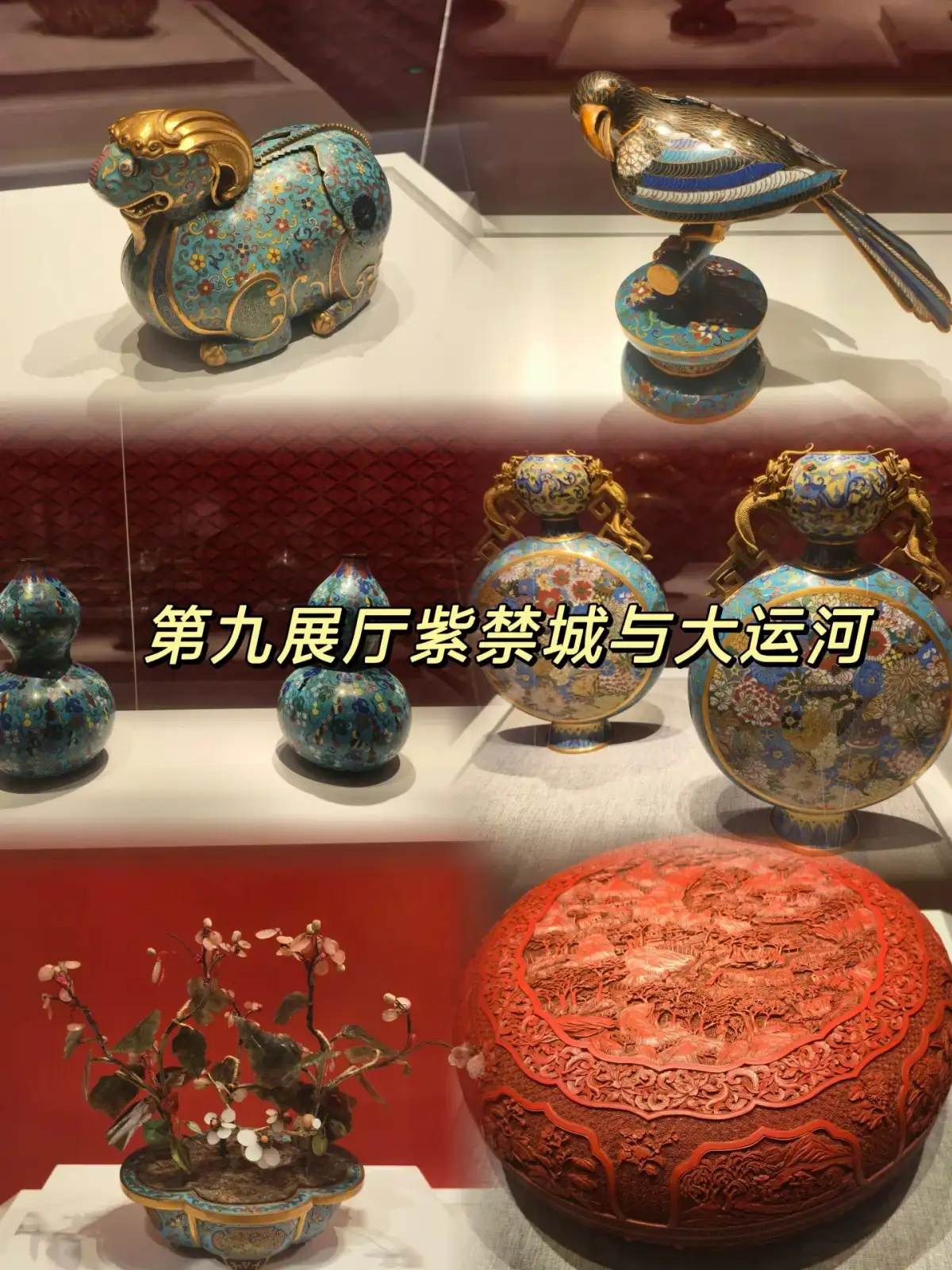
The puzzle of display cases featuring colored metal objects and red circular objects. Image:Xiao Bajie’s Travels · Original Post.
Three Types of Visitors, Arranged in Three Different Paces
Getting to Know the Canal for the First Time: The General Exhibition establishes the map and engineering framework; the Boats Exhibition explains how people moved about; and the Street Life Exhibition explores urban life. From each section, pick just one discovery you’d most like to share with others.
Visiting with Children: The “Vessels” section sparks concrete interests; the General Exhibition allows you to select relevant maps or engineering projects; and the “Street Life” section compares the work of different people. Adults should choose a topic in advance and encourage children to ask follow-up questions on-site.
An In-Depth Cultural Journey: Explore engineering and management in the General Exhibition, choose the thematic exhibition that interests you most to delve deeper, and then connect the exhibits to everyday life through the “Street Scenes” or “Intangible Cultural Heritage” themes. Be sure to factor in time for discussion and note-taking into your visit plan.
For older visitors or those with limited stamina, it’s best to save the most important content for the time when your attention is sharpest. Planned breaks aren’t just downtime; they’re opportunities for everyone to share discoveries and decide how to proceed for the rest of the visit. If one person is satisfied with a particular theme while another wants to continue exploring it in depth, you can agree on a meeting place and time, then take turns visiting small sections of the museum to avoid the entire group having to move at the same pace.
If you have limited time, what’s most worth focusing on? Focus on a question that can be fully explored. For example, use a map to understand connections, use a boat to understand transportation, and then use a marketplace scene to illustrate how those connections change daily life. Gaining something from each of these three areas makes for a complete, concise visit. Conversely, if you only move between the most eye-catching installations, you might end up with plenty of photos, but the exhibits will still lack any connection to one another.
Save your stroll through Yangzhou for a different perspective
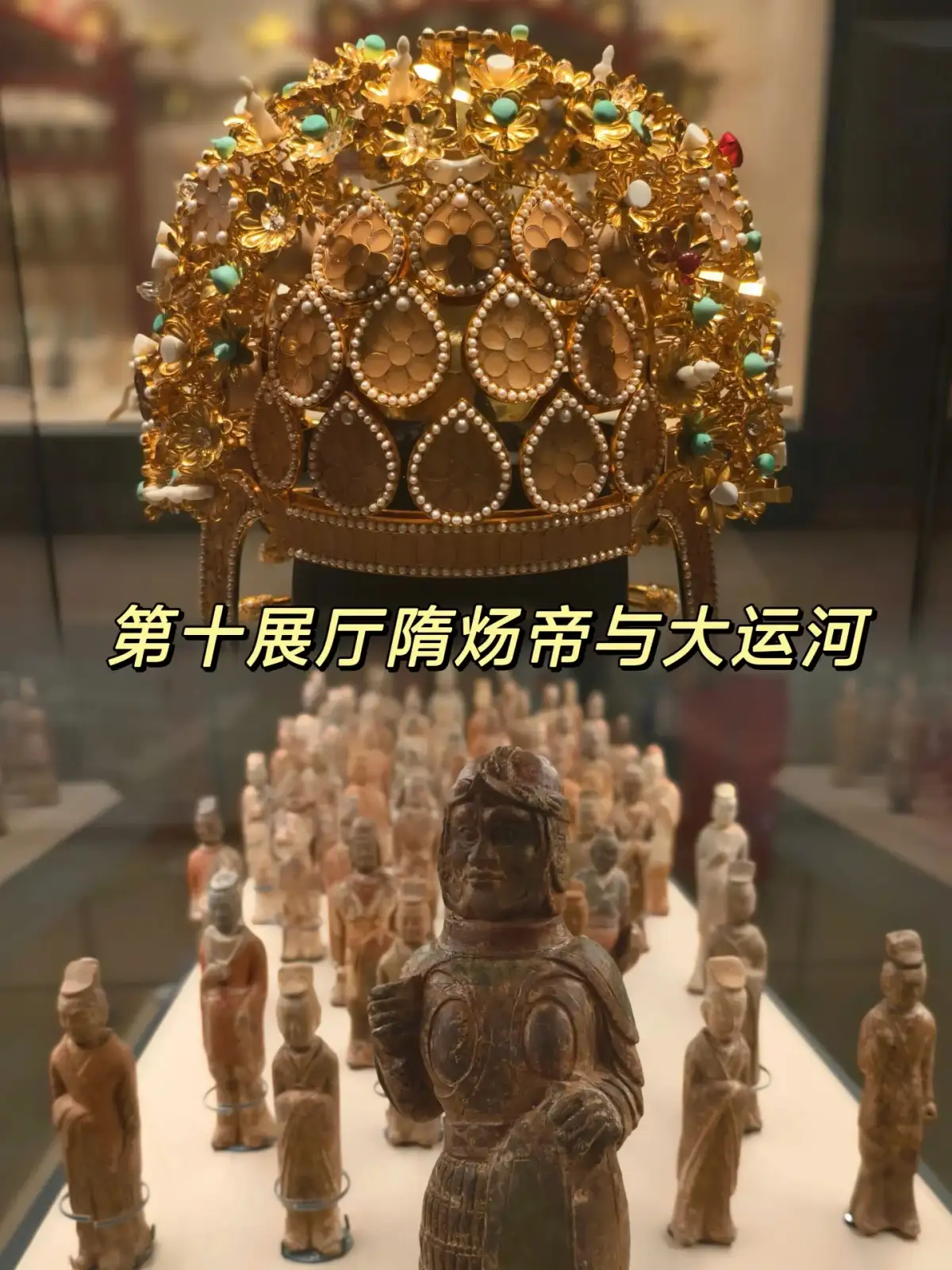
A display of gold-inlaid headdresses and small terracotta figurines. Photo:Xiao Bajie’s Travels · Original Post.
You don’t need to immediately follow your museum visit with a series of other high-density attractions. During your subsequent strolls through Yangzhou, you can continue observing the relationship between the waterfront and the streets: where it’s best to linger, where the flow of people connects, and how buildings face different directions. Today’s neighborhoods need not be forced into the same historical context as those depicted in the exhibition halls; rather, they offer another set of examples of how cities have organized space across different eras.
If your itinerary also includes the gardens, you can shift your exploration of cultural issues from the public realm to private spaces. The Canal Museum explores the connection between people and waterways, while the gardens invite reflection on how a family organizes water, stone, plants, and daily life on a small scale. These two perspectives are adjacent yet distinct, offering greater depth than simply chasing similar photo opportunities one after another in a single day.Yangzhou Destination GuideCan serve as an entry point for future city itineraries.
There’s also a way to wrap up the visit that works well for groups: everyone chooses the same question and finds one piece of material from a different exhibition hall. For example, for the question “Why do people gather along the riverbank?”, one person might choose a story about a boat, another a scene from a shop, and another an introduction to daily life from the comprehensive exhibition. Then, compare what each piece of material explains and identify which questions remain unanswered. The connections between exhibits emerge through actual discussion, rather than remaining merely on the exhibition map.)
At the end of the visit, try writing down three sentences: How did the waterway form connections? How did boats use this route? How did the people along the banks respond to this flow? These three sentences don’t need to cover all the knowledge, but they can test whether this visit has left you with your own understanding. The next time you encounter a bridge, wharf, or marketplace along the canal, you’ll know where to start asking questions.
Source and Editorial Notes
This article is an original travel analysis compiled by the Dongxing Travel editorial team based on the listed materials; it is not a firsthand account by the author. The full text of the original post has not been reproduced; accompanying images are used within the scope of authorization and are credited to the author and the source of the original post. This content does not serve as proof of actual travel experiences or services provided by Dongxing Travel clients.
Half-Price on the Second Day of the Holiday · Yangzhou Is a Bit of a Scam | Mid-Autumn Festival Trip 1️⃣ (Scenery Edition) · Travel Notes; Verified/Compiled on: October 3, 2026.
Yangzhou China Grand Canal Museum · Exhibitions · Official Information; Verified/Compiled on: October 3, 2026.
Yangzhou China Grand Canal Museum · Visitor Information and Announcements · Official Information; Verified/Compiled on: October 3, 2026.
Have You Had Breakfast Yet? · The Yangzhou Grand Canal Museum Was Absolutely Stunning!! (Includes Top Tips) · Image Source; This article does not cite the post as a basis for current policy.)
Xiao Bajie’s Travels · Here’s How to Explore the Yangzhou China Grand Canal Museum · Image Source; This article does not cite the post as a basis for current policy.)