Eastbound Travel Editorial Department · Travel Diaries and Pre-Trip Reading
Choosing a Path with a Destination in a Grand Garden
One of the most underestimated aspects of the Summer Palace is the distance along the lakeshore. Maps depict Kunming Lake as a calm expanse of blue, but when you actually walk along the shore, you’ll encounter an ever-changing shoreline, bridges, and branching paths. If you only have half a day, focus on the Long Corridor, the foreground views of Wanshou Hill, and a section of the east shore, with the Seventeen-Arch Bridge as an optional extension; if you want to explore a longer stretch of the lakeshore, reduce the number of climbs and visits deep into the courtyards.
This pre-visit guide focuses on the relationship between the lake and the architecture; it does not treat a full circuit of the park as the standard for a complete visit. The entrance, exit, and the day’s planned itinerary should be considered together when determining your route. For international visitors, imperial gardens are not merely a collection of royal structures: the water, the contours of the hills, the trees, and the corridors all work together to frame the view. Only by knowing in advance where you will end your journey can you dare to truly pause along the way to appreciate a balustrade, a ripple in the water, or a painted panel between the beams.
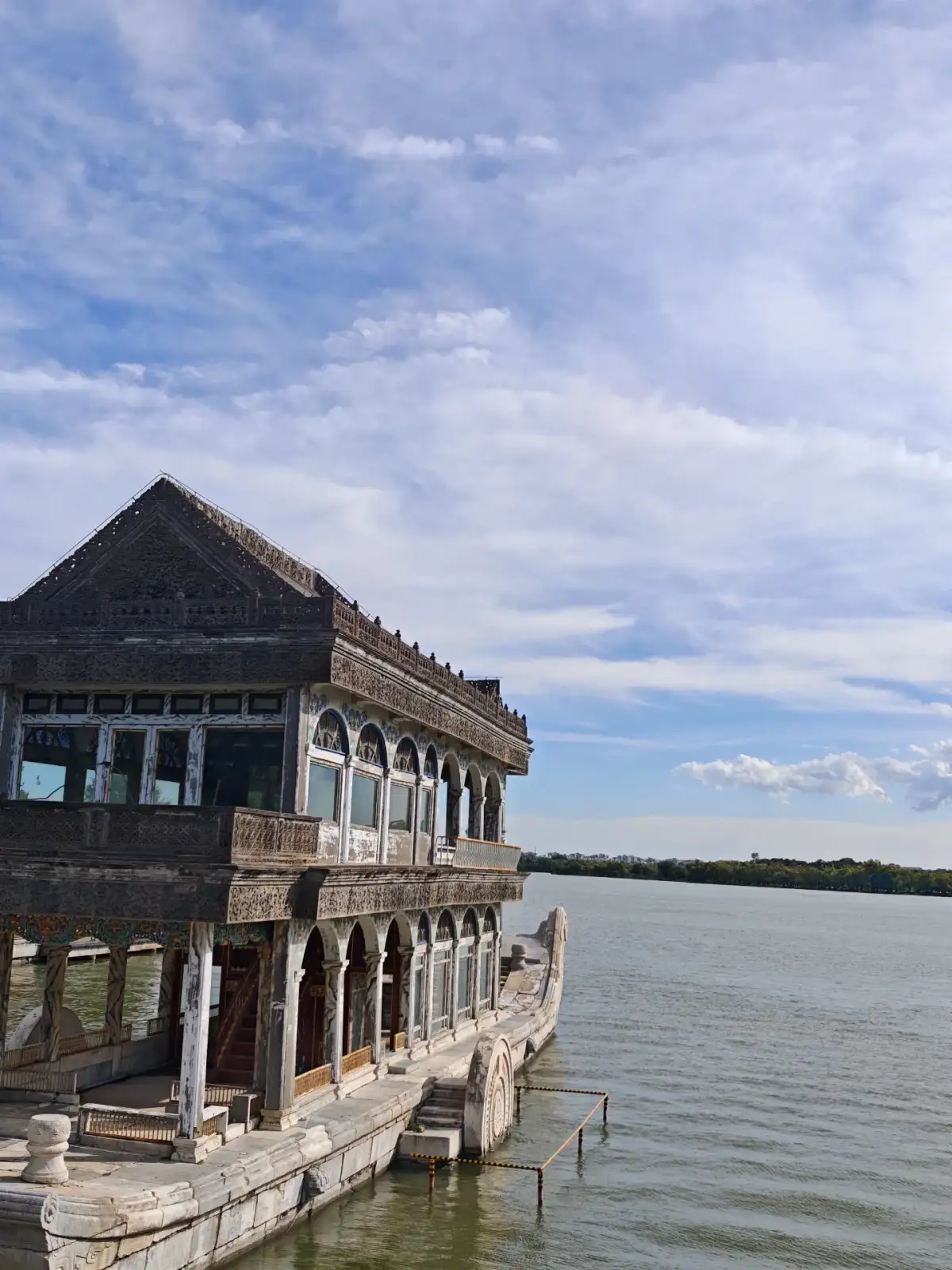
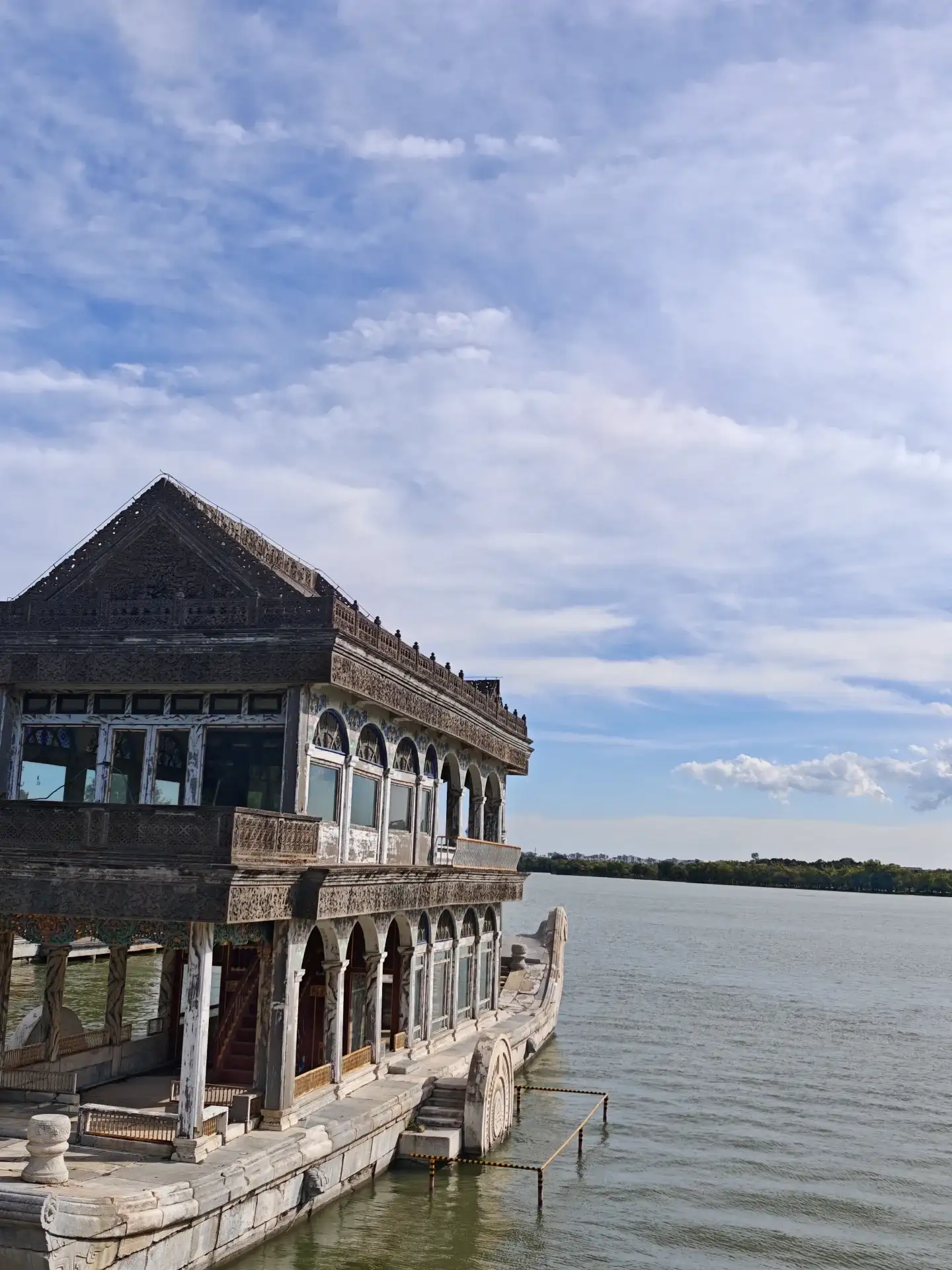
The Stone Boat on Kunming Lake and the trees along the shore. Image source: Xiaohongshu · Xiao Mao
Kunming Lake first provides a backdrop for the architecture
When viewing Wanshou Mountain from the lakeshore, what stands out most clearly isn’t the details of individual buildings, but how the structures interplay with the mountain’s contours. Roofs near the water’s surface, ascending steps, and higher silhouettes create a layered progression from low to high. The water’s surface leaves large areas of negative space in the foreground, preventing these dense structures from appearing cluttered. You can first stand on the flat lakeshore to make out the outlines, and then, as you approach the buildings, recognize the layers from the distant view.
lake does not always appear as vividly blue as in photographs. When the clouds are thick, the water’s surface may take on a grayish hue; when it’s windy, reflections are broken up into tiny specks of light; and lighting conditions—whether backlit or frontlit—also alter the color. When viewing a garden, it’s best to embrace these changes; focusing on the positioning of the shoreline and the buildings is more reliable than waiting for a specific water color. If a boat passes by, it merely suggests that water activities may be available in the garden—it does not mean they are definitely operating that day or suitable for every visitor.
corridors transform a stroll into a series of framed vistas
corridors derive their charm from the succession of scenes that unfold as you walk. The columns divide the lake’s surface into segments, while the corridor roofs and the colorful paintings between the beams draw the gaze back upward. Standing in the middle of a corridor, one can gaze in two directions simultaneously: outward toward the ever-shifting water and trees, and inward toward the repeating, extending rows of columns. With every few steps, one composition ends and the next begins, giving the garden a rhythm that invites exploration.
You can choose two or three spots to stop and take a closer look; there’s no need to turn every painted panel into a commentary assignment. The subjects depicted in the images—figures, landscapes, and flowers and birds—should be interpreted in conjunction with on-site explanations; one should not draw conclusions about the stories based solely on blurry images. The corridors are also primary passageways; when taking photos, keep your bag and camera at your side so as not to block the narrow spaces between the columns. When it’s crowded, step back a bit first, then choose a wider spot to look back—the viewing experience is often better this way.
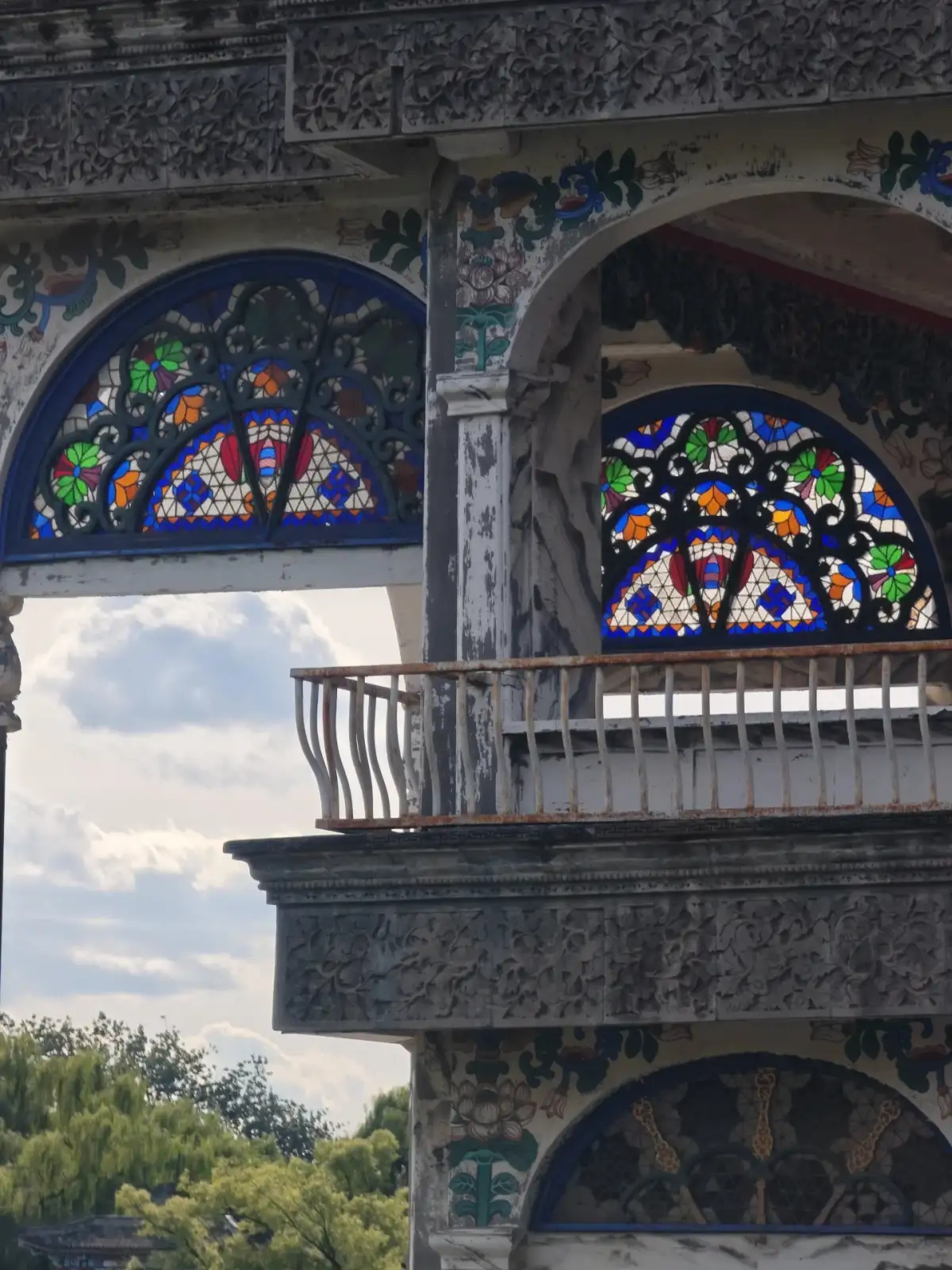
Stone Boat’s stained-glass windows and details of its woodwork. Image source: Xiaohongshu · Xiao Mao
windows of the Stone Boat frame the water’s surface
The stone boat by the lake is worth examining closely, starting with its exterior. Its scale differs from that of a boat moving on the water; it resembles a section of architecture anchored to the shore: arched openings, balustrades, and window frames slice the water and sky into distinct vignettes. In the photograph, the stained glass stands out clearly against the darker interior of the windows, while the exterior stone facade retains a grayish-white hue; these two materials draw the eye between light and shadow. Do not rely solely on photographs to determine which areas are accessible; on-site access and conservation requirements take precedence.
It’s also interesting to place the Stone Boat and the Seventeen-Arch Bridge in the same frame of memory. Both are close to the water, yet each organizes negative space through windows and bridge arches, respectively; one directs the gaze toward the water’s surface, while the other connects the two ends. After walking through the area, Kunming Lake is no longer merely a scenic backdrop but becomes the shared space between the buildings. If your route does not pass by the lakeshore where the Stone Boat is located, you can choose another waterside building to observe along your actual walking path. Plan your walk around your chosen exit point to establish a clear connection between the water’s surface, the windows and doors, and your return route. Since the lakeshore is quite long, you can decide whether to visit the Stone Boat or the eastern courtyard based on your interests: if you prefer material details, stay in the northwest area; if you prefer the living spaces of the courtyard, shorten the distance you walk along the lakeshore.
In front of Wanshou Mountain, deciding whether to raise your gaze
As you approach the foot of the mountain, the Summer Palace transforms from a horizontal lakeside vista into a vertical sequence of buildings. Stairs, terraces, walls, and eaves constantly shift the viewing height. If your stamina and the park’s opening hours permit, you can enter the designated areas to ascend; if anyone in your party is unable to navigate consecutive flights of stairs, viewing the mountain-top structures from the lakeshore still captures the main theme of this route. Ascending to higher vantage points is a choice of perspective—it should not be a mandatory segment for everyone.
Looking back from a height, the waterfront that seemed so long moments ago may shrink to a thin line, and the Seventeen-Arch Bridge and the islands become easier to place within the overall composition. Don’t just try to capture the entire lake in a single shot; instead, consider how the dense clusters of building roofs are balanced against the open water. The two perspectives—from the mountain and from the lake—complement each other, which is precisely why this garden remains endlessly fascinating; however, you’ll still need to check the day’s specific information regarding the actual climbing routes and closing times.
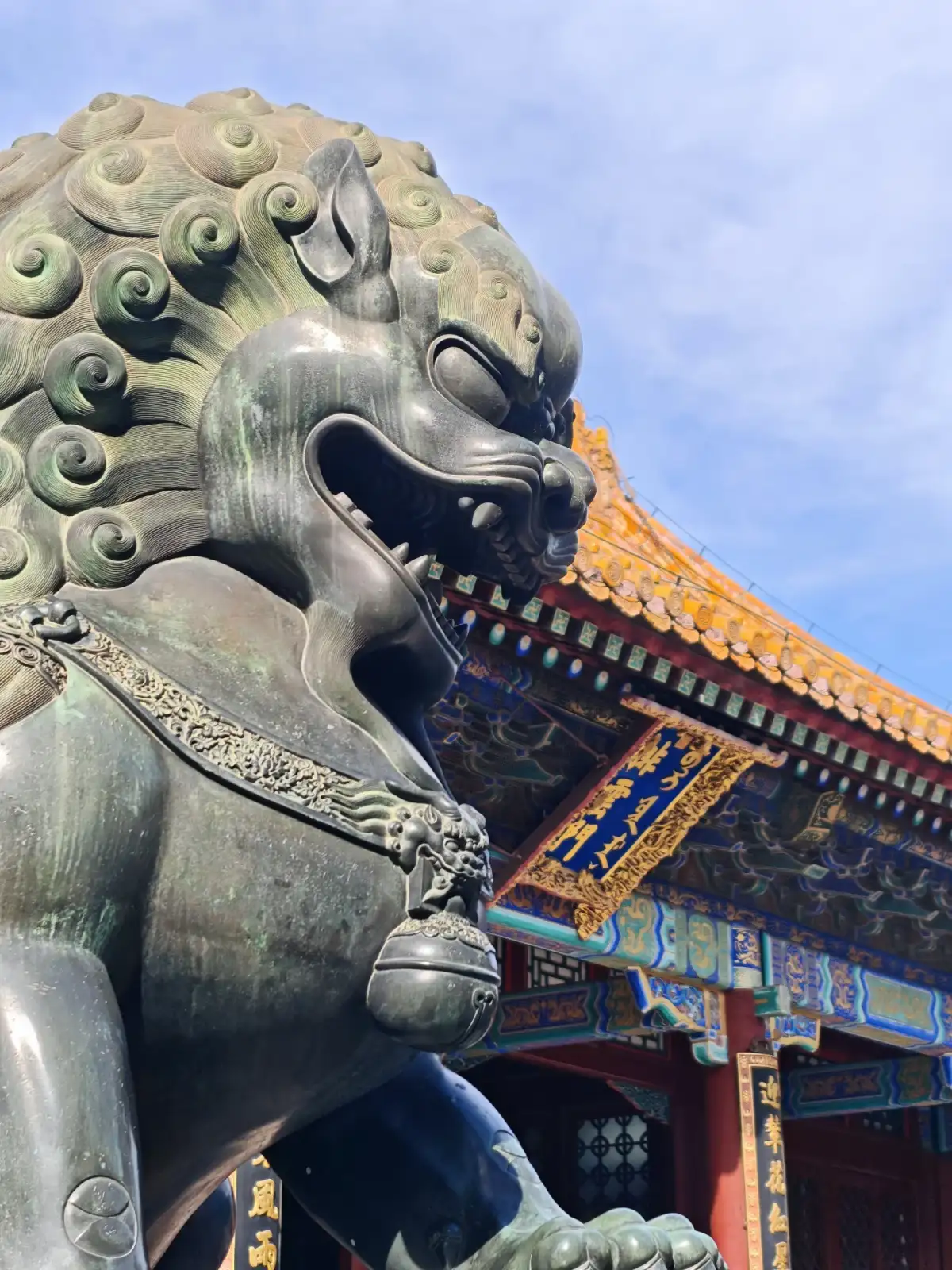
The bronze lions of the Summer Palace and the painted eaves of Renshou Gate. Image source: Xiaohongshu · Xiao Mao
Seventeen-Arch Bridge—each view, whether up close or from afar, has its own appeal.
bridge are best appreciated from the shore or other vantage points; once you step onto the bridge, your focus shifts to the stone balustrades, the decorative pillars, and the breeze skimming the water’s surface. A series of bridge arches unfolds, connecting the lakeshore to Nanhu Island; in the distance, it appears as a light, horizontal line, but as you approach, you can feel the substantial weight of the stone. It’s best to treat reaching the bridgehead and crossing the bridge as two separate stops, rather than simply snapping a photo in the middle of the bridge and hurrying back.
stone lions and balustrade details are best appreciated with the eye—without touching or climbing on them. When visitors gather on the bridge deck, simply observing as you move along is already a rich experience. Some photographic references feature the sunset view through the bridge arches—a scene created by the interplay of specific light, season, and angle—but one should not expect this view to appear at the same time every day. If this stretch of the path is clearly beyond your physical stamina for the day, staying closer to the lakeshore to admire the bridge’s reflection is also a perfectly valid choice.
courtyards—all create a shift in scale
The Summer Palace offers more than just expansive water views. As you enter the courtyards open to visitors, gates, walls, and vegetation narrow the vast vista, and the buildings transform from distant silhouettes into windows or eaves that can be examined up close. Simply choose a courtyard along the main route; there’s no need to include every named site in your itinerary. The area around Le Shou Hall is often included in lakeside walks, but you’ll need to confirm the exact access area on the day of your visit.
Stepping out of the courtyard to look back at the lake, the water’s surface will seem more expansive than before, as your body has just adjusted to a smaller space. You can plan a break after such a transition: sit down for a drink, compare the directions of the roofs you saw that morning with the map, and then decide whether to extend your journey. It’s best to confirm dining and rest stops in advance; you can’t rely on old photos to gauge the condition or operating hours of facilities within the park. Keeping a backup dining option near an exit will make the return trip much easier.
Boat rides and walking tours require separate planning
The lakeside walking route and the boat route may seem interchangeable, but in reality, they are influenced by piers, routes, weather, and operating hours. You shouldn’t rely on the last boat as a guaranteed means of transportation just to save a bit of walking. Plan to leave the park by land as your primary option; if there is a suitable boat departure that day, treat the view from the water as an added bonus. In the event of service suspensions due to wind or rain, your prior knowledge of the lake’s shoreline can help you adjust your plans.
Foreign tourists should verify the accuracy of their ID information, selected tour items, and official channel instructions when making reservations, and distinguish between park admission tickets and other open spaces that require separate fees or reservations. When choosing a combination of boat and walking tours, confirm the actual arrangements based on the current operational scope, your identification documents, and the needs of your companions. Also, clearly note the location of the park gates upon arrival and departure: transportation connections at opposite ends of the same garden may differ. Save a screenshot of your route on your phone so you can still find the designated exit and meeting point even if you lose signal or run out of battery.
You can appreciate the garden in all four seasons—the focus need not be the same
In summer, with the water’s surface and lush tree canopies, you can shorten your walk along the unobstructed lakeshore and spend more time pausing under the corridors; in autumn, it’s best to observe how the colors of the leaves blend with the tiled roofs; in winter, it’s ideal for discerning the lines of branches, bridge arches, and the buildings at the foot of the mountain. Whether the ice is open or the lotus flowers are in full bloom requires separate verification; never judge from a single photograph whether it is safe to walk on the ice or approach the plants. Spring flowers are merely one aspect of the changing weather—don’t let the blooming season determine whether a day’s visit is worthwhile.
What one can take away from the Summer Palace is a method for viewing gardens: first, use the water’s surface to grasp the whole; then, use the long corridor to observe continuous changes; and finally, establish a contrast between near and far through a single courtyard or by ascending to a higher vantage point. By the end of the journey, many paths remain untraversed, but the relationships that remain are clear enough. The next time you enter a smaller Chinese garden, you can still use the same perspective to seek out negative space, framed views, and the human scale.
Further Reading and Reference Sources
Beijing · Destination Overview
Summer Palace · Destination Overview
Compiled and organized by the East Travel Editorial Department based on publicly available travel notes and listed information. Intended for pre-trip reading; this is not a personal account of firsthand experience. Please verify opening hours, transportation, reservations, and service arrangements according to your actual travel dates.
Xiao Mao · The Summer Palace pairs perfectly with the blue sky and white clouds