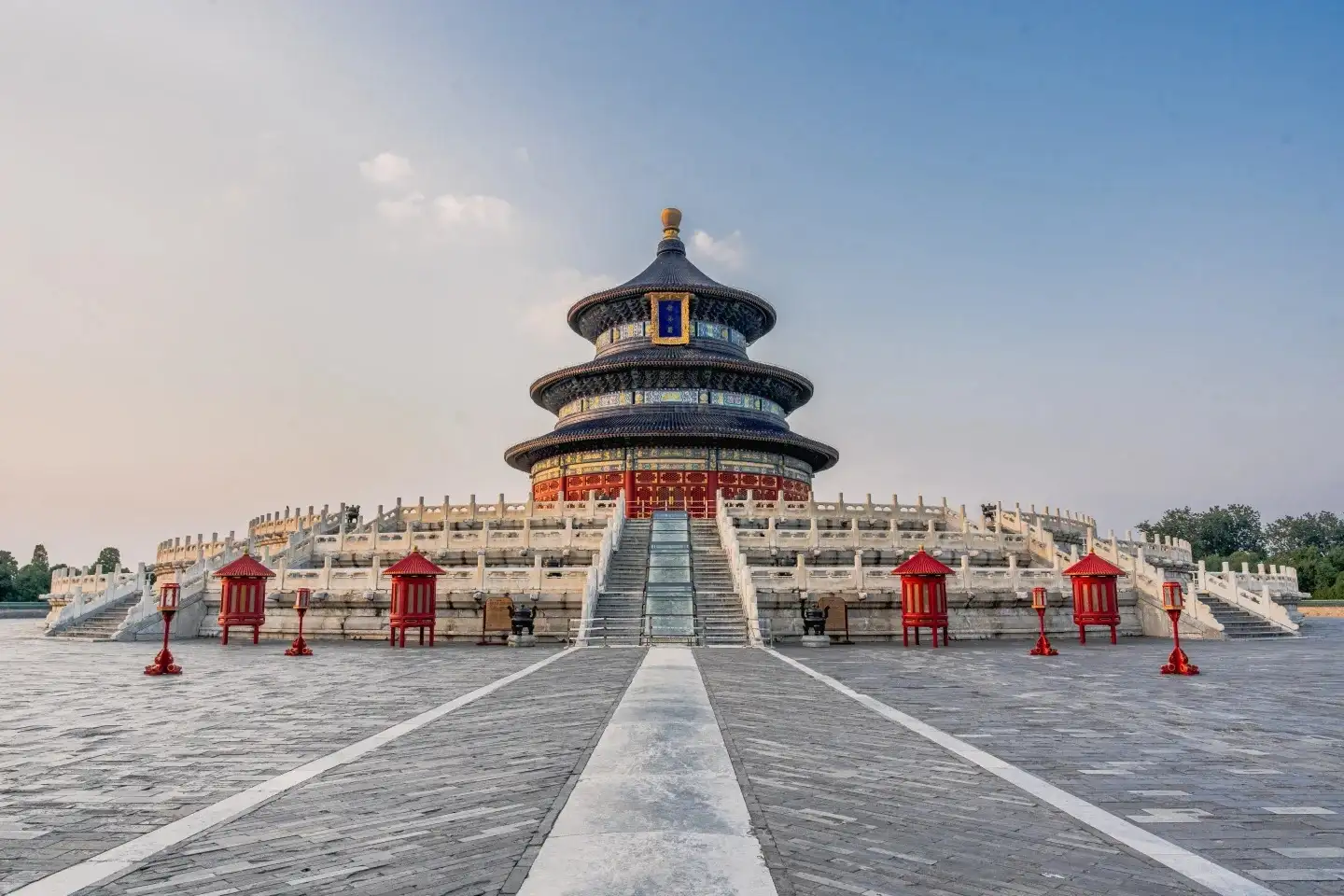
and photos of the Temple of Heaven often feature the Hall of Prayer for Good Harvests at the center of the frame. However, when visitors enter the site, they must juggle several factors simultaneously: the architecture is worth admiring, people are passing through the pathways, companions want to move on, and the camera may still be waiting for a clearer shot. A photography plan suitable for the average traveler must acknowledge that these factors exist simultaneously. Delaying the entire tour until closing time just to get a photo without people in it can easily leave no room for the architecture, your travel companions, or your departure plans. This article discusses how to balance photography and sightseeing, but makes no promise that you’ll be able to capture an empty scene at any specific time.
In a Xiaohongshu post, the author Ju_📸 linked their photos to their experience of waiting for the site to clear. That was a specific individual’s account; it does not imply that visitors can stay until the very end, nor does it prove that waiting will be permitted. We use this example to raise a truly useful question: If staff begin directing visitors to leave the park, should you stop taking photos? The answer should be based on the staff’s instructions. The desire to finish taking photos cannot be used as a reason to delay the management process, nor can the experiences of others serve as grounds for demanding the same treatment for yourself.
Decide what you want to see first, then choose where to position your camera
UNESCO’s description of the Temple of Heaven classifies it as a ritual architectural complex, where the architectural layout and landscaped surroundings collectively embody historical significance. This means that a single front-view photo of the Hall of Prayer for Good Harvests is only part of the viewing experience. You can start by reading the on-site explanations to identify the location of the building you’re viewing within the entire complex, and then decide whether to photograph the facade, the eaves, or the scale of the relationship between people and the architecture. There’s no need to plan every photo as if it were going to be the same poster before you even set out, nor should you ignore what you can actually see that day just to replicate a particular photographer’s composition.
If you’re interested in architectural structure, your photography goal could be to capture the relationship between a specific roof and the space below it; if you prioritize travel documentation, a group photo with your companions in the standard visitor area can also be valuable. The required vantage points and waiting times differ for each. The former may require stepping back to observe the whole scene, while the latter requires ensuring that people are willing to be in the frame and that pathways aren’t blocked. Break down your goals into actionable steps—for example, understanding the name of a building and taking a related photo—rather than a vague request to “take photos like a professional photo book.” This makes planning much easier.
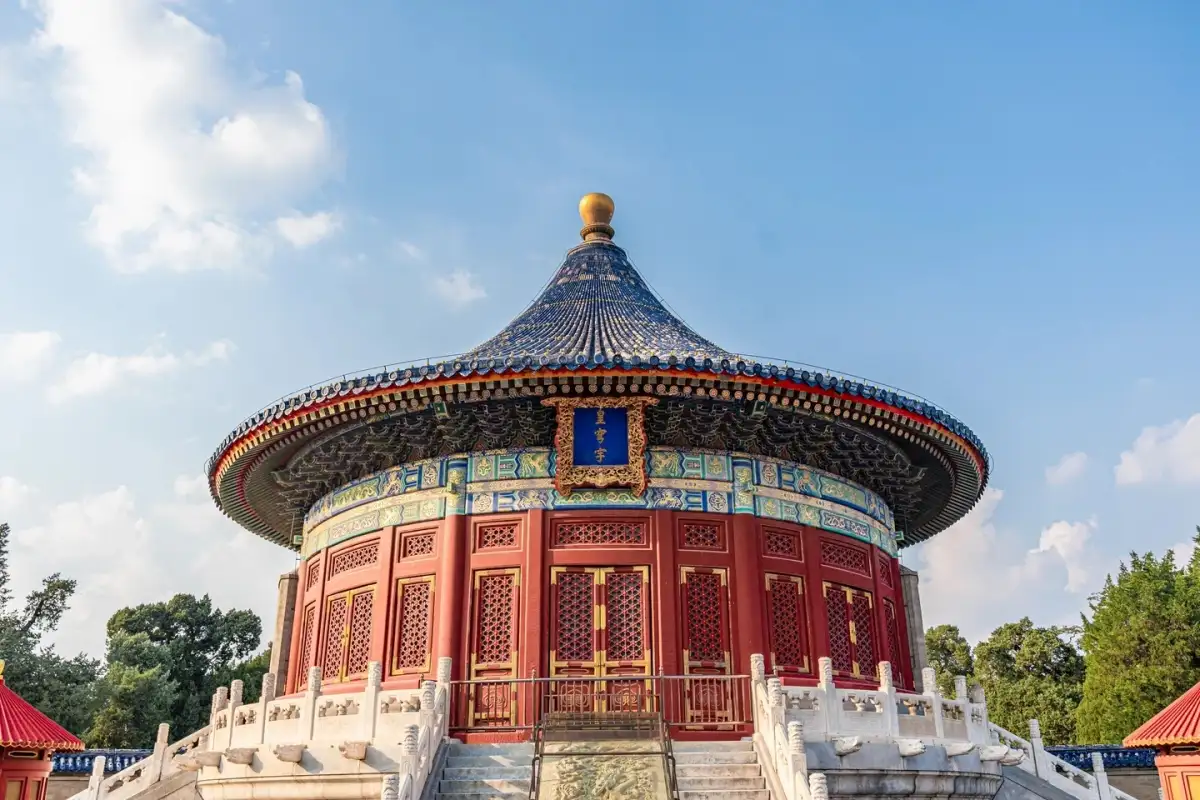
The circular hall and blue roof of the Hall of Imperial Heaven at the Temple of Heaven. Photo:Volume_📸 · Original Post.
and while a wide-angle lens makes it easy to capture the entire structure in the frame, it also tends to distort lines near the edges. Rather than using inadequate equipment as an excuse to insist on a specific vantage point, it’s acceptable to leave some areas out of the frame. When stepping back within the normal touring area, first be mindful of the people at your feet and behind you; if you cannot step back, focus on photographing a specific detail instead. The composition of a photograph is not more important than maintaining normal traffic flow at the site. For photography requiring a tripod, additional lighting, or other equipment, you must separately confirm the venue’s requirements; this article does not equate ordinary tourist photography with authorized professional photography.
setting a clear and enforceable limit on waiting times.
and the criteria for ending the wait should ideally be determined by the actual itinerary. For example, if you’ve reached the meeting point agreed upon with your companions, or if waiting any longer would cut into the rest of the visit or your departure from the park, put your camera away. This criterion cannot be merely a vague “more or less.” The photographer can inform their companions in advance of the two spots they most want to photograph, while the others can specify where they’d like to stop to read the descriptions and where they’d prefer to walk right through. This arrangement isn’t about making the photographer defer to the majority, but rather ensuring that everyone knows where they’ll have ample time to fully appreciate the sights.
so for visitors with only a short time allotted for the tour, choosing one main photo stop is sufficient. First, observe the architecture; then take photos from permitted locations; and finally, return to confirm whether you’ve truly read the on-site explanations. If you spend the entire time from entry to exit searching for the perfect shot, you may have spent time at the Temple of Heaven but may not have gained a genuine understanding of it. If there is a constant flow of people passing by, you can use ordinary tourists as a scale of reference, or choose a frame that excludes strangers who are recognizable from the front. The absence of people is not the only condition for a successful architectural photograph.
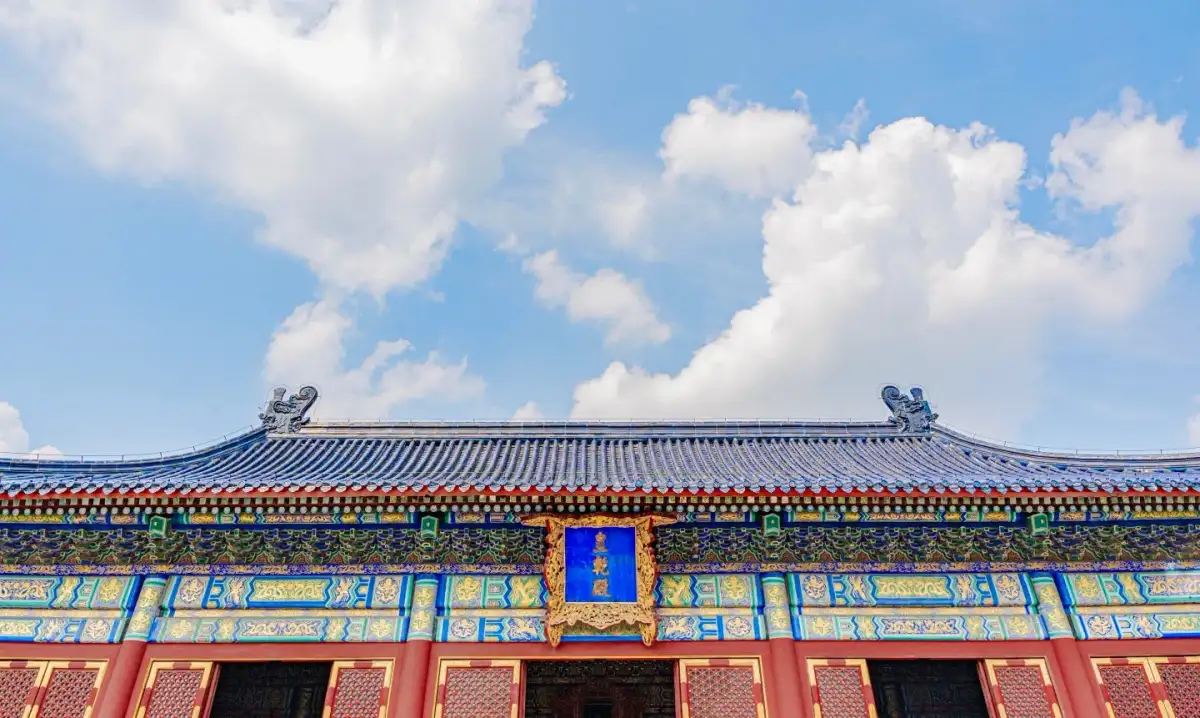
featuring blue-tiled roofs, colorful eaves, and red walls. Photo:Volume_📸 · Original Post.
When traveling with children, long waits can easily become the most exhausting part of a family trip. You can make your child’s observation tasks simpler: find their favorite color, identify the contours of the roof, or explain to an adult why they want to take a photo here. Adults don’t need to expect children to remember complex architectural terms, nor should they make children repeatedly return to a specific spot just to get a complete shot. Even if you don’t manage to take a group photo, you’ll still have a photo of a detail the child chose on their own. These kinds of records more closely reflect the shifting interests of an actual trip and cannot be used to substantiate any historical interpretation.
When traveling with companions who move more slowly, also consider the relationship between your shooting spot and the next rest stop. You may need to reposition your camera, but your companions may not be able to follow you back and forth. It’s best to agree to meet at a location where lingering is publicly permitted and does not obstruct traffic, rather than leaving them to wait alone at an unfamiliar fork in the path. Keep a way to contact each other, and if the crowd is diverted on-site, follow the staff’s instructions. Traveling together means, at the very least, that everyone knows where to go next—not just the photographer knowing which way the lens is pointing.
Lighting may change, but the basic composition should remain clear
whether it’s a clear blue sky, light clouds, or overcast conditions, the contrast between the roofs and the background will change—and a weather forecast is no substitute for being on-site. If the sky looks different from the sample photos, you can shift your focus to subtle color variations or the interplay of contours; there’s no need to deem the entire visit a failure. This is especially true for out-of-town or international visitors, who often don’t have the opportunity to return repeatedly to wait for the same lighting conditions. Rather than putting your subsequent travel plans under strain in pursuit of a specific type of weather, it’s better to make the most of the conditions you have. If necessary, treat your photography plans as optional so that you can still fully experience the history and the space itself.
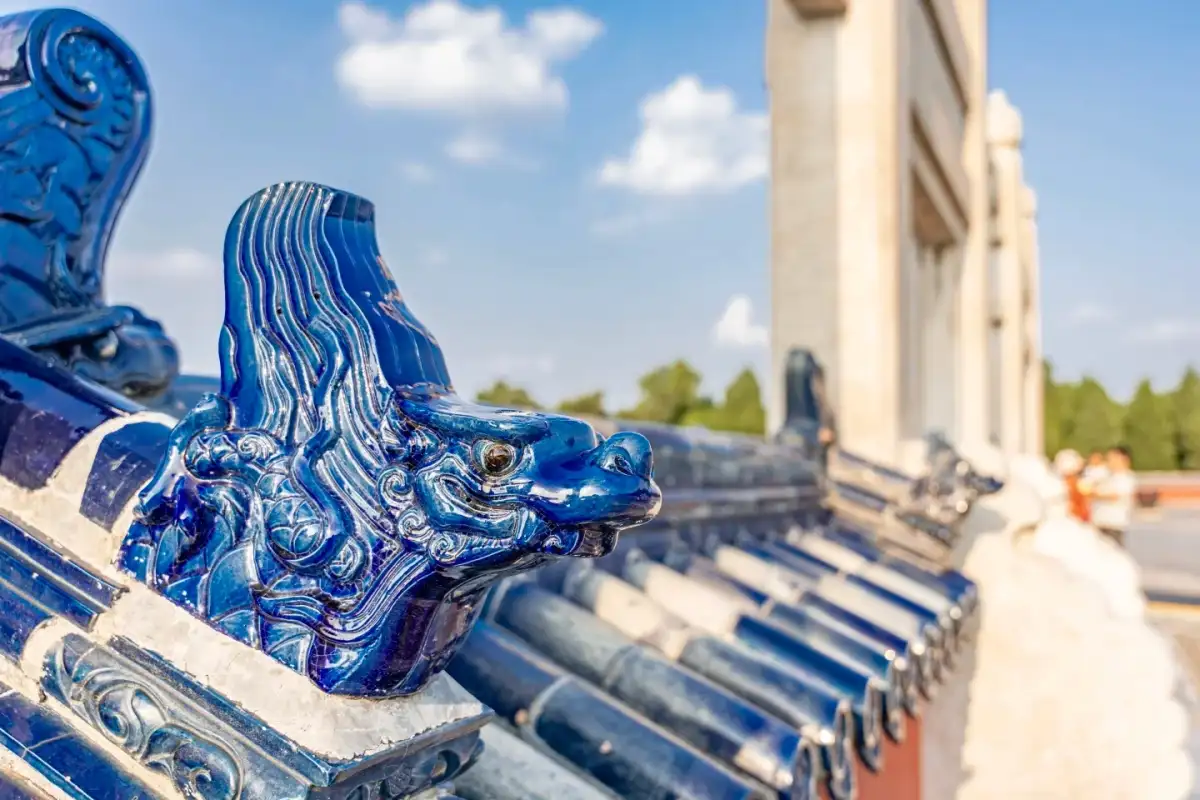
Detailed view of the blue glazed tile decorations on the roof of a Temple of Heaven structure. Photo:Volume_📸 · Original Post.
while official heritage descriptions are intended to help understand the nature of the site; specific access areas, opening hours, and photography restrictions must still be verified by checking the official announcements for that day or consulting on-site staff. Do not treat previous entrance points, waiting procedures, or equipment placements seen on social media as current guidelines. If you have formal photography needs, you must separately specify the equipment, number of people, and purpose; you cannot assume exemption from regulations simply because your group is small. Even general travel photography should comply with fencing and pathway requirements; do not cross protected boundaries in pursuit of a closer vantage point.
Before leaving, take a moment to organize your notes: write down the names of the structures you’ve photographed, and separate the locations you’ve confirmed from those that still need verification. Do not make direct assumptions about the age or identity of people, plaques, or decorations appearing in your photos based solely on their appearance. When sharing, clarify that these are observations made during a regular visit; do not claim exclusive ownership of the heritage site, and certainly do not present the staff’s clearance procedures as techniques worth emulating. If a photo includes clearly identifiable strangers, address portrait rights and privacy issues before making it public; the fact that an image is publicly visible does not mean it can be freely reposted.
and within the broader context of Beijing, the Temple of Heaven can be a half-day destination with a clear theme, rather than a brief stop in a series of photography assignments. To continue exploring urban spaces, please visit this site.Beijing Destination Guide. Discuss the confirmed schedule for the day, your companions’ stamina, and your photography preferences with your guide. The specific plan will still depend on actual reservations and transportation confirmations. A photo session that doesn’t disturb others and effectively captures what you’ve seen is more than enough to make this journey a meaningful record.
Source and Editorial Notes
This article is an original travel analysis compiled by the Dongxing Travel editorial team based on the listed materials; it is not a firsthand account by the author. The full text of the original post has not been reproduced; accompanying images are used within the scope of authorization and are credited to the author and the source of the original post. They do not serve as proof of actual travel experiences or services provided by Dongxing Travel.
Volume_📸 · The Temple of Heaven Without People · Travel Notes; Verified/Organized on: October 3, 2026.
UNESCO World Heritage Center · Temple of Heaven World Heritage Description · Official source; Verified/compiled on: October 3, 2026.