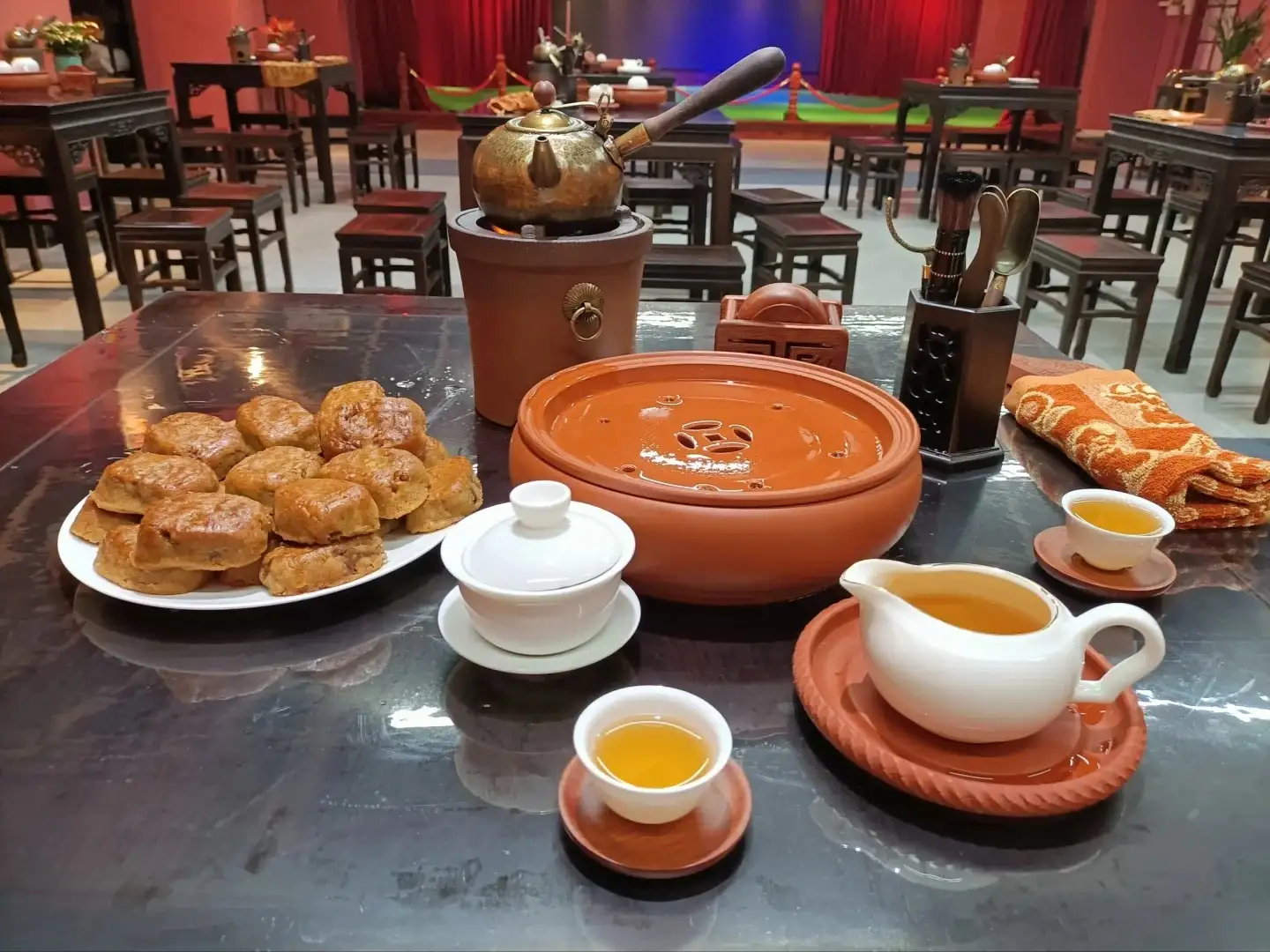
The most comfortable pause during a city stroll is sometimes a tea table where one can sit down. The teapot and cups on the table are small, yet conversation can unfold at a leisurely pace. In Chaozhou, Gongfu tea offers the opportunity to shift from rushing from one destination to the next to observing how water, utensils, and people interact. When sitting at a tea table for the first time, knowing what you’re about to experience is more useful than memorizing the names of every step—and it allows your journey through the ancient city to maintain its own rhythm.
Is “Gongfu Tea” a type of tea leaf? Here, we are primarily referring to a set of customs surrounding the brewing and drinking of tea. The introduction to the “Chaozhou Gongfu Tea Art” project on the China Intangible Cultural Heritage website lists steps such as warming the teapot, brewing, pouring tea, smelling the aroma, and tasting, and specifies that oolong tea is the primary variety used. The specific tea used at any given tea gathering should be confirmed with the host; the term “Gongfu Tea” should not be taken as the name of a fixed tea variety, nor should the flavor of a single infusion be taken to represent all possible choices.
The “Fucheng Teahouse” notes on Xiaohongshu are written by the operators, introducing their teahouses along with content such as music and Chaozhou Opera; they serve as leads for finding services rather than independent traveler reviews. The “Sun and Moon Light” notes on the ancient city, on the other hand, place Gongfu tea within the context of everyday life in the streets and alleys. This article uses two types of information to identify travel needs. According to official sources, the specific availability of teahouse services, pricing, and participation times are subject to actual communication.
At the tea table, first observe how a series of movements connects
At first glance at a tea ceremony, the names of the movements are the easiest to remember, but the relationships between them may not be immediately clear. You can start by asking a simple question: “Is this step for preparing the utensils, handling the tea leaves, or serving the tea to everyone?” By breaking it down this way, many unfamiliar terms fall into place. If the host is willing to explain, ask about the purpose of a specific movement; if a demonstration is underway, watch a full cycle first, then ask your questions afterward.
Official program descriptions mention steps such as preheating the teapot, warming the cups, pouring from a height, and pouring gently into the cups. These details illustrate that the brewing process involves not only tea leaves but also the coordination of utensils, water, and movements. Travelers can observe how the teapot and cups are used, how the tea is distributed among the cups, and finally taste the brew. This article does not provide a technical tutorial on preparing hot water; on-site experiences should follow the host’s guidance, which is more appropriate than attempting to mimic the movements based on written descriptions.
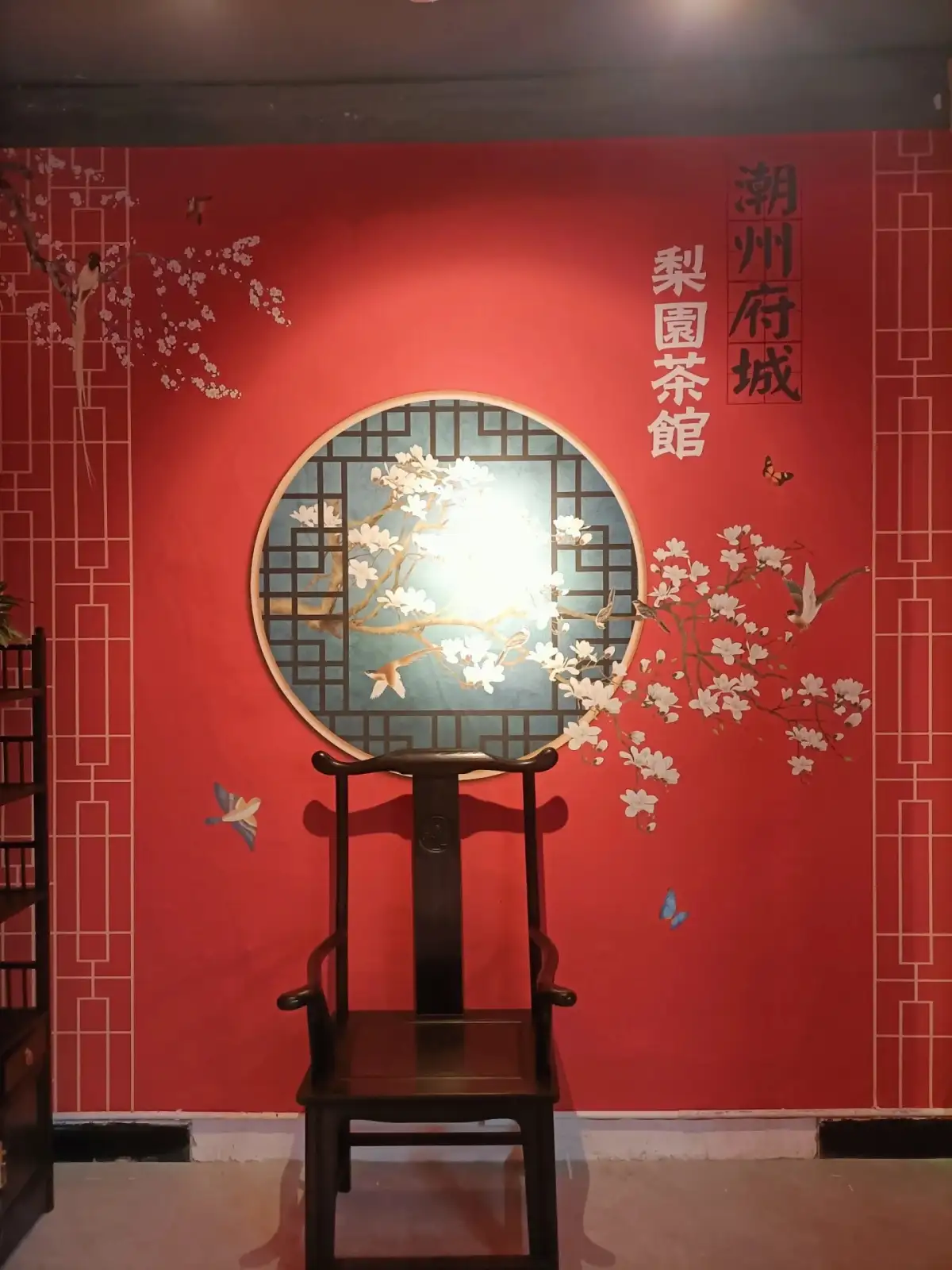
Round windows and seating in a Chaozhou Fucheng teahouse. Photo:Fucheng Teahouse · Original Post.
The same set of teaware may yield different rhythms depending on who is using it. Everyday tea drinking and formal demonstrations also have different emphases; the former may be accompanied by conversation, while the latter may place greater emphasis on explaining the process. Don’t immediately judge whether a performance is authentic just because a single table doesn’t fully showcase all the steps listed in the program description. By understanding whether a specific service involves everyday tea drinking, a skill demonstration, or a class, audiences can participate with appropriate expectations.
The taste of the tea can be described using very simple words. Start by describing what you smell, how it feels on your palate, and how the flavor changes between infusions, then listen to how the host explains it. You can express genuine feelings without professional terminology; whether you like it or not is part of the experience. If you plan to buy tea, you can make a decision after understanding the product name and details. Separating the enjoyment of tasting from the act of shopping will make the experience more relaxed.
Do you want to sit for a while, or learn a skill?
If you simply wish to take a break while strolling through the ancient city, you can look for teahouses that have confirmed they welcome visitors and are suitable for your travel companions, learn about seating arrangements and service styles, and allow enough time to enjoy a pot of tea. If your goal is to learn about Gongfu tea, you’ll need to inquire whether there are introductions for beginners, what language is used, whether you can ask questions, and what the hands-on activities entail. A shop displaying teaware does not necessarily offer the same instruction; nor is a tea ceremony class the same as a casual tea-drinking session.
If you’re interested in music or Chaozhou Opera, the “Fucheng Teahouse” notes highlight the potential for combining tea with other art forms. However, content posted by the operator at that time cannot be taken as a guarantee that performances will be held on every date. When making a reservation, confirm the actual program, start time, and whether tea is included as part of the package, then incorporate it into your itinerary for the day. While the convergence of multiple cultural events can be fascinating—each retaining its own traditions—a tea ceremony need not serve as a comprehensive introduction to all of Teochew’s arts.
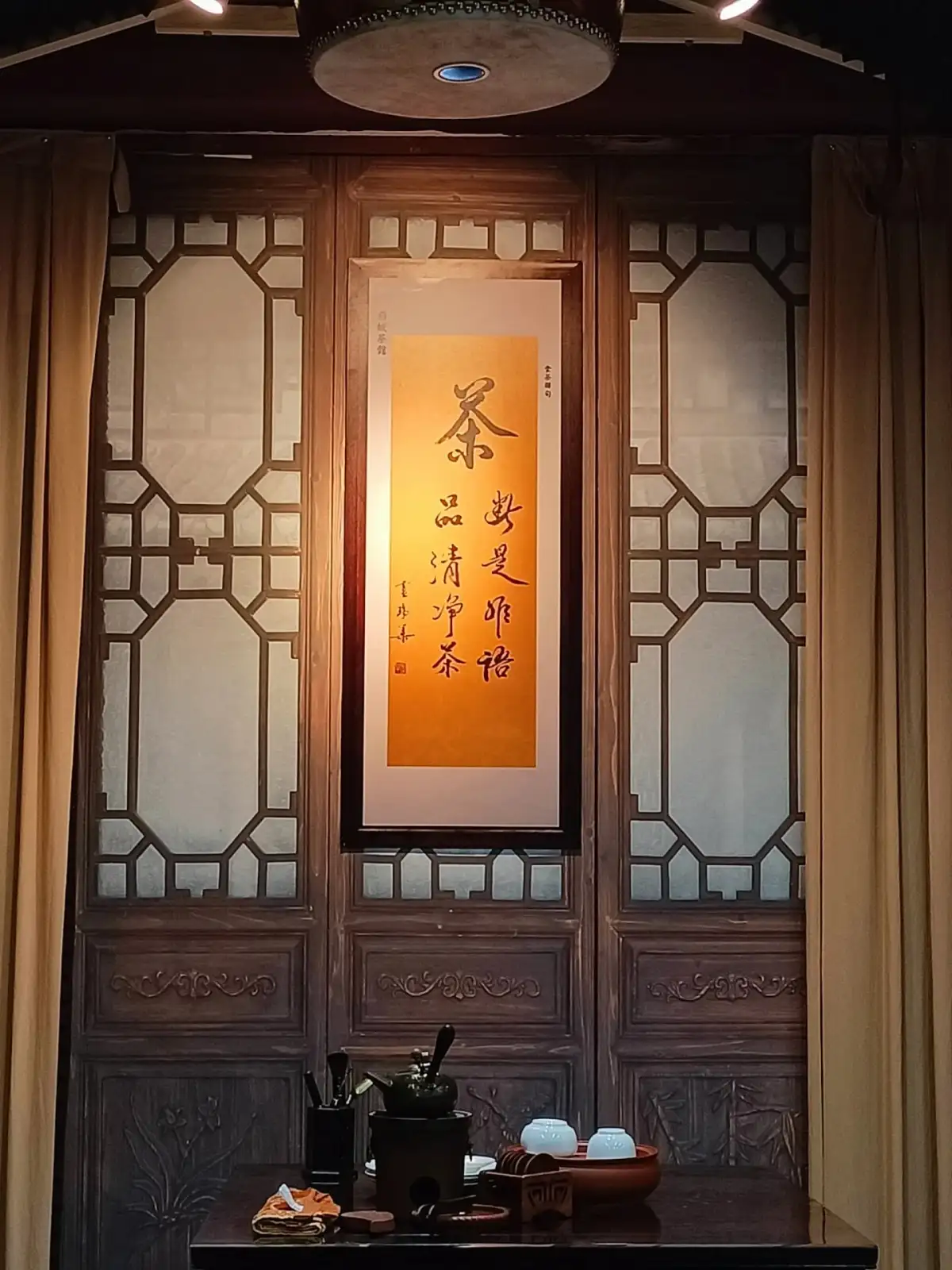
A tea gathering in front of the wooden lattice door at a tea house in Chaozhou’s Fucheng. Photo:Fucheng Teahouse · Original Post.
Before your first experience, you can narrow down the information you need to convey to the service provider to a few key points, allowing the conversation to focus directly on your trip.
Purpose of Participation: Is it simply to relax over tea, or do you hope to have someone explain the brewing process? Once you clarify your intent, service providers can more easily explain what they offer, and travelers can determine if it’s a good fit.
Travel Party Requirements: Number of people, whether children or elders are accompanying the group, and estimated length of stay. The actual seating and space around the tea table affect everyone’s comfort during the experience—not just the composition of photos.
Language and Content: Determine whether there is a suitable way to explain things to you, whether you can understand the tea varieties and utensils, and whether you are allowed to ask questions at appropriate times. Translation tools can be helpful, but they cannot automatically replace in-depth explanations.
Service boundaries: What each category—tea beverages, demonstrations, experiences, and product purchases—entails, and how they are billed. By clearly outlining the services offered, everyone can refocus their attention on the tea and conversation.
For photography enthusiasts, it’s best to decide in advance whether this segment will focus primarily on observing or on taking photos. The details of the teaware, the gestures involved in pouring tea, and the overall composition of the table are all worth capturing, but the camera should not constantly interrupt the host’s work. If you wish to photograph people or take close-ups of their hands, ask for permission first and then proceed at a pace that is convenient for them. The participants at the tea gathering collectively form a dialogue; photography is merely one way of documenting it.
Returning from the tea ceremony to the ancient city, the tone takes on a different character.
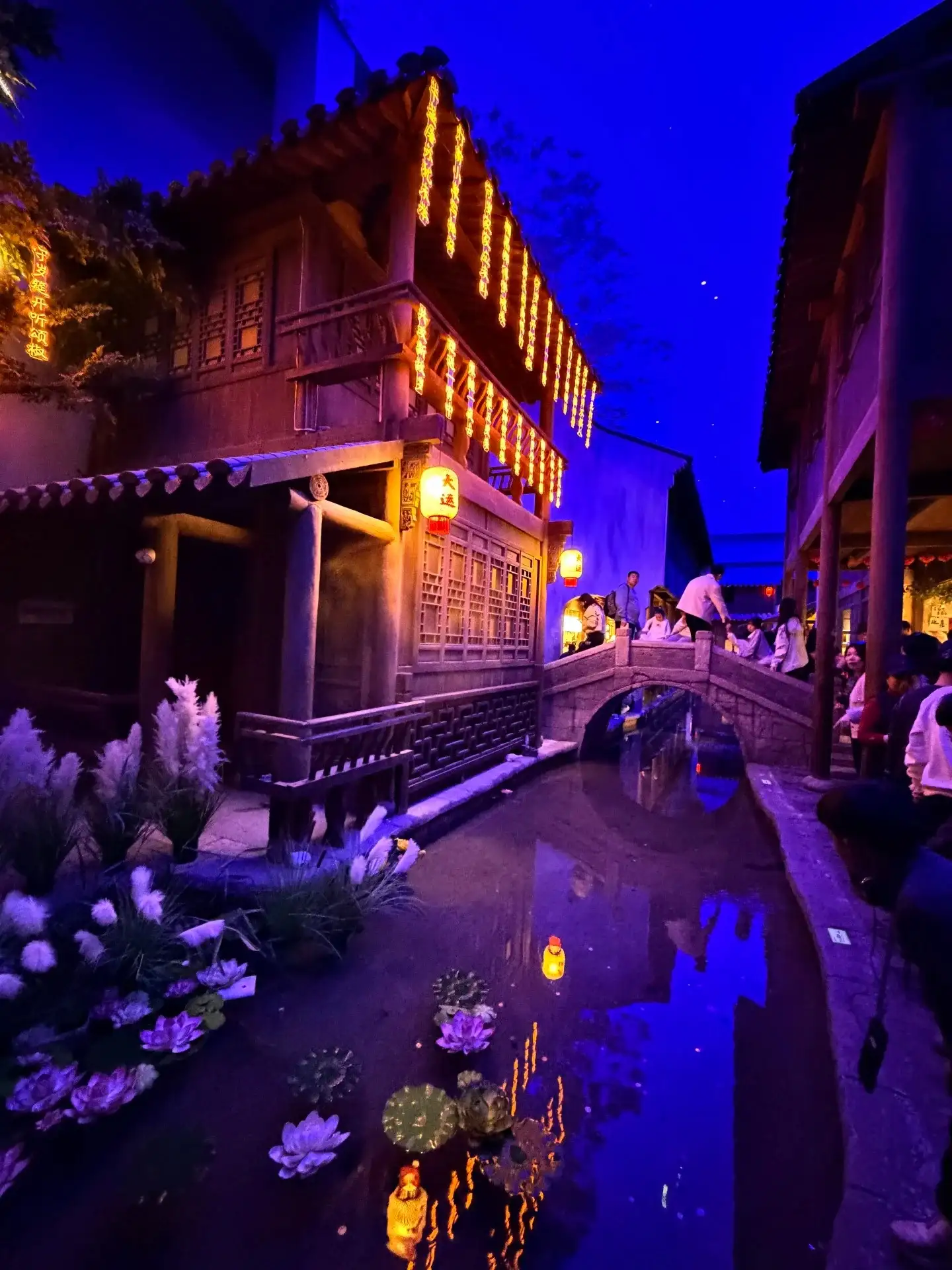
Walking through the ancient city and attending a tea ceremony can form a natural transition. First, stroll along a street that interests you, then sit down to discuss the architecture, artifacts, or shops you’ve seen; or use a confirmed tea ceremony event as a time anchor, taking a short walk afterward. “Light of the Sun and Moon” Notes lists many locations in the ancient city, but this article does not require visiting them all. To set aside time for tea, you should appropriately reduce the number of other locations visited.
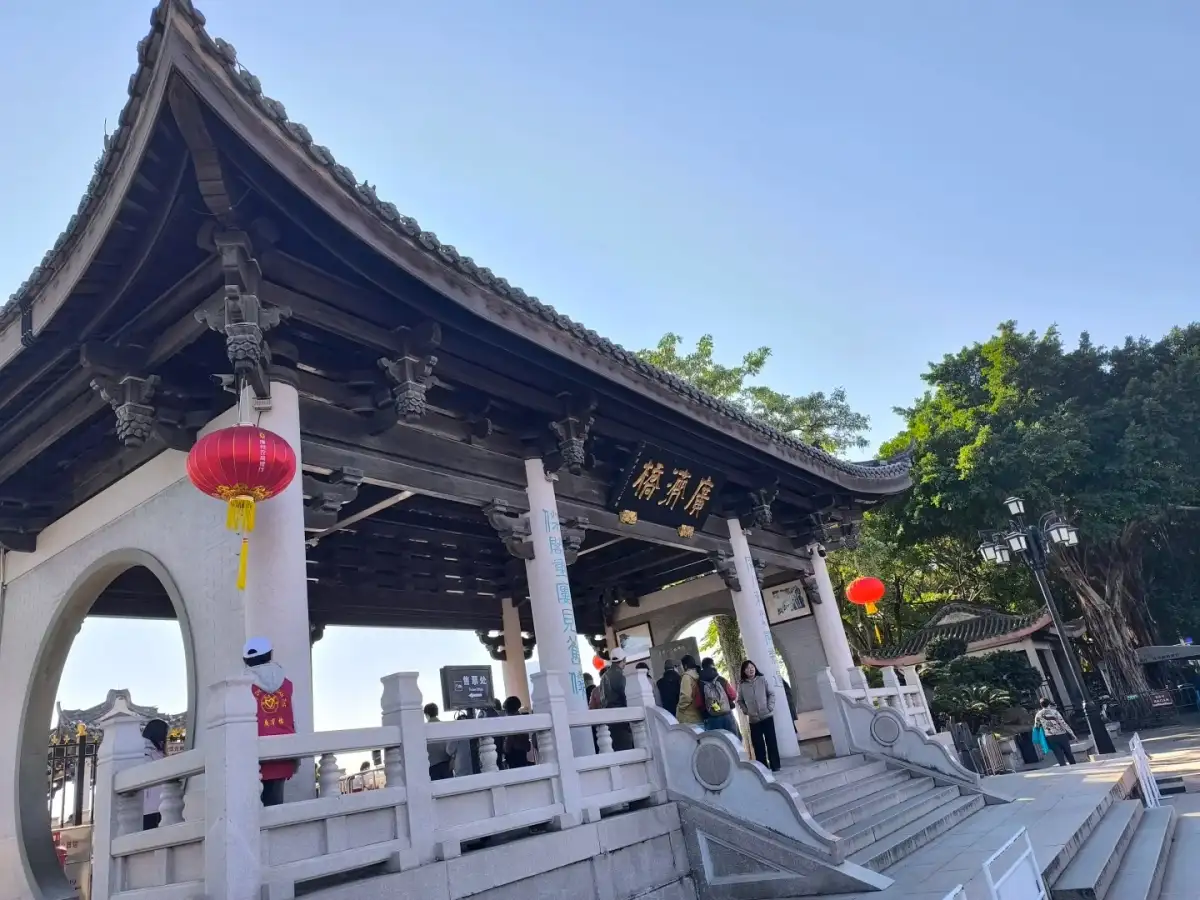
Pavilions and corridors on Guangji Bridge in Chaozhou. Photo:Sun and Moon Light · Original Post.
When traveling with elders, teahouses may offer a chance to sit and rest, but it’s important to be aware of seating arrangements, steps, and the acoustic environment. When traveling with children, you can assign them a simple observation task, such as noting how the cups are arranged or how many times a particular gesture occurs during a round. For those with personal restrictions regarding tea consumption, clarify your needs in advance and choose a participation method that suits your habits. The cultural experience can also involve listening to explanations and observing the process; there is no need to force yourself to finish every round.
When scheduling a tea ceremony before or after a meal, it’s essential to align it with your family’s regular routine and confirmed reservations. Treating a tea ceremony as something you can drop by for whenever you’re tired from walking may result in unsuitable venues or service; scheduling your entire itinerary around an unconfirmed performance, on the other hand, adds uncertainty. By securing one main experience first and leaving surrounding walks as flexible activities, cultural activities and urban exploration can complement each other.
After the experience, you may wish to remember just one piece of equipment, one gesture, and one form of interaction. The equipment connects flavor to ingredients; the gestures reveal the experience; and the interaction transforms the tea gathering into a shared moment between people. The next time you encounter oolong tea elsewhere, you’ll be able to compare specific teas and their preparations, rather than simply saying they all fall under the category of gongfu tea. Local customs thus offer details worth continued observation.
A tea table in Chaozhou can be a quiet affair, or it can be accompanied by conversation, laughter, or a demonstration. Official intangible cultural heritage descriptions help explain the brewing traditions, while business owners’ introductions provide clues about the services offered; your own needs determine how you participate. You don’t have to be a seasoned tea connoisseur on your first visit—simply observe the sequence of movements, ask a specific question, and be willing to sit down and listen to the answer. The tea in that small cup can open up a whole new dimension to your stroll through the ancient city.
Sources and Editorial Notes
This article is an original travel analysis compiled by the Dongxing Travel editorial department based on cited materials; it is not a firsthand account by the author. The full text of the original post has not been reproduced; accompanying images are used within the scope of authorization and are credited to the author and the source of the original post. They do not serve as proof of actual travel experiences or services provided by Dongxing Travel clients.
Fucheng Teahouse · A Must-Visit Local Teahouse in Chaozhou 🍵 · A Corner of Life in Fucheng · Travel Notes; Verified/Compiled on: October 3, 2026.
Sun and Moon Light · 🏮 Chaozhou Ancient City | A Date with the Millennia-Old Guangji Bridge and Its Vibrant Atmosphere❗ · Travel Notes; Verified/Compiled on: October 3, 2026.
China Intangible Cultural Heritage Network · Tea Ceremony (Chaozhou Gongfu Tea Ceremony) · Official sources; Verified/Compiled on: October 3, 2026.
Ministry of Culture and Tourism · Successful Inscription of “Traditional Chinese Tea-Making Techniques and Related Customs” on the Intangible Cultural Heritage List · Official sources; Verified/Compiled on: October 3, 2026.