Dongxing Travel Editorial Department · Travel Diaries and Pre-Trip Reading
Beyond the name “Summer Resort,” first understand the topography of this vast garden
The name “Chengde Mountain Resort” easily brings to mind a shady lakeside setting, yet the actual journey involves navigating the varying scales of palaces, lakes, and mountainous terrain. World Heritage documentation places it within the historical landscape formed by the Qing Dynasty’s imperial gardens and the Eight Outer Temples; for the average traveler, however, there’s no need to rush to explore all the temples—simply experiencing the two distinct terrains within the Chengde Mountain Resort is rewarding enough. The gentle lakeshore lends itself to leisurely strolls, while exploring the mountainous areas requires careful consideration of transportation and physical stamina.
An ideal itinerary for first-time visitors is to use a section of the lakeshore as the main route, select an open complex of buildings to explore in depth, and then decide whether to add the mountainous areas to the itinerary. Although Chengde and Beijing are often included in the same trip, traveling between the cities, checking into accommodations, and touring the park all require separate time allocations. If you arrive very late in the day, save dinner and rest for that night, and leave the full garden tour for the next day; arriving at Chengde Station does not mean you’ve reached the park gates.
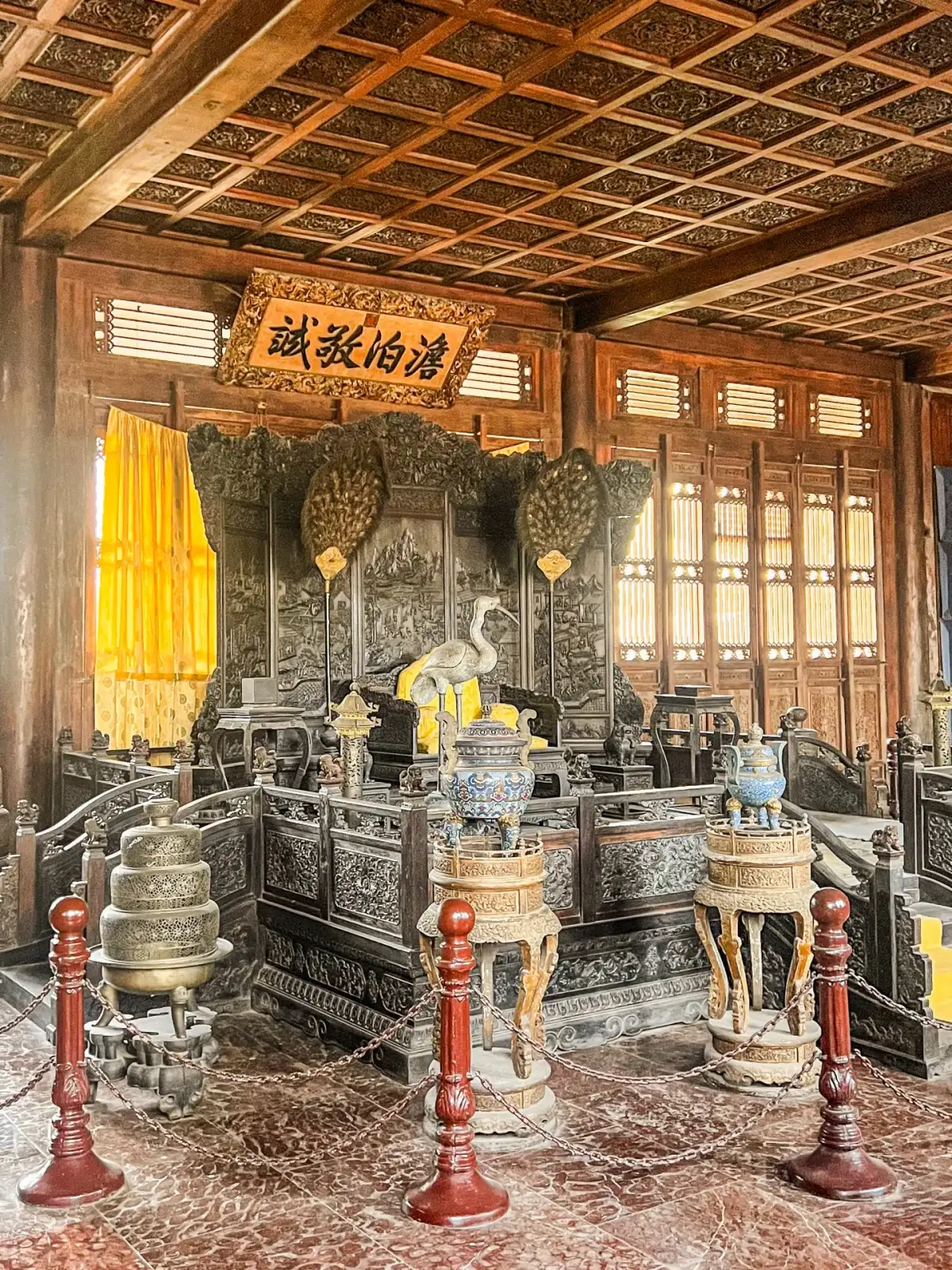
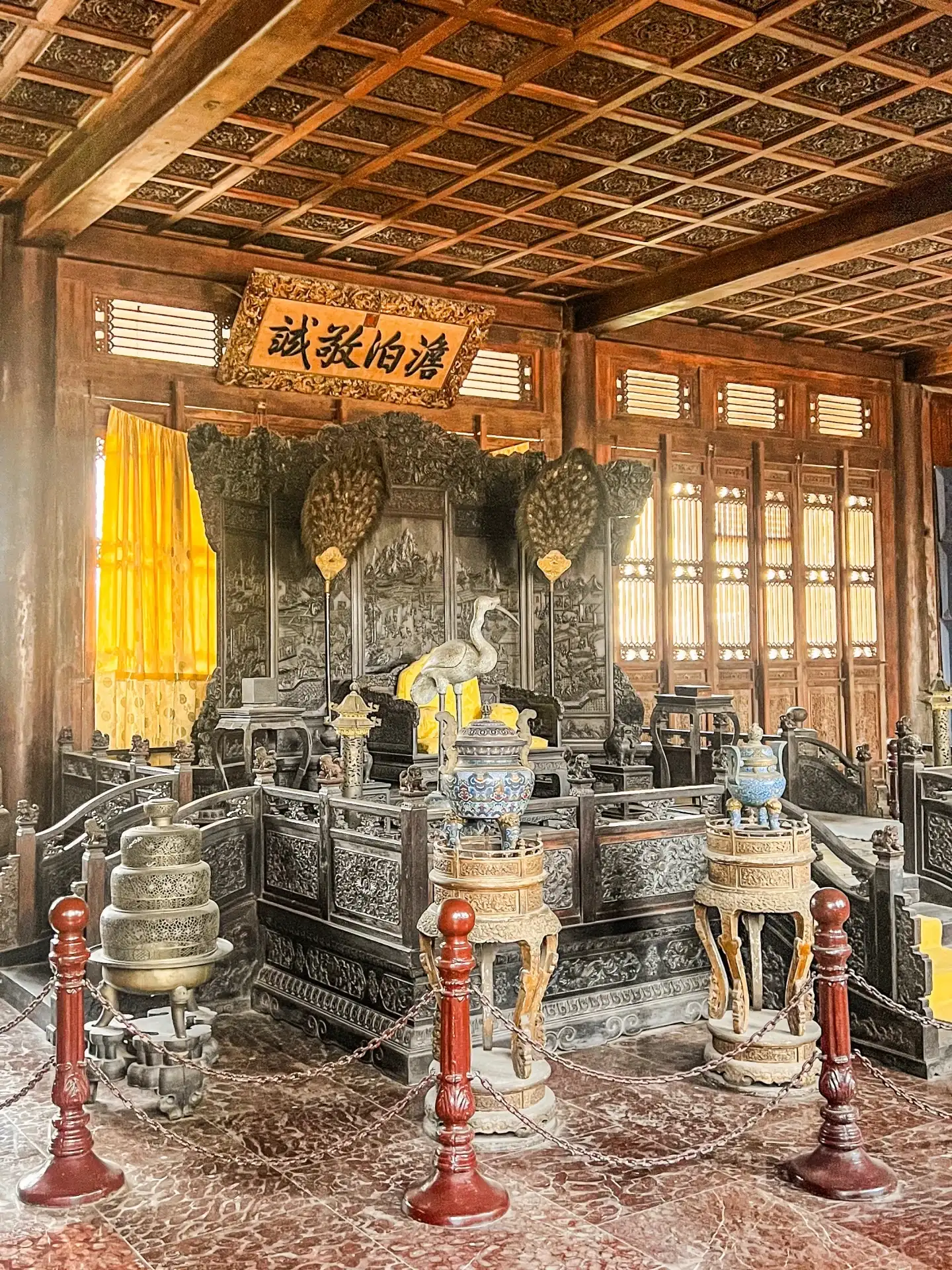
Wooden structures and furnishings inside the Summer Palace. Image source: Xiaohongshu · Ni Ni Jiang
Palace Entrance: First, Observe How the Materials Frame the Light
As you approach the palace area of the Mountain Resort, the sense of scale conveyed by the wooden structures, thresholds, and courtyard walls differs from that of the lakeshore. You might start with an open courtyard, first observing whether the roofline is low or high, where the doorways direct your gaze, and how much open space is left between the front and rear buildings. There’s no need to memorize all the hall names right away; spatial relationships often stick in your memory before the names do. If there’s an exhibition, choose one theme and explore it thoroughly—this will help you establish a historical context better than just glancing at each room.
The Mountain Resort once served as the venue for summer political and diplomatic activities during the Qing Dynasty; it cannot be interpreted merely as a recreational villa. The specific uses of individual rooms, whether the furniture is in its original position, and the era of the displays should all be determined based on the on-site signage. Capturing a single piece of furnishings in a photo does not mean you have witnessed an authentic scene from an emperor’s life. Describing the visible woodwork and architectural forms in detail, while leaving unconfirmed details of daily life unmentioned, actually leads to a more solid understanding.
When viewing photos of the furnishings, distinguish between the room and the viewing distance
The Summer Palace’s furnishings are often viewed through protective glass. Window panes, carpets, and furniture maintain their positions behind the glass, yet reflections on the glass’s surface superimpose the trees and sky outside. When you notice this superimposed reflection, you can first adjust your standing position to find a spot where the view is clear—without pressing your camera against the glass or asking others to move out of the way to eliminate the glare. The image captures that specific angle at that moment; you cannot use it to determine how each piece of furniture was originally used.
This is also why you should opt for an in-depth exploration of the exhibits rather than simply snapping photos along the way. Examine a display with an explanatory label to understand the space’s function, the identity of the exhibits, and the boundaries of their preservation. Then, head toward the lakeshore with these questions in mind—you’ll discover a clearer connection between the interior and exterior spaces. The history of the mountain resort isn’t automatically conveyed by the displays: the architecture and exhibits require explanation, while the topography of the gardens must be experienced firsthand. By setting aside time for both types of exploration, your visit to Chengde will yield more than just a few generic photos of imperial gardens. When encountering delicate porcelain, you might first compare how the glaze color complements the wood tones of the interior before reading the exhibit label; this sequence—observing first, then identifying—provides a concrete entry point into an unfamiliar display.
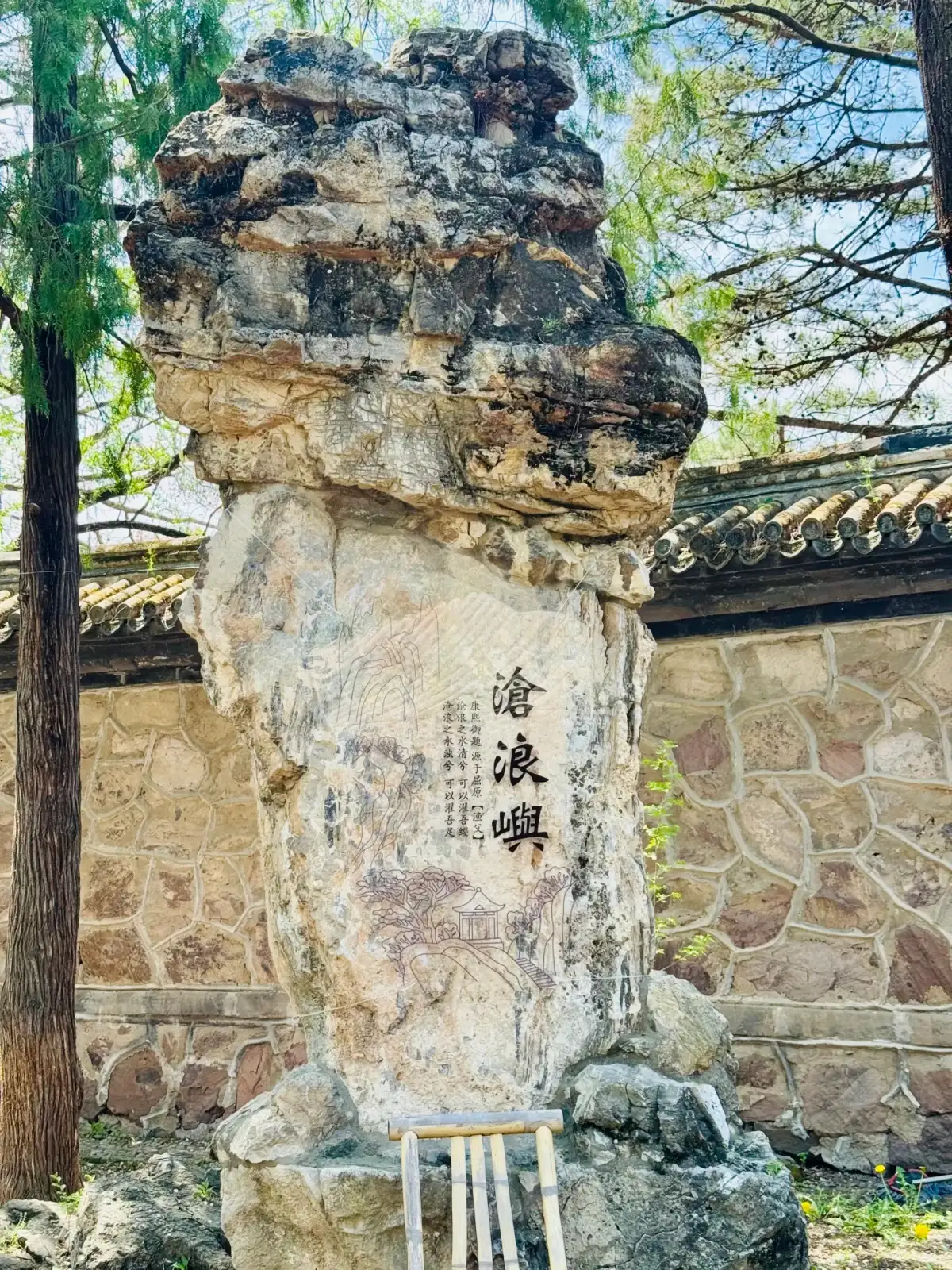
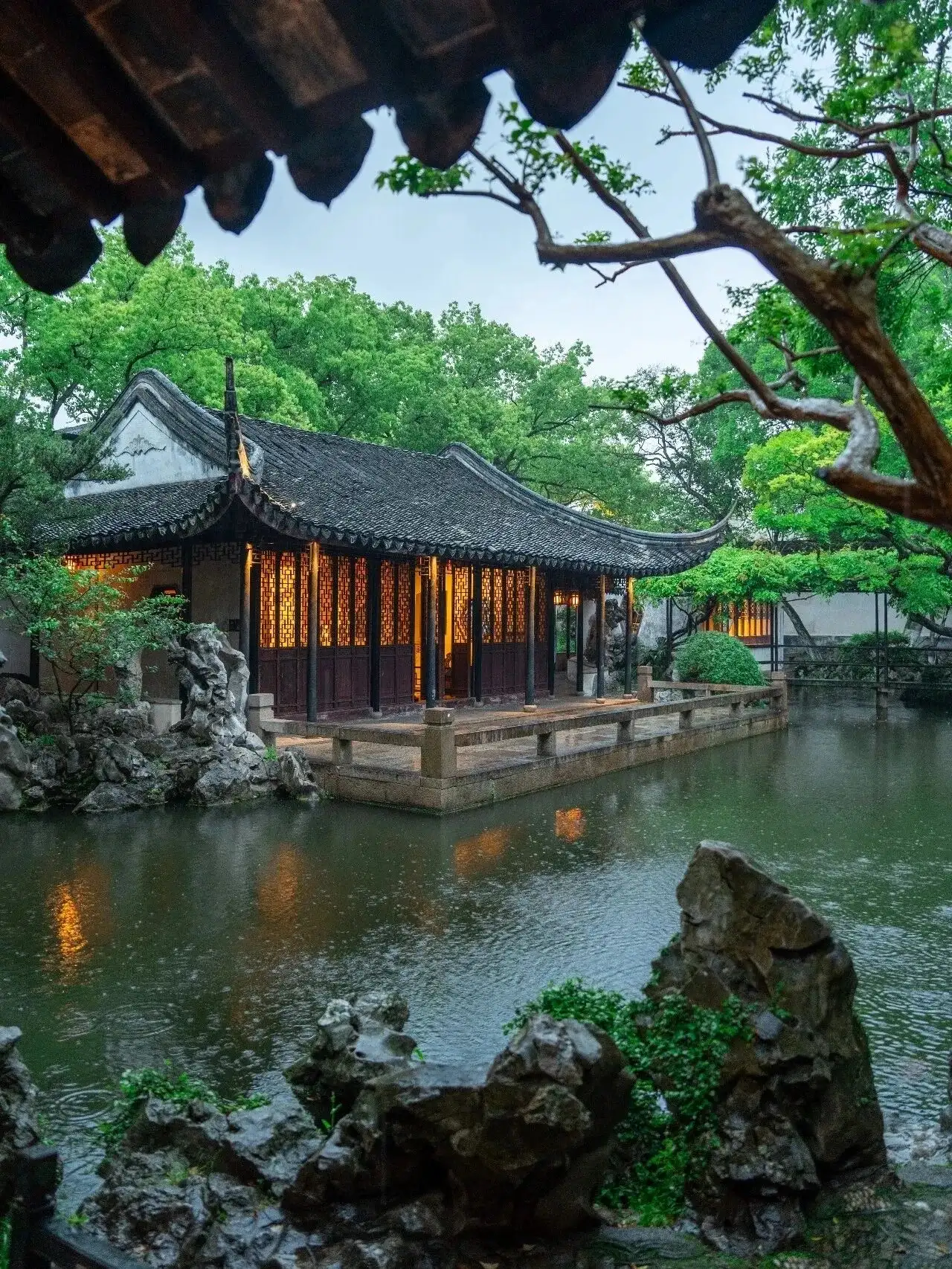
A stone carving inscribed with the characters for “Canglangyu” and a garden wall. Image source: Xiaohongshu · October
A bend in the lake’s surface can alter the appearance of the same pavilion
The lake area of the Mountain Resort is best explored by following the shoreline rather than checking off a list of attractions. As you walk along the water, pavilions and towers sometimes appear on the opposite shore, sometimes are obscured by tree branches, and then reappear after rounding a bend. Their positions remain unchanged, yet the foreground and sense of distance are constantly shifting. You might choose a distinctive lakeside building and view it from three different vantage points: first, to take in its outline; second, to observe its reflection; and third, to see how it connects to the path.
the water’s edge doesn’t require visitors to keep moving forward. Sitting down to watch the wind scatter the reflections can also become an important part of this journey. The islands, bridges, and narrow stretches of water along the lakeshore create a landscape with subtle, nuanced variations; if you walk too quickly, these changes will be compressed into a generic impression of a garden. When encountering railings or enclosed areas near the water, stay within the designated pathways—don’t assume that getting closer to the water for a photo is essential for a better viewing experience.
offering a view of the hillside, which provides a rich backdrop for the garden
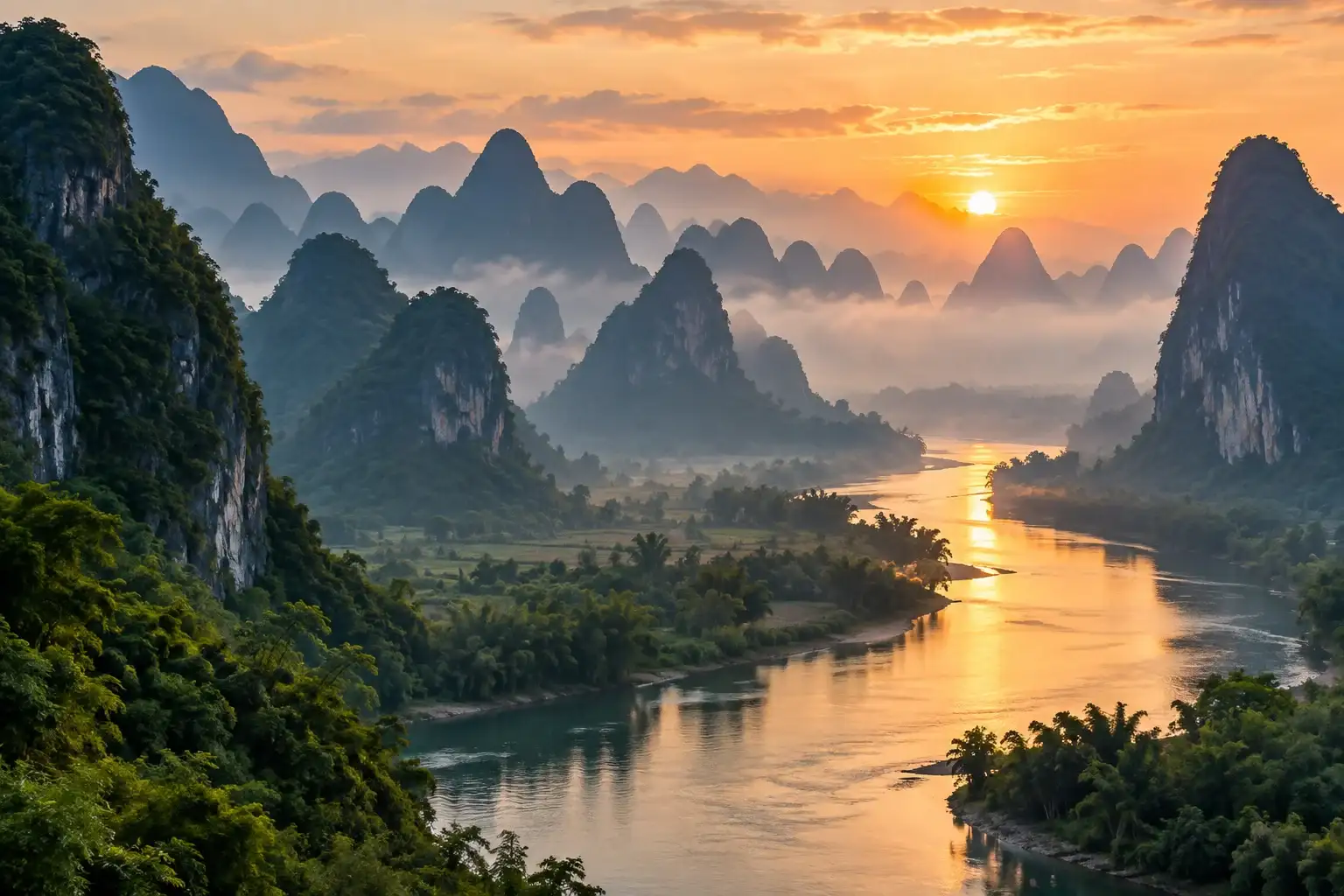
Chengde’s mountainous backdrop ensures that the lake area isn’t confined to a flat plane between water and shore. Forest-covered slopes in the distance, eaves up close, and the water’s surface right before your eyes all enter your field of vision simultaneously, with each of these three layers offering distinct colors and textures. On clear days, the contours of the hillsides are sharp; on overcast days, a continuous, soft palette of green and gray emerges. First, establish this impression from the lakeshore, then decide whether the mountains are worth including in that day’s itinerary.
Viewing the Summer Palace from higher ground is not the same as a leisurely stroll along the lakeshore. For certain distances, slopes, and access arrangements, you’ll need to consult the park guide; don’t assume you can head up the mountain at any time just because a line appears on the map. When choosing a higher vantage point, confirm your route back to the exit in advance. If the mountain trails are temporarily closed or you’re not feeling up to the hike that day, continue exploring along the lakeshore to find gaps between the slopes and rooftops—you can still make the terrain itself the focus of your experience.
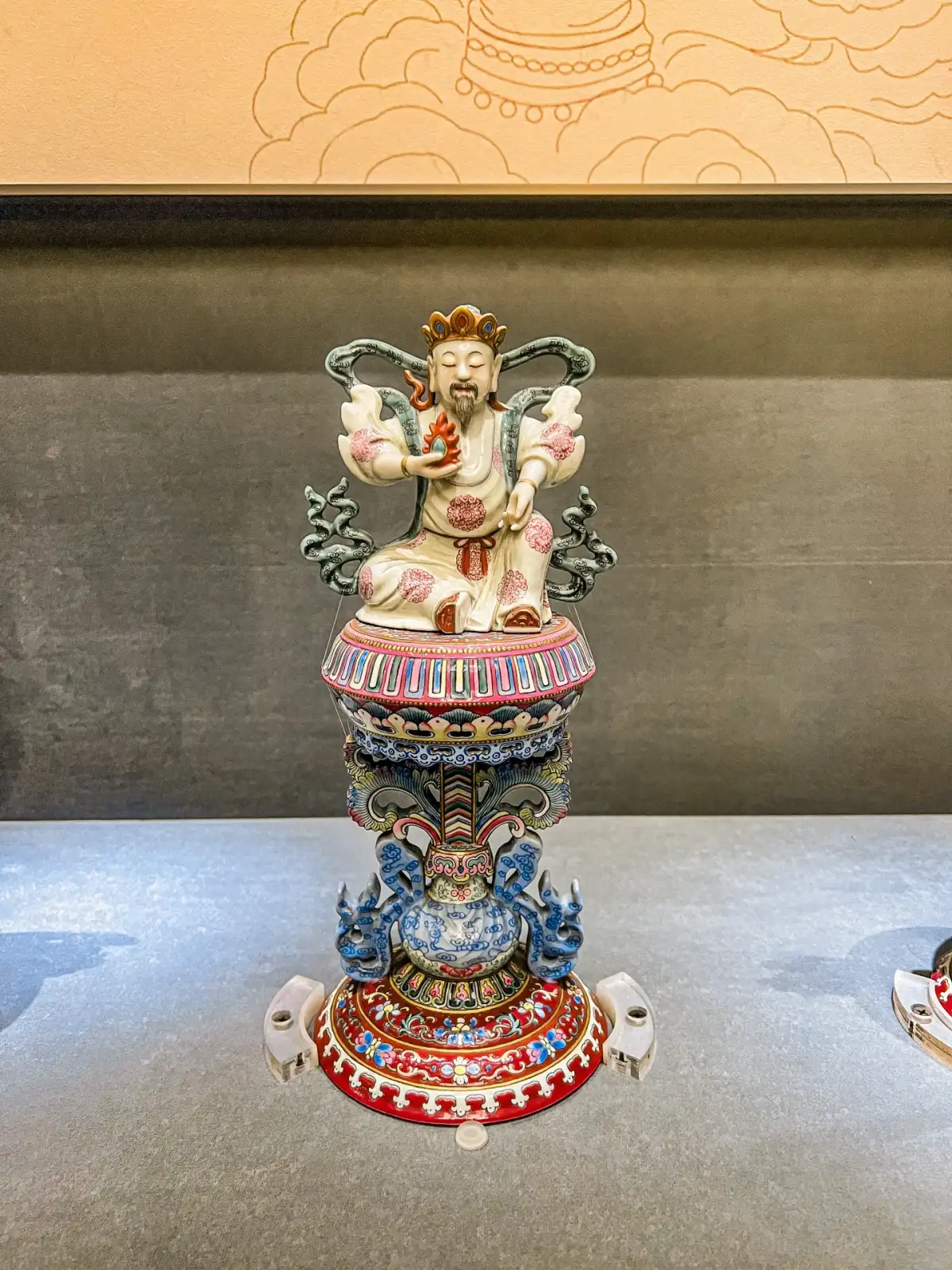
Colored porcelain and figurines on display at the Mountain Resort. Image source: Xiaohongshu · Ni Ni Jiang
a stretch of tree-shaded path from an open courtyard to help discern the garden’s balance of density and openness
While the open water surface by the lake is the easiest subject to capture with a camera, the paths through the woods better illustrate how the garden breathes. Emerging from the dense cluster of tree trunks, the lake suddenly widens; turning from the shore into the shade of the trees, the buildings appear framed within a narrower vista. You can choose a section of the forest path connected to the main route, slow down to a pace that allows you to discern the spatial relationships between the tree trunks, and then return to the lakeside for comparison.
Forests often have slippery patches, fallen leaves, or uneven ground; don’t assume the path is easy to walk just because it’s shaded. Choose spots that don’t obstruct others’ passage when stopping, and maintain a safe distance from ancient trees while observing them. If traveling with children or the elderly, save this section for after the architectural tour, opting for a gentle stroll instead of adding distant attractions to the itinerary. You don’t necessarily need a café to set the pace of your trip; tree shade, a place to drink water, and a chair to rest on can also help you refocus.
Looking at the temples from an open courtyard does not mean you have already visited the Eight Outer Temples
The temples on the outskirts of the Mountain Resort form an important part of Chengde’s historical landscape, but they have their own separate entrances, tour routes, and time requirements. Spotting a distant building from within the garden merely means it has come into view; it does not count as having visited that particular temple. If you’re interested in different architectural styles, set aside a separate, full itinerary to explore one temple in depth, rather than rushing from one entrance to another after your visit to the Mountain Villa.
This boundary also affects photography. Buildings in the background can serve as spatial references, so photo captions should specify that the view is from a distance; do not label a photo of the Summer Palace’s lakeshore as the interior of a temple. For international visitors, Chengde’s palaces and temples offer a gateway to China’s diverse architectural traditions; however, specific religious and ethnic histories should be understood in conjunction with official explanations, rather than generalized based on roof colors or a single online headline.
Organize transportation within the garden and city transportation into two separate tables
Intercity trains, city shuttle buses, and park transportation each cover a specific leg of the journey. When booking accommodations in Chengde, establish a three-point relationship between your actual arrival station, the park entrance, and your departure station to avoid focusing solely on “proximity to the Mountain Resort” while overlooking your check-in and departure arrangements. Whether to use transportation within the park should be confirmed based on the day’s operating routes and service information; station locations, fares, and schedules listed in outdated travel guides are not guaranteed.
The Mountain Resort is vast, so it’s best to plan your exit before entering: determine your exit point, set a latest departure time, and allow extra time for navigating the park paths and locating your vehicle. International visitors should verify passport information, applicable entrances, and ID requirements when purchasing tickets or making reservations. Confirm your purchase method, identification documents, and arrival time, and have your transportation service plan your in-park route for the day. By following official announcements and adapting to actual operational adjustments on the day of your visit, you can ensure a leisurely experience within the park.
On cloudy days, in summer, and during the cold season, there are distinct main routes to follow
In summer, it’s best to center your route around tree shade and minimize prolonged exposure to direct sunlight on hot, sunny days; on overcast days, the lakeshore offers gentle architectural reflections and layered views of mountains and forests—there’s no need to wait for the sky to clear; during the cold season, focus on the lines of branches and eaves, and check in advance whether the lakeshore paths, facilities, and mountain trails are open. While conditions may be right for snow, rime, and ice landscapes, the beauty captured in photographs does not guarantee that the location is safe to approach on any given day.
What this article suggests is not to “conquer” the Summer Palace in a single day, but to make several distinct transitions between the palaces and the lakeshore, the forest paths and the hillsides. If, by the end of your journey, you can still recognize that pavilion by the water you saw earlier and understand the direction of the mountains behind it, you will have gained a memory of Chengde that is far more meaningful than a mere checklist of attractions. The next time you visit the Eight Outer Temples, you’ll already have a foundation for understanding the terrain and architecture.
Further Reading and Reference Sources
Compiled and organized by the Dongxing Travel Editorial Department based on publicly available travel notes and listed information. Intended for pre-trip reading; this is not a personal account of the experience. Please verify opening hours, transportation, reservations, and service arrangements according to your actual travel dates.
Ni Ni Jiang · Truly a royal selection—the scenery at the Mountain Resort is absolutely stunning
October · Stealing Half a Day of a Jiangnan Dream
UNESCO: Mountain Resort and its Outlying Temples, Chengde
Is a visit complete without climbing higher?
A Chengde Mountain Resort route can focus on the palaces and water without making a hill climb the sole goal. A Mountain Resort lake walk lets you compare a pavilion's changing view around a bend, while shade and open water reveal the garden's density. If interiors interest you, protect time for displays and follow with a shorter lakeside return.
What follows a distant temple view?
Chengde mountain views add terrain to the lake setting, but seeing outer temples from afar is different from visiting them. Give the Outer Eight Temples a separate transport and visiting plan instead of adding every site after an extended garden walk. Allow time separately for movement within the resort, rest and return to the city so the route can respond to weather and energy.
Planning references