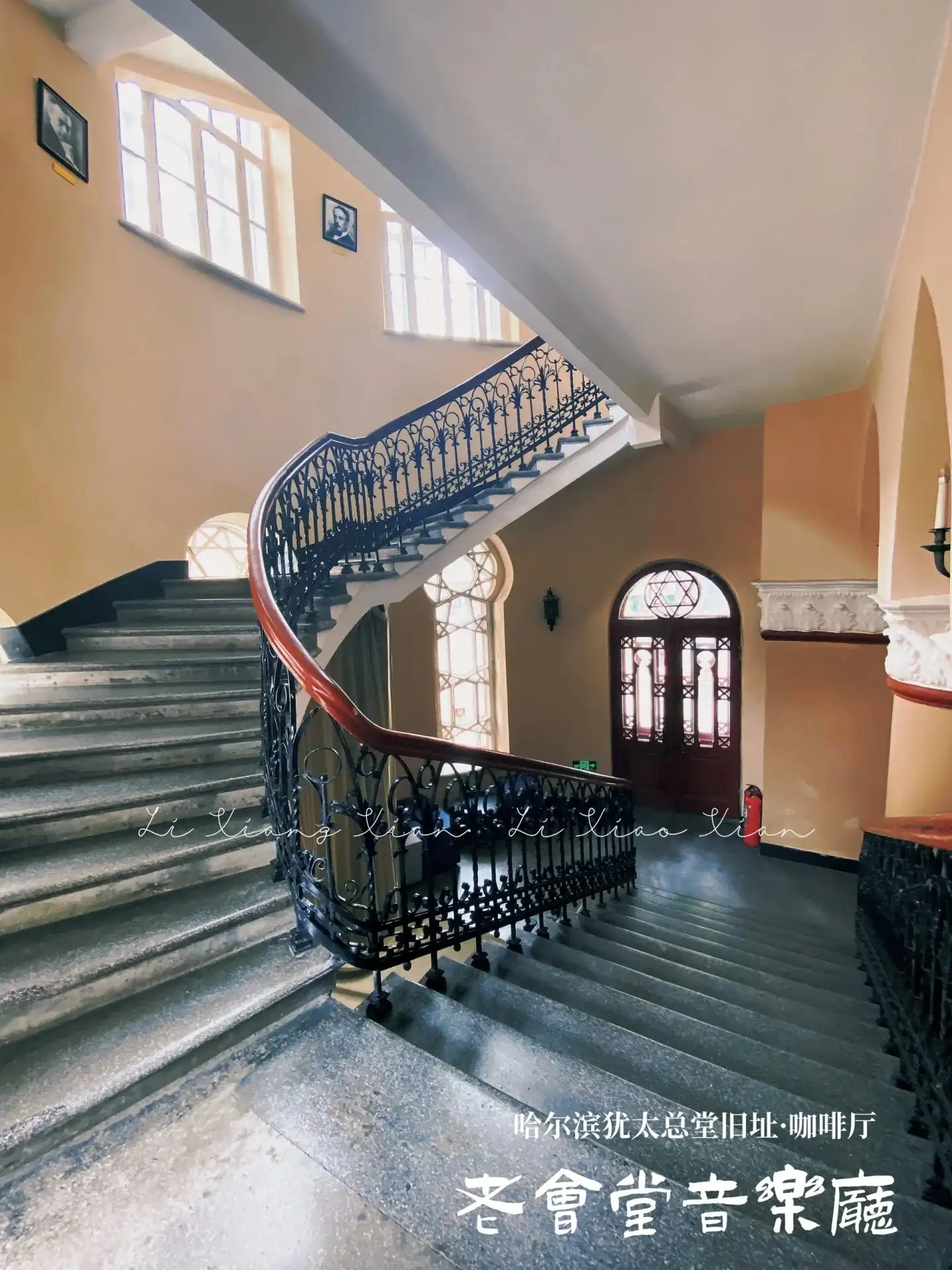
of Harbin’s musical character can stem either from a performance or from the way a building has been repurposed. The Old Hall on Tongjiang Street and the New Hall on Jingwei Street have similar names but should not be treated as the same destination. The former is now included in travel itineraries for cultural purposes such as a concert hall, while the latter is associated with exhibitions on Jewish history. By distinguishing between them, a city walk can evolve from simply photographing exteriors into two distinct ways of experiencing the city.
小红书作者“李小闲”记录老会堂的楼梯、窗户与音乐空间,也提到附近历史展示的兴趣;“无主线玩家”则将犹太博物馆作为认识城市文化的一站。两份观察把美感与历史放在一起。本文从这条线索展开,旧笔记里的餐饮、免费活动、开放时刻与步行用时并不被当作当日保证。
First, add both addresses to the map
Harbin Municipal Committee of the Chinese People’s Political Consultative Conference’s heritage records list the Old Synagogue at 82 Tongjiang Street and the New Synagogue at 162 Jingwei Street separately. When planning your itinerary, keep the full Chinese names and addresses on hand to avoid searching for the “Jewish Synagogue” and ending up at the wrong location. This is especially important when arranging transportation or booking activities; the building name, actual entrance, and meeting point should all match. This is more reliable than sending a driver a photo of the exterior without any text.
can be discussed in relation to the same cultural theme, but their specific functions determine different ways of engaging with them. Musical events have programs, start times, and audience arrangements, while historical exhibitions require reading and guided commentary. Don’t plan them together as a half-day city tour where you can just walk in and enjoy a performance at any time, only to discover on-site that the activities you need are different. First, decide whether you want to listen or read that day, then plan your itinerary accordingly.
For inbound tourists, this distinction is even more important to communicate in advance. If the English names of concert halls and history museums retain only the buildings’ former designations, visitors might mistake them for the same type of religious site. Explaining the original community use and today’s cultural function both respects history and aids in implementation. A building’s identity can exist on multiple levels; there is no need to use a single term to encompass all periods of its history.
Old Town Hall: New Sounds Enter an Old Space
cultural and tourism introduction traces the Old Synagogue’s history as a vital hub for the Jewish community, as well as its subsequent changes in use, restoration, and reopening as a concert hall. During the visit, this historical context helps us understand the concept of adaptive reuse: the old building retains a recognizable exterior and spatial layout, while continuing to be integrated into urban life through contemporary cultural activities. It is not a massive exhibit detached from practical use.
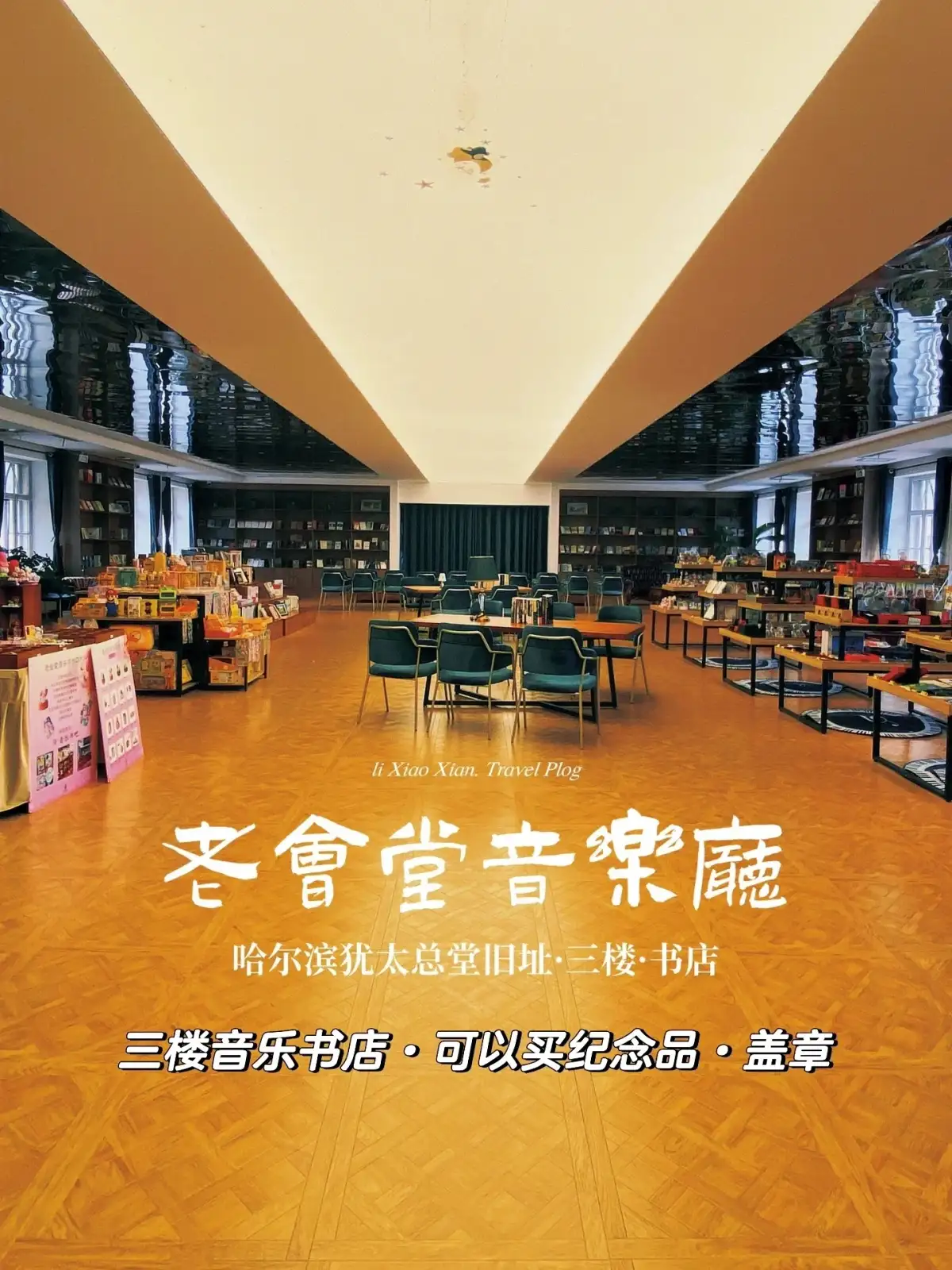
A long indoor space formed by bookshelves and tables and chairs. Photo:Li Xiaoxian · Original Post.
If you plan to listen to music that day, focus on the actual performance schedule and save architectural observations for before or after entry. Sound offers a different way of experiencing a space: how the stage relates to the audience, how distance affects concentration, and how silence allows subtle expressions to emerge. Without actually listening to a performance, one shouldn’t judge the acoustics based solely on the roof and walls; the performance itself deserves your full attention, rather than being treated merely as a backdrop for photos.
If you’re only visiting the open areas, start by examining the windows, staircases, and the relationship between floors. The original post by “Li Xiaoxian” focuses on these specific details, illustrating that a building’s appeal lies not solely in its facade. Observing how light filters through openings, how staircases organize movement, and what people see at different heights can transform a brief stop into a meaningful spatial experience.
Seeing the Restoration, Seeing the Passage of Time
historic building has been restored, and what you see today incorporates both its historical features and later renovations. While exploring, ask yourself which parts reflect the original function and which support today’s activities, then learn more from the on-site explanations. If you imagine the entire building as it was a century ago—unchanged—or treat it merely as a beautiful new venue, you’re likely to lose sight of the layers of time. Reuse is precisely what makes these layers visible.
Travelers can also understand this from their own experience: when a building is reopened to the public for a new purpose, memories are reimagined in new ways. Music does not replace the original history, nor does history hinder today’s cultural activities. The two are interconnected, bringing the building back from old photographs onto the city streets. Paying attention to changes in function while viewing can make the details of restoration and renovation more concrete.
New Hall: Leaving the Architecture to History to Interpret
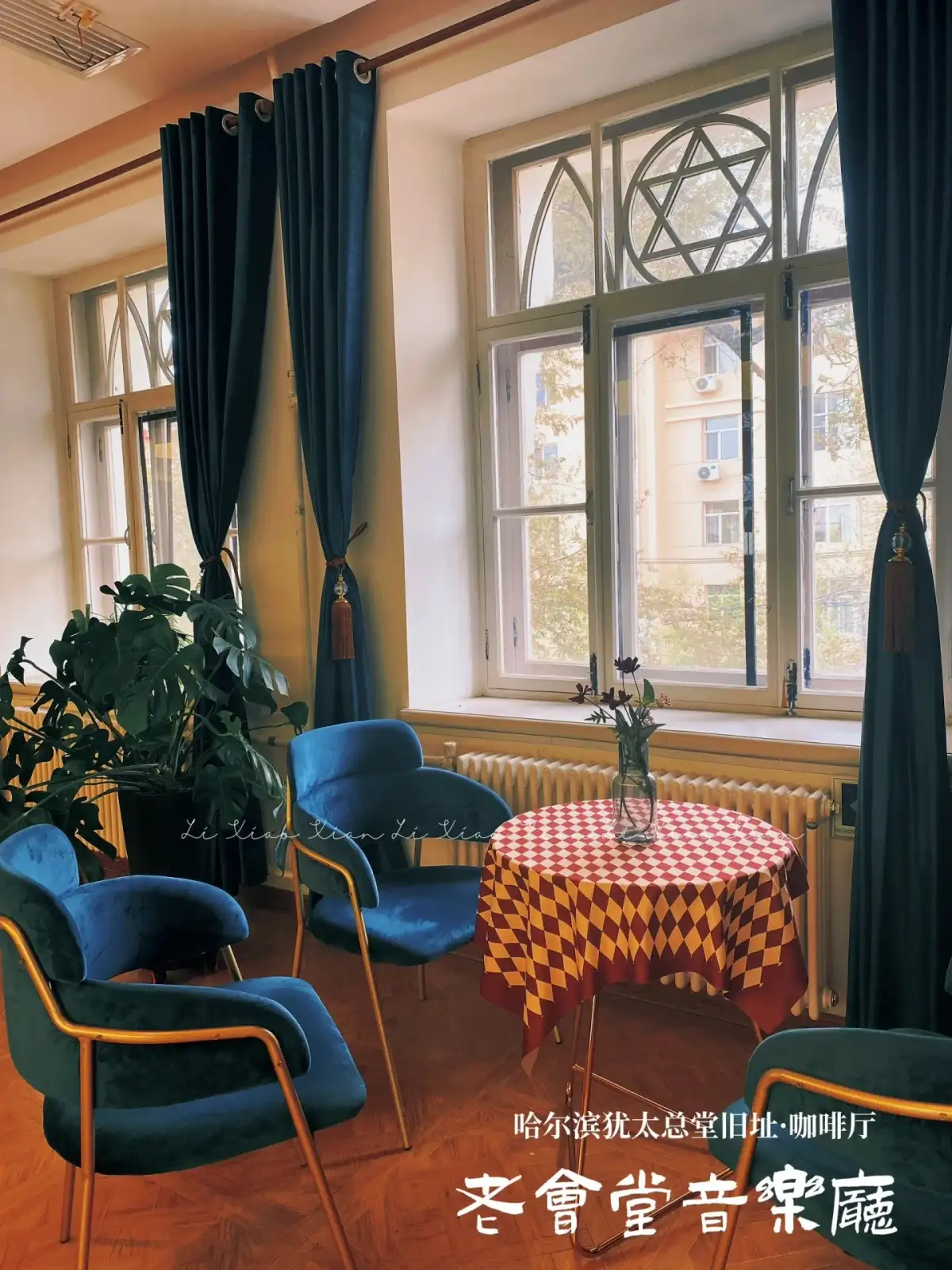
Tables and chairs by the window with potted plants. Photo:Li Xiaoxian · Original Post.
The community heritage research institute introduces the Xinhui Hall’s current use as a history museum. Once here, the focus can shift to how a community lives: education, commerce, cultural activities, and the relationship between people and the city. Images and materials need to be interpreted within their context; a single photograph of a person is not enough to tell a complete historical story. Allow time for reflection, so that the stories within the architecture can gradually take shape.
visitors can start by finding a thread that interests them and then see how it unfolds within the exhibition. Music lovers should explore “Education and Culture”; city enthusiasts should explore “Community Spaces”; and those interested in family history should pay attention to “People and Daily Life.” Different threads do not have to be covered in a single visit. Focusing on one thread at a time makes it easier to remember real people and events than rushing through all the introductions.
When reviewing biographical materials, it’s also worth avoiding the temptation to reduce an entire group to a single label. A community is made up of people with different professions, family backgrounds, and personal experiences, and historical displays help us recognize these differences. While buildings serve as shared spaces, the lives of their members follow distinct paths. Carefully reading a single, well-sourced account brings us closer to history than covering everyone with a single, sweeping emotional narrative.
How can these two locations be combined into a meaningful itinerary?
If the focus is on community history, visitors can first view the historical exhibits, then go to the old synagogue to observe the building’s adaptive reuse; the latter allows the city’s history, which was just read about, to take on its contemporary form. If the focus is on music, organize the day according to the actual performance schedule and set aside a separate time slot with full attention for the historical tour. Do not limit your visit to both sites to brief photo stops just to fit everything into a single day.
walking itinerary should take both the weather and your travel companions into account. Outdoor transitions in Harbin’s winter, summer walks, and indoor reading sessions each require a different physical rhythm. Clearly plan rest stops and meeting points to avoid having elderly family members stand at the entrance waiting for another group to finish taking photos. If you choose a shuttle service, send the staff the full addresses of both locations and the order of visits so that the cultural theme can be translated into a practical, executable itinerary.
For visitors with limited Chinese reading ability, prepare keywords such as “community,” “synagogue,” “restoration,” “performance,” and “exhibition,” and inquire in advance about actual language support. Historical content requires explanation; English names on maps cannot substitute for a comprehensive guided tour. If hiring a consultant, specify whether the focus is on architecture or community history, giving the organizer the opportunity to select truly relevant guided tours rather than defaulting to just the popular exterior sightseeing spots.
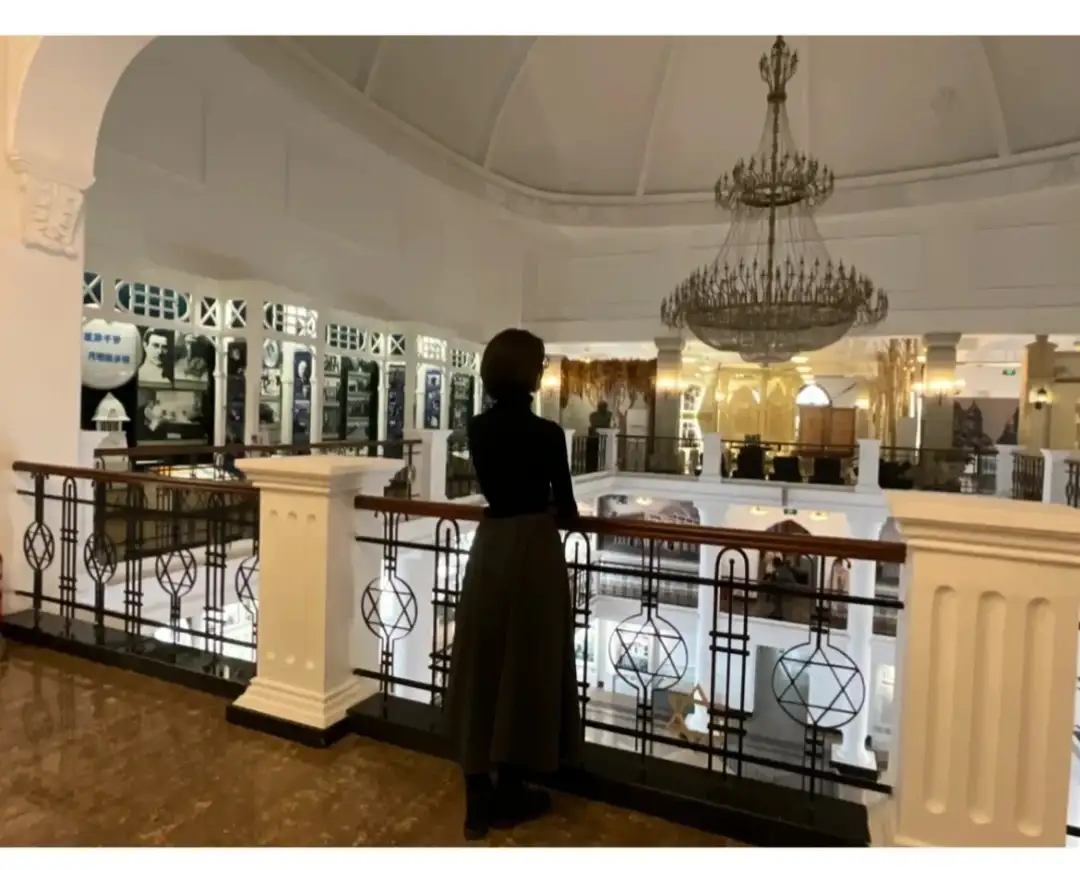
A visitor’s silhouette between a chandelier and an exhibition wall. Photo:No Main Story Player · Original Post.
Beyond a photo of the exterior, what else can they take away?
It is recommended to include three types of documentation: details of the space related to its former use; an observation describing its current function; and information about a figure or way of life featured in the exhibition. These elements give the journey three dimensions: architecture, usage, and history. Each photo need only correspond to one of these aspects; there is no need to repeat every angle, nor is it necessary to interrupt a performance or other visitors’ reading.
Even if you visit only one of these sites, you can still have a meaningful experience. The Old Synagogue offers a repurposed cultural space, while the New Synagogue provides a framework for exploring history. Leaving one unvisited as something to look forward to for your next visit is far more meaningful than cramming today’s itinerary into a rushed tour of landmarks. With clear choices, your city walk won’t end up being nothing more than the name of a pretty building.
This SiteHarbin Destination Guidecan help contextualize this cultural route within the city as a whole, allowing for comparisons with other neighborhoods and seasonal experiences. For private, customized tours, the two venues are best suited as a specific thematic focus rather than a fixed item included by default in every itinerary. Once the actual programs, opening hours, and reception arrangements are confirmed, they can be incorporated into the day’s schedule.
Harbin’s music and history converge here, yet each demands serious attention. Listening to a live performance, reading a piece of context-rich material, and observing how architecture accommodates contemporary life—such an itinerary transforms the city from a stylized photograph into a tangible reality. The differences between the two concert halls thus serve as a gateway to understanding Harbin.
Source and Editorial Notes
This article is an original travel analysis compiled by the Dongxing Travel editorial department based on the listed information; it is not a firsthand account by the author. The full text of the original post has not been reproduced; accompanying images are used within the scope of authorization and are credited to the author and the source of the original post. They do not serve as proof of actual travel experiences or services provided by Dongxing Travel.
Li Xiaoxian · Little-Known Niche Art Museums · Old Assembly Hall Concert Hall · Travel Notes; Verified/Organized on: October 3, 2026.
Off-the-Beaten-Path Explorer · Near Harbin’s Central Street—Jewish Museum · Travel Notes; Verified/Organized on: October 3, 2026.
Beijing Culture and Tourism Information Platform · Introduction to the Old Hall Concert Hall · Official materials; Verified/compiled on: October 3, 2026.
Harbin Municipal Committee of the Chinese People’s Political Consultative Conference · Harbin Jewish Heritage Preservation and Research Materials · Official materials; Verified/compiled on: October 3, 2026.
Chinese Jewish Institute · Harbin Heritage Tour · Official materials; Verified/compiled on: October 3, 2026.
Music or historical interpretation?
The Harbin Old Synagogue and Harbin New Synagogue have different visitor themes. Plan around the actual programme if music is your priority; allow quiet exhibition time for Harbin Jewish history. Confirm both addresses and current access rather than navigating with the generic word synagogue.
When there is no performance
Facades, restoration details and scale can still support an architectural visit, subject to access rules. Treat architecture, music and exhibitions as separate aims. Check photography notices and preserve the religious and historical context when interpreting the spaces.
Planning references