all allow one to experience the evolution of spatial language within a single site.
There are many temples around Chengde, and travelers often first wonder how many they can visit in a day. If your interest lies in architecture, you might reframe the question: Within a single temple, how can you perceive the interconnections between different architectural forms? Puning Temple provides a very clear entry point. According to the Chengde Municipal Bureau of Cultural Relics, the front section is in the Han style, while the rear is in the Tibetan style. This basic context makes the walking route part of a cultural experience; visitors not only view the architecture but also experience the gradual evolution of the spatial language.
The Xiaohongshu post “A Day Exploring Chengde’s Eight Outer Temples” highlights the viewing highlights of different temples, while “A Trip to Chengde: This Place Is Simply a Perfect Political Machine” focuses on the relationship between the surrounding temples and the imperial mountain resort. Based on this, this article focuses on a single architectural theme and does not adopt the original post’s fixed time estimates, ticket prices, or assessments of current accessibility. Information on architecture and historical functions is based on materials from the Chengde Municipal Bureau of Cultural Relics, while the actual visit follows the on-site tour route.
First, let’s examine how the entrance and courtyards guide visitors forward
In the Han-style architectural section, one can begin by observing the relationship between the gate and the courtyards. How does the entrance focus the viewer’s gaze? How does the next focal point emerge after passing through a space? What are the differences between the building’s front and side views? These questions do not require prior familiarity with all the technical terms, yet they shift the focus of the visit from “what is seen” to “how one is guided to view it.” A person’s movement through space thus provides the first clue to understanding the architecture.
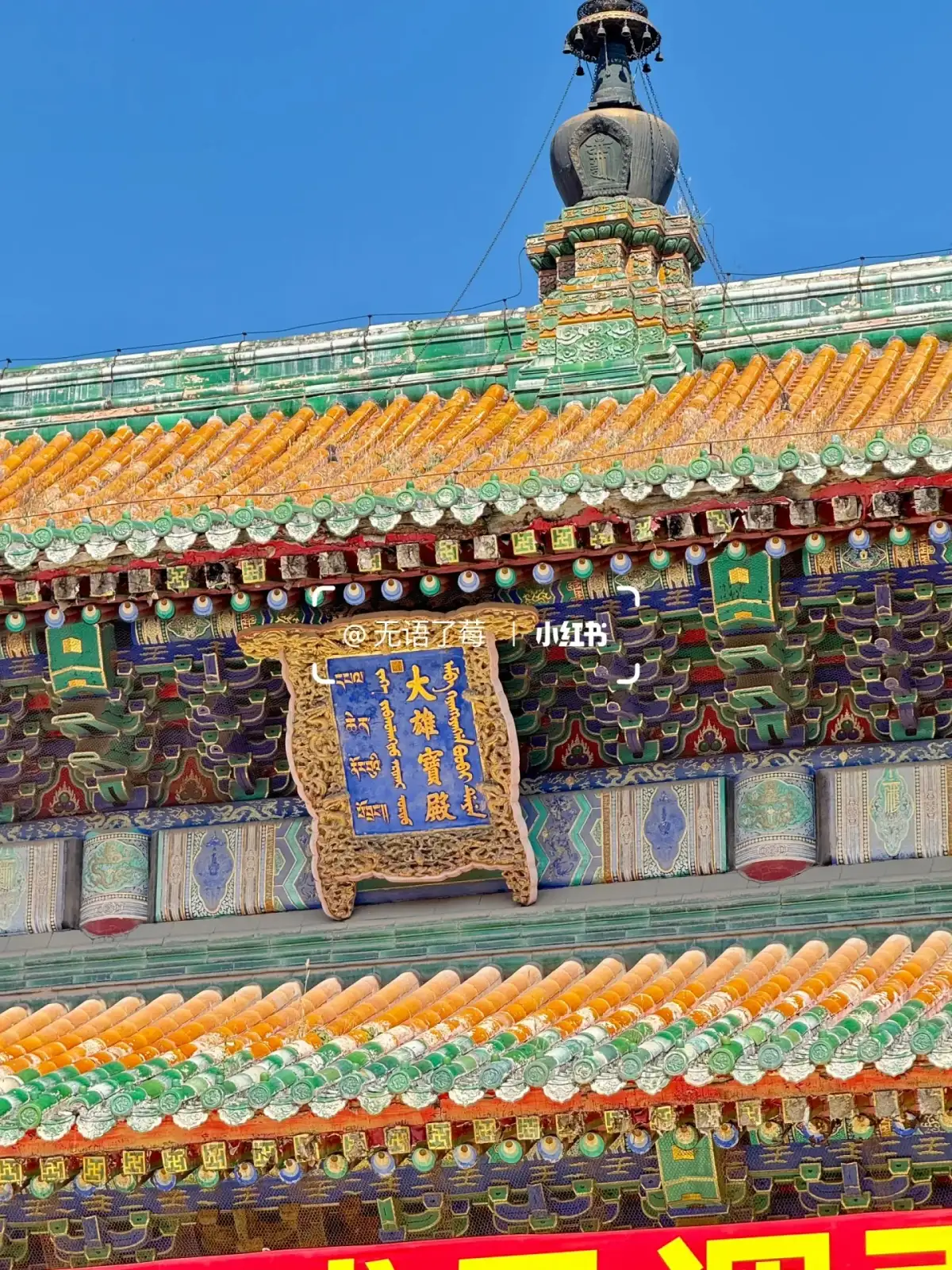
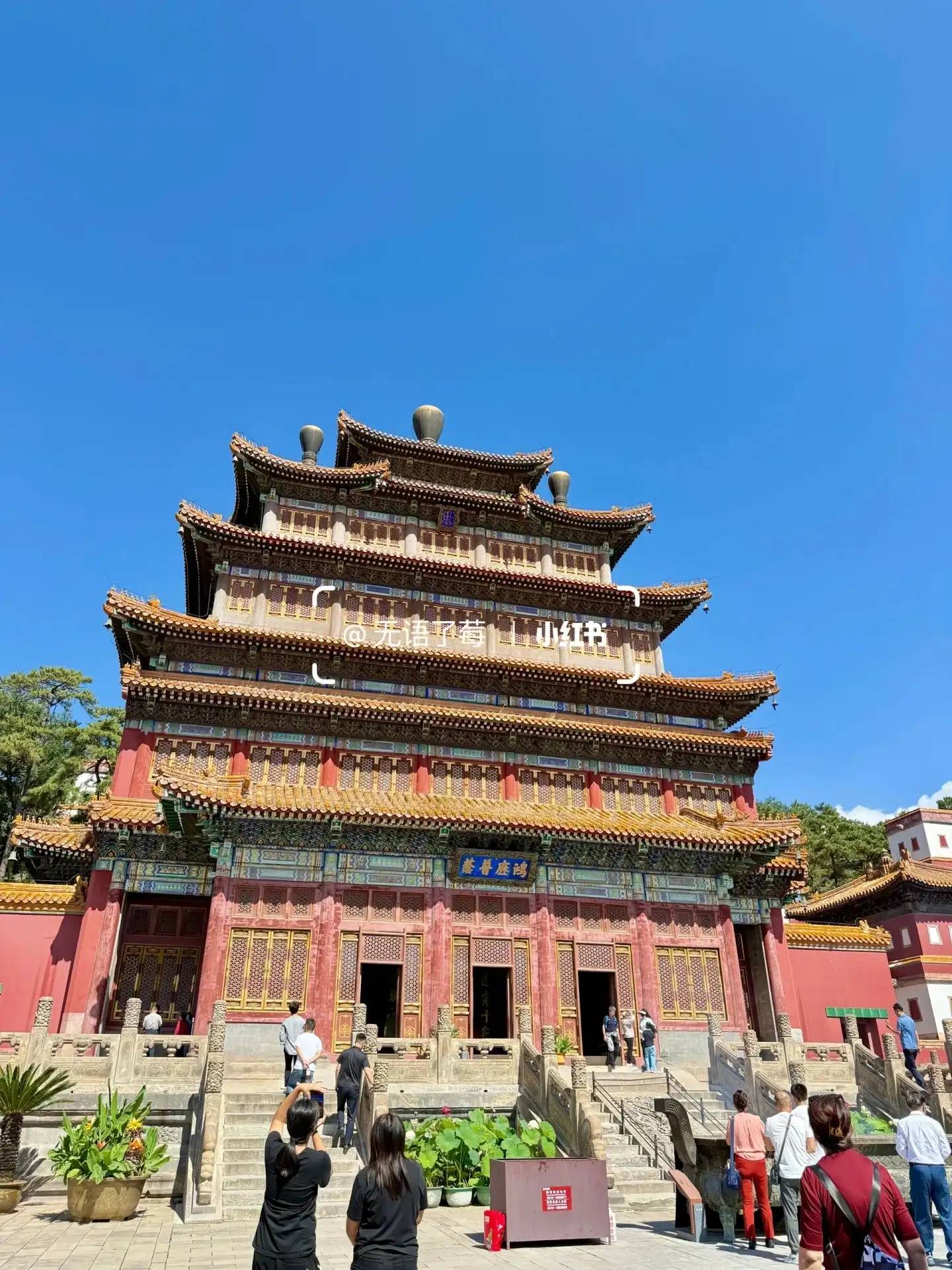
colorful glazed tile eaves, painted beam frames, and blue-background plaques. Photo:Xiao Yu Diao Mao · Original Post.
Those who appreciate roofs should pay attention to the overall silhouette and the shadows cast beneath the eaves, while those interested in spatial composition can observe the distances left between buildings. These two interests converge within the same courtyard: the roof is not an isolated motif but works together with the walls, the ground, and the forms across the way to shape the environment. Choose a spot that’s normally open to the public; first take in the wide view, then examine the details. This allows the details to retain their context, preventing them from becoming mere pretty fragments in a photograph with no sense of place.
When visiting with children, you can first ask them to find “the next thing that draws me forward.” It might be an archway, a roof, or some other elevated feature. Have them share their discoveries, then compare them with the adults’ observations—this turns the tour into a shared experience. Here, the sequence of the architecture becomes a tangible experience rather than a concept that can only be explained through a professional lecture, making it easier for children to maintain their interest and engagement.
changes in the rear sections require looking back and comparing to be fully appreciated.
descriptions of the Han-Tibetan architectural synthesis in the Cultural Relics Bureau’s notes provide a framework for further observation. Upon reaching the rear section, visitors can recall their spatial impressions from the earlier part of the tour and then note how the forms, layers, and focal points of the view change. Specific building names and their meanings will be gradually introduced through on-site commentary; by first clarifying the visual relationships, the cultural information will have a clear point of reference. The juxtaposition of different architectural forms within the same monastery is precisely the aspect of this site most worthy of close examination.
comparisons can be made using a clear framework—for example, how the architecture appears imposing, how the main structure is arranged relative to its surroundings, and where the gaze naturally rests. By examining the front and rear spaces within the same framework, we can highlight their differences rather than simply noting that the rear is more distinctive. These differences do not necessarily imply a hierarchy; the two spatial segments can each fulfill their own functions, forming a complete relationship as one moves through them.
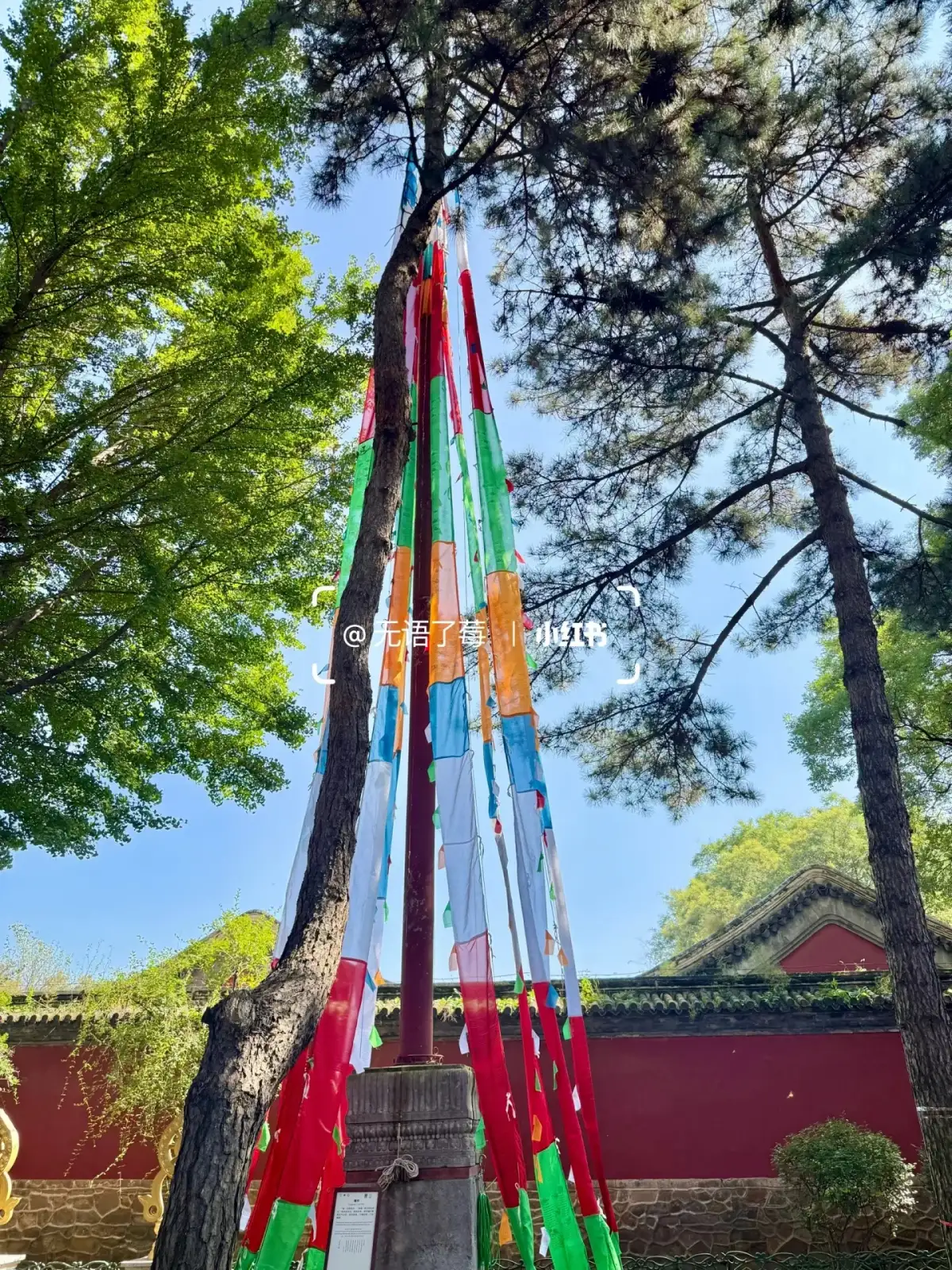
Colorful, long banners hanging beside the pine trees. Photo:Xiao Yu Diao Mao · Original Post.
For international visitors coming to China for the first time, this segment of the tour offers an opportunity to broaden their understanding of Chinese architecture. Chinese cultural spaces are not limited to a single type of roof or courtyard; regional, religious, and historical influences give rise to diverse organizational forms. Puning Temple brings this diversity together in one location, allowing visitors to begin by understanding the forms before them and gradually grasp their connection to a broader cultural context. Architecture thus becomes an accessible language of dialogue.
religious uses lend the viewing experience an additional layer of scale
Puning Temple also has a religious context, and the Cultural Relics Bureau’s site introduction incorporates this aspect into the tour. Here, architecture is not merely about appearance; how people move within it also influences the spatial experience. Visitors should pay attention to on-site signage to maintain space for worship and normal passage; when taking photographs, framing the environment and distant activities as the subject better conveys spatial relationships than close-up shots of people’s faces.
background context also makes quiet observation more meaningful. Some visitors pause to study the architecture, while others participate in religious activities; they share the same environment but have different purposes. By acknowledging this coexistence, travelers can more easily find an appropriate vantage point and adjust their volume. Cultural exploration does not require constant commentary; brief moments of silence allow one to refocus on the forms, sounds, and movements of people, revealing layers of the site that go beyond the guided commentary.
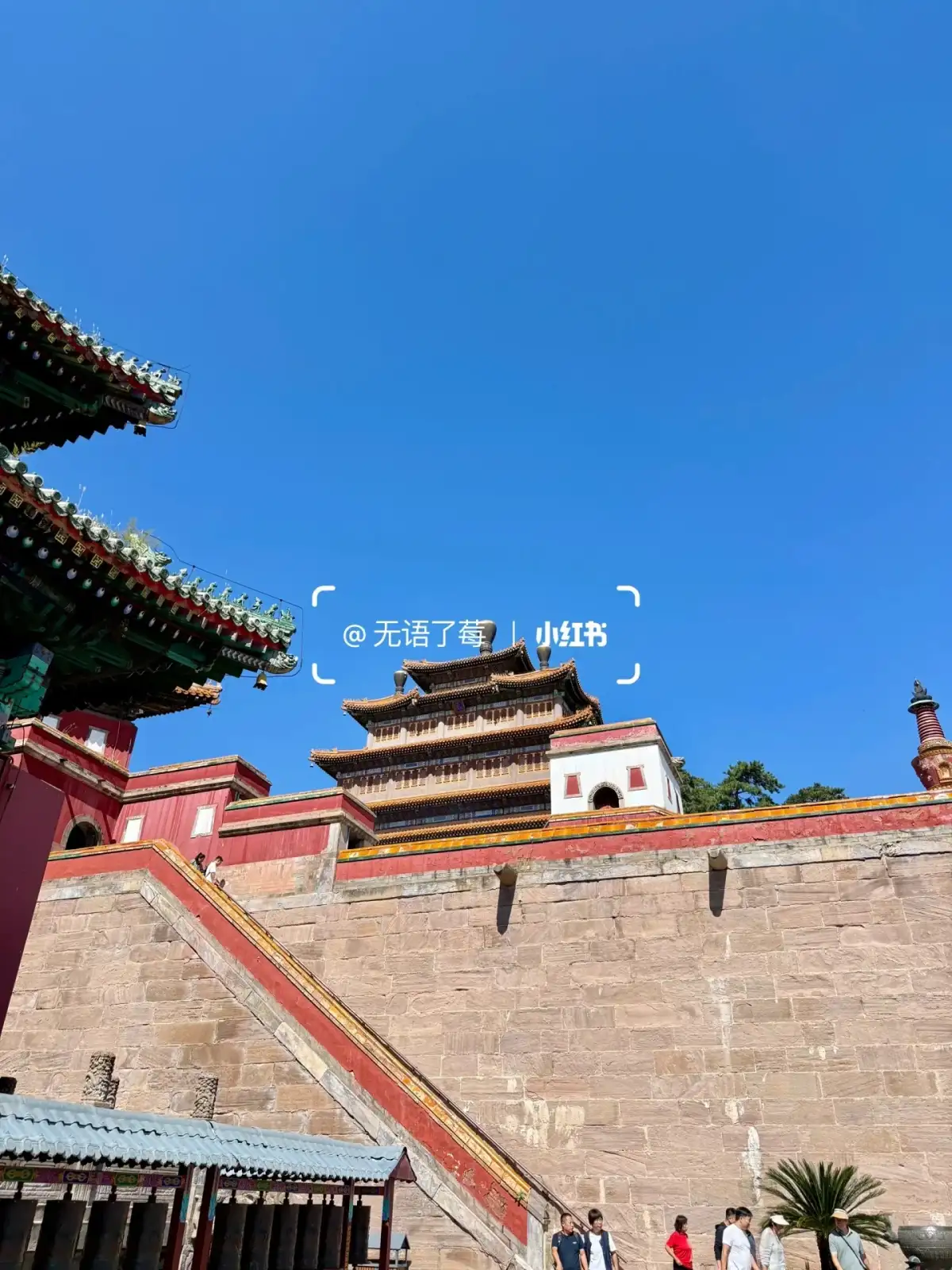
Red walls, stone steps, the upper structures, and visitors in the distance. Photo:Xiao Yu Diao Mao · Original Post.
The Cultural Relics Bureau also highlighted Puyou Temple’s historical function as a monastic academy, which raises a distinct question regarding the surrounding temple complex: temples were not merely used for ritual and symbolic expression but may also have served as centers for learning and education. Even if the actual tour does not include visits to these specific sites, this background information helps elucidate the division of roles among the temples. Different spaces collectively form a cultural system, rather than simply repeating the same architectural form.
bring us back to the overall relationship between the Mountain Villa and the surrounding temples.
After examining one area, you can consult a map to understand its relationship with the Mountain Resort and other temples. The map provides location information, while the cultural context helps visitors understand why these sites are often included together in a Chengde itinerary. History enthusiasts can go on to ask how these sites have served as venues for various activities and exchanges, while architecture enthusiasts can compare their forms and layouts. Gaining a clear understanding of a single site often provides a stronger foundation for further exploration than merely glancing at many sites in passing.
If you’d like to visit another temple, you can first compare themes before deciding where to go. For example, you might want to see how spaces are organized around different focal points, or understand how various architectural styles intersect in Chengde. A purposeful selection ensures that your second stop will complement what you learned at the first. If your energy is limited that day, you can also save the map and official brochures for later reading, allowing you to continue your comparisons on your next trip—there’s no need to cram all your interests into a single day.
create distinct entry points for different visitors.
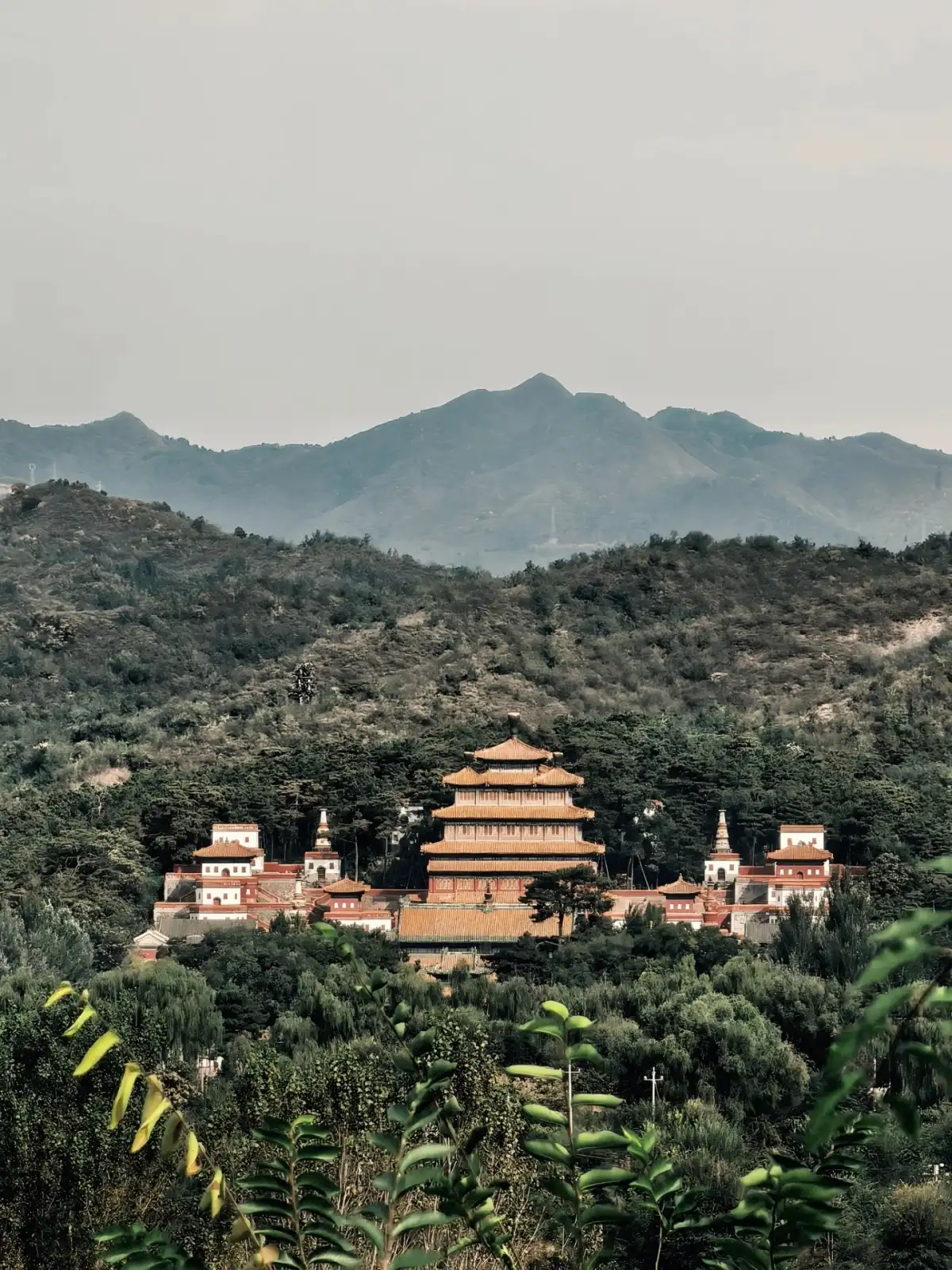
The main building with its multi-tiered golden roof, set amidst the mountains and forests, flanked by clusters of buildings on either side. Photo:Ancestor Grandma · Original Post.
Elderly visitors may be more concerned with a gentle walking pace and guided commentary, while children may be drawn to the changing spatial experiences, and photographers will want to find the right vantage points to capture the complete architectural silhouette. You can plan the central section for a group tour first, then adjust the rest of the itinerary based on the actual open route and the group’s stamina. During discussions, specify your interests and walking pace—this will yield more appropriate answers than simply asking, “How long will the tour take?” and will also help the tour guide understand who needs more time to linger.
If the group has multilingual needs, informing the consultant or tour service provider of your primary interests before the trip will help ensure the on-site commentary is more focused. Architectural names can be explained in conjunction with diagrams and the actual structures, allowing first-time visitors to follow along; those with a deeper interest in history can then ask further questions about the background. Group tours do not require a uniform level of prior knowledge; a clear theme allows people with varying levels of familiarity to share a common viewing experience.
This siteIntroduction to the Chengde Mountain Resortcan serve as a starting point for exploring the area; the specific scope of the surrounding temples can then be confirmed in conjunction with official guidelines. The value of this stop at Puning Temple lies in allowing visitors to experience the connections between architectural forms as they walk through the site, and subsequently to situate their personal observations within the broader cultural context of Chengde. Understanding this architectural dialogue provides a reason to continue exploring the city.
Sources and Editorial Notes
This article is an original travel analysis compiled by the Dongxing Travel editorial department based on the listed materials; it is not a firsthand account by the author. The full text of the original post has not been reproduced; accompanying images are used within the scope of authorization and are credited to the author and the source of the original post. They do not serve as proof of actual visits or services provided to Dongxing Travel clients.
Xiansen Doesn’t Talk About Li · A Day Exploring Chengde’s Eight Outer Temples | This Guide Explains It All‼️ · Travel Notes; Verified/Organized on: October 3, 2026.
Earth Knowledge Bureau · I took a trip to Chengde—this place is simply a perfect political machine · Travel Notes; Verified/Organized on: October 3, 2026.
Chengde Municipal Bureau of Cultural Relics · Introduction to the Han-Tibetan Architectural Fusion at Puning Temple · Official sources; Verified/Compiled on: October 3, 2026.
Chengde Municipal Bureau of Cultural Relics · Puning Temple Scenic Area · Official sources; Verified/Compiled on: October 3, 2026.
Little Fish Catches a Cat · Visiting Puning Temple in Chengde for the First Time? This Post Is All You Need · Image source: This article does not cite this post as a basis for current policies.
Grandma Zu · Free Photo Spots! Panoramic Views of Chengde’s “Little Potala Palace” and Puning Temple! · Image source: This article does not cite this post as a basis for current policies.