East Travel Editorial Department · Travel Diaries and Pre-Trip Reading
A residence preserved through poetry
When visiting Du Fu’s Thatched Cottage, one might begin with a simple question: How did a poet live in Chengdu? The name “Thatched Cottage” easily conjures images of a secluded life far from the crowds, yet Du Fu’s days in Chengdu were intertwined with family, friends, his means of livelihood, and the turmoil of the times. He arrived here during the Tang Dynasty, and during his years in Chengdu, he did not always live in the same house. Through its gardens, commemorative structures, and exhibitions, the museum before us gives this chapter of his life a form that can be explored on foot.
On your first visit, there’s no need to memorize a list of poem titles beforehand. If you know that Du Fu was a Tang Dynasty poet who made his way to Sichuan amid the turmoil of war, and then look at a single room, a stretch of water, and a grove of bamboo, the figure in the poems will easily step out of the textbook and into everyday life. His poetry depicts not only mountains and rivers, but also neighbors, daily meals, and the hardships endured in the face of wind and rain. Today, the Grass Hall features a garden layout shaped by long-term development, yet the poet’s life was filled with many moments of uncertainty. Keeping these two layers of time in mind brings you closer to the true essence of this place than simply assuming all the rustic buildings are original Tang Dynasty structures. Foreign-language readers may prepare a poem with a reliable translation, read a little less, and leave more room for the experience of the place itself.
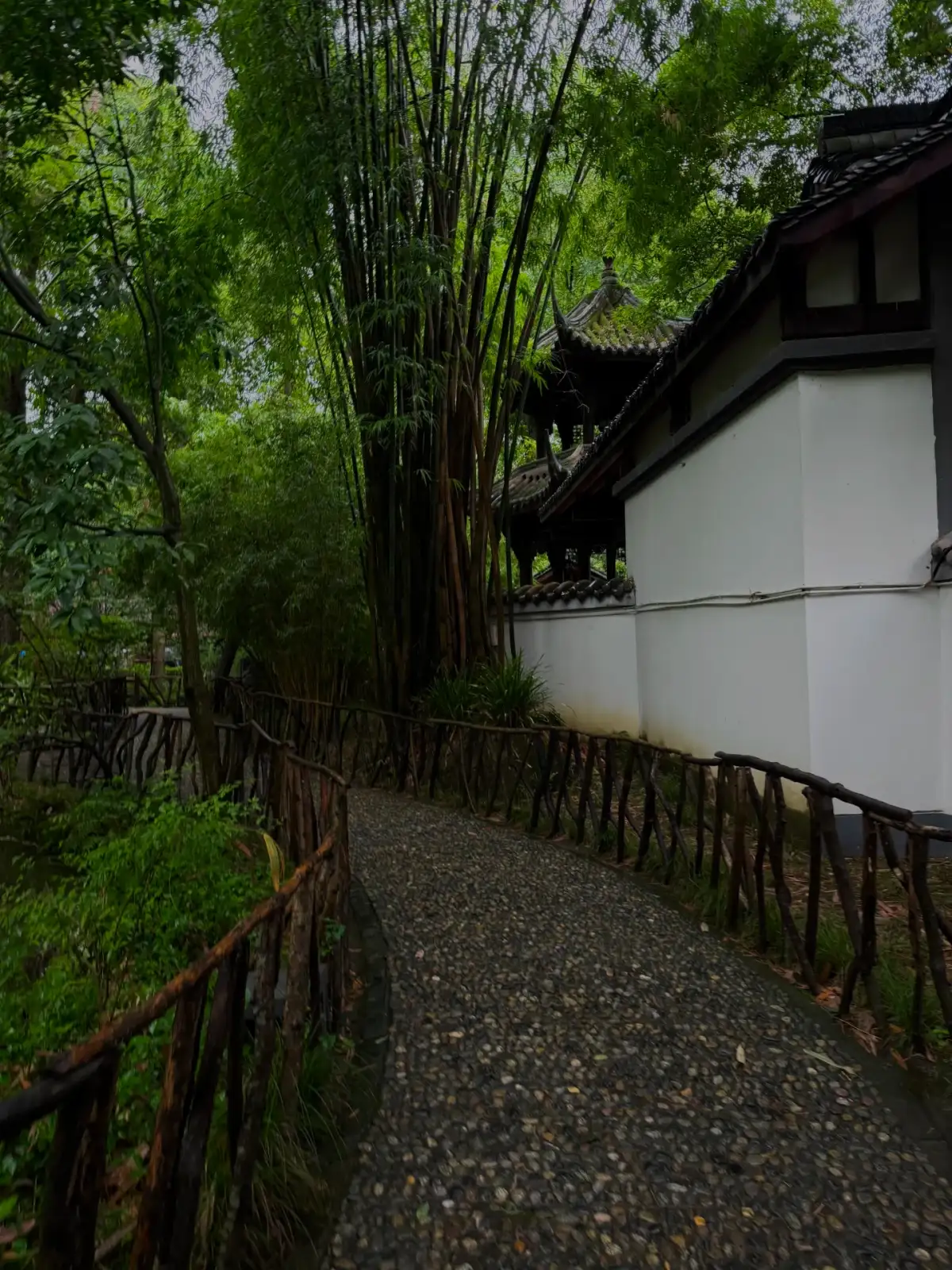
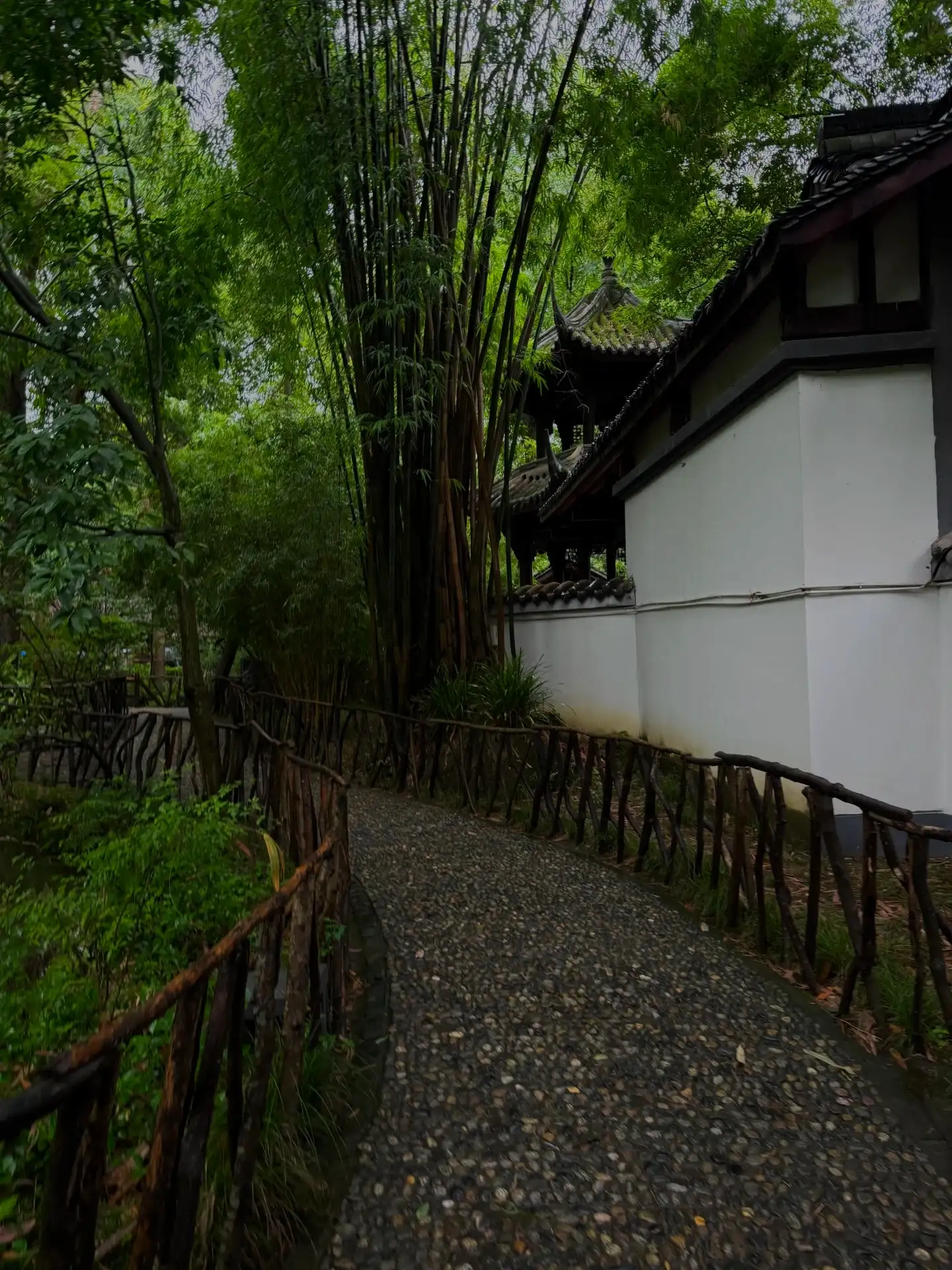
White walls, tiled eaves, and stone paths beside the bamboo grove at Du Fu’s Thatched Cottage.
Exploring the Du Fu of Later Generations Along the Commemorative Axis
To find your way around the garden, the clearest starting point is the cluster of commemorative spaces comprising the Main Gate, the Grand Hall, the Hall of Poetry and History, the Wooden Gate, and the Ministry of Works Shrine. If you enter through another entrance, locate a map of the garden first, then make your way toward this central axis; there’s no need to circle back to the main gate just to reach the “correct starting point.” Start with this section first; that way, the bamboo path and thatched cottage further on won’t end up as unrelated photos in your collection.
These names are worth explaining to your companions. “Poet-Historian” refers to the relationship between Du Fu’s poetry and the life of his era, while “Minister of Works” relates to his official title; today’s Grand Office is a commemorative structure, and one should not assume that Du Fu worked here simply because the name resembles that of a government office. The plaques, statues, and exhibits in each hall represent later generations’ ways of understanding and commemorating the poet. You might choose a spot to sit down, take in the meaning of a name, and then continue onward. For visitors unfamiliar with Chinese, the guided tour should clearly distinguish between personal names, official titles, and the functions of the buildings, so that the information doesn’t ultimately boil down to nothing more than a vague impression of an “ancient temple.” The short walks between halls provide the perfect opportunity to discuss: Why has a poet been enshrined so solemnly in the city’s collective memory?
As you approach the thatched cottage, distinguish between the reconstructed parts and the original ruins
The thatched huts are what many visitors most look forward to seeing. According to the museum’s description, this group of thatched huts has been reconstructed based on Du Fu’s poetic descriptions of daily life and relevant historical contexts. With their wooden frames, bamboo-woven walls covered in mud, and thatched roofs, they provide visitors with a concrete reference for understanding his living environment. It is not Du Fu’s original residence preserved intact from the Tang Dynasty, nor should the furnishings inside be regarded, piece by piece, as the poet’s personal belongings.
As you move from the monumental halls to the thatched cottage, focus your attention on the small details: how the roof sheds rain, how the interior and exterior connect, and how windows and doors let light in. Approaching architecture in this way does not require imbuing every detail with exaggerated literary symbolism. Du Fu’s poetry depicts wind and rain, family life, and the fragility of dwellings. While the reconstructed spaces help visitors imagine the conditions of daily life, they cannot recreate the sounds and smells of each day from over a thousand years ago. If you’re traveling with children, encourage them to look for thatched roofs, mud walls, and wooden pillars, and discuss how these materials differ from those used in modern homes. When taking photos, please follow the indoor guidelines and leave doorways clear for others to pass through; even a thatched gate that seems perfect for a group photo is part of the tour route.
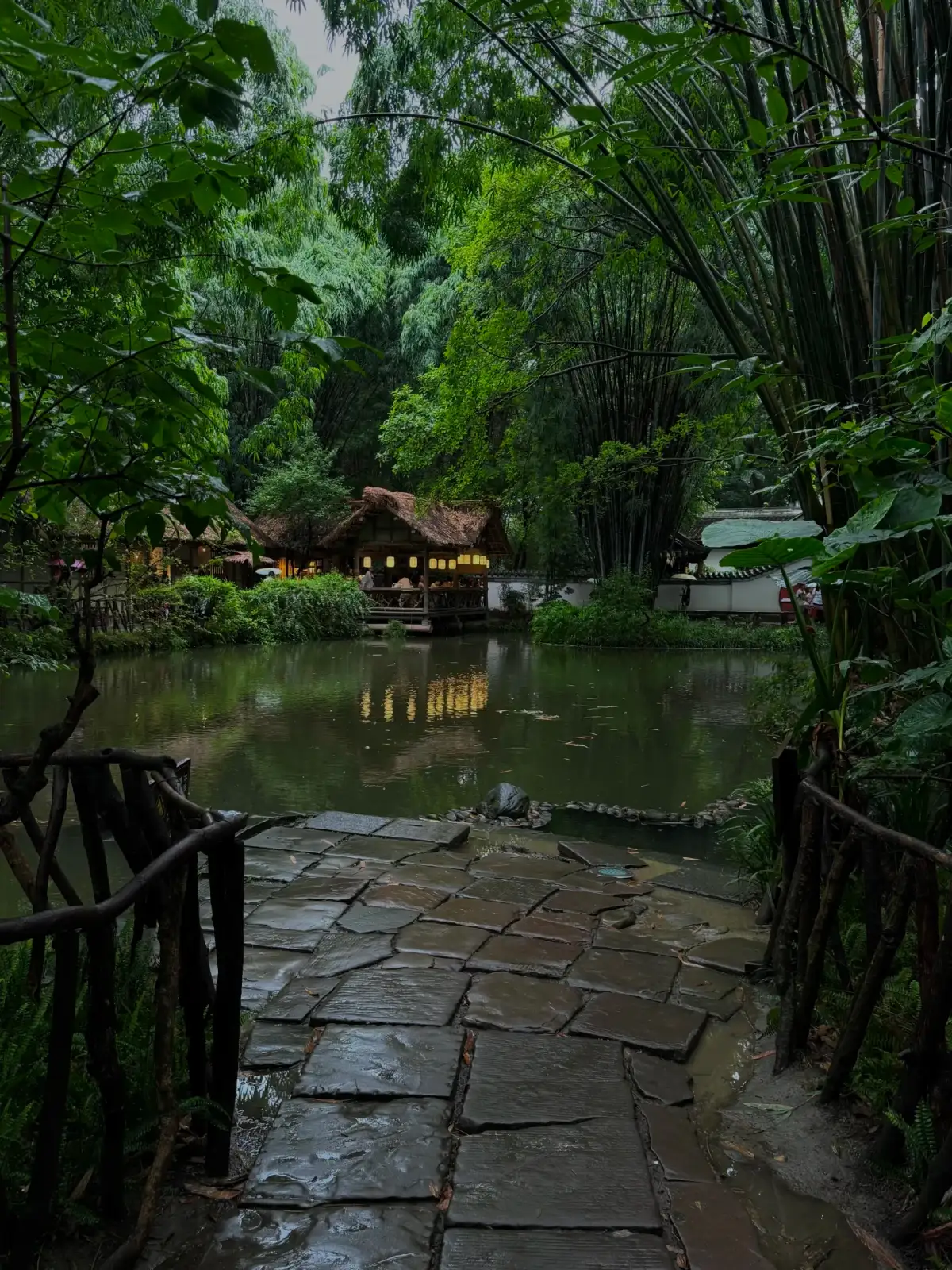
A thatched-roof building by the water and a bamboo grove in the gardens of Du Fu’s Thatched Cottage.
Tang Dynasty Ruins Bring Literature Back to Material Life
If time permits, arranging the display of Tang Dynasty archaeological finds behind the thatched cottage would make this visit more substantial. According to the museum, Tang Dynasty ruins were discovered within the garden in 2001, and a display space was later constructed to preserve the relevant remains and excavated artifacts. What is presented here is archaeological evidence of daily life in Chengdu during the Tang Dynasty; the discovery of artifacts from a similar time period does not necessarily confirm that a specific vessel was used by Du Fu himself.
Poetry, reconstruction, and archaeology each answer different questions. Poetry reveals what people valued; reconstruction helps us understand the layout of the dwellings; and archaeological sites transform dates and artifacts from abstract concepts into tangible realities. At the display cases, choose a single everyday object to examine its function, rather than rushing to photograph every single explanatory plaque. When exhibition layouts are adjusted, stick to the areas open on that particular day; there’s no need to waste half a day on closed galleries. For international visitors encountering ancient Chinese culture for the first time, this experience is particularly effective in preventing them from viewing “tradition” as a monolithic, unchanging past: life in the Tang Dynasty, the ancestral halls that emerged later, and today’s museum—though not products of the same era—all come together here to participate in the memory of a single poet.
The bamboo path and the waterside are perfect spots to reread a poem.
After visiting a few major exhibitions, let the garden guide your path. The white walls beside the bamboo grove, the eaves overlooking the water, and the winding paths offer a more relaxed environment for contemplation than the display cases. Inside the thatched cottage, there are pavilions and structures serving various purposes. When you reach the buildings by the water, first identify their names and functions, then observe the relationship between the eaves and the water’s surface. To see the reconstructed thatched huts, follow the guide to locate the corresponding area; these two types of spaces can be explored separately as you stroll through the garden.
Find a resting spot out of the way and reread the poems you prepared before entering the park. When reading “Rejoicing in the Spring Night Rain,” take note of how the poem shifts from describing the weather to expressing human anticipation; when reading “Song of the Thatched Cottage Shattered by the Autumn Wind,” you’ll discover how the hardships of housing expand into concern for others. There’s no need to insist that the rain before your eyes is the very same rain described in the poem. In photographs, the texture of the stone surface after the rain, the reflections in the water, and the overlapping bamboo leaves each have their own distinct quality; on site, however, there may also be guided tour groups, pruning work, and visitors chatting. By allowing these real-world sounds to exist, the garden need not bear the burden of an imagined, absolute stillness. On rainy days, bring a lightweight raincoat; the slippery stone paths are not suitable for walking backward while taking photos.
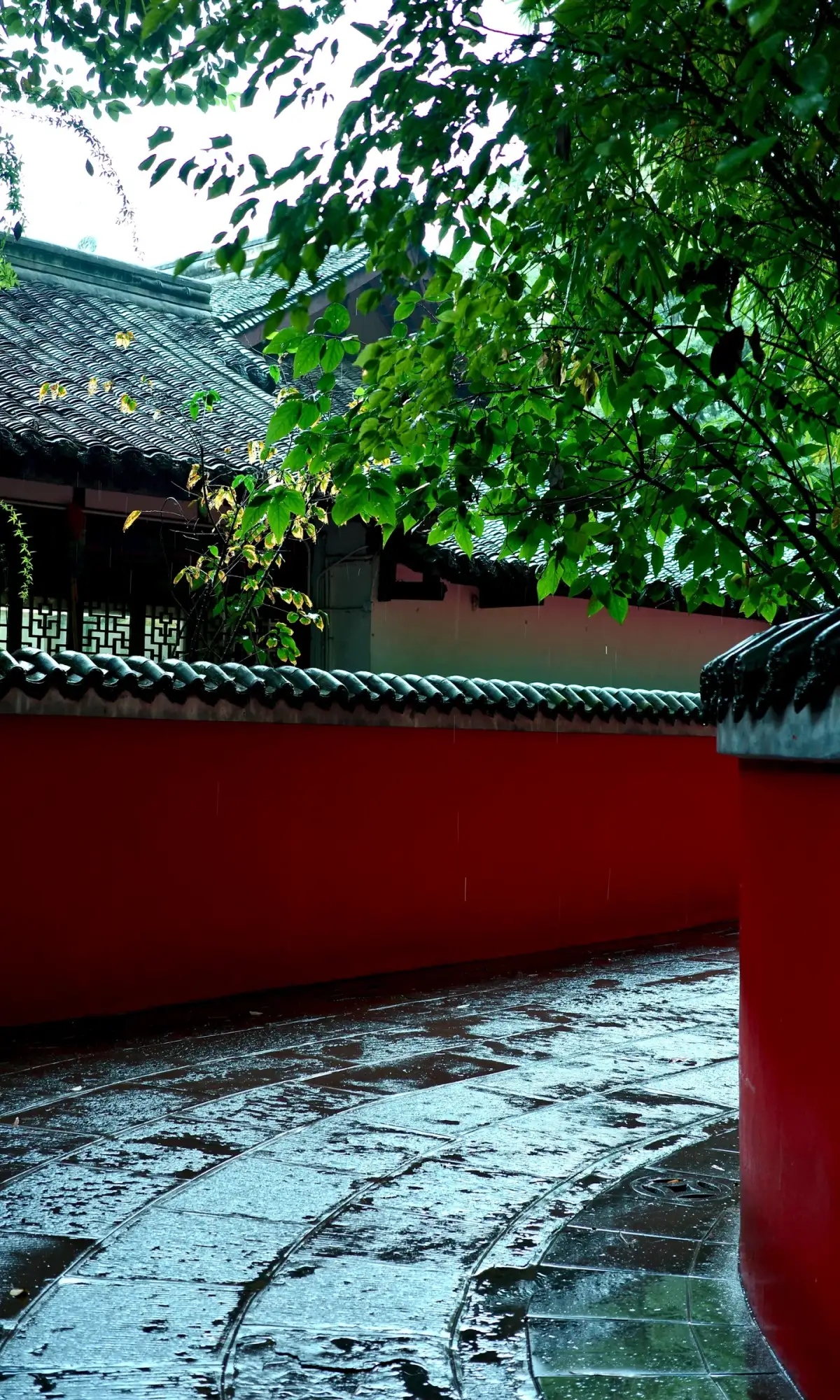
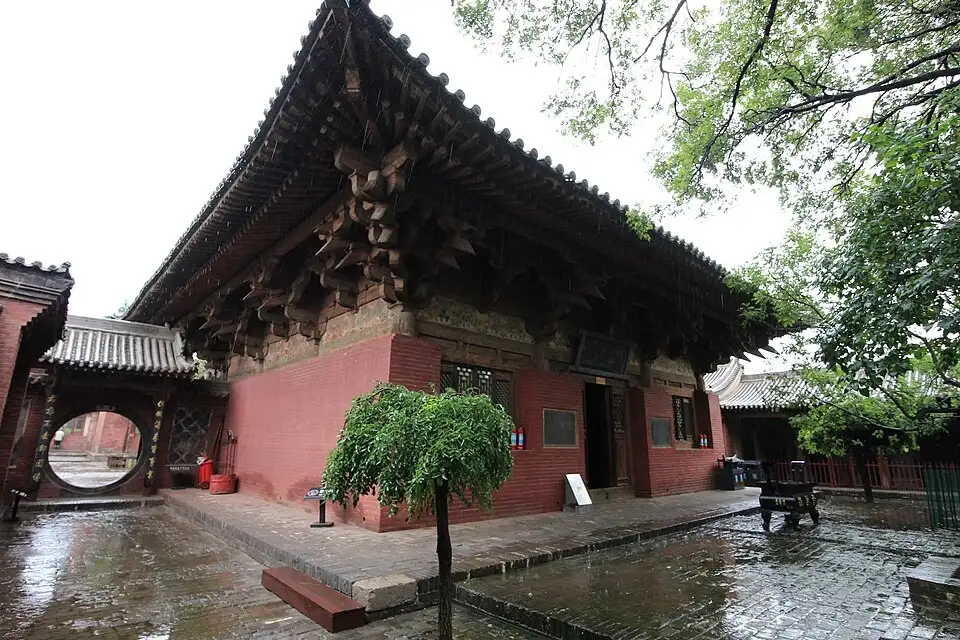
The red-walled corner and damp stone surfaces at Du Fu’s Thatched Cottage after the rain.
A half-day itinerary, leaving plenty of time for the exhibition
If your primary interest is Du Fu and Tang poetry, you can divide your half-day visit into three parts: first, walk along the commemorative axis; next, view the reconstructed thatched cottage and a related exhibition; and finally, return to the exit along the bamboo path and the water’s edge. Allocate about three to four hours as a rough estimate; the actual duration will depend on exhibition hours, the time spent listening to guided commentary, the pace of your companions, and any lines. Those who enjoy reading the exhibition panels in detail should limit visits to additional sites outside the park and avoid filling every hour of their visit.
If you’re more interested in the garden, you can spend less time in the halls, but it’s still recommended to read the poet’s biography at least once to connect the scenery with the places he lived. If your companions have different interests, agree on a clear meeting point, explore sections of the exhibition separately, and then reconvene. There is more than one path through the Grass Hall; choosing a side path that’s convenient from the entrance is more effective than strictly following an online map. Even on rainy days, don’t assume that all indoor spaces are suitable for extended stays; check the open-to-the-public signs first. At the end of your visit, take a few minutes to return to the map and confirm the exit and transportation to your next stop; discovering that your car is waiting on the other side of the park gate only after you’ve crossed it often takes a greater toll on your energy and mood than walking a bit farther within the park.
Continue on to the Huanhua Stream; there’s no need to rush across the city just yet.
The Grass Hall is situated within the urban cultural and green space landscape of western Chengdu. If the weather and your stamina permit, after leaving the grounds, you can take a stroll along the banks of the Huanhua Creek and then enjoy a tea break or a meal. This combination allows for a natural transition from the memorial site to everyday city life over the course of half a day. When walking along the water’s edge, first distinguish between the accessible areas of public green spaces and the boundaries of the museum grounds; do not assume that areas appearing adjacent on the map are all covered by the same admission ticket.
If you also plan to visit the Sichuan Museum, be sure to check its reservation requirements, opening hours, and current exhibitions separately. Choose a theme based on your own interests, and don’t expect to cover both sites in the last hour of your visit. To reach the Cottage, you can take the Chengdu Metro and walk the final stretch, or book a vehicle to a designated entrance; specific routes, exits, and pickup/drop-off points are subject to the map and official information provided on the day of your visit. Sending the driver the Chinese name of the museum and the GPS coordinates of the agreed-upon entrance is more reliable than simply saying “cottage” in English. International visitors should confirm in advance which booking channels, payment methods, and ticket pickup options are applicable to their travel documents when booking tickets, to avoid assuming that the process shown in screenshots from domestic visitors applies to everyone.
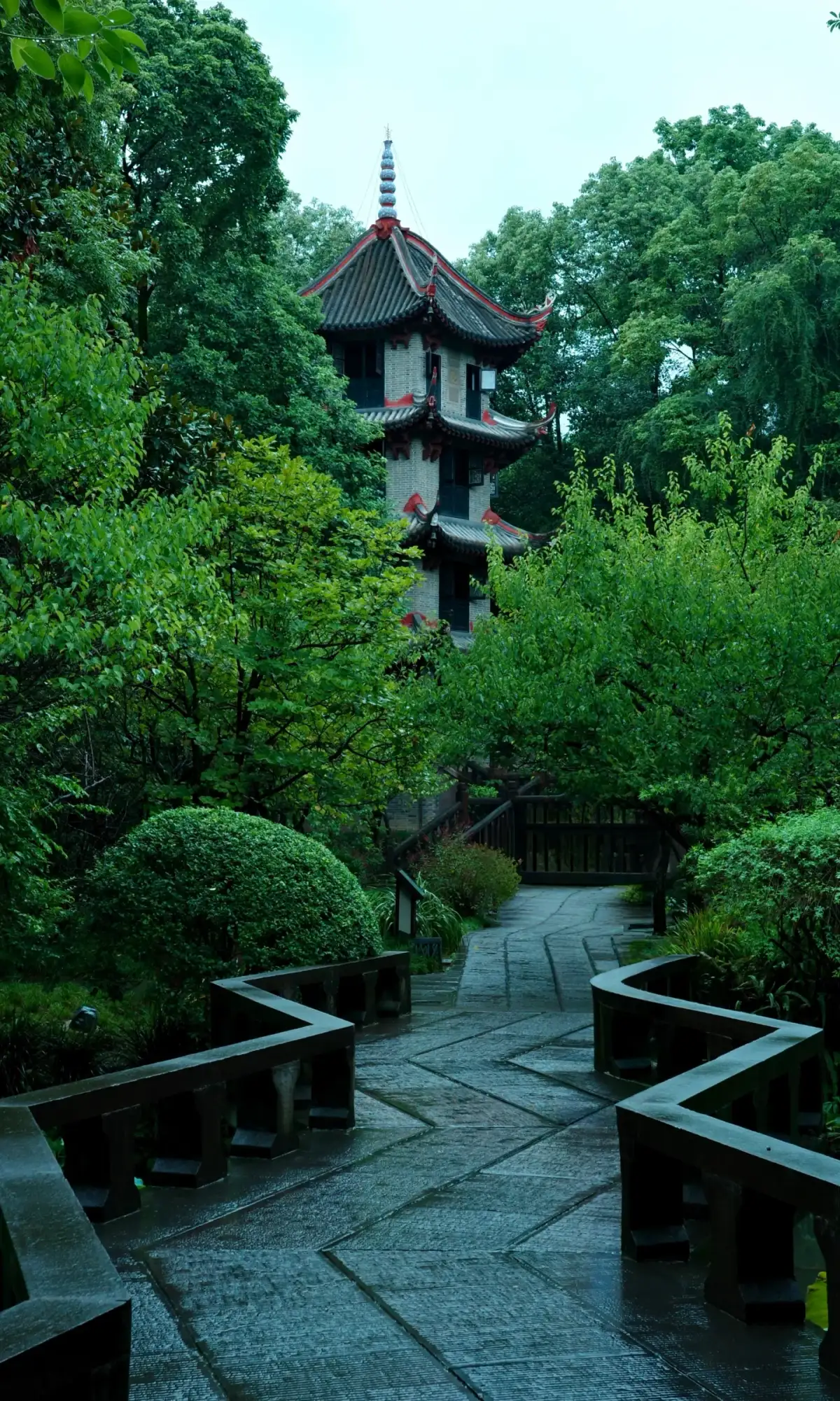
A pagoda and winding garden paths among the trees at Du Fu’s Thatched Cottage.
The seasons transform the garden; reading need not wait for ideal weather.
The bamboo and evergreen plants at the Grass Hall ensure the garden remains vibrant year-round, but the foliage, water surfaces, and light vary with the seasons. In spring, it’s best to treat the flowers and trees as a backdrop; in summer, it’s essential to avoid the sweltering hours and take timely breaks; and in fall and winter, observe how falling leaves and bare branches make the outlines of the buildings stand out more clearly. Any flowering season or “garden ablaze with gold” should be viewed as a scene from a specific moment in a specific year—not a guarantee that will materialize simply by purchasing a ticket.
The bamboo grove, the water’s surface, the red walls, and the courtyards each leave a distinct impression. When organizing your visit notes, try pairing the poems you’ve read with the actual spaces you’ve visited; this will allow you to continue exploring the seasons and daily life depicted in the poetry once you return home. Before your trip, be sure to check the museum’s latest reservation information, temporary exhibitions, and opening announcements; visiting hours may vary during holidays. When selecting poetry collections or cultural and creative products, choose an edition with clear translations and annotations that suits your reading style; upon returning home, you can then reflect on the questions raised by your visit through the text. Perhaps the most thought-provoking takeaway from the Grass Hall is that, after seeing a room or a patch of bamboo, you’ll finally be willing to take the time to read a familiar poem all the way through—rather than simply taking home a photo that looks quaintly antique.
Further Reading and References
Chengdu · Destination Overview
Originally compiled by the Eastbound Travel Editorial Department based on publicly available travel notes and listed information; intended for pre-trip reading and not as a personal travelogue. Opening hours, transportation, reservations, and service arrangements should be verified according to the actual travel date.
Du Fu’s Thatched Cottage Museum: Introduction to the Institution and Its Figures
Du Fu’s Thatched Cottage Museum: Attractions and Reconstructed Thatched Huts
Du Fu’s Thatched Cottage Museum: A Tang Dynasty Site
Is today's cottage the original Tang-era house?
During a Du Fu Thatched Cottage visit, distinguish memorial space, reconstruction and archaeological remains. The reconstructed Du Fu cottage helps readers understand the domestic setting described in poems; individual objects should not be assumed Tang-era possessions. Examine thatch, walls and timber, then compare interpreted exhibits to understand how imagining daily life differs from establishing historical evidence.
A half-day without memorising Tang poetry
For Du Fu poetry reading, choose one poem with suitable translation and notes. After the memorial route and cottage, read it again while seated beside bamboo or water. Children can find three visible materials and discuss differences from modern homes. Archaeology enthusiasts can stay longer in exhibitions; garden enthusiasts can extend the walk. You need not memorise the poet's entire life at once.
Planning references
Planning reference: Du Fu Thatched Cottage visit 1
Planning reference: Du Fu Thatched Cottage visit 2