A half-day cultural itinerary in Chengdu can begin with the selection of a slim poetry collection. Reading a segment of history through Du Fu’s life and works is a different interest from getting to know Xue Tao or exploring the architecture and plants in a memorial garden. Both Du Fu’s Thatched Cottage and Wangjiang Tower can serve as destinations for a complete visit; when time allows for only one, choosing a theme is more useful than comparing the number of photos. This article is an editorial interpretation intended for visitors to China; it does not simulate an actual visit to both sites, nor does it promise that all exhibition halls can be covered consecutively in half a day.
First, decide which poet you want to learn about
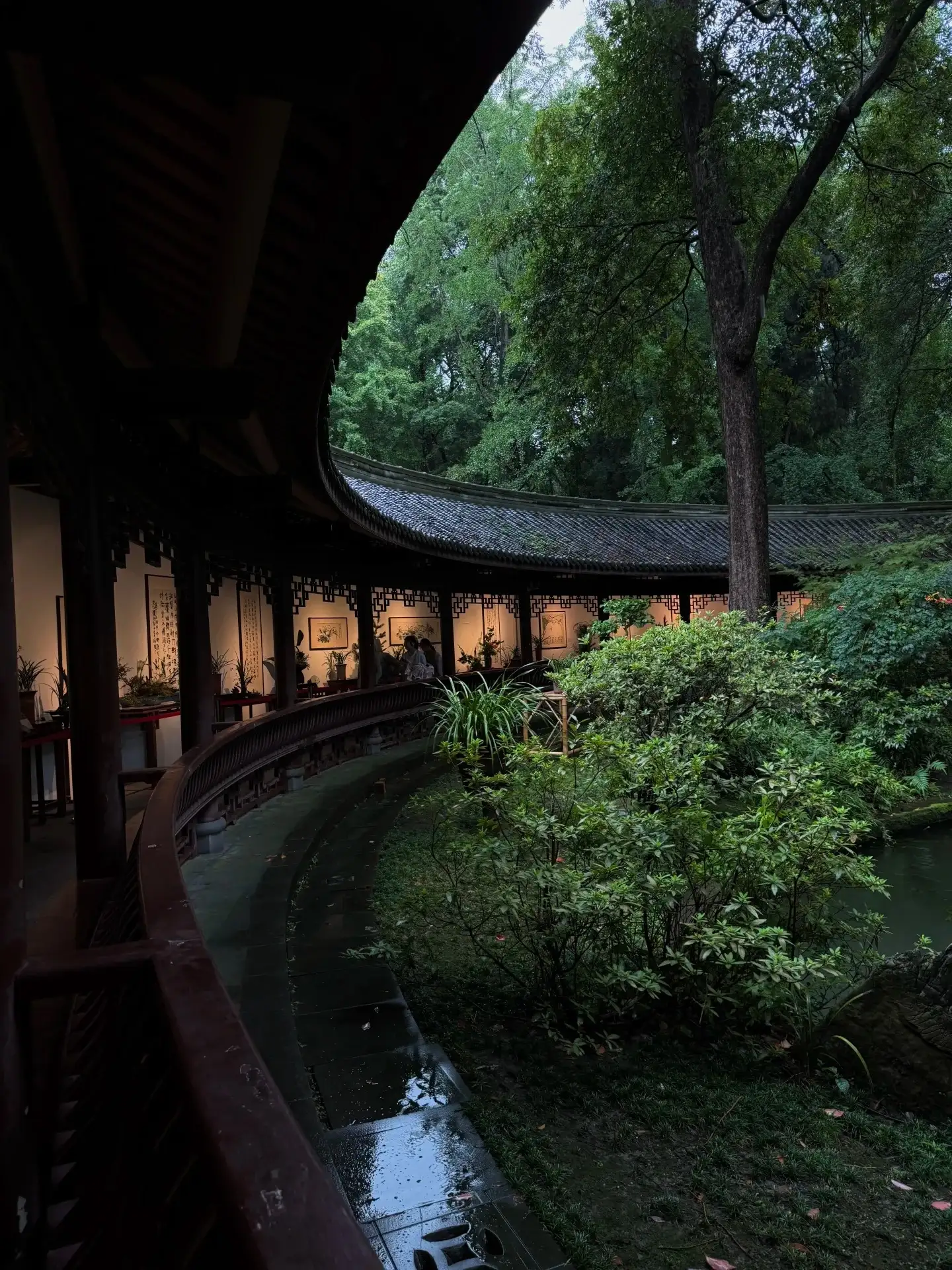
小红书作者吃啥哇记录的是雨天草堂的绿色环境;大麦茶在望江楼笔记里注意到园林路径、建筑和竹林之间的关系。两份观察把同一个问题带到行程前面:你期待的是诗歌内容,还是一段园林散步?原帖的情绪和到访条件属于作者,不能据此判断每天的天气、人流或自己的感受,但可以用来检查自己对目的地的期待是否清楚。
If you’ve read Du Fu but can’t explain why he stayed in Chengdu, you might approach the Grass Hall as a guided reading experience with specific questions in mind. Before entering the park, jot down one thing you’d like to understand—for example, how the daily life depicted in his poetry relates to the historical context. Look for exhibition explanations on-site to find the answer, rather than simply checking off every building name one by one. That way, even if you don’t manage to see every exhibition hall in a single day, you’ll still walk away with a coherent thread of knowledge.
Visitors who are familiar with Xue Tao only by name may wish to explore the relevant exhibits at Wangjiang Tower. Begin by establishing a framework based on three elements—the figure, her works, and the commemorative space—and then observe how her poetry has entered the urban life of later generations through pavilions, inscriptions, or exhibition halls. Do not interpret a single pavilion or well you see today as the sole authentic remnants of the poet’s activities from that era; commemoration and historical relics exist on different levels, and specific dates and historical contexts should be verified through on-site evidence or official records.
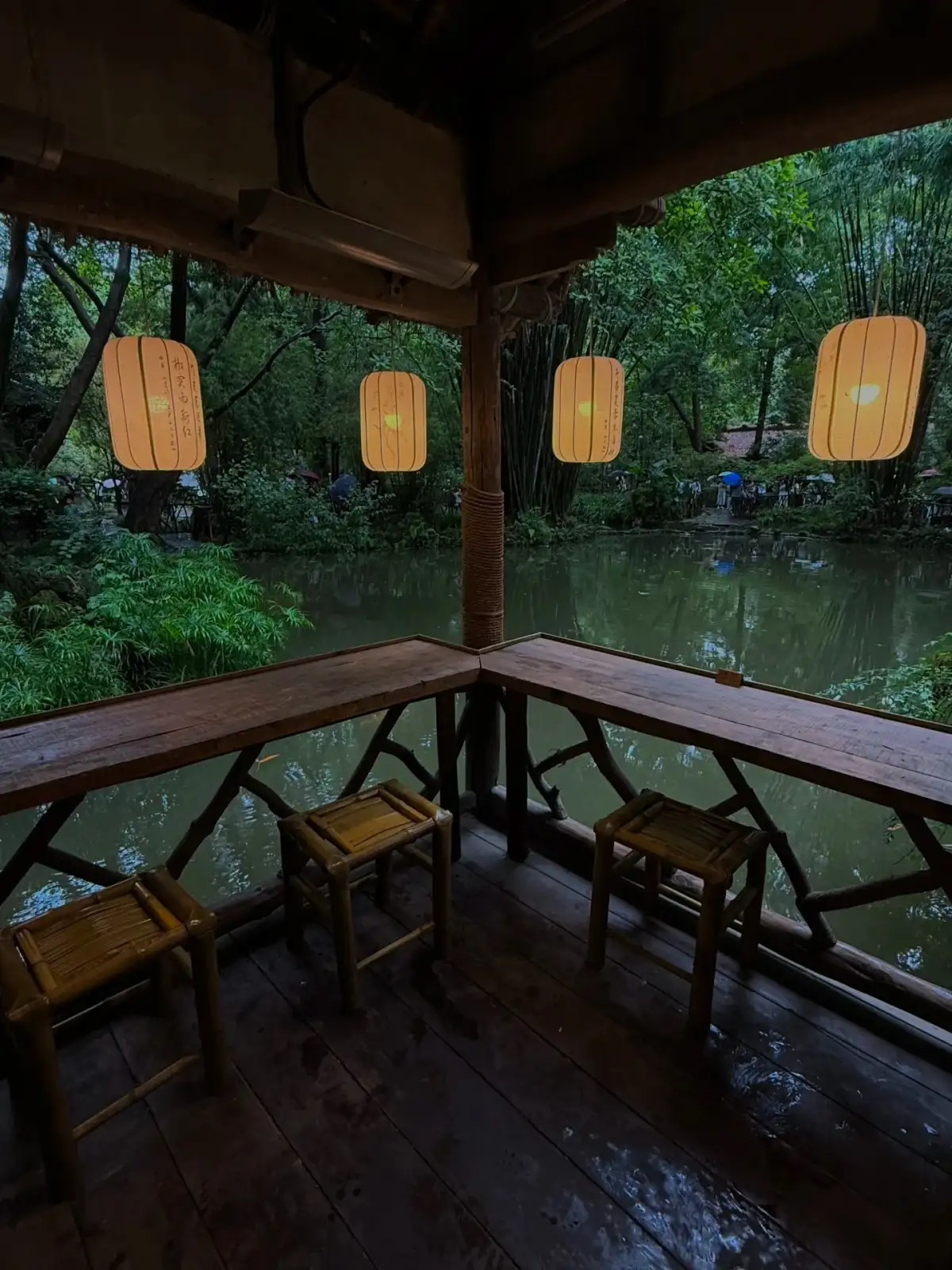
Lanterns, railings, and wooden benches inside a pavilion by the garden’s water. Photo:What to Eat · Original Post.
a narrative thread for the Grass Hall—one that becomes clearer the further you explore.
Du Fu Thatched Cottage Museum Official WebsiteList the permanent exhibits, ancient texts and documents, poetry and cultural content, and garden attractions separately. This article was verified on October 3, 2026. The official website provides general guidance; the scope of exhibits and temporary exhibitions are subject to change. Before setting out, check the day’s exhibitions to determine which sections address your specific interests, and avoid relying solely on other visitors’ photos to locate a display that may be undergoing adjustments.
You can still explore the exhibition even if you’re unfamiliar with poetry. A practical curatorial suggestion is to structure your visit across three levels: first, review the general introduction to the figure and her era; next, select an exhibit with a clearly legible description; and finally, return to the garden to observe the spatial layout. The general introduction helps establish the historical context; a single exhibit transforms names into concrete details; and pausing in the garden allows the information to sink in. There’s no need to copy down every paragraph of text from these three sources.
When visiting with children, narrow the task down further: have them choose a character or object they can see on-site, then discuss its connection to daily life. Adults don’t need to recite entire long poems on the spot, nor should they measure the success of the visit by how much knowledge they’ve memorized. If children aren’t yet interested in text, pay attention to the doors, eaves, and the relationship between the front and back courtyards within the buildings; this should still be limited to publicly accessible areas, and touching or taking photos should follow on-site guidelines.
The Red Hall’s red walls and vegetation frequently appear in travelogues, but they cannot replace the exhibitions. If you set aside time solely for taking photos, you may lose your focus on rainy days or when there are large crowds; at the same time, preparing an indoor reading itinerary allows for greater flexibility in your choices. Conversely, when you’ve grown tired from reading in the exhibition halls, you can reduce the amount of new text you take in and let the garden serve as a buffer—there’s no need to rush to the next cultural site on the spot.
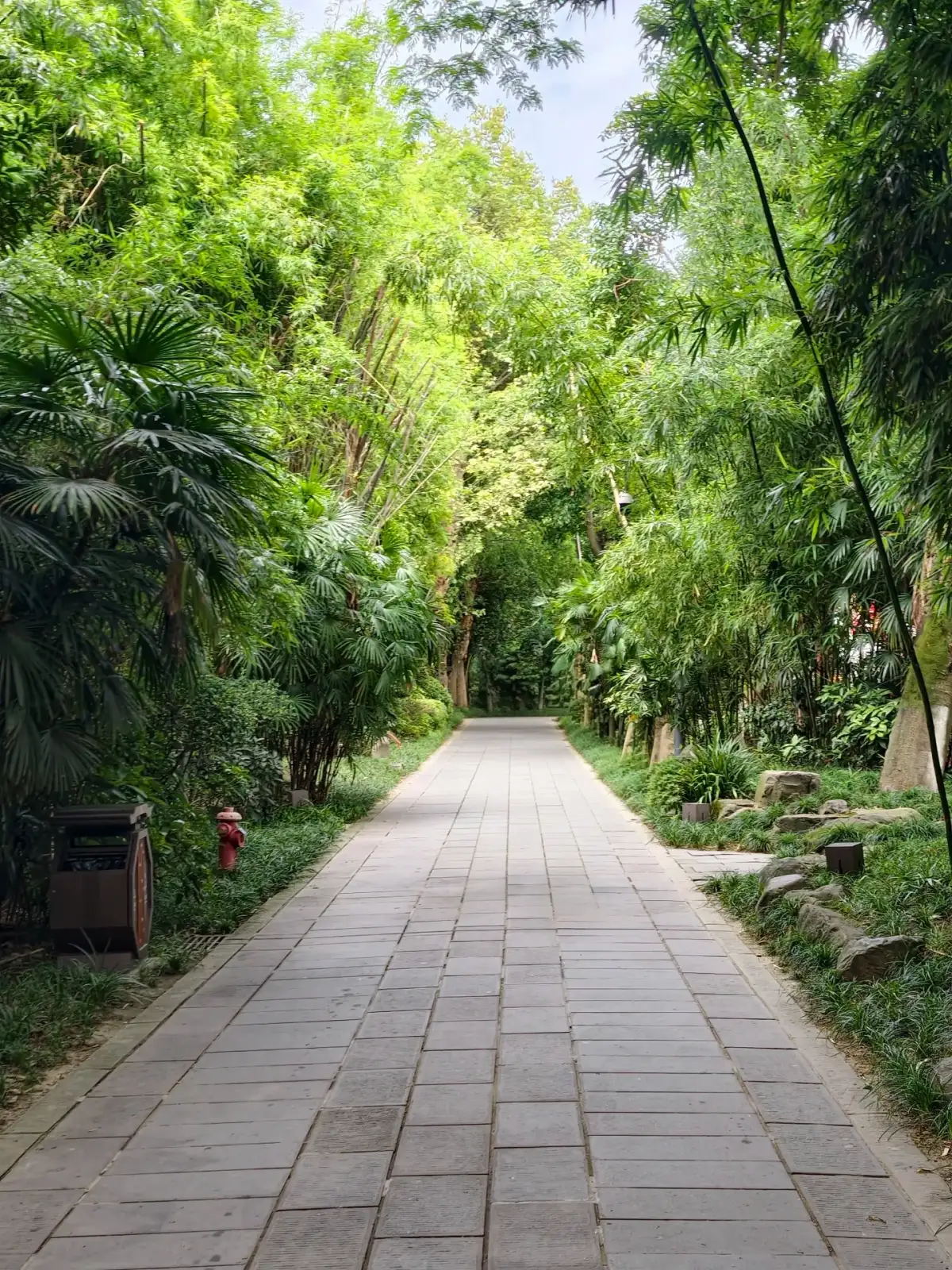
The stone-paved walkway between the bamboo groves on both sides of Wangjianglou Park. Photo:Discovery-Based Visual Experience · Original Post.
Wangjiang Tower is best explored by moving from the figures to the spaces
Wangjianglou Park Official WebsitePresent Xue Tao’s cultural legacy, historic architecture, and bamboo culture separately, providing entry points for guided tours of the memorial hall and the landscape—this draft was verified on the same day. This section division can be represented on paper as three short lines; first, choose the one that interests you most, then add another based on the time available on-site. Photographs of bamboo groves serve only as clues; they cannot confirm specific plant varieties, much less guarantee that the same play of light and shadow will occur in a particular season.
“Barley Tea’s” detailed notes mention that she did not climb the tower but spent time in other areas instead. This personal choice offers a practical planning insight: simply seeing the name of a location does not mean you must experience every possible way of viewing it. For those who dislike climbing heights or are already tired from walking that day, they can first ask themselves whether their interests can be satisfied by the ground-level exhibits and accessible routes, and then assess how much physical effort the remaining sections would require.
an understanding of Xue Tao through these three categories—the figure, her works, and the commemorative spaces—before viewing the pavilions and towers. This makes it easier to notice how commemorative spaces integrate a literary figure into the city’s collective memory. Start by reading the biographical information provided in the exhibition, then revisit the inscriptions in the same location; at this point, the architecture will take on a new context. Any allusions that haven’t been verified can be noted as questions to look up later. When listening to on-site guides, be sure to distinguish between historical records and legends; don’t assume something is a confirmed fact simply because it sounds poetic.
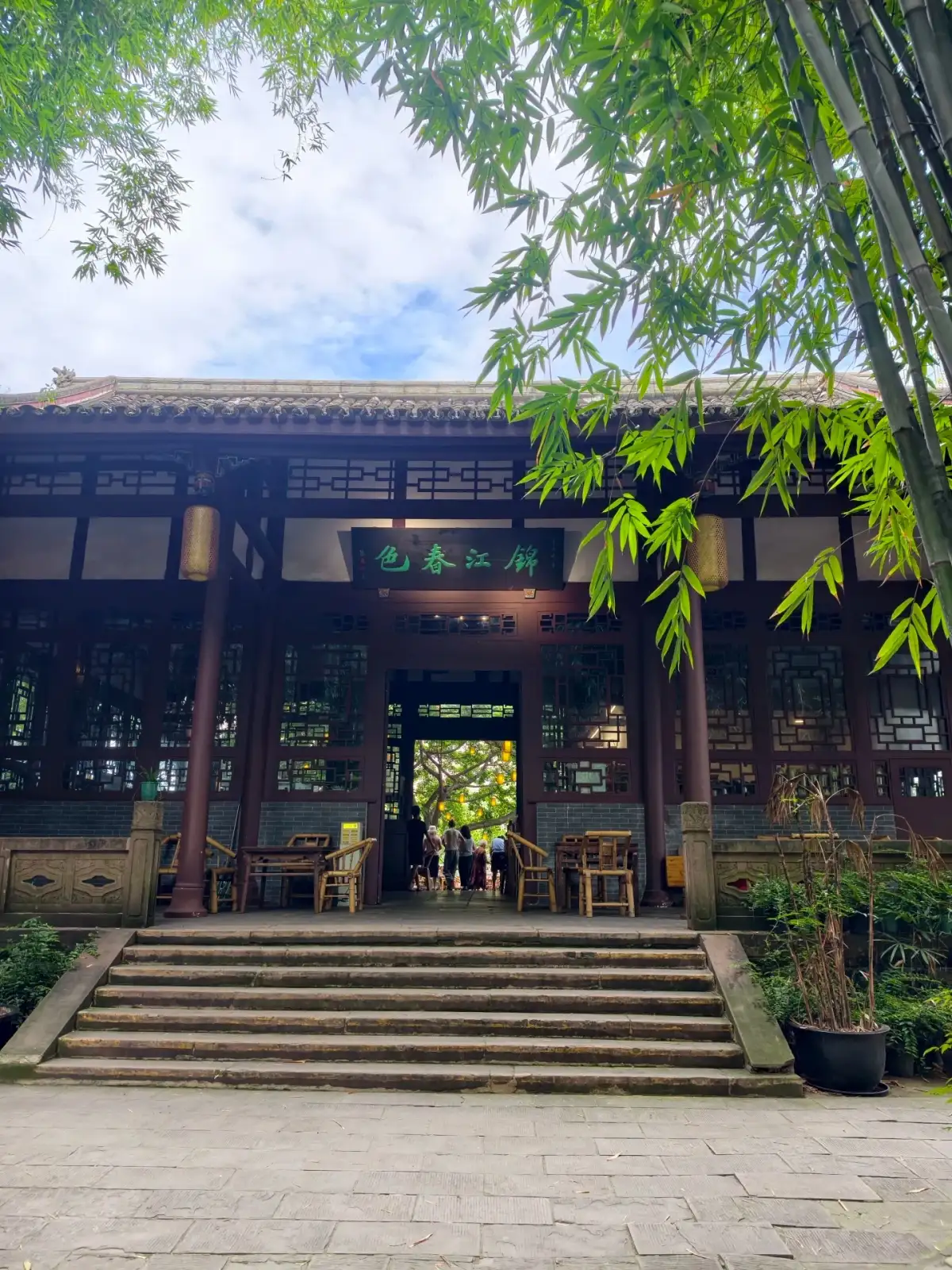
The main gate of the garden complex, stone steps, and tree-lined shade. Photo:Discovery-Based Visual Experience · Original Post.
If you wish to study the plants, note the species only when you see the labels, and focus your observations on leaf shapes, bamboo stalks, and growth patterns. Visitors do not need to enter the landscaped areas to find closer vantage points. Casual visitors can simply choose a continuous path and pay attention to how plants obscure or reveal the architecture—this is a different approach from collecting a list of names, and it suits those who want to slow down without planning a specialized study.
Structure your half-day itinerary around these three elements, and reserve the rest of the time for what truly interests you.
Once you’ve made a selection, set aside time for four key stages: arrival, entry, rest, and return. Don’t count the entire half-day as exhibition time, especially since you’ll need time to adjust to local transportation and language after arriving from abroad. Make sure to save the Chinese address of your hotel, the full name of the venue, and your chosen entrance; if you need to make a reservation or purchase tickets, use the official website for your visit to verify the procedures for foreign travel documents—don’t assume that the same steps apply to passports based on tutorials for domestic ID cards.
Visitors who wish to see both sites can spread their visits over different days, carrying over the questions raised during the first visit to the second. Focus on your chosen Du Fu theme at the Grass Hall and your chosen Xue Tao theme at Wangjiang Tower; compare how you come to understand these figures through the materials at each location—this approach fosters better retention than rushing from one to the other on the same day. Whether to schedule both visits on the same day should depend on actual transportation options, your stamina, and opening hours; this article does not include unverified estimates of travel time between venues.
When traveling in a group, start by identifying who is interested in poetry, who wants to take a stroll, and who needs frequent breaks. Don’t let one person’s interests tie the entire group down to a lengthy guided tour. Agree on a specific, easily recognizable meeting place and time, allowing everyone to explore the exhibits and the grounds at their own pace within the venue’s permitted areas; if there are children or companions requiring care, finalize care arrangements first before discussing whether to split up.
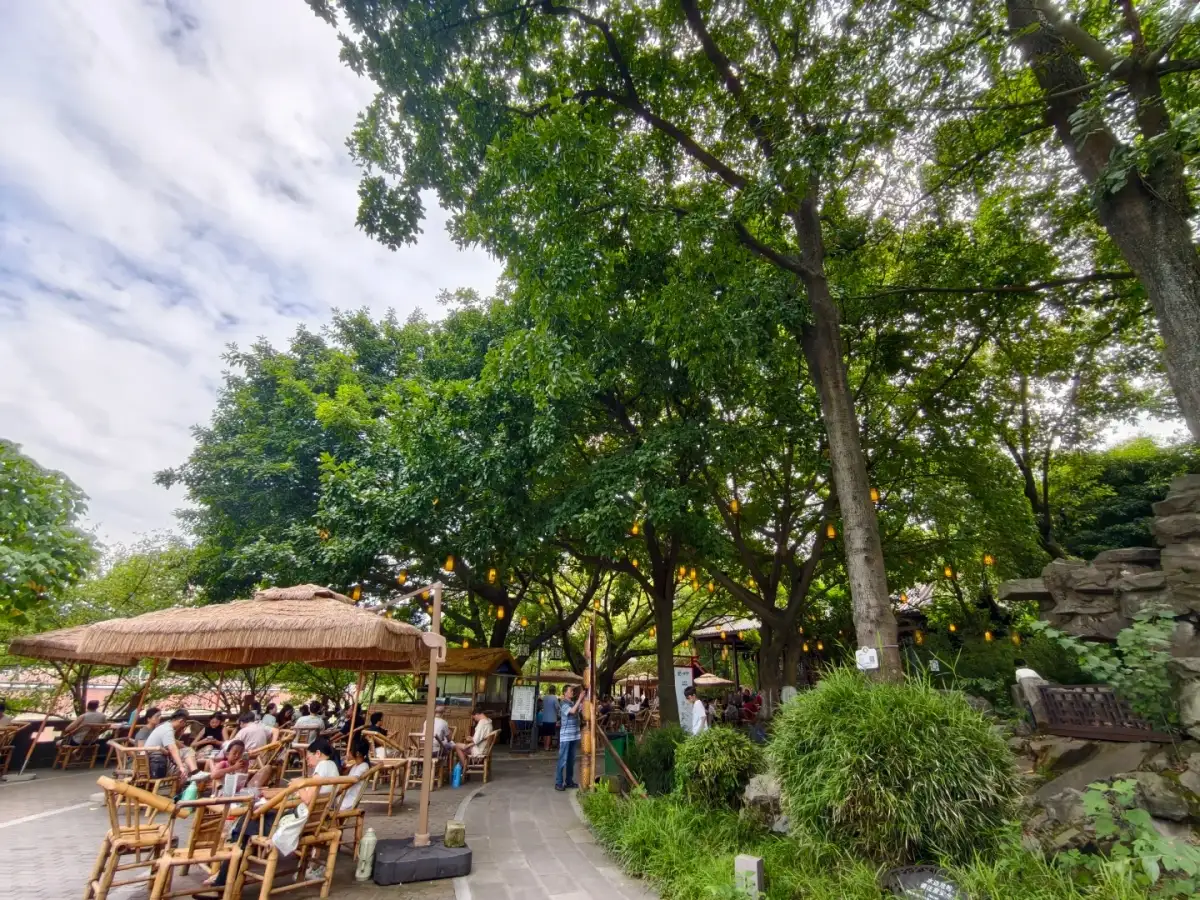
A tea house under the shade of trees in Wangjianglou Park, with visitors in the distance. Photo:Discovery-Based Visual Experience · Original Post.
It’s better to end with one question than with ten photos.
Before leaving, use your phone to note one new piece of information you’ve learned and one question you still don’t understand. Avoid photographing entire exhibition panels—especially when photography is restricted—and instead jot down your own questions while saving the official search link. Once back at the hotel, look up the source and add the relevant text; this approach also prevents you from mistaking legends heard that day for actual history, ensuring your travel notes have reliable boundaries when you organize them later.
To continue planning your cultural and natural itinerary in Sichuan, start from this siteIntroduction to Sichuan Destinationsto determine your next steps, then confirm a feasible itinerary with a guide. A single literary garden in Chengdu can easily occupy half a day of your attention. When making your selection, clearly state which figures you wish to explore, how much walking you can manage, and when you’d like to take breaks; this gives your itinerary a concrete framework, eliminating the need to visit another site just to prove this stop was complete.
Sources and Editorial Notes
This article is an original travel interpretation compiled by the Dongxing Travel editorial department based on cited materials; it is not a firsthand account by the author. The full text of the original post has not been reproduced; accompanying images are used within the scope of authorization and are credited to the author and source of the original post. They do not serve as proof of actual visits or services provided by Dongxing Travel clients.
What to Eat · My Take on Kyoto!! It might not be as melancholic as the Du Fu Thatched Cottage in Chengdu... · Travel Notes; Verified/Organized on: October 3, 2026.
Barley Tea · Glimpses of Chengdu | Wangjianglou Park · Travel Notes; Verified/Organized on: October 3, 2026.
Chengdu Du Fu Thatched Cottage Museum · Du Fu Thatched Cottage Museum · Official information; Verified/compiled on: October 3, 2026.
Chengdu Wangjianglou Park · Wangjianglou Park Official Website · Official information; Verified/compiled on: October 3, 2026.
Discovery Vision · Chengdu Wangjianglou Park: The Aesthetics of a Bamboo Grove Hidden in the City · Image source: This article does not cite this post as a basis for current policy. · Image source; this article does not cite this post as a basis for current policy.