Arriving in Chengdu on a rainy day and seeing a photo of a lush, green garden, it’s easy to narrow your itinerary down to capturing exactly that same scene. What a photography trip really needs to address, however, are the on-site conditions: whether the rain affects your travel plans, whether the path is suitable for stopping, whether your travel companions are willing to wait, and whether you can take your camera out and put it away discreetly. Both Du Fu’s Thatched Cottage and Wangjiang Tower offer opportunities to observe spatial relationships; based on the questions raised in the traveler’s notes below, I’ll provide editorial suggestions—but I won’t include forecasts for that day’s weather or opening hours.
What Can a Rainy Scene Tell You?
小红书作者吃啥哇的完整笔记记录了雨天杜甫草堂的绿色环境。它能证明作者的观察主题,却没有说明某个季节每次下雨都会有同样效果。照片的曝光、后期和取景范围也会改变观感。决定是否去之前,应先明确自己喜欢的是植物、墙面、建筑尺度还是雨后的色彩,这样遇到现场不同光线时仍能找到观看内容。
The “Wangjianglou Notes,” with their exploratory visual approach, focus on the interplay between bamboo leaves, dappled shadows, and architecture. The original post lists the author’s preferred times and weather conditions, but this article does not adopt them as the optimal shooting times. The valuable insight it offers is that the subject can be a relationship—such as the play of light and shadow cast by leaves on a wall, or the outline of a roof eave peeking out at the end of a path—rather than necessarily a panoramic reproduction of a specific location.
Combining these two sets of observations allows you to draft three subheadings for your photo album in advance: nearby plants and textures; mid-range doors and paths; and building silhouettes in the distance. These describe what to observe, without prescribing exactly which paving stone to stand on. For first-time visitors to China who are not yet familiar with the transportation system or venues, this kind of shooting assignment is easier to carry out than a long list of unfamiliar camera positions, and it also makes it easier to determine whether a location has already satisfied one’s interests.
First, maintain a continuous walk; then plan your stops.
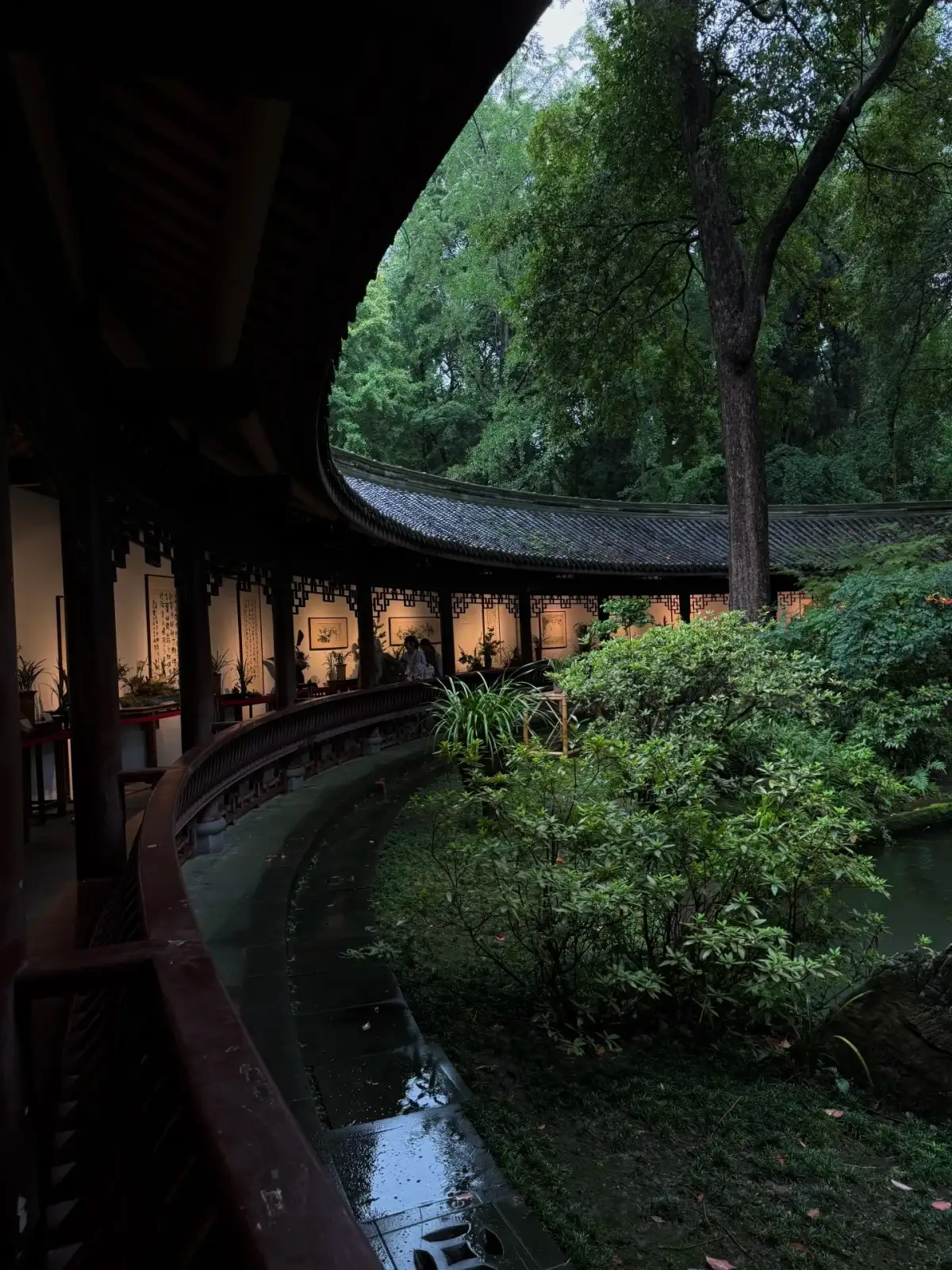
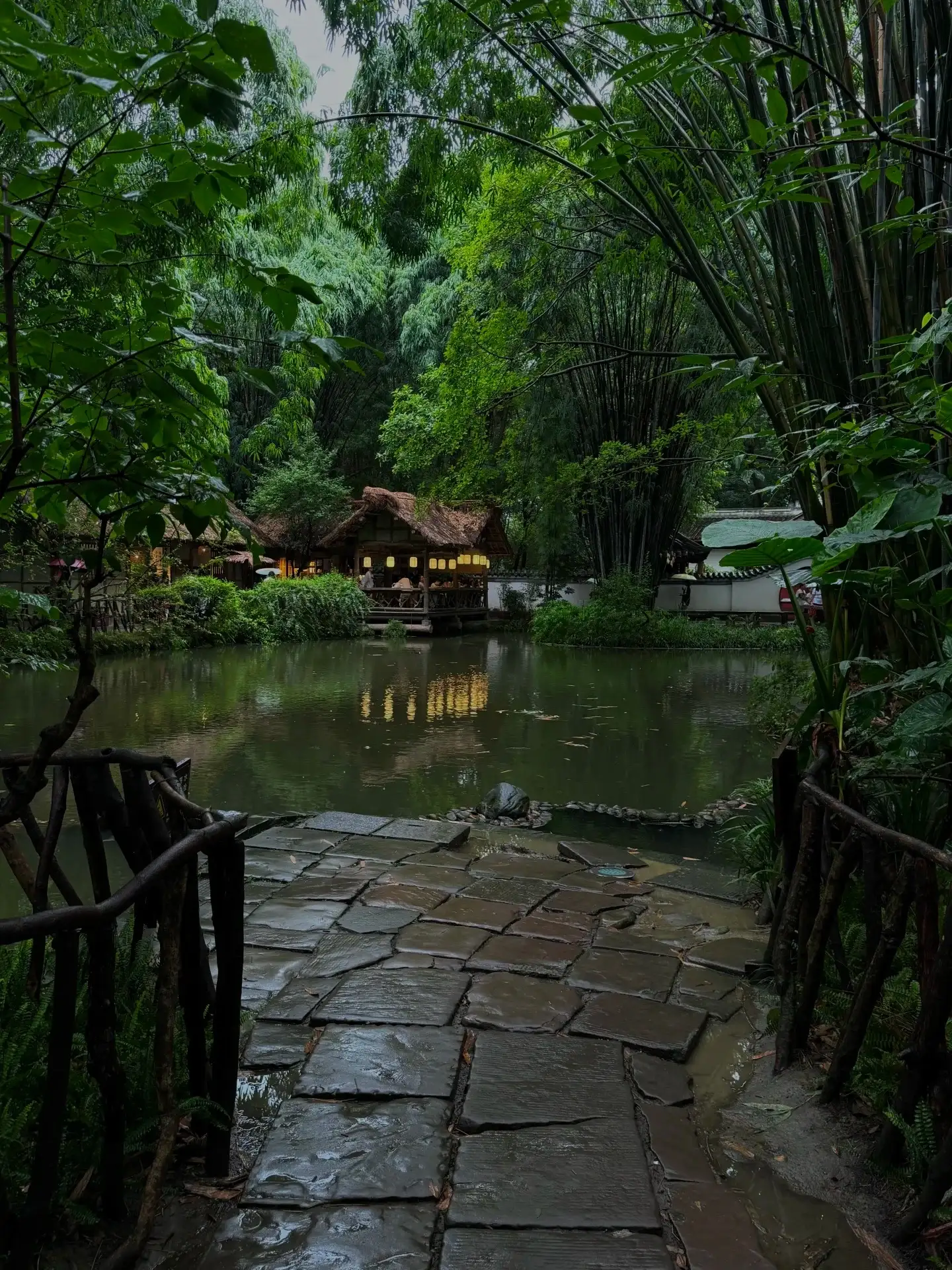
Winding corridors, waterways, and green trees in the garden during a light rain. Images:What to Eat · Original Post.
Common difficulties with photography in the rain stem from repeatedly taking equipment out and putting it away. Holding an umbrella in one hand and a camera in the other, while also keeping an eye on the ground, makes it difficult to stop and give way to others. Before setting out, you can practice the actual process at your hotel to see if the bag is easy to open, if the equipment can be stowed away quickly, and if the outer protective layer meets the manufacturer’s requirements. We do not recommend specific equipment here, nor should you judge how much rain your camera can withstand based on others’ experiences with protection.
After entering the garden, walk along a continuous path for a while to identify spots where you can stand at the edge to observe without obstructing the flow of visitors. Narrow archways, staircase corners, and exhibition hall entrances are not suitable for waiting a long time to compose a shot. You can first note a direction that interests you, then walk to a wider section before deciding whether to look back; if the current route isn’t suitable for turning back, simply commit it to memory—there’s no need to take more photos than are necessary for navigating the site.
choices of shoes, clothing, and bags should be tailored to this route. Constantly looking down to adjust your gear out of fear of getting it wet may cause you to overlook the changes right under your feet; carrying too many lenses will also reduce the time you’re willing to spend at each spot. The editor’s advice is to select a small amount of gear to carry based on the type of subject you most want to photograph, leaving the rest at your safe lodging. Don’t assume that just because it’s a “city park,” the ground will be completely flat, dry, or free of steps.
traveling companions need a clear agreement. Those who enjoy photography can linger a bit longer at easily recognizable spots that allow for a pause, while others know when to meet up and how to stay in touch if the rain changes. When traveling with children or elderly family members who require care, that responsibility should not be temporarily handed over to the person who has put their camera away. Before separating, always confirm arrangements for accompaniment and return before deciding whether to wait for the next beam of light.
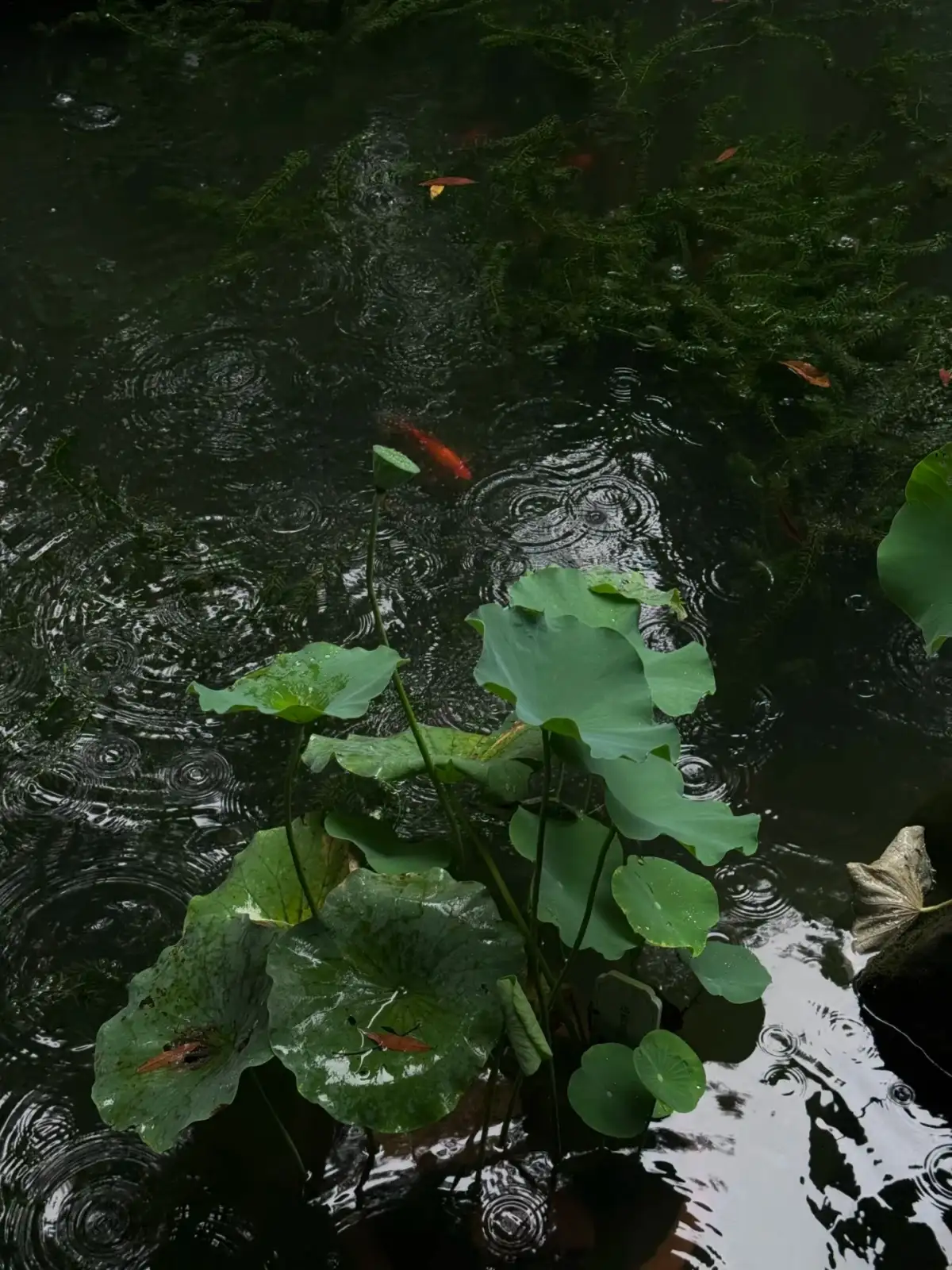
water ripples formed by lotus leaves, fish, and raindrops in the pond. Image:What to Eat · Original Post.
Divide the frame into three sections; there’s no need to strive for a full panorama in every shot
close-ups of plants can help document the actual details observed that day. If there are identification signs, save the photos and names separately; if there are no signs, limit descriptions to leaf shape, color, or arrangement—do not arbitrarily assign species names. When photographing raindrops, tree bark, or leaves, ensure you are in a legally permitted location; do not reach into green spaces to adjust branches or leaves, and do not move objects on-site to create a cleaner background.
gates and paths are suitable for illustrating how space is organized. When framing a shot, stand a bit farther back to observe the relationship between the gate’s shape and the plants behind it, then decide whether the composition is worth waiting for. Passersby do not necessarily ruin a photo, but when recognizable people are involved, you should respect their wishes; public use also requires the appropriate rights. If you prefer a clean, uncluttered frame, choose a time when there are naturally fewer people; you cannot expect the venue to ensure that all visitors have left.
architectural outlines generally require a wider viewing distance than a single detail. On the day of the shoot, construction barriers, events, or other installations may enter the frame; you should accept the on-site conditions as they are. The sections you are legally permitted to photograph are sufficient to convey your observations; avoid portraying venues under maintenance as dilapidated from unverified angles, or automatically labeling a section of architecture in the frame as an original structure from a specific dynasty.
Du Fu Thatched Cottage Museum Official WebsiteFeaturing exhibition and garden sections,Wangjianglou Park Official WebsiteSeparate sections will be dedicated to historic architecture, Xue Tao culture, and bamboo culture. This draft verified these content directions on October 3, 2026. When writing historical captions for photos, prioritize finding subject names and background information from corresponding official sources; on-site shooting permits and access information should be verified separately according to current requirements.
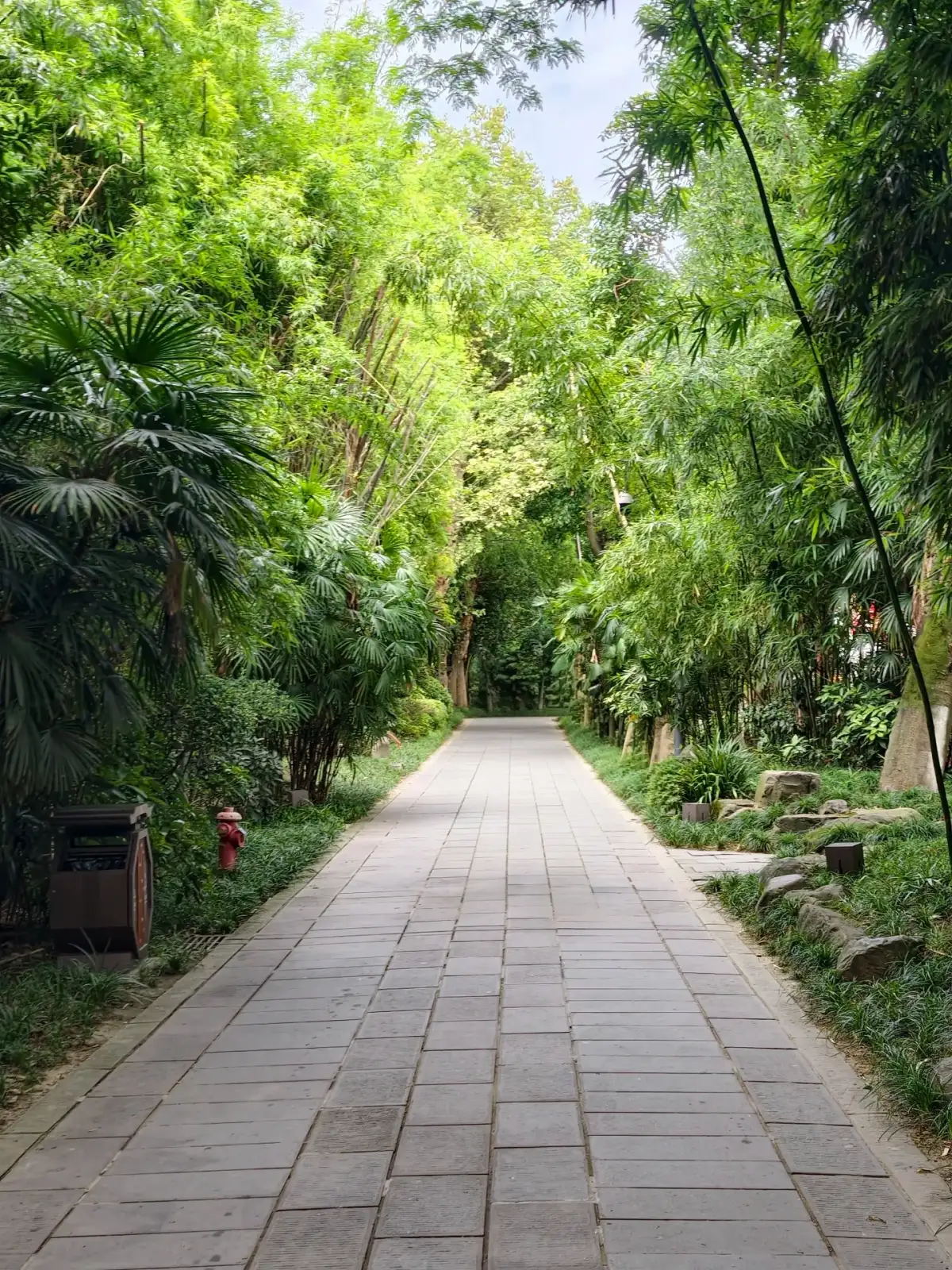
stone-paved path between the bamboo groves on either side of Wangjianglou Park. Photo:Discovery-Based Visuals · Original Post.
After the rain subsides, how to wrap up the trip
Before setting out, divide the day into two parts: things you absolutely must do and things you can skip. Arrival, return, meals, and necessary breaks belong to the first part; waiting for a specific angle belongs to the second. Photography plans can be canceled, but pre-booked services may have specific terms and conditions; therefore, the terms for ticket and transportation changes should be reviewed at the time of booking—one should not assume that everything can be unconditionally refunded or changed simply because of weather conditions.
If the weather isn’t suitable for a stroll through the gardens that day, first check whether there are any exhibitions inside the venue that match your interests and are actually open, then decide whether to switch your focus. Switching locations doesn’t mean every indoor space is automatically a shelter from the rain, nor does it guarantee that photography will be permitted. Reading about a figure or learning about an exhibit is a different activity from photographing the exterior; when caregiving responsibilities or physical conditions require an immediate return, end the visit there.
Save the hotel’s Chinese address and the venue’s full name on your phone to avoid repeatedly searching for them in case of rain. When hailing a ride or asking for directions, specify the exact pickup location rather than just the park’s name; the park’s entrances and exits may not be on the same side. Pack up your equipment before moving to the confirmed pickup spot; do not search for a vehicle while looking at your viewfinder. Do not rely on the route numbers from the original post; instead, base your route on the actual information available on the day of your visit.
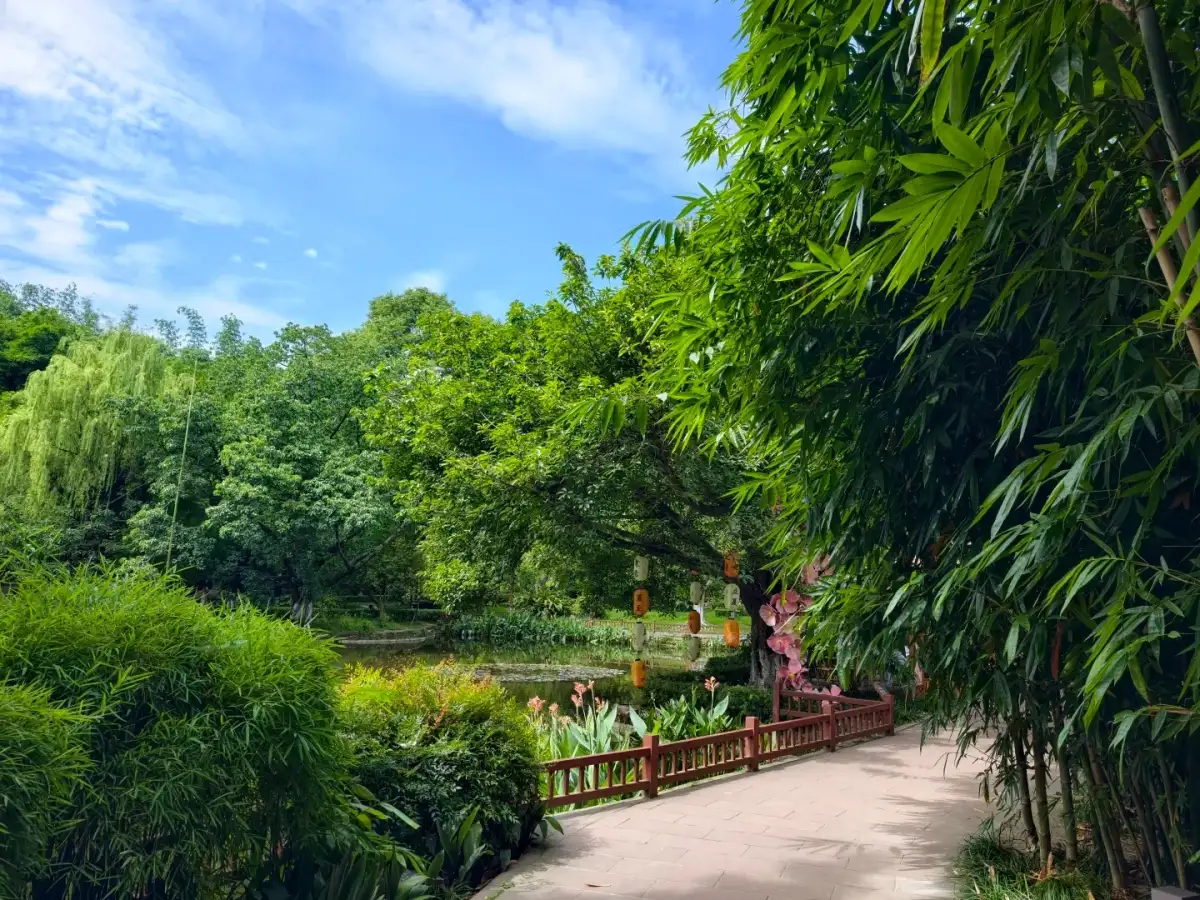
Wangjianglou Park’s bamboo grove, waterfront, and red railings. Photos:Discovery-Based Visuals · Original Post.
When organizing photos, also preserve the parts that weren’t captured.
Upon returning to your lodging, first select a small number of photos in the order they were taken and write a precise description for each one: whether the location has been confirmed, what the image shows, and what you noticed through it. Historical stories that have not yet been verified should be listed under “Questions to Investigate” and not included in the captions for confirmed facts. For plants that have not been positively identified, simply describe them as “bamboo leaves” or “leaves”; the more specific the description, the more evidence is required to support it.
You can frame “what you didn’t capture” as a choice rather than a failed trip. For example, you might not have waited for a panoramic shot that day but observed the building at the end of the path; or, even if you returned early because your travel companions were tired, you still managed to see the exhibits you wanted to see. These are all details that can only be written about based on personal experience; this article merely provides a method for organizing your thoughts and does not create experiences for the reader. The photos and text from the original post cannot be used as your own photographic work or as evidence of your firsthand experience.
When planning your next trip to Sichuan, you may refer to this siteIntroduction to the Sichuan Region, schedule cultural explorations, urban strolls, and mountain hikes at varying intensities. Garden photography in Chengdu on a rainy day doesn’t require a predetermined final image. Only when your equipment, walking pace, companions, and return journey are all adapted to the day’s conditions will your photos become a record of your observations—rather than turning your entire vacation into a mission to chase someone else’s lighting.
Source and Editorial Notes
This article is an original travel interpretation compiled by the Dongxing Travel editorial department based on the cited materials; it is not a firsthand account by the author. The full text of the original post has not been reproduced; accompanying images are used within the scope of authorization and are credited to the author and the source of the original post. They do not serve as proof of actual travel experiences or services provided by Dongxing Travel.
What to Eat? · My View of Kyoto!! It might not be as melancholic as the Du Fu Thatched Cottage in Chengdu... · Travel Notes; Verified/Compiled on: October 3, 2026.
Discovery-Oriented Visuals · Chengdu Wangjianglou Park: The Aesthetics of a Bamboo Grove Hidden in the City · Travel Notes; Verified/Compiled on: October 3, 2026.
Chengdu Du Fu Thatched Cottage Museum · Du Fu Thatched Cottage Museum Content Section · Official Materials; Verified/Compiled on: October 3, 2026.
Chengdu Wangjianglou Park · Wangjianglou Park · Official Materials; Verified/Compiled on: October 3, 2026.