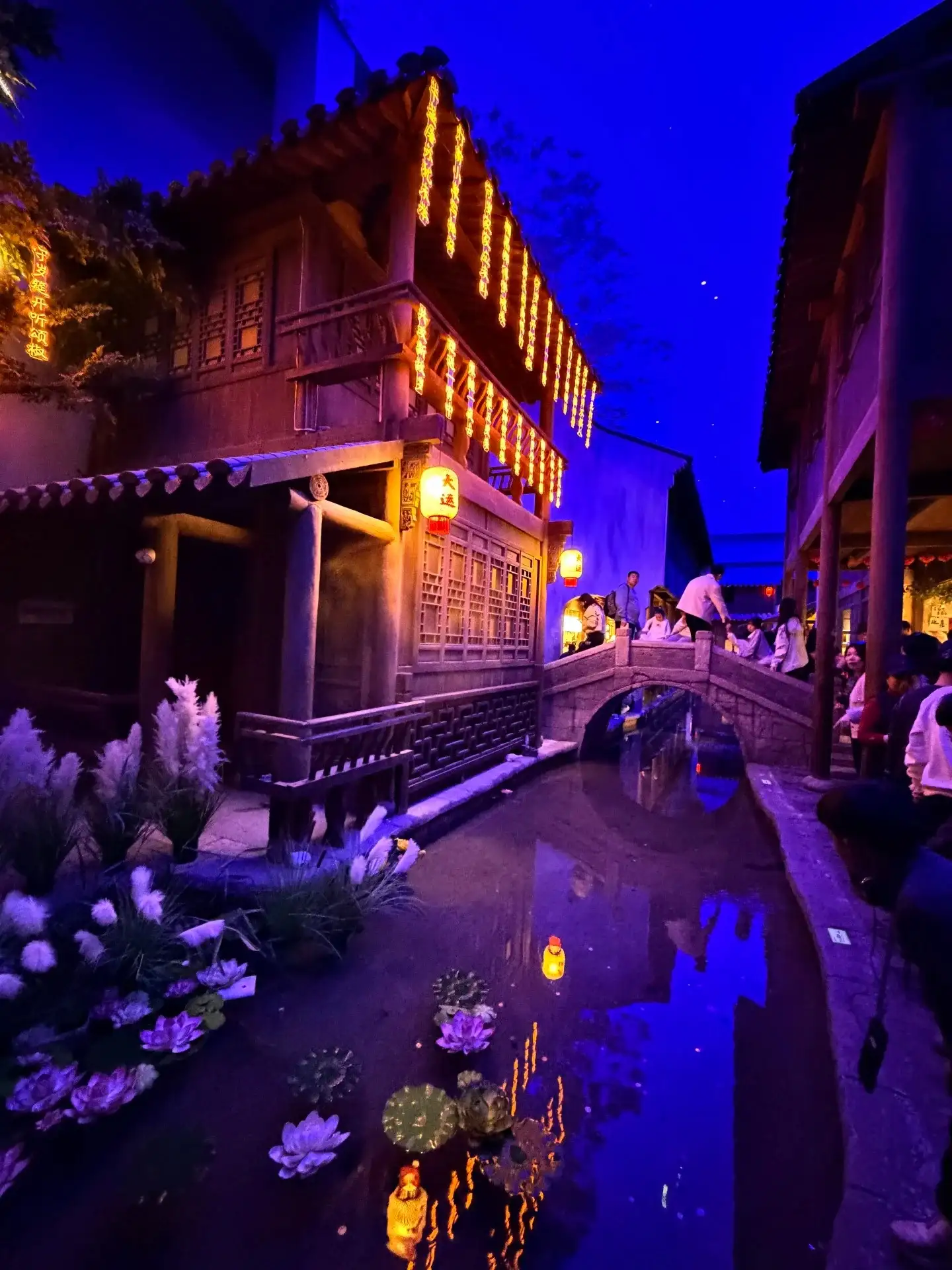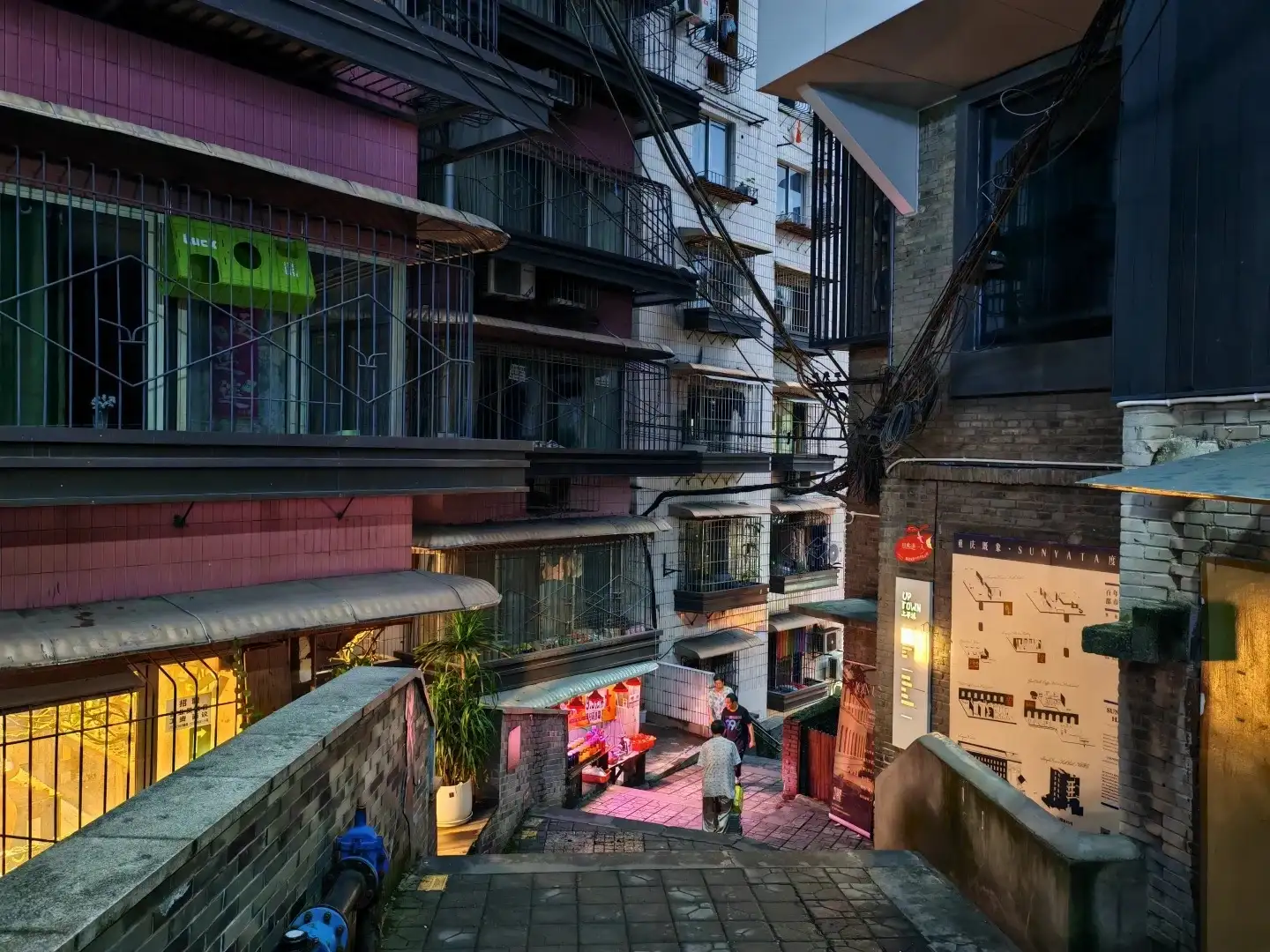
Chongqing’s Old Street at night is often depicted in photos as a scene of lights and river views, but what you actually need to do upon arrival may be quite simple: have a meal, take in some architecture, and finally make your way back to the hotel. If you only have an hour left in the evening, clearly defining your goals will make that time more meaningful. Walking to experience the neighborhood is different from heading out to find a specific shop; the former focuses on public spaces, while the latter also requires coordinating with specific business hours.
小红书作者海二在完整山城巷笔记里提到当次到访较晚,部分店铺陆续结束营业,因此没有细看所有历史建筑。本篇使用的线索是这份观察里的“晚到”与“内容取舍”,原帖时刻不作为整条街每天的营业时间。它为行程提出一个很实用的问题:你想见到的是街道的形态,还是某项必须在营业时进行的活动?
First, take care of the most urgent task of the day.
If you’re arriving from the airport, a train station, or another tourist attraction and haven’t eaten yet, you can schedule dinner during this time. First, use the exact address of your hotel or restaurant to pinpoint your location, then decide whether a short walk after dinner is appropriate. When you’re hungry, wandering back and forth through unfamiliar, hilly streets in search of a restaurant will drain the energy you’d intended to save for enjoying the night views. If you know exactly where you’re eating, you’ll likely shorten or skip the walk altogether.
If you’ve already eaten and just want to explore the neighborhood, choose an easily recognizable starting point and a clear destination. The goal isn’t to walk through the entire old town, but to see how a stretch of street unfolds along the terrain. Once there, pay attention to the relationships between walls, doors, ramps, and street-facing spaces, and allow yourself a few brief stops to take photos. When the route is too long, architectural details often become mere background as you rush from one place to the next.
If there’s a bookstore, exhibition hall, or restaurant you’re particularly eager to visit, check its operating hours and reservation requirements before leaving your lodging. This information determines whether the trip is worth taking—you can’t assume a shop is open just because you’ve seen photos of the street at night. If you find a place has closed, you can make a note of what you wanted to see and turn it into a specific goal for the next day; for tonight, plan your itinerary around the public spaces that are already accessible.
The neighborhood can be explored at night, but it’s best to save the architectural details for another time.
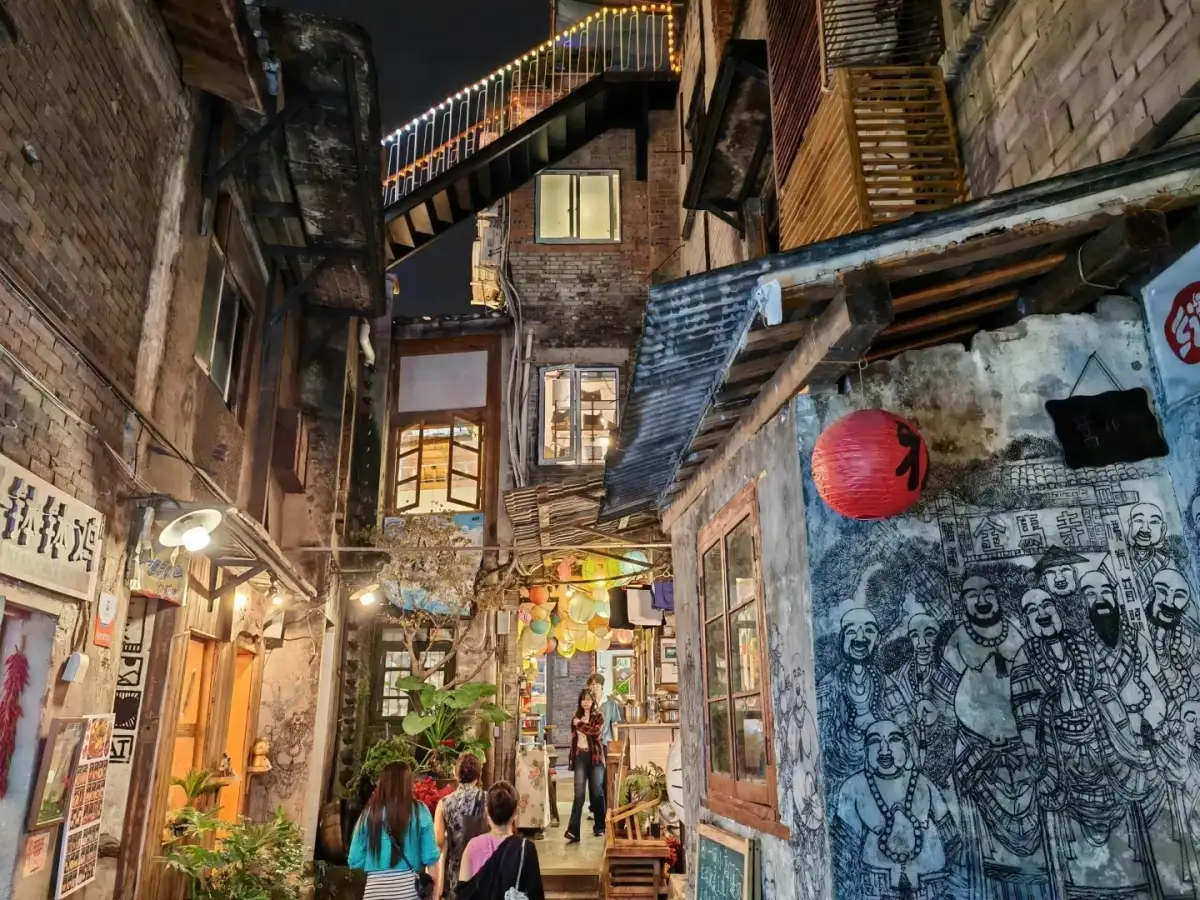
of Chongqing’s Mountain City alleys—with their nighttime shops, old walls, and lights. Photo:Hai Er · Original Post.
Observing at night makes it easier to see the overall layers of the streets and alleys—such as how paths curve, how lighting reveals eaves and walls, and how buildings overlap with the distant city skyline. It provides a sense of spatial impression. Historical inscriptions, intricate patterns, or the content on display panels, however, require proper lighting and closer viewing conditions. Setting aside separate time during the day for these will make for a more detailed viewing experience.
Hai Er noted in the original post that shops coexist with historic buildings and mentioned that he hadn’t fully experienced the historical context. This sense of an incomplete observation is worth preserving as a question for the next visit. Travelers can note just one building name, one storefront style they’d like to understand, or one public information sign during the evening, then search for their origins using official resources during the day. Neighborhood culture is built through continuous exploration and accumulation; there’s no need to fully understand everything on every outing.
For photographers, the interplay of light and shadow at night can make structures stand out more clearly, but it can also make ground-level details harder to make out. First, identify a safe spot to stop, then consider your composition. For a short stroll, it’s better to snap a quick shot of the overall scene, put your camera away, and keep walking than to repeatedly adjust your tripod at narrow corners. When photographing identifiable residents, shop clerks, or tourists, you must respect their wishes and rights regarding both photography and the public use of the images.
For those who don’t take photos, you can still assign an observation task for this hour—such as finding a path that transitions from one elevation to another. A city’s elevation changes affect the connections between doors, floors, and roads, and you don’t need to enter every store to explore these features. Companions can compare the details each noticed first; even a short walk can create shared memories of Chongqing.
on the map—and you’ll also need to factor in elevation changes.
Information on Shancheng Alley from the Chongqing Municipal Commission of Housing and Urban-Rural DevelopmentThis section describes the area’s topography—nestled against the mountains and facing the river—and the locations of walking trails. This article was verified against official records on October 3, 2026. Elevation changes are a key factor when choosing a route; the straight-line distance on a map does not directly indicate the difficulty of the walk. The actual layout of entrances, exits, ramps, and stairs should be confirmed on-site and through the latest guide materials.
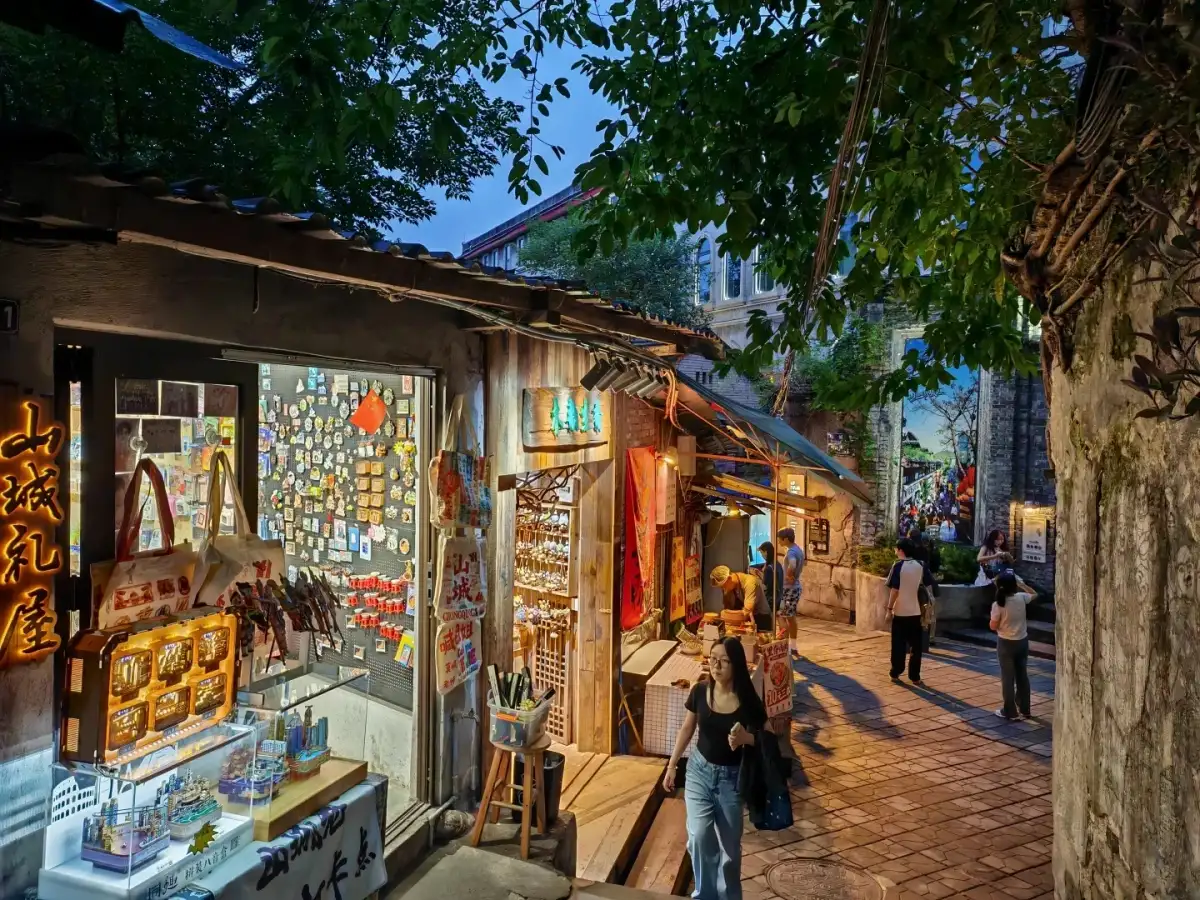
shopfronts along the streets of the mountain city, illuminated by the lights, and pedestrians in the distance. Photo:Hai Er · Original Post.
near your accommodation. It’s a good idea to compare the arrival point and return point first to see if you’ll need to walk back in the opposite direction. If members of your group have varying levels of difficulty navigating uphill and downhill terrain, let the planner know this in advance. If you prefer mostly flat terrain, look for routes with documented evidence of this; just because a particular section looks flat doesn’t mean the entire route is suitable for strollers or people with limited mobility.
Storing your luggage before heading out can also simplify city walking. Navigating steep, stepped alleys while dragging a suitcase is a very different experience from exploring the streets unburdened. If you happen to be looking for a place to stay in the evening, check in first, then decide how to spend the rest of your time. If you’re staying near the old street, be sure to ask about the pickup or drop-off location—even if a place is “right on the old street,” you may still have to walk a bit to reach the entrance.
When walking in a group, agree on a clear “round-trip” rule: stop at a specific point, view a particular attraction, and then return via a predetermined route. When everyone knows the boundaries of the walk, there won’t be arguments midway about whether to add another “Instagram-worthy” spot. The last hour of the day is especially well-suited for a limited number of destinations, allowing you to save your energy for more important activities later on.
Cizikou and Shancheng Alley—there’s no need to tick them all off your list in a single night.
Chongqing’s old streets do not all offer the same kind of experience.Map of Tourism and Leisure Districts published by the Chongqing Municipal GovernmentThis article, which introduces different neighborhoods separately, was verified on the same day. It is intended to help you get your bearings; specific information about that evening’s traffic and business hours should be checked separately. By choosing one area at a time, you can keep your post-dinner stroll flowing smoothly, rather than spending most of your time moving from one place to another.
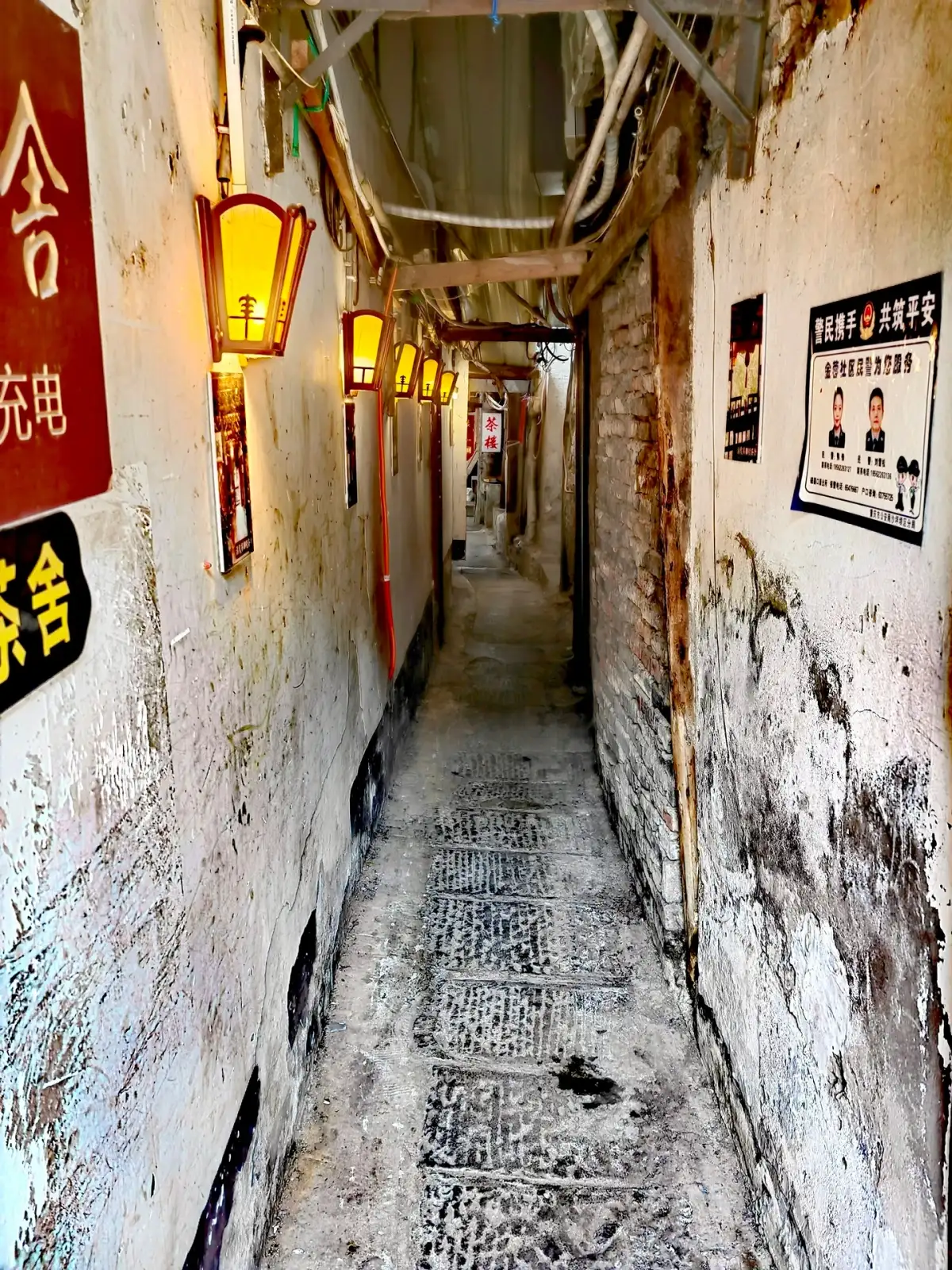
The narrow, winding alleys of Ciqikou, with lanterns hanging between the old walls. Photo:Zhongshan Yike · Original Post.
小红书作者中山逸客的磁器口笔记注意到饮食、石板路与街区空间,和海二在山城巷晚到的观察形成不同焦点。如果这晚最期待尝食物,应从实际可提供的菜品与餐饮条件选择;若最期待老城地形,可以从对应公开路径入手。无需将两个地名都写进当天,才证明来了重庆老街。
Your culinary interests also have specific limits. If you can’t eat spicy food or have dietary restrictions, ask about the ingredients, seasonings, and preparation methods before deciding what to order. By clearly communicating your taste preferences, a satisfying meal will make your evening more enjoyable. The personal preferences mentioned in the original post do not mean that the same foods are suitable for every international traveler; the restaurant’s actual offerings and your individual needs are the deciding factors.
Once you return to the hotel, set aside this hour as a clue for the next day.
You can jot down three small details: the names of the streets you walked today, the one spot you’re most eager to explore further, and whether you should visit during the day or at night next time. These three notes connect a short stroll to the rest of your journey—you don’t have to fill them in that very night. If today was mainly about eating and resting, that’s a clear decision too; when you return to the neighborhood tomorrow, you’ll have a better idea of what you want to see.
Then from this siteList of Tour RoutesOnce you have a confirmed itinerary, discuss with your advisor whether it’s appropriate to include a stop in Chongqing. Providing your accommodation location, arrival time that day, dietary needs, and preferred walking pace is far more helpful than simply saying, “Arrange a night tour of Chongqing.” An hour on the old street can feel short, yet still be fulfilling: choose the part that interests you most from what’s possible at the time, and let it come to a leisurely close.
Source and Editorial Notes
This article is an original travel analysis compiled by the Dongxing Travel editorial team based on cited materials; it is not a firsthand account by the author. The full text of the original post has not been reproduced; accompanying images are used within the scope of authorization and are credited to the author and the source of the original post. They do not serve as proof of actual travel experiences or services provided by Dongxing Travel.
Hai’er · In the alleys of the mountain city, discover the authentic Chongqing! · Travel Notes; Verified/Organized on: October 3, 2026.
Zhongshan Yike · Ciqikou—Nightlife, Spicy Flavors, and Cobblestone Streets: This Is the Real Chongqing · Travel Notes; Verified/Organized on: October 3, 2026.
Chongqing Municipal Commission of Housing and Urban-Rural Development · Mountain City Alley Trail Information · Official source; Verified/compiled on October 3, 2026.
Chongqing Municipal People’s Government · Map of Chongqing’s Tourism and Leisure Districts · Official source; Verified/compiled on October 3, 2026.