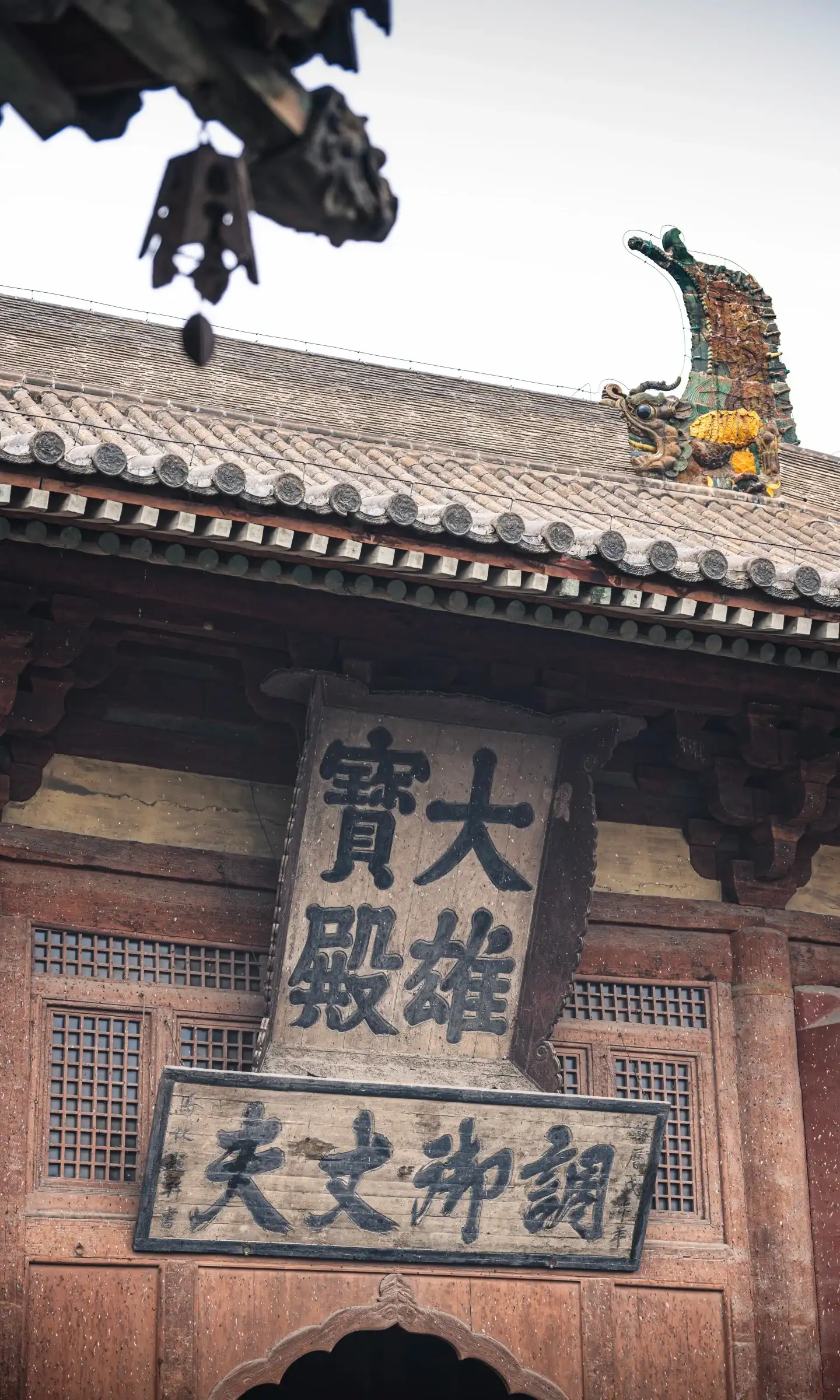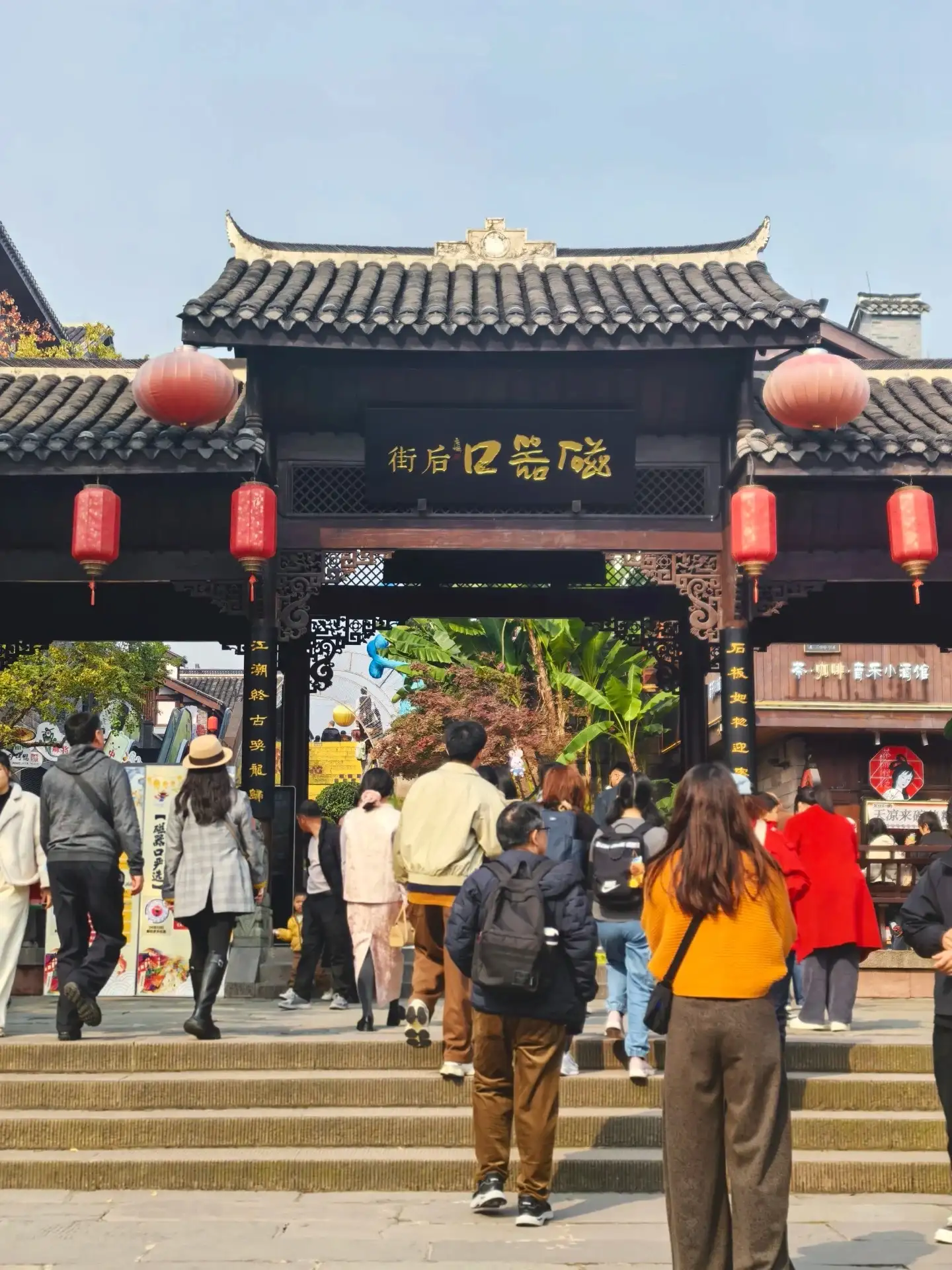
磁器口的名字里有瓷器,许多游客到达后却先看见花椒、麻花、茶馆与新店。小红书作者中山逸客把它写成有石板路和茶香的街镇;本地作者可乐不加冰📸则注意到后街、咖啡和文创带来的变化。这两种观看都属于今天的磁器口,若沿名字向后追一层,街边一只普通碗也能引出一段重庆的生产与运输历史。
visiting the ancient town, there’s no need to start by looking for the most expensive souvenir. Instead, you can explore the relationship between the mountains, the sloping roads, and the Jialing River by asking yourself, “Where did this bowl come from, and how did it leave this place?” This connects the bustling marketplace to labor and logistics, and helps visitors understand why a famous old street was once so vital to daily life.
behind the name lies more than just a kiln
the historical place-name records from the Chongqing Municipal Bureau of Civil Affairs, the porcelain from Ciqikou is linked to production at Qingcaopo at the foot of Mount Gele, and the associated civilian pottery and porcelain kilns are referred to as the Shaping Kilns. The ancient town served as a hub for sales and transshipment, while the kilns, raw materials, fuel, and the riverside port together formed the industry. The place of production is not necessarily the same as the place where the goods are displayed.
This fact also offers insights for today’s visitors. The fact that ceramics are sold on the streets does not automatically prove that every item comes from the traditional Shaping Kiln; nor does the fact that an object is sold in Ciqikou mean it is a local cultural relic. If you are interested in making a purchase, you should ask about the place of manufacture, materials, creator, and intended use, and have the merchant provide specific details—rather than relying solely on the name of the ancient town to ascribe historical significance to the item.
Official records mention the Jiang family’s immigrant background and their involvement in the porcelain trade. For the average traveler, there is no need to memorize the entire family history; simply understanding that skills are carried to new places through population movement is enough to grasp how Chongqing’s culture has continuously absorbed external labor expertise. Local materials and the mountainous terrain provide the foundation for production, while the craft of porcelain-making transforms them into usable bowls, jars, and other vessels.
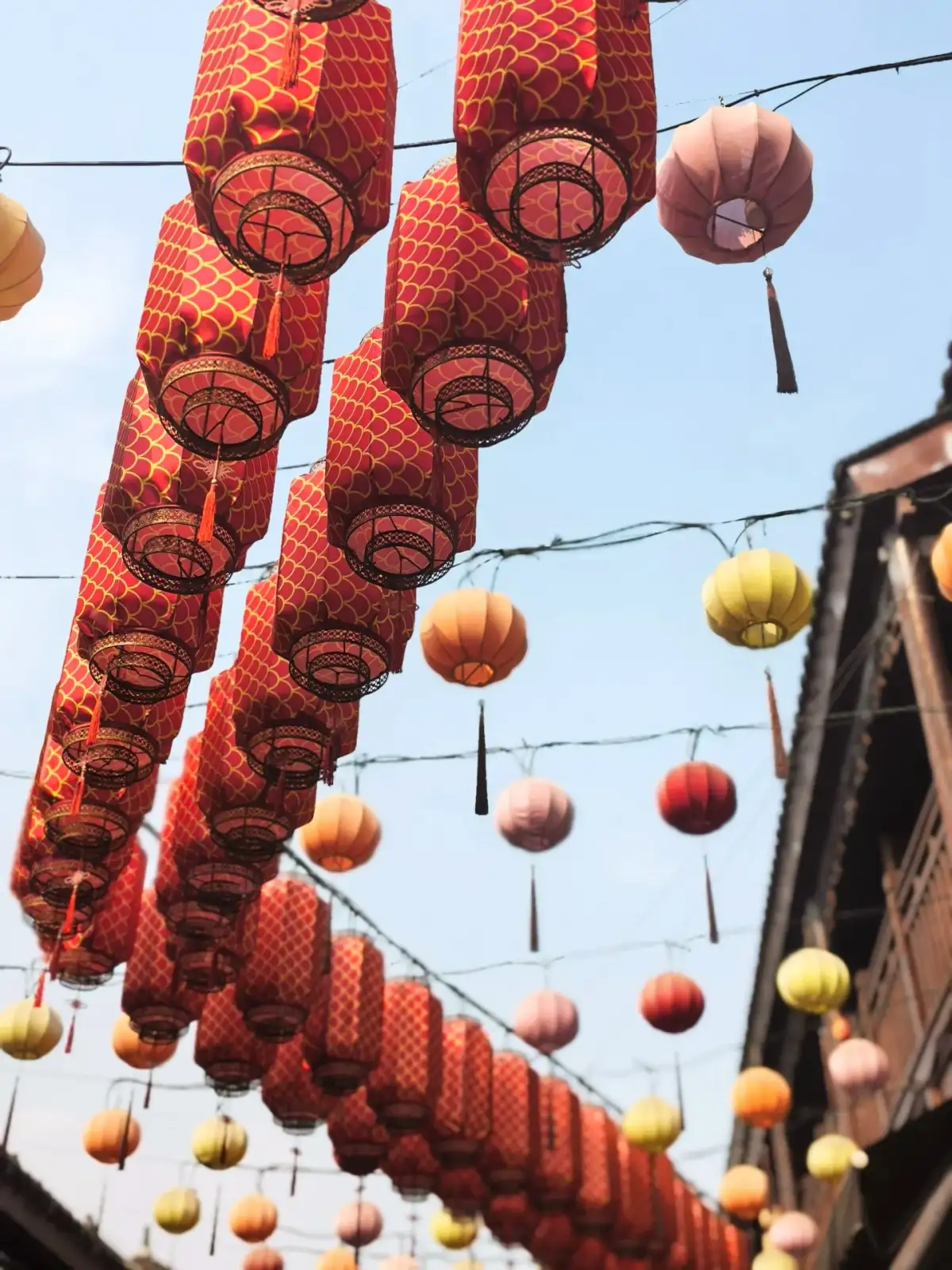
streets and alleys lined with red lanterns. Photo:No Ice in My Coke 📸 · Original Post.
When examining a piece, start by considering how it serves daily life: the rim, the base, its capacity, and how it feels in your hand. If the exhibition explains the materials and craftsmanship, incorporate that information as well. The cultural value of everyday ceramics does not stem solely from their rarity or preciousness, but also from their widespread use in ordinary life—in eating, storing, and trading.
a stretch of the slope once served as a transport route
both the porcelain research published by the Chongqing Archaeological Institute and the records from the Civil Affairs Bureau discuss the transportation links between Qingcaopo and Ciqikou, including the historic route connecting to Zhengbei Road. To reach the riverbank from the production sites, ceramics had to be transported overland before being loaded onto ships at the port for shipment. The slopes and roads of the mountainous terrain are not merely a backdrop that today’s tourists find exhausting to walk on; they once transformed the very nature of labor.
the old transportation routes listed in historical records should not be directly used as walking guides today. Urban roads, land use, and access conditions have all changed; visitors can use these records to understand the direction of logistics but need not retrace each segment exactly as shown on ancient maps. The streets open to the public within the ancient town on any given day provide sufficient clues: observe how the streets connect to the waterfront or up the slopes, and consider why those transporting goods would need such pathways.
If children find it difficult to understand the concept of a “transshipment port,” you can start by describing the journey of a single bowl: raw materials enter the kiln, are shaped into vessels, then transported by land to the water’s edge, and finally travel down the river to another market. This simple chain separates production, transportation, and sales; when children see shops on the street, they’ll understand that the store counter is just one part of an item’s journey.
adults, one might further inquire about how a port’s function might adapt following changes in transportation methods. Documents from the Civil Affairs Bureau note that the development of roads and railways altered the role of water transport; today, Ciqikou has shifted toward tourism and neighborhood retail, with its backstreets, cultural and creative businesses, and coffee shops embodying new ways of using the space. This transformation does not mean the ancient town has lost its essence; rather, it illustrates that the neighborhood must find its place within the context of modern urban life.
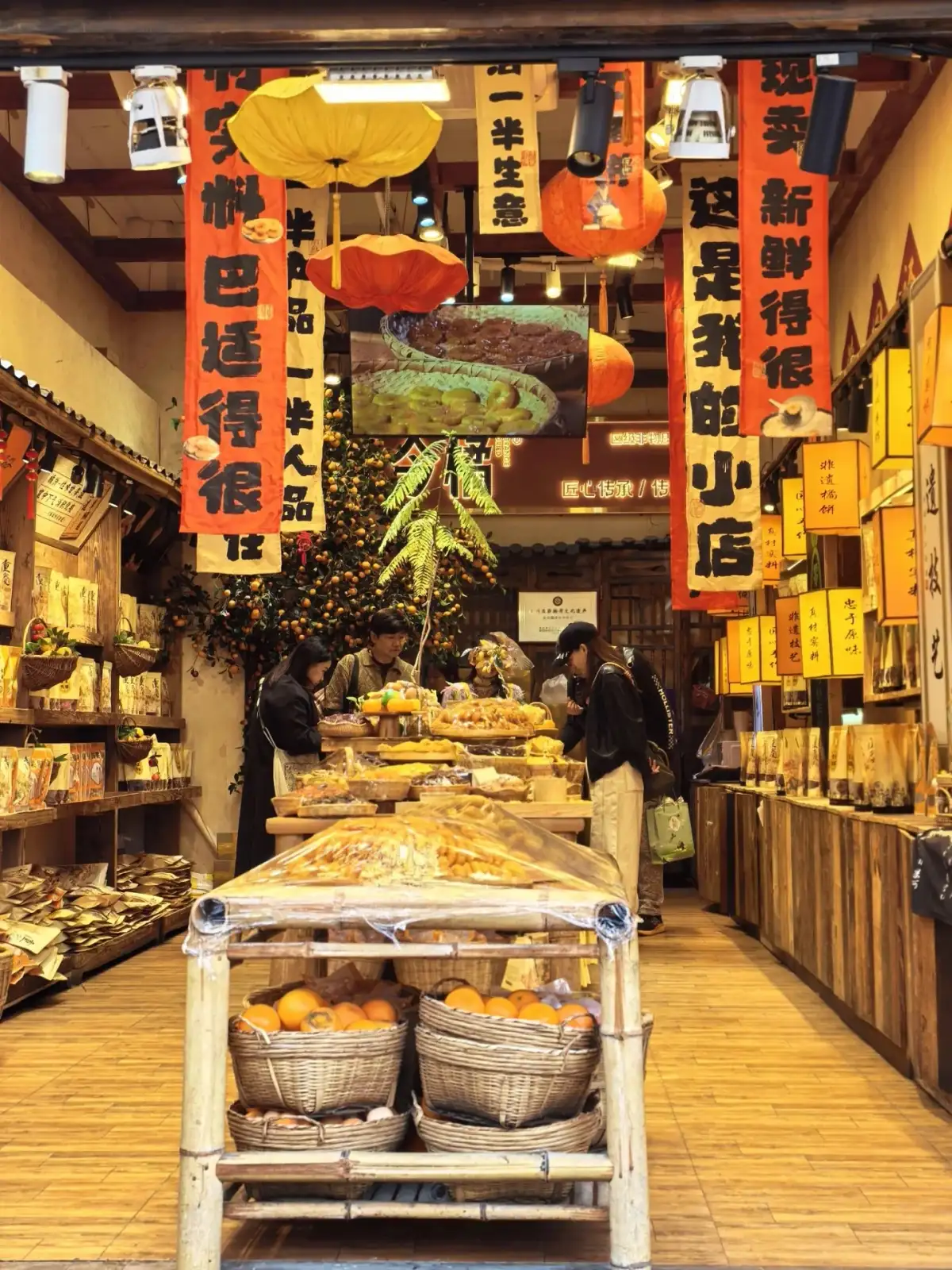
Wooden shelves and the backs of customers inside the store. Photo:No Ice in My Coke 📸 · Original Post.
along the banks of the Jialing River, bringing history and the present together
the Chongqing Municipal Government’s description of Cizikou’s topography, the environment is characterized by the Jialing River, streams, and surrounding mountains. As visitors move from the hillsides toward the waterfront, they can re-contextualize the ancient town within a broader geographical landscape: the area where the kilns were located, the roads leading to the wharf, and the direction of river transportation all collectively form a system that once functioned seamlessly.
today’s riverside areas, visits should be arranged according to on-site guided tours and opening schedules. In 2026, the Chongqing government reported the opening of a new Ciqikou ferry terminal, indicating that the waterfront’s functions continue to evolve; if you wish to take a water tour, you should check that day’s official information for specific schedules, fares, boarding and disembarking procedures, and eligibility requirements. The existence of a pier does not guarantee that boats are available at all times, and historical shipping routes do not necessarily correspond to today’s sightseeing routes.
photography enthusiasts, shift your focus from the dense array of storefront signs to three types of details: a street segment with varying elevation, a group of objects shown at life-size scale, and a distant view that clearly illustrates the relationship between the Jiang River and the architecture. These three photos—representing transportation, usage, and space—when arranged side by side at home, will tell the story of Ciqikou more effectively than a series of similar shopfronts.
“Coke Without Ice” 📸 has noted new shops and back alleys that can serve as points of observation for contemporary changes. When visiting, there’s no need to expect every shop to maintain the same “ancient” appearance, nor should modern renovations be taken as evidence of historical architecture. Traces of different eras coexist within a single neighborhood; by discerning their differences, travelers can gain a more authentic perspective on urban renewal.
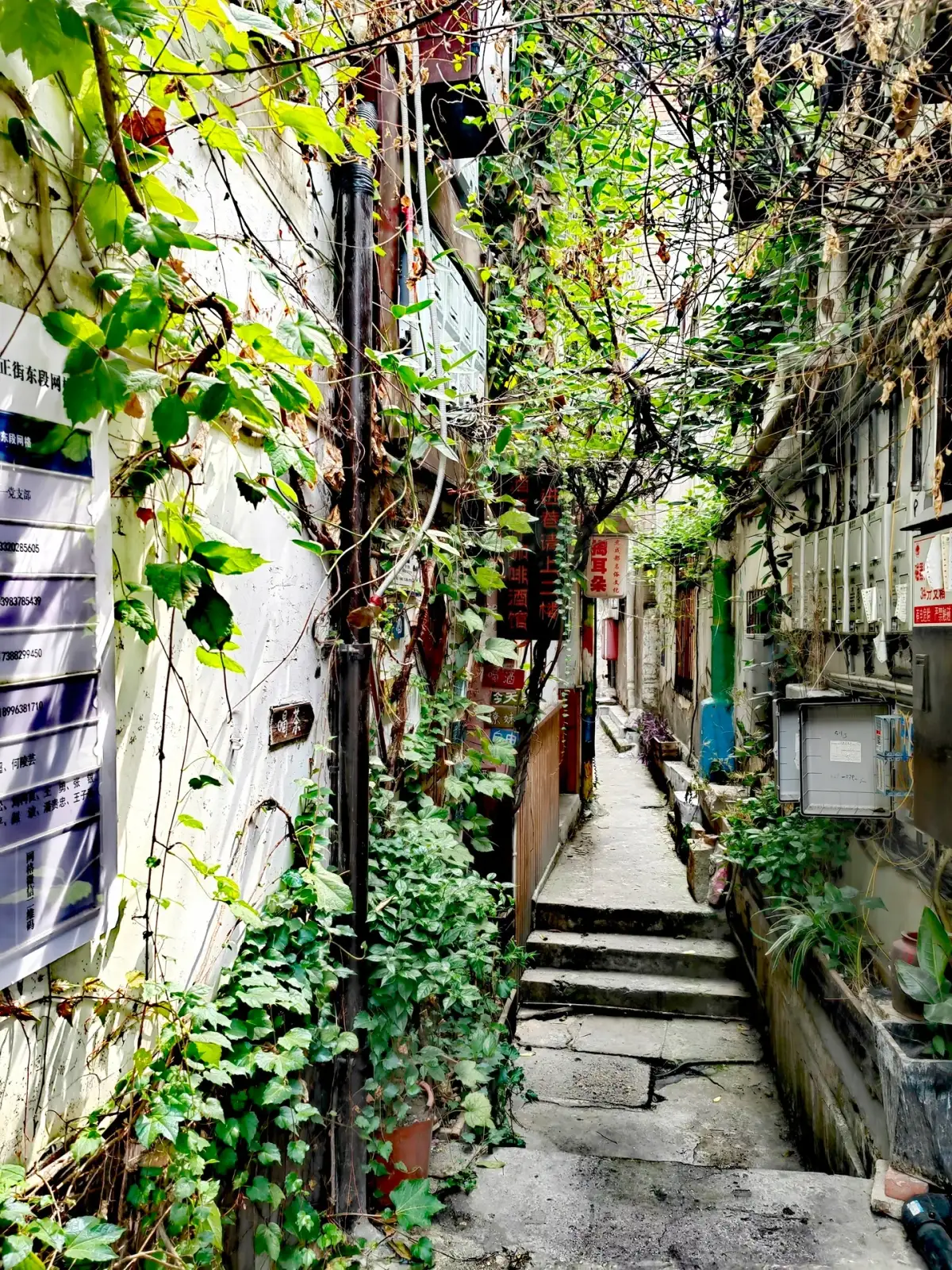
The stone steps in the narrow, greenery-covered alleys between the old houses of Ciqikou. Photo:Zhongshan Yike · Original Post.
If you wish to visit cultural exhibitions or specific courtyards, you can confirm their opening hours and guided tour content with the operators before your trip. If you’re interested in porcelain, ask the guide to explain the local production history; if you’re more interested in architecture, focus on the courtyards and streetscapes. There’s no need to cram all the exhibits, shopping, and dining into half a day—the clearer your focus, the more memorable your visit will be.
preparing the Chinese and English names “Ciqikou, Jialing River, and Shaping Kiln” for foreign travel companions can also reduce confusion caused by place names. The character “磁” in Ciqikou should not be interpreted in the modern sense of “magnet”; once its connection to the porcelain trade is understood, the origin of the name becomes clear. As for the historical rumors surrounding Longyin, these can be labeled as “legends” to distinguish them from verifiable records of production and transportation.
enjoying a meal or sipping a cup of tea can still be an important part of a visit to Ciqikou. As long as you place these experiences within the narrative that stretches from the bowl to the river, your rest can seamlessly connect with cultural exploration: the objects in your hands, the shops along the street, and the water beyond the windows all work together to interpret this ancient town. What you take with you upon leaving need not be a souvenir; it could also be a new insight into how ordinary objects traverse cities and mountains.
a stroll through the town, families can agree that each person will pick one item they’d like to learn more about, then share over lunch where it came from and how it was used. This simple activity requires no additional purchases and doesn’t involve walking very far, yet it allows both shop-lovers and history buffs to find common ground during the same outing.
Sources and Editorial Notes
This article is an original travel analysis compiled by the Dongxing Travel editorial department based on cited sources; it is not a firsthand account by the author. The full text of the original post has not been reproduced; accompanying images are used within the scope of authorization and are credited to the author and source of the original post. They do not serve as proof of actual travel experiences or services provided by Dongxing Travel.
Zhongshan Traveler · Ciqikou—The hustle and bustle, spicy flavors, and cobblestone streets—this is the real Chongqing · Travel Notes; Verified/Compiled on: October 3, 2026.
No ice in my Coke 📸 · 📍Chongqing Citywalk | Ciqikou · Travel Notes; Verified/Compiled on: October 3, 2026.
Chongqing Municipal Bureau of Civil Affairs · New Chongqing · Old Place Names | Ciqikou · Official sources; Verified/Compiled on: October 3, 2026.
Chongqing Archaeology · A Study of Ciqikou Porcelain · Official sources; Verified/Compiled on: October 3, 2026.
Chongqing Municipal People’s Government · Ciqikou Ancient Town · Official sources; Verified/Compiled on: October 3, 2026.
Chongqing Municipal People’s Government · Jialing Xiaodu Ciqikou Ferry Terminal Officially Opens · Official sources; Verified/Compiled on: October 3, 2026.
Look beyond the main street
The main street of Ciqikou Ancient Town shows lively commerce, while its Jialing River trading port theme benefits from a connection between slopes and river. A Chongqing hillside walk can follow an open lane towards the waterfront. Do not assume every present-day shop demonstrates ceramic production.
Plan the climb back
Confirm open paths, pickup points and how much slope your group can manage. A descent may be easier than the return climb. Follow water-level and access notices near the river, shorten slippery stretches after rain, and plan a seated tea stop within the route.
Planning references