Dongxing Travel Editorial Department · Travel Diaries and Pre-trip Reading
Starting from the foot of the mountain, the direction of the ancient town becomes clear
A defining feature of Huishan Ancient Town is the close proximity of the mountain to the town. The distant mountain range isn’t merely a backdrop; through sloping paths, vegetation, and courtyard walls, it gradually enters the realm of the pedestrian. If you’re planning a half-day visit to Wuxi, start by observing the relationship between the mountain’s base and the waterfront street, then choose a memorial hall or Jichang Garden to explore in depth. If you approach with the preconception that “all ancient towns in Jiangnan are pretty much the same” and limit yourself to a stroll down the commercial street, you’ll easily miss the most distinctive features of this place.
Before setting out, identify the ancient town district, historic sites, and the Wuxi-Huishan forest area on the same guide map. The official Wuxi tourist handbook also specifically notes that admission fees and attractions vary by area. First, decide which two types of spaces you want to visit so you can choose the appropriate entrance. The ancient town, gardens, and mountain hike can be combined, but each requires its own time and physical effort; if this trip focuses primarily on architecture, treat the mountain hike as an optional activity—you don’t have to visit every area to consider the trip complete.
Eaves and flora at the Huishan Fan Wenzheng Memorial Hall. Image source: Xiaohongshu · Xiaoman🌿
A row of courtyard gates, each hiding a different figure of remembrance
The cluster of ancestral halls in Huishan is a key clue to understanding the neighborhood. According to official archival records, this area is home to ancestral halls dedicated to various surnames and historical figures, whose architectural styles often resemble those of traditional Jiangnan dwellings. Consequently, the courtyard gates seen along the street are not merely a uniform row of scenery; behind them lie family histories, the legacies of venerated ancestors, and local memories. By first examining the lintels and cultural heritage descriptions, then deciding which one to enter, a casual stroll can gradually transform into a visit with specific objectives.
For travelers unfamiliar with Chinese clan culture, ancestral halls can be understood through their spatial functions: the gates and courtyards at the front facilitate entry, while the halls at the rear emphasize commemoration and ritual. They should not be simply classified as temples, nor should every one be treated as an ordinary residence. If you cannot decipher the inscriptions on the plaques, ask a guide to explain the names and purposes of the structures, then observe how the scale of the courtyard corresponds to that purpose. Access to different courtyards may vary; even if a gate is open, check the management notices first, and do not use rooms occupied by staff or residents as visitor passageways.
Step into a courtyard and observe how light creates layers
Once you’ve chosen a memorial hall to visit, take a moment to pause in the center of the courtyard. The walls and eaves frame the light into defined shapes, and the contrast between the deep interior of the hall and the open courtyard creates a space that feels quieter than the streets outside. First, observe the placement of the columns and doors; then, notice how the roof covers the side corridors—this reveals the order of entry. While the ornamentation may be minimal, the materials and proportions are sufficient to create a clear focal point.
, take one photo of the outer gate, one of the courtyard, and one of the details under the eaves. These three photos answer three questions: how the building faces the street, how people are led into the courtyard, and finally, where they linger. Don’t just photograph the plaque and overlook the space it occupies, nor use the vague term “century-old residence” to replace a verifiable building name. Restored sections and original components may coexist; the age and original condition must be determined based on the accompanying descriptions. Use your eyes to confirm colors, textures, and locations—do not infer a structure’s age solely based on its weathered appearance.
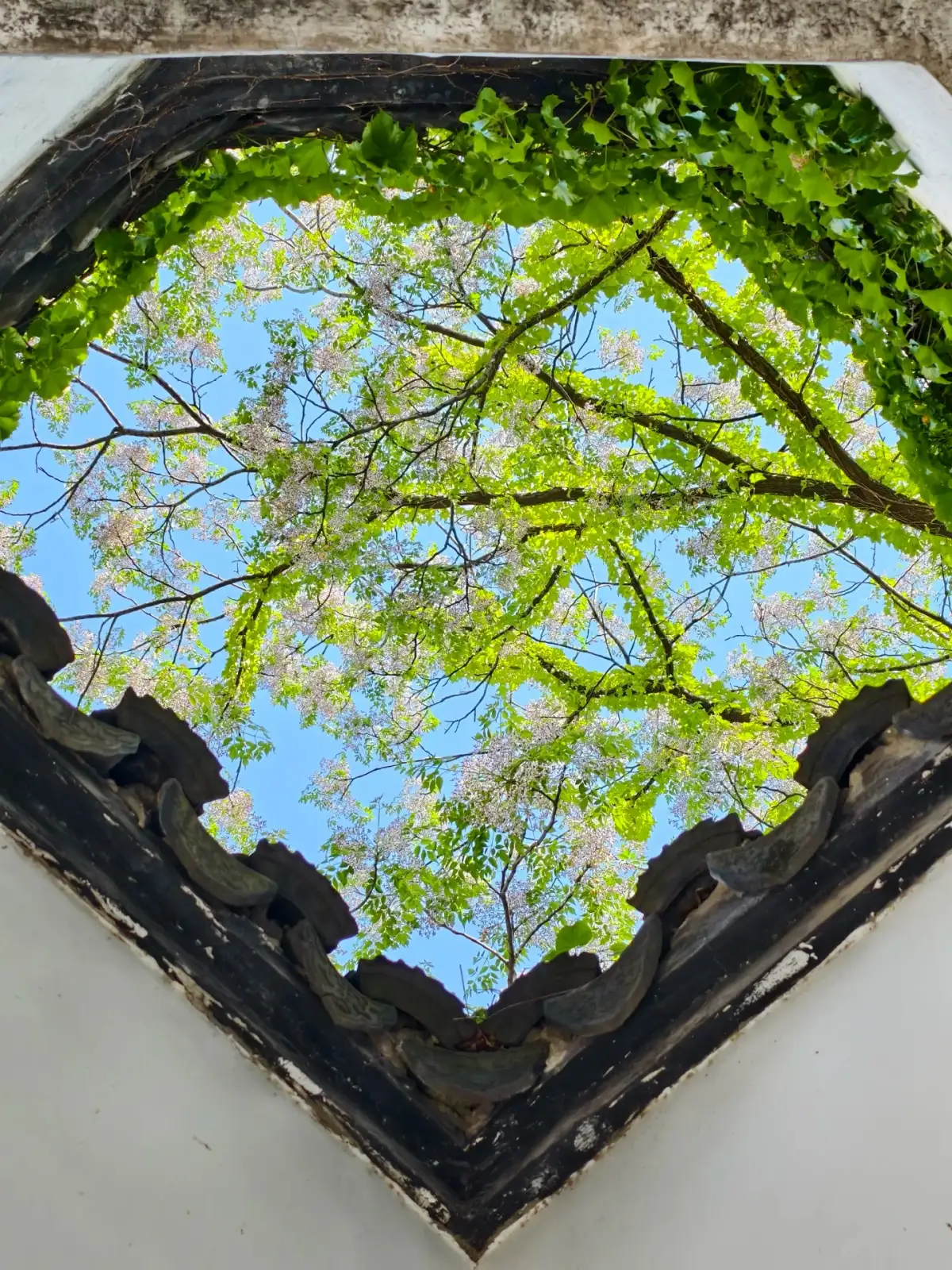
A photograph of the flowers and trees at the Fan Wenzheng Gong Shrine also suggests a way to “read” the courtyards from beneath the eaves. When looking upward, the sky is framed into an irregular small patch by the roof, with tree branches passing through this opening; the weight of the walls meets the lightness of the flowers and leaves within the same frame. When visiting in person, there’s no need to time your visit for a specific flowering season; when the branches are bare, the roof tiles and the upturned eaves become more clearly visible. You can start by checking whether the roofs of the two adjacent buildings are at the same height, then observe how water drains between them and how natural light is allowed in. By examining the architecture in this way, you can understand the layout of a courtyard without entering every room. If the plants on-site are protected, observe them from the existing walkways without moving any potted plants or branches.
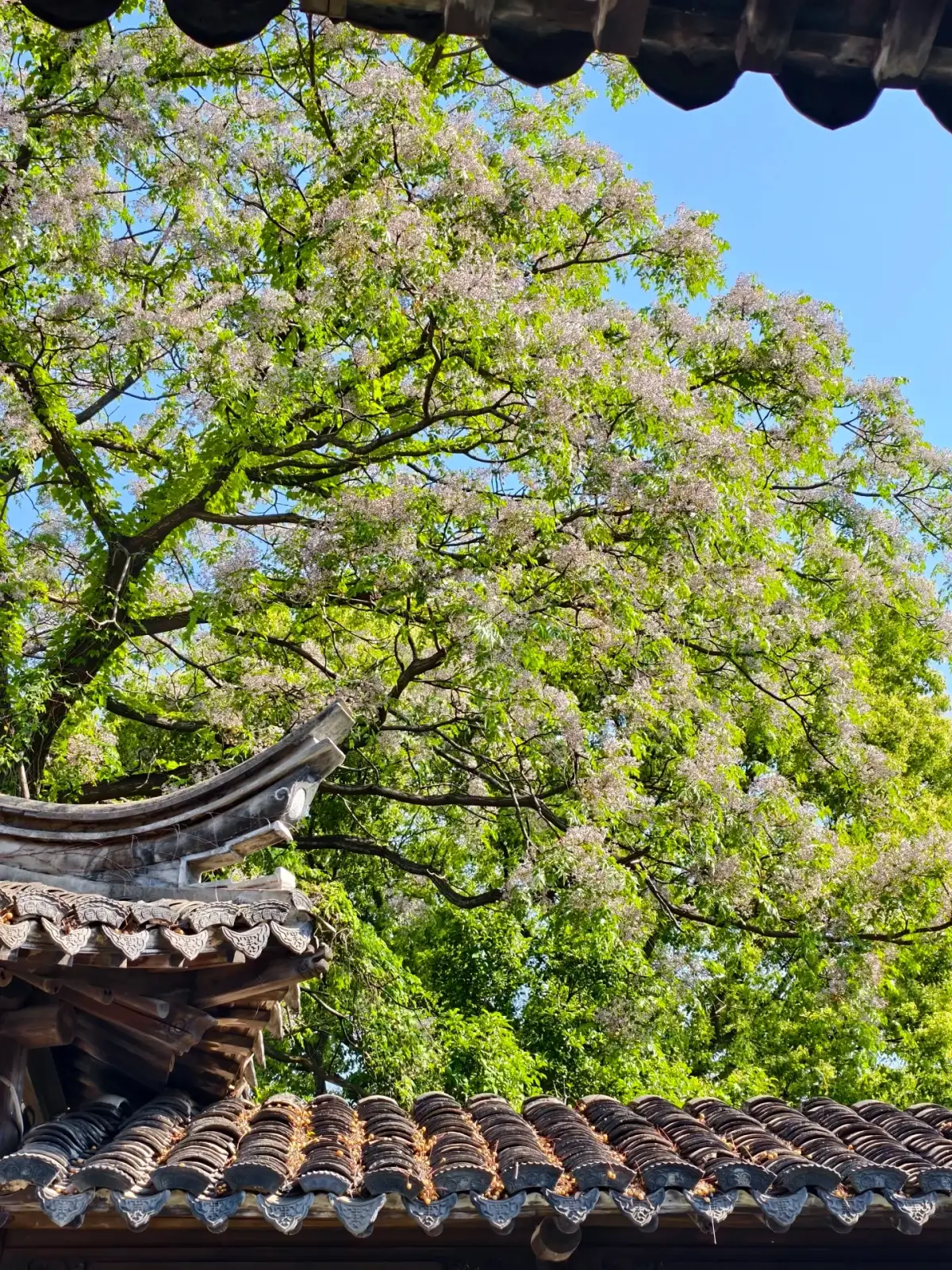
The eaves of the Fan Wenzheng Gong Shrine and the spring tree canopy. Image source: Xiaohongshu · Xiaoman🌿
On Shuishijie, the river and the ancestral halls create a sense of distance between them
Leaving the courtyards and returning to the waterfront street, you’ll notice that the visual perspective suddenly widens. The walls and gate towers on the opposite bank emerge across the water, their eaves forming a continuous line, while nearby bridges break up the repetition. You can catch a glimpse from the bridgehead, then walk along the shore to the next corner to compare how the architecture appears more complete when reflected in the water. The water not only provides reflections but also creates a sense of distance within the dense neighborhood, making the relationships between the courtyard walls easier to discern.
It’s best to take this walk at a leisurely pace, but there’s no need to wait until every street is completely empty. At intersections with heavy foot traffic, you can first turn onto another public road; when vehicles or delivery trucks are passing, step back to a safe location. The low steps along the riverbank are not an invitation for visitors to approach the water’s edge; simply keep your distance in slippery areas. The tranquility captured in photographs may stem from the time of day and the composition—it does not guarantee that the site will be empty during your actual visit. Focus your observation on the arrangement of the bridge arches, stone embankments, and walls, and you won’t lose sight of the main subject even as the flow of people changes.
Jichang Garden: Bringing the Mountain Inside the Courtyard Walls
If you’re interested in gardens, Jichang Garden is worth setting aside some extra time to explore. Wuxi archival records describe it as a foothill garden, emphasizing borrowed scenery, rock arrangements, and water features. Compared to courtyards fully enclosed on flat ground, here you can observe how the surrounding mountain contours contribute to the garden’s vistas: a tree top or a glimpse of a distant mountain’s outline can provide the pond within the walls with a more expansive backdrop.
There’s no need to rush to find the so-called “best angle” during your visit. Stand by the pond and first observe the boundary between the stone bank and the water; then check whether the buildings and plants are blocking part of the distant view. As you move along the path, the distant scenery will gradually come into or fade out of view. “Borrowing scenery” does not mean seeing everything outside the garden, but rather selecting elements that can be incorporated into the composition before your eyes. If you encounter paths or buildings that are temporarily closed to the public, follow the guided route and adjust accordingly—do not insist on walking the entire historical layout. Although ancestral halls and gardens are closely linked in Huishan, they should not be treated as a single, uniform visitor experience.
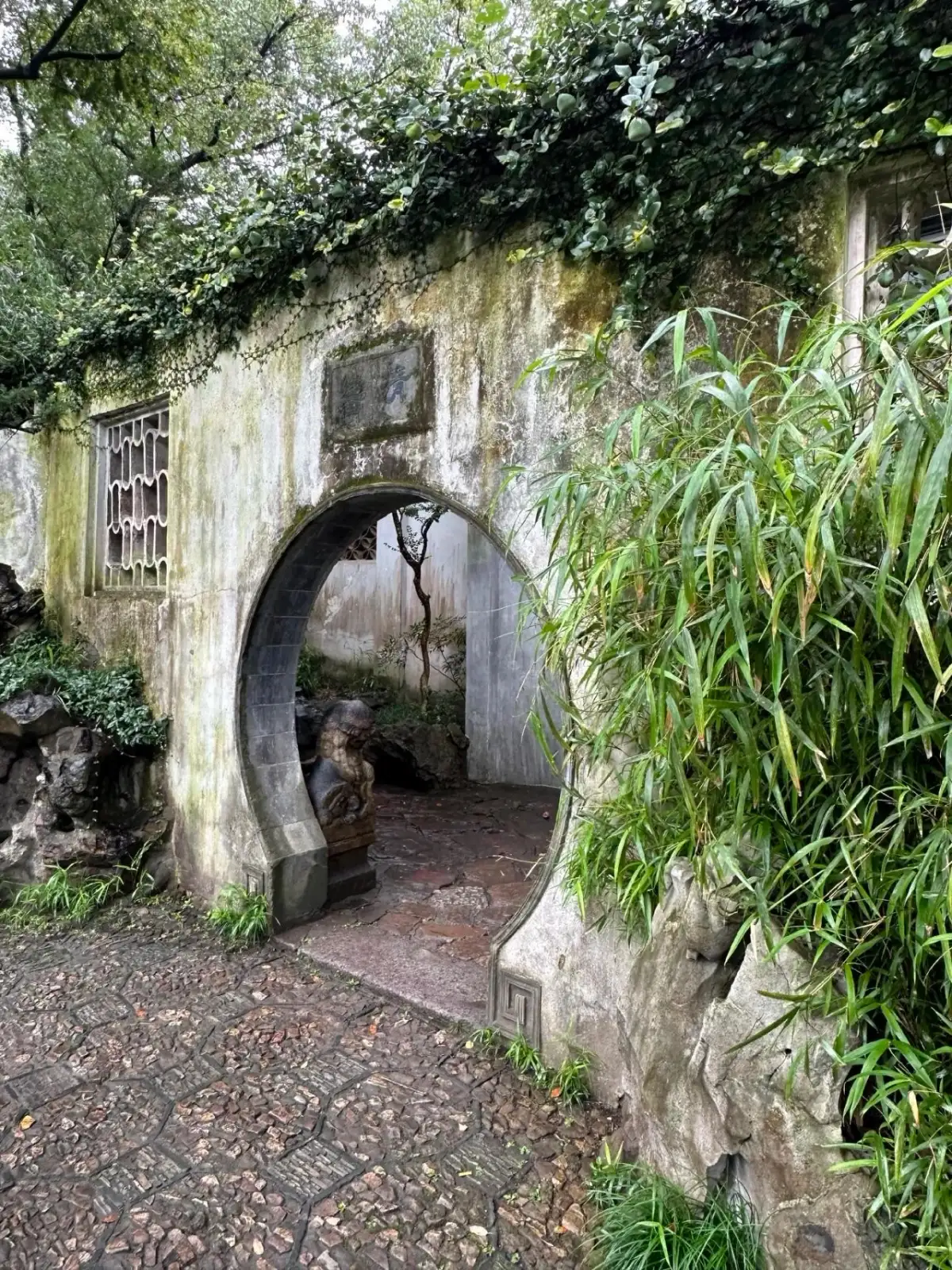
Moon-shaped archway and bamboo branches at Jichang Garden in Huishan. Image source: Xiaohongshu · Classical Garden Connoisseur
Erquan Spring and Clay Figurines: It’s Enough to Choose One to Explore in Depth
Huishan is also connected to local traditions such as spring water and tea culture, as well as Huishan clay figurines. If you’re more interested in the spring water, you can first learn about the relevant sites and introductions, then choose a suitable tea house to rest; if you enjoy handicrafts, visit formal exhibition or retail spaces to observe the shapes, colors, and production instructions of the clay figurines. Both types of experiences are worth exploring, but there’s no need to cram the entire combination of shopping, tea tasting, and hands-on workshops into a single half-day.
When selecting handicrafts, it’s more helpful to ask about materials, whether they’re locally made, and packaging and carrying options than to simply rely on the label “Intangible Cultural Heritage.” Don’t assume that craftsmen will always be demonstrating their work; check the current schedule for hands-on experiences. When drinking tea, focus on the actual aroma and taste you experience; the origin and grade should be clearly explained by the seller, and the name of the ancient town should not be taken as a guarantee of all tea’s quality. Cultural understanding can begin with a single thoughtful question—you don’t need to prove the value of your journey through consumption.
Mountains, forests, and courtyards dictate different seasonal itineraries
Spring flora attracts more attention, while the bare branches of autumn and winter make the architectural contours stand out clearly; summer is best for midday breaks in halls, tea rooms, or under the shade of trees. Different flowering periods and leaf-fall patterns are influenced by the weather of the given year; these photography notes describe only the scene at the time of shooting and do not guarantee the same conditions on the same day in another year. On rainy days, the courtyard walls and stone paths take on a special hue, but you should also consider standing water and the passability of bridges and slopes.
If planning to hike, check the route, opening hours, and return exits separately; do not assume that the footwear and stamina required for strolling through the ancient town will suffice for the mountain trails. If traveling with elders or companions with limited mobility, focus on the two adjacent courtyards as the main route and check for thresholds and steps in advance. When you get tired from walking, it makes more sense to sit down and have a meal in the neighborhood than to add another distant attraction to your itinerary on the spur of the moment. Huishan’s richness stems from the interplay of its diverse spaces; shortening your walking route does not diminish its cultural depth.
Returning to the street corner, I’ll record the connections I’ve observed on this trip
Take one last look at the courtyard gate you passed earlier before leaving—the inscription above it may now hold a different meaning. Once you’ve entered a memorial hall, you can imagine how the courtyard is laid out behind the gate; after visiting Jichang Garden, the mountain is no longer merely a scenic backdrop. This process—moving from the outside to the inside and then back to the outside—connects the details within the ancient town. Sketching a simple map to note the locations of the mountain, the waterfront street, and the courtyards is far more useful than simply writing, “It has a very Jiangnan feel.”
If continuing your Wuxi itinerary, you might set aside another half-day to walk along Qingming Bridge or explore another architectural section in the city center, comparing the differences between the canal’s commercial spaces and the Huishan Ancestral Hall district. Verify transportation and parking locations based on the actual entrance, and be sure to factor walking time within the ancient town into your return itinerary. What’s truly worth taking away from Huishan is how the collective memory at the foot of the mountain is preserved through courtyard gates, springs, and streets; these details—which invite observation and inquiry—are far more memorable than simply counting how many shop signs you pass by.
Further Reading and References
Compiled by the Dongxing Travel Editorial Department based on publicly available travel notes and listed materials; intended as pre-trip reading and not as a personal account of firsthand experience. Please verify opening hours, transportation, reservations, and service arrangements according to your actual travel dates.
Xiaoman🌿 · Fan Wenzheng Gong Shrine: The Most Beautiful Viewing Spot
Wuxi Archives: Huishan Ancient Town Historical and Cultural District
Wuxi Municipal Government: Huishan Tourist Guide
Reading an ancestral hall without knowing the family
A Huishan Ancient Town walk need not begin with knowledge of surnames or historical figures. At Huishan ancestral halls, identify the entrance, sequence of spaces and public interpretation, then choose an inscription or architectural part to question. Separating who is commemorated from how memory is expressed makes differences between halls clearer than photographing doorways alone.
Choosing a second subject
A Jichang Garden visit focuses on the relationship between a garden and its mountain setting; springs and clay figures offer different material and cultural subjects. With half a day, choose one additional subject and leave time for food and rest. Companions can share the courtyard visit and each discuss one detail, reducing the need to hurry between exhibitions.
Planning references
Planning reference: Huishan Ancient Town 1
Planning reference: Huishan Ancient Town 2