The focus of these two days does not necessarily have to be visiting as many attractions as possible
Dunhuang tends to captivate visitors with two distinct scenes: the art within the caves and the springs amidst the sand dunes. One requires focused contemplation, while the other relies more on physical movement and on-site weather conditions; fitting these two experiences into two days involves not only sequencing them but also managing two different types of attention. For first-time visitors, the most important decision is which experience matters most to you; only then should you plan your arrival, reservations, and return trip around that central focus.
The Xiaohongshu post “Dunhuang Mogao Caves Timing Guide” breaks down the visit into the Digital Center, transit, and the cave complex, illustrating that travelers are often concerned with how to smoothly transition between these stages; the “Mingsha Mountain and Yueya Spring” post, meanwhile, highlights the interest in climbing the sand dunes and photography. Based on observations from these original posts, this article proposes three travel approaches. The structure of the Mogao Caves tour is based on information from the Dunhuang Academy; the relationship between the sand dunes and the spring is referenced from the Ministry of Culture and Tourism; and specific transportation and opening hours are determined by the actual pre-trip itinerary.
First, distinguish between “two full days” and “staying two nights”
When someone says they have “two days,” it could mean arriving in the morning and leaving on the third day, or arriving on the first afternoon and leaving on the second evening. The amount of available time differs significantly between these two scenarios. First, mark your arrival and departure times on a piece of paper, then add in the time needed to get to the hotel, check in and out, have meals, and prepare for your return trip. The remaining time is what you can allocate to sightseeing. This step will directly determine whether it’s feasible to schedule visits to the Mogao Caves and the Sand Dunes on the same day.
If the first day is spent recovering from a long journey, your body may need time to settle in. We recommend prioritizing hotel check-in and light city activities early on, rather than rushing straight to a timed reservation as soon as you land. If you arrive early on the first day and have had sufficient rest, you can certainly plan a more comprehensive itinerary; The key is to plan based on your actual arrival condition, rather than simply pasting a two-day itinerary found online—one that starts early in the morning—directly onto your flight schedule.
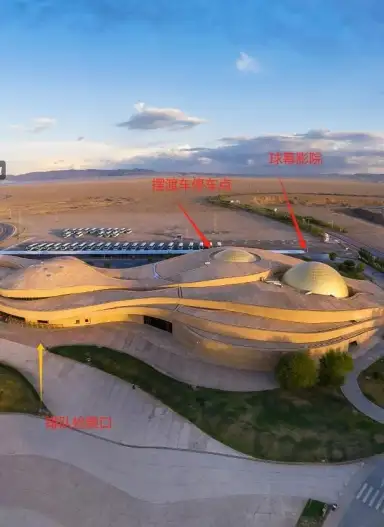
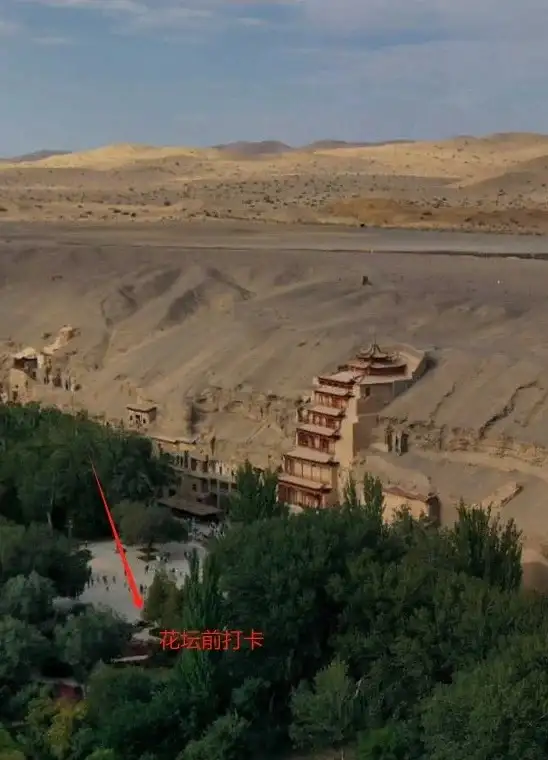
A bird’s-eye view of the curved-roof building and parking area at the edge of the desert; the original image includes red markings. Photo:Fun Trips Along the Silk Road · Original Posts.
On the day of departure, you should also plan for a complete travel itinerary in advance. Finishing your visit to the sand dunes or the grottoes does not mean you’ve already reached the airport or train station; you may still need to return to the hotel to collect your luggage, pack your belongings, and then catch your next mode of transportation. By treating your departure time as a fixed constraint, it becomes easier to determine an appropriate scope for cultural or scenic activities. A two-day itinerary doesn’t need to rely on a last-minute rush to prove it’s fulfilling; being able to end the trip peacefully is also part of the travel experience.
Culture First: Create a Complete Cultural Experience Centered on the Mogao Caves
According to materials from the Dunhuang Academy, the Digital Exhibition Center is designated as the first stop on the Mogao Caves tour. This information implies that reservations are not merely for entry to a specific cave but for an organized tour experience. The Digital Exhibition Center provides context and a sense of scale through images, while the actual caves allow visitors to experience the physical space, viewing distances, and guided commentary firsthand. A culture-first approach should preserve continuous attention along this learning path, rather than counting only the portion spent inside the caves toward the itinerary.
Before viewing the art, visitors can first choose a theme—such as how figures are arranged, how stories are distributed within the composition, or how architectural spaces accommodate murals and sculptures. Digital images help viewers grasp the overall picture, while the physical space allows them to experience the environment in which the works are situated. By juxtaposing these two phases, visitors can understand why the same artistic image offers different experiences on a screen versus in a cave, and they’ll find it easier to retain the information from the guided tour in their memory.
If your travel companions are unfamiliar with Buddhist art, start with the shapes and narratives—there’s no need to memorize all the character names in advance. First, observe where your gaze is drawn, which figures are larger, and how the characters in the story relate to one another; then listen to the necessary background information, which will provide a foundation for understanding the cultural context. For those who already have relevant knowledge, you can narrow your questions down to specific details and have the guide address what you truly want to understand. People with different levels of knowledge can share the same tour experience without needing to receive identical answers.
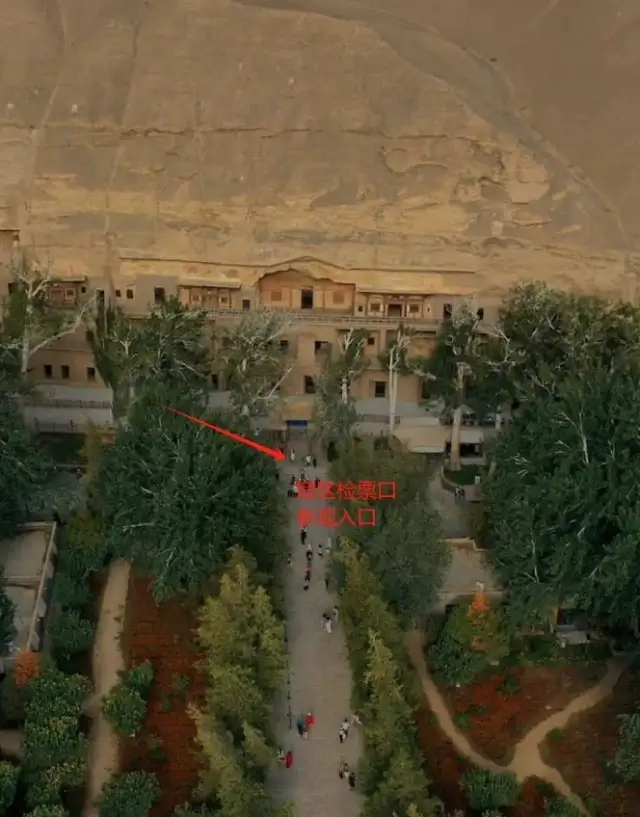
Trees and walking paths are arranged in front of the buildings at the base of the cliff face; the original image marks their locations with arrows. Image:Fun Trips Along the Silk Road · Original Posts.
In this itinerary, desert activities can serve as a change of pace. After exploring the caves, take a break, then decide whether to venture into the sand dunes based on your energy levels and the weather. If you’ve already devoted significant attention to the caves that day, it’s perfectly natural to postpone the sand dune visit to another day. The focus of a cultural journey is on a complete experience; the sand dunes do not need to serve as a way to “fill up the afternoon.” They have their own unique observations and physical challenges, and deserve careful planning.
Prioritize the Desert: Decide First Whether You Want Scenery or Activities
Interests in the desert can also be categorized into different types. Some people want to see the overall relationship between the sand dunes and the spring, some want to walk along the sections of the sand dunes open to the public, and others are primarily interested in photography. According to the Ministry of Culture and Tourism, Moon Crescent Spring is nestled within the embrace of Mingsha Mountain. This relationship provides a clear focal point for viewing: visitors can observe the spring and its surroundings up close, or explore the open trails that suit their preferences to understand how the sand dunes shape the overall landscape.
If the goal is sightseeing, the itinerary can focus on a few key vantage points without including every possible activity. If the goal is hiking and climbing, physical stamina, footwear, and rest periods should be considered in greater detail. Moving on soft ground feels different from walking on flat city streets, and fellow travelers may react differently to the same stretch of trail. It’s better for families to first find a common pace on easier sections before deciding whether to continue, rather than setting out to reach the highest vantage point right from the start.
Photographers can start by jotting down the relationships they wish to capture: the contours of the sand dunes and the springs, people and space, or close-up textures and distant lines. Once your goals are clear, your photos don’t have to rely entirely on a single moment. Even if you don’t capture the sunset colors you envisioned, you can still compose a meaningful series of images by varying your shooting distances. Treat weather-dependent shots as a “wish list” while keeping other creative approaches open—this will make your time in the desert more flexible.
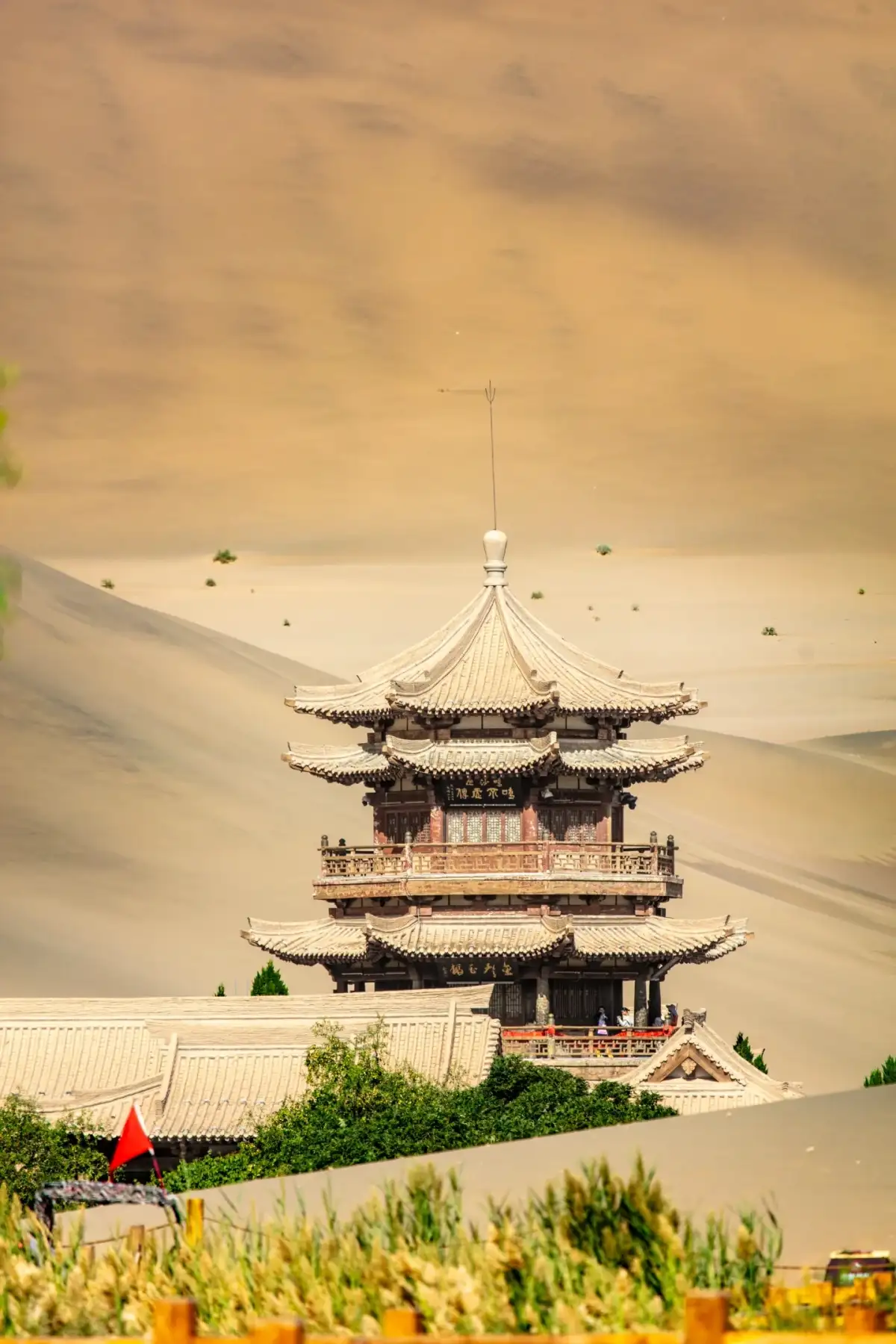
multi-story wooden pavilions stand before the sand dunes, with green trees and low tiled roofs in the foreground. Photo:On the Road · Original Posts.
days focused on the desert can still include a visit to the Mogao Caves, but making a reservation becomes a condition that requires coordination. First determine feasible visiting time slots, then prioritize the sand dunes; this avoids having to juggle two major objectives simultaneously. If the originally planned in-person visit cannot be arranged, avoid presenting the last-minute alternative as an identical substitute experience. Instead, re-discuss the cultural content, travel sequence, and duration of stays to ensure the actual choices remain clearly connected to the original intentions.
Family-Friendly Travel: Use Two Hubs to Reduce Frequent Transfers
When traveling with children or elderly family members, you can dedicate one day to exploring the Mogao Caves and the other to a manageable amount of sand dune scenery. Designate only one main focus for each day, and add other activities based on interest. This approach does not mean you are limited to visiting only two places; rather, it ensures that accommodations, meals, and rest support the main experience, minimizing the need for the family to constantly shift between multiple destinations. Cultural and scenic sites each have their own dedicated time slots, making it easier to accommodate the varying paces of different family members.
Children may be more easily captivated by digital images or the shapes of the sand dunes, while older family members may prefer guided tours, lighter walks, and breaks where they can sit down and discuss things. Before the trip, ask everyone to name the activity they’re most looking forward to, then identify common ground. If the whole family wants to stay together, plan around shared interests; if splitting into small groups for short periods is appropriate, clearly establish meeting points and communication protocols in advance. The primary goal of a family itinerary is to ensure everyone enjoys the trip together, rather than dividing each attraction equally among everyone.
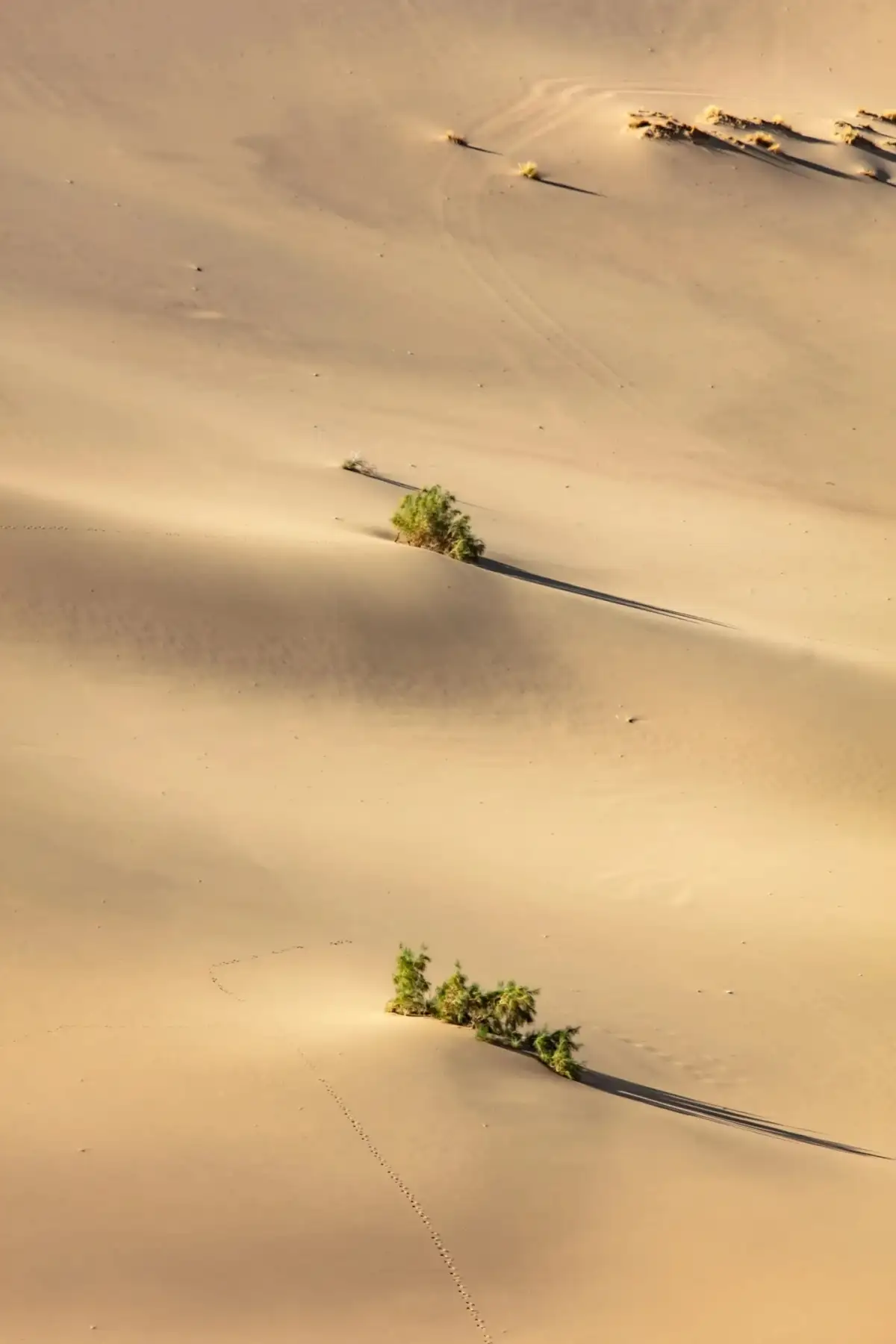
A few clumps of low shrubs grow between the undulating sand dunes, and the sunlight creates layers of light and shadow on the sand’s surface. Photo:On the Road · Original Posts.
For international visitors, language is also an integral part of the itinerary. Those wishing to gain a deeper understanding of the cave art should consult official service channels in advance regarding guided tour arrangements; if a group relies on a tour advisor, they should specify their language requirements and provide accurate personal information during the pre-trip planning phase. On-site viewing has its own rhythm; addressing communication needs in advance allows for a more focused visit and spares children and elders the wait caused by impromptu discussions.
When weather conditions change, keep the core of the itinerary intact
Both cave tours and outdoor activities are subject to weather conditions, though the impact varies. According to announcements from the Dunhuang Academy, extreme weather may result in the closure of the caves; sand dune experiences may also need to be adjusted based on on-site conditions. It’s advisable to leave some flexibility in your itinerary rather than tying every hour to a fixed activity. When major plans change, prioritize official arrangements and transportation first, then decide how to reallocate your energy for the day.
Those with a strong interest in culture can save the official digital resources for further reading before the trip or during downtime. While these resources have intrinsic value, they differ from the experience of actually entering the caves; readers can use the images to familiarize themselves with the subject matter and then deepen their understanding on-site during the trip. Those with a strong interest in the desert, on the other hand, can set aside lighter sightseeing and city-stay options, waiting for more suitable conditions. Alternative plans should still align with their interests, rather than merely serving as a stopgap to fill empty time.
Alternatively, a rest period can serve as a bridge between the two days. In the evening, have each travel companion choose one detail they remember most clearly: a relationship between people, the silhouette of a sand dune, or a new question raised by a guide’s explanation. On the second day, continue the journey with that detail in mind. Such reflection doesn’t need to be lengthy, but it allows the two experiences to shed light on one another—so that cultural insights and outdoor landscapes are no longer merely two separate “check-in” photos.
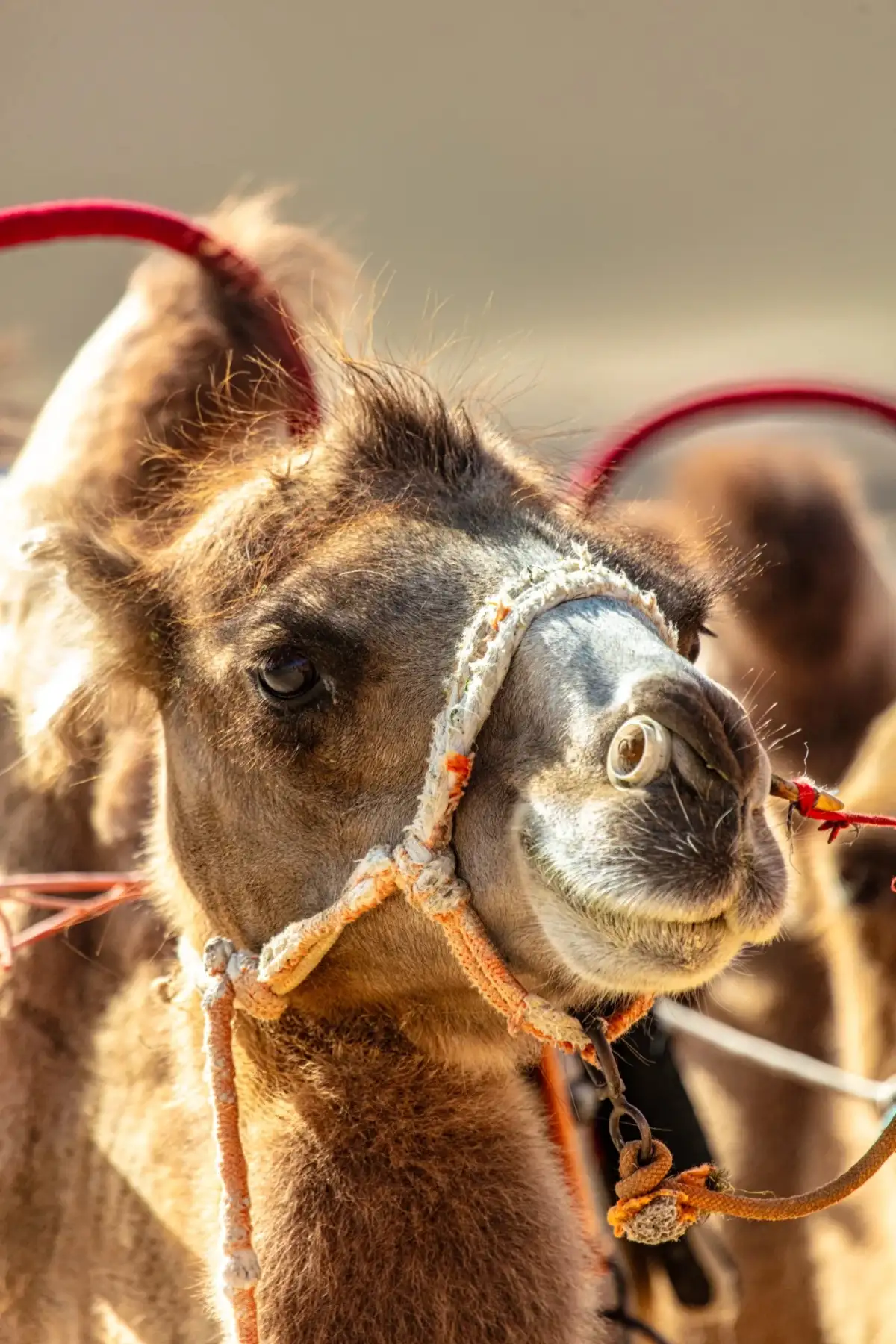
A close-up of a camel’s head wearing a rope halter, with another camel visible in the background. Photo:On the Road · Original Posts.
These three approaches should ultimately result in a clear choice.
Culture-focused travelers should first ask, “How can I set aside enough time for a thorough visit and exploration of the Mogao Caves?” before deciding how much emphasis to place on the sand dunes. Desert-focused travelers should first ask, “Do I want to take in the scenery, go for a walk, or take photos?” and then coordinate their cultural reservations accordingly. Families traveling at a leisurely pace should first ask, “Which activity each day will allow everyone to participate comfortably?” None of these three approaches is inherently superior; they simply apply the same two days to different travel priorities.
During the actual consultation, provide the travel consultant with your arrival and departure times, confirmed reservations, your travel companions’ walking preferences, and your primary interests—this will allow you to gradually develop a specific itinerary. Instead of simply writing “Mogao Caves and Mingsha Mountain,” specify what kind of experience you hope to have at each location. This way, if conditions change, the travel consultant can preserve the elements that are important to you, rather than mechanically substituting one destination for another. Clear expectations provide a focal point for a tailored travel plan.
This SiteIntroduction to Dunhuang DestinationsandMogao Grottoes Destination GuideThese can serve as two entry points to the region and its culture. The value of a two-day itinerary lies not in capturing every scene on your phone, but in giving you the time to truly experience them: the grottoes require a quiet and focused gaze, while the desert demands a pace and approach that suit you. By attending to these two needs, Dunhuang will leave you with two complete and distinct memories.
Source and Editorial Notes
This article is an original travel analysis compiled by the Dongxing Travel editorial team based on the listed sources; it is not a firsthand account by the author. The full text of the original post has not been reproduced; accompanying images are used within the scope of authorization and are credited to the author and source of the original post. They do not serve as proof of actual travel experiences or services provided to Dongxing Travel clients.
Fun Travel on the Silk Road · Dunhuang Mogao Caves “Checkpoint Guide”—You’ll Miss Out Big Time If You Don’t Know This · Travel Notes; Verified/Compiled on: October 3, 2026.
On the Road · 🇨🇳 Mingsha Mountain and Yueya Spring · Travel Notes; Verified/Compiled on: October 3, 2026.
Dunhuang Academy · 2026 Mogao Caves Tourist Access Announcement · Official sources; Verified/compiled on: October 3, 2026.
Dunhuang Academy · Introduction to the Mogao Grottoes Tour · Official sources; Verified/compiled on: October 3, 2026.
Ministry of Culture and Tourism · Introduction to the Mingsha Mountain and Crescent Lake Scenic Area in Jiuquan City · Official sources; Verified/compiled on: October 3, 2026.