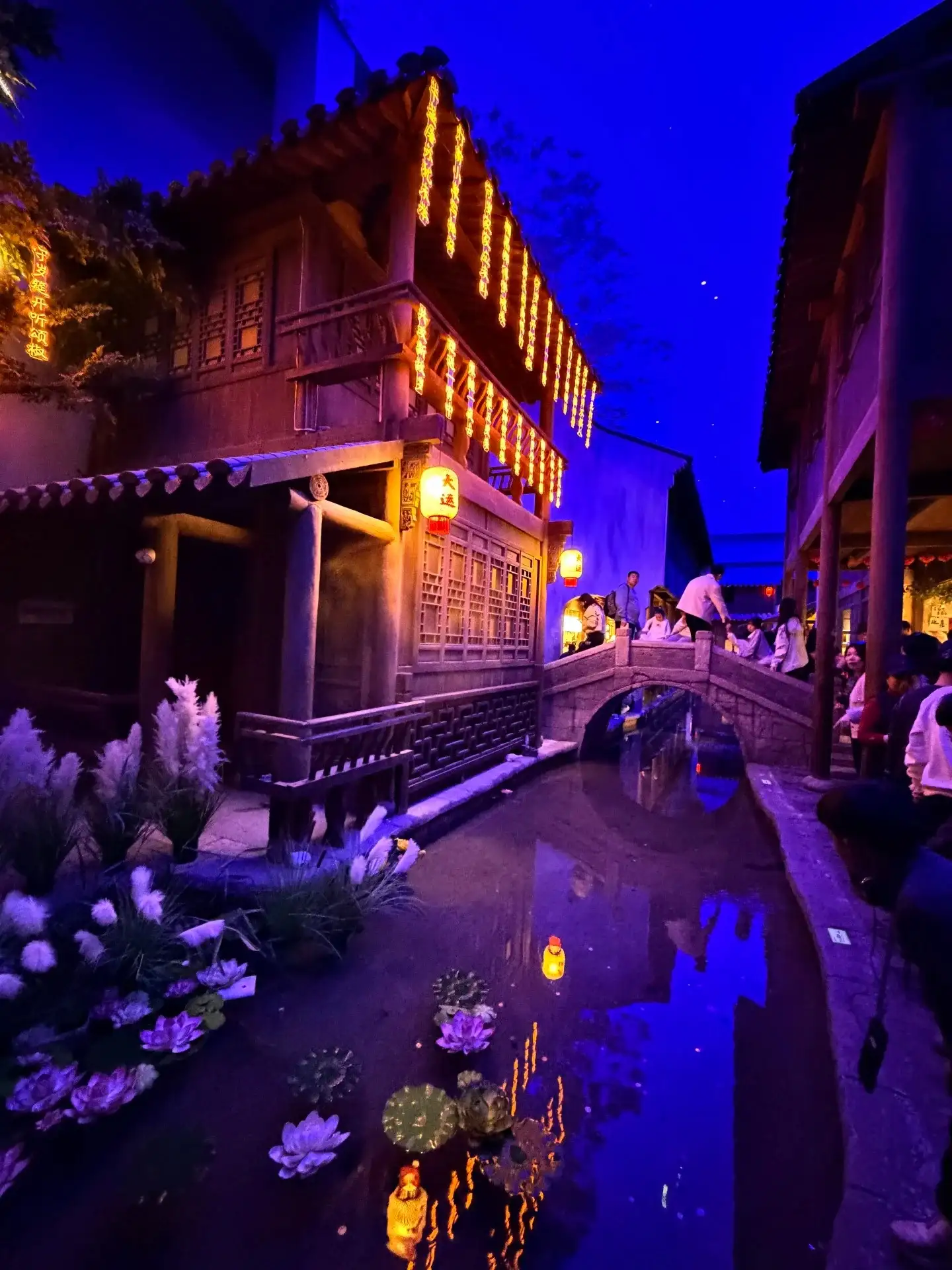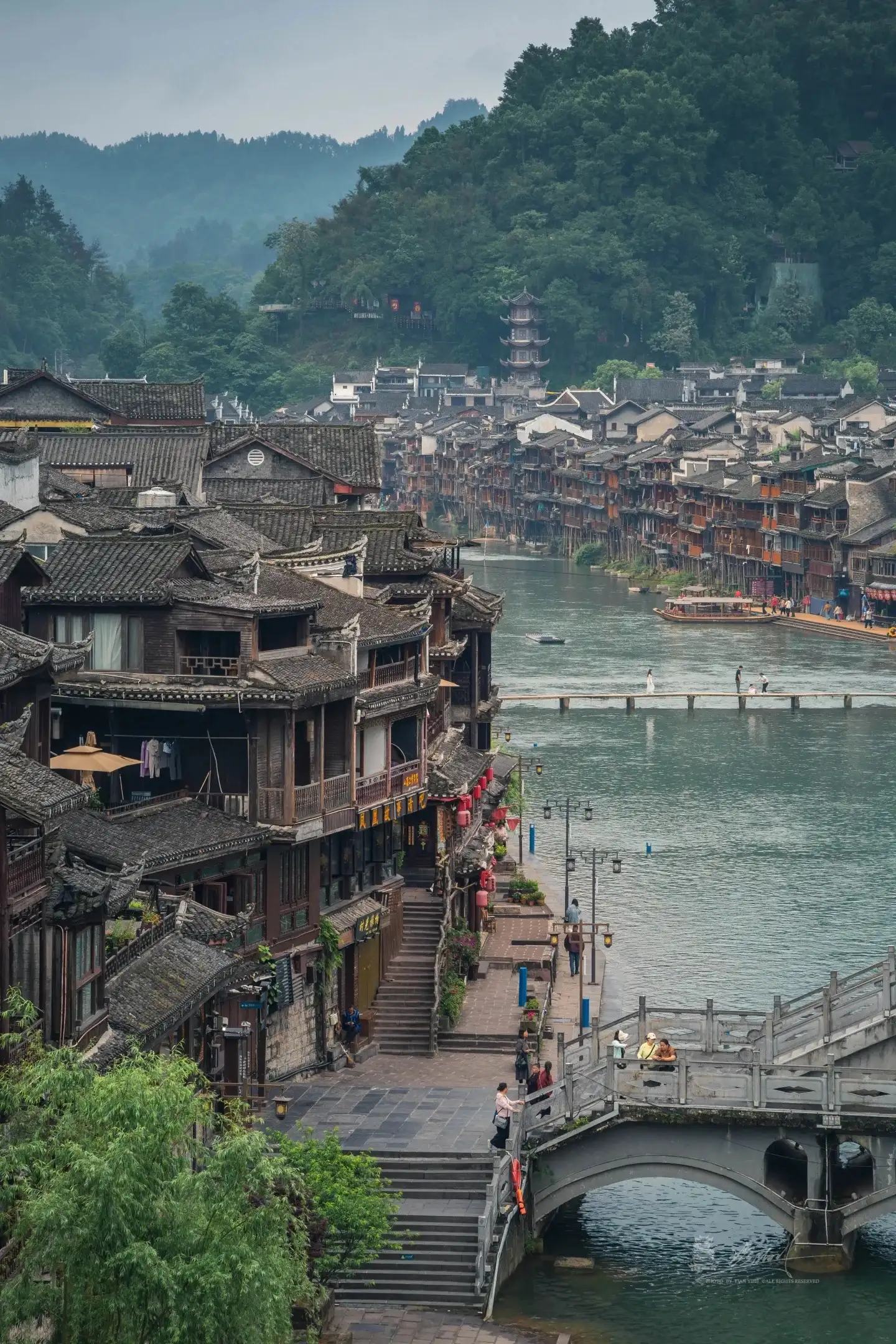
Seeing the Tuo River, wooden buildings, and bridges in Fenghuang Ancient City easily brings to mind *Border Town*. Two travel itinerary posts on Xiaohongshu both draw on this literary association and include Shen Congwen’s former residence in their ancient city walking tours. For those who have read the novel, this association certainly enhances the travel experience; however, before finalizing your itinerary, it’s worth clarifying one specific point: Shen Congwen’s hometown and the Chadatong depicted in the novel are not the same place.
If you’re only staying in Fenghuang for half a day, the former residence and a stretch of the Tuo River shoreline can form a clear literary theme. If your primary goal is to explore the geography related to *Border Town*, you should consider the practical arrangements for Chadatong in Huayuan separately. Placing the two locations separately on a map not only reduces confusion about the route but also makes the relationship between literature and reality more intriguing. One place helps visitors connect with the author, while the other facilitates exploration of the story’s setting.
The former residence is in Fenghuang, while the border town is in Huayuan
Data on Cultural Heritage Sites from the Hunan Provincial Department of Natural ResourcesIt specifies that Shen Congwen’s former residence is located on Zhongying Street in Tuojiang Town, Fenghuang County.Introduction to Chadong by the Hunan Provincial Governmentindicates that Chatong is located in Huayuan County and was renamed Biancheng Town in 2005. The information was verified on October 3, 2026; the relationship between the two locations should be accurately reflected accordingly.
This discrepancy directly alters the nature of travel inquiries. Those wishing to visit the author’s former residence can plan a tour of Fenghuang’s streets and alleys; while those wishing to explore the novel’s ferry crossings, rivers, and local memories should focus on Chadong. One should not assume that every location along the Tuo River is a specific scene from the novel simply because Fenghuang features shop names, performances, or promotional materials related to *Border Town*.
“Does this diminish the literary significance of Fenghuang?” It still has clear substance. The former residence, the ancient city, and places associated with the author’s memories provide a way to enter the work through the context of his life; rivers and streets can also spark readers’ own associations. Associations can be expressed as personal reading impressions, but factual information about locations must have clear sources. By keeping the two in their proper places, both writing and travel will be more accurate.
At the former residence, set aside some time first to explore the exhibition layout
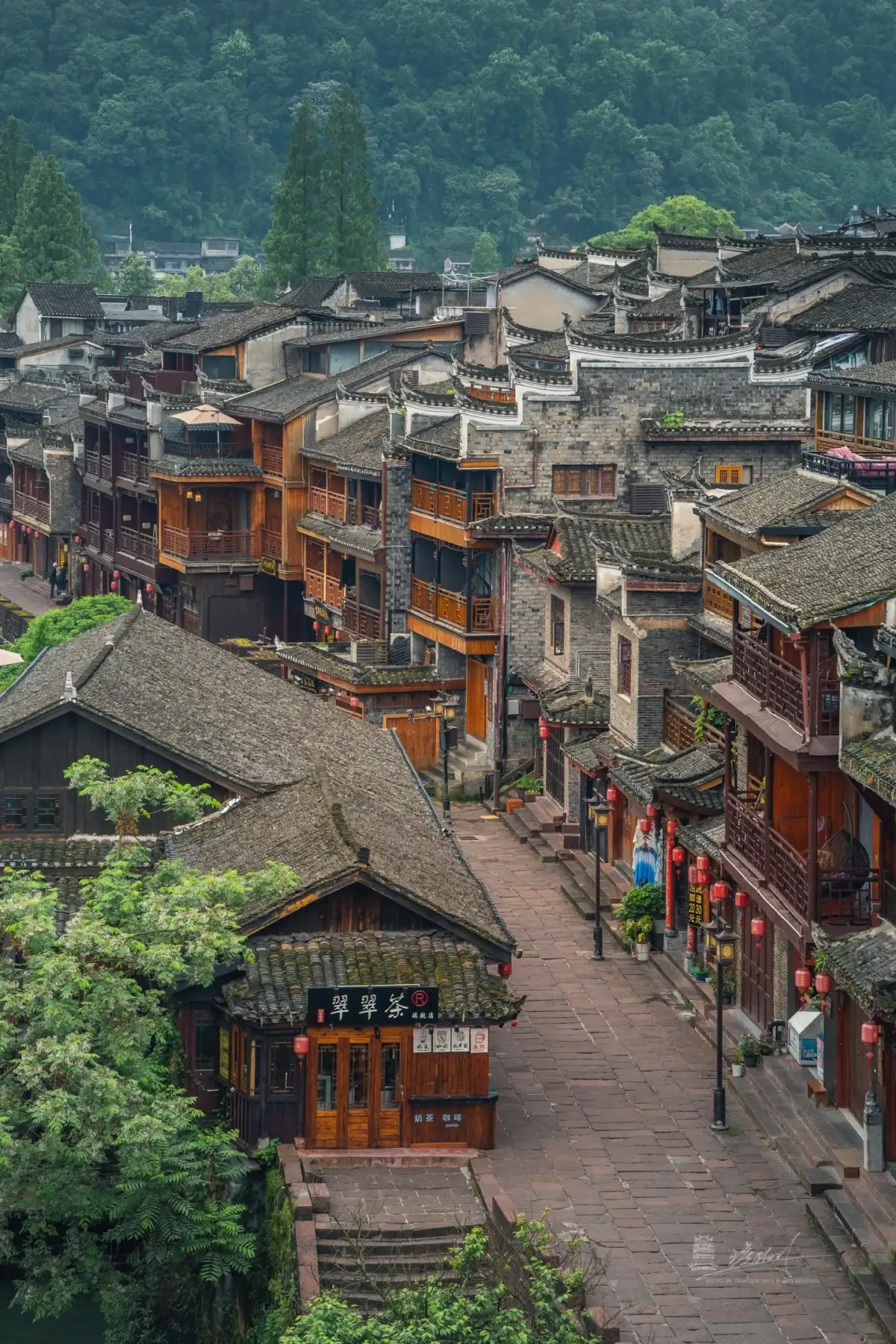
Streets and rooftops of Phoenix Ancient City. Photo:Bryan Hu Bochuan · Original Post.
A tour of the former residence can begin by exploring the relationship between the house and the courtyard, followed by reading the explanations about the author’s life, works, and related materials. Information regarding which rooms are open to the public, how to access them, and whether exhibits are replicas should be understood based on the current guided tour and exhibit labels. The pace of the tour in this small space is best enjoyed at a leisurely pace; avoid turning every corner into a photo backdrop as soon as you enter. Taking the time to clearly read the name and purpose of a single artifact offers more substance than hastily snapping photos of the entire room.
When visiting with children, you can pose questions centered on “how a person moves from life to writing.” Place names from their hometown, photographs, published works, or other physical exhibits each provide a clue. There’s no need to fill in the gaps with imagination for objects that aren’t present; children can first read an age-appropriate introduction and then explore the courtyard to see how the rooms are connected. A literary tour, therefore, does not require children to have already finished reading a novel.
Adult visitors can enter with their own reading questions in mind: Which words made Western Hunan stick in their memory? Why do the voices and character relationships in the works resonate so deeply? For aspects supported by on-site materials, visitors can gradually cross-reference them; the emotions conveyed in the work remain open to the reader’s interpretation, and there is no need to directly link every exhibit to a specific plot point. If a docent shares a story, visitors can ask which source material it is based on, ensuring that both interest and evidence are preserved.
Traveling along the Tuo River for a while brings the literary discussion back to reality
Bryan Hu Bochuan’s route notes connect Nanhua Bridge, Tiaoyan, Hongqiao, and the riverbanks on both sides, while Jieran incorporates the author’s former residence and cultural sites into the walking route. For a half-day literary excursion, one can select a public vantage point from these locations and then choose a stretch of the riverbank, thereby avoiding the need to walk the entire loop continuously. View the whole scene from the bridge, and observe the nearby wooden buildings and the water’s surface from the riverbank—these two perspectives alone are enough to convey the different scales of the ancient town.
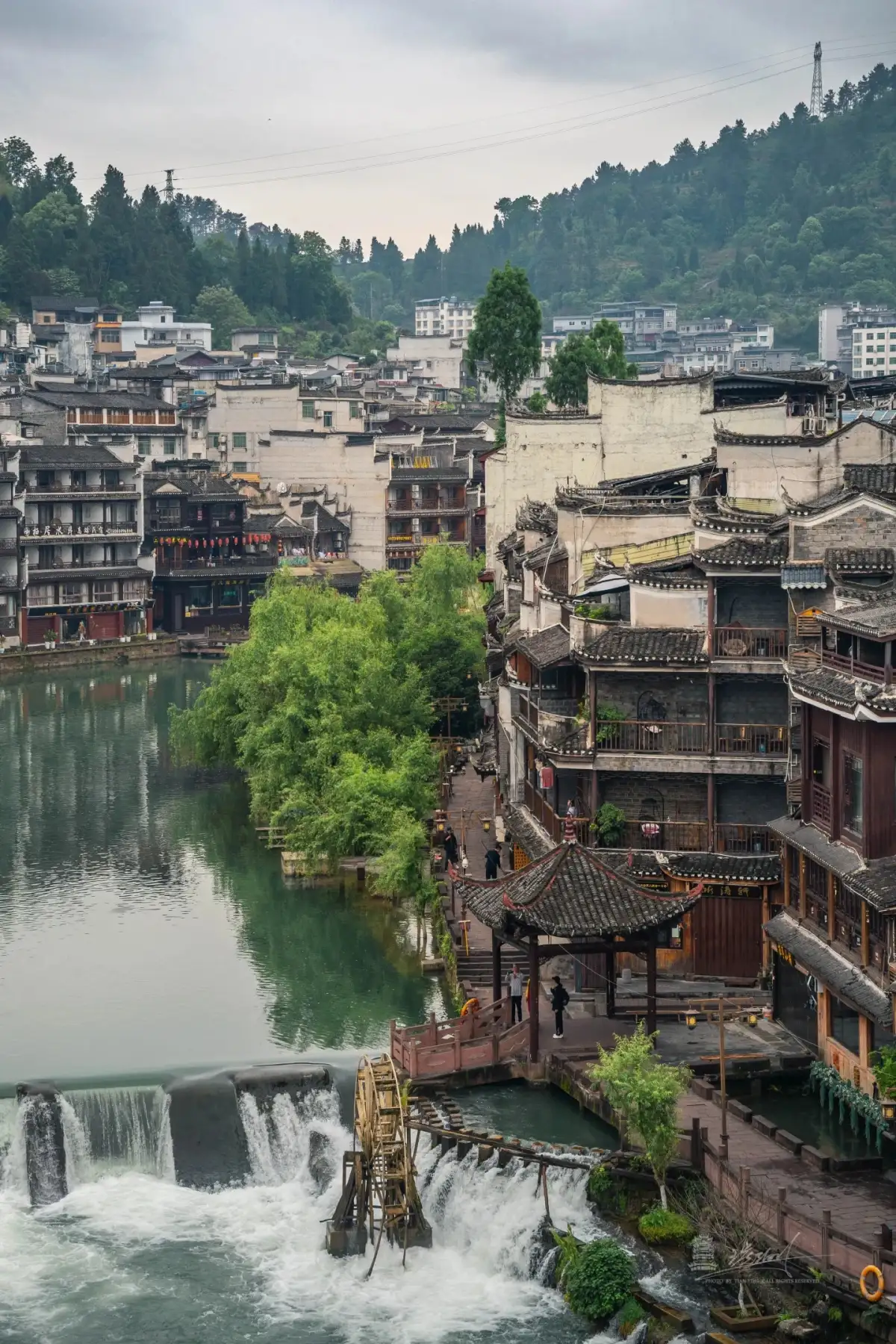
The banks of the Tuo River and the dam in Fenghuang Ancient City. Photo:Bryan Hu Bochuan · Original Post.
When examining the river, one can discuss its practical uses in reality: which bridge people cross, how shops face the street and the water’s edge, where vehicles park, and where residents enter their homes. Novels often lead readers to imagine small towns as static landscapes, but in reality, Fenghuang is a place of daily comings and goings, business operations, and modern services. Observing these activities makes it easier to understand the social relationships depicted in literature and helps avoid viewing the ancient town merely as a nostalgic filter.
The Jumping Stones attract many photographers, but whether the path is open to the public and suitable for your travel companions depends on on-site management and actual water conditions. Elderly visitors or children who require a stable walking surface can observe the river from the public bridge; there’s no need to cross the Jumping Stones just to take a photo. Nighttime views differ from daytime details. If you only have half a day, decide on your main interests in advance to avoid constantly waiting for the lights to come on while trying to explore the former residence.
To travel from Fenghuang to Chadong, a separate route must be determined.
“When reading *Border Town*, shouldn’t one visit both places?” For those willing to devote more time to literary geography, it makes sense to treat Fenghuang and Chadong as separate stops, each with its own distinct theme. If time is limited, it makes sense to choose just one of them first. Fenghuang is ideal for combining a visit to the former residence with the ancient city, while Chatong is best suited for exploring the local memories and riverine landscapes associated with the story. Practical transportation, lodging, and same-day activities between the two locations should be confirmed based on specific dates.
Information on Cultural Heritage Themed Trails from the Hunan Provincial Department of Culture and TourismLinking Shen Congwen’s former residence with cultural heritage sites and historic towns in Western Hunan indicates that this is a cultural journey within a specific region. Official tour route descriptions help define the theme but do not imply that all sites can be visited in a single day. Travelers can select a segment based on their own reading interests rather than checking off every location on a long list.
Literary enthusiasts with a particular interest in inscriptions should also distinguish between original handwriting and later copies. A 2026 report by the Hunan Provincial Government distinguished between existing inscriptions on the cliffs of Chadong and newly installed calligraphic works personally inscribed by the author. This kind of detailed identification lends itself well to cultural tourism: upon seeing a piece of calligraphy, one should first understand who wrote it, when it appeared, and how it was used. Knowing the authentic provenance gives the details of a landscape more substance than a vague sense of “literati atmosphere.”
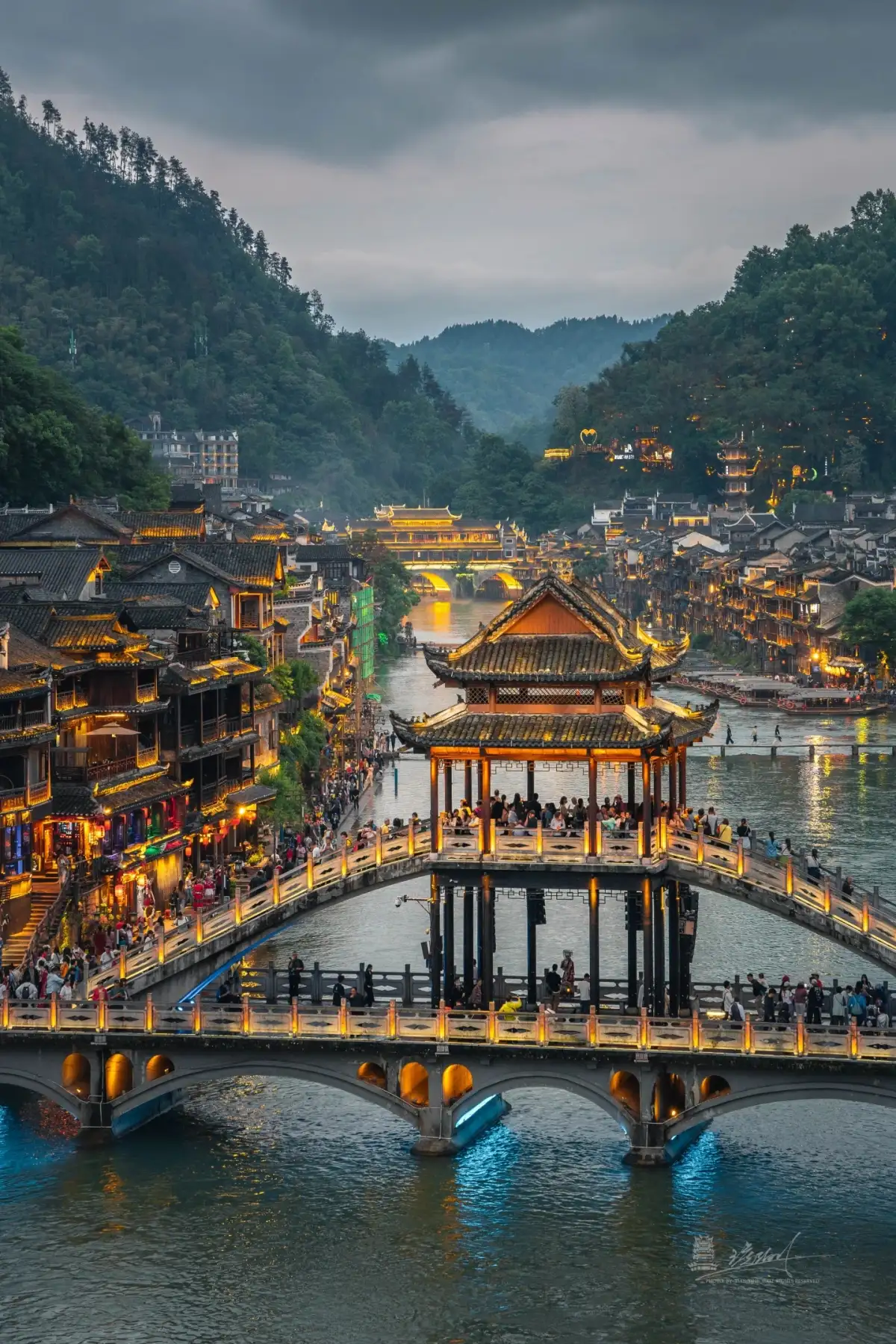
The Yeti Bridge over the Tuo River in Fenghuang Ancient City. Photo:Bryan Hu Bochuan · Original Post.
How might a half-day begin and end?
When booking a stay in Fenghuang, first confirm the birthplace’s current opening hours and ticketing procedures, and schedule your visit for a time when you can enter at your leisure; then choose a nearby street or alley and the Tuo River for sightseeing; finally, set aside some time to sit down and read or have a meal. This sequence connects the indoor exhibits with the outdoor surroundings and does not require every family member to walk through the entire ancient town continuously. Adjust the specific route based on your accommodations and access points.
Travelers holding foreign passports can verify their ticket and identification information through official channels or those recognized by the scenic area. If you have a lot of luggage, first confirm with your accommodation provider regarding vehicle drop-off points and the luggage transfer schedule; a literary stroll is best enjoyed with light luggage. If you require commentary in other languages, please submit your request in advance and confirm the actual content; do not treat Chinese travelogues as a guarantee of English-language services. Itinerary arrangements and quotes will still be confirmed by a consultant based on actual conditions.
When leaving Fenghuang, one can take away two distinct memories: the former residence helps us understand the author, while the Tuo River allows us to see the small town as it is today. Chatong, meanwhile, can become another aspiration in literary geography. A book inspires travel, and travel, in turn, inspires a fresh reading of the book; once the locations are clearly identified, this back-and-forth becomes even richer, and it also maintains a connection between Shen Congwen’s name and the concrete realities of life in Western Hunan.
Sources and Editorial Notes
This article is an original travel analysis compiled by the Dongxing Travel editorial team based on the cited materials; it is not a firsthand account by the author. The full text of the original post has not been reproduced; accompanying images are used within the scope of authorization and are credited to the author and the source of the original post. They do not serve as proof of actual travel or services provided to Dongxing Travel clients.
Bryan Hu Bochuan · First time visiting Phoenix Ancient City? Just copy this itinerary 🏯 · Travel Notes; Verified/Compiled on: October 3, 2026.
Jieran · National Day Itinerary for Phoenix Ancient City 🏮 One-Day Tour Without Backtracking · Travel Notes; Verified/Compiled on: October 3, 2026.
Hunan Provincial Department of Natural Resources · Address of Shen Congwen’s Former Residence as a Cultural Heritage Site · Official sources; Verified/Compiled on: October 3, 2026.
People’s Government of Hunan Province · Calligraphy Treasures from “Border Town” Return to Their Hometown Department of Culture and Tourism of Hunan Province · Cultural Relics-Themed Walking Trails · Official sources; Verified/Compiled on: October 3, 2026.
Hunan Provincial Department of Culture and Tourism · Cultural Relics Themed Trails · Official sources; Verified/Compiled on: October 3, 2026.