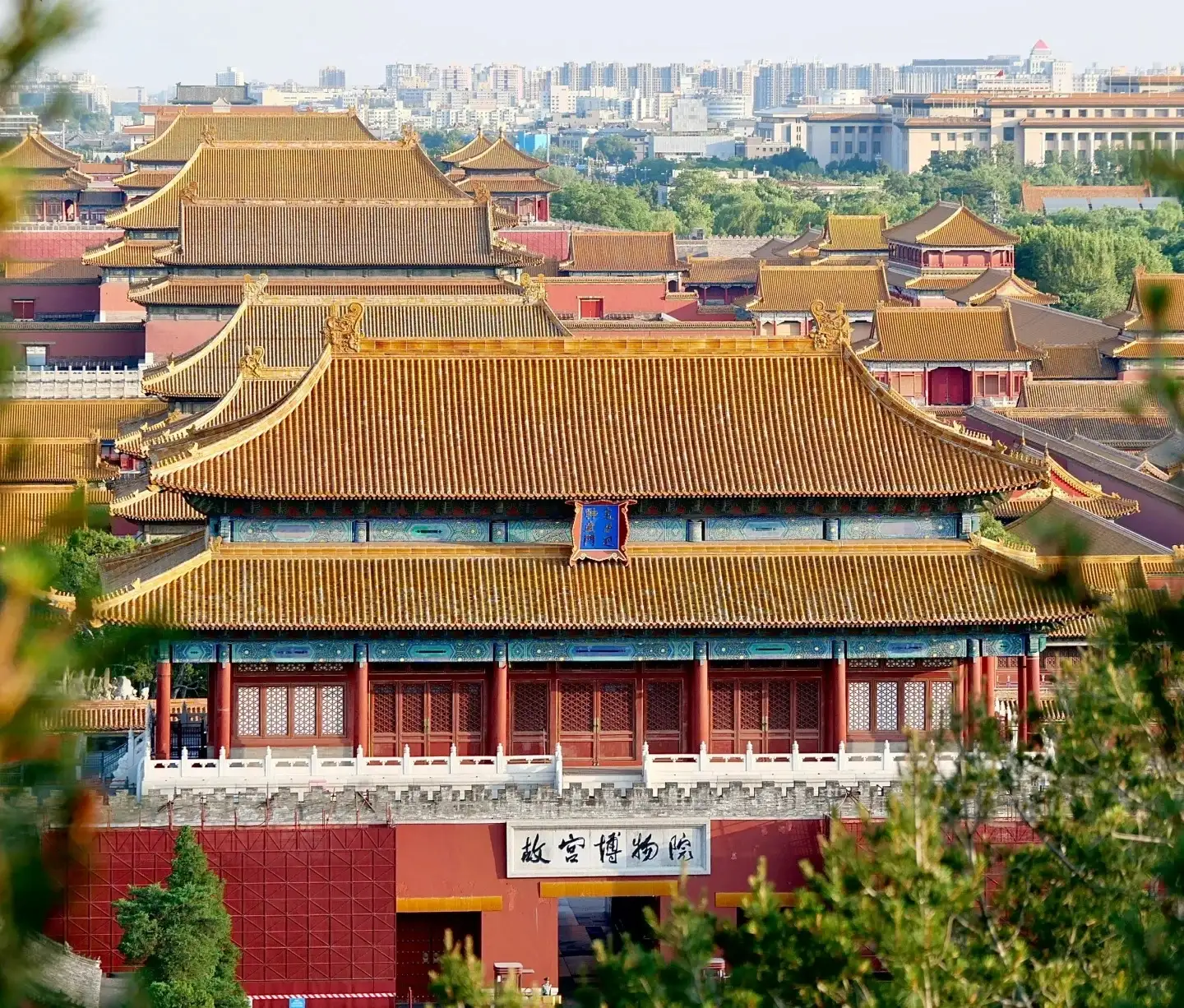
After successfully booking a visit to the Forbidden City, a second source of anxiety often arises on your phone: you want to see the Three Great Halls, view the precious artifacts, and take a series of photos along the way—as if missing even one section would be a waste of this rare opportunity. In reality, palaces and exhibitions require two distinct ways of viewing. Architecture is best appreciated by observing how the space unfolds, while artifacts require getting up close to read the descriptions and identify their materials and uses. Choosing one as the main focus for the day and the other as a supplement often leads to a clearer understanding than rushing from one named attraction to the next.
小红书作者Yang杨杨杨杨的完整预约笔记,除了抢票经历,也把钟表和珍宝等参观兴趣放进计划。本文只借这条线索讨论拿到预约后的选择,不采用其成功率、放票节奏、优惠资格或现场补票经验。具体门票和展览进入条件仍以故宫博物院当前公告为准。一个人的预约办法无法保证另一个人的订单,而展览名称也不等于当天必然能够进入。
The palace answers first: What was this place once used for?
Many first-time visitors imagine the largest hall as the emperor’s daily office where he sat to conduct state affairs. The Palace Museum’s description of the Hall of Supreme Harmony, however, highlights its use for national ceremonies. This distinction changes the way you view the courtyards, plinths, and halls: together, they organize a public space characterized by hierarchy and ritual. Standing at the standard viewing spot, you can first imagine the order required for a formal ceremony, then observe the scale of the architecture in relation to people—rather than simply searching for which chair the emperor sat in, as depicted in stories.
In contrast, the Palace Museum’s official description of the Baohe Hall notes that the building’s function evolved during the Ming and Qing dynasties; in the Qing Dynasty, it was associated with activities such as banquets and the imperial palace examinations. This offers travelers a practical tip: even though they are all halls, one cannot apply a single function to all buildings, nor should one mix different historical periods in a single day’s imagination. If you examine the names and then inquire about the time periods and functions, you’ll discover that the palaces aren’t merely a set of backdrops that differ only in color, but rather spaces that have undergone changes in both institutional structures and daily life.
You can navigate the main route through the palace by asking three simple questions. First, what space does this building face? Second, how are the people who come here organized? Third, to which historical period does its function belong? These questions do not require visitors to master the entire history of the imperial court, but they do help connect the information on the signage to the scale of what they see before them. If children are accompanying you, first ask them to identify the sequential relationship between the gates, courtyards, and buildings; then, adults can supplement this with the structures’ functions. This approach fosters better retention than simply reciting the names of the halls along the way.
When photographing architecture, a complete elevation and spatial relationships represent two distinct types of documentation. Framing only the eaves can highlight the ornamentation, while stepping back to a legally permitted viewing position to include the courtyard in the foreground allows for a better understanding of the spatial layout. Neither photo is superior to the other; they simply answer different questions. Viewers need not wait for an empty courtyard just to achieve a so-called “standard shot”; appropriately including distant pedestrians can help convey a sense of scale. When sharing publicly, avoid letting the recognizable faces of unrelated tourists become the focal point.
Exhibition and Response: How an Object Is Interpreted
As you enter the exhibition, adjust your pace. Artifacts in display cases typically include the name, period, materials, and related descriptions; read one piece of information first, then return to the object itself—this makes it easier to notice details you might have otherwise overlooked. For example, you might initially have simply found an object beautiful, but after reading about its material, you can examine how its surface texture was formed; after reading about its purpose, you can reflect on the relationship between the object and its user. This guide provides observation methods and does not list unverified information regarding the day’s exhibits or gallery layout.
When viewing artifacts, it’s best to keep the number small and your focus clear. Select a few items that truly interest you and write a brief sentence describing what you see for each one; this is more useful than taking a photo of every display case. The text in photos may not be legible, and once you return home, it’s easy to lose the context of the exhibition hall. You can photograph the labels and objects that are permitted to be photographed and note the correspondence between the two. When encountering exhibitions where photography is not allowed, record the names and your questions in writing; this way, you can still turn your visit into a meaningful reflection.
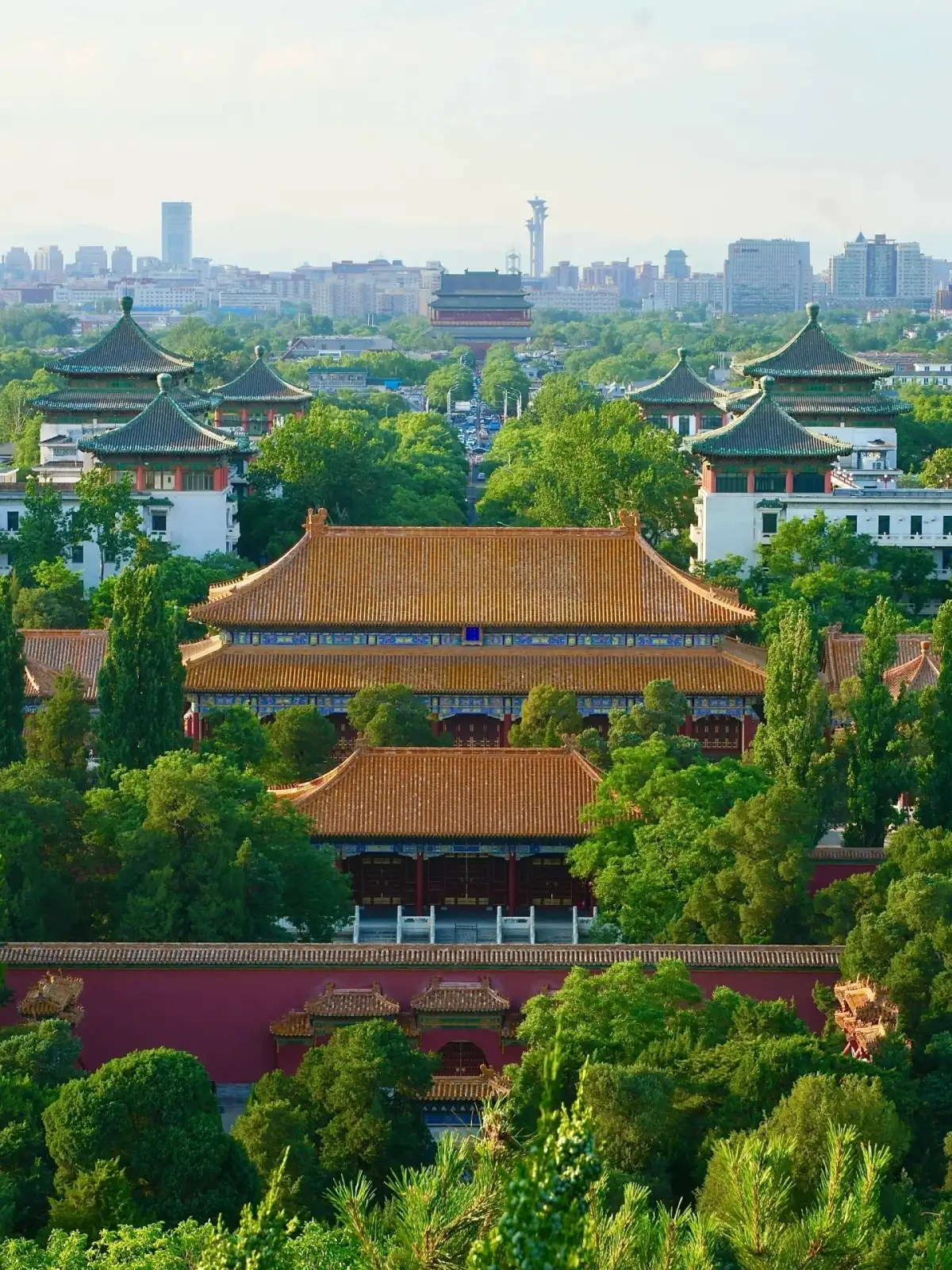
A view of the yellow-tiled halls and green trees along the central axis from a high vantage point. Photo:Solazy · Original Post.
If your travel companions have different interests, first determine whether they are interested in a specific material used in an artifact or in court life as a whole. An interest in materials tends to lead to a close-reading approach, while an interest in daily life requires placing objects back within their original contexts of use and setting. Don’t assume, upon seeing an ornately decorated object, that it belonged to a famous figure or was used exclusively for a specific ceremony. Museum descriptions are based on a limited scope of evidence; while travelers’ speculations are permissible, they should be treated as questions rather than historical facts.
dividing the day into a main thread, supplementary elements, and blank spaces
can allow for more uninterrupted time in the courtyards and halls; simply choose one exhibition that aligns with your interests as a supplement. If you prioritize the exhibitions, you’ll need to minimize stops for taking replica photos and focus on understanding the relationships between the palaces along the standard route. The specific order should be determined based on confirmed admission requirements and opening hours, rather than assuming that all spaces can be freely visited in any order on any given day. The real trade-off is to first allocate sufficient time to key themes and then explore the remaining content depending on circumstances.
downtime also serves a purpose: to rest, process what you’ve just seen, or wait for your companion to finish viewing. The open squares and courtyards within the palace complex create a sense of being exposed to the elements, while exhibitions may require standing and concentrating—two activities that take different tolls on one’s energy. If fatigue sets in, cutting back on supplementary details while sticking to the main narrative ensures the itinerary doesn’t suddenly end up with nothing seen. For families with children, being able to explain the purpose of a hall or the characteristics of an artifact upon leaving is already a tangible achievement.
You don’t need to memorize an entire guidebook before your visit. Go to the Palace Museum website, start by reading the descriptions of the buildings that interest you most, and pay attention to the distinctions made regarding their historical periods and functions; then check the current exhibition information to decide if there are any themes worth setting aside extra time for. Verify official reservation and admission requirements through the same official system to avoid relying on outdated guidebook descriptions of venues when planning your itinerary. Only after confirming what is actually accessible can the points of interest on the map be turned into a practical itinerary.
Once you’ve finished, organize your notes into two columns: one for spaces and one for objects. In the “Space” column, note which building is associated with which type of ceremony; in the “Objects” column, record materials, uses, or questions that remain unanswered. This approach helps identify whether your interests lean toward architecture, institutional systems, or art, providing direction for your next urban cultural tour. There is no need to frame your Forbidden City experience as a firsthand account of imperial life; what modern visitors gain is the opportunity to observe, read, and understand.
If we place the Forbidden City within a completeBeijing Cultural ItineraryYou can inform the consultant whether you’d like to focus on the architecture or the exhibits, and specify the standing and walking abilities of your companions. The consultant will then arrange the day’s itinerary based on actual booking availability; they cannot guarantee securing tickets or that a specific artifact will be on display. When visiting the Forbidden City for the first time, choosing a clear narrative thread will help ensure that the halls and artifacts you see remain linked in your memory, rather than becoming merely disconnected red walls in a photo album.
Sources and Editorial Notes
This article is an original travel analysis compiled by the Dongxing Travel editorial team based on cited sources; it is not a firsthand account by the author. The full text of the original post has not been reproduced; accompanying images are used within the scope of authorization and are credited to the author and the source of the original post. They do not serve as proof of actual travel experiences or services provided by Dongxing Travel.
Yang Yang Yang Yang · Here’s the Guide to Booking Tickets for the Forbidden City in Beijing! · Travel Notes; Verified/Compiled on: October 3, 2026.
The Palace Museum · Architectural Description of the Hall of Supreme Harmony · Official source; Verified/Compiled on: October 3, 2026.
The Palace Museum · Architectural Description of the Hall of Preserving Harmony · Official source; Verified/Compiled on: October 3, 2026.
Solazy · Jingshan Park | Beijing’s Perfect Central Axis · Image source: This article does not cite the post as a basis for current policy.