If you visit Ge Yuan in winter, will you miss the Summer Mountain? No. The four seasons here are both naturally occurring and imagery crafted by the garden designer through stones and spatial arrangements. Standing before Summer Mountain in winter, the trees and light belong to the present day, while the lake stones and mountain caves still tell the story of summer. It is precisely this coexistence of two different times that ensures a garden is worth experiencing not only when the flowers are in bloom.
In a Yangzhou travelogue on Xiaohongshu, “Second Fake Half-Price” mentioned that after a brief walk through Ge Yuan, they felt a guided tour would have made it easier to understand. This observation can serve as a starting point for slowing down and observing more closely. The factual basis for this article on bamboo and the Four Seasons rockery comes from Geyuan’s institutional exhibition page on Google Arts & Culture. The viewing sequence and dialogue format below are editorial suggestions, suitable for those new to Chinese gardens.
Spring mountains first teach us to see stones as living things
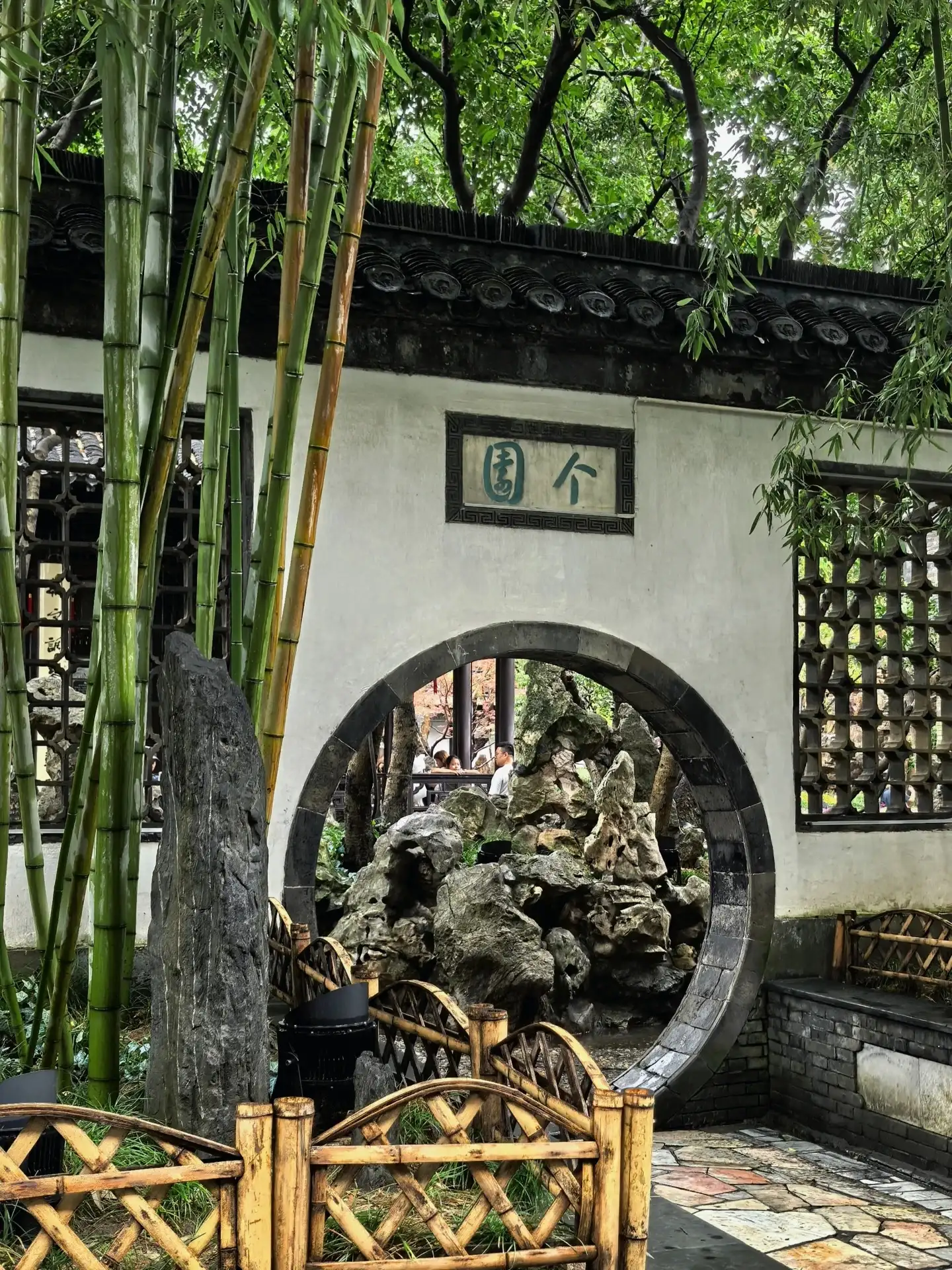
Ge Yuan uses “bamboo shoot stones” to convey the spirit of spring. To understand this approach, it helps to first examine the spatial relationship between the stones and the bamboo: within the context of bamboo, a stone’s upward-reaching form is easily interpreted as a sprouting shoot. The meaning of an object does not stem entirely from the object itself; what is placed beside it can also alter the way it is perceived. The same upright stone, when photographed in isolation versus when viewed alongside bamboo, tells a different story.
First-time visitors often seek out the most spectacular rockeries in a garden, yet the spirit of spring can be quite subtle. You might start by standing at an open spot where both the bamboo and the rock are visible, shifting your gaze from the whole to the details, and then back to the whole. The details hint at growth, while the surrounding environment validates those hints. Once you grasp this, the four seasons that follow will be more than just four names you’re supposed to identify.
When taking a child along, you might ask, “Which part makes you think it’s just sprouted?” Children may not know the technical terms for stones, but they can observe direction, scale, and density. Adults can then provide the name “bamboo shoot stone,” bridging the gap between intuition and knowledge. The same approach can be applied to photography: including a bit of the surroundings makes it easier to convey where the sense of spring comes from than simply cropping in on the stone’s texture.
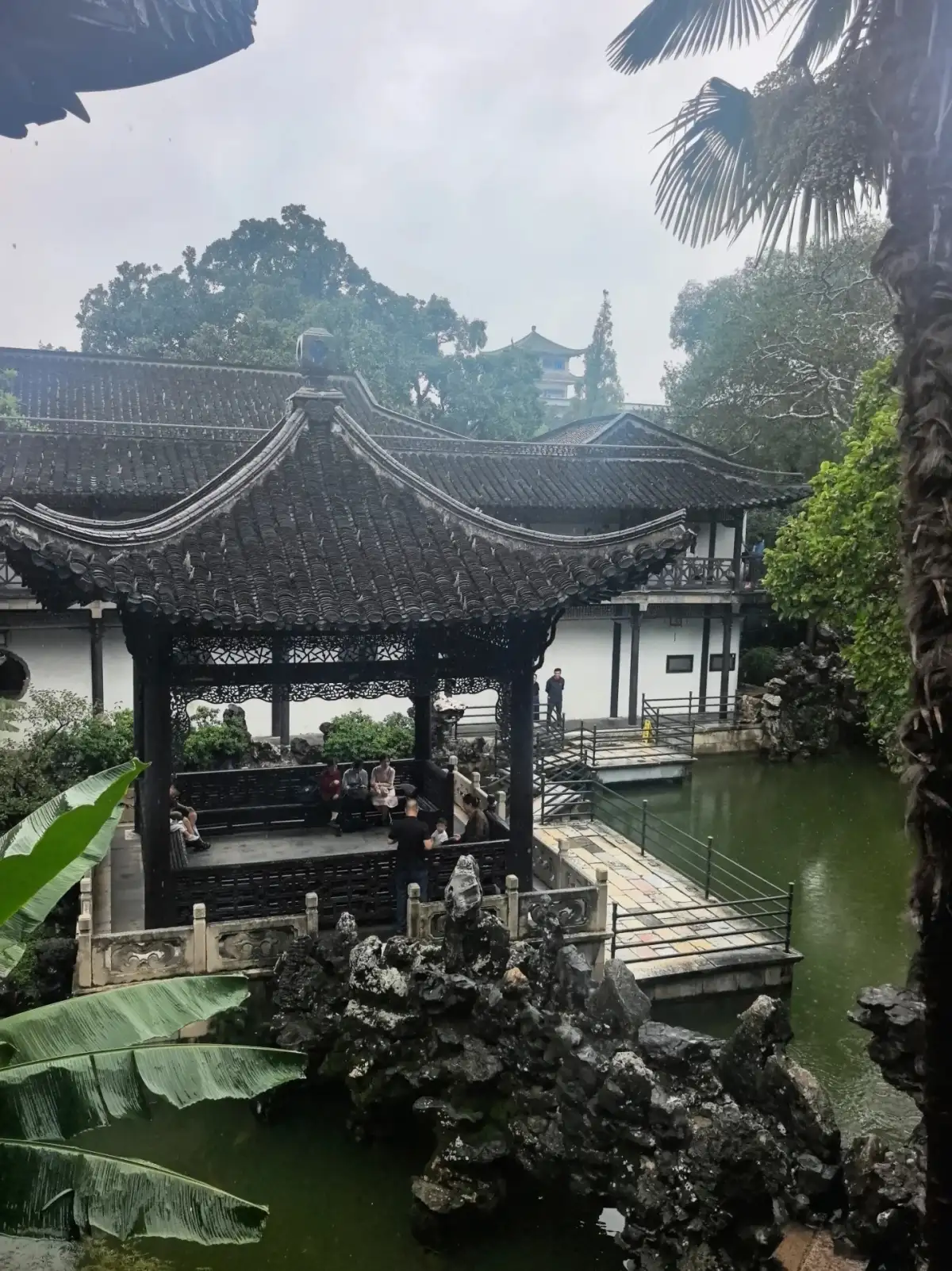
the ponds, pavilions, and rockeries of Ge Yuan in Yangzhou. Photo:Second Post: Half Price · Original Post.
Summer mountains and autumn mountains—a different stone evokes a different feeling.
Summer landscapes use lake stones, while autumn landscapes use yellow stones—a distinction in materials clearly highlighted in the exhibition brochure. For visitors, there is no need to first judge the grade of each stone; instead, they can compare their contours, surfaces, and stacking methods. How the mountain mass organizes its undulations and voids, and how the viewer’s gaze moves along the stones, all influence whether you perceive the space as light, airy, and deep, or as dense, stable, and powerful.
By first comparing these two materials, the garden becomes easier to appreciate. You can view a “Summer Mountain” and an “Autumn Mountain” from similar distances, identify the most prominent feature of each, and then read the on-site descriptions. This approach ensures you won’t merely remember the labels “summer” and “autumn,” nor will technical terms obscure what you actually see. Materials are part of the explanation; layout and surrounding vegetation also contribute to the overall expression.
the reality of autumn—might it make the “Autumn Mountain” more evocative? Natural light, changes in vegetation, and weather do indeed alter the viewing experience, but the theme of “Autumn Mountain” does not depend on red leaves necessarily appearing on any given day. Those who appreciate materials and space can visit in different seasons to compare; those primarily interested in photographing the colors of plants, however, should consider the actual phenological conditions as another piece of information to research before the trip. By keeping these two expectations separate, you won’t end up dismissing the entire park visit simply because you didn’t encounter a particular color.
If the path and the cave entrance allow entry, you can observe how the space transitions from open to confined. First, pay attention to the ground beneath your feet and the flow of people around you; then turn your gaze to the stone walls and the light filtering through. Some are better suited to walking inside, while others are better off looking in from the outside—both approaches reveal the garden’s layers. The goal of the visit is to understand spatial relationships; it is not necessary for every member of the group to climb the same section of the trail.
In winter scenes, Xuan stones are used to evoke the image of accumulated snow. There is an interesting distance between the white stone and the actual snowy landscape: the material keeps the season within the garden, while the natural weather creates its own version on any given day. After examining the first three sites and then looking for the essence of winter, one will discover that the garden designer did not simply replicate the four seasons one by one, but rather sought out cues for each season that would evoke associations in the viewer.
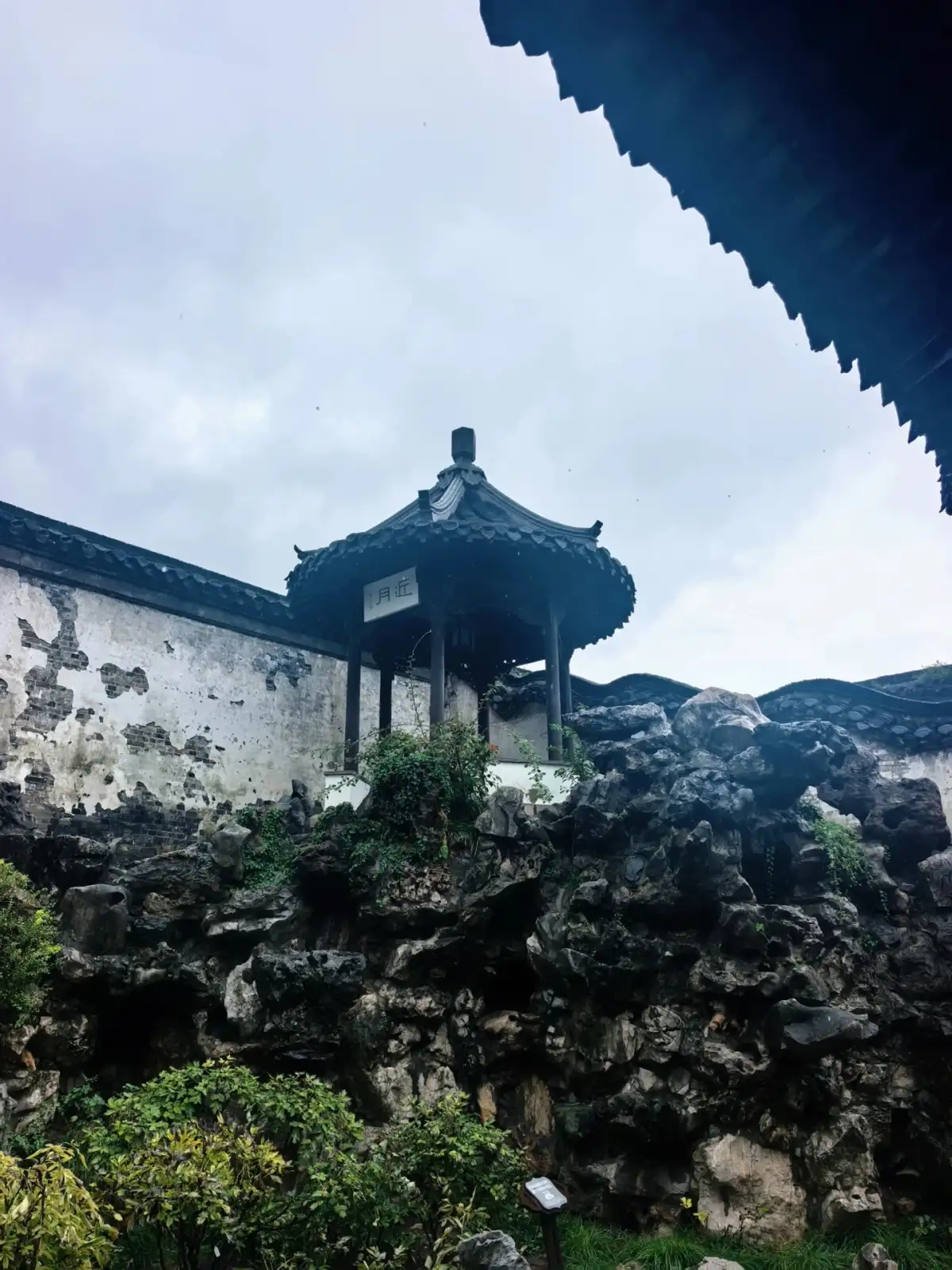
the pavilions on the rockery at Ge Yuan in Yangzhou. Photo:Second Post: Half Price · Original Post.
A single visit to the garden can unfold along two timelines
The first timeline stems from the theme—understanding materials and imagery through the four seasons; the second comes from the present moment—perceiving the true season through bamboo leaves, shadows, the air, and physical sensations. These two timelines sometimes resonate and sometimes diverge. Viewing summer mountains in winter is not a mistake in timing, but rather a simultaneous appreciation of both the garden’s design and the changes of nature. Noting this distinction offers more substance than simply saying the garden is beautiful or not.
When fellow travelers have differing interests in the garden, you can divide tasks along two lines. Those interested in history can read the historical materials and landscape descriptions; photography enthusiasts can observe how light falls on the stones and bamboo; and children can search for the spot that most evokes the season for them. Finally, everyone shares the reasons behind their choices. In this way, a single garden can accommodate diverse interests, and the visit need not be entirely dominated by the person most knowledgeable about technical terms.
Is a guided tour necessary? If you wish to understand the historical connections between the garden’s owner, the architecture, and the rockeries, a professional guided tour can provide a more complete background. If your goal this time is simply to explore the imagery of the four seasons, you can still have a focused visit by first using the institution’s brochure and on-site text to establish a basic framework. Before deciding on a guided tour, let the staff know whether you’re interested in the materials, the garden layout, or the historical figures—this will ensure the content better aligns with your interests.
For older visitors, comparative observations can be made in relatively gentle, open areas. Don’t tie understanding the four seasons to walking every narrow path. A vantage point where one can simultaneously see rocks, water, or architecture is ideal for slowly engaging in conversation; when encountering steps or narrow paths, let those willing to walk explore them and return to describe the changes in their view. Allowing everyone to make their own discoveries is more important than keeping the group in perfect formation at all times.
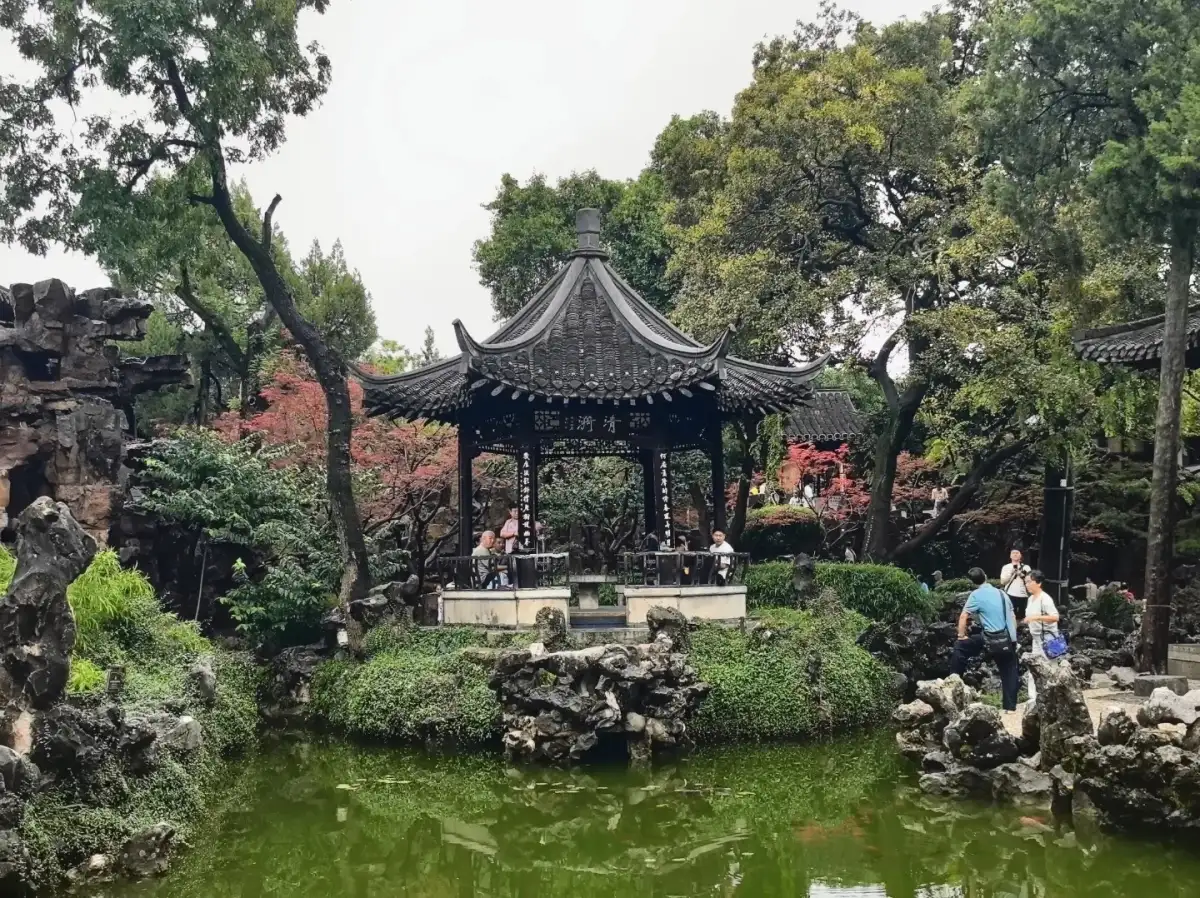
Lake stone rockeries and pavilions at Geyuan Garden in Yangzhou. Photo:Second Post: Half Price · Original Post.
After leaving the garden, one canOther Cultural Itineraries in YangzhouThis sense of scale is carried through to the interior. The bamboo and rocks in the garden compress nature into a space where one can linger, while the city’s waterways and alleyways unfold another kind of connection to daily life. The interplay of the small and the large ensures that Yangzhou’s beauty extends far beyond a single photograph of a garden.
One could also depict a specific action for each of the four seasons, rather than using four adjectives. Spring evokes upward growth; summer invites the gaze to wander; autumn draws the eye to the weight of the stones; and winter sparks associations through color. These actions are personal observations and may differ from those of fellow visitors. Recording these differences and then returning to the site to explore their causes is more interesting than arguing over whose perception is more accurate—and it also reminds us to pay attention to perspectives we may have previously overlooked.
Before leaving, return to the spot that moved you the most and observe it from a different angle that allows you to linger. Does the stone that stood out earlier still occupy the center of your vision, and how have the proportions of the bamboo, wall, or water beside it changed? A brief second look can help you determine whether you’re perceiving a single material object or a carefully arranged relationship. At this point, photographs and notes can complement each other, documenting how this judgment was formed.
Perhaps the most valuable takeaway from Ge Yuan is not the names of the four types of stone, but rather a way of observing: first identify the material, then examine its relationship with the surrounding elements, and finally ask yourself why you feel a certain way. Once you grasp this approach, when you visit other Chinese gardens, even unfamiliar rocks will offer a starting point for conversation.
Source and Editorial Notes
This article is an original travel interpretation compiled by the Dongxing Travel editorial department based on cited materials; it is not a firsthand account by the author. The full text of the original post has not been reproduced; accompanying images are used within the scope of authorization and are credited to the author and source of the original post. They do not serve as proof of actual travel experiences or services provided by Dongxing Travel.
Half-Price on the Second Day · Yangzhou’s “Two-Faced” Charm | Mid-Autumn Festival Trip 1️⃣ (Scenery Edition) · Travel Notes; Verified/Organized on: October 3, 2026.
Ge Yuan (Google Arts & Culture exhibition page) · One of China’s Four Great Gardens: Ge Yuan · Official source; Verified/compiled on: October 3, 2026.
Can winter reveal all four seasons?
Geyuan in winter can still reveal seasons expressed through stone. At Geyuan Garden, study how the Geyuan four-season rockeries use materials, shapes and paths to suggest different experiences. Look at surfaces before hearing the interpretation; the actual season and the symbolic seasons can coexist.
More than a rock photograph
Compare two stone types and their connections to buildings or water. Stay on open paths rather than treating rocks as climbing equipment. Children can compare apparent lightness or thickness without needing a standard answer for every form. Record locations to keep the photographs distinct.
Planning references