Eastbound Travel Editorial Department · Travel Diaries and Pre-Trip Reading
First, consider the Stone Elephant Path separately from the mausoleum complex as a whole
at the Ming Xiaoling Mausoleum often feature autumn leaves and stone beasts, which can easily lead first-time visitors to assume that a visit consists merely of a stroll along a tree-lined path. In reality, Stone Elephant Road is part of the Sacred Procession Route, and further along lie various structures and landscapes. When planning a trip to Nanjing, you can make the Sacred Procession Route the focus of a half-day itinerary and then decide whether to explore the mausoleum complex in greater depth based on your interests. When combining a visit here with Sun Yat-sen’s Mausoleum and other attractions on Zhongshan Hill, you’ll need to carefully consider entrances and travel distances—don’t assume that because locations are adjacent on a map, the travel time between them will be short.
Before setting out, review the map and the day’s open areas to determine your starting and ending points. If you simply wish to admire the stone carvings and the play of light through the trees, that alone can make for a fulfilling experience; if you want to understand the layout of the imperial mausoleum, set aside extra time to read the explanations and study the architectural layout. Wear shoes suitable for stone-paved paths and gentle slopes, and bring water. While the tree-lined paths provide some relief from the sun, they do not guarantee that the entire route will be cool or flat. A morning with some flexibility is better suited for a visit here than a sightseeing itinerary packed hour by hour.
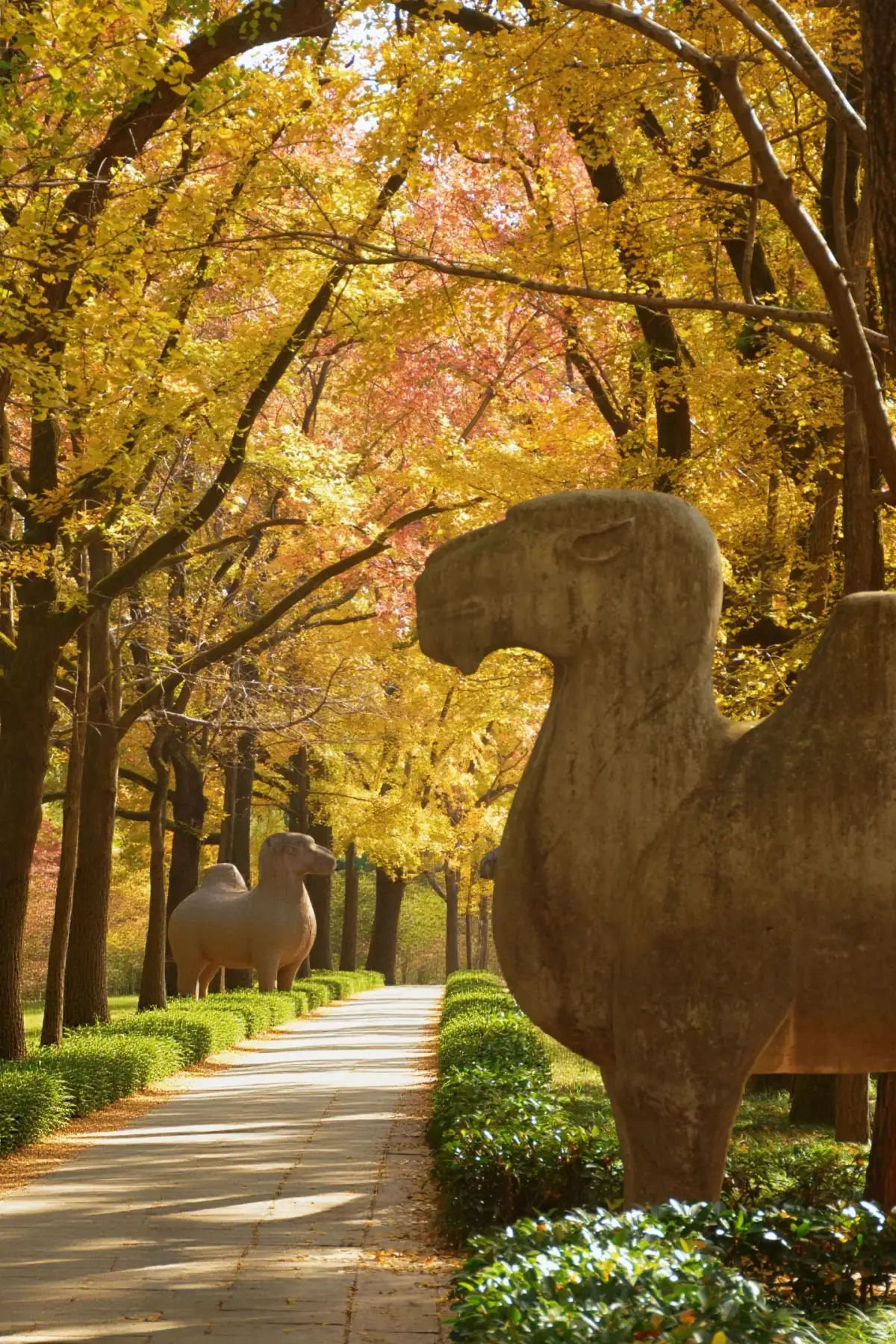
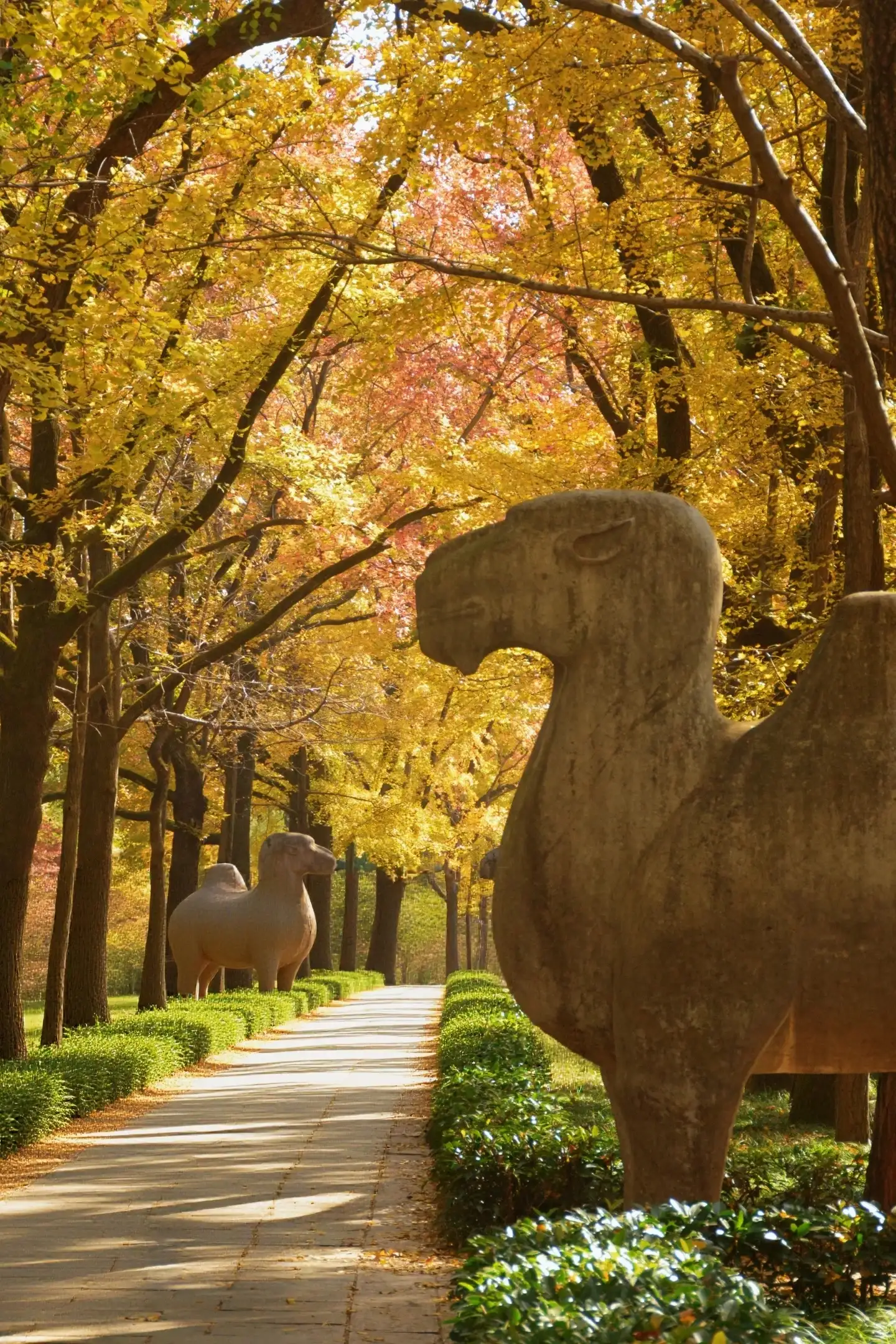
Stone camels among the autumn leaves on the Stone Elephant Path at the Ming Xiaoling Mausoleum. Image source: Xiaohongshu · Mo Zixi First, admire the scale; second, appreciate the posture According to the Sun Yat-sen Mausoleum Administration, the stone elephants on the Stone Elephant Path are arranged
At first glance, notice the scale; at second glance, notice the posture
According to the Sun Yat-sen Mausoleum Administration Bureau, the Stone Elephant Path features six types of stone beasts, including lions, xiezhi, camels, elephants, qilin, and horses. First, observe the sheer scale of these massive stones: how the animals were carved from a single block of stone, and how much space is left between their bodies and the ground. Then, compare the standing and reclining poses—you’ll discover that repetition does not equal sameness; different poses of the same animal alter the eye level at which pedestrians encounter them.
You don’t need to memorize all the symbolic meanings at once. Start by choosing a horse or elephant—animals you can easily recognize—and observe the proportions of their legs, backs, and heads before moving on to the more unfamiliar mythical beasts. Approaching the ceremonial significance through specific shapes leaves a stronger impression than memorizing a description first. The Administration also explicitly emphasizes the protection of the stone carvings; viewing them must not involve climbing or touching them. When taking close-up photos, maintain an appropriate distance and include the boundary markers at your feet in the frame; the stone beasts are not benches, and their massive size does not mean they can withstand visitors’ careless use.
stones and trees along the same stretch, offering two distinct perspectives on time
the stone carvings’ outlines remain relatively constant, while the foliage changes with the seasons, the wind, and the light. If you stand for a moment beside one of the stone beasts, you can observe how the shadows of the leaves fall across its surface, revealing subtle changes in what is otherwise a massive stone. On sunny days, the shadows are distinct; on cloudy days, the form appears more uniform. You can appreciate the carvings in both types of weather—it’s just a matter of where you focus your attention. Here, there’s no need to equate good weather with that single beam of light often seen in photographs.
If you’re interested in photography, try taking one side view and one environmental shot of the same stone animal. The side view highlights its form, while the environmental shot explains why it appears on this stretch of the path. The trees, the path, and the adjacent stone carvings form a sequence; cropping out a single animal will lose the sense of scale within that sequence. During the fall foliage season, please do not pile up leaves, pluck branches, or step into protected areas just to alter the composition of your photo; by leaving the site in its original state, your photos will truthfully capture the appearance of this sacred path at the time of your visit.
When observing the stone carvings, you can focus on several distinct areas. The sunlit backs, the darker undersides, and the bases near the ground often exhibit varying levels of brightness; the surface textures and carved contours allow the stone animals to be recognized even without color. Don’t interpret every mark as a story left by the passage of time; distinguishing between weathering, repairs, and the carving itself requires professional expertise. What visitors can do is carefully note the shapes they see and, when encountering interpretive signs, match them to what they observe on-site. The color changes cast by tree shade should also be distinguished from the stone’s inherent color: when a breeze passes, the patches of light shift, but the contours remain in place. This experience, where transience and stability coexist, is precisely why the stone carvings in the woods are worth taking the time to observe.

Wax-flowering plum blossoms and red walls at the Ming Xiaoling Mausoleum in the snow. Image source: Xiaohongshu · Mr. Dabuliu
the turn in the Sacred Way—it’s worth exploring on foot.
within the imperial mausoleum complex, the path serves not only as a walkway but also guides the process of approaching the site. The changes in direction along the Ming Xiaoling Mausoleum’s Sacred Way can be experienced through walking: the stone beasts you’ve just seen gradually recede behind you, while the buildings ahead may not immediately reveal their full appearance. If you pause to look back, you’ll notice that the path you’ve traveled and the path ahead present different depths of field at the same spot; the turns in the path thus become an integral part of the viewing experience.
There’s no need to interpret every bend as a single legend. First, confirm the route shown on the guide map; then, observe how the terrain and architecture connect from your actual vantage point—this is sufficient to understand the spatial organization. When there are many visitors, move with the flow of traffic; look back at the scenery from wider sections rather than stopping abruptly in narrow passages. Taking your time to appreciate historic architecture doesn’t mean walking as slowly as possible everywhere; leaving space for people moving at different paces allows for a more leisurely observation of your own, without being constantly interrupted by passing crowds.
civil and military stone statues along the Stone Elephant Road, where their postures serve as clues to ceremonial etiquette
the Stone Beasts section and continue along the Sacred Way, you’ll encounter a different expression of human stone statues. Compared to the animals, the attire, standing postures, and hand positions make it easier to appreciate the ceremonial nature of these sculptures. Instead of simply counting the number of statues, compare the proportions of the heads to the torsos and observe how the carvings use the folds of the robes and the outer contours to create a sense of solemnity. For visitors unfamiliar with traditional Chinese official attire, on-site explanations will help distinguish between the different categories of figures.
the details of the stone statues also require protection. View the overall composition from a distance; when up close, observe only the permitted side views—do not climb over the railings to examine the patterns. If you’ve previously visited European church cemeteries or the mausoleums of other civilizations, you can make comparisons with specific questions in mind: How are people arranged within commemorative spaces? How do their garments emphasize status? How do the pathways guide visitors toward the statues? The comparison need not conclude which is more grand or mysterious; simply understanding how each organizes its order enriches the journey.
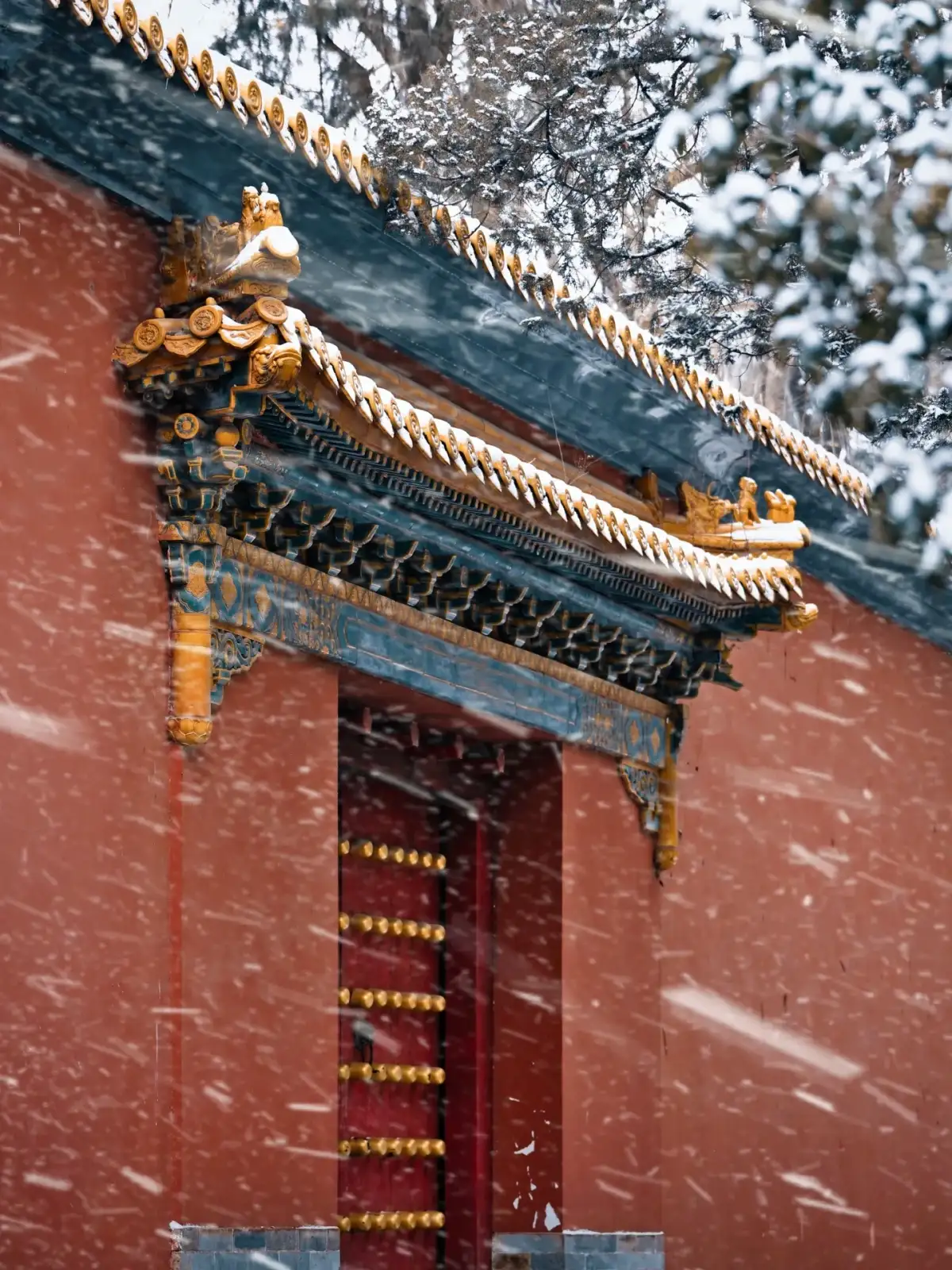
Colorfully painted eaves and a red courtyard gate at the Ming Xiaoling Mausoleum in the snow. Image source: Xiaohongshu · Mr. Dabuliu
Continuing into the Mausoleum Palace, the architecture takes on a different sense of weight
If you choose to continue into the mausoleum complex that day, your focus will shift from the stone statues scattered along both sides of the path to the gates, plinths, walls, and architectural ruins. Standing at the entrance, first orient yourself to the front and back and note the elevation changes, then read the information about the dates and restoration efforts in the explanatory texts. Preservation, damage, and subsequent conservation efforts operate on different levels; one cannot directly describe everything seen today as the complete, original appearance from a specific historical era.
are also worth noting. The dimensions of the preserved plinths and the distances between the front and rear courtyards all speak to the scale of the original spaces; a ruin does not necessarily lack substance just because its roof is missing. Rather than rushing to find the next photo of a complete building, take the time to read an information plaque that explains its purpose. If you encounter a building that is temporarily closed to the public, simply observe its exterior and consult the map; do not venture down side paths without authorization. After your tour, return to the woods, where the continuous arrangement of stone carvings will provide a striking contrast to the scale of the mausoleum complex you just visited.
Beyond the autumn leaves, three types of weather can also be factored into your plans
Autumn is a common theme for visits to Stone Elephant Road, but leaf colors vary depending on tree species and the year’s weather; the date of a particular photography journal entry cannot directly guarantee the best time to visit. In spring, observe the new leaves and flowering trees; in summer, notice the outlines of the stone carvings beneath the dense shade; and in winter, see how the bare branches and trunks lend an airy, open feel to the Sacred Way. If you encounter snow or ice, first check the scenic area’s announcements and ensure the trails are safe—never let the allure of a rare photo opportunity cause you to overlook the conditions underfoot.
On rainy days, you may want to shorten your time outdoors and spend more time reading the explanations and exploring the accessible buildings; adjust your plans in case of heavy rain, thunderstorms, or temporary closures. Opening hours, ticketing, reservations, and ID requirements must be verified through current official channels; do not rely on discounts or outdated prices found in social media posts. International visitors should save the accurate Chinese names and entrance locations before departure and seek advice early if unfamiliar with the ticketing process. “Slow travel” requires reducing the pressure of making last-minute decisions, rather than handling all formalities once you arrive at the entrance.
make the Sacred Way a complete chapter in any Nanjing itinerary
You can wrap up this part of the tour after resting and having a meal near Zhongshan Mountain, then return to the city center to plan other activities. Moving from stone carvings to the mausoleum complex and then to city streets in a single day provides plenty of information; if you’re running low on energy, ending your visit after the Sacred Way won’t detract from the overall experience. The key is to keep track of which sections you’ve seen and which areas you haven’t yet explored, so you don’t let your impression of a single tree-lined path overshadow the entire Ming Xiaoling Mausoleum.
When reflecting on the experience, you can recall a stone beast, a turn in the path, and a change in elevation. These correspond to form, direction, and scale, respectively, and together form the basic clues for interpreting the mausoleum. Nanjing’s history isn’t confined to commemorative dates and the names of historical figures; it also resides in paths like this one—shaded by trees and requiring a step-by-step approach. The next time you see a photo of autumn leaves, the relationship between the stones and the path will immediately come to mind, rather than just the generic remark, “Autumn in Nanjing is beautiful.”
Further Reading and Reference Sources
Compiled by the Eastbound Travel Editorial Department based on publicly available travel notes and listed materials. Intended as pre-trip reading; this is not a personal account of the experience. Opening hours, transportation, reservations, and service arrangements should be verified based on the actual travel date.
Sun Yat-sen Mausoleum Administration Bureau: Stone Elephant Path
Can the stone-animal avenue be your main visit?
A Ming Xiaoling Sacred Way walk can form a complete subject: compare the poses of the same animal, then consider their positions beside the changing route. Stone Elephant Road details extend beyond autumn leaves to how sculpture shapes a ceremonial passage. Visitors less interested in foliage can still read size, placement and the turns of the path.
When to continue towards the mausoleum
A Ming Xiaoling mausoleum visit shifts attention from wooded sculpture to architecture and funerary space. Continue after the Sacred Way if you want the broader complex; for a slower woodland walk, finish that section attentively first. Allow time to return in either plan. Stop securely before taking photographs in rain and keep passageways clear when seeking symmetrical views.
Planning references
Planning reference: Ming Xiaoling Sacred Way 1