Although both Yangshuo and Jingxi feature Guangxi’s karst peaks, fields, and water surfaces, they may appear similar in photographs but require different viewing approaches when traveling. Yangshuo’s fields can be experienced as a continuously changing landscape along the way, while Jingxi’s springs are better suited for closely examining the relationship between the nearby surroundings and the water’s surface. Choosing between the two depends not only on your preferred colors but also on how you wish to move, where you want to stop, and whether it aligns with the direction of your entire journey.
First, divide the scenery in your photo into foreground and background
小红书作者菠萝油Yoki在完整十里画廊笔记里注意到路旁田野、山峰与沿线停留,提出不必为了一个固定机位反复寻找的个人感受。好久不见的鹅泉笔记则从泉边、桥与较高视野讨论不同观看位置。本篇仅用这两份观察比较看景方式,不采用原帖票价、租车时刻或非正式进入方式。
If what attracts you most in a photo is the silhouette of distant karst peaks, think about what’s in the foreground. Rice paddies, water surfaces, village houses, and trees can transform similar silhouettes into different scenes of daily life. For photographers, this affects the depth and dimension of the image; for ordinary travelers, it determines whether a particular stretch of the journey is worth taking slowly. By clarifying what kind of foreground you prefer, your planning will go beyond simply “finding a place like Guilin.”
If you prefer reflections in the water or details along the water’s edge, you’ll need to consider your viewing distance. Standing in one spot to view the water versus moving continuously along a longer scenic stretch creates different rhythms. The former allows for repeated observation of the same subject, while the latter lets the scenery change as you move forward. Both approaches can be fulfilling; the one that suits you best often depends on your travel companions’ need for rest, your equipment, and the time you have available.
Yangshuo is ideal for treating the changes along the way as part of the experience.
Yoki’s notes describe the Ten-Li Gallery as an idyllic experience along the way; this observation translates well into the editorial suggestion to “choose a continuous stretch of the route.” First, identify a section that is legally accessible and easy to reach and return from, then plan a few short stops along the way. Stop each time to view a different foreground; there’s no need to insist on finding the exact same café or field featured in a photograph.
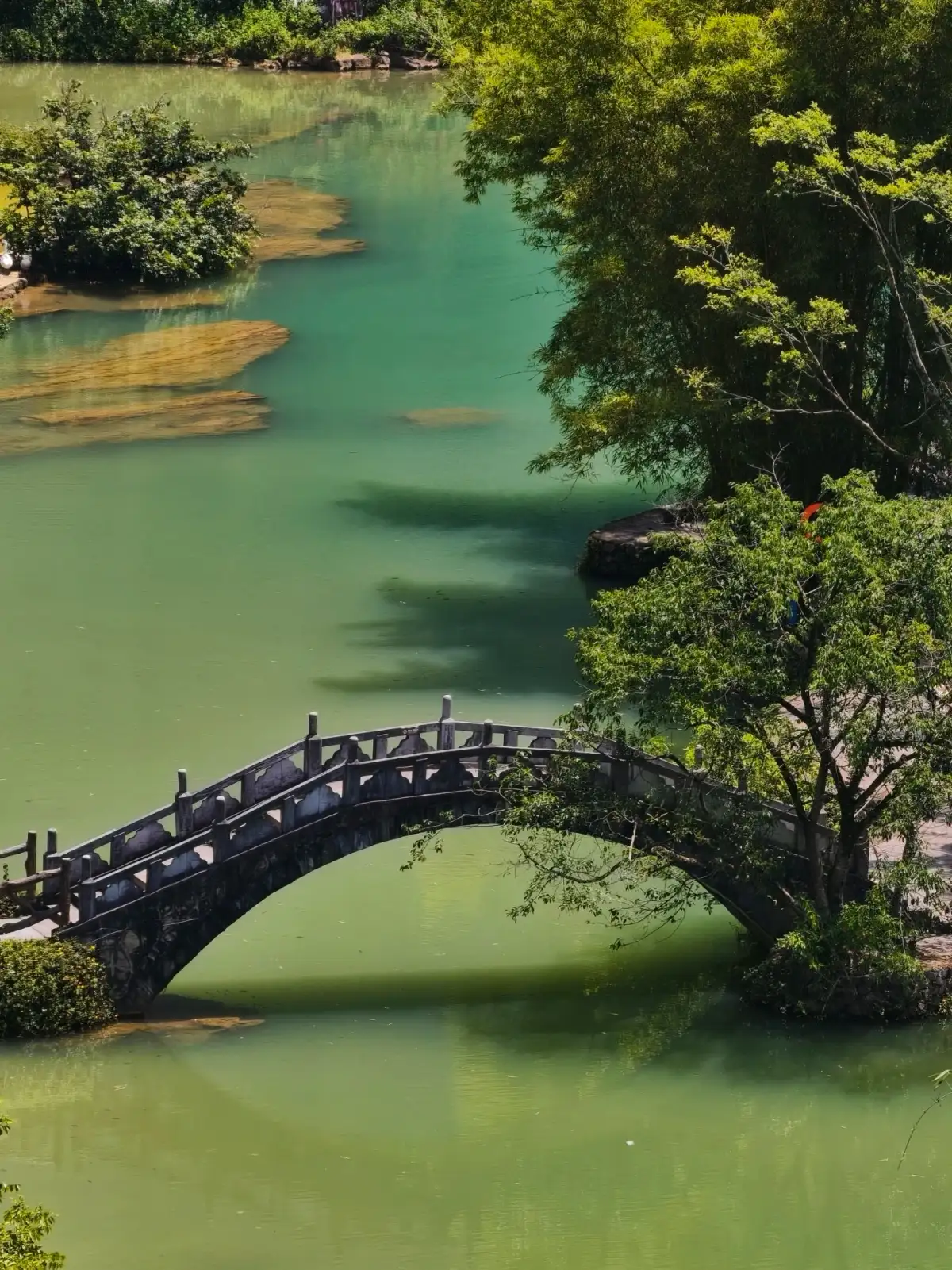
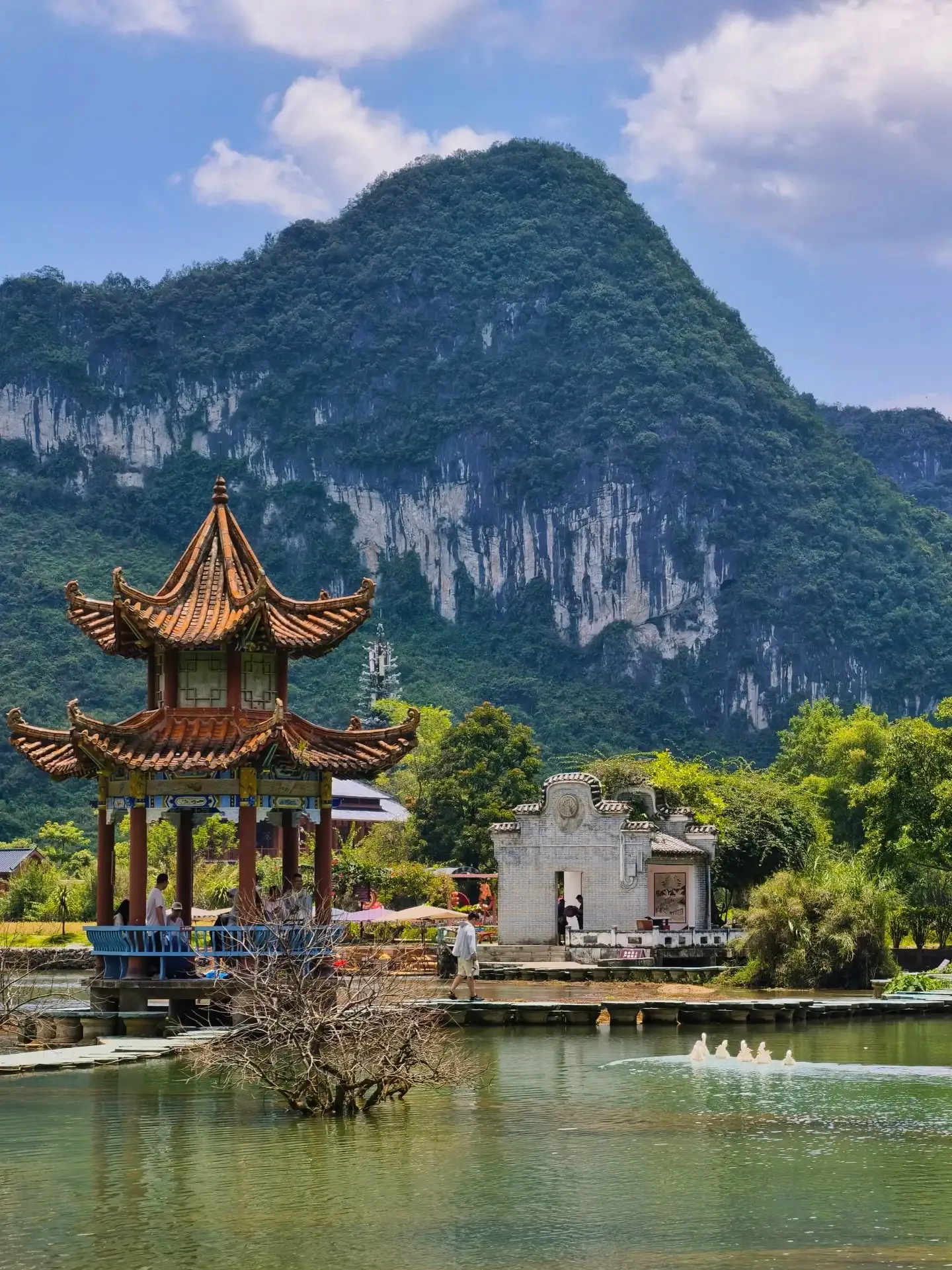
The stone arch bridge under the shade of trees at Equan and the green water. Photo:Long Time No See · Original Post.
Fields are spaces of production, governed by agricultural seasons and the daily lives of locals. The colors of rice paddies vary throughout the year, and the state of the crops in a photograph reflects only what was observed at the moment of capture. Before your trip, research seasonal conditions, and on-site, adjust your focus based on what you actually see: sometimes it’s best to focus on blocks of color, while other times it’s better to observe the boundaries between fields or the connection between village houses and the mountains. Do not enter fields that are being cultivated just to capture the same shot.
to observe the changes along the way—doesn’t mean you have to walk the entire stretch. Choosing a clear turnaround point ensures that even a short stop feels complete. You can start from a specific, identifiable starting point, first observing the interplay between the fields and the mountains, then deciding whether to continue or end the walk based on how your companions are feeling. Those traveling with children can turn the activity into a quest to find two different foregrounds, while older travelers can center their experience around a comfortable resting spot—these are all practical elements of the route.
Public reports on Yangshuo by the Guilin Municipal Tax Bureau of the State Taxation AdministrationThe “Ten-Li Gallery” is referred to as a scenic corridor; this article was verified on October 3, 2026. Official reports are used to confirm locations and themes; specific modes of transportation, commercial services, and access conditions should still be selected based on the date of travel. Cycling, e-bikes, and walking each have their own requirements; decisions should be based on individual ability and legally available services. Do not automatically assume that all travelers can use these options based on the author’s experience renting a vehicle in this travelogue.
By the springs in Jingxi, you can start by focusing on a single subject
The long-awaited complete notes allow you to observe E’quan Bridge, the water’s surface, and the surrounding mountains from different vantage points. From this, you can design a more focused stop: first, find a spot by the spring where viewing is permitted; then, observe the relationship between the water and the shore; and finally, depending on your stamina, decide whether to visit other public viewing spots. Once the core subject is established, adding additional angles becomes an optional choice that does not detract from the sense of fulfillment at this stop.
Data on Equan from the Guangxi Meteorological DepartmentThis article, which introduces the landscape where springs, mountains, and farmland converge, was reviewed on the same day. It is intended to help establish geographical context and is not meant to verify the water’s color, weather, or on-site services on that particular day. Travelers can observe the scene in layers, starting from the water’s edge: first, the nearby water surface; then, the vegetation along the shore; and finally, the interplay between the surrounding mountains and fields.
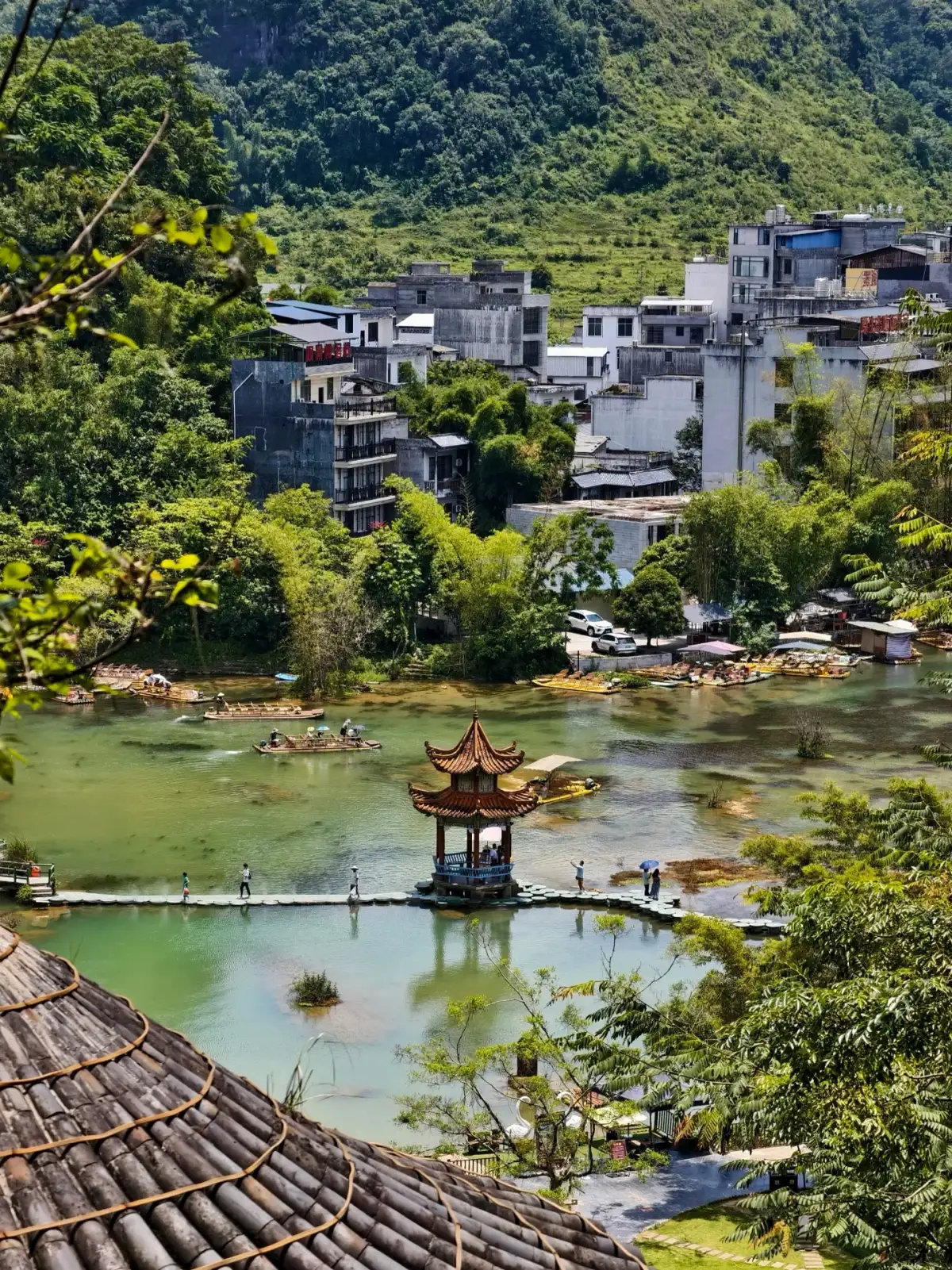
View of the small pavilion in the waters of Equan and the village houses along the shore from a high vantage point. Photo:Long Time No See · Original Post.
Photography by a spring can also begin with composition. First, capture an overall shot that accurately conveys the surrounding environment, then decide whether a close-up is needed. A close-up might emphasize aquatic plants, a stone bridge, or a reflection; the caption should only mention objects that can be clearly identified. Information not visible in the photo—such as the spring’s source, depth, or the bridge’s history—should be supplemented by reliable sources, rather than inferred based on color or intuition.
若想增加较高视野,先问具体路径怎样上去、怎样下来。原帖作者的用时和体力不作为自己的尺度;同行人都愿意参与,才把它放入主线。希望停留在水边的旅客同样能看到山、水与田园关系,站得更高并非理解景观的唯一方式。
When you’re on a short vacation, comparing route directions is more useful than comparing which place is more beautiful.
—should not be treated as interchangeable simply because they appear similar in a single photo. First, look at your arrival city, departure city, and other confirmed destinations, then place your candidate locations back on an actual map. Adding an extra leg to your itinerary means potential increases in travel time, accommodations, and luggage handling; this time will cut into the time you actually spend sightseeing. Plans centered primarily on Guilin and Yangshuo should be discussed separately from those that extend further into southwestern Guangxi.
If you can only add one natural stop, ask yourself where you’d prefer to spend your time: continuous viewing along the route, or a closer look around a spring. The former suits those who enjoy discovering things as they walk, while the latter suits those who wish to focus on a few specific subjects. The intensity of the actual route still requires specific details, but once your interests are established, it becomes easier for a consultant to propose an itinerary that fits the entire route.
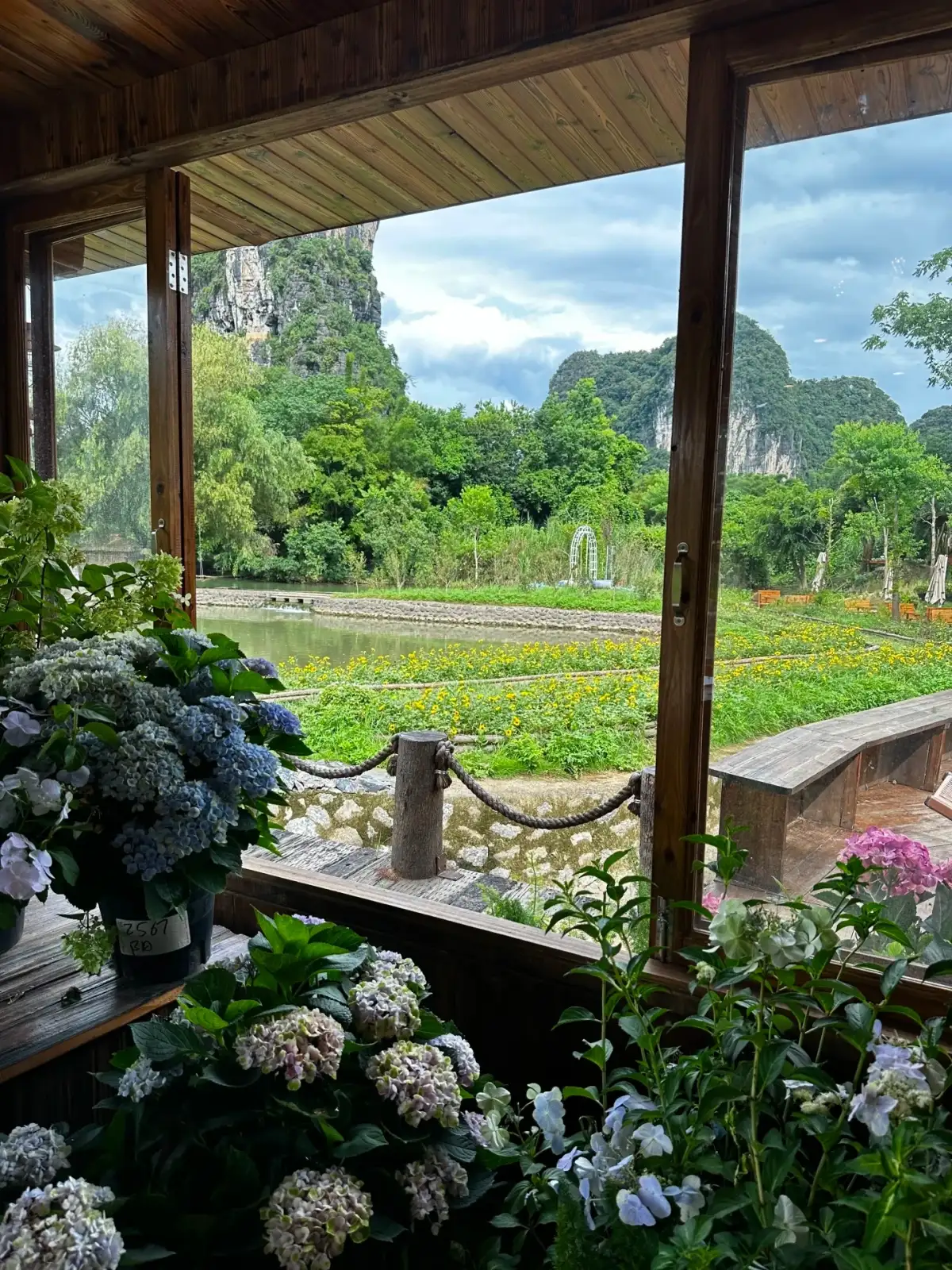
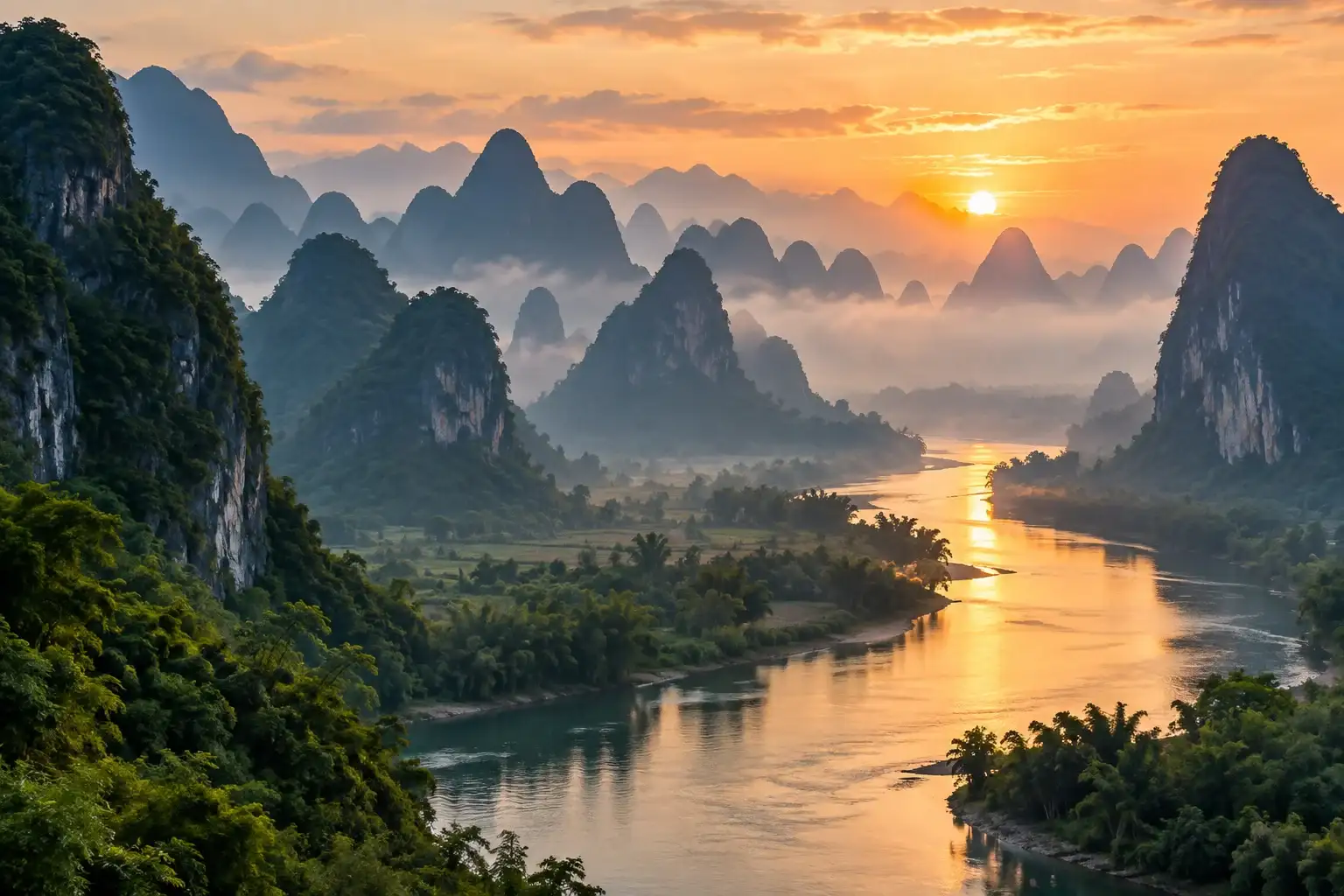
View of the karst peaks and rice fields from the window of a guesthouse near the Yulong River. Photo:Xiao La Kong Kong · Original Post.
Travel companions with a strong interest in photography should clearly discuss the trade-offs between waiting and moving. If you’re aiming for specific lighting conditions, you’ll need to accept the variations brought by the weather and on-site conditions; the entire group may not be willing to linger for a long time for a single photo. By agreeing on the timeframe for shooting in advance, you can incorporate others’ rest and meal breaks into the plan, reducing the need for last-minute negotiations once you arrive on site.
Even if you’re not familiar with Chinese platforms, you can still articulate your needs specifically.
For international travelers holding foreign passports, when preparing information, include both the Chinese and English names of the location, as well as the clear contact information of the actual service provider. If a particular Chinese name yields multiple results on a map, verify the location by cross-referencing the city and the full address. Specific ticketing and event details should be confirmed with official sources or the actual operators; travel guides are intended to spark interest and do not replace bookings or current requirements.
When choosing accommodations, start by comparing the directions you plan to explore each day with your arrival and departure locations. A rustic guest room pictured in a photo might be appealing, but the view, carrying luggage, dining, and transportation are still distinct considerations. Prioritize your most important needs, then verify the actual conditions with the hotel. This will prevent you from rearranging your entire itinerary—which may end up being unsuitable—just for the sake of a window view.
Returning to the theme of the journey, both Yangshuo and Jingxi are ideal places to find your own way of interpreting the relationship between mountains and water. You can continue to refer to this siteGuilin Destination GuideandList of Tourist Routes—and discuss your plans based on what you’ve already identified. Once you have a clear vision of how you’ll experience the scenery, a stretch of farmland or a springside spot can offer plenty to see; your choices should give travelers time to observe what’s actually there, rather than filling your Guangxi itinerary with two places that share a similar name.
Source and Editorial Notes
This article is an original travel analysis compiled by the Dongxing Travel editorial team based on cited materials; it is not a firsthand account by the author. The full text of the original post has not been reproduced; accompanying images are used within the scope of authorization and are credited to the author and the source of the original post. They do not serve as proof of actual travel experiences or services provided by Dongxing Travel.
Pineapple Bun Yoki · Ten-Li Gallery | Summer Rice Fields and Green Meadows · Travel Notes; Verified/Organized on: October 3, 2026.
Long Time No See · Equan | At the foot of the mountains in Jingxi, the water guards the secrets of the mountains · Travel Notes; Verified/Organized on: October 3, 2026.
Guilin Municipal Tax Bureau of the State Taxation Administration · Public Reports Related to Yangshuo’s Ten-Li Scenic Corridor · Official Materials; Verified/Compiled on: October 3, 2026.
Guangxi Meteorological Department · Geographical and Scenic Data on the Equan Scenic Area Xiao La Kongkong · Off to the Yulong River!! Discovering a Breezy Courtyard Just Like the Ones in Dali · Image source: This post is not cited as a basis for curr · Official Materials; Verified/Compiled on: October 3, 2026.
Xiao La Kong Kong · Off to the Yulong River!! Discovering a breezy courtyard just like the ones in Dali · Image source: This post is not cited as a basis for current policies. · Image source; this article does not cite this post as a basis for current policy.