A workable two-day outline: lake first, tea country second
Start with a selected northern or eastern West Lake walk, then a city meal and neighbourhood visit on day one. Use day two for Longjing or Meijiawu tea country, leaving time to return to the city or station. This is an adjustable editorial route rather than a booked package; admission, tea experiences and transport are not confirmed by the outline. Walking, waiting and hill-area transfers still take time.
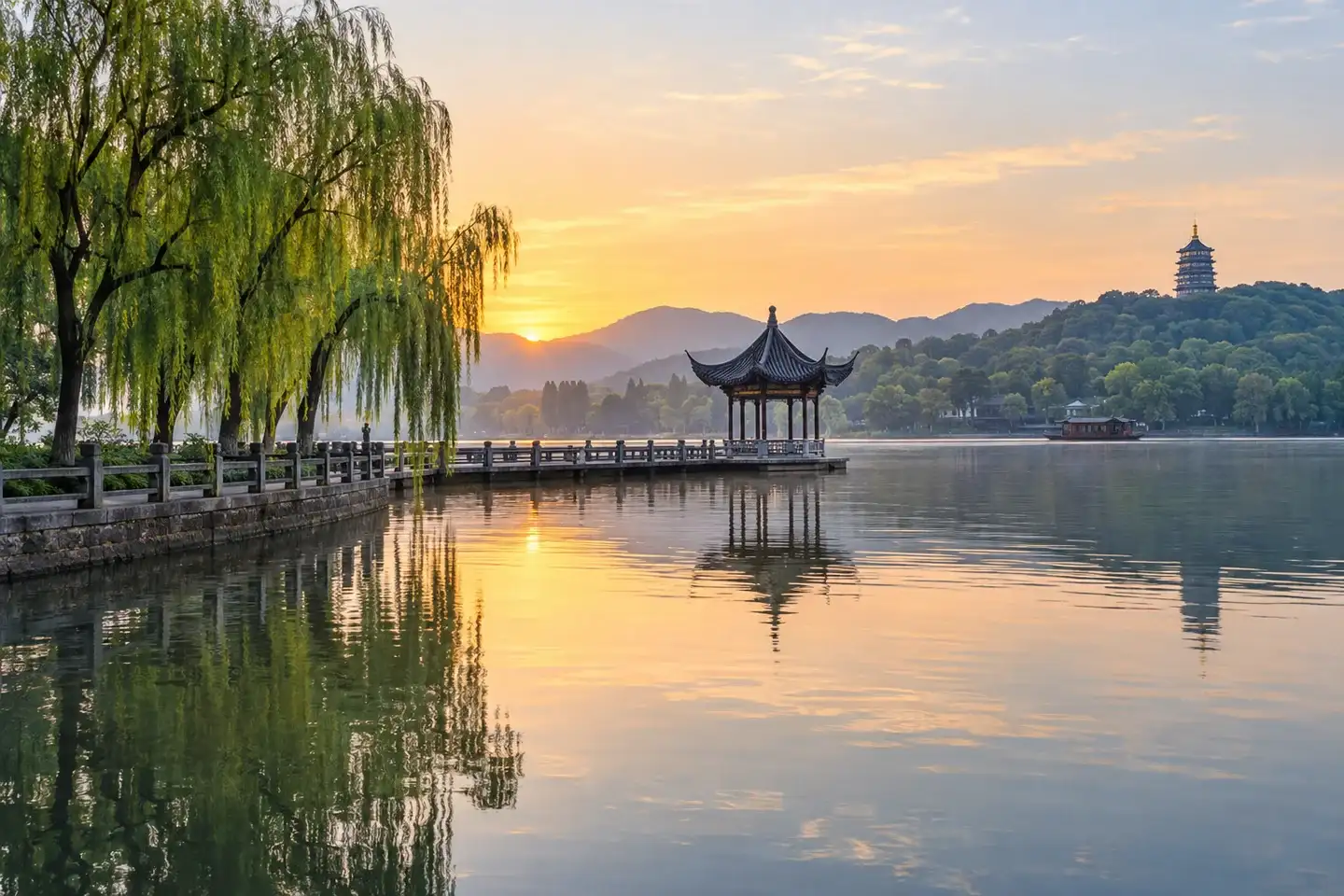
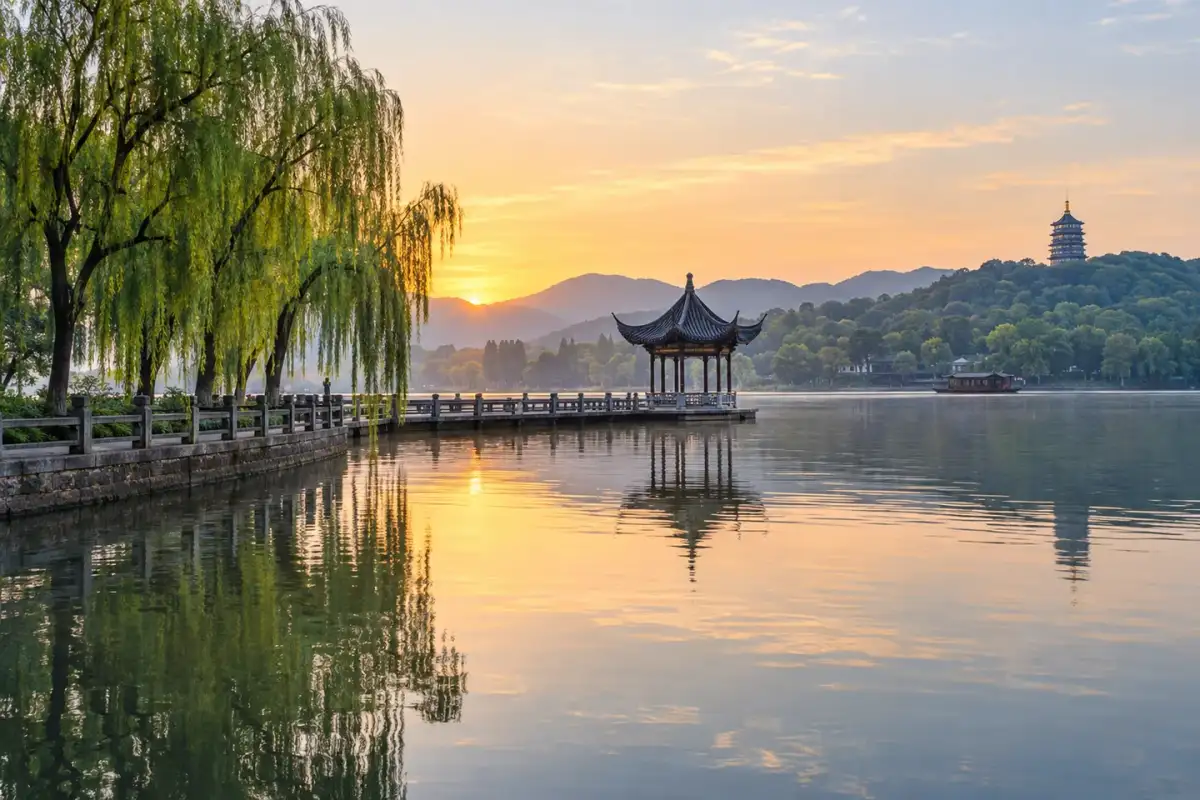
UNESCO recognises West Lake as a cultural landscape: water, causeways, islands, buildings and the city work together. A first visit can explore a small section slowly instead of completing every lakeside stop, temple and distant excursion. Information was checked on 4 October 2026; confirm individual venue and reservation arrangements for your dates.
Choose accommodation around the full route, including luggage
Compare the arrival station or airport, your intended lake access and the next day’s tea-country direction. City accommodation near transport and meals can simplify a first visit. A hill or tea-village stay may be quieter, but ask about evening dining, transport and carrying bags uphill. “Near West Lake” is too broad: different shorelines have different access, and a map distance is not automatically a walking time.
Confirm passport check-in, luggage storage and the hotel’s actual entrance. For a late arrival, ask how reception works. If you arrive around midday, settle or store bags before shortening the lake route; do not drag luggage along an extended causeway. On departure day, include collecting bags rather than using a lake-to-station estimate for a journey that starts in a village and passes through the hotel.
Day one morning: a selected Broken Bridge and Bai Causeway walk
If time and mobility allow, choose a section around Broken Bridge, Bai Causeway and Solitary Hill. These appear in Hangzhou’s official lake-route suggestions. Pause at a view you like before deciding to continue; the presence of Su Causeway farther along the map does not oblige you to complete everything. Check signs and current paths rather than following crowds until you accidentally double back.
Shorten the walk for a stroller, older companions or heat. Pick a sensible return point towards the city and let a lakeside break replace an extra excursion. Prepare for sun and wet stone. If you add a boat, confirm its pier, operating conditions and return location. A paid sailing and a shoreline walk are different activities, and boat operation is not guaranteed in all weather.
Day one afternoon: connect the lake to the city
Choose lunch near the point where you actually finish the walk. Then consider an eastern lakeside neighbourhood or Nanshan Road, adjusting for the distance already covered. If historic commercial-street atmosphere interests you, select a section of Hefang Street. Do not treat every shopfront, rebuilt façade and surviving historic element as evidence from the same period. Allow time to choose a meal and sit down.
For collections or craft culture, check current museum hours, reservation requirements and the actual address before replacing the afternoon. Similar museum names do not establish the same location. A two-day visit does not need every cultural venue. Keep dinner and a short evening walk near your accommodation if you are tired. Fountains, lighting events and performances depend on current operation, not a promise created by a travel video.
Day two: ask what a tea visit actually includes
Hangzhou’s official tea routes include Longjing village, Meijiawu and hill trails. Select one area instead of rushing through every production location. For views of tea plants and village life, use publicly permitted paths. Obtain permission before entering cultivated plots, picking leaves or taking part in production; a plantation is not an unrestricted public park.
Before tasting, ask about the price, tea type, serving format, any purchase obligation, interpretation language and duration. These are normal transaction questions rather than a judgment on a particular shop. A spring-tea label, area name or package design alone does not prove the origin of the tea you are served. Keep product information and a receipt if buying. Families can emphasise learning about tea and a short village walk while avoiding steep or extended hill routes.
Adding a temple or a distant attraction requires a trade-off
If temples and religious architecture are your priority, replace part of the tea-country day with a clearly defined temple visit rather than adding it to everything. Check whether the relevant scenic area and temple have separate reservations, tickets or access conditions. Follow local religious etiquette and do not put photography ahead of worship. Confirm travel separately from admission; a successful booking does not shorten a hill-area transfer.
Qiandao Lake, Liangzhu and other themes have their own journey and interpretation needs. They can anchor another visit but should not be presented as effortless extras after a long lake walk. With only two days, choosing a distant attraction normally means dropping tea country or a longer lake section and revisiting accommodation and departure plans. “In Hangzhou” does not mean everything fits into one day.
Rain and heat: keep a view, reduce the exposure
Rain need not cancel Hangzhou, but reduce long causeway and hill walking. A short lake section near the city followed by an indoor stop can preserve the landscape experience while allowing you to dry off. With thunderstorms, strong wind or official warnings, check attraction and transport notices and stop exposed hill or boat activities. Bring suitable shoes and protect documents; leave time to manage wet clothing before departure.
In heat, put the longer walk in a more comfortable part of the day and allow an air-conditioned break or a confirmed indoor visit. If companions are tired, replace a tea-hill route with a short village visit or indoor tea interpretation. A complete experience does not require climbing. The day’s weather and venue notices are more useful for a hill decision than an average-temperature chart saved months earlier.
Before leaving, work backwards from the actual station
Hangzhou has different railway stations. Save the complete station name in Chinese from the ticket, rather than treating all tickets marked Hangzhou as departures from one place. Verify the service and availability with official railway channels; this guide does not supply a fixed train or promise a constant journey time. Different station names can change the hotel and return plan.
If you are still in tea country that afternoon, decide when to leave, how to collect luggage and how much station and security margin to preserve. Rain, vehicle waiting and luggage queues can lengthen the process. Do not add one last distant temple on departure day. A successful two-day visit gives you a clear lake experience, a meaningful introduction to tea and a workable exit; dropping optional stops does not mean failing to see Hangzhou.
Continue planning your China journey
More practical China travel guides
Official references and verification date
References checked on 4 October 2026. Recheck current rules before booking and departure.
UNESCO: West Lake Cultural Landscape of Hangzhou