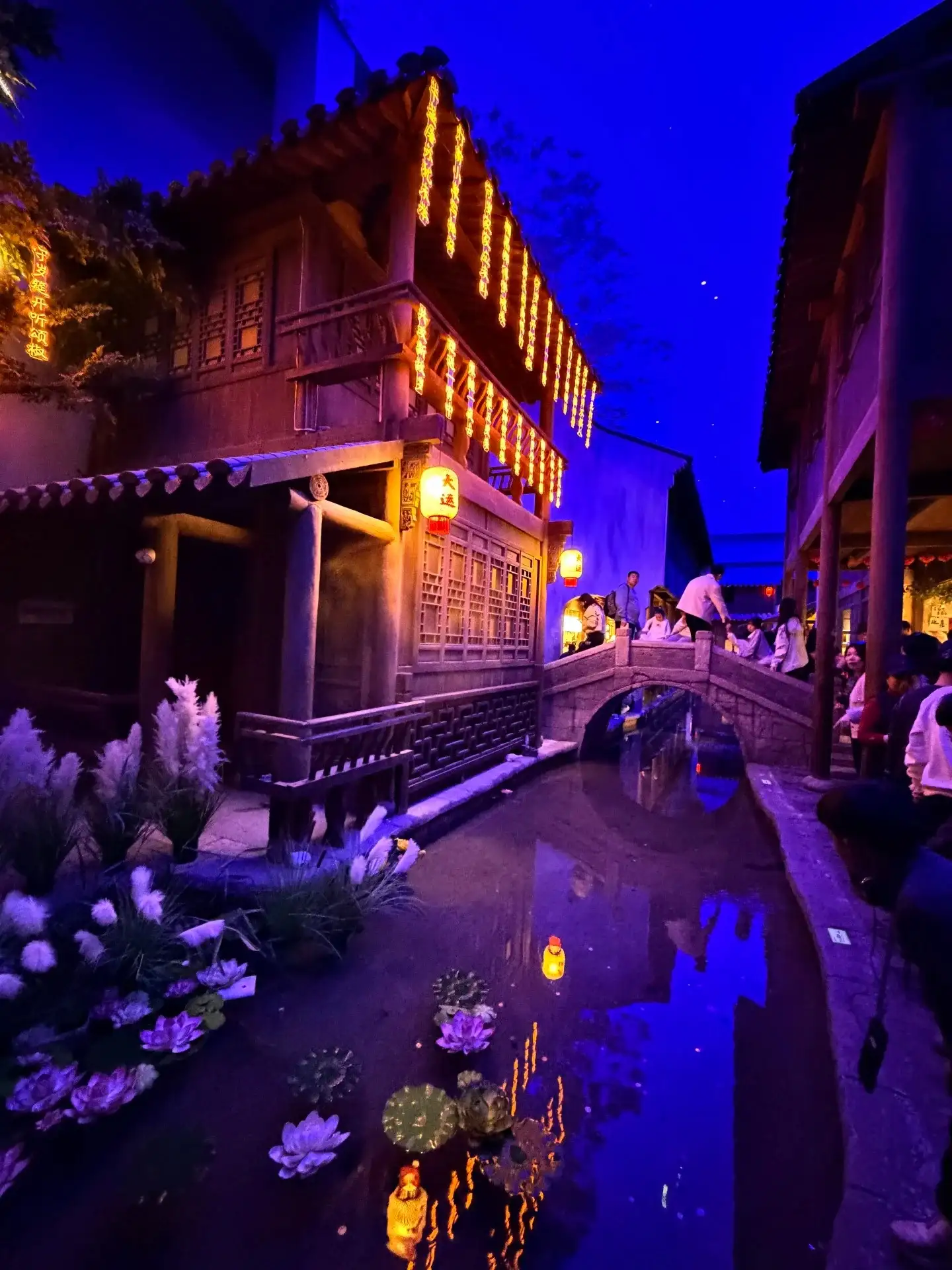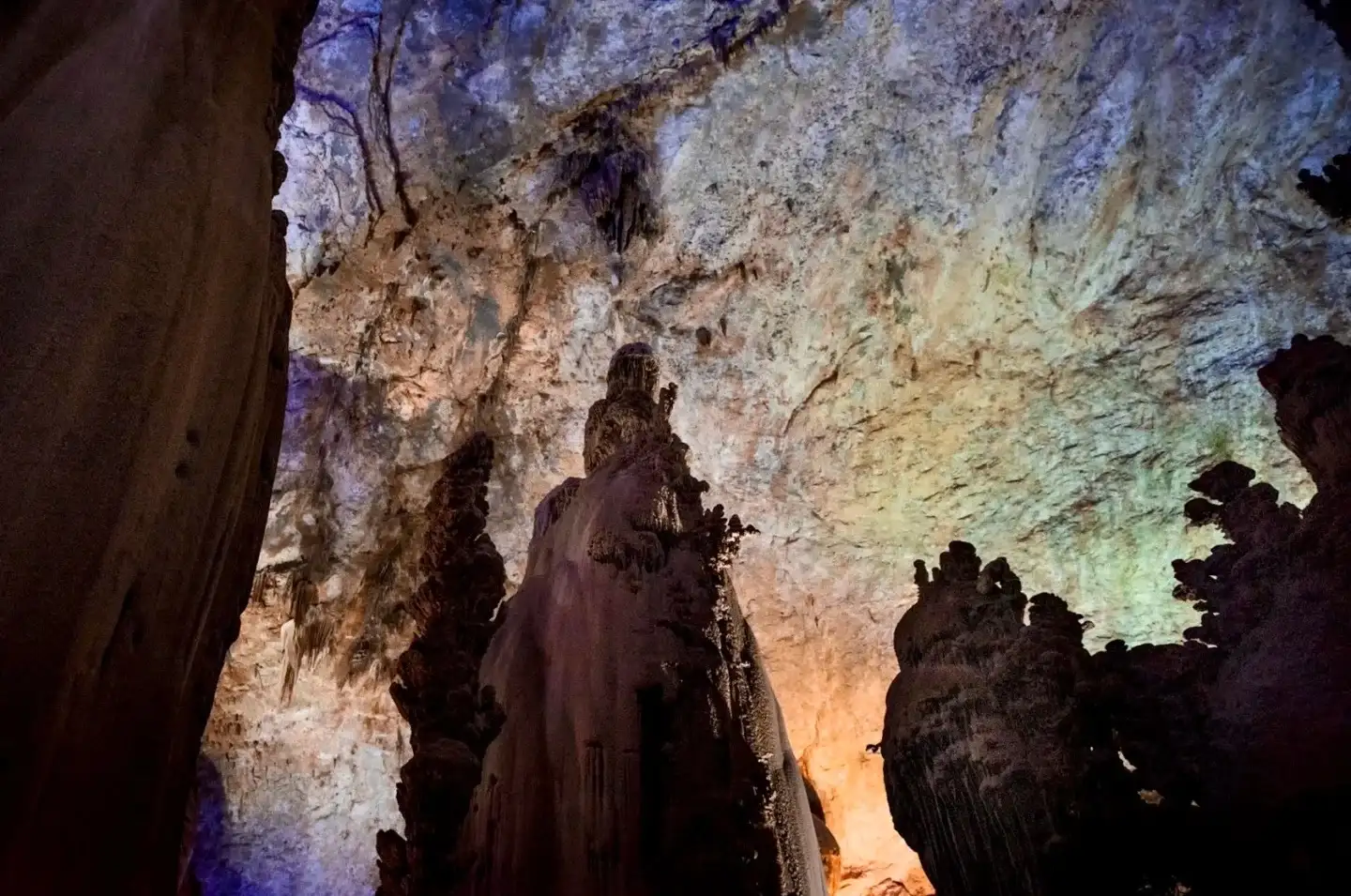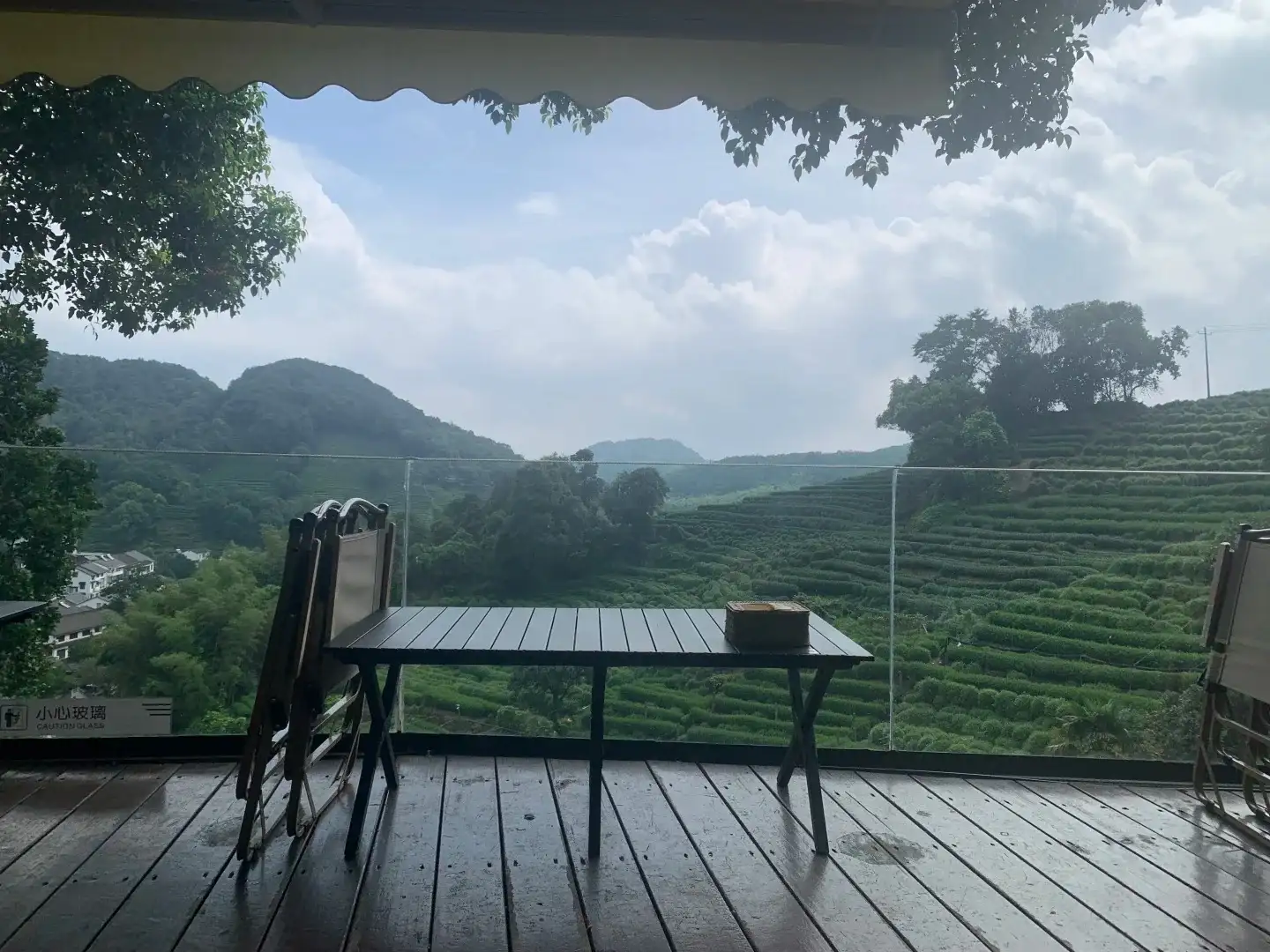
Once the tea is in the cup, the two questions that most easily come to a visitor’s mind are “Does it taste good?” and “Should I buy it?” In Hangzhou, you can shift the focus to earlier stages: Where do the leaves come from? What kind of processing do they undergo? And how do people brew them into a cup of tea? Tea gardens and tea culture exhibitions address these different aspects. When encountering Chinese tea for the first time, there’s no need to memorize all the varieties and grades; simply understanding the relationship between the plant, the craftsmanship, and the final beverage is enough to give your stay in Hangzhou real substance.
小红书作者翳筠的Notes on Longjing VillageThis is a brief observation of tea fields, noting the rhythm of the green tea terraces and the surrounding villages. It serves as inspiration for selecting tea garden themes but does not provide evidence regarding the harvest season, activity schedules, or tea quality. This article expands on this question to create an original reading path: first, learn about tea plants from designated viewing areas; then, move on to the formal exhibition to understand tea production and culture; and finally, decide whether to taste the tea based on your own preferences.
In a tea garden, start by examining the plants in detail
When observing tea plantations from public roads, start by noting how the tea trees are arranged in rows, how the terrain undulates, and how the roads connect to the planting areas. Capture the overall layers in wide-angle shots, and examine leaf shapes and branches up close from a permitted distance. Agricultural production areas and viewing areas may be adjacent, but they have different usage permissions; narrow paths between tea rows may be designated for management operations, and entry and picking require explicit permission. Including a public road in your photograph can also clarify your vantage point and ensure that the production fields are not treated as a background to be trampled on at will.
Is a tea garden worth visiting if you’re not there in the spring? You can shift your focus from tea-picking to the terrain and the relationship between the plants and the village. Tea-picking and tea processing are subject to seasonal and production conditions; a green landscape does not necessarily mean that visitor-participatory activities are currently taking place. The Hangzhou Municipal Bureau of Agriculture and Rural Affairs’Report on the Harvest of West Lake Longjing TeaThis reflects the harvesting schedule for a specific year; this article does not use it to estimate dates for the following year. If you wish to participate in an experience, check the activity description provided by the current organizer, then verify the time, content, and whether a reservation is required.
You should also distinguish between hiking through tea mountains and short strolls through villages. According to Hangzhou’s cultural tourism authorities,Tourist InformationA list of recommended tea garden routes; longer mountain hikes should not automatically be assumed as the default itinerary for all visitors. First, assess how long your companions are willing to walk continuously, whether they can handle steep slopes, and the day’s weather conditions; then select a route with a clearly defined return point. For those seeking to understand tea culture, a well-defined path along the edge of a tea garden is often more helpful than rushing through the entire mountain trail.
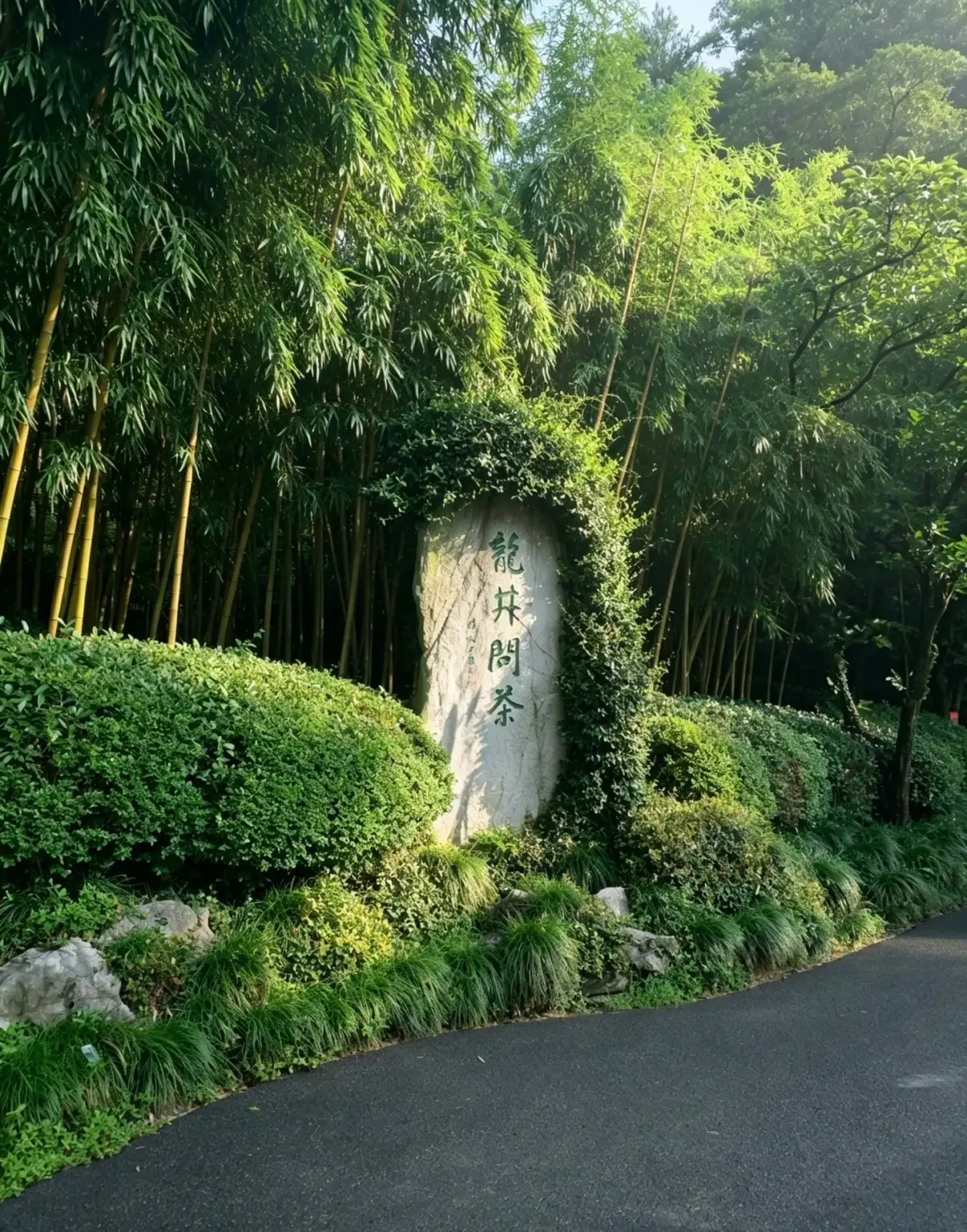
Green bamboo surrounds a stone stele inscribed with characters by the roadside; the stele stands between the vegetation and the road. Photo:Yi Yun · Original Post.
From a Single Leaf to the Final Product
Once a leaf is separated from the tea plant, the processing steps alter its state. First-time visitors can follow the narrative thread of “plant, processing methods, finished product” in the exhibition, first observing what changes at each step, then learning the specific technical terminology. It is important to distinguish between different types of tea; the processing steps for one type cannot be directly applied to all teas. When viewing demonstrations or images, refer to the exhibit labels to determine which category of tea and which tradition is being showcased; the same term may have more specific meanings across different processing methods.
The China Tea Museum’s2026 Shuangfeng Exhibition Area MaterialsMention *Chinese Tea Culture* and the *West Lake Longjing Tea Special Exhibition* to provide formal entry points for this type of exploration. You can focus on one of these themes as the main highlight of the visit and explore the other if your stamina and interest allow. Be specific about the museum location, and arrange accommodations and transportation based on the actual site; double-check opening hours and any temporary changes before your visit to avoid simply entering a generic museum name on the map.
If you’re accompanied by children or someone with no prior knowledge of tea, you can prompt questions based on visible changes: Why do the leaves have different shapes? Which tools come into contact with the leaves? What steps are involved in the production process? Since these questions are grounded in on-site observations, the answers can be found one by one. When unfamiliar tea names come up during the explanation, start by noting the one that interests you most, then look it up later. A tour doesn’t require proving your knowledge by listing how many famous teas you’ve tasted; simply being able to describe an authentic production process is a concrete achievement in itself.
Equipment that showcases how tea is consumed
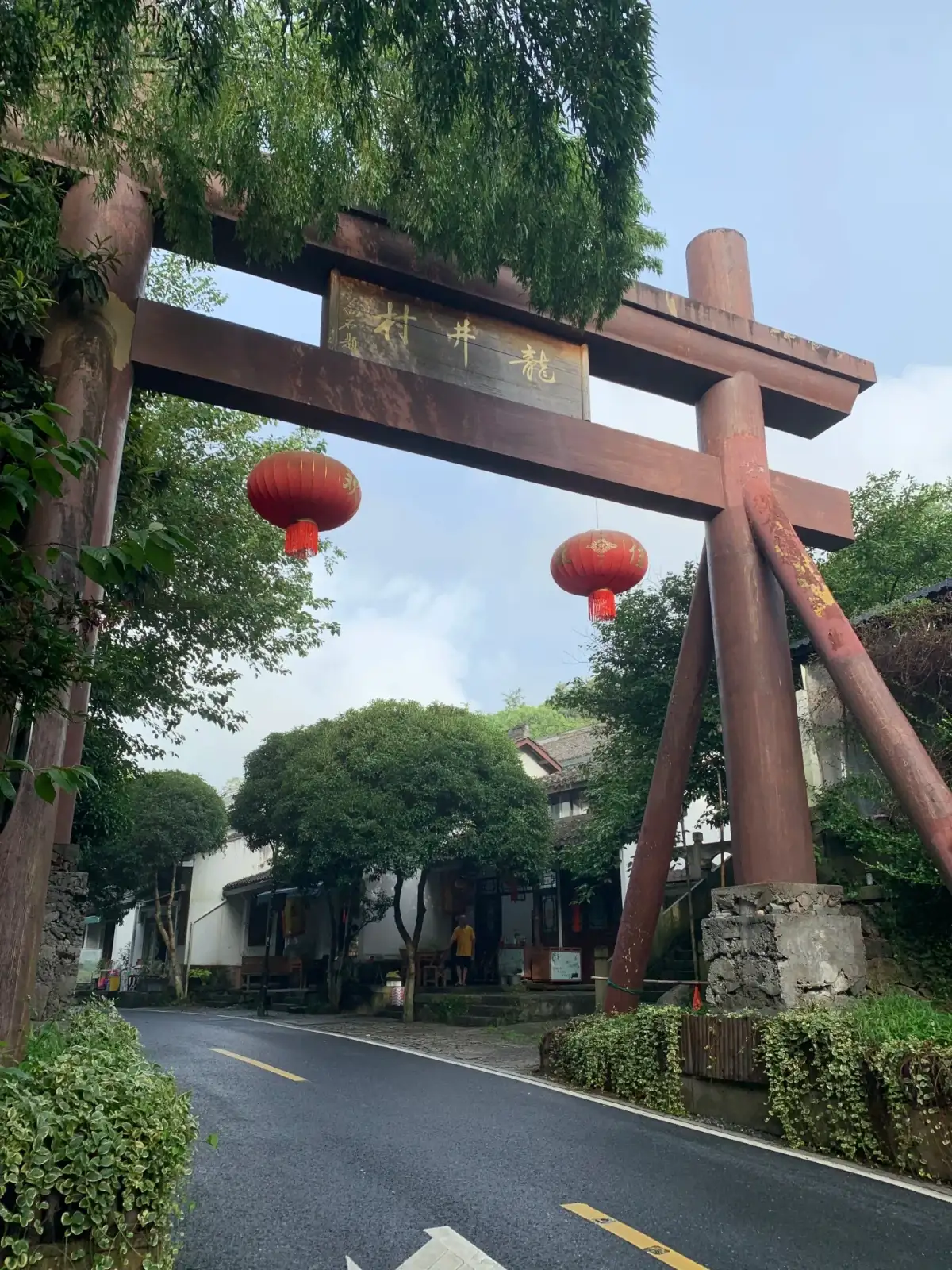
A wooden gate spans the road, with red lanterns hanging by the entrance and dense trees lining both sides. Photo:Yi Yun · Original Post.
When photographing tea utensils, in addition to their patterns, observe whether each piece is used for holding water, brewing tea, serving tea, or drinking. Shape and function are often linked: how to hold the utensil, how to pour from it, and how to distribute a single brew among several people. Original artifacts in museums are for viewing only; touching and demonstrations should be conducted in designated interactive areas where explicitly permitted. Historical tea-drinking practices depicted in the exhibition may differ from the service methods used in a modern teahouse today. Be sure to check the date and accompanying explanations to avoid mistaking contemporary tea ceremonies for traditions that remained consistent across all historical periods.
Do you need to know how to brew tea to participate in a tasting? For officially offered introductory experiences, ask in advance if they include instructions or guidance. If you’re unfamiliar with the process, ask a staff member for an explanation so you can try it yourself with a basic understanding of the equipment and how to use hot water. Children in your party require adult supervision. Activities sometimes emphasize learning, while others emphasize leisure. Before booking, clarify what’s included, who organizes the event, and whether you can participate solely as an observer; do not assume that every shop near a tea garden offers a verified cultural experience.
When tasting tea, start by describing your own impressions
When tasting a cup of tea, first pay attention to the aroma, the sensation upon sipping, and the changes after swallowing. Use words you’re familiar with—such as “refreshing,” “strong,” “bitter,” or a specific familiar aroma—rather than immediately resorting to professional evaluation terminology. Brewing methods, water quality, and strength all influence the experience, so the impression of a single cup does not represent the entire tea category. If you wish to make comparisons, please provide details about the tea’s origin and brewing method; comparing under clearly defined conditions is more useful than making judgments based solely on a statement like “This is the best.”
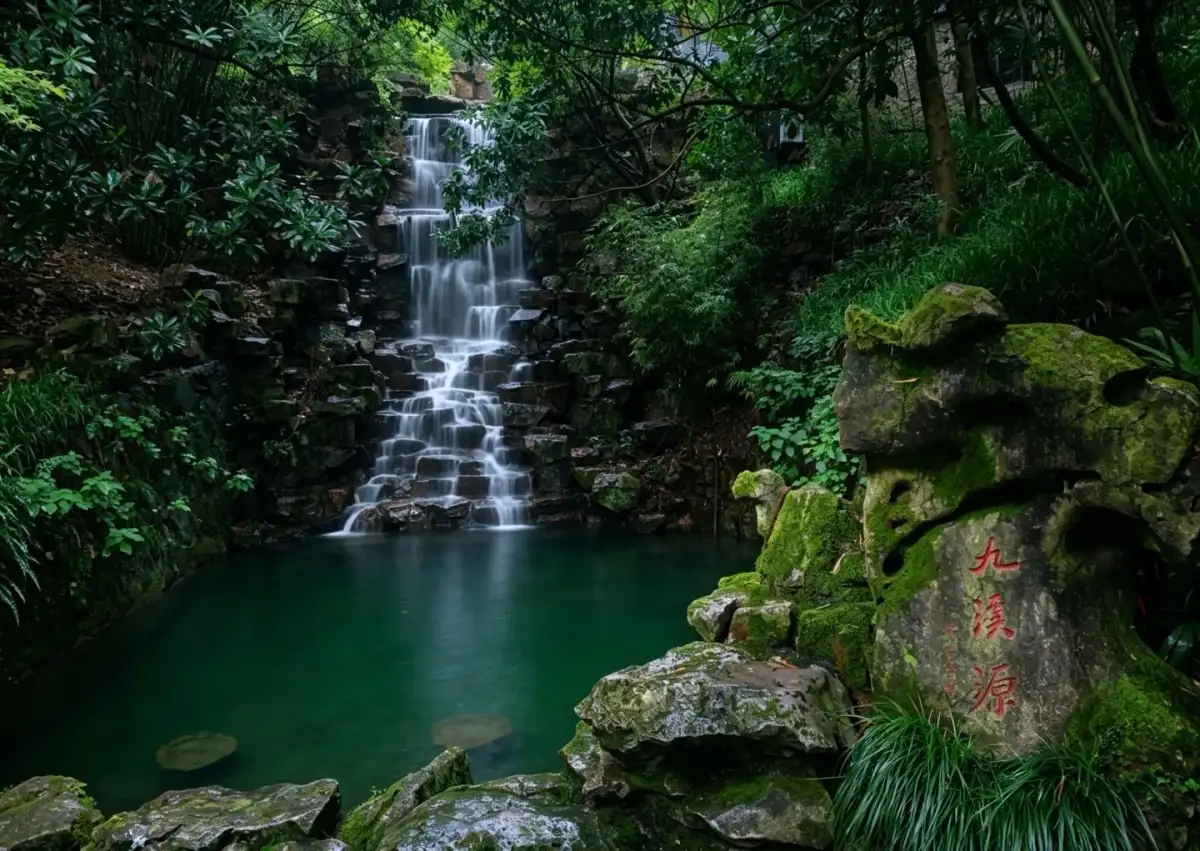
Water flows down tiered rocks into a turquoise pool; red inscriptions are visible on the moss-covered rock face. Photo:Yi Yun · Original Post.
Is it possible to arrange a tea culture experience if you don’t want to drink caffeinated beverages? You can focus primarily on observing the plants, craftsmanship, and utensils, while tasting remains a personal choice. When dietary or physical requirements are involved, follow your own professional advice and explain any restrictions to the experience provider. This article does not guarantee health benefits based on tea culture, nor does it treat “natural” as a reason for suitability for everyone. Only when you know what you want to see and what you want to avoid can a consultant tailor the cultural tour to your actual needs.
Do you have to buy tea after viewing it? Cultural visits and purchases can be decided separately. If you wish to bring tea back, ask about the product name, origin information, packaging, shelf life, and pricing; retain a formal receipt of purchase. Check the customs regulations of your next destination regarding what you can bring in. Packaging designs, store locations, and a single tasting are not sufficient on their own to prove a specific origin or grade. This article provides guidance on how to make informed decisions; it does not rank stores or provide unverified prices.
A tea culture itinerary in Hangzhou can consist of an outdoor observation session and a themed exhibition, with time set aside for meals and rest in between. Whether to schedule the morning or afternoon activities first depends on that day’s traffic and museum opening hours; on rainy days, the outdoor portion should be appropriately reduced. First, ask each participant to identify a question they’d like to explore, then select content that answers that question—this approach fosters better retention than cramming visits to multiple villages and museum areas all at once. Tea gardens, museums, and tea ceremonies each serve distinct purposes; they can complement one another or be arranged independently.
Available on this siteIntroduction to Hangzhou DestinationsContinue exploring your urban visit by connecting tea culture with West Lake or other confirmed points of interest. To wrap up, try jotting down three key insights you’ve gained: where the tea plants grow, how a specific processing method transforms the leaves, and how a particular utensil is used for drinking. This way, even if you don’t buy any tea, you’ll have completed the journey from landscape to culture; the next time you sip a cup of tea, you’ll understand the origin of its color.
Source and Editorial Notes
This article is an original travel interpretation compiled by the Dongxing Travel editorial department based on cited materials; it is not a firsthand account by the author. The full text of the original post has not been reproduced; accompanying images are used within the scope of authorization and are credited to the author and the source of the original post. They do not serve as proof of actual travel experiences or services provided by Dongxing Travel.
Yi Yun · Longjing Village · Travel Notes; Verified/Organized on: October 3, 2026.
China Tea Museum · Hangzhou Tea Culture Research Association Conducts Study and Research Visit to the China Tea Museum · Official documentation; Verified/Compiled on: October 3, 2026.
Hangzhou Municipal Bureau of Agriculture and Rural Affairs · Hangzhou Official Announcement: West Lake Longjing Tea Harvest Officially Begins on March 20 · Official documentation; Verified/Compiled on: October 3, 2026.
Hangzhou Municipal Department of Culture, Radio, Television, and Tourism · Hangzhou Culture and Tourism Attractions Guide · Official documentation; Verified/Compiled on: October 3, 2026.