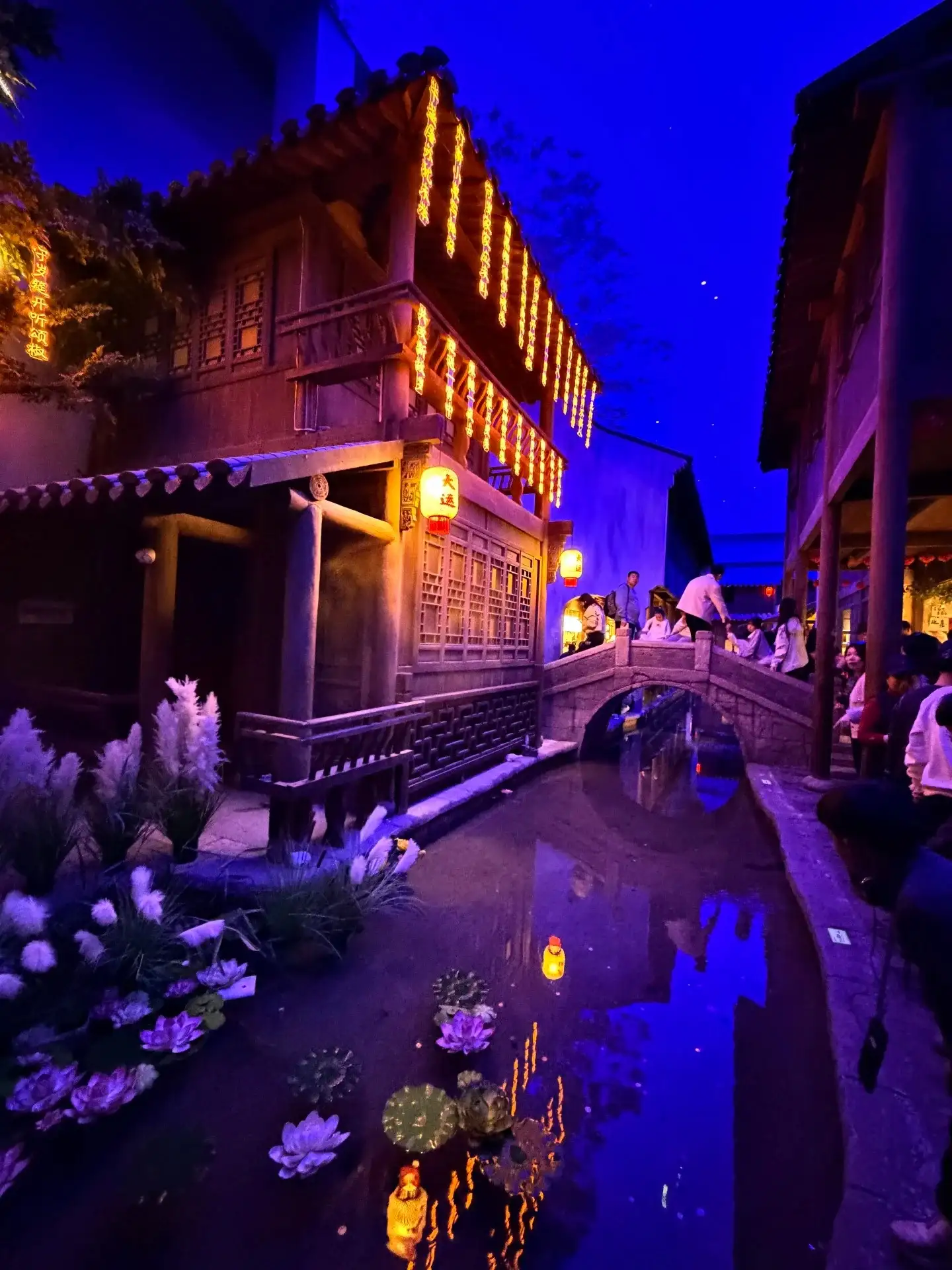
On China’s ancient streets, many lintels end with “hao,” “guan,” or “zhuang.” To travelers encountering these names for the first time, they can easily be mistaken for the signs of old shops with similar styles. The Hongjiang Ancient Commercial Town is an ideal place to explore this question: Why do spaces for trading goods, handling money, and gathering fellow townsfolk or industry peers all appear within the same neighborhood? By examining ancient architecture through the lens of these functional divisions, you can connect the unfamiliar Chinese characters encountered during your travels into a narrative thread of life in a commercial town.
This article uses official neighborhood data to explain the commercial context and draws on two authentic records by “Xiaohong” to identify points of observation. The specific ages and uses of the buildings are subject to official descriptions; please refer to separate announcements for current opening hours and admission fees. The following is a cultural approach to interpretation: understand the division of labor through names, then return to the storefronts, alleys, and courtyards to see how these divisions are accommodated within the space.
First, Get to Know the Commercial District; Then, Read the Shop Names
Huaihua Municipal Government’sIntroduction to the Hongjiang Ancient Commercial Townmentions the distribution of goods such as tung oil and timber, as well as the surviving guild halls, money houses, merchant firms, and “yinzi” houses. Goods converged through transportation networks, bringing with them trade, capital, and people. By examining a street through this lens—where shops handle customer interactions, money houses provide financial services, and guild halls embody social connections—the various types of names take on their respective roles.
can be used to guide interpretation through the general process of goods movement: first unloading and storage, then price negotiation and transaction, and finally shipment to the next destination. This provides a framework for understanding commercial spaces. When entering the public exhibition area, look inward from the doorway to find descriptions related to business operations, residential life, or social activities; then return to the street to observe how these buildings adjoin one another. By placing a single building back within the context of the entire street, travelers can move from individual storefronts toward a broader picture of how the commercial district functions.
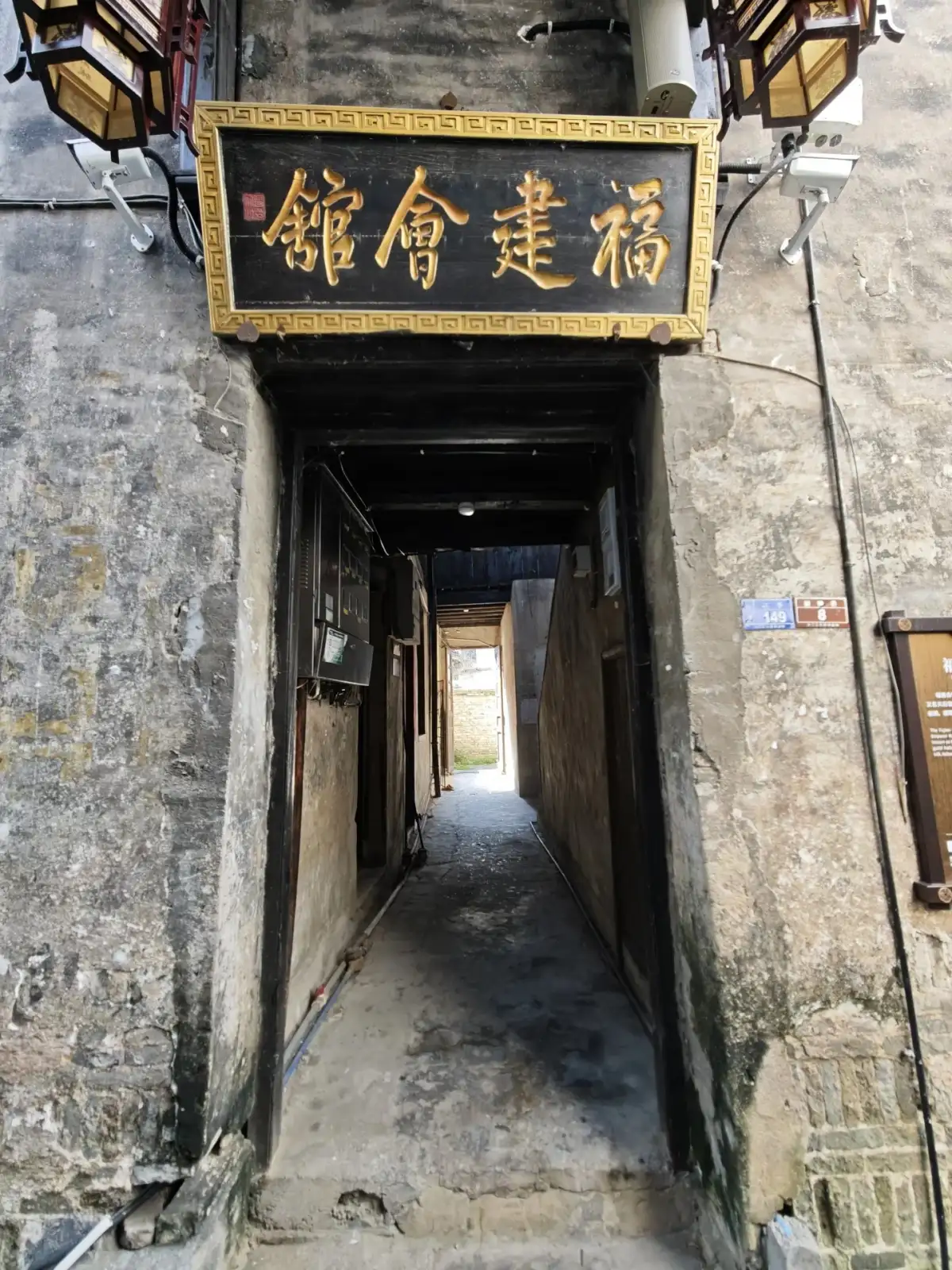
Fujian Guild Hall. Photo:Brother Wang · Original Post.
Business Names: Goods and Credit Enter Through the Storefront
business names can be understood as the names of the operating entities. Street-facing storefronts serve as points of contact with outsiders, while the rooms and courtyards behind them may serve other purposes. When reading the descriptions, pay attention to the goods sold, the people involved, and the spatial layout; then look from the storefront inward to observe how different areas connect. The main gate, the counter, and the courtyard each raise a question: Where do people enter? Where do they converse? And within which areas does daily work take place?
Set yourself a brief task: Choose a shop with a clear description, and note down what it sells, its location, and one architectural detail. Then visit another shop and record the same three pieces of information, comparing similarities and differences. This approach builds evidence-based understanding and prevents you from getting overwhelmed by the sheer number of street signs. If a guided tour is available on-site, you can ask whether the lintel is original, whether the storefront has been restored, and which parts of the display are historical artifacts; these questions are more likely to yield reliable answers than asking the guide to recount a legend.
Money Houses: Head to the places where funds are handled
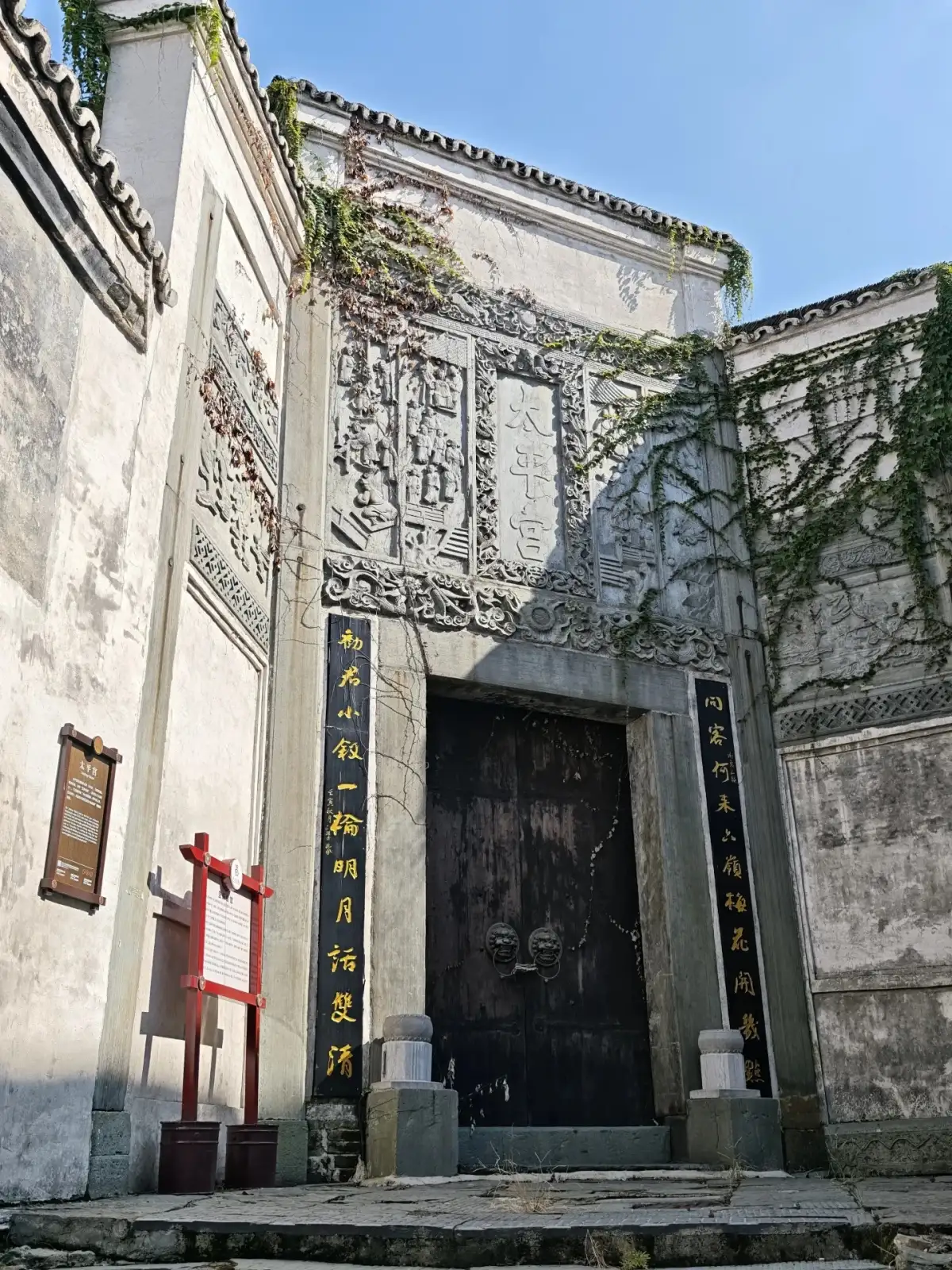
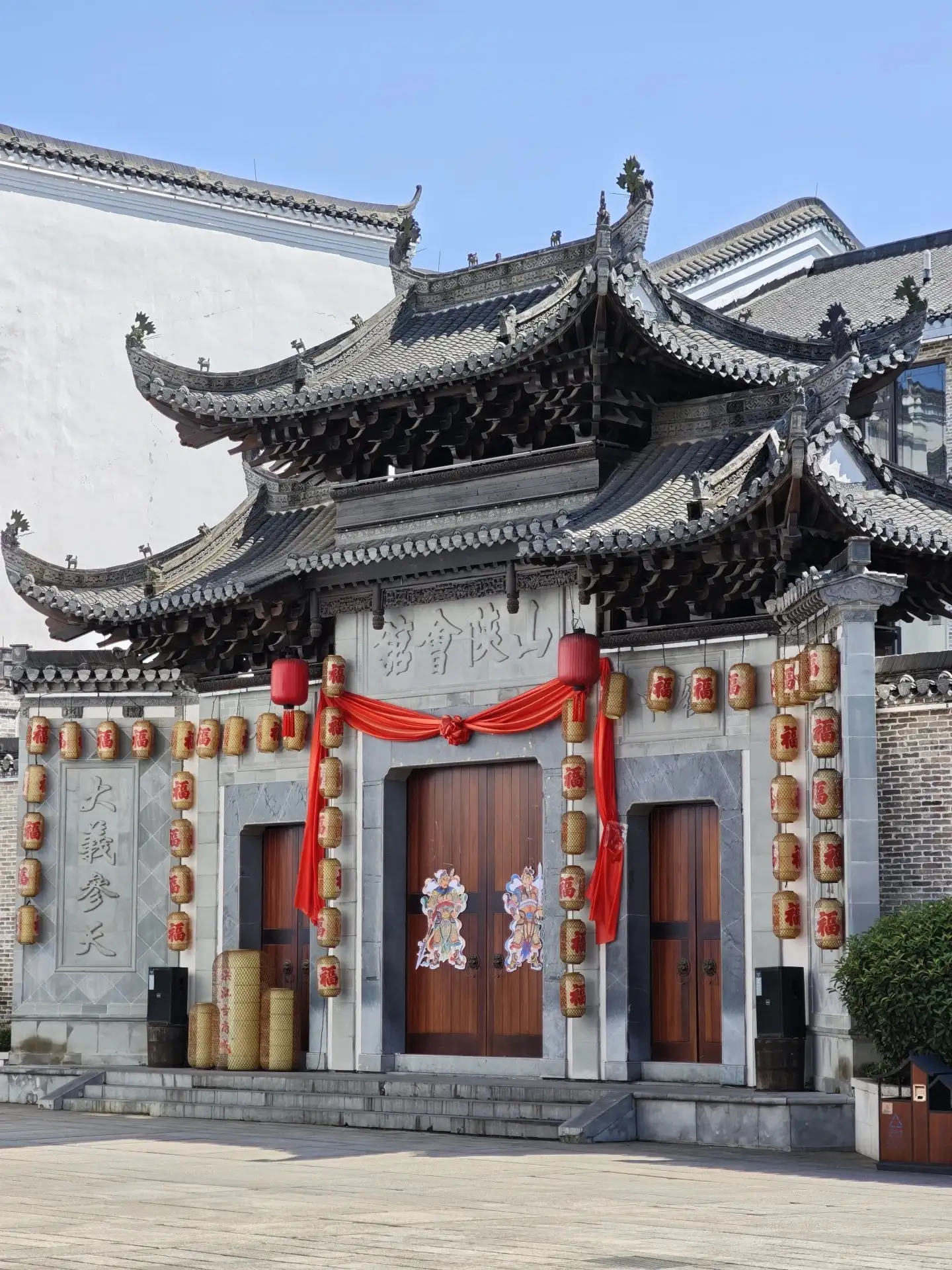
Stone-carved facades and wooden doors of historic buildings in Hongjiang. Photo:Brother Wang · Original Post.
money house falls within the category of traditional financial institutions and can be understood in terms of its general functions, such as depositing and withdrawing money, currency exchange, and credit services. The Hongjiang District Management Committee’sAttraction Guiderecords clues regarding the Shengfeng Money House and its promissory notes, mentioning currency exchange between different cities. For travelers, this serves as a window from the local streets and alleys onto the broader commercial network: the function of a promissory note may extend beyond the very building where it was issued.
Why are there money houses in the ancient commercial city? Large-scale transactions require settlement and generate needs for credit and capital turnover—this can be understood through these general commercial relationships. During your visit, pay attention to publicly displayed ledgers, bills, or explanations of systems, and distinguish between original items, replicas, and schematic diagrams. Take a photo of the entire exhibit label, then a close-up of the details on the document itself; this way, when you review the photos later, you’ll know its name and purpose. The typography and layout give the documents visual appeal, while the explanatory notes detailing their functional roles connect this piece of paper to the merchants’ daily work.
If you’re unfamiliar with Chinese financial terminology, start by noting the purpose. When you see an unfamiliar bill name, ask: “Who holds it? What do they exchange it for? Where can it be used?” Clarifying the relationships before memorizing the terms usually leads to faster understanding. When visiting with children, start by explaining how settlements are made after goods change hands, and have them look for corresponding tools and text within the exhibition. After viewing the exhibits, discuss the bill that interests them most—this provides a chance to pause and rest while transforming what was once an unfamiliar financial space into a comprehensible concept.
Guild Halls: Spaces Where People Need to Gather
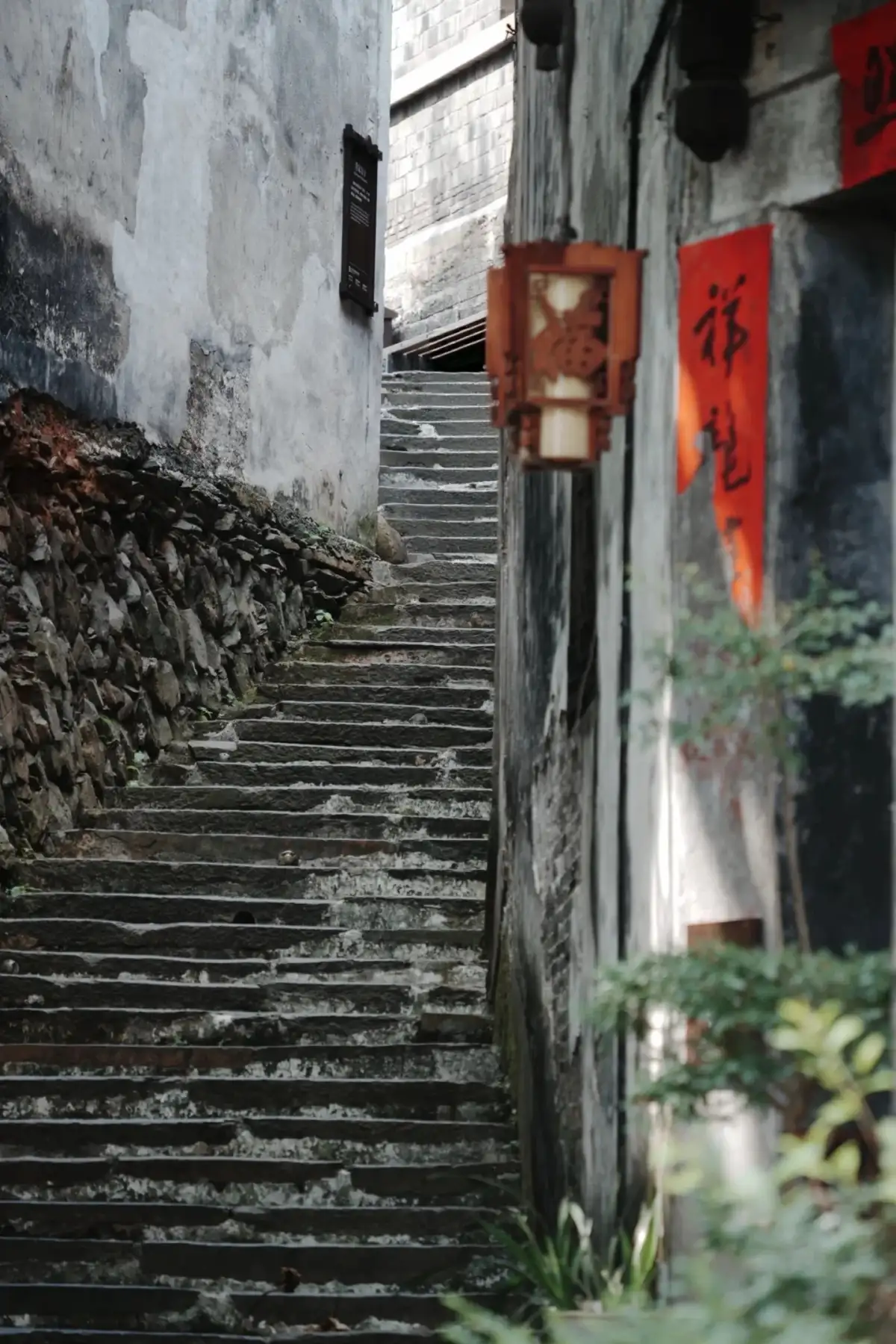
Narrow stone steps leading up along the gray walls of Hongjiang Old Street. Photo:San Shi Wu Yu · Original Post.
guild halls help travelers identify social connections, such as fellow townsfolk and colleagues in the same trade. When you see a name that includes a place name from another region, you can pose questions based on the distance on the map: Who came here, and why did they need a place to gather? Next, examine the organizational structure and functions described in the official introduction to the guild halls. With their entrances facing the street and courtyards providing an additional layer of space, the interplay between names and layout allows visitors to glimpse the commercial communities that traveled from afar through the specific architecture.
You can begin exploring the guild halls simply by observing their exteriors. Start by reading the lintels above the entrances, then examine the layout of the courtyards and the orientation of their entrances and exits; if the public description includes information on their former uses, correlate it with the spaces before you. External observation helps you grasp the scale of the structures, while entering the premises allows you to further observe how activities were organized. When the building is closed, simply complete the first type of observation while standing on the public street. Following a clearly marked tour route allows you to view the historical spaces while also leaving a clear path for those currently using the buildings.
小红书作者小王哥的Notes on the Ancient Architecture of HongjiangNote the coexistence of various commercial buildings; San Shi Wu Yu’sStreet and Alley NotesFocus on the stone steps, wooden windows, and the names of commercial districts. These two types of records can be read together: first note the names, then select details from the streets and alleys, and finally match them up. The author’s perceptions of the level of commercialization vary; travelers can focus their attention on the specific spaces they can personally observe on that day.
Yenzi Houses: Viewing Courtyards and Alleys as a Unified Whole
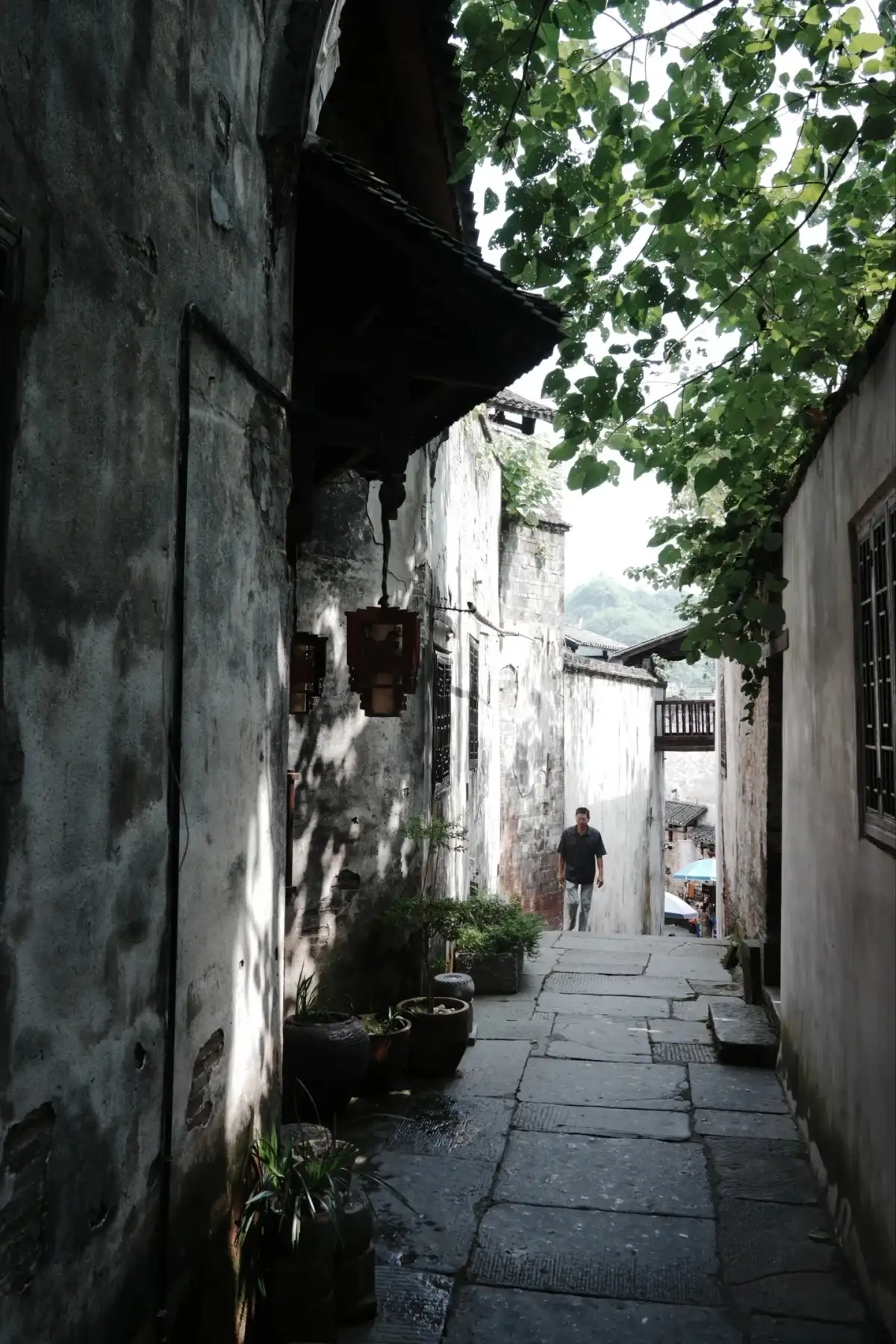
Stone-paved alleyway under the shade of trees in Hongjiang, with pedestrians in the distance. Photo:San Shi Wu Yu · Original Post.
Hongjiang District of theScenic Area Introductionintroduces a local architectural style known as “Yenzi Houses.” Stand at an open vantage point to observe the exterior walls, eaves, doorways, and interior courtyards, noting how the interplay of light and shadow from the surrounding streets changes once you step inside. The courtyard serves as a vantage point: light streams in from above, with surrounding levels unfolding around it; one can also discern the direction of movement here. By observing a courtyard and then looking back at the entrance, the depth of the space becomes clearer than when viewing just a single exterior wall.
half-day itinerary can be organized around a single merchant establishment, a financial exhibition, and a section of the Yinzihu alleyway. Start by selecting the theme that interests you most, then plan your on-site route based on opening hours and distances. Examine business establishments to understand commercial relationships, money houses to examine financial instruments, and guild halls to observe social connections; selecting just two of these can form a complete narrative. Find a place to sit midway through your tour, jot down a few names alongside the architectural details you’ve observed, and then decide whether to continue. By the end of the tour, you’ll be able to distinguish the functions of these spaces—a deeper understanding that’s easier to retain than simply memorizing all the specific details.
This exploration of Hongjiang can conclude with a page of your own notes: a building whose purpose you’ve identified, a newly learned commercial term, and a space you’re most eager to revisit. Even a few notes with clear connections transform the ancient commercial town into a cultural site ripe for further exploration. If you plan to visit other cities in Hunan next, please check this websitePhoenix Destination Guideoffers a different kind of experience in exploring ancient cities. Travel arrangements between the two locations should be made separately, allowing time to explore each ancient city on its own, so that the distinct patterns of commerce and daily life can be fully appreciated.
Source and Editorial Notes
This article is an original travel analysis compiled by the Dongxing Travel editorial department based on listed materials; it is not a firsthand account by the author. The full text of the original post has not been reproduced; accompanying images are used within the scope of authorization and are credited to the author and source of the original post. They do not serve as proof of actual travel or services provided by Dongxing Travel.
Little Brother Wang · Huaihua, Hunan | Hongjiang Ancient Architectural Complex | National Level 6 · Travel Notes; Verified/Compiled on: October 3, 2026.
San Shi Wu Yu · The Faded Years of the Ancient Port of Hongjiang: Gently Treading the Stone Steps to Experience a Glimpse of the Vibrant Life of Hunan Merchants · Travel Notes; Verified/Compiled on: October 3, 2026.
Huaihua Municipal People’s Government · Aiming for 5A: A Journey Through Huaihua’s Golden Triangle of Tourism (Hongjiang Ancient Commercial City Edition) · Official Information; Verified/Compiled on: October 3, 2026.
Hongjiang District Management Committee · Introduction to Attractions in the Hongjiang Ancient Commercial City Scenic Area · Official Information; Verified/Compiled on: October 3, 2026.
Hongjiang District Management Committee · Introduction to the Hongjiang Ancient Commercial City Scenic Area · Official Information; Verified/Compiled on: October 3, 2026.