From the vastness of the grasslands to the density of the artifacts
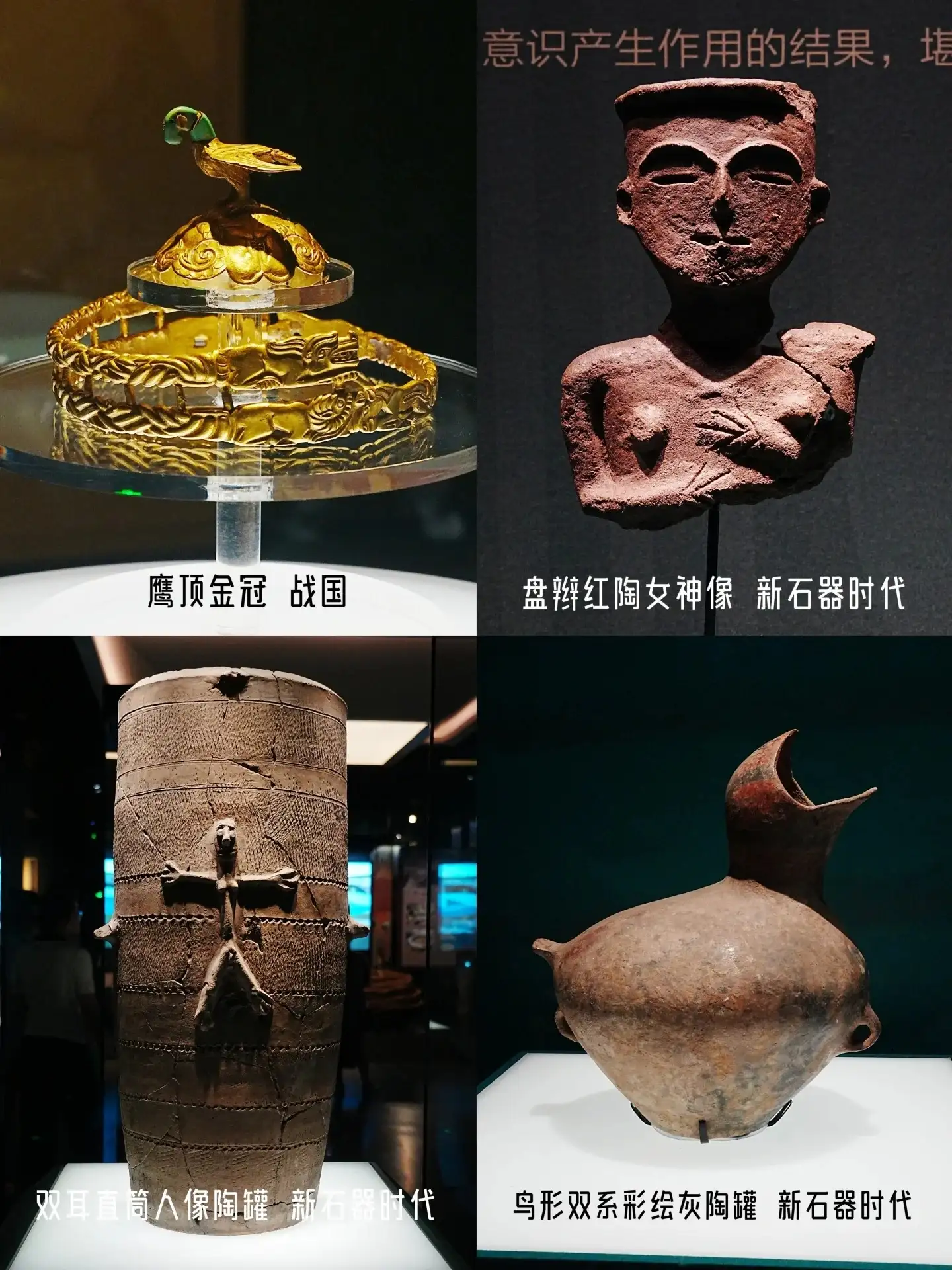
When thinking of Inner Mongolia, many travelers first envision vast grasslands and animals in the distance. The museum, however, offers a different kind of perspective: animals can be organized onto a wearable object, where metal, patterns, and the body come together to form a unified expression. The eagle-topped gold crown from the Inner Mongolia Museum serves as an ideal entry point for this way of viewing. Its narrative does not rely on massive scale but rather is concentrated in the crown’s apex, the crown band, and several interconnected motifs, guiding the gaze from the broader perspective to the finer details.
Both Xiaohongshu’s “Quick Guide to the New Inner Mongolia Museum” and “A Time-Saving and Effort-Saving Route Summarized After Six Hours at the Inner Mongolia Museum” list the golden crown with the eagle at the top as a key highlight. Building on this shared interest, this article further explores the theme of “reading artifacts.” Basic information on the form and animal motifs is based on materials jointly produced by Xinhua News Agency and the museum; collection categories are referenced from the Ministry of Culture and Tourism’s descriptions, and specific exhibition locations should be identified according to the on-site layout.
At first glance, you see the eagle; only upon closer inspection do you begin to discover the story beneath.
The most striking feature of the gold crown is the male eagle with outstretched wings located at the center of the crown’s apex. It draws the viewer’s gaze upward and provides the entire object with a clear focal point. According to the joint thematic description, there is also a depiction of a wolf devouring a sheep below the crown’s apex. Thus, the viewer’s gaze need not linger solely on the eagle’s silhouette but can continue downward to observe the relationships between the animals: which figures are depicted in full relief, which are closer to the surface, and how the actions unfold at different positions.
These motifs give the headdress multiple levels of interpretation. From a distance, one can appreciate the proportions between the outline and the headband; up close, the animals’ movements and how they are depicted become more distinct. The contrast between the soaring eagle and the wolf in pursuit conveys different rhythms, revealing that this artifact is more than just a glittering surface. Visitors can first note what they see immediately upon viewing, then compare it to the additional details they notice upon a second look. This back-and-forth process allows the interpretation of the object to unfold gradually from the first impression.
If you’re visiting with children, you can ask them to first identify the different animals and then explain where each one is located. The eagle is at the top, while the other motifs are on the crown and the band; their positions determine which one catches the eye first. Adults can then supplement this by naming the objects and explaining their context, allowing children to actively participate in the observation. This sequence does not require immediately interpreting all the animals as single symbols; instead, it allows cultural interest to be built upon the specific shapes and arrangements.
The crown band brings together decoration and wear
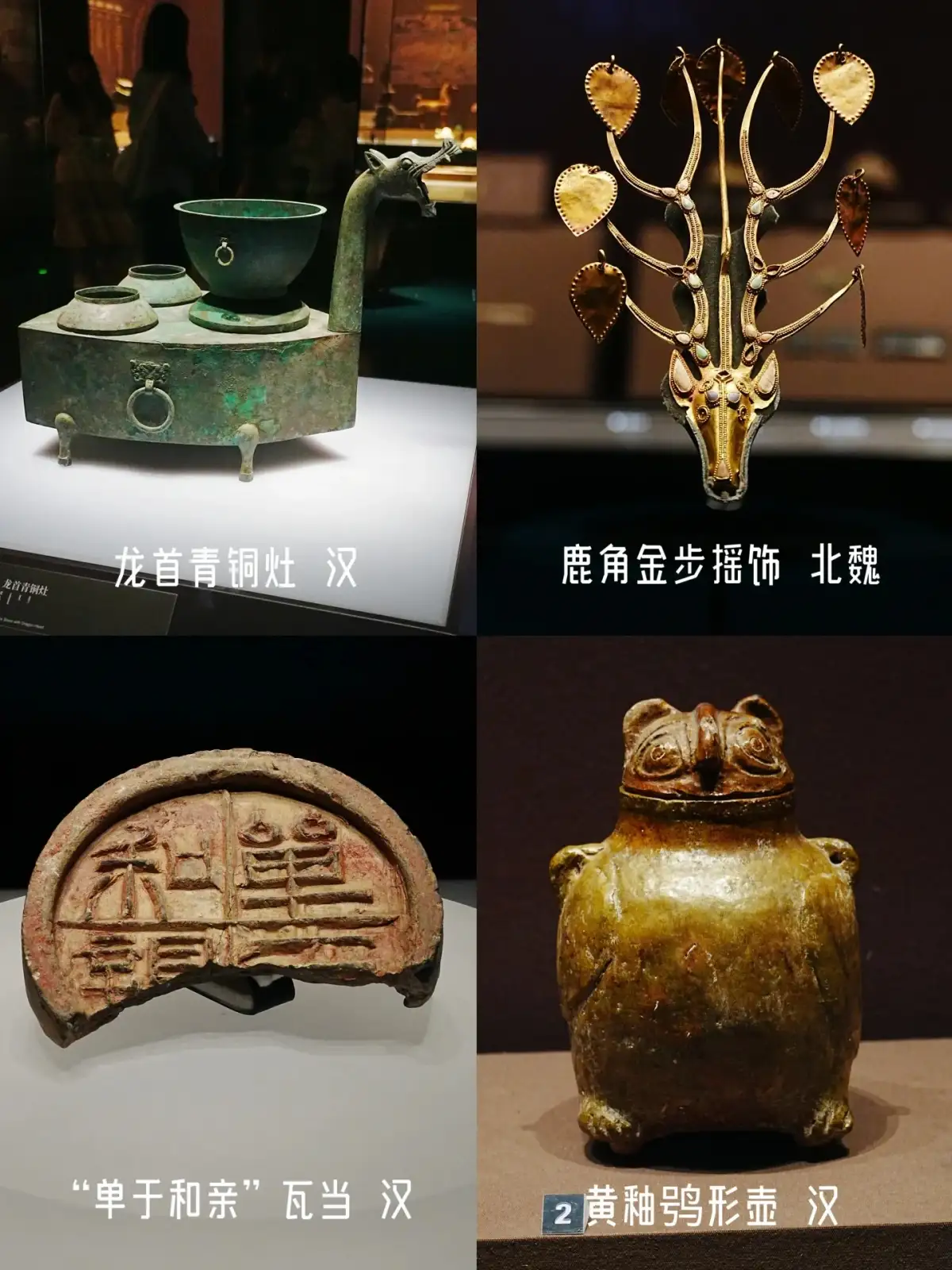
A collection of photos of bronze, gold, and silver artifacts from the Inner Mongolia Museum. Photo:Seeking Traces · Original Post.
The joint thematic exhibition describes the gold crown as consisting of a crown top and a crown band, and introduces the motifs of tigers, sheep, and horses at the ends of the crown band. The crown band raises an interesting question: How can an object adapt to the body while conveying such complex symbolism? Viewers can begin by examining the relationship between the curves, connections, and decorations, understanding it as an object meant to be assembled and worn—not merely a metal sculpture meant for display in a glass case.
The way the crown is worn also alters one’s sense of direction. While objects in display cases are viewed under fixed conditions, actual wear is linked to the wearer’s head and movement. Visualizing this function helps explain why the crown’s apex must be prominent, why the crown band curves, and how the decorations are distributed across different surfaces. The focus here is on the connection between structure and function—giving the shape a purpose—rather than inventing a specific owner or historical scene for the artifact.
Those interested in design can further examine how the whole and its parts complement each other. The central motif serves as a visual identifier, while the details along the band provide continued interest for close inspection; the curved design allows for comfortable wear, and the connections bind the various parts into a cohesive whole. This combination demonstrates that object design must simultaneously address form, material, and function. Cultural travelers can also use this as an opportunity to recognize that craftsmanship is not merely about abundant ornamentation, but also about how the various parts work together in harmony.
Gold and turquoise create a structure that extends beyond the surface.
According to the joint exhibition notes, the eagle’s head and neck are crafted from turquoise and connected to the rest of the piece with gold wire; some parts are movable. This detail adds a layer of interest regarding craftsmanship: rather than simply arranging different materials side by side, they are organized into a cohesive, coordinated form. By first observing the colors and contours, then reading the explanatory notes on the connections, visitors can understand why the materials and structure must be discussed together.
Standing in front of the display case, observe how the metal and differently colored sections are distributed, and note which areas most easily catch the eye. A vivid splash of color in one spot may help you locate the animal’s head more quickly, while the surrounding gold maintains the object’s overall continuity. Such visual relationships can be described directly. Afterward, by reading the information in the description about materials and construction, your initial impressions can be linked to the craftsmanship behind the piece, shifting your focus from the object’s “value” to the question of “how it was made.”
Exploring the craftsmanship is best done at a leisurely pace. The connections within an object may be subtle, and it may not always be easy to see them clearly from every angle on-site; official images and descriptions can help deepen your understanding. Focus on the overall form and visible details during your visit, then consult reliable sources afterward—this creates two complementary phases of exploration. For those interested in design or craftsmanship, this deeper exploration is often more engaging than rushing to view every single item in the collection.
, which brings cultural interest to more specific themes.
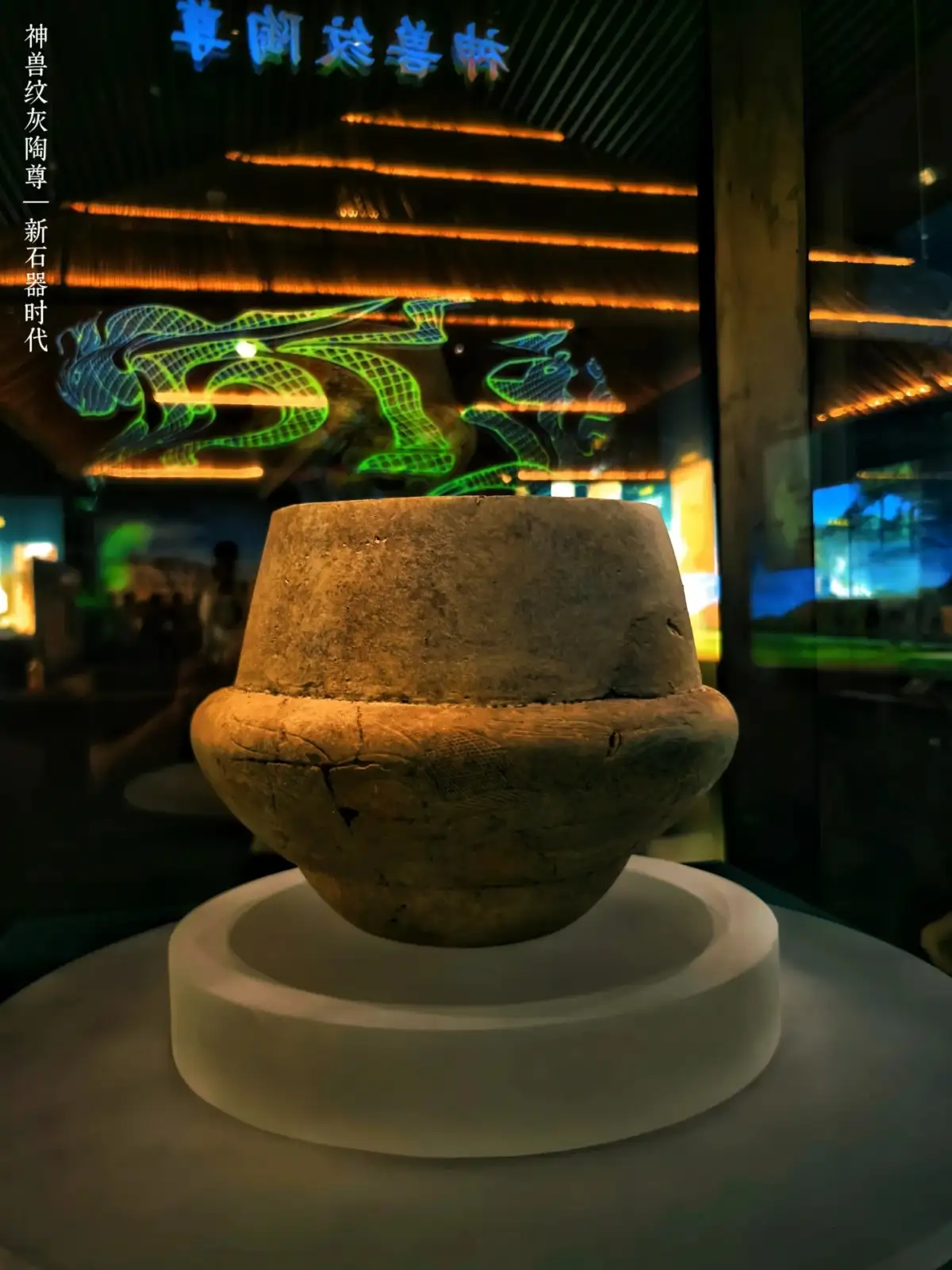
Pottery on display in a showcase at the Inner Mongolia Museum. Photo:Tiger Girl and Tiger Girl · Original Post.
Steppe culture is often simplified in travel photos to horseback riding and vast landscapes, but the golden crown reveals a different level of expressive richness: animals become part of the decoration, materials become a symbol of status, and craftsmanship shapes the imagery. It prompts visitors to ask further questions: how do animals appear on different artifacts? Are their body postures similar? And what differences exist between their decorative functions and practical uses? In this way, regional culture shifts from an abstract impression to objects that can be compared one by one.
According to the Ministry of Culture and Tourism’s museum guide, the collection encompasses historical artifacts, ethnic and folk culture, and natural history materials. Different categories raise different questions, so there’s no need to rush through the entire itinerary. If your primary interest lies in artifacts and animal imagery, start by creating a viewing route centered on those objects; if the children in your group prefer natural history, you can set aside a separate focus for them. Even when entering the museum together, everyone’s interests can still follow their own distinct paths.
Rather than rushing through all the exhibition halls, let a single artifact become the focal point
The two original posts provide a comprehensive list of artifacts and serve as a reminder that the museum houses a wealth of exhibits. The editor suggests first selecting the artifact you’re most interested in understanding, then deciding what else to see in the surrounding area. Focusing on a single theme reduces aimless wandering and provides conversation topics during breaks. For families with members walking at different paces, sharing observations around a small number of objects is an easier way to maintain interest than having everyone follow the list continuously.
Inbound tourists can first prepare a brief bilingual glossary of materials and animal names, then have the docent base the explanation on the actual artifact. Terms like “eagle,” “sheep,” “metal,” and “crown band” are easy entry points; specific historical periods and cultural contexts can be introduced gradually. This approach accommodates first-time visitors while leaving room for those with a deeper interest to explore further. Language preparation should serve the viewing experience; there is no need to turn pre-visit materials into a tedious glossary of terms.
Information on the Inner Mongolia regional collection can be found on this websiteTour ItineraryIn discussions with the consultant, we clarified our respective aspirations regarding the grassland landscape, urban stays, and museum experiences. The theme of the eagle-topped golden crown guides the journey from vast landscapes into the compact world of artifacts: how animals are arranged, how materials are joined, and how forms adapt to the body. By taking away a few concrete questions, one’s impression of the region becomes richer and more worthy of further exploration.
Source and Editorial Notes
This article is an original travel interpretation compiled by the Dongxing Travel editorial department based on the cited materials; it is not a firsthand account by the author. The full text of the original post has not been reproduced; accompanying images are used within the scope of authorization and are credited to the author and the source of the original post. They do not serve as proof of actual travel experiences or services provided by Dongxing Travel.
“Tiger Girl” and “Tiger Girl” · Inner Mongolia Museum ‖ Quick Guide to the New Building · Travel Notes; Verified/Compiled on: October 3, 2026.
Exploring by Hint and Trace · A 6-Hour Tour of the Inner Mongolia Museum: A Time-Saving and Effort-Saving Itinerary · Travel Notes; Verified/Compiled on: October 3, 2026.
Jointly produced by Xinhua News Agency’s Inner Mongolia Channel and the Inner Mongolia Museum · Special Feature on the Eagle-Topped Gold Crown · Official sources; Verified/compiled on: October 3, 2026.
Ministry of Culture and Tourism · Inner Mongolia Museum Cultural Feature · Official sources; Verified/compiled on: October 3, 2026.