Before passing through a gate, first observe how the gate interacts with the wall
In photographs of Jiayuguan, the gate towers easily become the visual focal point, and travelers often look up first to observe the roofs and the height of the structures. If one lowers their gaze slightly, the relationship between the city gate and the wall raises another question: How does a fortified city organize entry and defense, and why isn’t the entire experience seen simply by passing through a single gate? By observing the gates, walls, and turns along the standard open route, the tour can shift from a grand impression of the frontier to an exploration of specific spaces.
The Xiaohongshu post “The Beauty of Ancient Architecture | Jiayuguan Photos Taken with My Phone” highlights the earth-yellow walls and their surroundings, while “Jiayuguan Fortress at Dusk, Bathed in the Setting Sun” focuses on how light transforms the architecture. This article draws on these visual points of interest to further discuss the functional aspects of the space. The composition of the fortress is based on local historical records from Gansu Province, while the overall Great Wall system follows the implementation plan publicly released by the Jiayuguan Municipal Government; it does not incorporate the historical legends regarding the inscriptions mentioned in the original post or the author’s personal travel experiences.
City Gates: Transforming Walls from Boundaries into Passages
A wall emphasizes a boundary, while a gate permits a certain kind of passage. When combined, the space answers not only the question of “where is inside and where is outside,” but also “how do people enter.” Visitors can explore the open areas to observe the dimensions of the gate opening, how it connects to the wall, and how their line of sight changes as they approach. Viewed from a distance, a door may be merely a part of the facade; but when one actually passes through it, it becomes a passageway that the body can perceive, providing a concrete experience of the boundary.
For incoming tourists, this is a cultural question that is easy to engage with. Regardless of which architectural tradition they are familiar with, everyone can compare how gates and passageways organize movement. The guide first points out the visible relationships before them, then adds the context of the fortress; understanding then arises naturally. Rather than forcing travelers to memorize the names of numerous architectural elements right from the start, it is better to first ask them to describe how they moved through the space; this establishes a shared language for understanding spatial function.
photographing the gate, they can capture a clear image of its relationship to the wall and document the view through the gateway. These two photos respectively illustrate the external silhouette and the experience of passing through; when combined, they tell a more compelling story than a close-up of the city gate tower alone. Figures in the distance moving through the gate can help establish a sense of scale, while the architecture remains the focal point of the frame. In this way, the gate is not merely a decorative element in the photograph but also preserves its role in guiding the visitor’s path within the record.
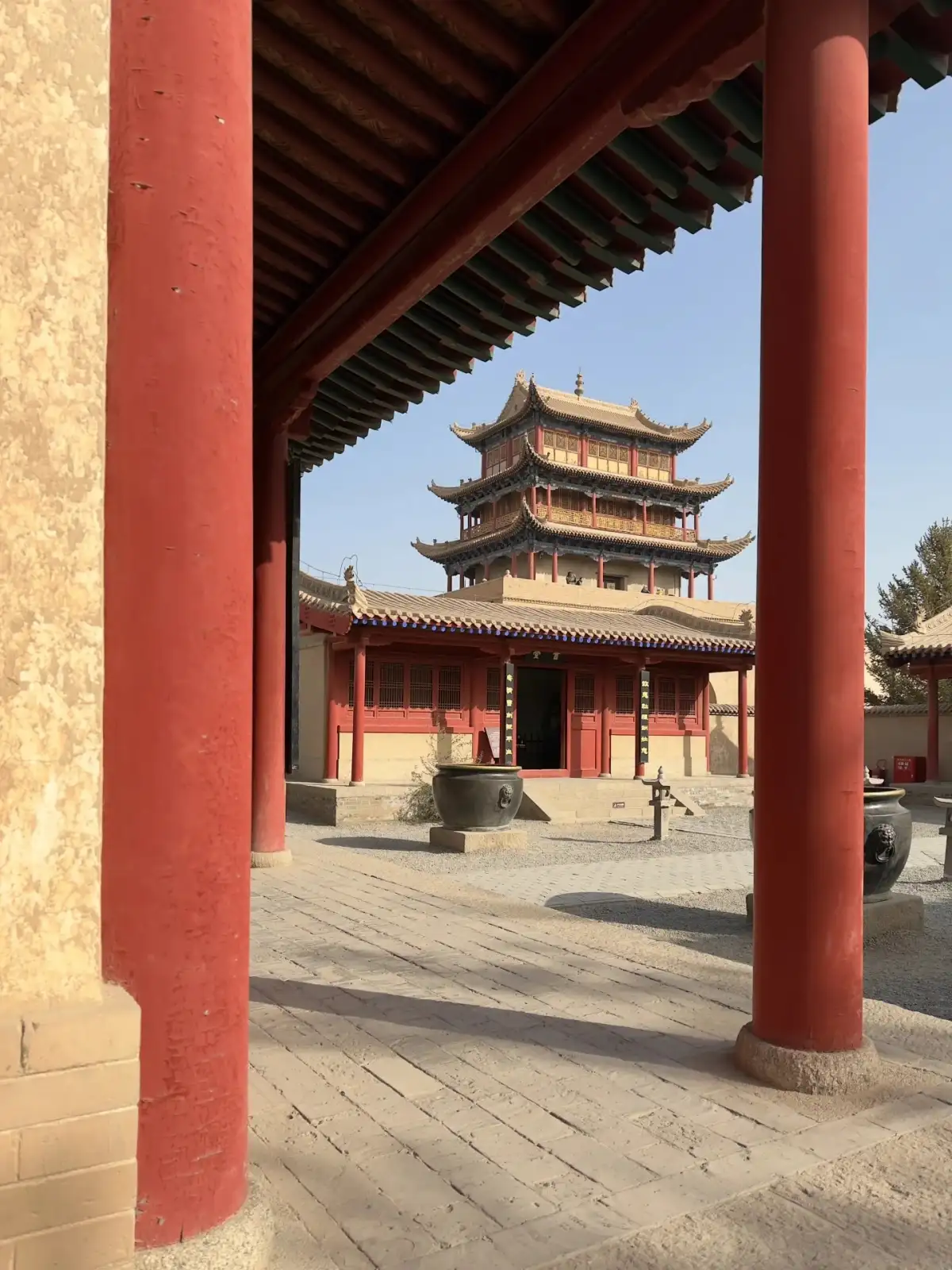
Architectural framing of the gate at Jiayuguan Fortress. Photo:Yao You Guang · Original Post.
The Barbican and the Outer City: Creating Multiple Layers of Entry
Local historical records from Gansu describe the fortress as comprising an inner city, a barbican, an outer wall, and a moat. This context provides direction for on-site observation: in addition to the main gate tower, visitors should examine how these different components form a layered structure. Visitors can follow the on-site explanations to first determine their exact location and then understand the relationship between the adjacent walls and the gate. Once their location is clear, the names of these features will no longer be merely terms that appear repeatedly in the commentary.
The most readily experienced aspect of this multi-layered space is that the line of sight and the path of movement do not always run through it in a single, uninterrupted flow. After passing through the gate, the surrounding environment reorganizes one’s direction; certain sections invite a pause, while others lead to the next destination. By paying attention to these changes along the actual open route, one can understand why the fortress is not merely a single gatehouse. The architectural system functions through its combination of elements, and the traveler’s body thus becomes a tool for understanding the space.
If accompanied by children, they can be encouraged to draw a simple diagram after viewing a section: where the gate is located, in which direction the wall extends, and which section they just passed through. The drawings need not be precise, but they allow children to actively recall the spatial layout. When adults then explain the names using official or on-site diagrams, the children gain an experience they can compare with what they’ve seen. This simple activity transforms the visit from passively listening to stories into a shared understanding of the environment before them.
The moat: extending the viewing experience to ground level
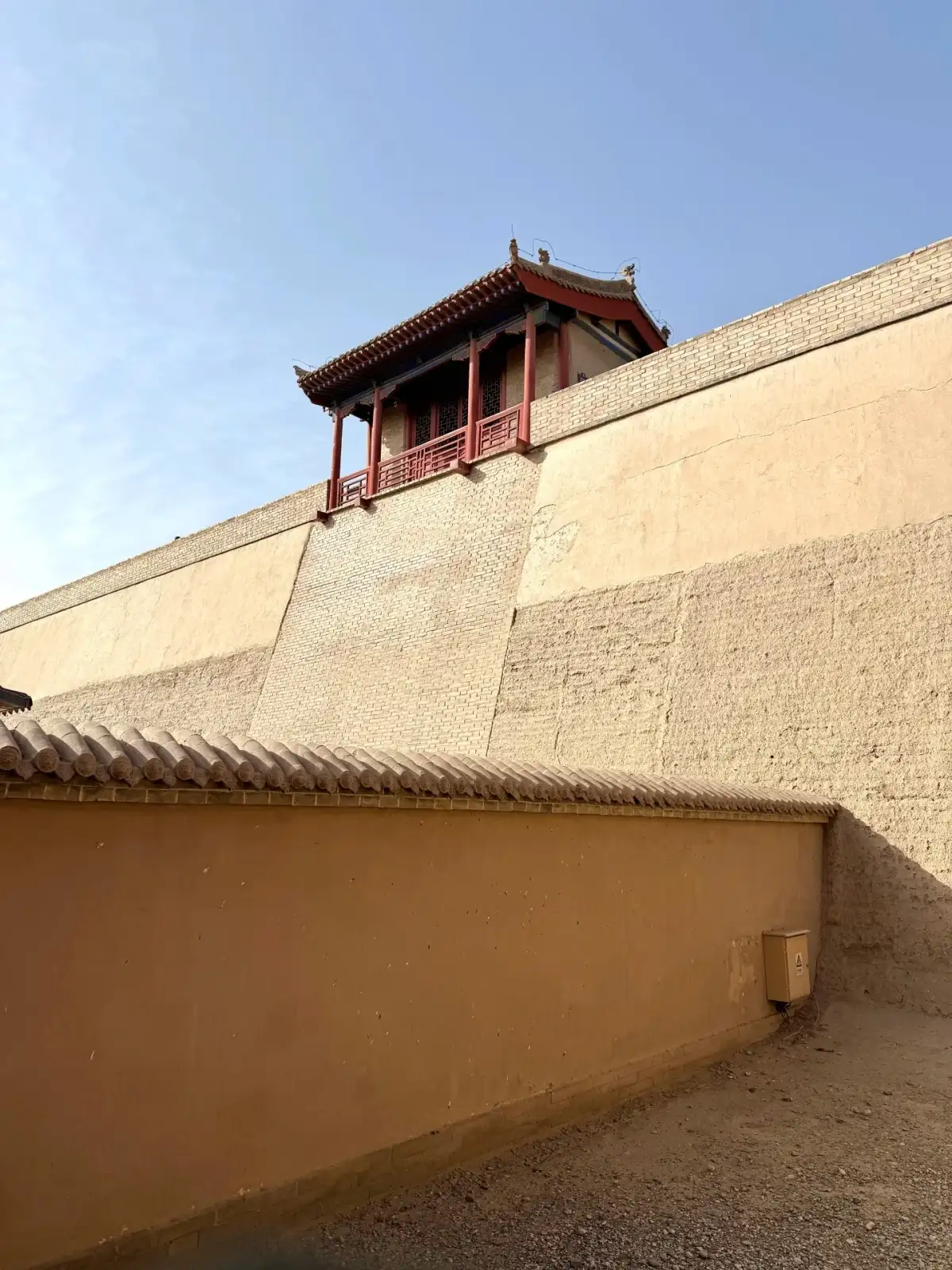
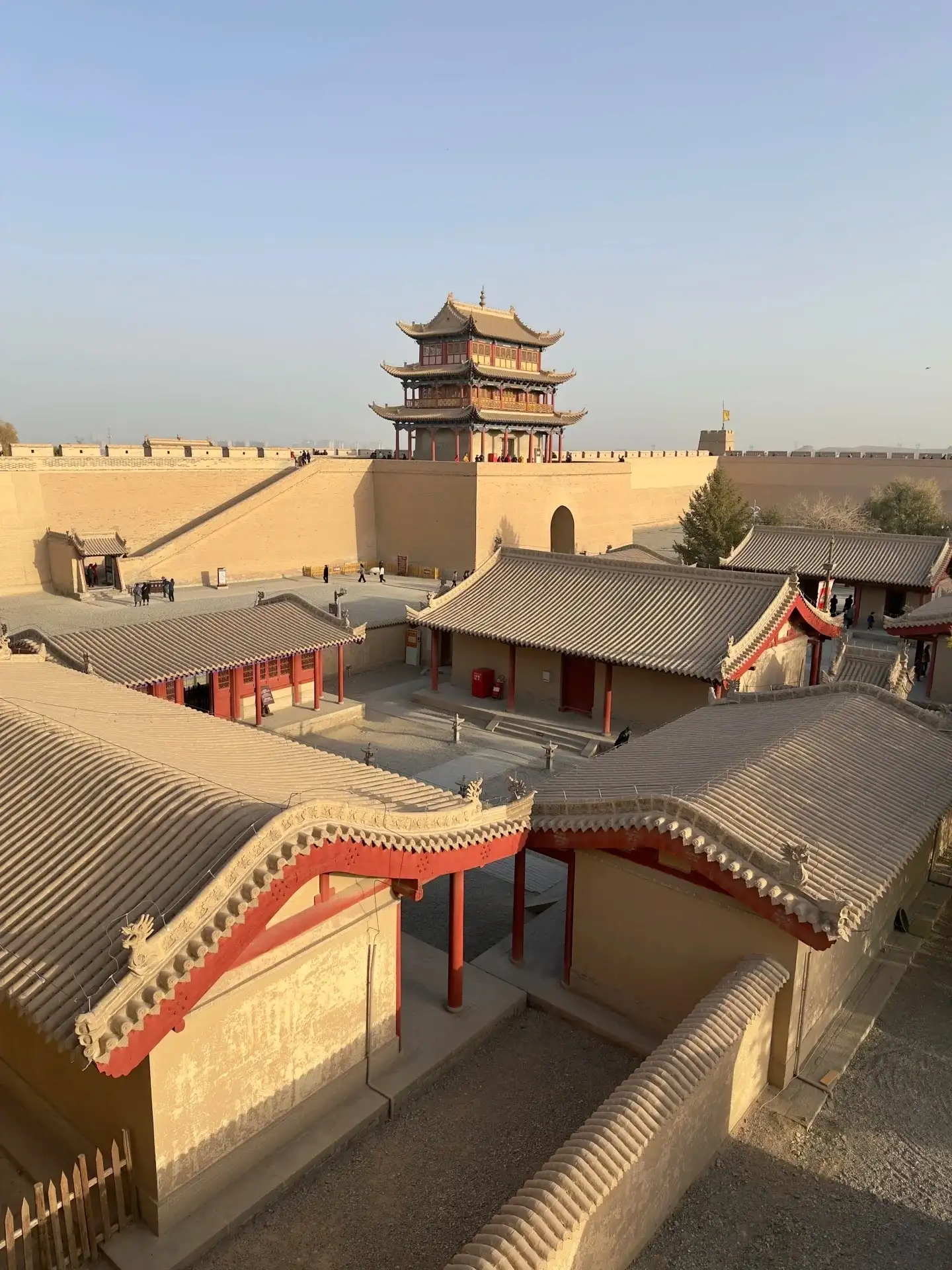
The gates and watchtowers of the Jiayuguan Pass. Photo:Yao You Guang · Original Post.
When moats appear in the fortress composition, the viewer’s gaze must shift from the upper structures to the ground-level relationships. Defensive spaces consist not only of high walls but also organize boundaries in conjunction with other elements through the topography of the ground. Visitors can use the standard open areas and on-site diagrams to understand where a particular element fits into the overall structure; the connections between different components better illustrate how the system functions than evaluating any single part for its grandeur.
Architecture enthusiasts can compare this theme with city walls they have visited previously. While city gates typically connect roads and daily activities, the Pass City possesses its own regional and military context. When making comparisons, focus on a single question—such as how entry is organized or how the wall interfaces with the ground—to make the differences more concrete. A cultural analysis need not focus solely on finding similarities; clearly explaining why the two sites have different spatial conditions is equally valuable.
Beyond the fortress walls lie the ramparts, watchtowers, and the surrounding terrain
The Jiayuguan Municipal Government’s publicly released plan includes the fortress, the First Watchtower of the Great Wall, the Suspended Wall, and the flanking walls within the overall protection zone, and discusses the relationship between mountainous and riverine terrain and defense. This document reminds visitors that the fortress before them is part of a larger network. When viewing the site, visitors can first use a map to understand the different nodes and then decide whether to extend their actual route further. The terrain is not merely a backdrop for photographs; it also played a role in historical spatial decisions.
A map can help first-time visitors to the Hexi Corridor establish a sense of scale. The fortress serves as a central hub; the wall continues to extend, while other ruins appear in various settings. Once these elements are clearly distinguished, travelers can more easily understand that the “Great Wall” is not merely a single, continuous, picturesque wall, but also comprises components with different functions and situated across diverse terrains. The fortress thus gains a systematic context, providing a direction for further exploration during subsequent visits.
If you wish to include the First Watchtower or the Overhanging Great Wall, please first specify which element you’d like to add. To further explore the relationship between different terrains and the ruins, focus the discussion on this theme; if you have already completed your exploration of the pass’s spatial layout, you may reserve other points of interest as extensions on the map. Actual access, transportation, and walking conditions will be determined by the day’s itinerary—while the system is worth understanding, it does not mean you must visit every point during a single visit.
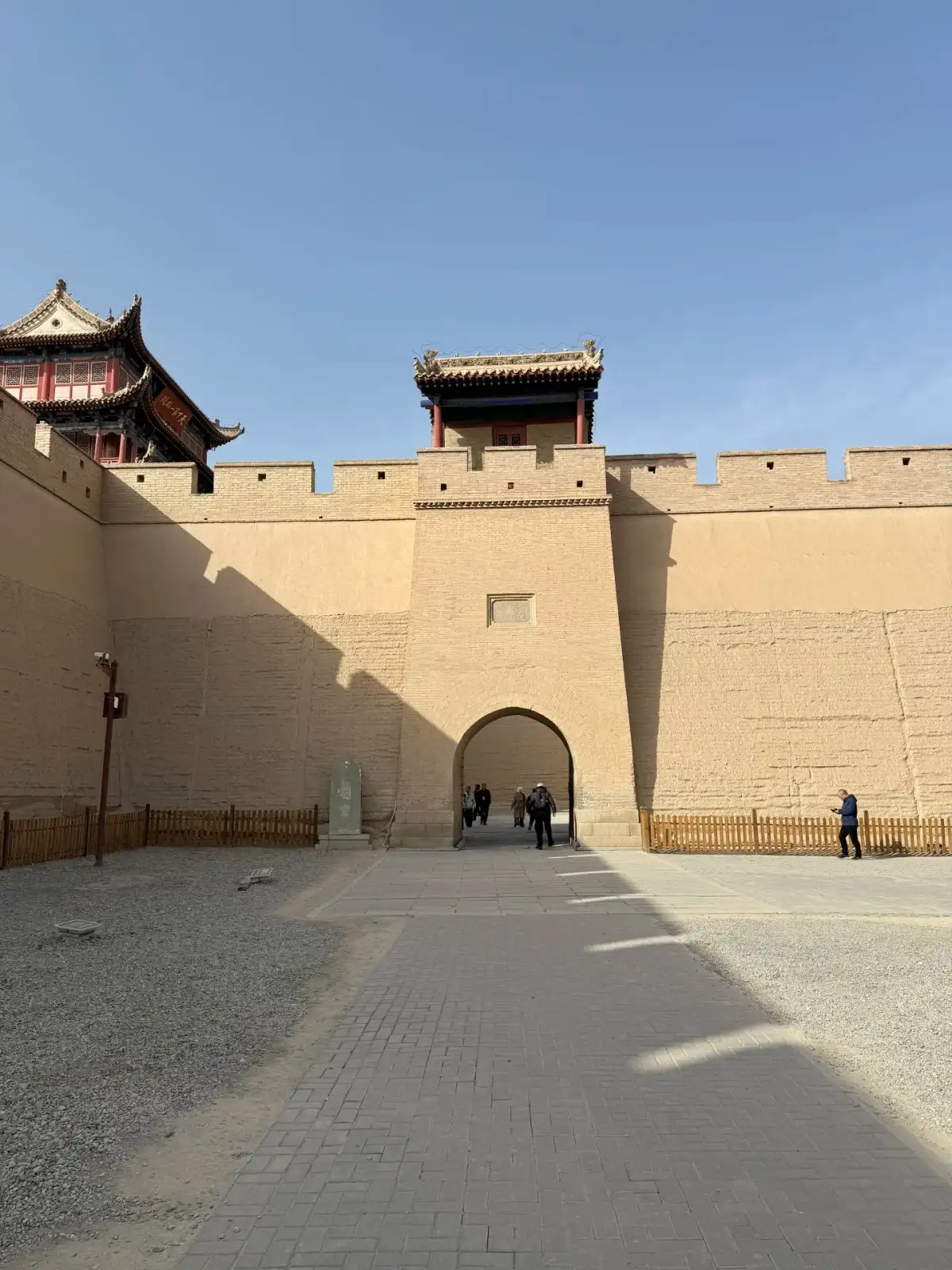
The city walls and gateways of Jiayuguan Fortress. Photo:Yao You Guang · Original Post.
Light alters perceptions; the structure preserves another interpretive thread
The evening light in the original post casts the fortress in varying hues; this visual interest can be incorporated into a photography project. At the same time, the interplay between the gate, the wall, and the ground is not limited to a single moment. Even without the anticipated sunset, the subject can still be captured through wide-angle shots, passing glances, and close-up compositions. Photographic aspirations and cultural interpretations each have their place, allowing the journey to maintain its focus even when the weather changes.
After the tour, visitors can select three key takeaways: how a particular gate guides passage, how a section of wall connects to other parts, and how a map situates the fortress within its broader context. These three elements, arranged from near to far, form their own sequence of interpretation. They also help fellow travelers recall why they stopped at certain spots, rather than leaving with only the impression that “it was very majestic.” When the space is clearly explained, the cultural impression of the fortified city carries greater weight.
The actual configuration of the Hexi Corridor can be viewed on this siteTourist RoutesDiscuss with consultants, or refer toIntroduction to Dunhuang as a Destinationcreating another cultural theme for the stop. The focus of this section of the Great Wall at Jiayuguan is to understand a system through the gate and the wall: how boundaries permit passage, how layers organize entry, and how topography influences these choices. Thus, upon departure, the gate tower remains magnificent, but behind the photograph lies a spatial map that offers deeper understanding.
Sources and Editorial Notes
This article is an original travel analysis compiled by the Dongxing Travel editorial team based on the listed materials; it is not a firsthand account by the author. The full text of the original post has not been reproduced; accompanying images are used within the scope of authorization and are credited to the author and the source of the original post. They do not serve as proof of actual travel experiences or services provided by Dongxing Travel.
Radiant Light · The Beauty of Ancient Architecture | Jiayuguan Photos Taken with My Phone · Travel Notes; Verified/Organized on: October 3, 2026.
Detective Wu · Jiayuguan Fortress at dusk, bathed in the setting sun, exudes a unique charm · Travel Notes; Verified/Organized on: October 3, 2026.
Jiayuguan Municipal Government Credit Portal · Implementation Plan for the Jiayuguan Great Wall Cultural Heritage Protection and Utilization Demonstration Zone · Official sources; Verified/Compiled on: October 3, 2026.
Gansu Provincial Office of Local History and Chronicles · Gansu Yearbook: Introduction to Jiayuguan Fortress · Official sources; Verified/Compiled on: October 3, 2026.