East Travel Editorial Department · Travel Diaries and Pre-Trip Reading
Outside the fortress, start by familiarizing yourself with this passageway
Jiayuguan is an ideal stop on any itinerary through the Hexi Corridor. If you’ve traveled through Zhangye beforehand, your eyes will already be accustomed to the interplay of oases, mountains, and open wilderness; arriving here allows you to continue exploring the questions: Why was this fortress built at this exact location, and how do the city walls, mountains, and rivers collectively organize the flow of traffic? Don’t rush to find the plaque proclaiming it the “First Majestic Pass Under Heaven” as soon as you arrive. Instead, take a moment to survey the surrounding terrain from the designated viewing areas near the entrance, and orient yourself to distinguish the directions of the city, the fortress, and the distant mountains. On clear days, the Qilian Mountains provide a backdrop; even if the distant mountains aren’t visible, it doesn’t hinder your understanding of the relationship between the city walls and the open spaces. A fortress is not an isolated, picturesque structure; it is part of a defensive system shaped by its natural environment. Keep this in mind, and the gateways, courtyards, city walls, and ancillary structures will no longer be merely separate photo spots—they will gradually come together to form a space that can be interpreted.
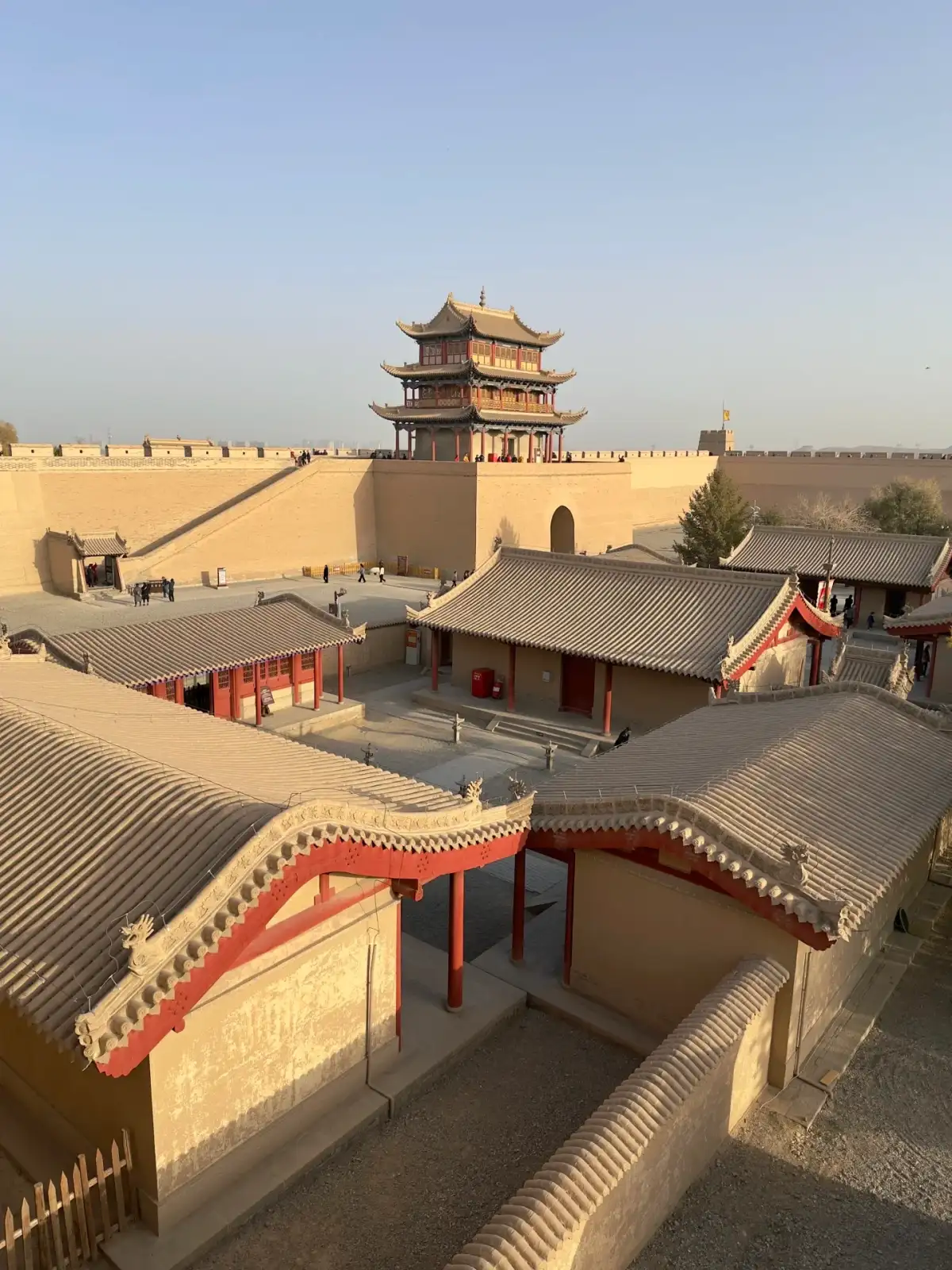
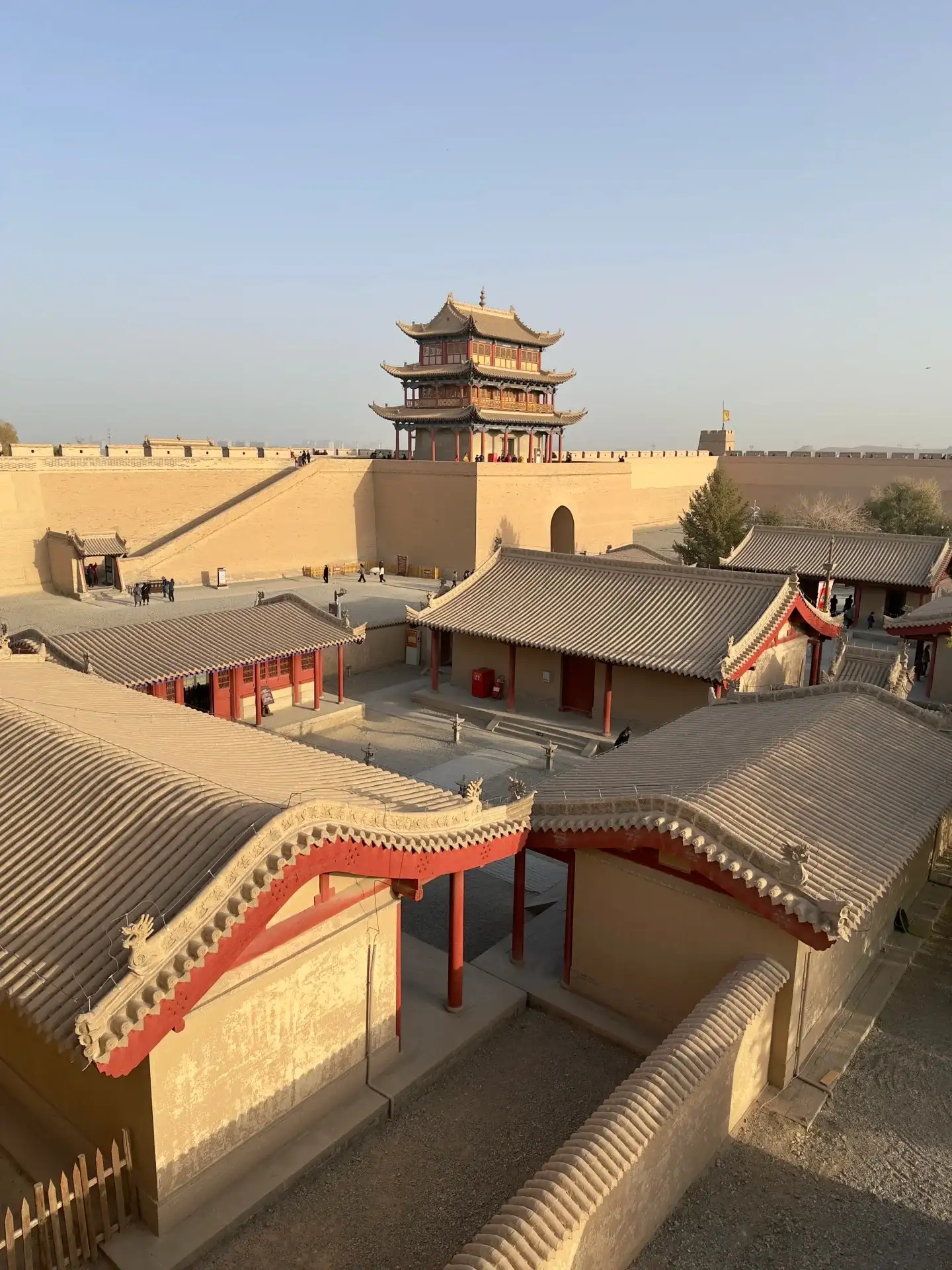
The Jia Yu Guan Gate Tower, city walls, and inner courtyards. You Guang
After passing through the city gate, notice why the path takes a turn
Upon entering the fortress, you can first follow the designated tour route through the city gate and the adjoining courtyards, observing how the entrance narrows the field of view and then opens it up again after the turn. The alternation of wide open spaces and narrow passageways naturally alters your walking pace. These variations are related to defense, access, and management; for specific architectural names, refer to the on-site guide—there’s no need to label every structure a “bailey” simply because of its similar shape. If a tour guide is available, the most worthwhile questions to ask concern how the various gates, walls, and towers work together, and what procedures visitors had to go through in the past to enter the fortress. Walking through the complex once makes it easier to understand the layout of the passageways than simply looking at a floor plan. If you encounter a tour group stopped at an entrance, first step aside to allow others to pass, then find a spot out of the way to listen to the explanation. The routes within the fortified city do not require walking in a straight line; it is precisely these visible turns that distinguish it from ordinary city streets.
Climb the city wall and observe how the courtyards are enclosed
open sections of the city wall offer opportunities to look down upon the interior structures. Before ascending, check the stairs and the day’s accessible areas; if your companions are unable to climb, you can arrange for them to view the scene from below—there’s no need to strain yourselves climbing just for a single photo. From a designated viewing spot, first look at the gate tower, then observe how the roofs, paths, and open spaces within the courtyards are enclosed by the walls. From this vantage point, you can discern architectural layers that are hard to notice from below: gray tile roofs, earth-yellow walls, and red column shafts, each with its own distinct distribution. The city wall itself is the star of the tour; the thickness of the crenellations, wall surfaces, and corners makes the defensive structure more tangible. Don’t treat every section of the wall as a race course; simply choose a path that allows you to clearly observe the relationship between the interior and exterior. On windy days, carry as few loose items as possible, keep both hands free for walking, and let your attention shift smoothly between the ground beneath your feet and the distant views.
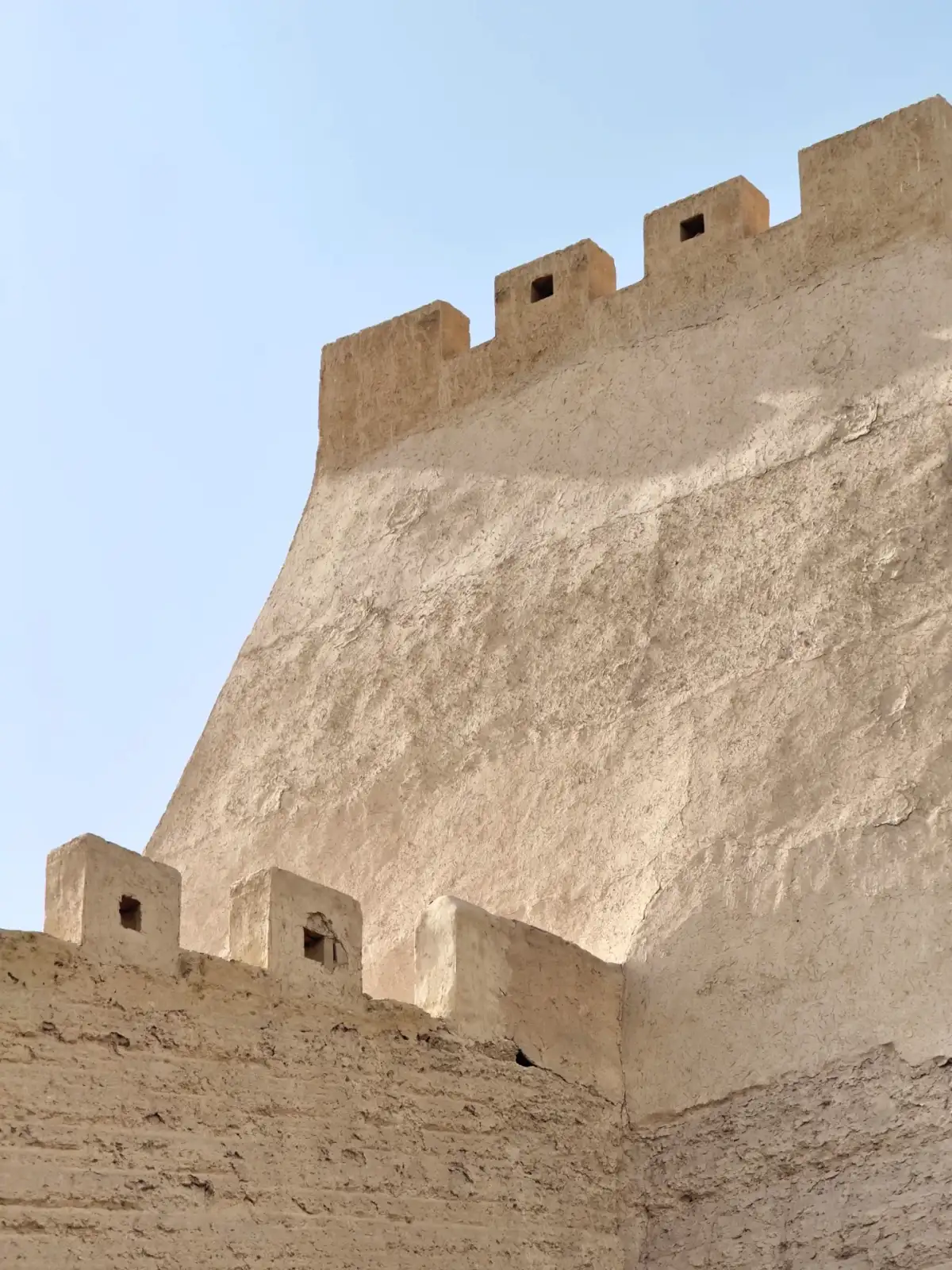
The surface of Jiayuguan’s earthen walls and their battlements.
wooden buildings and earthen walls represent two distinct architectural approaches.
The roofs of Jiayuguan’s pavilions rise gracefully, while the walls beneath them are thick and solid; the juxtaposition of these two forms creates a striking tension. Up close, you can examine the wooden beams and columns with their painted details, the repetitive lines on the tiled roofs, and the rough, uneven surfaces of the walls. These elements exist not merely for decoration; the building’s function, materials, and structural forces all contribute to the forms before you. To understand the story behind its construction, listen to local legends such as the “Dingcheng Brick,” while keeping them separate from verifiable architectural history. While these stories reflect people’s appreciation for the wisdom of the craftsmen, they cannot replace specific dates or engineering records. The structures we see today have also undergone preservation and restoration; therefore, we cannot directly interpret the more vividly colored sections as representing their original Ming Dynasty appearance. Taking a tour while keeping material considerations in mind will reveal new details more easily than repeatedly photographing the same gate tower, and it will also bring history down from the names on the plaques and into the actual architecture.
views across the city walls, as well as the oasis and traffic
Looking outward from the fortress, not every direction reveals only open desert. Trees, farmland, roads, and distant mountains combine to form ever-changing landscapes from different vantage points. Occasional modern vehicles passing by also serve as a reminder that this is still a place of real life and daily travel today. You can observe the nearby city walls and distant terrain by dividing them into several layers, noting where the green spaces are located and how the drier slopes extend toward the mountains. This way of looking can correct the one-dimensional image of the “frontier”: the fortress is connected to oases, river valleys, and roads, and historical exchanges were likewise sustained by daily life. When photographing distant mountains, there is no need to enter farmland or private property in search of a specific “Instagram-worthy” vantage point; simply staying on official roads and in designated viewing areas allows you to observe many of these relationships. A clear view of snow-capped mountains is not a daily occurrence; when the air and weather change, the textures of the nearby land are equally worth studying.

Trees, traffic, and distant mountains near Jiayuguan.
The First Watchtower and the Overhanging Great Wall—choose a vantage point that offers a view into the distance
The Jiayuguan Cultural Heritage Scenic Area comprises the Fortress, the First Watchtower of the Great Wall, and the Suspended Great Wall. Each of these three sites offers distinct experiences and requires transportation to reach them. After exploring the Fortress, if you still have time, you can choose one of the other sites to explore further based on your interests. The First Watchtower is associated with the Taolai River Gorge; the focus of your visit can shift from the architecture to the watchtower itself, the river valley, and the cliff faces. The Suspended Great Wall, on the other hand, showcases how the wall ascends along the mountainside, so you’ll need to factor in the physical exertion required for the climb. Don’t simply list all three sites on a single itinerary and assume you can easily cover them all in a short period of time. Before setting out, confirm the entrance locations, opening hours, and return transportation for each site, and verify ticket details based on the latest official information. If your travel companions would rather spend more time at the Pass City, you can easily save the latter two sites for another day. An afternoon spent clearly understanding the spatial relationships between these sites will leave you with a more complete understanding than rushing from one location to the next through a car window.
Great Wall Museum, providing a basis for on-site observation
If you wish to further understand Jiayuguan’s position within the Great Wall system, consider including cultural exhibits such as the Great Wall Museum in your itinerary—be sure to check in advance whether they are currently open and if reservations are required. Indoor maps, models, or artifact descriptions can supplement details that are difficult to discern with the naked eye within the fortress, such as how the walls extend and how the fortress connects to surrounding defensive outposts. It’s best to enter with a specific question in mind—perhaps about a gate or section of the wall you just saw—and then consult the corresponding explanations; this way, reading the exhibits won’t feel like just another tourist task. If the exhibition area is temporarily closed, you can always look up official descriptions after leaving; there’s no need to seek all the answers in unverified legends. The on-site experience at the fortress and the written explanations complement each other: the architecture allows you to experience the space, while the documentation helps you understand its purpose and historical evolution. For fellow travelers who are not familiar with Chinese, arranging a guided tour in their language in advance can also reduce the confusion that comes from hastily guessing the meanings of numerous names.
Morning and evening lighting, as well as nighttime tours, require different arrangements
low sun casts shadows of the gate tower, battlements, and rooftops onto the walls, adding more depth to the massive structures. Photography enthusiasts can choose to visit in the morning or afternoon based on the day’s opening hours, rather than waiting for the sunset until they can no longer leave at their leisure. Night tours or performances may be offered during certain periods; whether they are open, how to purchase tickets, and the entry and exit locations should be verified separately. Do not assume that night views are available every evening simply because a blog post mentions them. Daytime is better suited for identifying materials and structures, while nighttime lighting offers a different viewing experience—the two are not mutually exclusive. In windy, sandy, or cold weather, the experience of being atop the fortress walls will also change; it’s best to shorten your time on the walls and head to sheltered open areas. Bringing a jacket that’s easy to put on or take off, packing water, and allowing time for meals and the return trip will make waiting for the right light a comfortable experience.
Leaving Jiayuguan, placing the fortress back within the corridor
After the tour, you can revisit the map to re-examine the relationship between Jiayuguan, Zhangye, and Dunhuang, then reflect on the gateways, walls, and courtyards you actually walked through today. The terrain you passed along the way is not merely a drive connecting scenic spots; it helps explain the passageways and boundaries within which the fortress is situated. Photographs can also be categorized into distinct records based on materials and functions: the surfaces of earthen walls, the outlines of wooden buildings, the layout of courtyards, and the distant mountains and land. This way, when reviewing them later, it becomes easier to recall how a military structure simultaneously served both transportation and daily life. Jiayuguan certainly has a majestic presence, but the most fascinating aspect of travel lies in continuing to discover details within that grandeur. By allowing ample time for the main scenic area, exploring extensions based on personal interest, and situating the structures within their natural and transportation contexts, the fortress becomes a clear reference point for understanding the Hexi Corridor.
Further Reading and References
Great Wall · Destination Overview
Compiled and organized by the Dongxing Travel Editorial Department based on publicly available travel notes and listed information. Intended for pre-trip reading; this is not a personal travel account. Please verify opening hours, transportation, reservations, and service arrangements according to your actual travel dates.
Jiayuguan Municipal People’s Government: Jiayuguan Cultural Heritage Scenic Area
Which question makes the fortress route clearer?
Build a Jiayuguan Pass visit around how people move through gateways: why does the entrance turn, how do courtyards enclose space, and what corridors become visible from open walls? Jiayuguan Great Wall Museum can provide context for these observations. Record material and function separately, giving nearby routes as much attention as a distant tower photograph.
Adding the First Beacon or another wall section
An Overhanging Great Wall extension and the First Beacon offer different terrain and viewing subjects; choose one if time is limited. Establish the question you want an extension to answer before selecting it. Architecture enthusiasts may prefer longer in the fortress. These sites are not a continuous walking route, so confirm transport, rest and the day's access separately.
Planning references