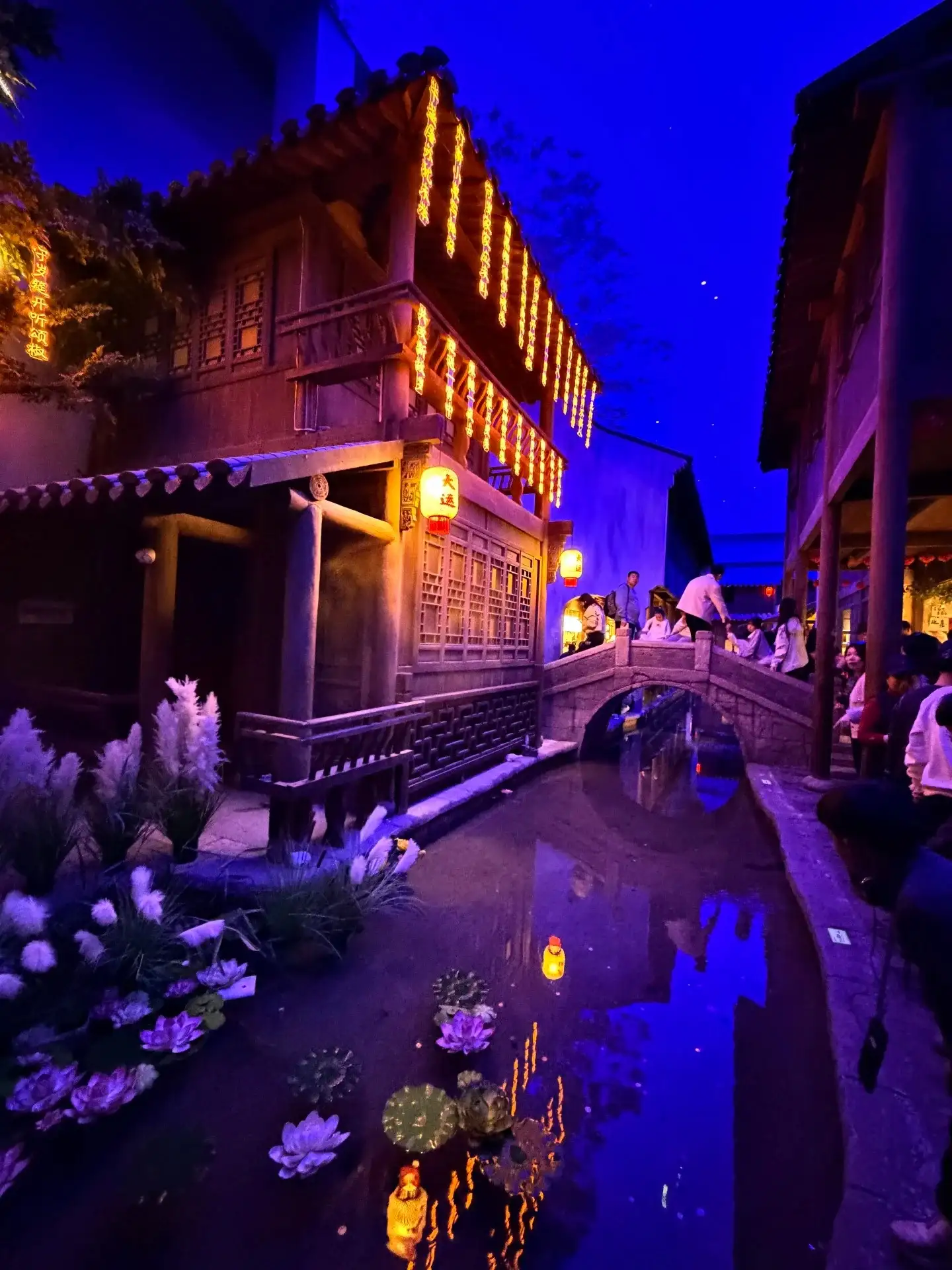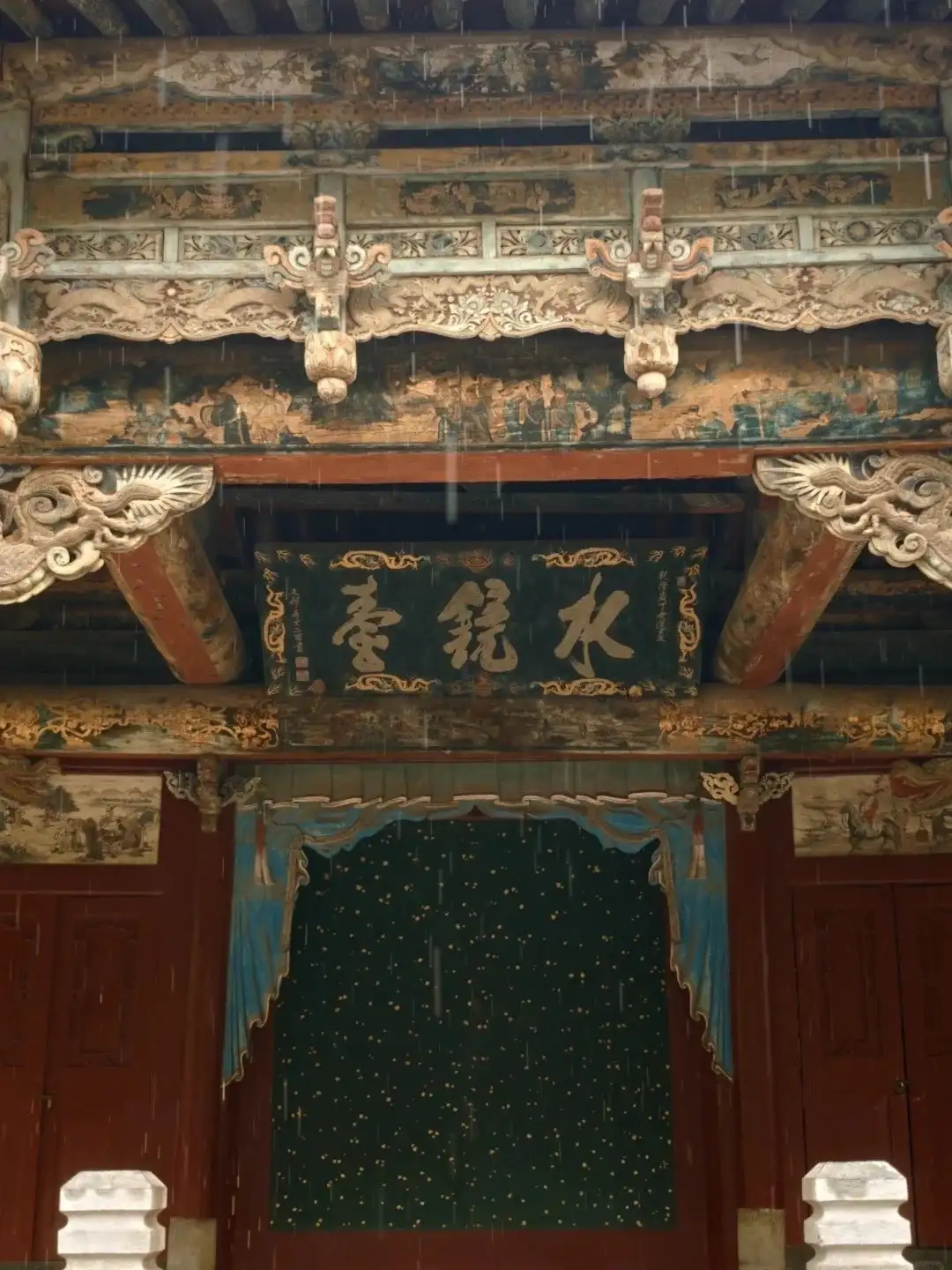
Jinci’s halls often lead one to look up at the roof first; but upon approaching the Hall of the Holy Mother, a different scale gradually reveals itself: the folds of a figure’s robe, the position of a hand, or the subtle variations between the shoulder and neck. The colored sculptures imbue the architectural space with human relationships. If one merely remembers how beautiful the attendants are, one misses how they collectively form a scene with defined roles and order.
小红书作者“鹤庐汉服”以晋祠彩塑为灵感制作服饰复原,并说明自己为部分纹样加入了其他宋代材料的参考。山西省文化和旅游厅的原帖则把雨中晋祠与圣母殿人物神态联系起来。一份关注服装转化,一份关注遗产现场,它们为观看提供了两种入口:从衣服到身体,再从身体回到殿内空间。
Start by looking at the overall composition, then examine the beautiful details
tourism materials from Taiyuan, which explain that the main statue in the Hall of the Holy Mother, together with attendants of various roles, forms a group composition, with the figures’ poses depicting daily worship and musical activities. When viewing the scene, first identify the center and the two sides, then observe the directions and spacing between the figures. Determining who is seated, who is standing, and who is facing which direction helps establish the relationships between the characters; within this context, the details of their attire become more than mere decoration.
Moving from the group to the individual also helps avoid treating each statue as an isolated portrait. The group of statues responds to one another within the same space, and their movements and positions influence the viewer’s attention. A slight turn of the head by one figure may draw the viewer’s gaze from one spot to another; variations within the orderly arrangement lend rhythm to the scene. Visitors can start by finding a figure they’d like to examine closely, then look back to see how it fits into the whole.
This approach is well-suited for international visitors unfamiliar with Chinese religious architecture. By first using the visually apparent spatial relationships as a point of reference, and then introducing the identities and historical contexts of the main figures, understanding becomes more natural. Guides can also begin by explaining that this is a group of sculptures situated within a ritual space, and then discuss the realistic details, avoiding the simplistic interpretation of these works as direct snapshots of Song Dynasty street life.
Folds in the clothing serve both as attire and as the body
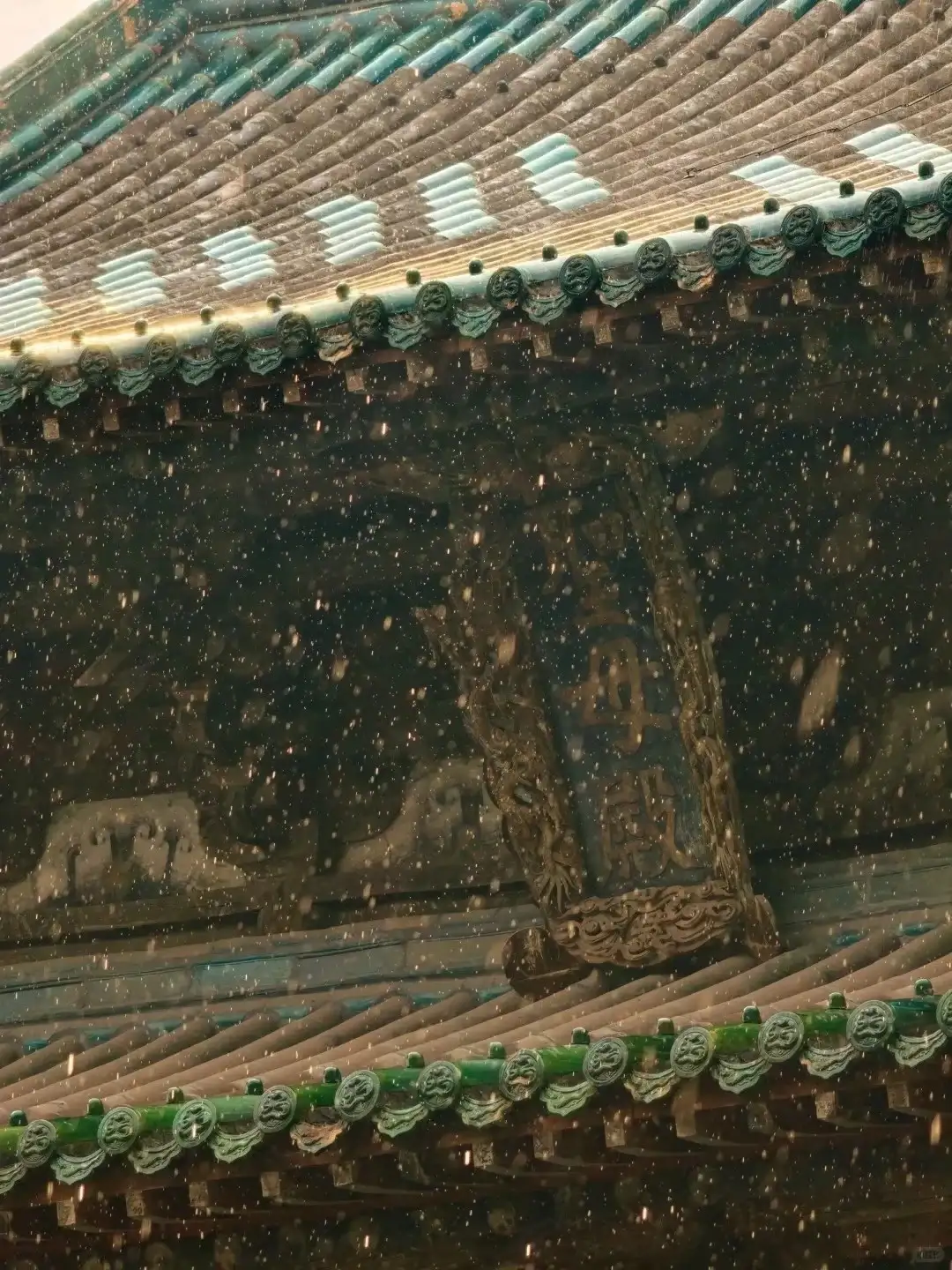
Colorful paintings and eave details of the ancient buildings at Jinci. Photo:Shanxi Provincial Department of Culture and Tourism · Original Post.
The folds in the clothing of these sculptures serve a dual purpose: they depict the garments and help the viewer perceive the volume of the body. The way the sleeves drape, the cinching at the waist, and the relationship between the hem and the feet ensure that the standing posture is more than just a vertical silhouette. When observing, follow a single fold downward to see if it relates to the body’s movement, rather than counting each line or directly naming every type of fold.
collars and shoulders are good starting points for observation. The collar forms a frame at the upper body, while the shoulders determine whether the overall posture is open, drawn in, or slightly tilted. Next, observe the cuffs and hands; this connects the movement to the clothing. If you can only view the site from a distance at a designated vantage point, maintaining this holistic perspective is more appropriate than chasing every detail; whatever the light and distance allow can become part of the viewing experience.
colors. The surfaces visible today have undergone long-term preservation, so the current state of the colors cannot be arbitrarily equated with the original appearance of the garments. On-site, it is most helpful to observe how adjacent color blocks create distinctions, where the viewer’s gaze pauses, and where they correspond with the figures’ movements. Regarding specialized issues of pigments and restoration, one should rely on in-depth explanations from formal research and exhibitions rather than judging original colors based on the saturation of photographs.
From Gestures to Character Roles
to outline the figures, and their gestures to bring them to life. Start by observing the position of the hands, then notice the space between the hands and the body. Whether the hands are clasped, raised, or lowered creates a different sense of balance; even without knowing the names of the objects, one can discern the differences in the figures’ postures. Afterward, by referring to the official descriptions to understand their roles, the movements take on a more specific cultural meaning.
expressions—there’s no need to apply today’s familiar emotional terms like “happy” or “sad” to all of them. Beyond the eyebrows, eyes, and mouth, the angle of the head, the neck and shoulders, and the body all contribute to expression. A slight bow of the head may simultaneously affect both the gaze and posture; different movements within a group portrait, in turn, alter our perception of individual figures. Describing the visible forms first, then discussing the feelings they evoke, allows for personal space in aesthetic communication.
When visiting with children, ask them to choose two figures and identify one obvious difference: where their hands are, which way their heads are facing, or what shape their cuffs are. Adults shouldn’t rush to explain the entire history; instead, help the child clarify the differences first. This shifts the child’s focus from searching for the prettiest faces to careful observation. While young children can participate, family members with an appreciation for art can delve deeper into the same set of details.
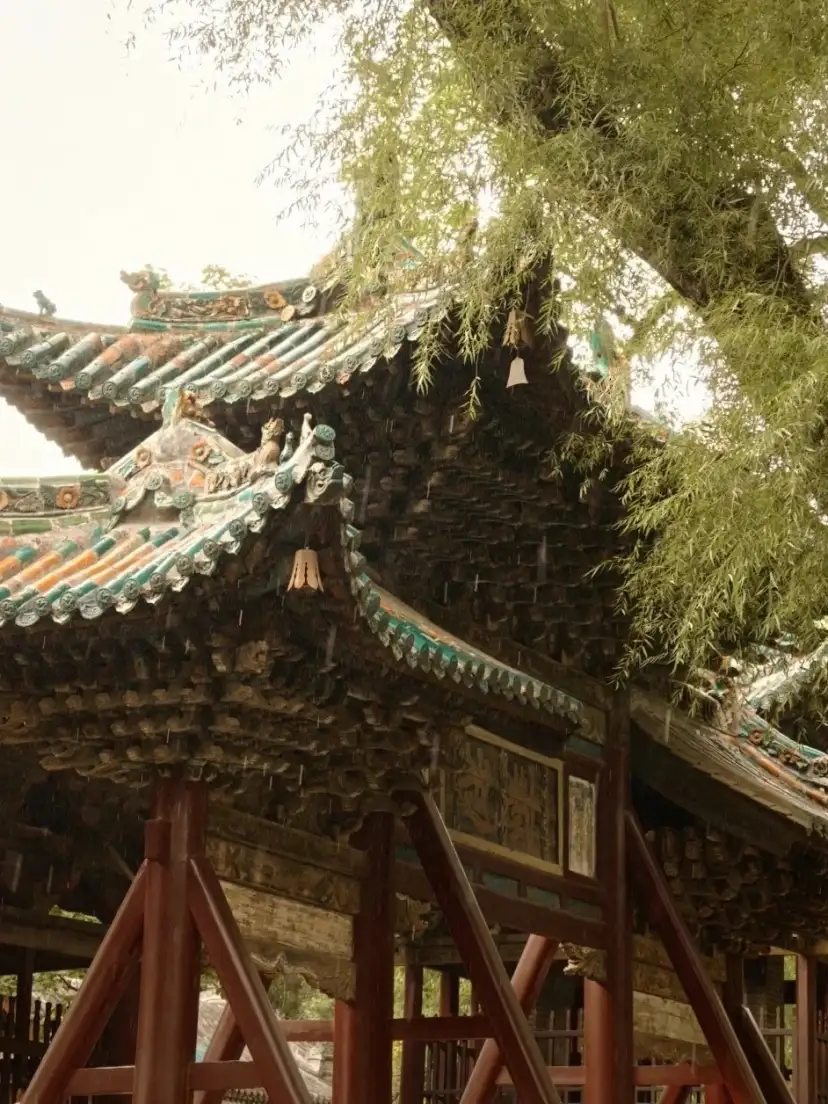
The eaves and wooden supports of the Jin Temple. Photo:Shanxi Provincial Department of Culture and Tourism · Original Post.
What has been restored through the use of modern attire, and what has been added?
notes on “He Lu Hanfu” to translate the garments depicted in the sculptures into wearable contemporary clothing, explicitly mentioning the design work that incorporates patterns from other cultural relics. This is particularly valuable: modern works make materials, layering, and body movements intuitive, while also demonstrating that restoration involves choices. Wearable garments require authentic fabrics and craftsmanship, whereas colored sculptures consist of surfaces shaped through carving and painting; the challenges addressed by the two are different.
Therefore, when appreciating the restoration, one might ask which details come from the visible sculptures, which were referenced from other sources, and which are modern additions. Such questions do not detract from the work’s beauty; rather, they help viewers understand how the creator worked. By viewing the restoration as a dialogue with the original work, visitors can appreciate the fluidity of the robes while also returning to the colored sculptures to observe their original contours and expressions.
If someone wishes to wear similar attire at the Jin Temple, they can also separate their photography plans from their heritage viewing. Clothing allows people to express their aesthetic sensibilities, while the colored sculptures and architecture deserve the full attention of a dedicated viewing experience. Choosing a legal photography spot that does not block passageways, and respecting on-site management and other visitors, allows both desires to coexist—rather than disrupting normal visits to the hall just for the sake of a single composition.
Preservation ensures that details remain legible
A study on the digital preservation of the colored clay figurines of attendants demonstrates that these works still require professional documentation and conservation. Digital models and images can aid research and dissemination, but they cannot replace the spatial relationships experienced on-site. After viewing detailed images and returning to the hall, the relationships between the figures and the architecture—as well as among the figures themselves—remain key elements; conversely, after experiencing the site firsthand, reading the research makes it easier to place the details back into their proper context.
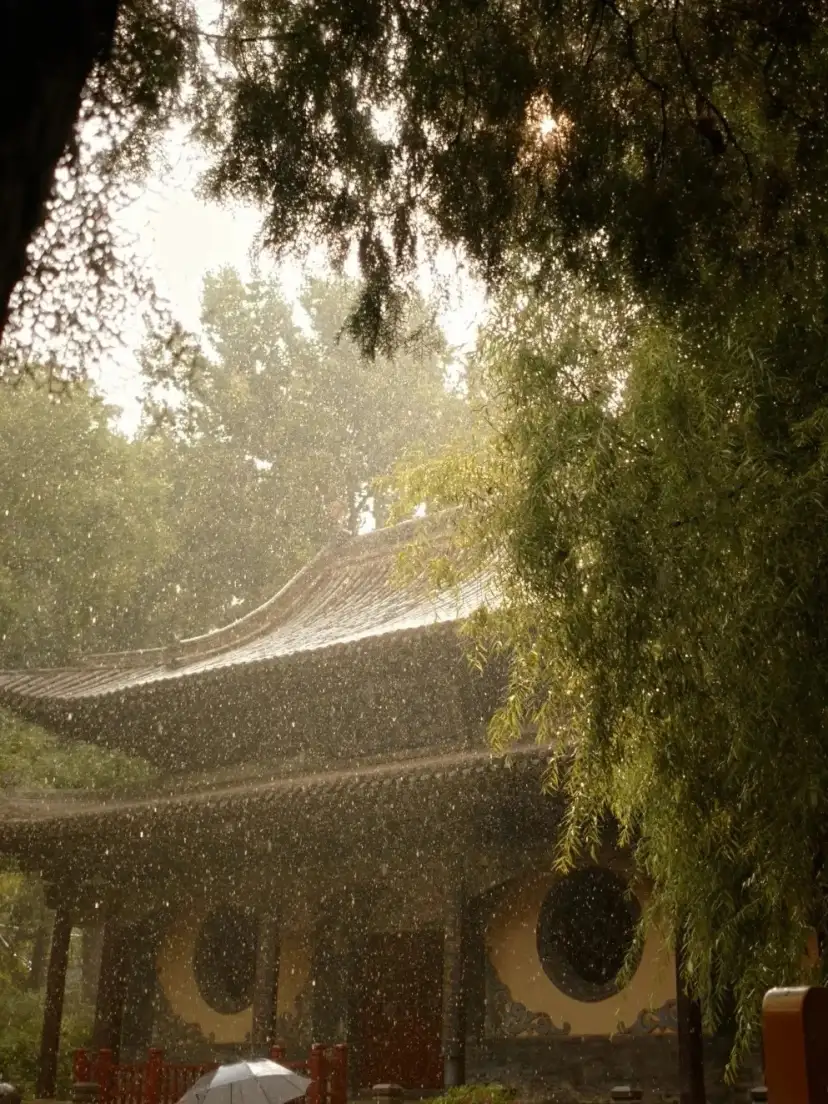
The courtyard architecture of the Jinci Temple in Taiyuan in the rain. Photo:Shanxi Provincial Department of Culture and Tourism · Original Post.
travelers to view the site within designated areas—without touching the originals or altering the on-site conditions to capture a clear shot of a specific face. If one cannot see every detail, they can leave with a question in mind and continue their exploration through reliable publications or official images. Visiting heritage sites does not require the goal of complete, close-up possession; even limited viewing can foster a clear and measured understanding.
When including the Jin Temple in your Shanxi itinerary,
If you plan to visit Pingyao or Datong next, treat the Jin Temple as a focal point for studying figure composition rather than just another generic “check-in” spot for ancient architecture. By focusing here on the figures, their attire, and the group compositions, and then observing different materials or spaces at other sites, you can maintain variety throughout your cultural journey. This sitePingyao Ancient City Destinationto provide a city-wide starting point, which can be planned separately from this close reading of the figures.
preparatory commentary, you can directly ask to see the relationship between the group of attendant figures and their clothing, and ask the guide to explain this specific theme rather than simply listening to a long list of the site’s titles. For visitors with limited Chinese proficiency, providing notes in their own language for terms such as “cuffs,” “gestures,” “main figure,” and “attendants” beforehand can facilitate on-site communication. The clearer the focus, the easier it is to provide commentary that is truly relevant.
there’s no need to compile a list for every figure upon leaving. Noting how a fold of clothing defines the body, how a hand conveys character, and how modern restorations reinterpret these details is sufficient to constitute a layered viewing experience. The colored sculptures in the Hall of the Virgin Mary thus transform from merely beautiful figures into interconnected works of art, imbuing the spaces of the Jin Temple with a tangible, living presence.
Sources and Editorial Notes
This article is an original travel interpretation compiled by the Dongxing Travel editorial team based on cited materials; it is not a firsthand account by the author. The full text of the original post has not been reproduced; accompanying images are used within the scope of authorization and are credited to the author and the source of the original post. They do not serve as proof of actual travel experiences or services provided by Dongxing Travel.
Helu Hanfu · Reconstruction of Hanfu Worn by Court Ladies in the Colorful Sculptures of Jinci Temple · Travel Notes; Verified/Organized on: October 3, 2026.
Shanxi Provincial Department of Culture and Tourism · When You Encounter an Autumn Rain at Jinci · Travel Notes; Verified/Organized on: October 3, 2026.
Taiyuan Municipal Bureau of Culture and Tourism · The Three Wonders of Jinci: Song Dynasty Polychrome Sculptures · Official materials; Verified/Organized on: October 3, 2026.
Ren Ruimin, Zhao Yuying · A Study on the Digital Preservation of Colored Sculptures of Song Dynasty Court Ladies · Official materials; Verified/Organized on: October 3, 2026.