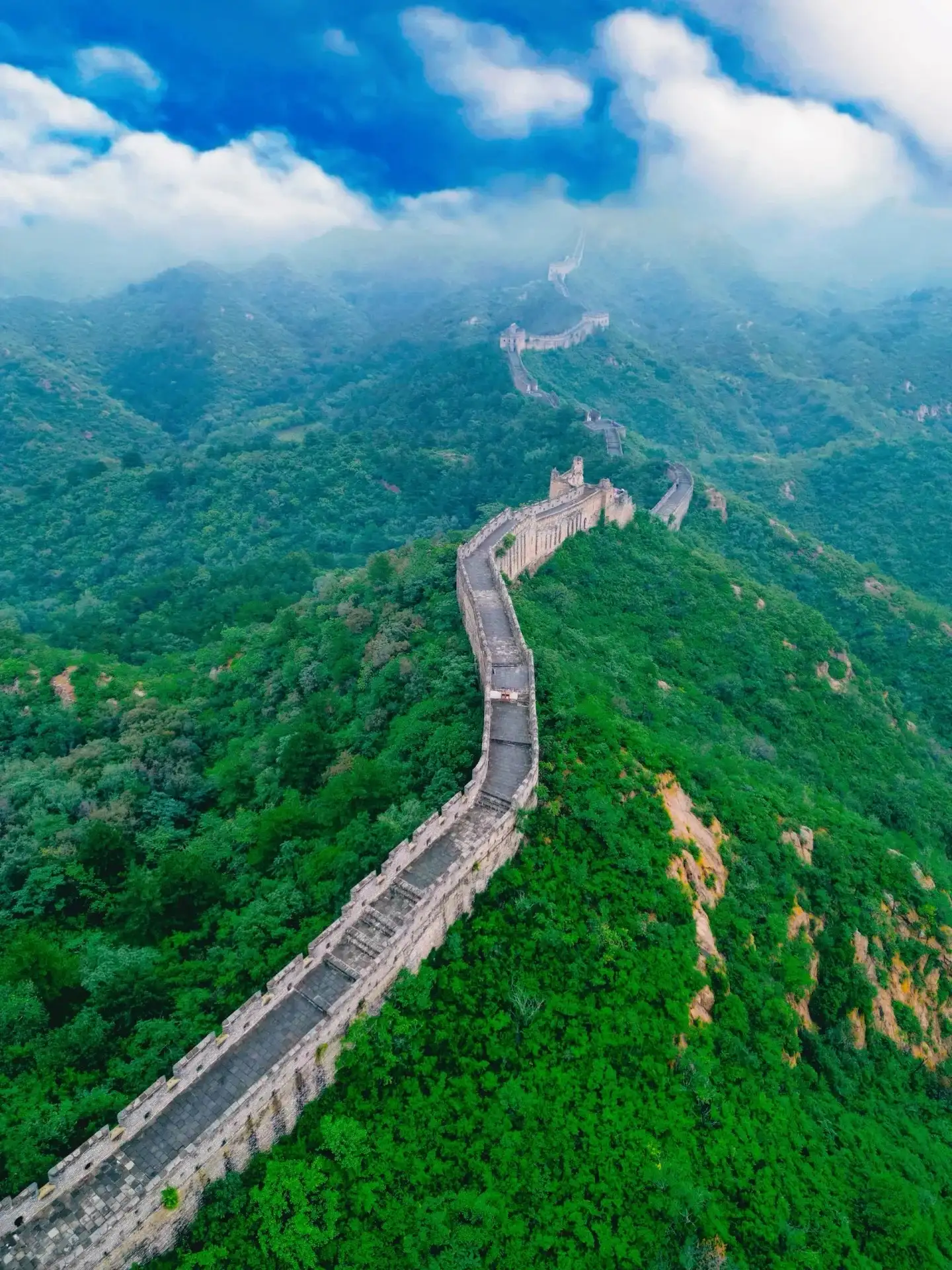
Viewed from a distance, the Jinshanling Wall appears as a line unfolding along the contours of the mountains; as you approach, this line gradually transforms into gates, watchtowers, sections of the wall, and varying elevations. The joy of reading architecture lies in moving back and forth between these two scales. First, observe how the Great Wall hugs the ridgeline; then, examine how a watchtower organizes space; finally, return to the materials themselves—and the grandeur becomes something concrete and understandable.
本文从这些观察提取建筑兴趣,不将人少、固定路程或某次交通耗时当成承诺。金山岭位于河北滦平,适合以墙楼和地形关系为主题,与北京城市文化停留分别安排。
From a distance, first identify why the wall bends.
When viewing the Great Wall from a distance at an open vantage point, start by identifying the direction of the ridges and the variations in the wall’s course. The wall isn’t simply a straight line drawn arbitrarily across flat ground; rather, it forms a visible silhouette in harmony with the undulating terrain. It rises in some places and drops in others; watchtowers appear in different positions, and the viewer’s perspective shifts accordingly. First, get a clear sense of the mountains; only then can the layout of the structures find its place within the environmental context.
There’s no need to immediately identify the names of every building at this stage. You can choose a high vantage point and a lower one to compare the directions from which they are visible. Different positions offer different perspectives, revealing that the arrangement of buildings and walls serves a practical purpose. A simple observation can transform the distant view from a series of pretty curves into a spatial relationship, without requiring you to memorize all the military terminology right from the start.
When shooting panoramas, it’s advisable to frame both the wall and the surrounding hillsides. A telephoto shot of just the wall emphasizes its continuous rhythm, while a shot that includes the terrain explains why it’s there. Both types of photos serve their own purposes; on-site, you can choose one based on your stamina and available time—there’s no need to walk farther just to capture the longest line of sight. The scope of the view is determined by your own position and the available path.
Up close, how does a building become a spatial element?
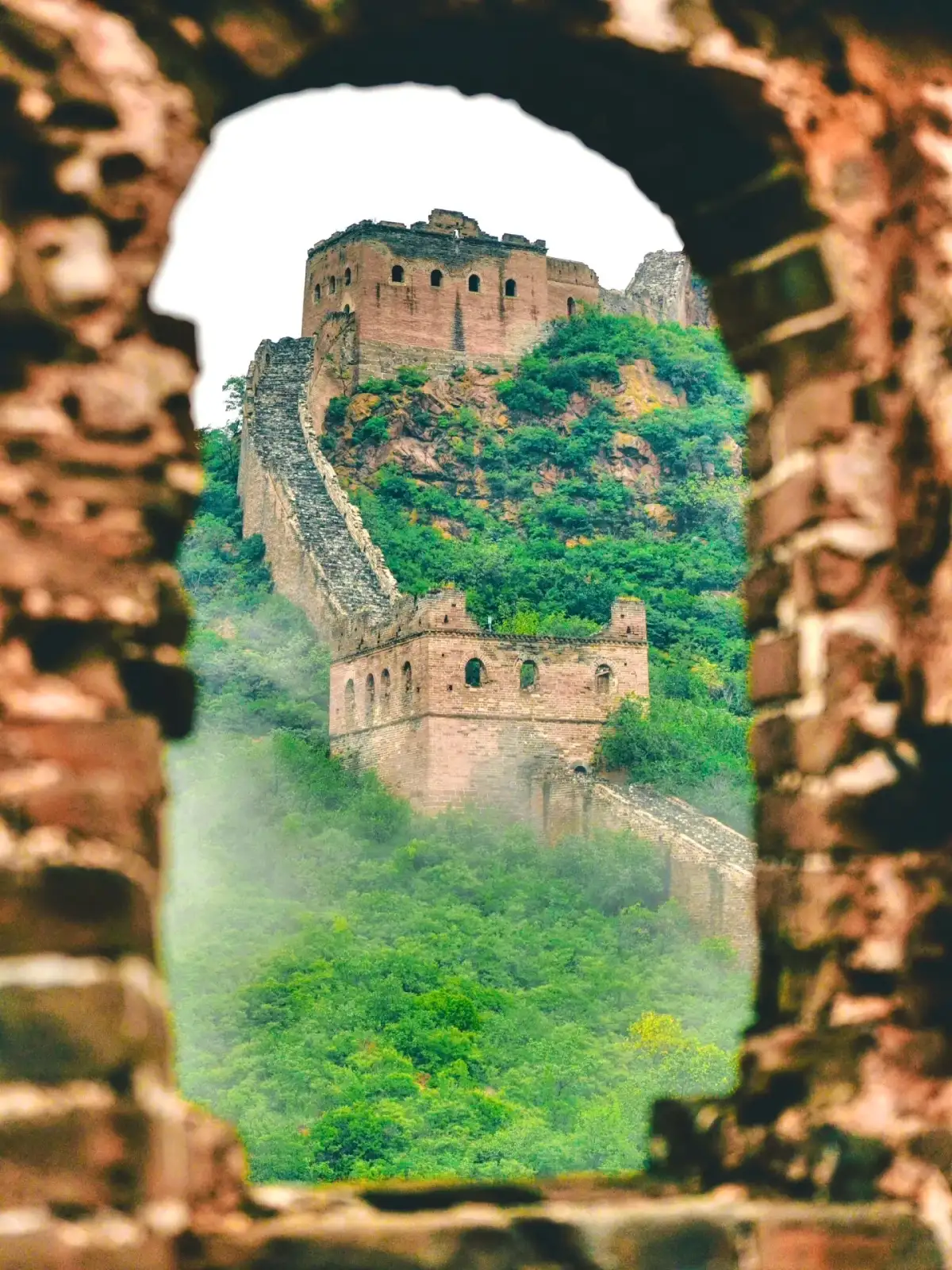
Cultural tourism materials separately describe the brick-and-wood “brick-stacked watchtowers” and the brick-arch “General’s Towers,” illustrating that watchtowers did not all follow the same architectural practices. Once you understand these differences, you can observe the wall openings, interior spaces, and the relationship between upper and lower levels on-site. Simply reading the materials from locations where access and viewing are permitted is sufficient to discover the changes from the external contours to the internal organization.
Hollow watchtowers give the nodes along the Great Wall a room-like quality, rather than simply being elevated sections of wall. The number and orientation of doors and windows, along with the locations for passage and observation, collectively shape how the structure was used. Start by noting where people entered, then observe which openings the line of sight extends through to the outside. This interplay between physical movement and line of sight helps us understand the structure’s function far better than simply counting the number of stories.
The front and side views of the same watchtower can also differ. By changing your angle along open paths, doors, windows, and wall surfaces will present different combinations. Viewers can look out through a visible opening and then view its location from the outside, connecting the interior with the contours of the mountains. When architecture is understood as a space with depth, watchtowers are no longer merely repetitive landmarks in the distance.
the walls and buildings work together.
The watchtowers serve as nodes, the wall connects these nodes, and nearby auxiliary defensive structures form even more complex relationships. Cultural and tourism materials describing the system surrounding the General’s Tower remind us that the Great Wall is not merely a single continuous wall. When viewing the relevant structures within the same field of vision on-site, one discovers that passage, observation, and defense collectively compose the space. This differs from the combination of the Jiayuguan Gate and the city walls; at Jinshanling, the emphasis is on the continuous relationships within the mountainous terrain.
When visiting with children, you can ask, “Can you see the next tower from here?” or “How does the wall change between these two towers?” These questions are grounded in the actual view, so children can answer them without prior knowledge of military history. Follow up with a formal explanation of the wall’s function and historical period to provide context for their observations. Do not climb over the structures just to simulate ancient activities; there is plenty to see within the designated open areas.

Text Brick: Materials Can Also Preserve Information
Hebei Culture and Tourism materials introduce the inscribed brick walls of Jinshanling. Travelers often view bricks merely as uniform building materials, but the inscriptions give each individual brick readable information. When you approach a designated viewing spot, first observe the relationship between the characters and the brick surface, then use the on-site explanations to understand and record the content. Don’t automatically interpret every mark on the bricks as evidence of age; reliable explanations can help distinguish between meaningful information and mere surface changes.
A single brick and an entire section of wall offer two distinct perspectives. The whole reveals the scale of the structure, while the detail evokes thoughts of construction, organization, and maintenance. When bricks are stacked to form a wall, individual materials become part of a shared structure; the clues left by the inscriptions remind us that behind this massive structure lies concrete labor. Bringing this material scale back into the panoramic view, the Great Wall becomes more than just a collection of grand adjectives.
Cultural details, such as screen walls, are also worth examining separately from the defensive theme. Official records mention the “Qilin Screen Wall,” introducing another layer of visual expression to the military architecture. Different functions can coexist; walls and towers do not have just one meaning. Visitors can appreciate the patterns first and then learn about their background; there is no need to interpret every decorative element as a practical combat facility or a specific legend.
Preservation and use continue to this day.
The approval for conservation and restoration issued by the Hebei Provincial Bureau of Cultural Relics addresses wall stability, the sealing of brick joints, and the prevention of rainwater erosion, illustrating that preserving the Great Wall requires concrete action. The historical sites visitors see are not static backdrops left unattended. Water, wind, and the structural condition of the wall all affect its preservation, and today’s inspections and repairs continue to shoulder this responsibility. Understanding this helps people appreciate the opportunity to view the Great Wall through legitimate channels even more.

When you see brick joints or wall surfaces in different conditions on-site, there’s no need to immediately judge which parts are older or more authentic. Time, materials, and restoration all have professional explanations; a visual impression cannot replace thorough investigation. Travelers can describe the visible differences and read official descriptions with a critical eye. Careful observation and cautious conclusions are not mutually exclusive; in fact, they make the interpretation of the material more meaningful.
Covering Three Scales in a Single Walk
You can structure your visit around three elements: the distant landscape, the watchtowers, and the materials. First, observe the terrain and contours; next, examine a tower that is legally open to the public; and finally, observe a section of wall that is clearly visible. The length of the route depends on your stamina, the weather, and the day’s opening hours. By completing these three elements—even without reaching the farthest point—you can develop a layered understanding of the architecture.
Visitors should note down the full name of Jinshanling, the actual entrance, and the pickup/drop-off locations in advance, and confirm whether the entry and exit points are the same when discussing the itinerary. For foreign-language guided tours, specific requests can be made regarding watchtowers, the wall, and construction materials. Arrangements should account for the fatigue of hiking in the mountains, waiting times, and the return trip; the completion time mentioned in a single online post cannot dictate the pace for an entire family.
This SiteGreat Wall Destination GuideThis helps situate Jinshanling within the overall route, allowing you to plan your itinerary based on actual access and transportation conditions. An architecture-themed journey doesn’t require constant movement; stopping to carefully examine a single structure is equally valuable. The distant wall lines, the nearby spaces, and the materials visible at hand transform this section of the Great Wall from a mere photograph into a heritage site that can be truly understood.
Source and Editorial Notes
They do not serve as proof of actual travel experiences or services provided by Dongxing Travel.
Beijing Culture and Tourism Information Platform · Introduction to Major Architectural Sites at Jinshanling · Official source; Verified/Compiled on: October 3, 2026.
Hebei Provincial Department of Culture and Tourism · Text: Brick Walls and the Qilin Screen Wall · Official source; Verified/Compiled on: October 3, 2026.
Hebei Provincial Bureau of Cultural Relics · Approval for the Preservation and Restoration of Jinshanling · Official source; Verified/Compiled on: October 3, 2026.
Can a short route be meaningful?
At Jinshanling Great Wall, combine a ridge view, an accessible example of Jinshanling watchtowers and visible inscribed Great Wall bricks. These scales connect terrain, space and materials without requiring the longest route. Confirm entrances, exits and pickup points before choosing the walk.
Read materials cautiously
Describe inscriptions and joints first, then use formal interpretation for their meaning. Colour alone does not establish age or restoration history. Adjust for wind, rain and step conditions, and remain on permitted paths rather than crossing barriers for a photograph.
Planning references