Even though both are described as “low-effort,” travel journals from Jiuzhaigou might outline completely different itineraries for a single day. Some travelers make the most of the sightseeing buses, stopping only near key lakes; others find strolling through the woods at a leisurely pace very relaxing and remain satisfied even if they rack up a significant number of steps. For visitors traveling with parents or children—or those who simply dislike long walks—the key is to distinguish between these two types of “ease”: reducing the actual distance walked and minimizing the psychological pressure of rushing are two different needs.
Xiyouji’s complete notes connect multiple lakes via shuttle buses, while listing the round trip to Reed Sea as an optional walk. Qieqie’s “Leisurely Outings” notes show a preference for the Shuzheng Lakes and forest sections; although she describes herself as having low energy, she still recorded a significant number of steps. Both articles reflect their respective travel preferences. Treating them as clues can help a family discuss which sights they want to see; however, specific entry times, vehicle seating arrangements, and walking experiences cannot be directly replicated on another trip.
Three Valleys: First, Find Your Priorities on the Map Jiuzhaigou Scenic Area’s Official Itinerary Introduces the three main valleys as
Official Itinerary for the Jiuzhaigou Scenic AreaThe three main valleys are described as forming a “Y” shape: Rize Valley, Zecha Wa Valley, and Shuzheng Valley. The official recommendation for a one-day visit is to combine sightseeing buses with walking. This information was verified on October 3, 2026. The most practical insight it offers is that movement within the scenic area occurs in different directions; you cannot treat all the attractions on your list as if they were lined up along a single street to be visited sequentially.
Rize Valley’s lakes, waterfalls, and forests—ideal for those who want to see a variety of water features in a single day; Zechawa Valley’s Longhai Lake and Five-Color Pool—perfect for viewing expansive lake surfaces alongside intricate hues; and Shuzheng Valley’s cluster of lakes, waterfalls, and surrounding scenery—which offers yet another continuous landscape. Families can start by circling one must-see attraction in each valley, then allocate extra time to explore one of those locations in greater depth. This approach is more practical than trying to cover the entire map from the start.
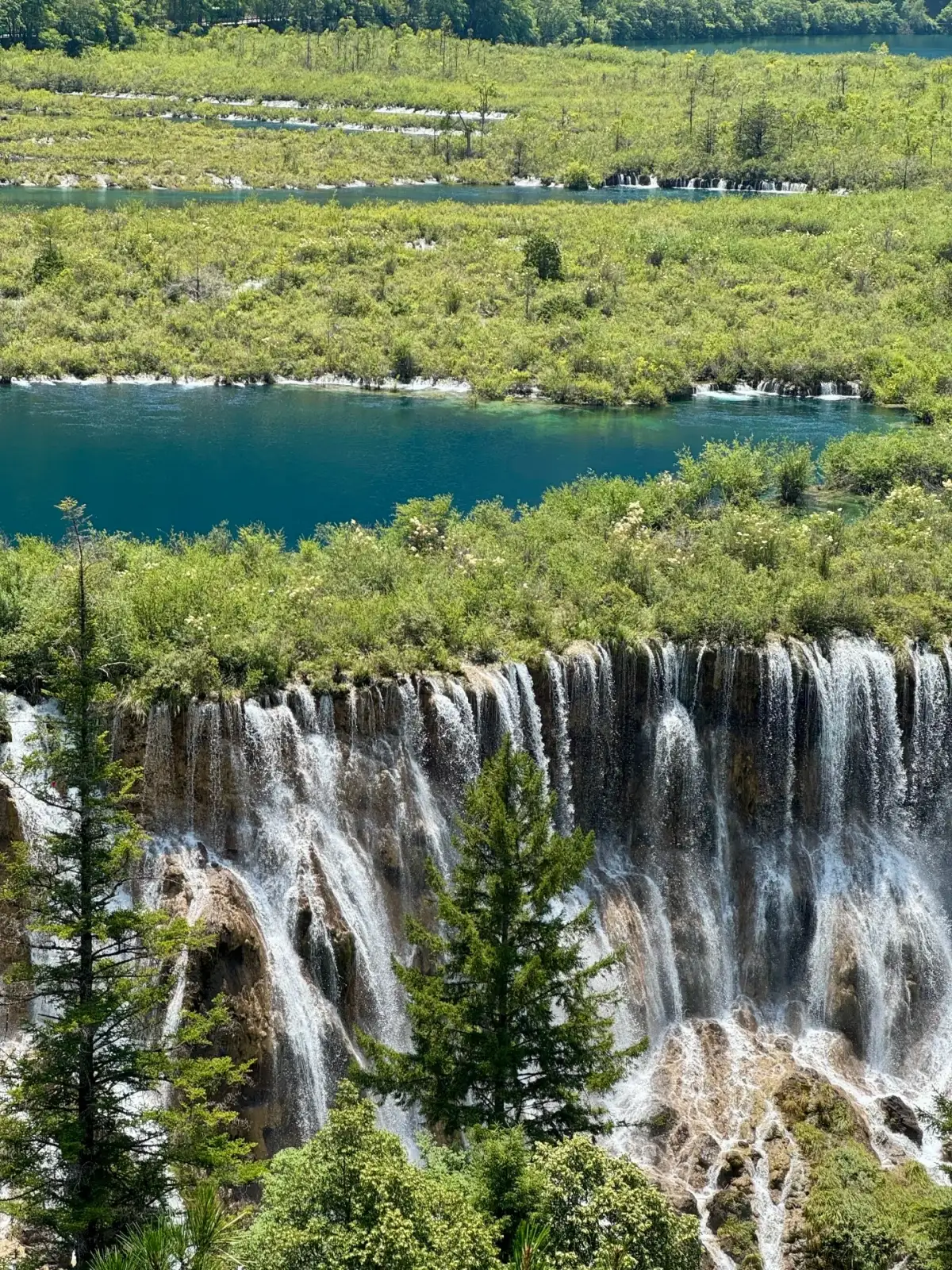
Water flows down the edges of elongated terraces, forming multiple waterfalls, with vegetation growing above them... Photo:Xi’s Travelogue · Original Post.
Nuorilang plays a crucial role in connecting different directions. When planning your route, treat it as a hub for changing directions, clearly determining whether your next stop will be toward Changhai, Rize Valley, or back toward the valley entrance. Save the location names on your phone so everyone in your group can see them; for members who only read English, you can also save the corresponding names from the official guide. On-site, follow the bus stop signs and staff instructions when boarding buses; this not only minimizes mistakes but also reduces the pressure on the person in charge of the itinerary.
If you want to minimize walking, you must have a reason for every time you get off the bus
For a day with less walking, you can start by setting your scenic goals as “one open lake, one colorful detail, and one waterfall or cluster of lakes.” These combinations are editorial suggestions; specific locations should be chosen from among those open on the day of your visit. A wide-open lake is ideal for taking in the overall view first; areas with rich colors are best appreciated by standing at designated viewing spots and taking your time; and waterfalls offer a completely different experience through their sound and the force of the water. Once each goal is clearly defined, you can determine whether any additional walking is necessary.
Specific questions worth asking before getting off the bus: Once you reach the spot you want to see, from which stop should you continue by bus? If it’s a round trip along the same route, the return journey should also be factored into your stamina; if it connects to another stop, your travel companions need to know which direction the exit is in. Simply looking at two points on the map that appear close together may lead you to underestimate the time required for stairs, viewing stops, and taking photos. Those who need to minimize standing time should also factor in waiting times for both the bus and at viewing platforms.
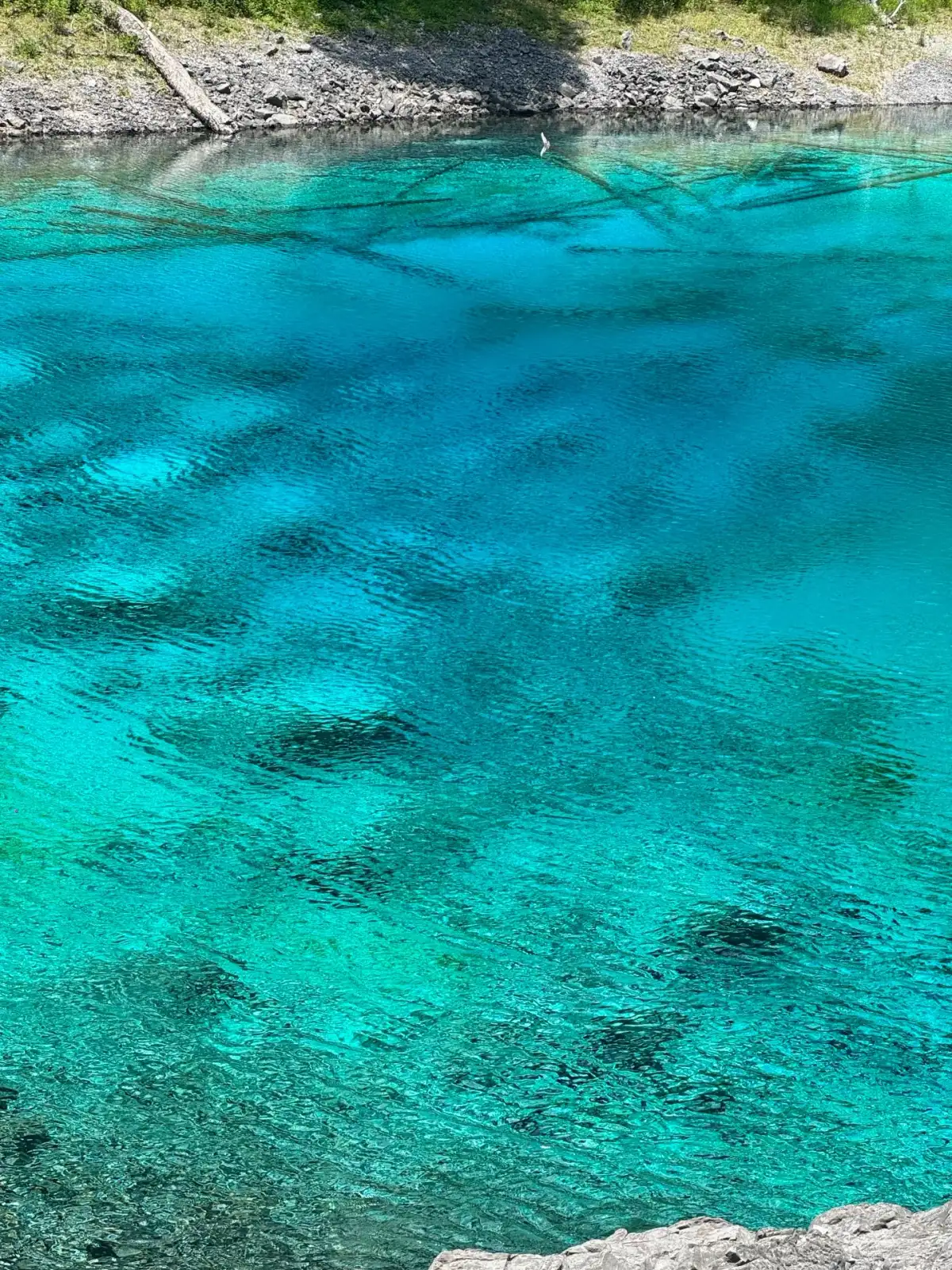
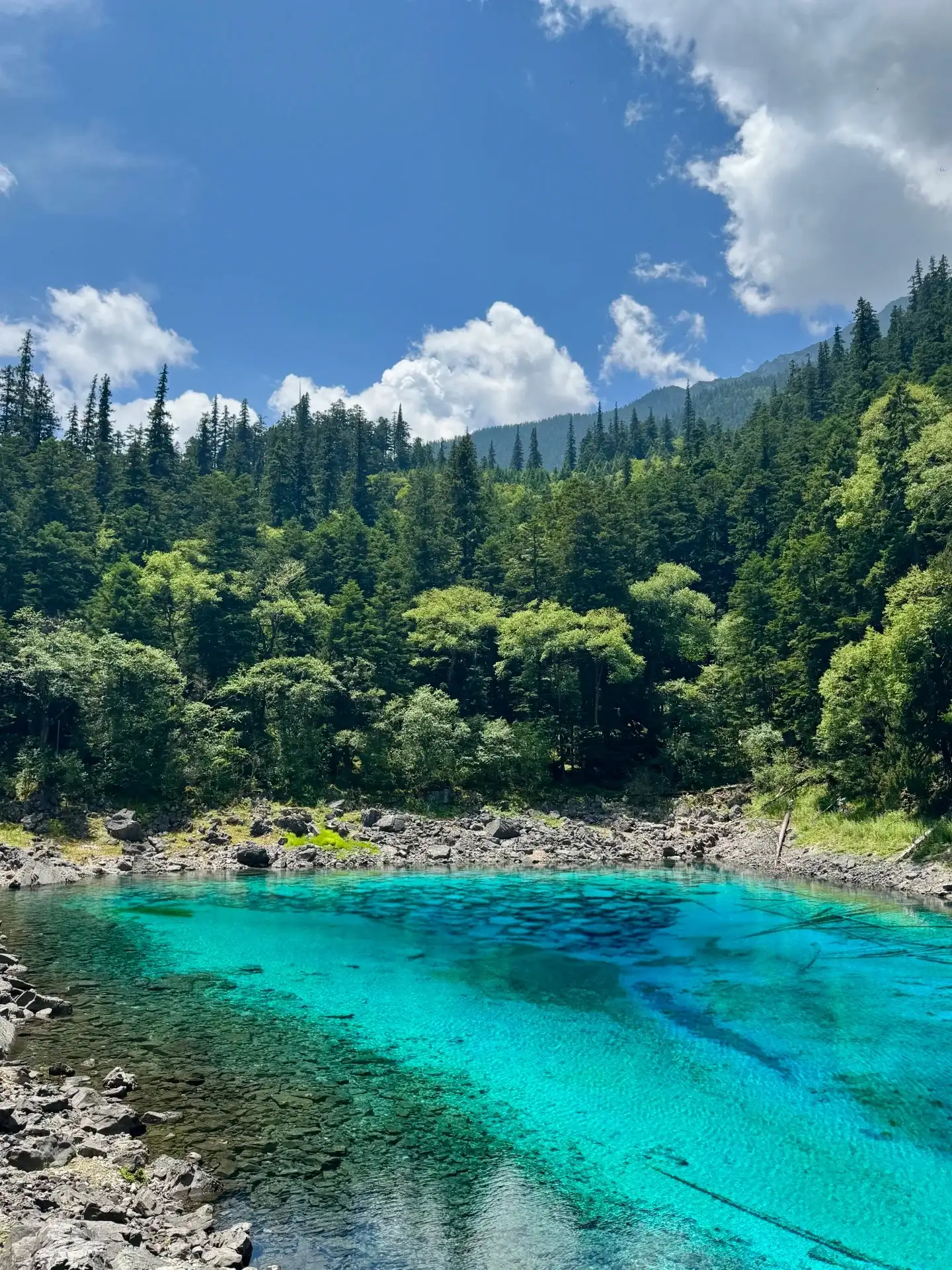
The transparent, turquoise-blue lake reveals rocks and sunken wood beneath the surface, with tiny ripples gliding across the water... Photo:Xi’s Travelogue · Original Post.
In both travel logs, the Reed Sea is associated with extra walking. Those willing to walk specifically to see this type of scenery can make it a clear goal; those who have had their fill of water scenery and are starting to feel tired can skip the extra walk. Leaving a secondary section as optional provides practical flexibility for the itinerary. A so-called “leg-saving” route should, first and foremost, allow travelers to make adjustments on the spot based on their own condition that day.
For those who enjoy forests, you can choose to visit fewer lakes
如果森林是主要愿望,路线可以把一段开放林间路径放在较重要的位置。原帖作者喜欢这一段的安静与连续行走,说明有些旅客更在意观看过程,未必想在每个著名海子旁都停下。家庭中有人爱树林、有人爱拍水色时,可以保留一个共同海子,再为森林分出完整时段,减少来回协商。
Photos taken in the forest also offer different subjects. Observe how the tree trunks, the ground, and the light in the distance create layers, then take a wide-angle shot that includes the path to show how people interact with the environment. Near the lake, focus your gaze on the reflections, the vegetation along the shore, and the underwater formations.Information on the Scenic Area’s Iconic AttractionsExplaining that the colors of Wuhua Lake are related to objects on the lake bottom, light, and reflections helps visitors understand why the view from the same spot changes depending on conditions.
When photographing the water’s colors, there’s no need to have everyone wait continuously for the right light. Start by taking a photo that captures the entire scene, then select a specific detail—this alone is enough to preserve the landscape’s distinctive features. Children can look for different objects above and below the water’s surface, while older family members can take in the overall view at designated rest areas. For those who wish to continue photographing and those who need a break, agree on a meeting point for a short time in advance; this will allow the family to move at a more leisurely pace than if everyone were constantly jostling for the same photo spot.
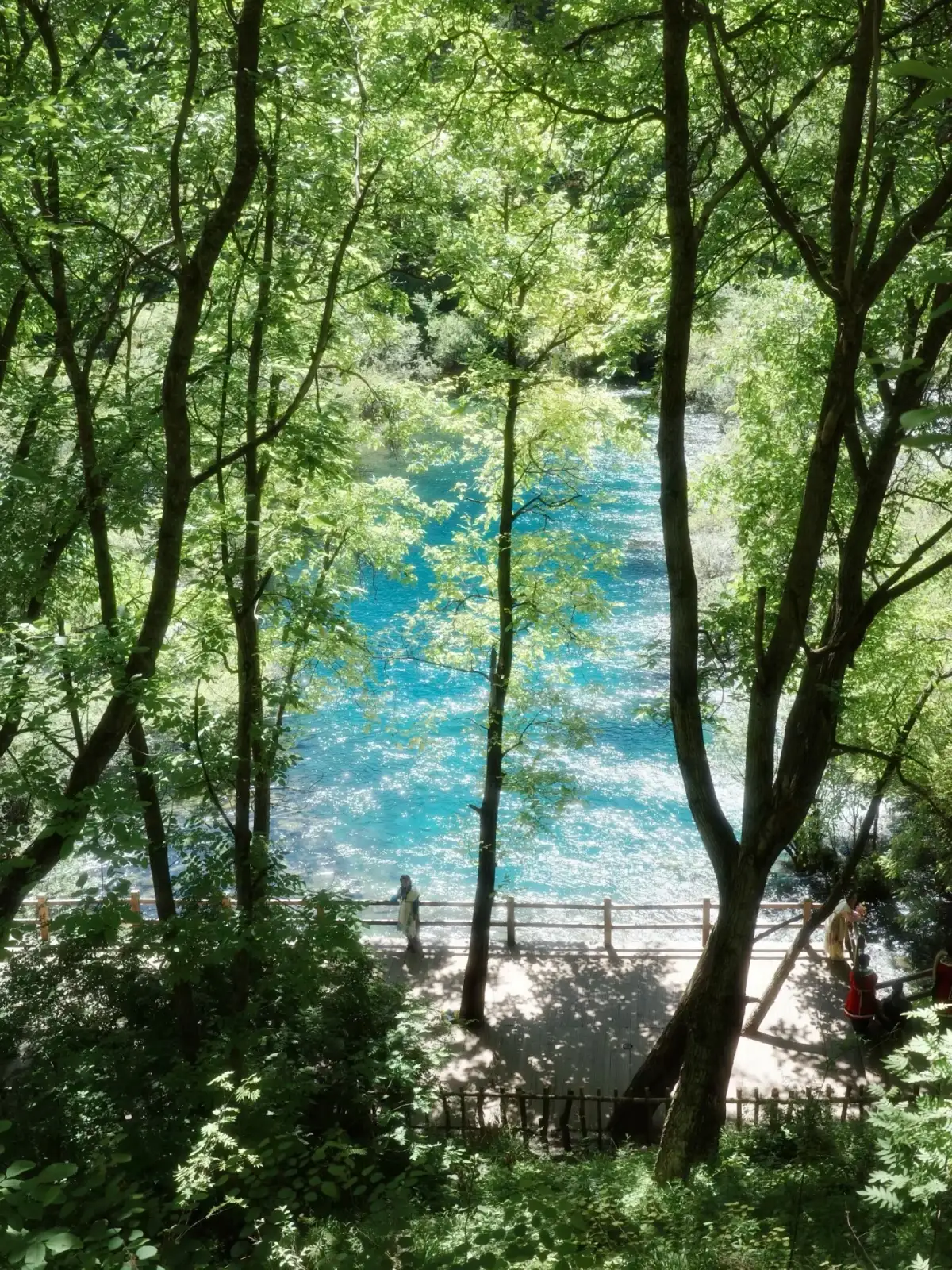
Turquoise-blue lake waters peeking out between tree trunks, with boardwalks and railings extending along the water’s surface... Photo:Qieqie’s Leisurely Outing · Original Post.
A midday break is part of the itinerary
“If we can only choose two valleys in a day, won’t we miss out on too much?” If you stop only briefly at each spot, covering more locations might actually leave a shallower impression. For families with limited energy, it’s better to prioritize key highlights and ensure a full lunch break first. Decide during lunch which direction to add in the afternoon, letting your actual morning experience guide the decision. The editors recommend keeping one “must-see” and one “optional” item, rather than treating the entire afternoon as a must-complete itinerary.
For dining arrangements, inquire with the official visitor services before entering the park about current operating hours and locations. If you choose to dine inside the park, be sure to factor in travel time and waiting periods into your schedule; if you bring your own packed lunch, consume it in designated areas as required by park management and take your trash with you. Vegetarians or those with dietary restrictions should confirm ingredients in advance—do not rely solely on dish names to determine if a meal meets your needs. Once dining arrangements are finalized, it will be easier to plan the afternoon itinerary.
“Does the sightseeing bus guarantee a seat for the entire trip?” Such a guarantee cannot be inferred from personal notes. Even “low-energy” routes still involve waiting for the bus, boarding and alighting, and stops to view the scenery. If a member of your party is unable to stand for extended periods, you must inform the scenic area or a consultant of this specific issue in advance to discuss feasible options for the day. Verify ticket reservations and document requirements through official channels based on your travel date; do not assume that the process for all foreign documents is the same based on a single visitor’s experience using an ID card.
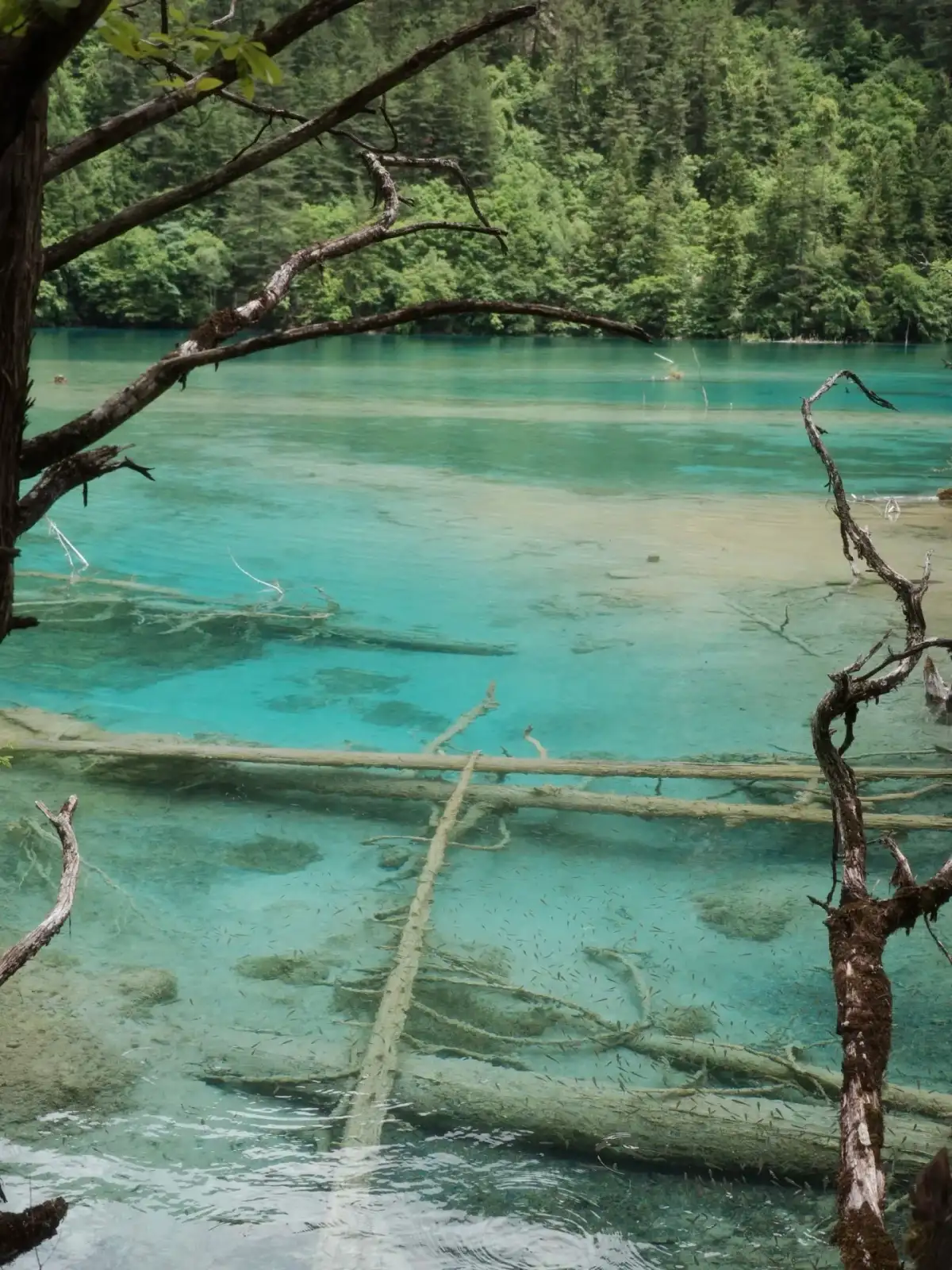
Several pieces of driftwood lie across the light blue-green lake, with the branches and details of the lake bed clearly visible. Photo:Qieqie’s Leisurely Outing · Original Post.
On the way back, leave some leeway for the final scenic spot
For the final section, choose a scenic spot that connects clearly with your return route, rather than suddenly adding a distant destination you’ve been hoping to visit. Confirm same-day exit requirements and vehicle schedules based on on-site announcements, and allow ample time for the return trip. Seasonal conservation efforts, maintenance, and weather conditions in Jiuzhaigou may affect which sections are open; the names listed in the historical itineraries on the official website do not guarantee that all locations will be accessible on the day of your visit. Plan your actual route based on current opening information, and let your interests guide where you spend more time within the open areas.
For Chinese families visiting China for the first time, you can tell the tour advisor directly that you “want to minimize walking,” “prefer forests,” and “want to focus on photographing Wuhua Lake,” then add the children’s ages and the mobility needs of elderly family members. Specific requests are easier to arrange than a vague request to “easily see all the highlights.” A day in Jiuzhaigou doesn’t need to be measured by the number of steps taken or attractions visited to be considered a success. If, at the end of the day, you can calmly recall a lake, a stretch of forest, and the sound of flowing water, then you’ve found an itinerary that’s right for you.
Source and Editorial Notes
This article is an original travel analysis compiled by the Dongxing Travel editorial team based on the listed materials; it is not a firsthand account by the author. The full text of the original post has not been reproduced; accompanying images are used within the scope of authorization and are credited to the author and the source of the original post. They do not serve as proof of actual travel experiences or services provided by Dongxing Travel.
Xi’s Travelogue · The “Leg-Saving” Route Through Jiuzhaigou | Explore the Highlights in One Day · Travel Notes; Verified/Organized on: October 3, 2026.
Qieqie’s Relaxed Outings · Jiuzhaigou | A Step-by-Step Guide for Low-Energy “Mouse People” · Travel Notes; Verified/Organized on: October 3, 2026.
Jiuzhaigou Scenic Area Official Website · How to Explore Jiuzhaigou · Official information; Verified/compiled on: October 3, 2026.
Jiuzhaigou Scenic Area Official Website · Iconic Attractions in Jiuzhaigou · Official information; Verified/compiled on: October 3, 2026.