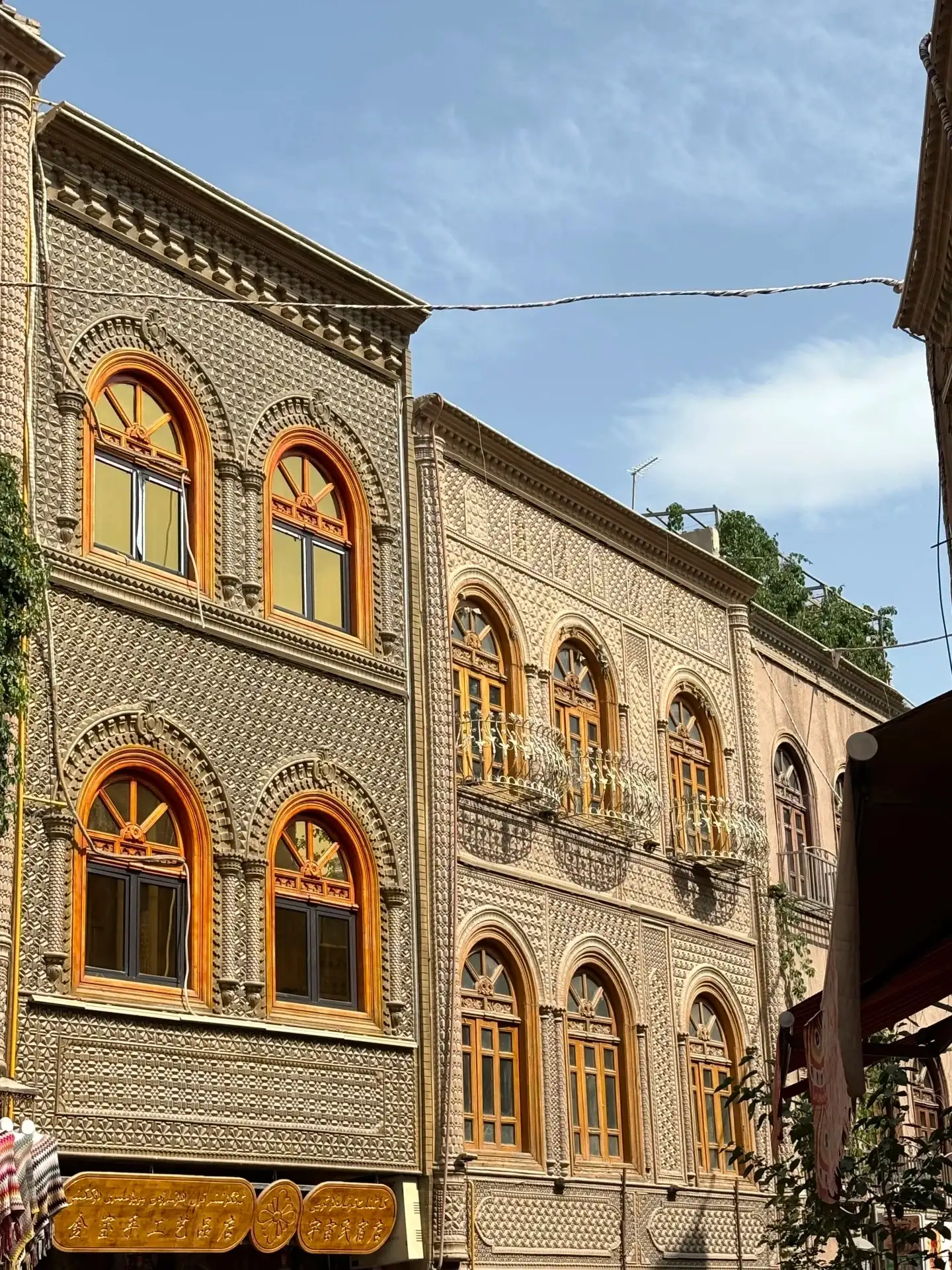
If a day in the Old City of Kashgar begins with a copper teapot, the itinerary will be quite different from chasing after eighteen photo spots. The curves of the pot’s body, the connection between the spout and the handle, and the surface decorations will make one wonder how it was made and how it is used. Next, take a look at an earthenware cup or a flowered hat, and the trip gains points of comparison. The streets and alleys are still beautiful, but the businesses, crafts, and family life they embody gradually come to the forefront.
小红书作者Yao的精选记录了一个很细的瞬间:路上穿着民族服饰的人转身开门,原来那就是她的家。路路瑶的笔记则列出许多巷道与高台民居摄影位置。这两种观察可以同时成立。对第一次来到喀什的家庭,值得把拍摄愿望放进一段有生活内容的散步里,让每一次停下都有具体理由。
bronze workshops to associate sounds with shapes
Report on Intangible Cultural Heritage by the Kashgar Prefectural Administrative OfficeIt introduces traditional crafts such as bronze ware, earthenware, flower hats, and woodenware, and also documents how artisans create objects to meet the needs of modern customers. Information verified on October 3, 2026. This content is suitable for planning a walking tour; specific shop hours and availability for hands-on experiences on a given day should be confirmed based on your actual itinerary.
At bronze ware shops that welcome visitors, you can start by looking at the finished pieces, choose an easily recognizable detail—such as the curve of a handle or the shape of a spout—and then ask how that part was made. Children can draw their favorite teapot, while adults can observe the differences in size and function among similar pieces. If the artisan is working, stand at a spot they allow you to watch from, leaving enough space for them to work—this is more natural than asking them to demonstrate a step right away.
The copper-colored surfaces are sure to attract photographers, but the shops also feature tools, unfinished pieces, and the arrangement of items. With permission, capturing the objects as they appear on the workbench will better illustrate the production process than simply photographing a row of souvenirs. When considering a purchase, ask about the materials, intended use, care instructions, and whether the item is safe for food contact. Decorative pieces have different requirements than everyday items, and clarifying the intended use can help avoid judging quality solely by appearance.
earthenware and wooden objects; a single item can take on a new life.
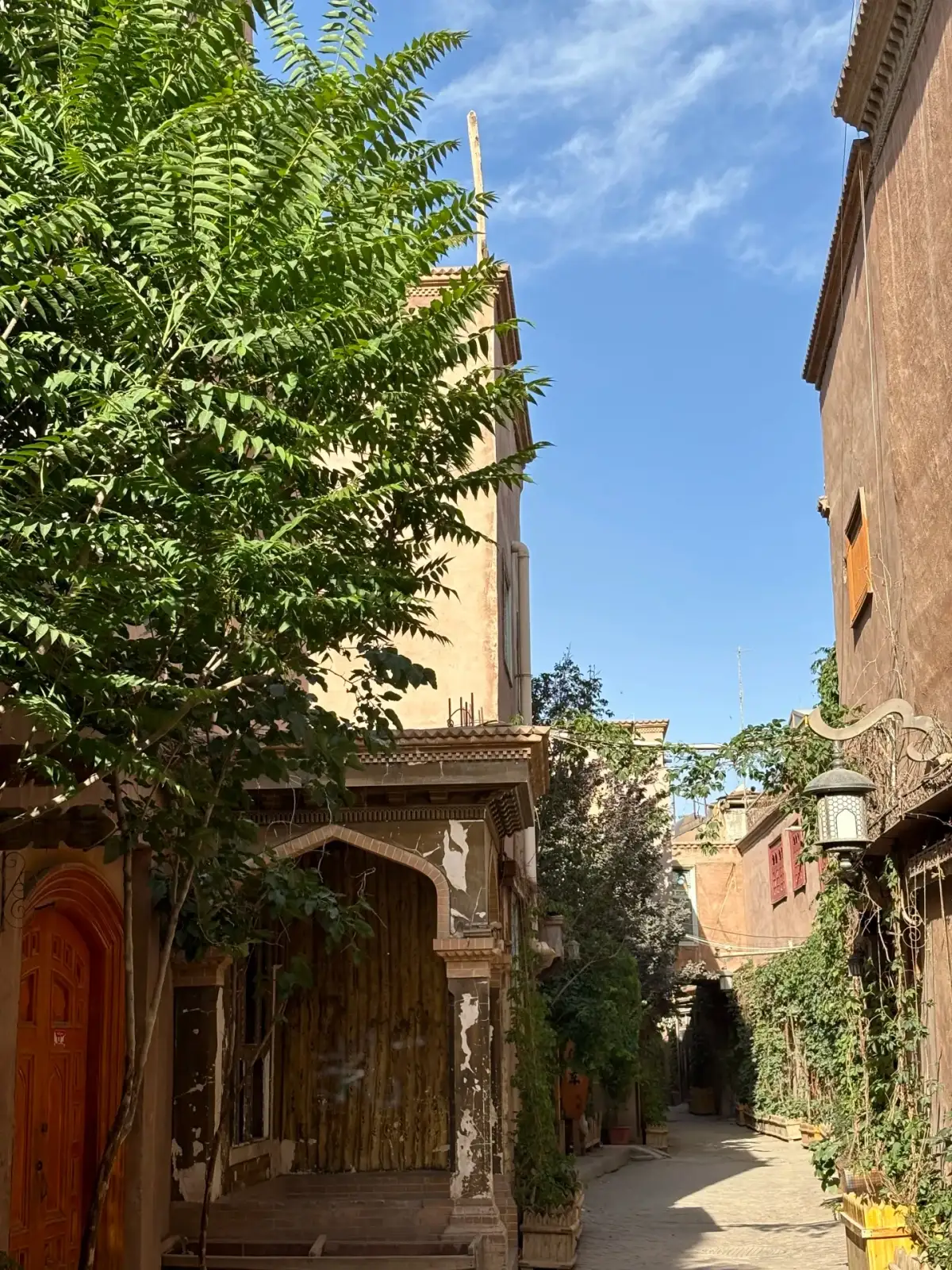
A narrow alley bathed in sunlight, featuring wooden doors, trees, and climbing vines. Photo:Yao’s Picks · Original Post.
The same official report describes how traditional earthenware artisans are experimenting with new forms and innovating by using a branding iron to create patterns on wooden bowls and spoons. Traditional crafts respond to today’s needs, which raises an interesting question for travelers: Which shapes have endured over time, and which designs were created for new users? Hearing specific answers in a shop offers a more authentic glimpse into local life than simply labeling an entire street as “unchanged for a thousand years.”
The pottery-making experience is best scheduled for the middle of the walk. Stroll around for a while first; once you find a piece that interests the child, decide whether to try it. When making a reservation, be sure to clarify the details of the experience, how the finished piece will be handled, whether firing is required, and how to pick it up afterward. The date of your departure from Kashgar directly affects this choice: if you cannot take your piece home the same day, you should arrange for transportation and storage in advance. Don’t wait until the end of the class to discover that it won’t fit in your luggage or that you’ll have to wait for further processing.
wooden items can be understood through everyday actions. Consider whether the curve of a spoon feels comfortable in the hand, what a bowl’s size is suitable for holding, and where the patterns appear when you hold the item. Travelers interested in shopping can allocate their budget to an item they’ll actually use. Be sure to note the shop’s name, material specifications, and usage recommendations in your shopping log; this way, even after returning home, the item will still remind you of the place where it was made. Regarding requirements for taking items out of the country or into the destination country, check the specific customs regulations based on the actual items in question.
Alleyways connect; home doors mark boundaries
Official Tourist Guide to the Old City of KashgarKeep in mind that this area serves as a space for tourism, residential living, and commerce all at once. The doors, windows, staircases, and balconies you see in the alleyways may be directly connected to people’s daily comings and goings. Remembering this relationship will make your walk more enjoyable: when passing a doorway, yield to people entering or exiting first; when you want to get closer to take a photo, ask about the space’s purpose and seek permission first.
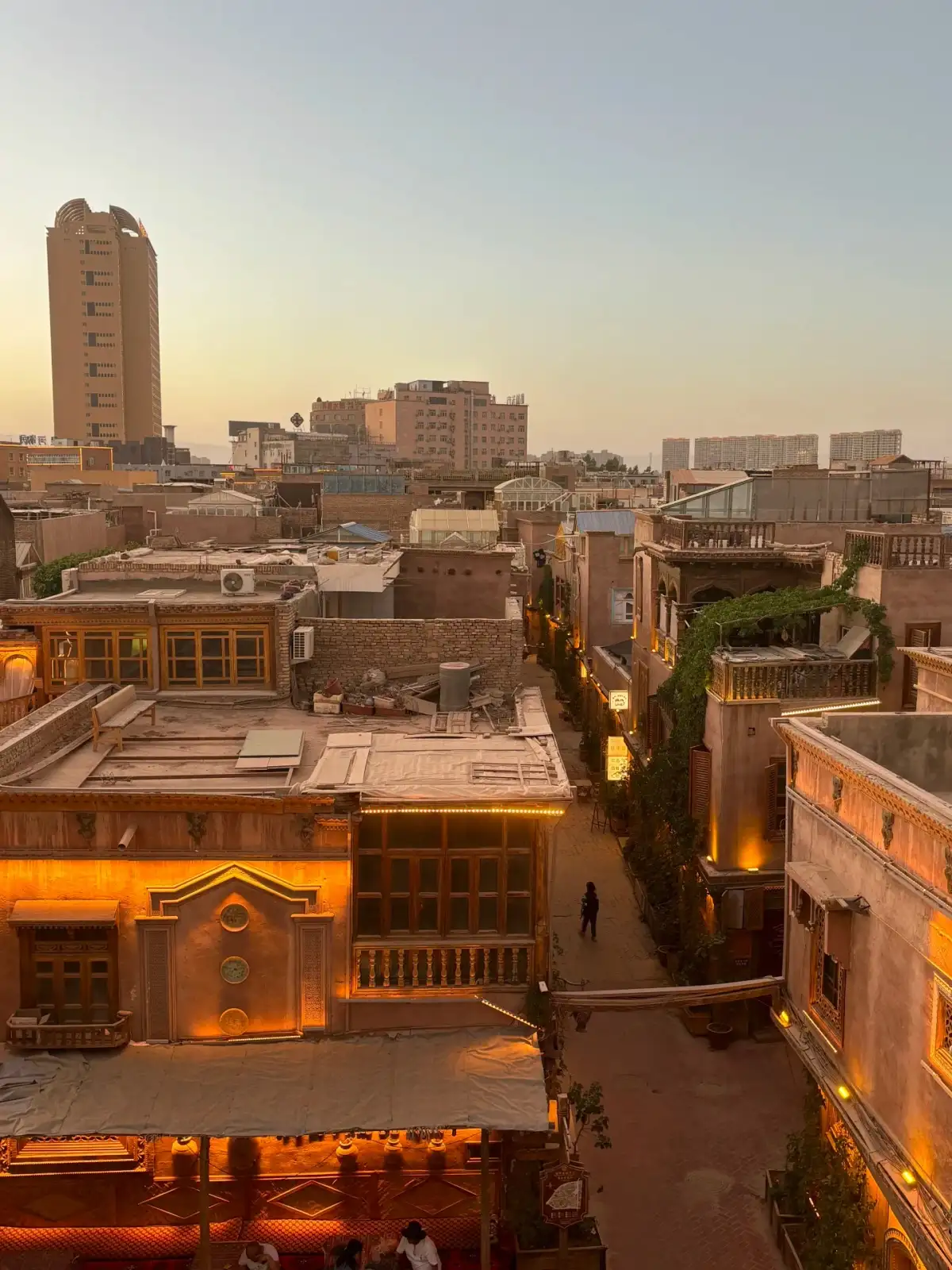
The old city’s rooftops, narrow alleys, and distant high-rises bathed in warm evening light. Photo:Yao’s Picks · Original Post.
Lu Lu Yao’s notes, some elevated vantage points are linked to guesthouses or coffee shops. During your actual trip, treat these locations as spaces operated by business owners. If you need to make a purchase, obtain permission, or comply with other restrictions, follow the on-site guidelines. Standing in an alleyway and framing a section of the sky with geometric shapes can also yield beautiful photos. When taking photos, you don’t need to make it a goal to access every rooftop and staircase.
Parents accompanying children should encourage them to compare the twists and turns of the streets and alleys, as well as the shapes of windows and doors, while avoiding any judgment of residents’ appearances. When seeing people in different attire, simply discuss colors, patterns, and materials; do not speculate about a person’s identity or lifestyle based on their clothing. If you wish to take portraits of people, have an adult explain the purpose and obtain their consent. The culture of the old town is rich, and the tone of the introduction should leave room for the people who live there to express themselves.
Set aside some time to sit down
After visiting several workshops in a row, you can sit down at a tea house or coffee shop that’s open to the public. Parents can rest while children sketch the artifacts they just saw, and photographers can select two or three representative shots. This break allows the craft walk to become a shared family experience. When choosing a place, first check whether the menu and seating are suitable for your companions—those who prefer quiet conversation and those who want to watch a performance may require different environments.
Tea drinking in the ancient city also has its own stories.Officially Reproduced Introduction to Medicinal Tea CultureRegarding the custom of adding spices to tea, visitors can explore this through scent and taste and inquire about specific ingredients. For those with food allergies, special dietary needs, or health concerns, it is advisable to choose beverages with known ingredients. The term “medicinal tea” is used here as a cultural designation; it should not be interpreted as implying that the beverage has any specific therapeutic effects.
“Is half a day enough to explore the old town?” Half a day is sufficient for a walk with a clear theme; there’s no need to cram the entire old town into that timeframe. Start by choosing a craft, then find a shop that welcomes visitors, and finally sit down for a cup of tea—this creates a natural flow to the experience. If you try to chase scattered photo spots in the distance at the same time, you’ll spend more time traveling between locations. When travel companions have different interests—such as shopping, photography, or culture—you can agree in advance on a shared segment of the itinerary and set aside short periods for individual activities.
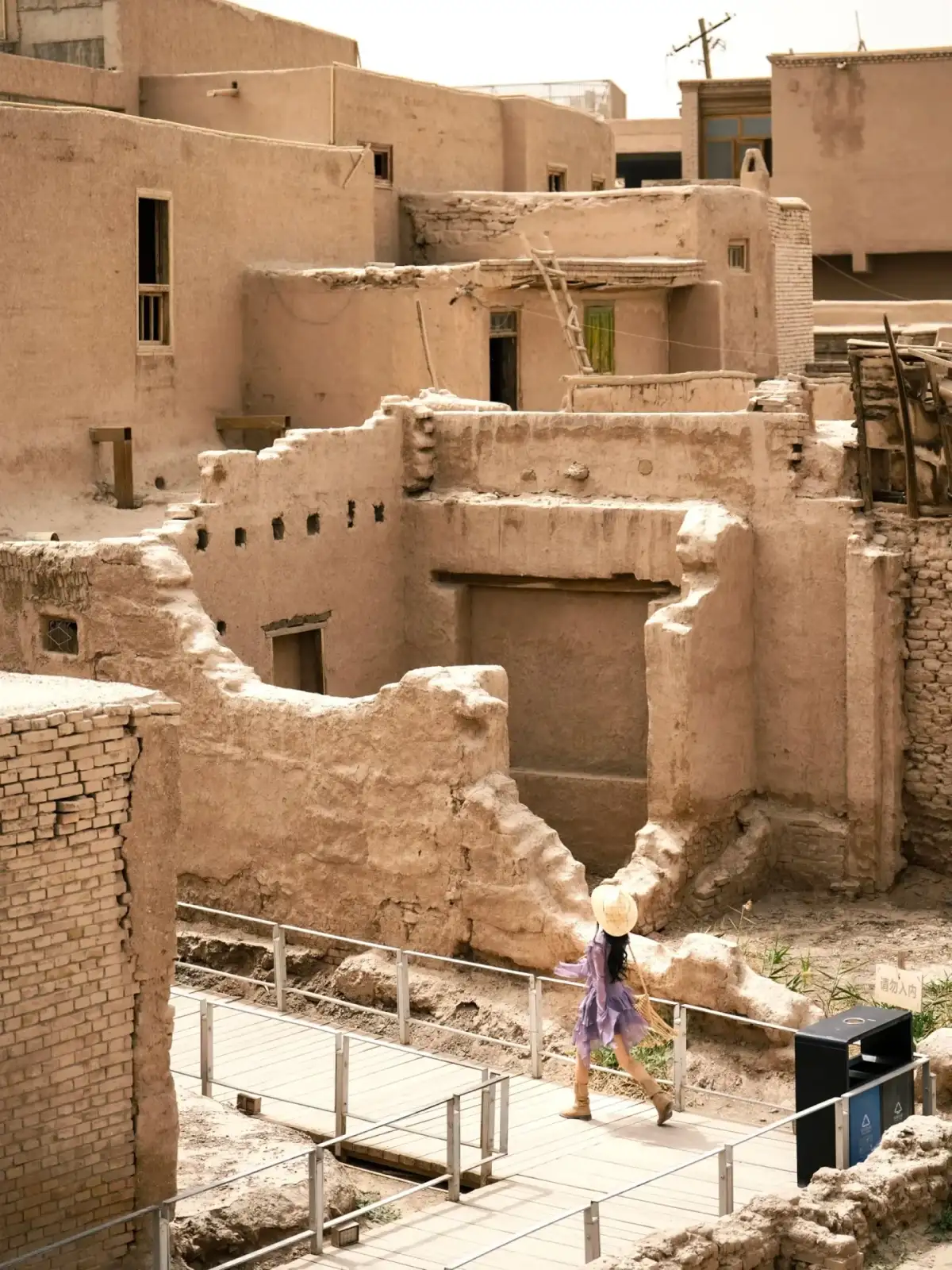
earth-toned walls, doors, windows, and figures in the distance along the path within the fence. Image:Lu Lu Yao · Original Post.
How families entering the country can clearly express their wishes
When inquiring about the itinerary, specify whether you wish to observe bronze ware production or participate in a clay pottery workshop; indicate how long the child can sit, whether you plan to take the finished piece home, and if you need assistance in other languages. This information is easier to arrange than simply requesting “the most authentic Kashgar experience.” Operators, tour guides, and on-site activity organizers each have their own schedules. Only after confirming the details should you include the experience in your itinerary, to avoid letting a simple list of activities replace all the necessary information.
Accommodations can also be chosen with this walking tour in mind. Staying on a bustling street makes it convenient to head out, but you’ll need to balance the nighttime atmosphere with your need for rest; it’s also worth asking the hotel where arriving vehicles can park and how to bring luggage into your room. For families holding foreign passports, confirm document requirements and check-in procedures with your accommodation provider in advance. By handling these matters before arrival, you’ll have more time to explore the ancient city during the day.
As you leave, your photos might include a single artifact, a permitted glimpse of the crafting process, and a shot of a public street or alley. Together, these images capture the Kashgar you’ve seen during this half-day: craftsmanship as a continuous practice, streets bustling with people, and buildings serving as real homes. The Old City is worth revisiting time and again—and a single copper teapot might just be the starting point for your next exploration of it.
Source and Editorial Notes
This article is an original travel interpretation compiled by the Dongxing Travel editorial team based on the listed information; it is not a firsthand account by the author. The full text of the original post has not been reproduced; accompanying images are used within the scope of authorization and are credited to the author and source of the original post. This content does not serve as proof of actual travel experiences or services provided to Dongxing Travel clients.
Yao’s Picks · Kashgar—More Like a Foreign Country Than Overseas · Travel Notes; Verified/Compiled on: October 3, 2026.
Lu Lu Yao · If You’re Going to Kashgar, Don’t Miss These 18 Places!!! (Includes Travel Guide) · Travel Notes; Verified/Compiled on: October 3, 2026.
Kashgar Prefectural Administrative Office · Encountering Colorful Intangible Cultural Heritage in the Old City of Kashgar · Official sources; verified/compiled on October 3, 2026.
Kashgar Prefectural Administrative Office · Kashgar Old Town Scenic Area · Official sources; verified/compiled on October 3, 2026.
Kashgar Prefectural Administrative Office · A Visit to a Century-Old Herbal Tea Shop in the Old City of Kashgar · Official sources; verified/compiled on October 3, 2026.