When taking parents to the Leshan Giant Buddha, the family’s interests often align, but their stamina may not. Some want to see the Buddha up close, others prefer the panoramic riverfront view, and still others look forward to a leisurely lunch. The most useful itinerary should list all these preferences together, then determine the walking distance, where to stop, and how to leave afterward. Planning the route from the entrance to a specific viewing spot is only half the job—the return trip also takes up energy and time.
Identifying easily overlooked details from a visitor’s observations
小红书作者啵啵椰在完整笔记里记录了从山脚抬头观看、沿石阶移动和不同高度接近大佛的体验。文字也提到了当次看到的栈道状况。本篇借这份观察讨论家庭如何判断路线,具体开放安排以景区当期信息为准,不沿用原帖结论。它提醒人们,一尊规模很大的佛像会同时产生近看、仰看和远看几种愿望,而这些愿望需要不同移动方式。
Before setting out, ask each traveler to name the one thing they care about most. For those interested in architecture and sculpture, focus on cultural explanations and close-up viewing spots; for those wishing to understand the relationship between the mountains, the Buddha, and the river, start by seeking a panoramic view. For parents, sitting down to discuss what they’ve just seen may be more important than adding another vantage point. First, identify the core desire; only then will you know where it’s worth spending more time.
When asking about physical fitness, don’t just ask, “Can you walk?” Instead, discuss specifics such as prolonged standing, stairs, downhill slopes, weather conditions, and the frequency of rest breaks needed. Taking a daily stroll around the neighborhood is a different situation from navigating continuous elevation changes in an unfamiliar scenic area. Everyone describes their physical condition differently; stating your usual walking pace in advance can help reduce the need to rush each other once you arrive at the destination. Individuals with medical conditions requiring professional assessment should consult a healthcare professional themselves.
Close-up and panoramic views offer different insights.
UNESCO Mount Emei–Leshan Giant Buddha Heritage Site InformationBe sure to introduce the Great Buddha in the context of its natural and cultural surroundings. This text was verified on October 3, 2026. To understand this heritage site, focus on both the Buddha statue itself and the surrounding space. While photographs often show the entire statue, this does not mean every vantage point allows you to see all the details at once; views at different scales each reveal distinct aspects.
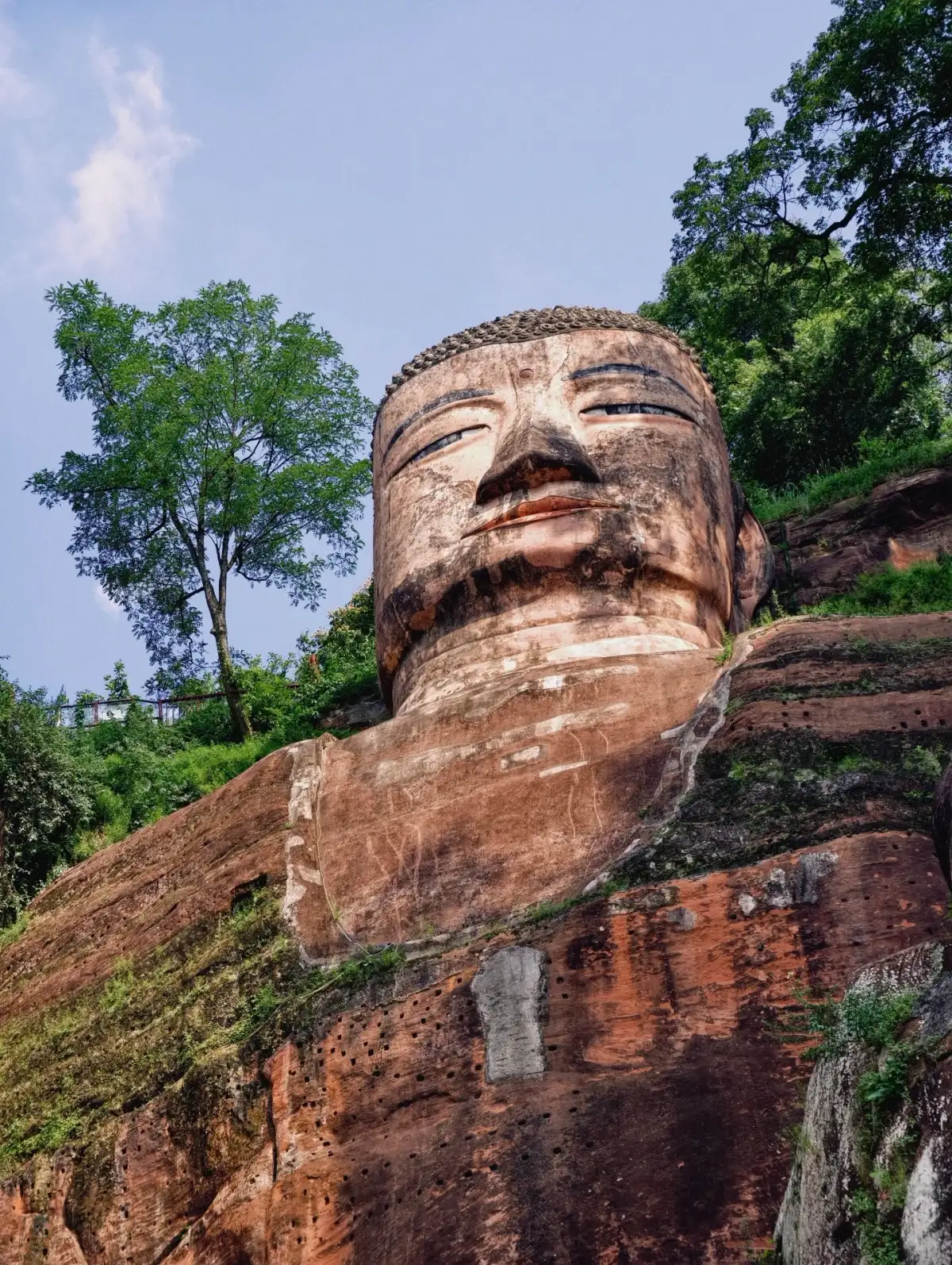
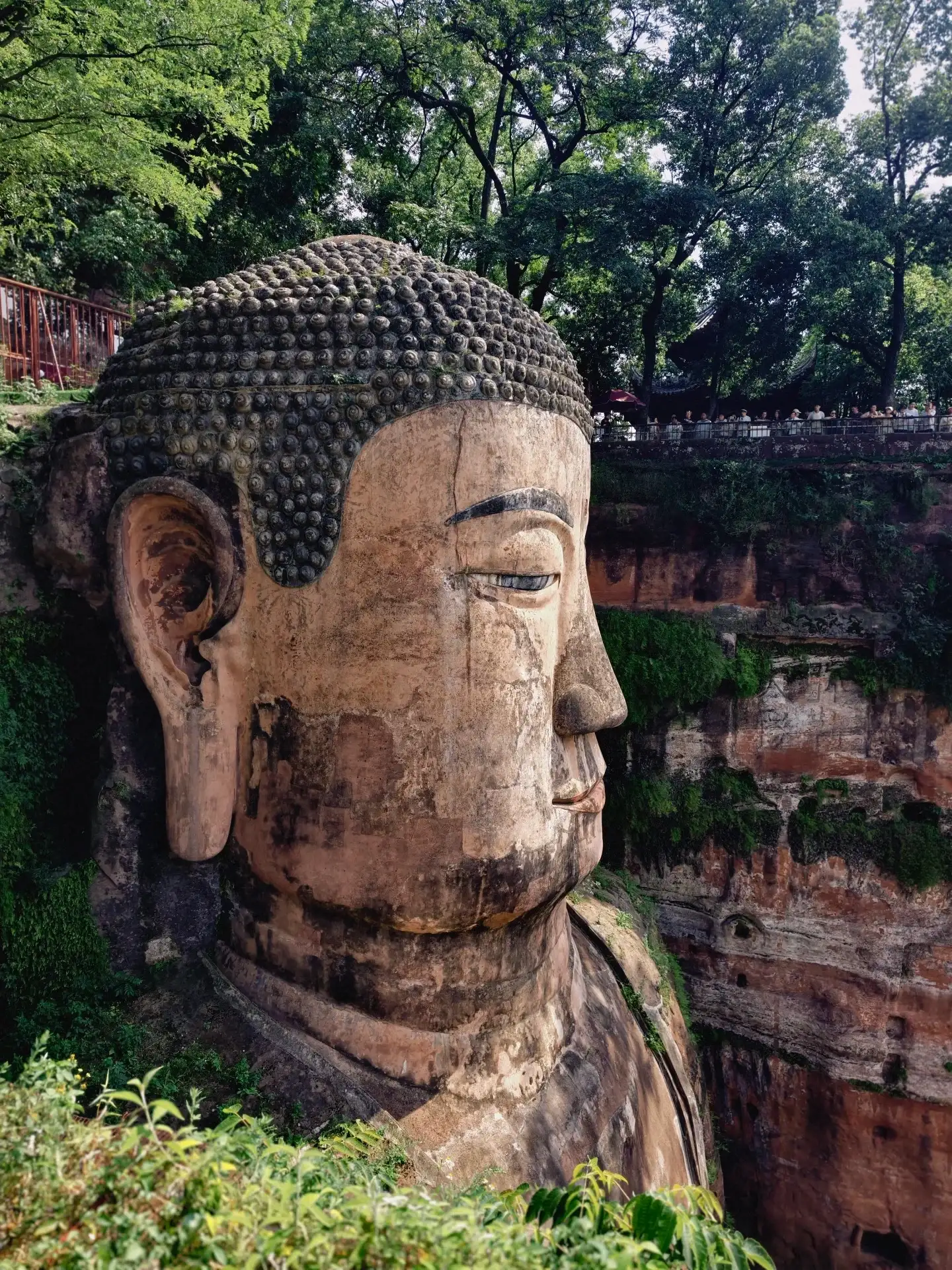
View the head of the Leshan Giant Buddha and the rock face from below, looking up. Photo:BoBoYue · Original Post.
A closer viewing is best suited for observing body proportions and the relationship between the rock face and the carvings. This requires paying attention to your standing position and the flow of visitors, as the space before you is influenced by the on-site pathways. For children seeing large-scale cliff-face sculptures for the first time, start by comparing the scale of a person to that of the rock face, then discuss why it’s impossible to fit the entire Buddha statue into a single frame when viewed up close. This is an on-site observation activity; there’s no need to rely on hard-to-remember numerical measurements to convey the awe-inspiring nature of the experience.
A view from a distance is better suited for understanding the Buddha statues within their natural setting of mountains and riverbanks. Whether the view meets expectations depends on the actual location, weather, and conditions at the time. Families can list close-up and panoramic views as two options, rather than insisting that parents experience every possible angle. The value of the trip is determined by the questions one asks while viewing; increasing the distance does not necessarily deepen understanding.
If you’re considering a water-based tour, be sure to read the current guidelines for the specific service separately to confirm the conditions for boarding, disembarking, and returning.Tour route information for “Three Rivers Zen Charm” published by the Leshan Municipal GovernmentOfficial information regarding the water tour route is provided here, based on a search conducted on the same day as this article. It does not replace actual schedule, ticketing, or weather announcements for specific dates; families should consider these as separate factors when making comparisons.
A three-column table on a single sheet of paper is easier to use than a long list of attractions.
In the first column, list what to see. Choose only one primary viewing objective, then add a secondary objective to explore if circumstances permit. If parents want to rest, they can wrap up the main part of the visit right away; other family members will also understand that this stop isn’t over yet. This arrangement works well for families on short vacations, as well as for those who have already spent several consecutive days sightseeing in other parts of Sichuan, relieving Leshan of the burden of having to cover every possible viewpoint.
In the second column, describe the route. Instead of a vague term like “hiking,” research the specific paths available that day, including entrances, exits, and elevation changes to navigate along the way. When preparing, check with official service channels to see if a specific route has continuous staircases and whether there are shorter alternatives or return paths. Answers should correspond to the selected route; do not generalize a section with assistive facilities to imply that the entire scenic area requires no walking.
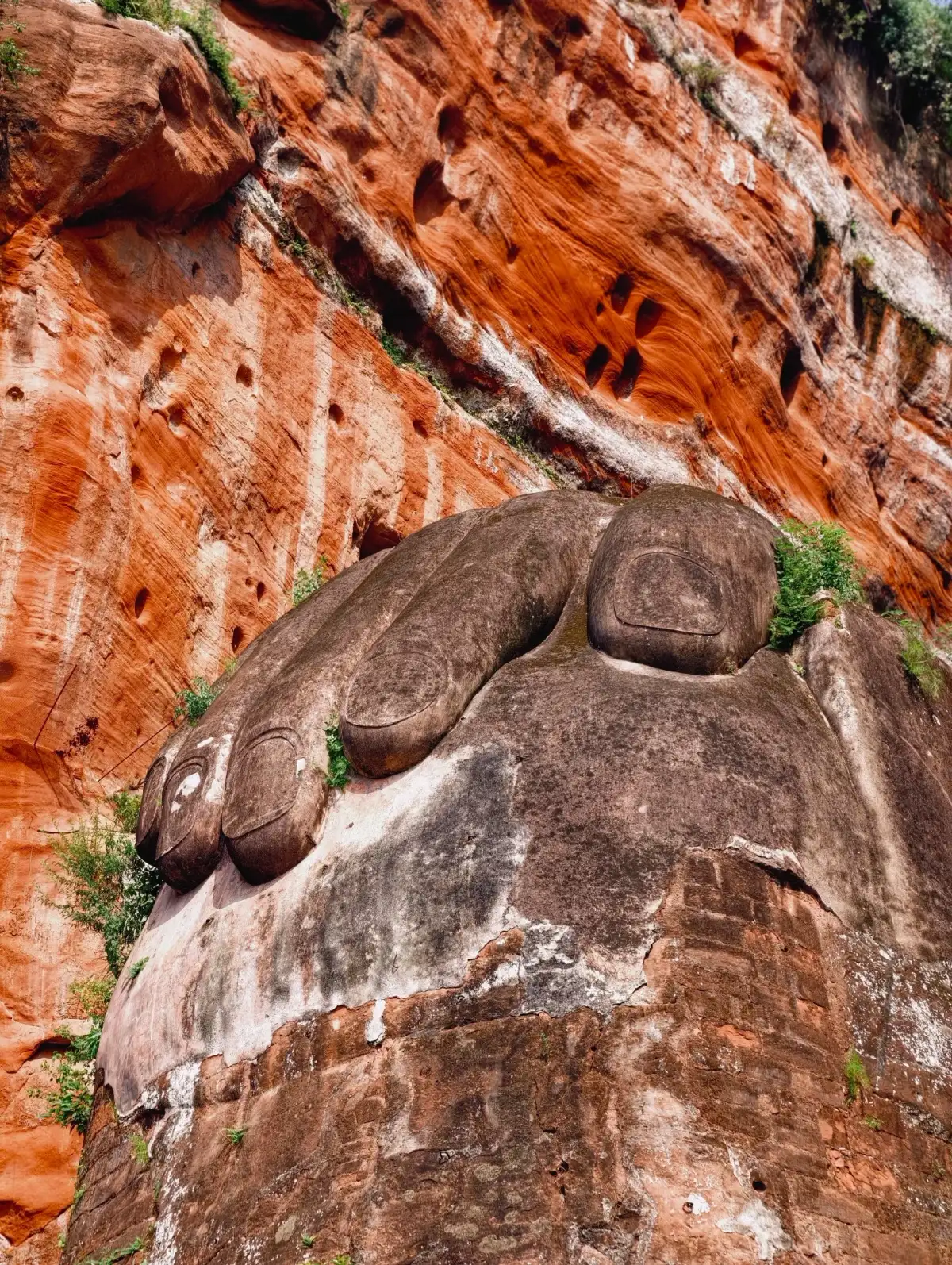
The feet of the Leshan Giant Buddha and the surrounding red cliffs. Photo:BoBoYue · Original Post.
In the third column, note where you’ll go after the tour ends. Returning to the hotel, heading to a restaurant, and catching the next mode of transportation each require different departure points. When booking the next leg of the trip, factor in the distance you’ll need to walk from the scenic area to the waiting area. Families carrying large luggage should first arrange for luggage storage or accommodations before planning cultural visits, to avoid taking turns dragging suitcases while looking after their parents along the way.
Take a photo of these three columns and share it with your travel companions. If everyone knows the meeting point and how to contact each other, they can quickly coordinate in case of last-minute changes. Parents don’t need to memorize all the place names; they can simply save the information about “where to meet up at the end of the day.” Family members with foreign passports should also double-check ticketing procedures; keep original documents and booking information in an easily accessible place to avoid having to search for them repeatedly once you reach the entrance.
time needed for breaks—this provides a more meaningful conversation.
After a section of the tour, sitting down to review photos helps transform the scale of what you’ve seen into a lasting memory. If someone in the family is willing to describe a detail they noticed, encourage others to add their own observations; there’s no need to launch into a lengthy explanation. Children can point out which parts were hardest to see in their entirety, while elders can discuss the relationship between the mountain and the river—these varied responses help the whole family understand why it’s worth pausing along the same stretch of the trail.
meal arrangements can be coordinated with physical stamina. Those wishing to sample local cuisine should first confirm any dietary restrictions and appropriate portion sizes; if parents require regular meals, these should become a fixed part of the day’s schedule. Don’t wait until all filming is finished to find a belated lunch. Confirm specific restaurant hours and menu options on the day of the shoot; it’s a good idea to have two clearly located options on hand so you can choose based on where you’ll finish for the day.
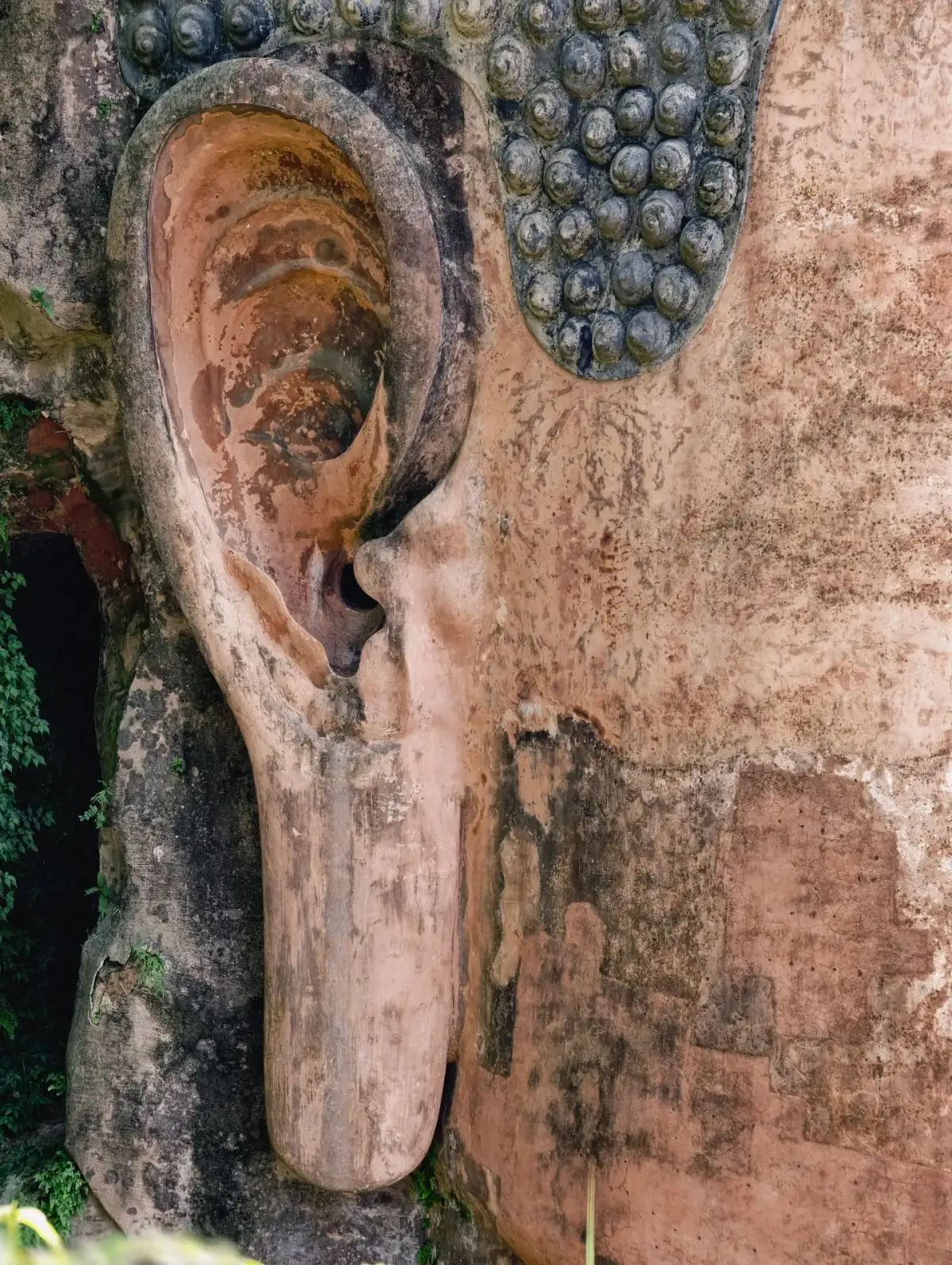
The ears, curls, and surface textures of the Leshan Giant Buddha. Photo:BoBoYue · Original Post.
A family-friendly backup plan should be simple enough—for example, shortening the close-up viewing time, cutting out extra activities, or rescheduling another cultural site for a later day. If the backup plan still involves traveling between cities, transferring between modes of transportation, or lugging luggage around, it doesn’t truly lighten the load. These trade-offs should be driven by feedback from your travel companions and agreed upon before arrival; this makes last-minute changes easier for the whole family to accept.
If some people wish to continue viewing while others want to rest first, splitting up is appropriate only when care arrangements and meeting points are clearly established. Children and parents who require assistance should always be supervised, and the rest of the group should remain within the permitted visiting areas. There’s no need to use the phrase “since we’re already here” to persuade anyone to keep going; simply make a note of what they’d still like to see, and you’ll have a concrete reason to return on your next trip.
End this day in Leshan by sharing a common topic of conversation.
On the way back, ask each person to choose one thing worth remembering; this is a better indicator of whether the trip was suitable than asking how many panoramic photos were taken. Some may remember the rock face, others the river’s surface, and still others the moment the family paused together. The value of family trips—especially those involving parents or elders—often lies in these shared topics; the itinerary simply provides the conditions for those conversations to happen.
For further information, please refer to this website.Introduction to the Sichuan Region, and then discuss with your travel advisor whether Leshan connects to other cultural destinations. Practical arrangements should specify the primary viewing methods, the walking pace of your companions, and transportation needs after the tour ends—don’t let a single phrase like “a one-day tour of classic attractions” gloss over these differences. Allow plenty of time for the return trip; this will make it easier to continue on to your next destination.
Source and Editorial Notes
This article is an original travel interpretation compiled by the Dongxing Travel editorial team based on the listed materials; it is not a firsthand account by the author. The full text of the original post has not been reproduced; accompanying images are used within the scope of authorization and are credited to the author and the source of the original post. They do not serve as proof of actual travel experiences or services provided by Dongxing Travel.
BoBoYue · Take Your Time, Appreciate the Details, and Look Up · Travel Notes; Verified/Organized on: October 3, 2026.
UNESCO World Heritage Centre · Mount Emei and Leshan Giant Buddha Heritage Information · Official materials; Verified/compiled on: October 3, 2026.
Leshan Municipal People’s Government · “Chan Charm of the Three Rivers” Tour Route Information · Official materials; Verified/compiled on: October 3, 2026.