By grouping these two famous sites together, visitors can begin by comparing the ways in which they are viewed
The Luoyang Museum and the Longmen Grottoes often appear together on city itineraries. Maps connect them, while cultural interests can add another layer of connection: the artifacts in the museum bring visitors closer to the materials, functions, and excavation details; the grottoes allow visitors to simultaneously engage with the imagery, the cliff face, and the on-site space. A small artifact and a mountainside offer travelers different perspectives. By understanding this distinction, these two stops can come together to form a themed cultural journey.
Xiaohongshu’s “Guide to Major Attractions in Luoyang” highlights the author’s differing interests in museum artifacts and the night views of Longmen, which provides the basis for the combination of topics discussed in this article. For specific details on the museum’s collection, please refer to the Luoyang Museum’s official website; for background information on Longmen, please refer to UNESCO materials. The following itinerary is an editorial suggestion centered on content and scale; visits can be spread across different days, avoiding the need to turn cultural comparisons into a race against time that must be completed in a single day.
At the museum, start with an artifact that is clearly visible
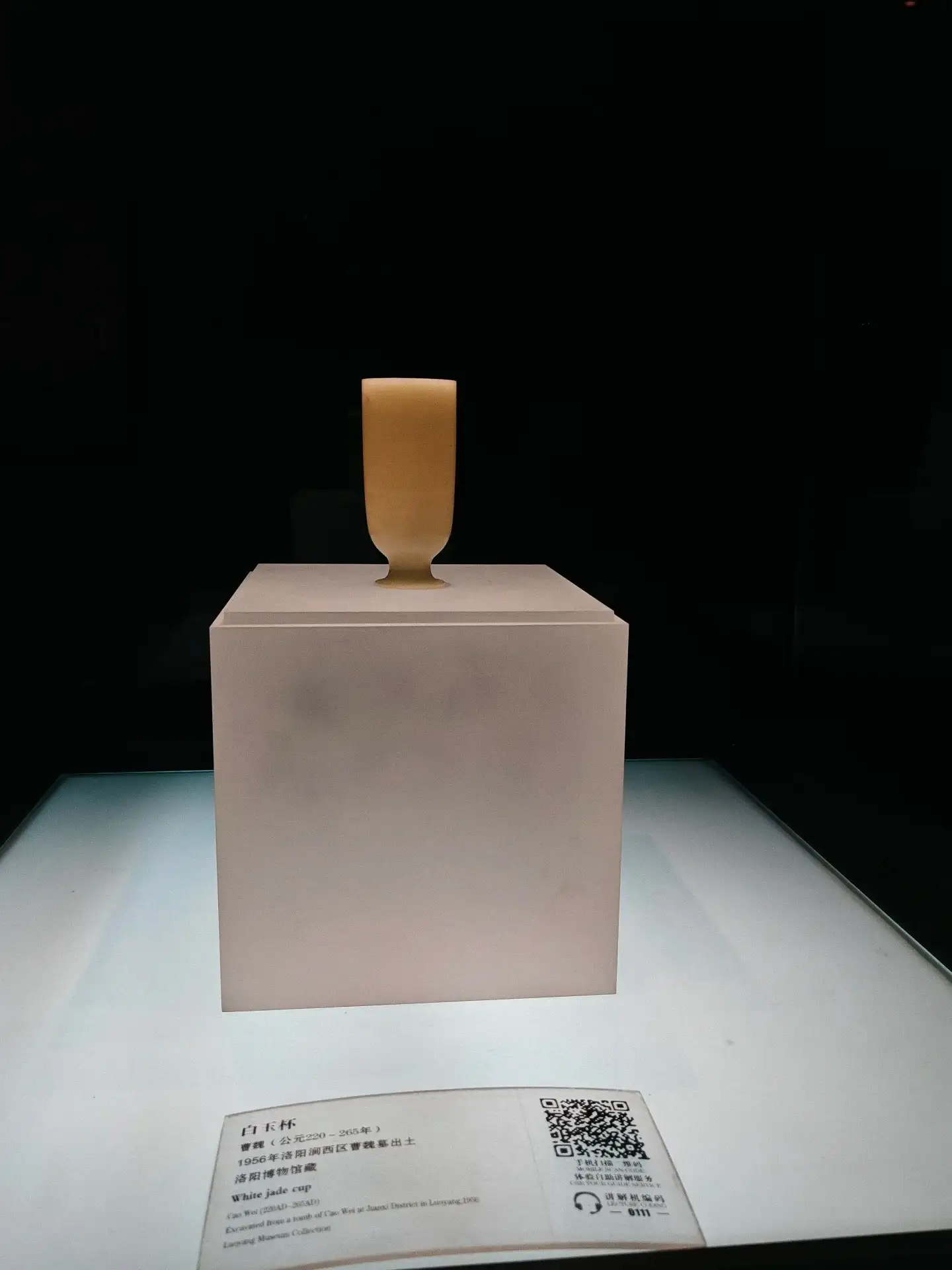
The Cao Wei white jade cup featured on the Luoyang Museum’s official website offers an accessible starting point for first-time visitors. While the cup’s name and basic function are relatively easy to understand, its material, contours, and viewing distance raise further questions. Start by examining the rim, the body, and the overall proportions of the cup. Consider how it differs from the cups you use in daily life, and then read the exhibition label for information on its era and other details. Even small objects can spark discussions about craftsmanship and daily life.
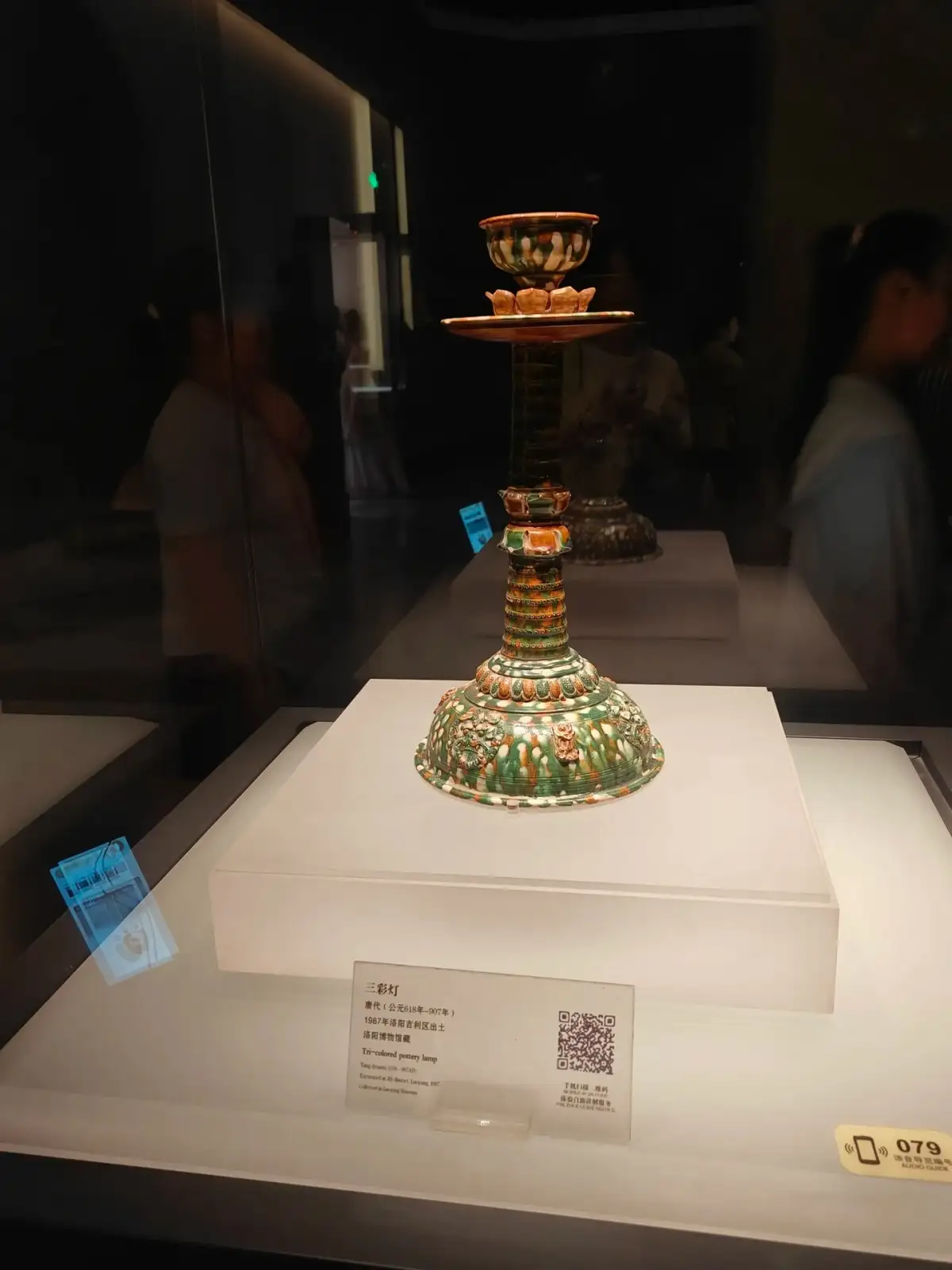
In a glass display case, a high-footed object with green decorations stands on a white display platform. Photo:up🆙 · Original Post.
When viewing jade objects, discussing their shape is often a better starting point than focusing on their “value.” What kind of curve does the rim form? Does the body appear delicate? What impression do the overall proportions evoke? These observations can be described directly and also give fellow visitors the opportunity to share different perspectives. At this stage, the name of the material becomes part of the explanation, rather than the end goal of the viewing experience. Rather than everyone simply saying “it’s very precious,” it’s better for each person to point out one specific detail they’ve actually noticed.
exhibition hall also offers a useful viewing condition: the explanatory text helps place one’s impressions within a clear historical context. First, look at the object; then read its name, date, material, and information on its excavation or provenance; finally, look at it again—you’ll often notice details you missed the first time. This back-and-forth process transforms the artifact from a mere pretty object into a gateway to a specific historical question. Even by carefully examining just a few objects, you can develop your own way of viewing them.
Moving on to terracotta sculptures and stone carvings, compare how the materials are used to create forms
The “Three-Color Black-Glazed Horse” featured in the museum’s online collection description draws attention to the ceramic sculpture and its glaze color. Visitors can begin by observing the horse’s posture, body proportions, and the hues of its various surfaces, reflecting on how three-dimensional forms convey a sense of power in animals. Compared to the cup, this object more readily sparks discussions about movement and vitality. Comparing the two from the same viewing distance reveals that their functions, scale, and visual focal points have all shifted.
the stone pi-xie offers a different material experience. The official website describes it as an Eastern Han dynasty stone carving, allowing visitors to shift their attention from vessels and pottery sculptures to the shaping of stone. By observing the contours, the transitions in form, and the overall posture, visitors can discover how objects made of different materials capture the eye. There is no need to immediately seek a linear narrative of progression from the cup to the horse to the Pixie; instead, compare how each addresses specific expressive challenges—the differences themselves are already rich enough.
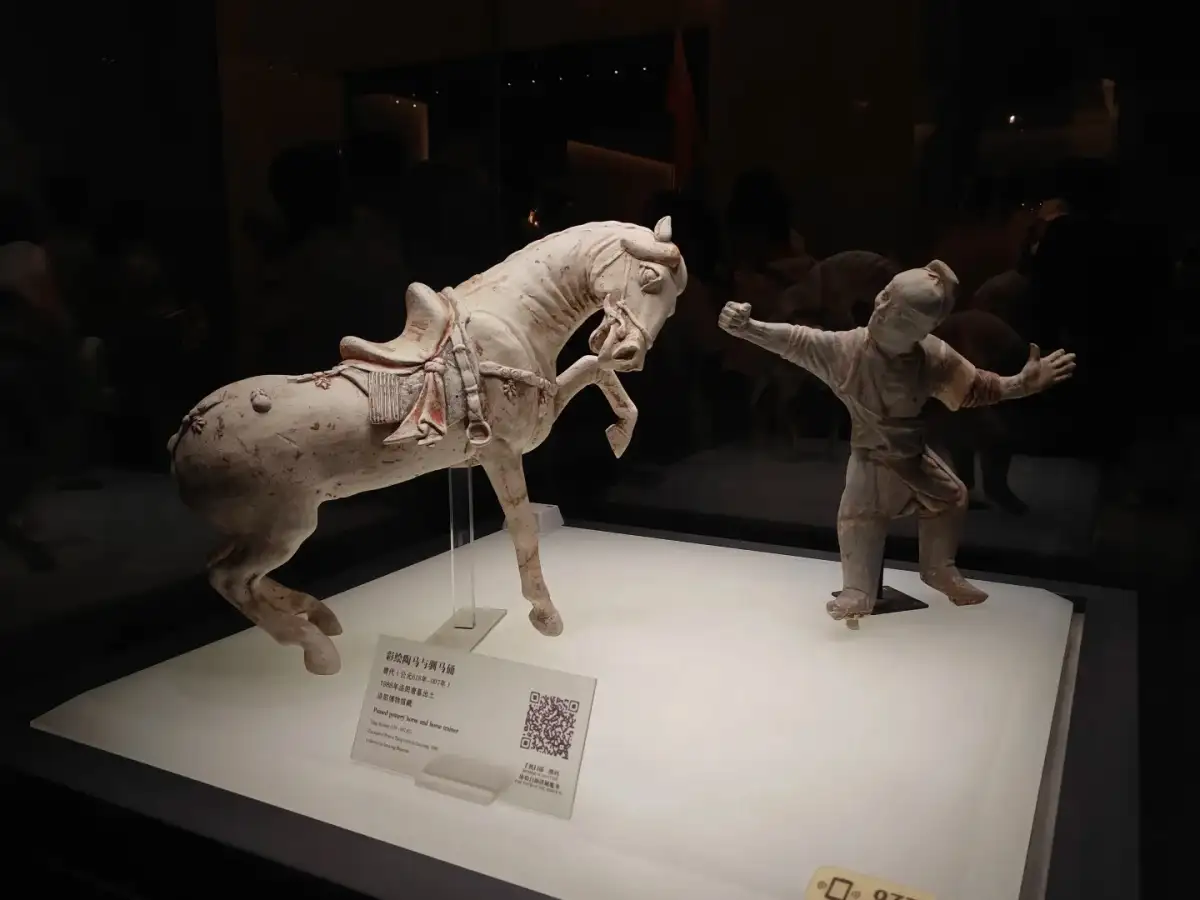
Horse-shaped and human-figure exhibits are displayed in the showcase, with explanatory plaques placed in front of them. Photo:up🆙 · Original Post.
If bringing children, let them choose the object they most want to explore further and explain why. Some may be drawn to the movements of animals, while others might be captivated by the shape of a cup; adults can supplement the discussion with information from the exhibit labels. Such discussions are more effective at sustaining interest than simply covering all the highlights in a fixed order. Collections and specific exhibition arrangements are subject to change; review the official website’s collection listings before your visit, but once on-site, follow the current exhibition layout to keep the theme flexible.
At Longmen, let the stone return to the cliff face and its environment
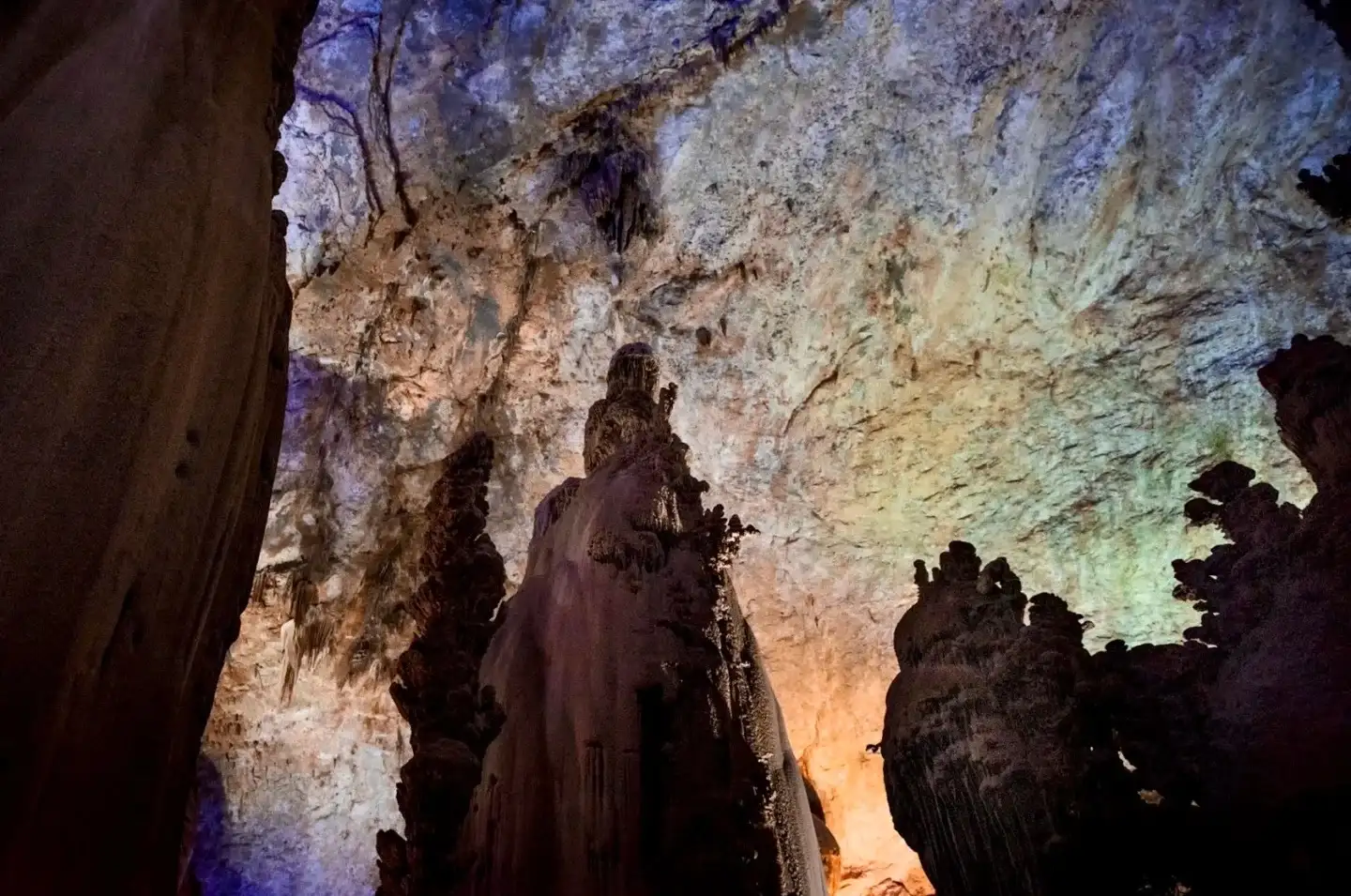
There is one key difference between the stone carvings at Longmen and those in the museum: an open-air visit brings the mountainside, paths, distances, and the sculptures themselves into the viewer’s field of vision. As you approach, examine the details; as you step back, observe how the figures fit into the overall environment—the viewing experience itself changes as your body moves. You can bring the questions about contours and materials raised in the museum here to continue exploring, but be sure to include the environment in your answers. Stone does not merely appear as a material; it also constitutes the space in which the figures are situated.
the UNESCO heritage description, which links Longmen to Buddhist sculptures of the Northern Wei and Tang dynasties. This background information can guide comparisons without immediately turning the visit into a lengthy recitation of historical dates. Choose objects with clear on-site explanations; first observe the poses, drapery, arrangement of figures, and the shapes of the niches, then read about the relevant periods and names. Understanding differences through a few examples helps cultural context sink into concrete memory more effectively than repeatedly hearing phrases like “long history.”
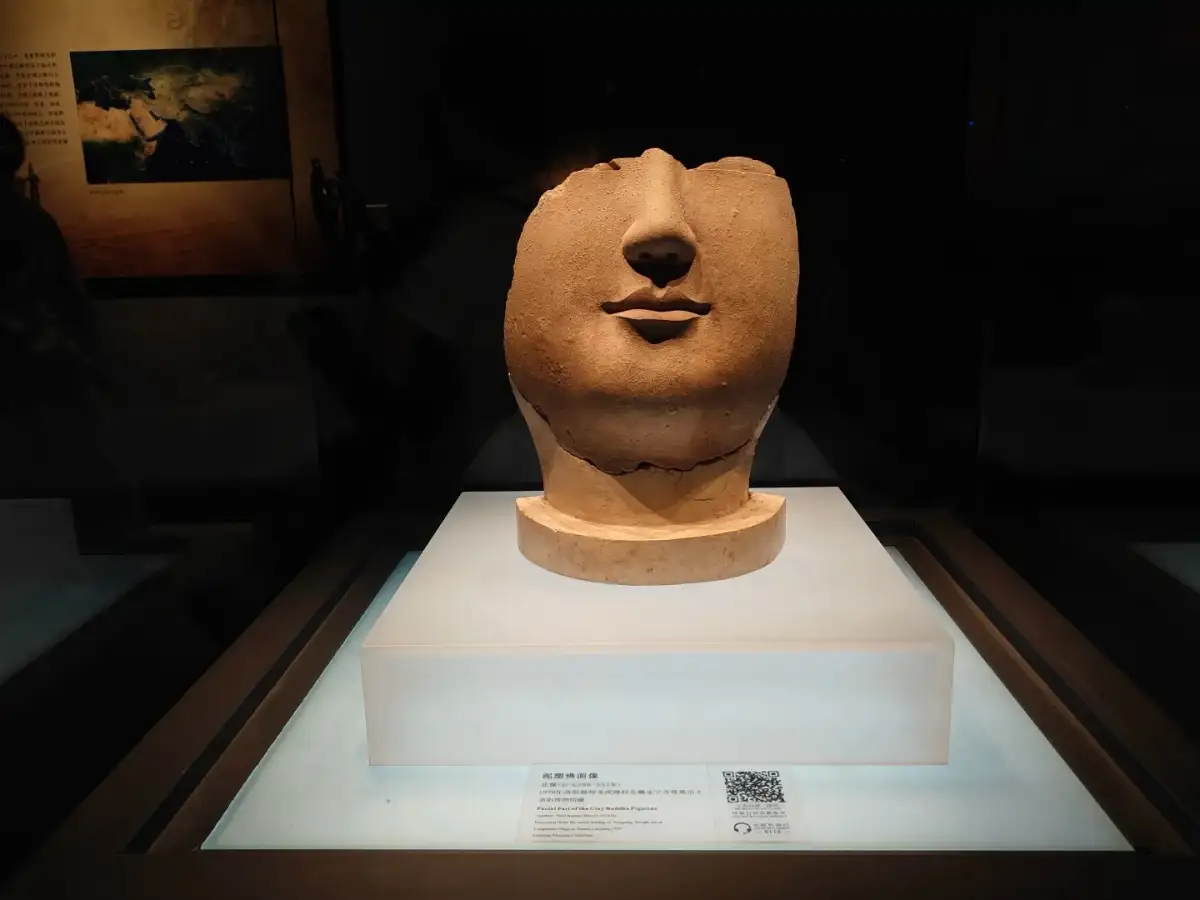
A fragmentary stone sculpture of a head is placed in the center of the display case, with an exhibit description attached below. Image:up🆙 · Original Post.
If visitors have viewed a smaller object inside the museum, they can pay special attention to how scale alters their experience when moving to an outdoor setting. Small objects draw the gaze inward, while large-scale installations require visitors to adjust their distance—or even look up. Visitors thus adopt different viewing postures. Documenting these physical changes can clarify the relationship between the two sites and provide substantive text for later photo captions.
Provide international visitors with a clear, shared theme
For companions unfamiliar with Chinese history, start with three questions: What material is it made of? What activity was it originally associated with? And from what angle should we view it today? These three questions do not require extensive background knowledge but can be applied equally to a cup, a ceramic horse, a stone carving, or a grotto. By supplementing the answers with necessary historical context, the guide can ensure that people of different languages and knowledge levels can participate together without being overwhelmed by technical terms right from the first stop.
Translations of material names should also be grounded in the actual object. First, point out whether the item before you is a vessel, a ceramic sculpture, or a carving on a mountainside; then explain the differences between jade, pottery, and stone—this approach fosters a more natural understanding. For visitors who enjoy delving deeper, they can explore the craftsmanship and functions; for first-time visitors, simply learning how to view the exhibits is sufficient. Shared themes should provide a starting point while leaving room for varying levels of interest.
In terms of travel planning, it is best to devote full attention to each stop. If combining the two stops on the same day, factors such as reservations, transportation, meals, and remaining energy for walking should all be considered; if spread over two days, visitors can reflect on their favorite objects from the previous day at the start of the second stop. The latter approach allows cultural connections to form through recollection and reduces the pressure of “rushing to the next place immediately after viewing.” The success of your itinerary can be gauged by whether you still feel motivated to continue exploring at each stop.
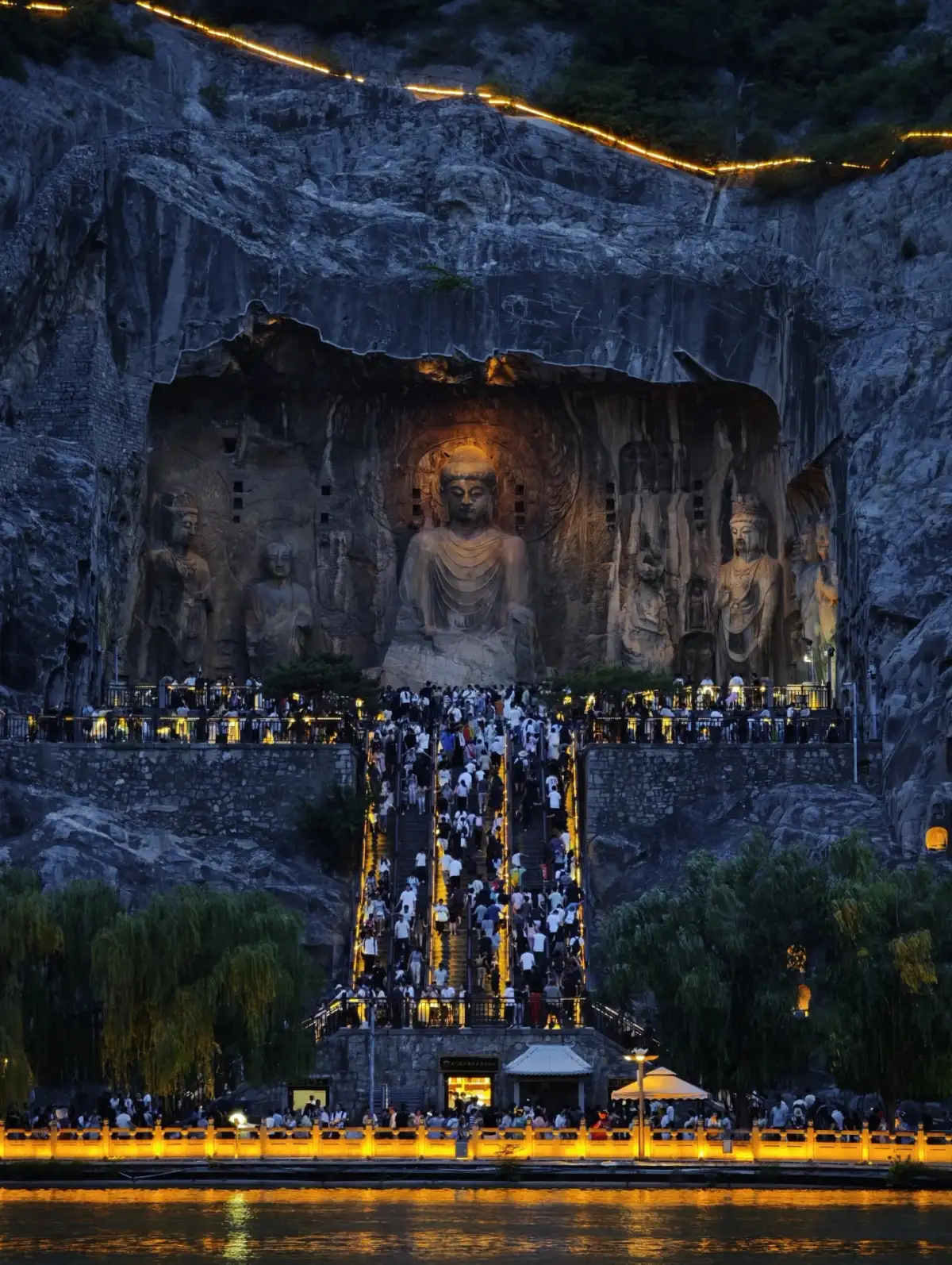
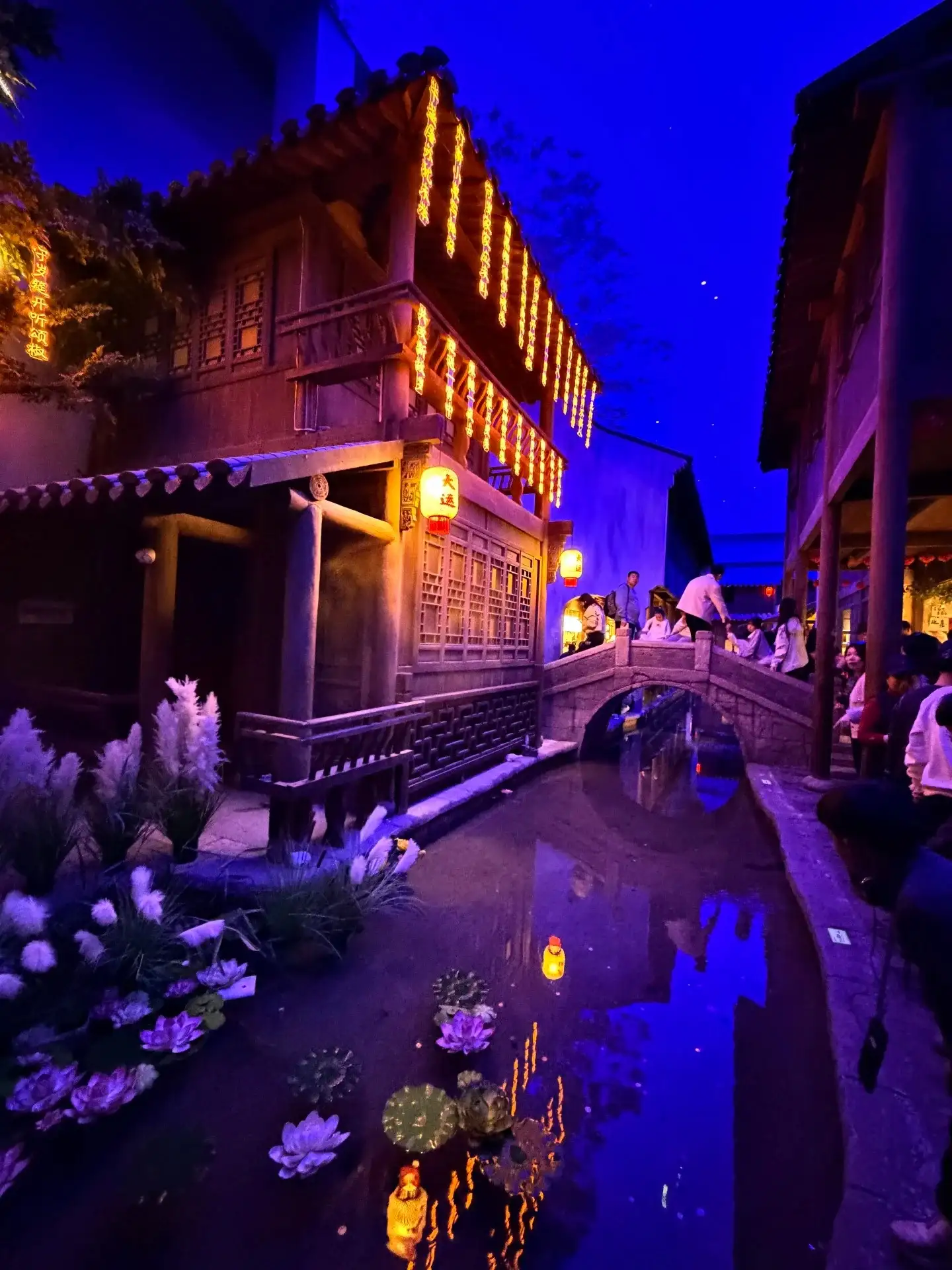
The cliff-side grottoes are illuminated by lights in the night, and the visitors on the steps blend with the play of light and shadow on the river’s surface to form a single line. Photo:Ji Ze · Original Post.
When leaving Luoyang, take your own comparisons with you
In your travel journal, include four images at different scales: a full view of a small artifact, the pose of a terracotta sculpture, the relationship between a stone carving and the exhibition hall, and the relationship between a grotto and the surrounding mountains. When photography is permitted, first capture the complete object and its surroundings, then select specific details; in areas where photography is restricted, use brief text descriptions instead. Such documentation follows its own logic and helps fellow travelers recall why these two stops were scheduled together.
This siteIntroduction to the Longmen Grottoes as a Destinationprovide a regional context for the outdoor section. The connection between the museum and the grottoes can be established through your favorite material or object. Starting with a cup and then moving on to a mountain is not a necessary progression from small to large, but rather a way to learn how to discover culture at different distances. By the end of your trip, if you can articulate what each of these two ways of seeing has brought you, you will have cultivated your own unique interpretation of Luoyang.
Sources and Editorial Notes
This article is an original travel interpretation compiled by the Dongxing Travel editorial department based on the listed materials; it is not a firsthand account by the author. The full text of the original post has not been reproduced; accompanying images are used within the scope of authorization and are credited to the author and the source of the original post. They do not serve as proof of actual visits or services provided to Dongxing Travel clients.
up🆙 · Guide to Major Attractions in Luoyang · Travel Notes; Verified/Organized on: October 3, 2026.
Luoyang Museum · Introduction to the Luoyang Museum Collection and the He-Luo Civilization Exhibition · Official sources; Verified/organized on: October 3, 2026.
Longmen Grottoes Scenic Area · Longmen Grottoes Visitor Guide · Official sources; Verified/organized on: October 3, 2026.
UNESCO World Heritage Centre · Longmen Grottoes · Official sources; Verified/organized on: October 3, 2026.
Ji Zu · 🌞 A Day of Intensive Exploration at the Longmen Grottoes in Luoyang · Image source: This article does not cite this post as a basis for current policy.